Interviewing the author of " Healing the Prostate" Dr. Mark Stengler
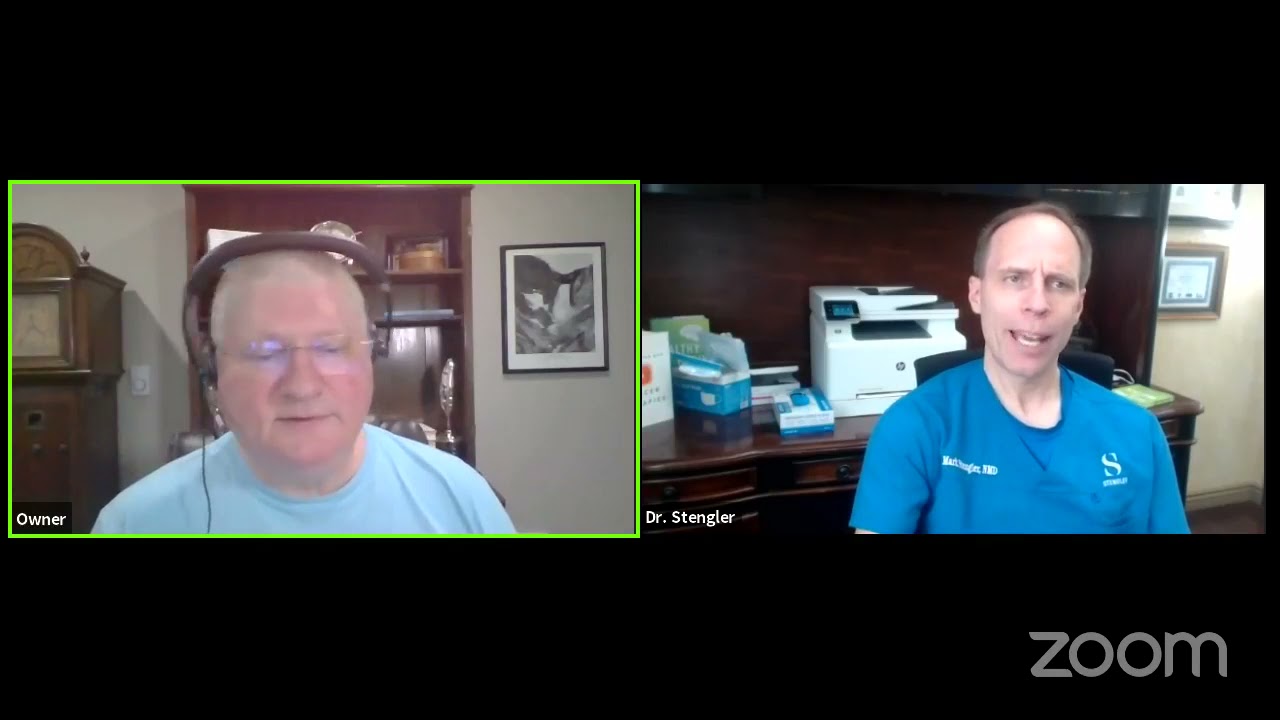
In this YouTube interview, host Matt Kelly (Speaker A) talks with Dr. Mark Stengler, co‑author of the new Hay House book Healing the Prostate: Best Holistic Methods to Treat the Prostate. The conversation moves from a personal introduction to a detailed overview of prostate anatomy, common conditions (benign prostatic hyperplasia – BPH, prostatitis, and prostate cancer), and the limitations of conventional urologic treatments. Dr. Stengler emphasizes that most prostate issues stem from modifiable factors – diet, excess weight, and hormonal imbalance (especially elevated estrogen and DHT). He notes that routine hormone panels rarely include estrogen, leading to missed therapeutic opportunities. The interview delves into specific natural therapies (saw palmetto, beta‑sitosterol, rye pollen/Cernitin, pycnogenol, bladder‑support herbs, antifungal protocols) and stresses the importance of using clinically studied, standardized extracts at effective doses. He discusses the prevalence of BPH (≈30‑50 % of men by age 50, rising to 80‑90 % by age 80), the role of PSA testing (thresholds, velocity, and its limited diagnostic value), and current prostate‑cancer management trends such as active surveillance for low‑grade disease. Emerging urinary biomarkers (e.g., ExoDX) and collaboration with urologists are mentioned. Dr. Stengler also highlights the scientific rigor of his book, citing dozens of peer‑reviewed studies, and provides practical resources (website, book availability). The interview ends with a brief promotional wrap‑up.
Chapters
but it's Dr. Mark Stengler. And most of you have heard me talk about our book, Outside-the-Box Cancer Therapies, with the really unique cover. Dr. Mark Stengler is the co-author, and really without Dr. Stengler, who's a very, very heavily published author, we probably would never have got that book out. So I'm just really happy to have Mark with me today. Mark and I go back to our days in medical school. We were there together. Mark was a year ahead of me, even though he's much younger than I am. And he happened to marry someone from my class. So we're almost family, I guess. So welcome, Mark.
Hey, good to be with you. Don't forget, your dad was my wife's eye doctor too.
That's, that's right. This is a big circle. It goes around. Well, What the reason I wanted to have you on today was to talk about your latest book, and I lost track of how many countless books you've published, but this one is called Healing the Prostate: Best Holistic Methods to Treat the Prostate, and before I get into the kind of backstory and some of the deeper stuff, probably a good place to start, although we have a very educated audience, is the books about the prostate. Tell us what that is and what it does.
Yeah, sure. Well, the prostate gland is unique to men. It's actually a gland that has an important function, and it participates in the production, the maturing, and transport of sperm, so we need it for fertility, and it produces prostatic fluid, which is released with ejaculation. There's different components of it that basically assist the sperm male to travel not to be damaged. And so essentially it's important for fertility. Now, some doctors believe that the sperm production, the fluid released by the prostate also has somewhat of an anti-inflammatory cleansing effect in the urinary tract as well. I mean, that's not as well studied, but essentially we know for a fact it's involved in nourishing and protecting sperm.
Great. So as I mentioned at the top, and my listeners certainly have heard a lot about our book that we wrote together, Outside the Box, And you've written previously about cancer. What led up to writing a specific book about prostate health?
Well, as you know, in private practice, doing the family practice, seems like the men only come in for a few things, right? You know, they've been diagnosed with cancer. Yeah, they have erectile dysfunction, or they've had a heart attack or stroke and now they want treatment. Unfortunately, you know, the men just tend to come in when the more serious things happen. The women are a little wiser in that regards. They come in more preventatively, often before things are too serious. But the one thing we see a lot with men over the age of 50 commonly coming in, one of their issues is BPH, or benign prostatic hypertrophy or hyperplasia. And so it's a fancy way of saying the prostate gland is enlarged. And so the prostate gland sits below our bladder. It surrounds urethra, which is basically a tube that drains the bladder. And as that gland enlarges, which for most men it does to some degree as they age, it occludes some of the urinary flow and then men get the urinary symptoms. So most of the men that come to my clinic, they're more frustrated with the nighttime urination known as nocturia. You know, so when men start getting up more than twice a night, they're getting up 3, 4, 5— I've had some men tell me they get up 7 times a night, they have to go to the restroom. Obviously it's a major problem for quality of life. You can't sleep throughout the night, you're, you know, disrupting your wife and It's problematic, and so most of these cases are related to enlargement of the prostate gland, so men want help with that. In conventional medicine, they do have treatments. There's different classes of drugs, 3 different classes of drugs, but they all come with side effects. So a lot of men on their own, we find, are going to the health food store, they're seeing things online, they're taking products and supplements and trying things for their prostate, and, you know, a lot of them get mild to moderate benefits and As holistic doctors, we try and get them even better results than that using natural approaches.
Yeah, and I would imagine your experience is probably the same as mine where nowadays, especially with the internet, people have a lot of information that they get and a lot of products kind of pitched to them for BPH and those sort of symptoms. And what I sort of noticed, you know, which was different from when you and I got in practice was, In more recent times, a lot of guys would come in, as you say, with kind of part of the solution, maybe getting some benefit. So what if when you see, you know, the average man come in with BPH, you know, not cancer, but BPH, they're getting some benefit maybe from some of the over-the-counter things, what are the common things that you think of next or that you go towards that you talk about in the book?
Well, as with all parts of health, we gotta look at it as a whole system. So it is true when we use specific supplements, and I'm sure you and I will talk about them, and they can greatly help men with their symptoms. So besides the nighttime urination, the frequent urination during the day, maybe the feeble, slow stream, dribbling urination, the products when used correctly can be very effective, but We gotta look at what's going on underlying the prostate enlargement. So what I talk about in the book is really more the fundamental causes which are acknowledged in the medical literature but really not addressed in medicine. So besides, let's say, genetic factors— and there's a small percent of men where just genetically they're kind of destined, so to speak, to have prostate enlargement issues. Now, it doesn't mean they can't be helped with the things we're talking about, but there's a small percent of men where it's really strongly genetic, so that really isn't a big factor for most men. But underlying, it really comes down to diet, lifestyle, weight, and hormone balance, so I talk about that, talk about it in the book, certainly get into the research on diet. We know men that are overweight have more problems with enlarged prostate and urinary issues, but I talk a lot about the hormone component, you know, because men, the prostate gland, somewhat analogous in a way to breast tissue in women in that just very hormone sensitive. And so in holistic medicine, we're really good at identifying hormone imbalances and then balancing them out naturally. Now, conventional medicine, they acknowledge the hormonal component, but they really don't address it very well, and so I think, you know, we have the advantage of addressing the underlying issue much more effectively in terms of preventing prostate problems, not just prostate enlargement, as you know, but even prostate cancer has a hormonal component. So prevention, but for men who have it, also addressing that hormonal issue, which even a lot of the supplements work on receptors and stuff which are involved with hormonal stimulation.
And I think it's— that's a really great place to kind of jump off from because so many things, you know, in our world of medicine have so many connections to the rest of the body and the way our physiology works as a whole. And that's of course what we're focusing on. How often with your patients when they come in do you feel like they're actually aware that these other areas like diet and lifestyle and some of the things that go along are actually that big of a contributor?
A very small percent. Very small percent because I think a lot of them have been to their family doctor, maybe they've been to the urologist, and they just don't talk about the effects of diet and being overweight and environmental toxins and things like that. So it really doesn't enter their mind. So most of them aren't familiar with the literature at all on that.
Mm-hmm.
I mean, so for example, I quote a study in a mainstream medical journal in the book. It was a 2019 study and they looked at the influence of lifestyle changes using certain nutrients and herbal supplements, common herbal supplements, and they found that the symptoms of prostate enlargement or BPH can be, you know, significantly improved just with dietary changes, Some regular exercise and some just basic supplements. So these things are in the literature, but again, urologists, family doctors, they're just not aware of it. They're not looking for it. So yes, the average person is unaware that they can actually be very proactive in improving their prostate health, their urinary issues, through dietary changes, lifestyle changes, exercise, weight reduction, things like that.
I guess along the same lines, and I'm asking this because I'm curious if your experience is similar to mine, how many of those patients have also had a more broad look at their hormones taken into consideration when they maybe go see the family doctor, etc.?
Yeah, honestly, I'd say almost 0%. I don't know what your experience is. I mean, if you're talking to these urologists and family doctors, I mean, they'll acknowledge they're definitely aware of the hormonal connection, but virtually none of them actually look and test the hormonal imbalances. So it's pretty interesting, you know, as you've seen, as I have, when you, you know, have a male patient, let's say 60 years of age, he's got prostate issues, urinary issues, you run a hormone profile on him and all of a sudden he's showing really high estrogen levels, right? Especially for his age. And so they're, first of all, surprised to find out that men have estrogen. And then second, you explain to them how there's really quite a bit of literature, and I talk about in the book how the prostate cell receptors are very much sensitive to estrogen, and so men can get higher levels of estrogen from being overweight. You have an enzyme in your fat cells which converts, manufactures estrogen. Men maybe are out there on testosterone replacement, and testosterone gets converted in estrogen. Maybe that's not being monitored or dealt with properly, or They're not recommended dietary things, supplements which can help reduce that conversion. So yeah, we do see things like that with tests, and the men are quite surprised, but it's good because then they can see really what is the strategy we're looking at. Yes, we're going to use supplements and things, and, you know, occasionally I use medications, but more often the supplements and diet lifestyle changes. They can see the strategy. The strategy is give the patient symptom relief Long-term, balance out the hormonal stimulation of the gland, get that under control, or the root factors.
Yeah, yeah, I would say that's my experience. It's fairly low, or you've probably seen the one pattern I would see is a lot of men would get maybe the test— total testosterone checked and nothing else, and I know in a lot of cases with BPH, erectile dysfunction, etc., their testosterone might be on the lower end of normal, but it's normal. But then no one checked their estrogen and found that estrogens can be quite high. And that often gets, in my experience, the attention of men to do something about the dietary causes of estrogen conversion and physical activity, you know, those sort of things too. And I, yeah, I really appreciated the way you kind of tie those together in the book. And I think, you know, something I want to mention about the book, because you sent me over a version I could take a look at, it's, it's very, it's, it's very scientifically sound, but it's, it's easy to read. You don't, you know, you don't need to have— you can have an advanced degree or not, it doesn't matter. It's, it's very accessible information. And a lot of these things we're talking about that we, you know, often don't see when you've just gone in for your regular checkup or whatever, but you still have symptoms, are really dealt with in depth there. So when— what would you say would be the percentage of times where you would have to maybe use an integrative approach where you did use some medication along with the diet and supplements and those sort of things?
Yeah, now for some men when they come in and they're having acute problems, basically we call it urinary retention. You know, so they're not able to urinate at all or very little. I mean, that can be an emergency situation, end up in the hospital, need to get a catheter. So obviously trying to head that off at the pass. So if it's a newer patient and they're having more extreme problems urinating, then we'll use medications. We'll use medications, alpha blockers and certain medications which will relax the bladder, relax the prostate so the urine can flow through. We have to or else they're going to end up in the hospital.
Yeah.
You know, the catheter. So we'll use those in that situation. Men who have a very enlarged prostate, we have found in the literature, contrary to what a lot of doctors say, there is some literature we talk about in the book where certain supplements have been shown actually to reduce the size of the prostate. Now, I know years ago we were always told that supplements can help with prostate symptoms, but they cannot actually reduce the size of the prostate, and we actually document in the book that isn't true. What is true, there are some studies showing you can reduce the size of the prostate, but I want to be fair about it, it's not necessarily like you're significantly reducing the size, you know, it's not like we can reduce the size by 50%, let's say, with a really enlarged prostate, but you can make a minor decrease in the size of the prostate, so you can actually make an impact according to literature, which I think is very, very fascinating. But for men with extremely enlarged prostates, they don't want to get surgery, maybe aren't good candidates for surgery, certainly there are medications like Avodart which have shown in studies to reduce the size of the prostate, so sometimes just with all— as all conditions, like, you know, in our cancer book, there are times we have to do a combination of treatments and we'll do that if we need to.
Yeah, very good. Maybe this Step back a little bit, just so people know, when you get males in the 50+ age range, how common is statistically BPH?
Well, pretty common. Essentially, if you live long enough, you'll probably have some degree of prostate enlargement, but according to the statistics, about 33% of men age 50 have prostate enlargement, and by the time you get in your 80s, It's kind of a similar number. So if you're 80, there's probably an 80% chance you got prostate enlargement. You're 90, probably 90%. So we say roughly about 30 to 50% of men around age 50 to 60 have prostate enlargement. Obviously different degrees depending on the person. If you look at the literature, your prostate gland— and remember when you were in your anatomy labs in school, you know, seeing it for the first time other than pictures you see it in the— cadaver lab. I mean, you know, you're kind of surprised how small— it's about the size of a walnut, but you look at the literature, I mean, people, you know, get prostate enlargement, you know, double, triple that size. So, yeah.
Yeah, yeah, and it's certainly one of the more common, as you say, men. In my experience also, they don't come in unless there's something you know, way wrong, and prostate problems are one of the things that seem to drive them into the doctor. And I know you go into this a lot, and of course there's a lot of research behind it, but broad brushstrokes, what are your primary go-to natural therapies for BPH?
Yeah, so there's a few things I've found. Well, typically with patients, besides again the diet, exercise, losing weight, detoxification, Most men will put them on a prostate formula. What I have found throughout the years, if you give just one, quote, prostate supplement— say you give them beta-sitosterol, you give them saw palmetto, you give them Pygeum— a lot of these classic prostate supplements, they can help. Typically, we see much better results with prostate formulas. Maybe we're getting 2 to 3 of these, and I think one of the keys is— and one of the problems with prostate formulas for some of them, not all, is you'll maybe have 3 or 4 very good ingredients in there of these common prostate herbs, but then as you look closely, it looks impressive on the label, but then maybe they're only getting 20%, 25% of what the studies used, and then the patient says, hey, I've been on this for 4 months, I don't notice a difference. Well, yeah, you're only using 1/5 the dose the studies used, so don't feel like these things don't work, we just gotta get you on the right doses, so I'll use a prostate formula with the common herbs in it. So I usually like the saw palmetto, beta-sitosterol. I really like the rye pollen extract we get out of Europe. It goes by different trade names like Cernitin, Cernitin. You can get it here in the US. Very impressive studies on it for prostate enlargement, BPH, as well as prostatitis, which by the way is a, you know, as you know, a different condition, more common in men under the age of 50. It's amazing to think that 15% of men under the age of 50 have prostatitis, chronic prostatitis, which is an inflammation of the prostate gland, and most of these cases, you know, the men have urinary issues similar to the BPH, they get pelvic pain, they go into the doctor, they're given antibiotics. A high percentage of cases it doesn't work because most cases of chronic prostatitis are not bacterial, so the antibiotics don't work. You know, it's fungal, it's viral, it's diet-related, it's stress-related. So these men can be helped a lot. But anyways, the rye pollen extract has shown to be very effective for men with chronic prostatitis. So that, and then, Paul, what I've been using recently, there's some good studies on pycnogenol.
Mm-hmm.
Pycnogenol, pine bark extract. And so they've studied that in men and they found about 150 milligrams a day is similar to the drugs in terms of helping with BPH symptoms. And so they have much better urinary control. And when they've looked at these studies using ultrasounds, they find that they have less what they call residual urinary volume in the bladder. And so, you know, when you have urinary issues, you're not getting rid of all the urine. And so you always feel like you get a nervous system reflex, like you got to urinate, you get the urge to urinate. So helps to clear the bladder. So very, very— interesting that they get better bladder emptying in people taking the pycnogenol. And then I've used in recent times a formula I found based on published research, and I'm sure people haven't heard of some of the ingredients, but it's an herbal combination. It contains Cretava nervala stem bark, Equisetum arvense stem— now people refer to that as horsetail— another one called Lindera aggregate root. And so what they were shown in studies for men and women actually with overactive bladders, that it improved urinary symptoms in 85% of users. What's more impressive, a 60% average reduction in urinary incontinence. So what I found, and one of the reasons I wrote this book, Dr. Paul, is that what I found in recent years is if I treated the prostate, I'd get Good results. If I treated their prostate along with their bladder, the smooth muscle of their bladder, helping their bladder to be better tonified, to relax better with herbs like I just mentioned, those 3 herbs, which again have been shown in published studies to be very effective, I get phenomenal results in terms of relieving BPH symptoms. So treating the bladder and the prostate together, I found superior to just treating the prostate by itself. And it makes sense because as men age, I mean, the bladder muscle, the smooth muscle tissue tends to lose tone as well.
Yeah, I think a couple of things that came up there I just really want to underscore. One is, which you go into in the book, is a lot of people have the right maybe names of things that they're taking, but the dose is way too low to be to be effective. And I know that was one of the— I mean, it's great when they come and get our advice, but one of the biggest frustrations with some of the natural therapies where people would say, well, I've taken that, it didn't do anything for me. And then you look and they're really not getting a minimal effective dose. So I think people need to be sensitive to that. And the book does a really nice job of talking about that. And the other thing from a broader health perspective, which you kind of wrapped around to there from just outcomes is it's not a benign thing to have too much urine left over in your bladder all the time. You can form bladder stones, you can grow fungal and bacterial and other things. A lot of things can happen just from residual urine. And so getting the urine flow and the bladder activity to be as normal as possible is actually more healthy for the rest of you. Because one of the big issues that you see as you get to patients who are in their, you know, 70s and 80s and 90s, which there's a lot more people now in those age groups, they'll get bladder and kidney infections and they don't get any symptoms because they're so, you know, their body's so used to it. And people can get septic and, you know, pass away. So having that kind of full circle care like you were talking about and getting the bladder to empty and work better is also very protective for your health long-term.
Yeah, and good point. And what I've done for years, especially my senior men, when we do lab testing on them, I always run now a screening urinary test— excuse me— with a reflex to culture. It's shocking how many men and women come back with a raging urinary tract infection at the highest levels, you know, greater than 100, you know, at the highest levels, E. coli and other bacteria. The patient's not aware of it. They don't necessarily have urinary symptoms, but you treat them and all of a sudden, oh, now my fatigue's gone. Yeah, you know, or, oh, you know, my relative said my memory and focus was problematic. You know, these are all symptoms, as you know, of a urinary tract infection that people aren't aware of.
Yeah, yeah, it's amazing. And it's also, you know, a lot of family members don't realize how, you know, the further you get past 70, the more that's one of the most common presentations, and clearing that up is not only life-saving, but literally people feel like new people, you know.
Right.
So something you mentioned a little bit earlier, I wanted to just spend a couple of minutes on if we can, and that is prostatitis. So, you know, we've got prostatic hyperplasia, which is the swelling of the prostate that's non-cancerous, and you had mentioned, you know, prostatitis can actually start in younger men. And there's a— which you talk about as well, there's acute prostatitis, but then there's also, of course, chronic prostatitis. And one of the things I've seen personally in practice is if you don't deal with prostatitis earlier in the game, when it becomes chronic, it's extremely hard to, you know, get after and get ahead of. So, what are your thoughts on that? And again, maybe getting men to seek help a little earlier. What would a younger guy, you know, maybe someone under 50, start to look for that would prompt them to get checked out for prostatitis?
Right. Well, a few things. I mean, if they're feeling pelvic pain which isn't explainable, a lot of men will describe like they're sitting on some type of a ball in the rectum, and that's often referred pain from the prostate. You know, that's the classic symptom. You can have all variations of different types of pelvic pain. That's kind of the classic symptom. Again, changes in urination in a man under 50, I mean, you're thinking either you got a urinary tract infection or something else is going on. So you get tested by the doctor and there is no urinary tract infection. Well, now you got to start thinking, where are these symptoms coming from? And as holistic doctors, we look at different things. Is it just referred pain? Maybe the low back, maybe the pelvis is out of alignment. You start looking at things like that, but always near the top of the list with me is Considering chronic prostatitis, which, as you said, is just chronic inflammation of the prostate gland. Normally it's non-bacterial, so the vast majority of cases, about 90% of cases for chronic prostatitis— so this man under 50, he's got kind of this weird pelvic pain, discomfort, maybe pain with sexual relations, urinary changes. You're thinking chronic prostatitis, you're doing urine tests, you're not finding bacteria, but you find white blood cells, which suggests inflammation.
Right.
not necessarily infection. Antibiotics maybe have been given by other doctors. The patient either notices no benefit or just very temporary benefit, probably because it just gives them a short-term anti-inflammatory effect. It's not treating the root of the problem, and so those are all suspicions for chronic prostatitis. Now, I do talk about in the book, they actually— there was a very good published study where they treat men with chronic prostatitis with antifungal treatment. And of course, antibiotics don't treat, you know, fungi. They typically make the problem worse. So a lot of these men with chronic prostatitis, they've been given therapeutic treatments of antibiotics. Yes, their urine tests show some white blood cells but no bacteria. You can't culture anything. The doctor thinks, well, you know, no test is perfect, which is true. They give the antibiotics anyhow therapeutically, see how the patient does. and then the problem just persists, and maybe they get 2 or 3 rounds of Anabox and they stop doing that, but you also could be setting up, you know, a worse fungal problem. So the patient perhaps has been drinking a lot of alcohol, they are on a high, you know, carbohydrate, high sugar diet, put some more Anabox into the mix, now you get more of a chronic fungal infection. And so anyways, we talk about a study they did where antifungal treatment was very, very effective for chronic prostatitis, and I have seen that with a lot of men Throughout the years, we throw on a diet low in sugar, we put them on antifungal herbs, antifungal medication, and lo and behold, they get very, very good improvement with their chronic prostatitis. I know, Drew, you've seen that with some men too.
Yeah, yeah. I think that cycle that you get into where the most common initial treatment is an antibiotic, and certainly sometimes there's some bacteria there, But as soon as you get the antibiotic going into the person, you just know any fungus that's there just, you know, has a field day and really can, you know, go, and other, you know, other infectious forms. And the other thing I think, which you talk about kind of on the front end of the book, is the anatomy around the prostate. There's some accessory, you know, accessory ducts and glands, and there's a lot of places for fungus and other things to just hang out, you know, and be there for a long term with no symptoms. And so these, especially the younger guys that start to get prostatitis, you really do have to back up and think about, you know, a more broad picture there. So I'm really glad that you got into that in there. One of the other things, and I want to talk about prostate cancer, we've We're about halfway through, so we've got plenty of time, but I was curious. I know you talked about it in the book, and of course it's a deeper topic than we have time for, but where are things at in the science right now with using the PSA test, you know, across the age spectrum and as a predictive test or not? And I know you go into that quite deeply, but, you know, what's the current thinking now as far as PSA?
Yeah, the history of the PSA is pretty interesting, as you know. I mean, it used to be the gold standard for prostate assessment, you know, decades ago when we started practicing medicine, and then we had this period of time where the person who discovered the PSA, Dr. Albun, came out with a book and said it's bogus, you know, no one should be doing it, and then since then there's been more research has come out and show, you know, there's some validity to it.
Yeah.
I mean, it's, you know, it's not a great test, but it has some validity to it, so you can't just abandon it, Right. So, I think it's one of those screening tests where, I mean, I think we have to have it until we have some other technology. You know, I get a fair amount of men on, let's say, testosterone replacement, so I do run a PSA every 6 months as part of their treatment just to see if they're— not necessarily I'm worried about prostate cancer, although we're looking to see if there's huge spikes in the PSA, especially over time jumping up, up, up like the PSA velocity, but, you know, is the prostate getting irritated or should we be doing other things to help them with balance and things like that? So, the PSA has some validity. Nowadays, you're seeing it used a lot more in algorithms, you know, algorithms, so to speak, not just as a one-shot number.
Yeah.
We do talk about in the book the PSA less than 4, unlikely you have prostate cancer, though still possible. Between 4 and 10, you know, there's kind of a mild likelihood you have prostate cancer, And above 10, a more likelihood. That's what the most recent research is showing. Again, as we both know, a PSA in itself is not diagnostic of prostate cancer. For us practicing doctors, we're watching it. Maybe it jumps from, let's say, you know, 3.5, and then I check it maybe 6 months later, and also now, hey, now I'm at 6. And I check it again in a month or two. If it drops back down again, well, that's more just like prostate irritation, inflammation, BPH most likely. If it keeps, you know, up, up, up like in a velocity type thing, then we're more concerned. We take more action and look into it more closely. So it's a general screening test that kind of gives a sense of if we should be looking at things more. So personally, I don't overrate it or underrate it. I use it. I don't rely on it exclusively, but I don't abandon it either like some people have done.
Yeah, yeah, that's— and I mean, even, you know, a while ago, it really seemed like it has a place. It's one player in a bigger game.
Right.
And just like with testosterone and not measuring estrogen, for example, or other things, it's— you have to be careful you don't have just a narrow view of the problem because, you know, I'm sure we've both seen younger guys, you know, have a— they go from a 0.5, you know, old-fashioned regular PSA to a 4.5 suddenly, and they turn out they have cancer and, you You get a guy over 60 and that might be totally normal. You know, it's very relative to the rest of their health. You know, there's so many more things we can talk about, but we've got a nice chunk of time left. I'd like to move to prostate cancer if you want to.
Sure.
All right. So you definitely go into this in the book. You know, something I wonder— I didn't do the counting for it, but I know in our Outside the Box book, we had just under 1,100 references that we put in there. I know that the publisher was a little shocked at that. How many scientific references did you get into this one?
You know, it wasn't extensive as the cancer book, but it's still pretty heavy. I'm looking at it here. It's, you know, it's a nice little chunk of the book there is references. Well, you know, the thing, as you know, Dr. Paul, is as integrative doctors, we use a wide variety of therapies. I think some people are surprised to find out, maybe some other doctor colleagues of ours, I think they're sometimes surprised to find out in many ways we're, we're more scientific than they are.
Mm-hmm.
We very much rely on the science, although we don't discount historical use or what we experience in the clinic either. We're not just tunnel vision per se, you know, because sometimes we have to use things we don't have, you know, years to wait to see if they're going to work. We're using non-toxic therapies and we've seen them work for 50, 100, hundreds of years, so there's something to them. With our Outside the Box Cancer Therapies book, we knew it was kind of a sensitive issue because in conventional medicine they're very sensitive to non-oncologists making recommendations, so we kind of went overboard With the scientific validation of what we're talking about. Of course, with our research in there, we're talking about mainstream medical journals. These aren't just, you know, some journal written in a far distant land.
Yeah.
Written by 10 people or something. So in this book, same thing. It's— I think people will be quite surprised that the citations I give in the studies are from just very mainstream journals. It's just people aren't looking for them. A lot of doctors in medicine, urologists, they're just not looking for the research. Let me give you an example. Let's take saw palmetto. What I've noticed when I started going through some of the big brand name medical websites that consumers go to, you know, maybe some websites that start with a big M on it, a lot of people go to, they bash supplements like saw palmetto.
Mm-hmm.
They say the literature shows that saw palmetto doesn't work. And I'm thinking, wow, that's, that's kind of an amazing, you know, statement to make. So I thought, well, maybe I'm missing something. So I went back in the literature for this book and I started looking at all the literature on saw palmetto, including the most recent research. Now, when I looked at the citations they're given, they pulled off 1 or 2 studies, you know, maybe like 8 years ago. And as we all know, when you have something well studied like saw palmetto, you have dozens and dozens of studies. And just like with drugs, when you have many, many studies, it's pretty rare they're all going to come out good. You know, there's different qualities of studies and different numbers and different things looking at. And so look at saw palmetto, it's like anything else. It has a lot of good studies, some that don't come out good, and some, some kind of in the middle zone. So when I'm looking at it, I'm looking, let me look at the best studies and the most recent. So then I come across a 2018 paper and they're looking at a systematic review on saw palmetto. Many different studies, randomized controlled trials of men with BPH, benign prostatic hyperplasia, included 27 studies, and they found that soft metal reduced nighttime urination, improved their maximum urinary flow compared to placebo. Also, and here's a key thing, they found that soft metal had a similar benefit to the common drug tamsulosin, known as Flomax, which is used to relax the bladder and prostate for urination. and also a 5-alpha reductase inhibitor, which is, you know, a common drug used for when you have urinary symptoms related to the prostate. No adverse effects on sexual function as you get with those common drugs, no adverse effects on PSA levels, and there was a slight decrease in prostate size. So I'm thinking, wow, so here I have in a mainstream medical journal a review of 27 studies, 2018, unlike, you know, with, with this, you know, some of these mainstream websites are claiming with saw palmetto, I think that's pretty darn impressive. I look at other studies that shows about 90% of men who take saw palmetto have improvement in mild to moderate urinary symptoms of BPH within the first 4 to 6 weeks. Thinking, wow, that's, that's, those are impressive stats. But here's what it comes down to, and kind of we talked about the very beginning, when you really get down to the nitty-gritty, Here's the issue with saw palmetto, like we talked about at the beginning. The studies that found it effective, like I just talked about, they were using very specific standardized extracts, you know, what they call this liposterolic fatty acid concentration, around 320 milligrams, you know, a very standardized extract. So when studies were using extracts like that, came out phenomenal. When studies didn't actually look at the type of extract used, you could use whatever you want. Well, of course, you could be using products that could be literally 100 times less potent.
Mm-hmm.
So it wouldn't be, you know, if I'm studying a drug, let's say I'm studying a drug and the normal dose is, let's say, you know, a 5% extract at 200 milligrams. Well, then I pull up some studies and it's using, you know, 25 milligrams at a 1%. I mean, why would I expect to get good results? So, you know, a lot of people, I think, who had a bias against holistic medicine either were just ignoring this obvious fact or they're just not very good researchers.
Yeah, yeah. I mean, we see that all the time, and that's why I wanted to bring that up, because everything is not equal. And even in studies that you read, and especially, you know, some of the bigger news outlets for medical research, they do kind of have a bent or sometimes really have a bent towards publishing negative studies for, you know, integrative and natural things. But if you take a look a little bit below the surface, you'll find these things. Well, this is— you can look, and if you do what we do, you look at the study design and you say, well, this is one that was destined to fail because there's no— there's almost no medicine being given here. You know, it, uh, like, this is a real problem. So I think that is a real, uh, a real service that that your book does is it really lays out these issues around dosing and form, strength, you know, all of that, especially where it makes a difference in the science and the outcome, which I think is really important. Now, you know, and just like a lot of things in, you know, in our book Outside the Box, it was about cancer. So we covered a lot of cancers, a little bit about prostate, breast, you know, all the common ones. In this book, you get a little bit deeper into prostate cancer, and what are the statistics like now for males kind of across the lifespan with prostate cancer, where we're at today?
Oh, in terms of the frequency?
Frequency of prostate cancer, yeah.
Yeah, well, you know, it's the 2nd most common cancer in men next to skin cancer. So, as a man ages, you know, exponentially the risk of prostate cancer goes up. The good news for men though, of course, as we know, is most cancers, prostate cancers, are slow growing.
Mm-hmm.
So, they've done studies where they do biopsies on men who've, you know, were deceased and they analyzed their prostate, and so it's very common for men who have passed and having autopsies to have, you know, prostate cancer, but it's contained within the prostate. It's not spread. So prostate cancer in and of itself isn't deadly unless it's rapidly growing or expands outside the prostate capsule, you know, which encloses the prostate gland, and that's where the problem comes in. It's like breast cancer; it's not fun to have a breast lump, you know, it can be removed and stuff, obviously. Breast cancer is a problem when it spreads to vital organs, you know, besides, you know, the way it looks and stuff. So with prostate cancer— Most men don't even know they have it. Now, that's not to underplay prostate cancer. Prostate cancer— there are a small percent of prostate cancers which are very aggressive. You know, whether you're young or old, you want to know if it's an aggressive prostate cancer because you need more radical treatment because of it, so I'm not underplaying it, but the nice thing is they have acknowledged now, especially in the last couple years, oncologists, that It is now acceptable to not necessarily go in right away. A man who has prostate cancer, let's say a low-grade, even closer to mid-grade prostate cancer, automatically do the surgery, do the more invasive treatments with radioactive seeds and these types of procedures. So active surveillance is becoming much more common in men who've had a prostate biopsy, it's a lower-grade score. Especially men who are 65 years and older, because statistically, The research has been clear for a number of years. If you're over the age of 65, statistically, there's no difference in your lifespan whether you have a prostate removal or not. Now, again, if you have the aggressive kind—
Right.
It is a problem, you know, you probably do need to have the more aggressive treatments, but if you're in the higher percent of men who have a lower grade, then not necessarily. And so men at least have the choice because a lot of men are concerned about— they've had friends who've had you know, their prostate removed, now they have urinary issues, they have erectile dysfunction, you know, things of this nature. So at least men are able to be more involved in their care, and it's not considered heresy, so to speak, you know, if you don't go in there and have your prostate removed if you're an older man and it's just a low-grade prostate cancer.
Yeah, so I think that brings up a very good point, you know, from the point of view of safety and, you know, do no harm, is we obviously as doctors, we see this. There's sort of 2 different prostate cancers that occur in people. One is the more common kind of slow-growing that you're talking about, and then the other that I've seen in even younger men is— and certainly older, but younger— is the very rapidly advancing. It's treated 2 totally different ways.
Right.
What I'd like to focus on in the little bit of time we have left is Let's say all the good diagnostics have been done and, you know, everyone's pretty convinced that this is not a rapidly growing metastatic prostate cancer, but it's one of the slow-growing ones, and maybe your patient is in their, you know, later 50s, 60s, so again, the surgery is probably not going to make difference, etc. How much crossover in therapy between BPH and the slow-growing prostate cancer do you see as far as Treatments and inter— you know, interventions and things that you would do on all levels, diet, lifestyle, et cetera?
Yeah, I think in some ways there's similarities, in other ways there's not. So for example, definitely with the diet, we all want them to be on an anti-cancer, anti-inflammatory diet, which our Outside the Box Cancer Therapies goes into that in detail. I mean, there's many different diets that can be followed, but they have a lot of essential characteristics of them. You know, they're low sugar, Or higher plant-based foods, higher good fats, clean foods, typically lower in dairy products, especially non-organic, lower in animal meats unless they're like free-range and stuff. So there's a lot of, you know, similarities. The exercise, losing weight, the other lifestyle factors like adequate sleep, stress reduction techniques. So all that is, you know, the same. The difference would be I would not focus on the herbs we use for BPH. You know, the focus is not on herbs like saw palmetto, Pygeum africanum, beta-sitosterol. That's not our focus. Our focus is more on the things which have more of an anti-cancer effect, things which are directed more towards inflammation. Um, so to me, that's where the biggest change is. And then we incorporate the things like in our outside-the-box cancer therapies like intravenous vitamin C, other intravenous treatments, specific supplements used for their anti-cancer properties. One thing that is similar though is that we're still working on the underlying hormone balance because both with BPH and prostate cancer, you got the metabolite of testosterone, dihydrotestosterone, DHT, which is a problem, you know, when it's too— levels are too high or your receptors are too sensitive to it. estrogen. Those are the 2 hormones we're more focused on, which again, it's kind of interesting because remember, most people still aren't aware that testosterone isn't the culprit when it comes to prostate cancer, or else, you know, we'd have 20-year-olds walking around with prostate problems, prostate cancer. It's not the case. As we age, those metabolites increase in their levels and activity, so that's more of the issue. So, so there's some similarities and some differences. Obviously, we monitor the patient more closely with lab testing and imaging that have the prostate cancer. What I do actually here where I'm in Encinitas, California, in San Diego, I work with a urologist. Actually, he's in the book here. He gave me a quote for the book, but I'll work with him because of insurance issues and his expertise. He helps to monitor the patients with imaging. He does some actually some cutting-edge tests which are becoming more mainstream, By the way, we now have some better tests that have come out, some urinary biomarkers you can use which are more predictive of whether a man has more aggressive prostate cancer or not. So we talk a bit about in the book about that, but, you know, like one we use, and I have no association with the company, but like the ExoDX prostate test, that's using urine testing to assess biomarkers telling if you're more likely to have prostate cancer. So there's some better technology out there to help assess patients too, but basically that's what we do. We treat them, we monitor them, the biomarkers, imaging, and if the patient, you know, everything's working well— I've got men who've had prostate cancer for, you know, 10, 15 years.
Mm-hmm.
I mean, some of these men, what we normally see as they get older, they get older, we see some mild increases in their prostate, cancer size, but nothing significant where they got to take other action, and those are, you know, cool cases to see, especially when it's been like 15 years.
Yeah, yeah, definitely. Those are— those were always the ones I love to get.
But if they're getting worse, yeah, if they're getting worse, if there's signs they're worse, you know, we get them over to the oncologist and see if more aggressive therapies need to be done.
Well, so The new book, it's also by Hay House like our previous book, Healing the Prostate: The Best Holistic Methods to Treat the Prostate. So you can get it from Hay House, any outlet you get books basically.
Right.
And you can look that up and I will do a summary. I'll have some links and we'll put out our information to all of our folks. But what's the best way for people to find you, Dr. Mark?
Yeah, probably my website, markstengler.com. And that's my clinic practice, more information on myself, some of the books I've written.
Yeah. And have you lost count of the books? How many have you written now?
I think, I don't know, I think this is 30 or 31. I told my wife, I It's time to pick the pace up. I'm gonna hit it like twice this year. I'm gonna start picking the pace up.
Yeah, so I'll never catch you. Yeah. Well, it's— it has been wonderful talking to you. We're winding down now. And I'm getting the secret messages from the producer that we're gonna have to wind up here. But so one more time, your website, and just the spelling on your last name is S-T-E-N-G-L-E-R. In case people aren't familiar with Stengler's. But what's the website one more time?
Yeah, markstengler.com.
There you go. All right. Well, it has— I've been looking forward to this. It's really been a joy to speak to you. And, you know, I've co-authored a large number of things, mostly scientific, and that's not always a fun job. But I really— I don't know if you had the same experience, but you were the best co-author I could have had.
No, thank you. Yeah, no, I enjoyed it.
Outside the box, we did much better than many co-authors do. So anyway, check out Dr. Stengler's new book, Healing the Prostate, and it's Hay House book available anywhere you can get books, and we'll have information on our site. Go to drmarcstengler.com, and we are done for the time. So Mark, hang on afterwards. I'll have a word, but we'll just let Cameron take us out.









