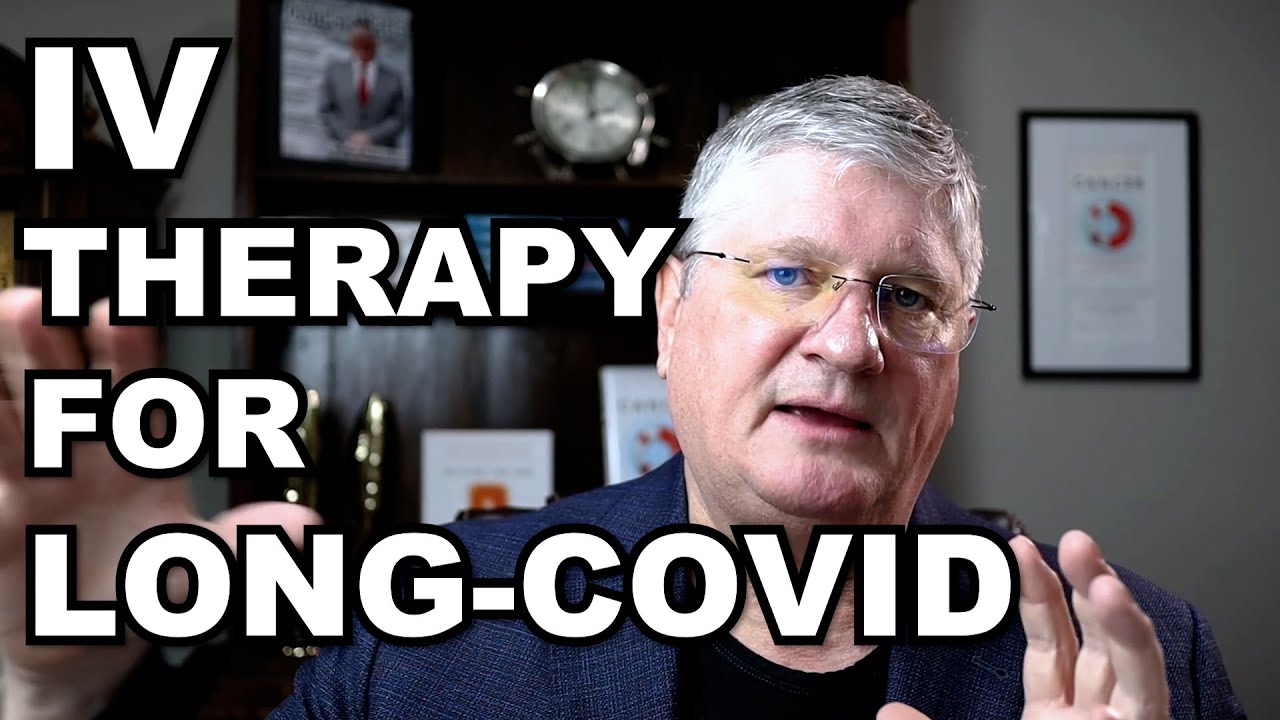
In this Medicine Health Podcast episode, Dr. Paul Anderson discusses the potential of intravenous (IV) nutrient therapy as a synergistic, add‑on treatment for long COVID, especially for patients with severe or plateaued symptoms. He reviews a recent systematic review of nine clinical studies (totaling ~720 participants) that examined IV vitamin C, noting that most controlled trials reported reduced fatigue scores—a key long‑COVID symptom. Anderson acknowledges the limited number of large randomized trials but draws on his three decades of clinical experience with IV nutrients in chronic illness and cancer, describing various protocols (low‑dose, high‑dose, multinutrient blends, and glutathione‑paired regimens). He explains the physiological rationale: IV delivery bypasses the gut, rapidly elevates plasma nutrient levels, and supports cellular processes such as antioxidant defense, detoxification, and metabolic co‑factor function. Safety and efficacy, he stresses, depend on practitioner expertise; improper dosing or inexperienced providers can cause adverse outcomes. He warns against generic “hangover‑clinic” style IV services for chronically ill patients and recommends seeking integrative or naturopathic clinicians experienced with chronic disease. The episode concludes with references to show‑note links, referral resources, and encouragement for listeners to explore IV nutrient therapy as a complementary option, not a standalone cure.
Chapters
Synergistic modalities. They add on to everything else that you're doing, and especially in a case where you have an extreme case, very bad symptoms, or you have somebody, you know, who's really just plateaued and they're stuck, these add-on type of therapies can be very useful. So they're synergistic. It's not a standalone therapy, in my opinion, and that opinion comes from doing this many thousands of times with people who are very sick. Can intravenous nutrient therapy help with long COVID? Let's talk about it. A study was done taking a look. It was a review paper where they look at a bunch of studies and they put them together and they say, what are our outcomes here? This particular review looked at vitamin C intravenously and people who were sick, and then they had you know the outcomes of the study. And basically, and we'll link this in the show notes if you wanna take a look at the study, but it was 9 clinical studies that had a total of 720 participants amongst the studies. 3 of the 4 controlled trials saw a decrease in fatigue scores. So controlled trial is where you have one arm getting the treatment, one arm not getting the treatment. And then 4 of the 5 observational or before and after studies saw a benefit. Interesting. in levels of fatigue as well. And because fatigue is one of the major criteria and factors that we see in long COVID, especially now, I thought this was a nice one to sort of present. Now, people will often say legitimately, well, you know, there aren't really large-scale randomized controlled trials of IV nutrient therapy. And in, you know, a lot of situations, well, that's very true. There are some, and I was a co-author on a textbook of intravenous parenteral or nutrient therapy. And we certainly have a ton of studies in there, but if you're looking for, you know, well, we took 1,000 patients with long COVID and we randomized them to 2 groups and all of this, there's a lot less of that. Now, if you wanna just go back in time, which it doesn't seem, you know, it actually seems longer ago, than it really is. So we go back to the very beginning of COVID One of the reasons that I started to get interviewed so much, et cetera, was in the very beginning of COVID there was this weird sort of connection with my background and COVID. And that was that early reports out of China in Wuhan, the Wuhan hospital system, said that one of the— they were doing anything they could with COVID patients. And it said that one of the things that they were doing was intravenous vitamin C therapy in the ICU. And the initial trial, it was, it was just what they were doing, looked at if we give intravenous vitamin C in the ICU with these very sick COVID patients, are they in the hospital any less amount of time? Are they less likely to die, et cetera? Okay. So that was like, oh, well, that's an uncontrolled trial and all this stuff. And, and I actually then, because we had just found out about that and I had a background doing research, human research with intravenous vitamin C for cancer. So, some groups got ahold of me and said, would you comment on this research or this, you know, these cases from China? Because it's, you know, similar to what you were doing with cancer patients. So that sort of started this ball rolling. And, you know, I've probably been on a large number of interviews since then during the age of COVID But then the next thing with COVID itself that came out was, well, that's, you know, that's anecdotal. It's a case series. We need randomized controlled trials. And so there's, there were a number of randomized controlled trials set up as of the date of recording this. I believe 2 have been published, and I talk about those in one of the prior intravenous vitamin C YouTubes or other recordings that we've done, so we'll put links to that stuff in the show notes. But then fast forward to now in long COVID, and you can look beyond intravenous vitamin C with long COVID to the way that we use intravenous nutrient therapy in chronically ill patients and say, we may not have a whole bunch of studies on long COVID, but would it likely be helpful for people. Okay, so we've got this one study where it definitely, you know, in this review of a bunch of, you know, was it 9 papers, uh, and looking at over 700 participants, it was helpful in the, in the parameter of fatigue. Now we know it's helpful for a bunch of other stuff, but fatigue is pretty, pretty major. So even though we don't have a lot of controlled trials, etc., going on, uh, what I have seen this 3 decades that I've been experimenting with and using intravenous nutrient therapy of all types is that much like we talked about hyperbaric or hyperthermia or other stuff, these are synergistic modalities. They add on to everything else that you're doing, and especially in a case where you have an extreme case, very bad symptoms, or you have somebody, you know, who's really just plateaued and they're stuck, these add-on type of therapies can be very useful. So they're synergistic. It's not a standalone therapy, in my opinion, and that opinion comes from doing this many thousands of times with people who are very sick. So what can you do with IV therapy? Well, you can do, as the study review was looking at, vitamin C intravenously. Vitamin C kind of comes in 2 forms. There's a lower dose strategy and a higher dose strategy, and then there's a third, which is our hospital strategies, which would mimic the randomized controlled trials, et cetera. There are different reasons to use low versus high dose, and we don't need to get into that because those are very clinically determined. The other thing though is you can also develop a multinutrient IV, which again kind of comes in a big spectrum. And so we have multinutrient IVs that are very hydrating, meaning it's sort of like getting a saline IV. Mm-hmm. to hydrate you, only instead of saline, it's got a mixture of nutrients so it can go into your cells. And then we have other more heavy therapeutic type intravenous nutrient protocols where you get a high dose of, or higher dose of the nutrients. And then a lot of times we'll use either one of these protocols to synergize with nutrients first and then glutathione. Now, we talked about glutathione in a whole bunch of the other sections on long COVID, central role as an antioxidant, a detoxicant, et cetera. Well, remember, It takes a lot of nutrients to keep glutathione running. So what we found, and again, this is not long COVID, but part of the cancer research, one arm were patients who had head and neck cancer and they got radiation, head and neck radiation. And the radiation oncologist, when they were done, would ask if we could help with the post-radiation nerve damage. And so what we did with those folks was not vitamin C IV, but it was nutrients that supported all the cells, but especially glutathione function and glutathione after. And what we found is that as opposed to doing no treatment in the control group, that the people who got the IV nutrient mix and then some glutathione after would heal more quickly. Okay, so that's a short version of that. So if you think about the insults in Long COVID, and again, here we're going on my clinical background, what I see with people. I'm not speaking from a whole bunch of studies or other things, but clinical experience. Does count for something sometimes. As a synergist, if we're looking to help heal up the nervous system, the inflammatory response, cardiovascular, etc., just like with hyperthermia or hyperbaric, etc., IV nutrient therapy can be very profound in helping. Why would you put nutrients into somebody's vascular system, right, in the vein, right, intravenous? Well, one thing is it doesn't replace your eating. It doesn't normally. It doesn't replace You know, nutrients you might take orally in between, etc. It's there so that you bypass the digestive system. It goes right into your vascular compartment, and the nutrients are immediately available to your cells. And remember, when we're talking about hyperbaric oxygen, how gases diffuse down from the plasma and the blood, and in the case of hyperbaric, into the cells, and then they push carbon dioxide and toxins out. Nutrients generally have transporters, but it's kind of the same thing. If suddenly the plasma has a higher amount of these good nutrients going around, it will more likely go into your cells and support the cell function. Depends where those cells are, but it basically gets to the whole body. This is real similar to if you have an extremely aggressive or bad infection and you are in the emergency room or the hospital somewhere, they will often give you a loading dose of intravenous antibiotics, not because they don't think that the oral antibiotics Pills will not work, but because they you've got an aggressive infection, they want to lift your blood levels of the antibiotic up, and then they may give oral after that, or they may just keep doing IV. So it's a way to sort of we call it fill the tank. The other thing is is because your body runs on these nutrients, whether they're in the antioxidant category or the or the metabolic category, such as enzyme cofactors, etc., it targets. everything in, in a way where, just like with heat or hyperbaric oxygen or whatever, it just gives your body a little edge so that it can do its processes as it goes forward to heal. So it kind of kickstarts the healing process. Those processes could be things like detoxification, could be antioxidant function, could be pro-oxidant function, could be the cellular nutrients required for your cells to do whatever it is that they do, but also just substrate, chemical substrate, for you to heal. So, in my personal experience, if, again, these other therapies we're talking about where you have to have a, you know, a modality or, you know, some kind of intervention, you really want to work with people who really know what they're doing in these areas. So, you know, if you have to get hyperbaric, you have to be somewhere where there's a hyperbaric chamber and you make sure those people know what they're doing. Hyperthermia, you know, you can heat yourself up at the gym in the sauna or whatever, but if you're getting big hyperthermia, That's usually done at a hospital or somewhere. Same with IV therapy. And, and one of the things I got a lot of comments on earlier, uh, in, in one of the past podcasts was, um, people saying, well, they had these really bad experiences, uh, with particular types of intravenous nutrient therapy. And what I would say is, this is common to all things in medicine. If you have a tool— well, if I give you an antibiotic, And I don't do it correctly, you might have a bad experience with that. If I give you an emergency rescue medication and I do it inappropriately, you may have a very bad outcome, or you could even die from that if you're given the wrong dose of something. So these things, medical treatments, they require training. They require people to actually know what they're doing with the modality. And one of the things that you have to be a bit cautious with, especially if you're very chronically ill, is there are now a lot of opportunities for people to do Intravenous therapy, and a lot of them are, you know, kind of aimed at the masses. So it's a lot like hangover clinics and stuff like that. And certainly if you have a hangover or something, that's— those clinics are probably gonna be fine. But if you go to a clinic like that and they're not used to treating somebody with long COVID or a chronic illness, and they just kind of give you the same protocol that they give everybody else, it may be great, or it may not be enough, or it may not be correctly managed. And so you really want to work with somebody who uses intravenous nutrient therapy in setting of chronic illness, long COVID, that sort of thing. Now, in the show notes, we, we've been putting referral sources for, you know, integrative and naturopathic providers, et cetera. So you can take a look at those sorts of things as you go along too. So very, very useful modality, very, in, in my personal experience over these last 3 decades doing intravenous nutrient therapy, researching it, et cetera. Very useful if used appropriately, if used in the way that the body will receive it, and it can be done very, very safely. And what we're seeing in Long COVID is exactly the same as we see in other chronic illness. It is a wonderful synergist to helping the person kind of get over the hump and heal, et cetera. Does everyone have to do it? No, just like all the other therapies. But I want you to know that it's out there and it's available. And if you are gonna do it, just like hyperbaric or hyperthermia or whatever, work with a practitioner. Who does this with chronically ill people. Okay. Very, very important because they're gonna be able to manage things in a, a much more nuanced way. Well, I'm Dr. Paul Anderson. This is the Medicine Health Podcast. We are in our series. I used to say 16 parts, but it's probably gonna be higher than that on long COVID because all your questions are so great. Check us out on dranow.com, D-R-A-N-O-W.com. And, uh, that will give you all the links to all the various other things like newsletters and the Pod Burners and YouTube channel. And if you haven't checked out the YouTube channel, uh, it's the Dr. A DRA Online, but you can just find it from Dr. A Now and link over, or just search me and you'll probably find me. Uh, we're growing that community. The YouTube has a lot of videos on it now, and they're just like this. So thank you for listening, and I'll see you all on the next one.