Mold Laws: Behind the Scenes, Interview With Brandon Chappo
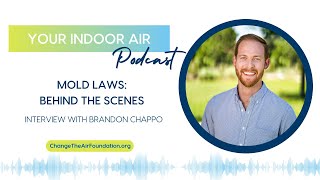
Brandon Chappo of the Change the Air Foundation discusses why mold regulation is broken in America. Illinois just passed a law requiring certified remediation and insurer liability. About 50% of North American homes have mold or dampness, costing $14 to $38 billion annually in asthma expenses alone.
Questions this video answers
Senate Bill 1087, the Mold Remediation Registration Act.
Seven states.
IICRC and NORMI (or other organizations the department deems adequate).
At least 50% of homes (about one in two houses).
About 14 pages.
Chapters
For some reason, mold and water damage has been left off the map in indoor air quality, you know, pollutants for needing certification or licensure requirements. This is not how we treat asbestos. This is not how we treat radon. This is not how we treat lead based paint abatement. And we're sitting here wondering, given the prevalence and scale of mold and water damage and the public health severity that it could potentiate, why hasn't this been dealt with in all these decades?
Hello. Hello, everyone. My name is Kendra Seymour and welcome back to your Indoor Air podcast. I'm joined today by Brandon Chapo, one of our co founders and our director of public policy. And today is a super exciting interview. I've been looking forward to this for a while because we're going to jump into the policy side of mold and water damage in our homes and buildings, and we have a huge victory that we can't wait to tell you about. But we're also going to dive into the scarier reality because the fact of the matter is, legislation regarding inspections and mold remediations, remediations in the United States is grossly inadequate. In fact, the person remediating your home, chances are, does not need to have any kind of special training or knowledge or, you know, licensing on how to effectively and safely remove mold and bacteria and water damage and all of those toxic things from your home. And believe me when I say that as a result, a lot of the practices that pass as remediation are ineffective, they're insufficient, and they're even unsafe, which puts you and your health and your home at risk. So we're going to kind, you know, dive into that a little bit more today. So that said, Brandon, thank you so much for taking time out of your schedule to chat.
You're so welcome, my friend. I'm really happy to be here.
Yeah, I. I've been looking forward to this for a while because, you know, change. The Air Foundation's been around for a couple years and there's so much behind the scenes stuff. Hundreds and hundreds of hours that go into the policy side and meeting with legislators and getting bills proposed that we kind of want to give people a peek behind the curtain. So I'm so glad you're here.
Absolutely. Looking forward to diving in.
Yeah. Now, before we jump in, I do need to take a moment to give a shout out to two of our corporate partners whose generosity help keep our resources free. That's MV Restoration and Home Safe Mold Inspectors of NWA and what I love about the companies we partner with is, is that they really have put their money where their mouth is, you know, for lack of a better way to phrase it. They not only, you know, are doing the hard work of improving people's health by improving their homes, they're also supporting organizations like ours so that we can continue to do the policy work. We can continue to provide those free resources. So thank you. Thank you so much to both of those companies. And if you want to learn more about them or if you're interested in becoming a corporate partner, you. You can head on over to our website @changethe air foundation.org and check out our corporate partner tab. All right, Brandon, so let's start with the good news, right? Everyone always likes to start with the good news. We had a huge victory recently in Illinois. Can you tell everyone about it and why it was so critical?
Absolutely. Yes, we did. Indeed. So back in a few weeks ago in August, the governor in Illinois signed Senate Bill 1087, the Mold Remediation Registration Act. And that bill solely came to the forefront because volunteers, passionate constituents, worked with Change the Air foundation, using their experiences, you know, being affected by living in mold and water damage to try to make an impact for constituents in their state. So what is the bill? The bill basically does a few huge things, we think. One, it ensures that all mold remediators in the state of Illinois have to have an active third party certification and also proof of financial liability, so they have to have insurance. And the other thing that it does is it mandates the department of Public Health in Illinois to have a mold information and awareness campaign to speak to the constituents of Illinois about the dangers of mold, mold exposure, and the potential ramifications of living in a water damaged building. We feel that those are two huge missing pieces in many states across the country. What was so beautiful about what happened in Illinois was not just the fact that the constituents came to us, used their voices, and we interfaced with their legislators about what had happened to them and their families, but the fact that Republicans and Democrats alike came together on this bill, joint sponsored it. So it was bipartisan. And it passed the Illinois assembly, the House and the Senate unanimously, not one vote against it. So, you know, people in the legislature there found huge merit in the issue in and of itself and wanted to do something about it. We understand that this is just a starting point of the many facets of, you know, the gaps in laws and regulations, but we felt it was a really impactful cornerstone that we can build off of there. So that that was a huge victory for our community and just wanted to thank our volunteers and the bill sponsors for leading on that and working alongside us and our ally organizations because it was a huge victory. We've been at this for many years, getting a lot of bill proposals up and off the ground. This was our first one that we spearheaded, that we got across the finish line. So our community should feel really happy and hopeful about that for the future.
Yeah, I mean, and I think the hard thing too is it's. It's hundreds and hundreds of hours and meetings and phone calls and follow ups and months and months. And every state has different, you know, timelines and requirements. And so it really was a team effort. I think what is shocking is this makes Illinois only be seventh state to require mold remediators to have a certification. And so that is shocking because. And if you've listened to any of our episodes before I talk about this, in many states, I could go to bed tonight and wake up tomorrow and call myself a mold remediator. That's alarming. And, you know, when you think about it, we require, you know, hairdressers to go through so many hours of training before they're allowed to color and dye your hair. We have some of these things in place. So can you tell us a little bit more about what the certifications look like? I know we worked with the icrc. Can you just give us a little bit more of a glimpse behind that aspect?
Yeah, absolutely. And you're spot on, Kendra. For some reason, mold and water damage has been left off the map in indoor air quality, you know, pollutants for meeting certification or licensure requirements. This is not how we treat asbestos. This is not how we treat radon. This is not how we treat lead based pain abatement. And we're sitting here wondering, given the prevalence and scale of mold and water damage and the public health severity that it could potentiate, why hasn't this been dealt with in all these decades? So basically what we wanted to ensure was that mold remediators. So in particular in Illinois, the bill basically states that they will have to have the IICRC certification. And also it could be NORMI or any other organization that the department deems is adequate. Having said that, there's only a few out there that we really feel does a good job for our constituents. So that's. That's basically what that component of the bill does. And what we're hoping to do is, is emulate that bill in states across the country. Because you're right, it's like the wild west out there. Only seven states in the country require a certification or licensure requirement for the person that's fixing your home from mold and water damage to be properly trained and certified. It's crazy. And so not only do we feel that in our constituents, but when we tell the legislators that, they're shocked because they already had assumed that that was in place. And I think that's the other thing that we're doing when we're in these meetings is that we're not just advocating for an issue, but we're educating on the issue. And I think that that goes such a long way for everybody involved in the conversation. So, yeah, that's just a little glimpse into that component. But we feel that that's a huge pillar of our policy reform initiative that we're going to be pushing for, for years to come. And hopefully we can, you know, once, once one state goes, goes, which Illinois was one, a lot of the legislators in other states look to that to see, okay, you know, other states are leading on this. This is a public need. This is a consumer protection mechanism. It absolutely is. This is common sense policy. Let's put it in place.
Yeah, and I think you hit the nail on the head because I was guilty of this. I, I think many people are. They assume that these people are trained properly. I know when we first moved into one of our homes and they found some mold and water damage in the basement, it was a contractor ripping it out. And literally we're all standing there. My realtor, the seller's realtor. This is when we were under contract for the home and nobody is wearing ppe. There's no containment, there's nothing. And I just assum that we wouldn't be standing there if it wasn't safe. They would tell us they were the professional. And I think too people, it's, it's really frustrating because you're like, all right, what does good, safe and effective mold remediation look like? And a lot of our government websites are very out of date. The information is scant if it's existent at all. And so that is another part of the piece is, you know, when you go to look for, well, what, what is the proper way to do this? It can be a struggle to find accurate information and not get upsold on magic sprays and fogs, potions or the easy fix. Or sometimes, you know, they'll say, well, it's less than 10 square feet. We can rip it out yourself. And we actually are going to have a whole mini class series on effective remediation practices coming in the fall of 2024. And I hope people will check that out because we kind of break down some of the common myths and misconceptions. So there is enough of my rant on that. But that's a good one. There is an interesting point that you brought up back when this MO law was going forward, and it had to do with language. And details matter when it comes to the law. And you always talk about shall versus May. So can you unpack that and how that language in a bill can make a difference between a bill that has some teeth and one that maybe doesn't?
Absolutely great point. Many people don't realize this. The devil is certainly in the details, as they say. To give you a little back context on that bill in Illinois, bill had passed in 2007 under the same name, the Mold Remediation Registration Act. The bill didn't have the component of the public awareness campaign through the Department of Public Health. So we added that in there, which was a huge component. But the bill basically had asked that the Department of Health have a program set up so that all mold remediators were certified in the state. So that was the other component. Here's the problem. When that bill passed in 2007, the language said that the department may establish that program to have certification requirements. They never did because again, a lot of these agencies don't have a lot of resources. They're dealing with funding issues. You know, people are coming in and out, et cetera. So it wasn't mandated. When we saw that we wanted to build off of that bill and basically mandate that they do this because of how important it was and the huge, you know, huge gap that there was in public health and consumer protection. And so we went in there and just changed that one word to shall from may and that mandated it. That one word could have that much power. Basically saying, now it's an option for you to do this or no, you will do this. And that's a big difference, everyone. And so it's important when we're looking at laws, and I know it's boring, I know eyes roll in the back of your head when you're doing it. But really it's important to think, oh, well, my state has this law in place, so I'm protected. Very important for you to go in and read what, what the language actually states, because you could be under a very different assumption of what the bill language intent actually was when it was passed. And so, and not just for this issue. I'm just saying for any issue, it's Very important. And so we do that in every state. Either there's nothing that we can go off of or if there's something that we want to hook onto, we go through and read it and make sure that you know that it's doing what it was intended to do. So yeah, very important point there that, that, that we were able to find and fix.
Yeah, that was a great catch. I'm going to give a little plug if you head on over to Change the air foundation.org and you head on over to our policy tab. We actually have an interactive US State map that we are super excited about. And do you want to tell people just real quickly how that works? Because you're going to want to check it out if you're listening, I promise.
Yeah, you will. It's, it's a pretty new feature. It's only been up for a few months now, but it's very unique. There's not a lot of websites that I'm aware of that actually has this. But if you go to our policy and advocacy tab on our website changethe air foundation.org and scroll down, you'll see a map of the United States that you can hover over. You can click on any of the states that you live in and three links will pop up. It'll be find your state legislators will be one. Find your federal legislators will be the second. And then of course look at your current indoor air quality laws in your state which we have provided by the Environmental Law Institute and we update that yearly as they update that so that, that you have the most up to date information. Also what you'll find on that map, you'll see some different colors, you'll see the states that we've got some action in and advocacy in of where we're trying to propose laws, which is 18 states right now. Also eight, six different states, we have eight bill proposals. You'll see those states in a different color. And then of course, Illinois is its own color because we are able to get a bill passed that we had gotten proposed along with the help of our volunteers and other allied organizations. It's a super unique function. I use it every time that a volunteer comes to me that says that they want to put their, you know, put their experience in front of legislators, use their voice to make an impact. And my first question is great, do you know who your state representatives are? And usually not all the time. Usually they're like, I'm not sure. Well, we have a great function for you to be able to find out now and so that's kind of what, what, what bird that a little bit was just because we kept running into that same issue where people just weren't familiar. So you know what we wanted to give you a resource to be able to find that out quickly. And so if you go there click on your state you can find that out quickly just by putting in your address and that's all and it'll pop up who your state representative or delegate is and then also your state senator.
Yeah. And you can even read the eight bills that we've helped to get proposed and the Illinois bill that passed. You can actually click in and read those. The states where that's applicable. We've linked to that as well. We really try to be your one stop shop for all things indoor air quality. Now I don't know if you guys caught something that Brandon said. He said that we are working in 18 states. So I want to just lay the reality out there for everyone listening. You know Brandon is, he's a one man shop. He actually has a full time day job and, and works on the side for us probably almost full time. Even though you are on paper considered a part time employee. And I, I run all the other stuff in, in the foundation as a volunteer. We are a small shop who is aiming to do bid work. And so if you want to see momentum like this continue laws changing that protect people, I would encourage you to head on over to our website. Change the foundation.org please consider donating. We can't do this work without you. I 100 mean it. There is only so much we can do on our own and it really is going to take all of us, your $20, your $10, whatever you have, we promise goes a long way to making a big difference. So I, I did just want to give a, a quick shout out because I think sometimes people don't realize that you and me and the rest of us involved in the foundation are, are here because we see how important that is. Most of us involved in personally impacted and we don't want what happened to us to happen to you. So please consider helping us out. It goes a long way. So one of the other things Brandon that I think it's helpful to kind of unpack for people is when you're going into a meeting what are. We have three things that we are advocating for right now. Not that there aren't more, you know, areas that need to be addressed when it comes to this but can you kind of unpack quickly for us what the foundation advocates for at the Policy level.
Absolutely. Yeah. So on paper, we, you know, our goals, you know, when we're getting these bills proposed and hopefully passed, three things mainly right now, it's, it's public health and awareness campaigns through state departments of health to discuss the dangers of mold and mold exposure and why it's important to get a proper assessment and why it's important to get proper remediation work done. So that's, that's one aspect, of course, that was one component of the Illinois bill. And then another would be getting certification or licensure requirements for inspectors or remediators across the country. Again, I'll state this if anybody missed it, only seven states in the United States require remediators to have a license or certification, any requirements. The rest of them, they could wake up tomorrow, start their own LLC and start doing business. It's the wild west out there. So we have to change that. And then, of course, the third is always pushing for more appropriations and funding for further research and just more additional resources for people in the community that really should be coming from the state, you know, through the taxpayer. But we think that that's great ROI for folks given, given the scale of this. And so those are our three main that. That we advocate for. But again, when we're in these meetings, just like I said earlier, and we're educating, we're talking about the gaps in the insurance coverage, we're talking about the fact that disclosures are, you know, vague or very ambiguous or very weak and why that's important. You know, we're talking about how the building codes are inadequate in many cases. And you know, as an example, like our builders properly handling all the building materials on these job sites with these quick turnarounds and these schedules. Right. This is all a part of the conversation that we're having in these offices. So I don't want people to think that, that that's not an issue that we're going to be fighting for, that hopefully in future bills we're going to be advocating for. But right now we feel like those three main points that I mentioned earlier, again, public health and awareness campaigns, state departments of health, certification, licensure requirements, and increased funding and appropriations for research and other resources is going to move the needle and set us up. We're a great baseline to be able to do other work.
Yeah. I think that something that people will say, well, it, you know, the bills don't go far enough. And do you. Can you tell them quickly about. Brandon, a little backstory first got involved in this just as a constituent in Ohio and was impacted. And so he worked to get an Ohio bill proposed. And you, you know, tell. Tell them a little bit about that perfect bill you wrote that was never going to get passed.
Absolutely.
Just do everything all at once in a single bill.
Yeah. I mean, in a utopia, we could put everything in a bill and it would pass seamlessly and we would all be happy and protected and healthy. Right. When I got sick in Ohio, this was before Change the Air foundation was even a thing. I, you know, this is how I got started in this policy and advocacy space is I went as a constituent to my representative and we got a bill up and running there to deal with mold and water damage. And when the representative asked me to help him write the bill because, you know, he had other 130,000 other constituents and he has other issues he was working on. So that while this was an important issue, he had other important issues to work on. I said, sure. And so I was thinking of all different facets and angles of this problem. Let's. Let's go after, you know, you know, you know, inspections and remediations need to be certified or licensed and public health awareness and insurance coverage. And I had a beautiful bill. And when I presented that to the representative, he said, brandon, this is a great bill. He said, I'd vote for this bill. He said, there's one problem. I said, yeah, what's that? He said, this thing will never pass. He said it just like that. I said, what? He said, yeah. He said. I said, but it's a great bill. He said, yeah, there's way too many components in this bill. And so that was good for me to understand, because understanding this, when a bill gets proposed, it has to move through a committee. If you have too many different components of a bill that has overlap with other committees, it's going to log down that bill, which already has a steep hill and mountain to climb to get past, which is only going to reduce its chances of being passed in general. And again, only 10 to 20% of all state bill proposals become law. That's it.
Yeah, the stats are not good.
The stats aren't good to begin with. And so, you know, while we do want to end this issue and this problem as best as we can yesterday, it's not a good strategy in our minds at Change the Air foundation to go into something already knowing that we're set up to fail. Because you know what? People can't afford this to continue to be pushed down the road any further. We have to start to make progress in spaces and areas that we can and build off of that success so that we can make a long term impact. And that's, that's the strategy. So again I, and I talk to people about this in these meetings. I said, I understand where you're coming from. I was severely affected by this. My life was offended from this and I want to fix this yesterday. But we have to go about this the right way strategically. And I think we are so far always room for improvements, of course, and we're learning things every day. But we feel that that was a really important lesson that I received from the representative early on in my journey and it's beginning to bear some fruit.
Yeah, yeah, no, and I think that's really helpful for people to think about. Many of us, other than sitting through like our 8th grade civics class, probably forget some of the details and unless you work, you know, for the government or in politics, it may be a little further from your mind. So that's super helpful. I think the other thing I just want to mention too is we at the foundation, certifications are kind of your starting point, right. They're kind of the minimal requirements that we tell people to look for. Because the reality is, and I know some of you are out there thinking, well, someone could choose to ignore the law. And while that's true, when it comes to something that impacts people's safety and health as a society, we put laws in place that benefit the, the good of everyone, right? So just like before you drive a car, you know, before my kids turn 16, they're going to have to go through so many months of driver's ed and training and pass a written test and a physical test. That doesn't mean that when they go out on the road, they're not going to get into a car accident. You know, I will tell them the same thing my parents told me. Yes, I want you to be knowledgeable and you need to be on the lookout for people who are distracted drivers. So if you head on over to changethe air foundation.org and you go to our start here section under our resource tab, we take you through how to find a good remediator, how to find a good inspector. It starts with certifications, but then we go further. And one way we do that is by providing you with the tips and resources, the questions to ask, the answers to listen for. When you're vetting these companies, it is so, so important that you do this extra step. And we have really laid it out, I think beautifully, in a user friendly, consumer friendly language for you. So please check that out. And keep in mind that yes, certifications are important, but need to take that additional step and we've tried to provide that for you as well. I do want to talk about if, if we can just for a moment. We recently, and I shouldn't say recently because it's been about a year in the making, released kind of a game changing policy brief. And if you've been following us for a while, we were fundraising for this. Can you tell us a little bit about this? I know we're going to do a ton of stuff upcoming on it, but give us a kind of an overview of what this policy brief looked like, why it mattered, and kind of some of the insights that came as a result.
Yeah, we're super excited to release this to the public. It's a national policy brief. And what that is for people that don't understand is, you know, going into these legislators offices and staffers and they want to look at data from this issue. There really wasn't anything that existed out there for residential homes in America that talked about dampness and mold. Not just looking at the health ramifications of this, but what are the costs that are already known and associated with this that we could put into one package for every office so that they could be understanding what the literature states backing what our testimony from our constituents and from our organizations were telling them what was happening out in the real world. This basically came out of a couple years ago. We went to Washington, D.C. and we wanted to advocate for mold and water damage. Actually, it was in 2023, not a couple years ago. I'm sorry. And it was 2023, the healthy at Home act, which we helped get up with Representative Joe Courtney, Joyce Beatty and Senator Blumenthal to fix the toxic mold issue in HUD housing. But it was also going to put forward and asking other agencies to come together to look at the health ramifications of this on a deeper level so that we could, then the agencies could recommend standards for fixing this, for inspecting remediations, building codes, et cetera. When we were having conversations in those offices, we had, we met with about 30 congressional offices over like a half a week. Every one of those offices found merit in what we were promoting. Right. They, they, they knew. So in other words, nobody was promoed, which was great to hear because everybody knew that it was a public health problem. A lot of the feedback we were getting from those conversations were, how much is this actually costing us? How wide scale is this? And of course, at the time, I didn't have, you know, while there's literature out there here and there that states some of that, we didn't have one package that we could refer them to. And the Republicans in general, they're very much on the heels of wanting data driven policy to make decisions. And so out of those meetings came the idea at the foundation that we really need to work with a few consulting firms to put that policy brief, that package together from what is known in the literature so that we can have a starting point, a spark to have these conversations. And so, yeah, we're about to release this, but basically what it is, is it again, it's getting all the literature that's out there, all the data, and putting it into a place where we can then put it in front of public health officials, legislators and researchers to move them on policies. Now, what we found out of that was pretty eye opening so far. And again, people can read it. It's about 14 pages long, but we think it's very thorough. It's good. We worked very hard on this. A couple things. At a minimum, what was found is that if we can reduce the prevalence of indoor mold and dampness, we can save again, at a minimum, tens of billions of dollars in health care and product lost productivity every year. At a minimum, it's a huge problem. We also found from the literature that at least 50% of homes in North America have mold and water damage and dampness. One of two houses. Some studies say that those percentages are even higher prevalence from that. Again, it basically goes over the gaps in laws right now too. Right. So how many states have certification requirements? Again, we've said this before, licensure. 7. How many states have disclosures of different varying levels? Okay, how many states have zero laws when it comes to mold and water damage? That we found there was 10 in the United States. Other things that they were looking at was updating the economic impact data from dampus and mold. Things like asthma, which has been written largely about that was another huge update. Just to speak on that for a moment, in 2007, the EPA had done a study on dampus and mold and what the costs were attributable to asthma. For that. They found at the time that 20% of all US asthma cases were directly attributable to mold and dampness indoors. That costs, they figured at the time, $3.5 billion annually. Okay. When we got with Industrial Economics and Raw Strategic, the two firms that we worked on this with, they crunched the numbers of what that would look like today, given the prevalence in homes, that number now isn't three and a half billion annually. That's now anywhere between 14 and 38 billion, almost $40 billion of costs, lost productivity, health care costs, you name it. Because of the mold and water damage epidemic that we have in this country. Just asthma alone. We're not talking about any of the other issues that our, our community suffers from, myself included. The neurological associations, right. The immune suppression, you know, the carcinogenic properties of this. That hasn't been done yet for us to be able to put numbers to. But we're hoping that with these massive numbers stating and these statistics that that stops legislators and staffers in their tracks, researchers, public health officials, to say we've already got a big problem with this as it is and we only know this much about the problem. We need to actually do the research to start to take care of this. And not just the research, but we have to start fixing our existing building stack and start fixing how we're building new building stock so that this isn't a problem for the public and you know, basically a weight on the taxpayers and people that are suffering from this every year when it's a lot of times preventable. I mean, most times it's preventable. So it's just something that we wanted to put in front of folks, you know, in, in, in D.C. and at the state level so that they could understand what the economic costs, aside known economic costs are, aside from the health impact costs. And what we learned from that was, you know, basically there's been other indoor air pollutant campaigns that have been done before, radon, asbestos, lead, that there's been some positive impacts from some of those campaigns. And we've learned that we can lean on some of those and translate it to mold and water damage without having to recreate the wheel on some of this stuff. And so Again, it's a 14 page document. It's, you know, it's called a policy brief, but we're looking at residential homes in the United States, looking at health and economic impact data, you know, to give people actionable steps that they can take today to be able to fix this long term in law.
Yeah. And you say 14 pages. It's got lots of great graphics and bullet points. It's easy read, it's, it's, it's super fascinating. And I think what really is so exciting, you know, is that there really hasn't been anything like this published and certainly not with the most up to date research because thousands of hours went in the titicians that were involved, to run these numbers and to comb through the research really was impressive. And, and just a thank you to everyone who has supported us, who's donated because you all make this possible. And we'll link to this. It's over on our policy page. You can see the brief for yourself. You can flip through it, you can download it. And I think it's going to help us, you know, continue to change the way we address mold and water damage in this country and even worldwide. There's a lot of implications, I think, you know, regardless of where you live, if you're not in the US A lot of takeaways that I think are relevant, you know, anywhere.
Yeah, it's going to be. We, we really think it's going to be the spark that starts to move people on this on a national scale. And so we're very excited to get it out there. And thank you to our supporters and our donors who made this possible and also all the subject matter experts and indoor air quality advisors that, you know, worked alongside of us and of course, the consulting firms on this to get this done. So, y', all, you'll be hearing very soon about this. We'll have a lot of.
That's a great teaser, though. So we're excited. Yeah. Stay tuned, everyone, but catch your sneak peek now because that is up. I know we're, we're out of time. So, Brandon, Illinois passed. Yay. What are you working on now? Where are we going as a foundation from the policy side of things?
Yeah. So we're doing work as we speak. You know, the ball never stops rolling. We've got volunteers reaching out to US Weekly basically saying that they want to get bills up and running in their state. What we're going to try to do is absolutely build off of that momentum that Illinois gave to us. You know, a lot of lawmakers love always ask the question, well, has any other bills passed? Well, before we could say, well, we've gotten a lot of bill proposals up and running and they're working their way through committee, but we hadn't had one that we could lean on recently that we said that got across the finish line, bipartisan, unanimous. And so we're going to absolutely use that to our advantage and start to present that framework in front of lawmakers in many states across the country to again, be that cornerstone to build off of. So right now we're working with, we've got volunteers in Colorado, very passionate volunteers in Colorado and Pennsylvania and a few other states that we're going to be trying to get these bill proposals up and running for those issues that I was talking about. And I want people to remember too, that every state looks a little bit different because of the existing law or lack thereof that's in place, formal. So for instance, in a state like Illinois, well, we wouldn't be going back, you know, trying to get certification requirements for remediators up and running because now that's taken care of. Right. So other states that have licensure, we wouldn't be advocating for necessarily. We would be advocating for some of those other issues. Right. Increased funding, public health and awareness campaigns. Maybe we could throw in disclosures into the discussion. So every state, we have to look at what the existing laws are in place. And so it makes, you know, not every bill is going to look exactly the same, I guess, is what I'm saying. So that's important for people to know too. So, yeah, we, we're just going to continue to build off of Illinois and hopefully to replicate that across the country. Yeah.
Well, thank you, Brandon, so much for being here and bringing your passion for the policy side of things and all work that you're doing.
Oh my gosh, it's an absolute privilege. It's an honor, really. Truly. I'm so grateful to be a part of the organization and working alongside volunteers. I'm just, absolutely, just so impressed by their want of using their situations and their experiences to make a difference for others. Really, it's very heartwarming. So thank you for having me and be on the lookout for more updates in the near future.
Yeah. And if you don't want to miss any of those updates, I encourage you, if you haven't already, head on over to changetheira foundation.org and sign up for our newsletter. It's a great way to get actionable tips and solutions and guides and free resources and interviews directly to your inbox. I promise. We keep it short and sweet. We know you're busy and at the end of the day I just want you all to know we are here for you. Our resources will continue to be free. Our work is for the benefit of you and your family. And so yeah, definitely help us out by, you know, signing up for our newsletter, liking and sharing and following these posts. And if you feel inclined, please consider making a donation. It's super easy. Just click on that Donate now button on our website. Thank you everyone. We will see you next time.









