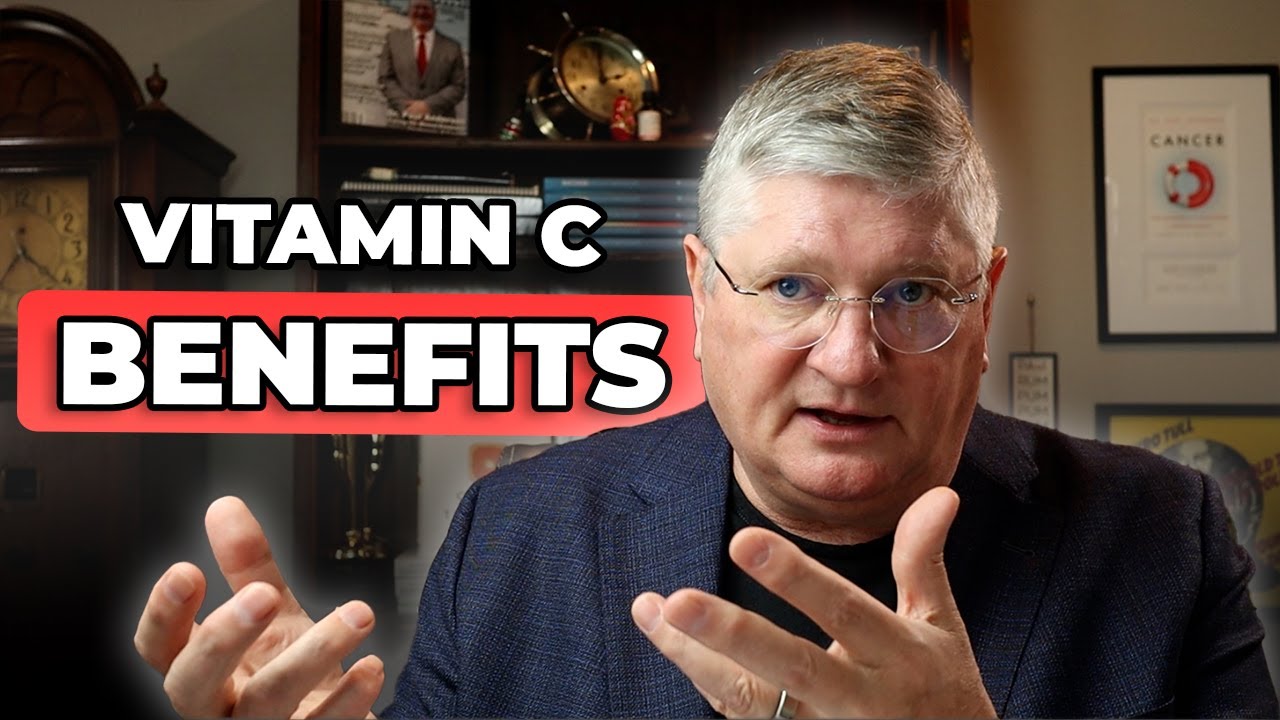
In this video Dr. Ray (also referred to as Dr. A) explains why vitamin C is sometimes administered intravenously rather than taken orally. He outlines how vitamin C is absorbed when eaten—its water‑soluble nature, the role of food matrices, and the limited amount the gut can tolerate before causing diarrhea. Because the body stores only minimal vitamin C, levels can drop during infection, trauma, or other stressors, making oral intake insufficient for acute needs. Intravenous (IV) delivery bypasses the digestive tract, allowing much higher doses that can achieve either moderate (5–20 g) or high‑dose oxidative (>25 g) concentrations. Moderate doses support cell‑mediated immunity and are used in chronic infections, mast‑cell disorders, and autoimmune conditions. High‑dose oxidative therapy can generate pro‑oxidant effects that may damage catalase‑deficient cancer cells and is sometimes combined with cancer treatments. The speaker stresses that IV vitamin C is a prescription drug, requiring a licensed provider trained in sterile nutrient infusion, and that safety and regulatory compliance are essential. The video concludes by summarizing the three main reasons for IV vitamin C: exceeding oral limits, achieving oxidative therapy, and ensuring professional administration.
Chapters
If you ate, you know, 5,000 or 10,000 or 25,000 milligrams, intravenous is the way to go. Because if it goes in IV, it doesn't affect your digestive system. So that's another good thing there. Hi, I'm Dr. Ray. Welcome to my YouTube channel where we talk about medicine, health, all things integrative, and many, many other things. We get a lot of questions on our individual YouTube videos, podcasts, but we also get questions on some of our playlists. So we've got playlists on things like glutathione, and mast cell disorders and long COVID, all sorts of things. Vitamin C is another real popular topic on this particular channel. So this comes from questions around what would be the benefit to getting intravenously administered vitamin C. And we saw, and one of the questions said, we saw a prior video from a long time ago where you said there was a difference between low dose and high dose, and What we really want to look at is why would I get vitamin C in an intravenous method put into the vein and into my blood as opposed to eating it in food or taking it as a supplement, basically. So let's break that down here. The first thing we want to talk about is how vitamin C is handled by the body. So when I eat a food with vitamin C in it, a lot of fruits and vegetables that have vitamin C, et cetera, the vitamin C is going to go in and it's water soluble. It'll be digested and then absorbed. And And depending on the food structure that it's in, it may have some other helpers with it. It might come with some bioflavonoid and some other thing. But vitamin C, technically the one that we look at as the isolate, is ascorbate or ascorbic acid. And that exists in a couple of chemical forms. So we do want to remember that vitamin C in the food form comes in a bigger structure with ascorbate and then potentially other molecules around it. If you look at the work of Dr. Szent-Györgyi, there's a lot of writing about this. So we do want to give some props to the whole food form. If you're going to be injecting it or infusing it, you're going to be using the isolate, which is ascorbate of one form or another. Now, the next thing you want to think of is we can eat it. Why would we put it in the vein? Well, number one, it's possible that it can be used under stressful circumstances. So there is some research, for example, we've done videos on this with people in hospitals, say, you know, with acute COVID illness or other things. And they're giving them some vitamin C throughout the day in their IV. And there's reasons for doing that that have to do with things we talked about in other videos. So the reason for that is that when we're under stress and we say we're fighting an infection or healing from a wound or a trauma or something, our vitamin C levels, because we don't store a lot of vitamin C in the body, we store minuscule amounts, vitamin C levels go down under trauma, under inflammation, et cetera. So because we have to eat it, if we're sick, especially if we're in the hospital, there might be reasons to put some into the body as we go along, because we can't compensate with what the need that has risen due to the trauma or the illness and the decrease in the amount we can take orally usually during those stressful times. So that might be one reason for intravenous administration. Another reason would be that there's a certain limit to how much vitamin C you can absorb orally. Now, there's a big range of limits, but one of the things that will cap out everybody at some point is if you get enough vitamin C, you'll get loose bowels and maybe have diarrhea, et cetera. It's not terrifically dangerous, But it's not what you're really looking for to have diarrhea. So your body will only absorb a certain amount. For some people, and a lot of this has to do with inflammation and disease state, but also tolerance to vitamin C. For some people, they'll just absorb a few hundred milligrams in a day. Other people absorb thousands of milligrams during a day. And that all depends on a large number of things orally. But let's say we want to get enough in you. We don't want to worry about your digestive tract getting into the act. What's another way? It would be to go in through either intravenous A long time ago, it was not unheard of to do intramuscular injections with vitamin C. They're not very comfortable. I don't really recommend them to anybody. We used to have mixtures for really sick people that are a combination of B vitamins and vitamin C that you'd mix together and give as an intramuscular, really kind of a not too comfortable slash painful injection. So if it goes into the vein, you have the one, you know, poke into the vein and then you're good to go. But why would I do that? Well, number one, maybe you're too sick to take in Too much orally. Number 2, maybe I want to put more in you than your gut could handle. So if I, if you ate, you know, 5,000 or 10,000 or 25,000 milligrams, that might be more than your gut can handle, but I want it in you. Intravenous is the way to go because if it goes in IV, it doesn't affect your digestive system. So that's another good thing there. The other thing is, what if I want to push the higher-end activities of vitamin C that we call oxidative? And we've got other videos on high versus low dose, but Basically, oxidative things start somewhere 25, 30 grams, go higher. So 25 grams is 25,000 milligrams so that they can go up from there. And the oxidative effects we might use in people with infection, sometimes to support cancer therapies, other things of that nature. Well, you can't eat enough vitamin C orally no matter what your tolerance is to create an oxidative effect. And so when we're needing an oxidative effect, we have to get it in not through the gut, we have to get in through the vein. And usually it's going to be above 25. Grams. So it's going to be quite a high amount. Now, beyond infections, why might I want oxidative effect? Well, oxidative effect of different IV-type therapies, but high-dose vitamin C in this case, can make cancer cells, for example, in a more weakened state. Now, this is not all cancer cells, but some cancer cells lack an enzyme that's common to most human cells, many human cells, called catalase. And this is not universal to cancer cells, but there's certain types of cancer cells that are catalase deficient. And so if I build up a lot of vitamin C and I have a pro-oxidant effect, they don't have the enzymes to break the oxidation down and it actually injures the cancer cell. And what that's doing is less directly anti-cancer and more aiming your immune system at that particular area of cancer, cuz you want to get your immune system involved. So that's a lot of times what that's doing. But the other thing, which is why sometimes we'll use a mid-range dose in chronic infectious patients, mast cell patients, autoimmune patients, et cetera. So it might be 5 grams or 10 or 15 or 20, you know, somewhere mid-range, is that your oxidative reductive system not only uses a lot of vitamin C, but also the cell-mediated immunity portion of your immune system. So the T cells, T like Thomas, you've heard of B cells and T cells. Well, CMI, cell-mediated immunity, are the T cells. And they break down into T helper categories and T regulatory categories, and then actually cytotoxic or killer T's, as they sometimes are called. Well, balancing that family of T cells behind the scenes chews up a lot of antioxidant capacity. And so a moderate dose, like I said, 5, 10 grams, maybe a little bit more with some other cofactors, will often support the balancing of cell-mediated immunity, which can be helpful in most immunologic challenges, whether they're infectious, autoimmune, something triggered externally, and then having an internal manifestation like mast cell activation syndrome or mast cell disorders, and on and on. So those are other reasons we may do it. So while there are many, many reasons you might need to do intravenous vitamin C, or you might want to explore it, you want to just keep the basics in mind. Number 1, the IV form can exceed what you can take in orally. Number 2, if you are looking for an oxidative therapy, and this would be in combination with a healthcare provider that does this, then the only way to get an oxidative therapy from vitamin C would be to do it intravenously. And then number 3, we want to make sure that we're working, if it's intravenous, with healthcare provider that is trained in intravenous nutrient therapy, specifically IV vitamin C. Their license covers it, whatever jurisdiction you're in. They're following all of the rules for sterile products and intravenous nutrients. Any intravenous nutrient, by the way, is a drug. It's classified as a prescription item. And so it has to be on the order of an administration of a healthcare provider. So that's just why we want to do our due diligence in whomever we work with for this. All right. I'm Dr. A. I hope this answered the these questions for this time around about vitamin C and why we might do it in an intravenous format. I'll see you all on the next video.