What YOU NEED TO KNOW About Methylene Blue | Fascinating Health Benefits
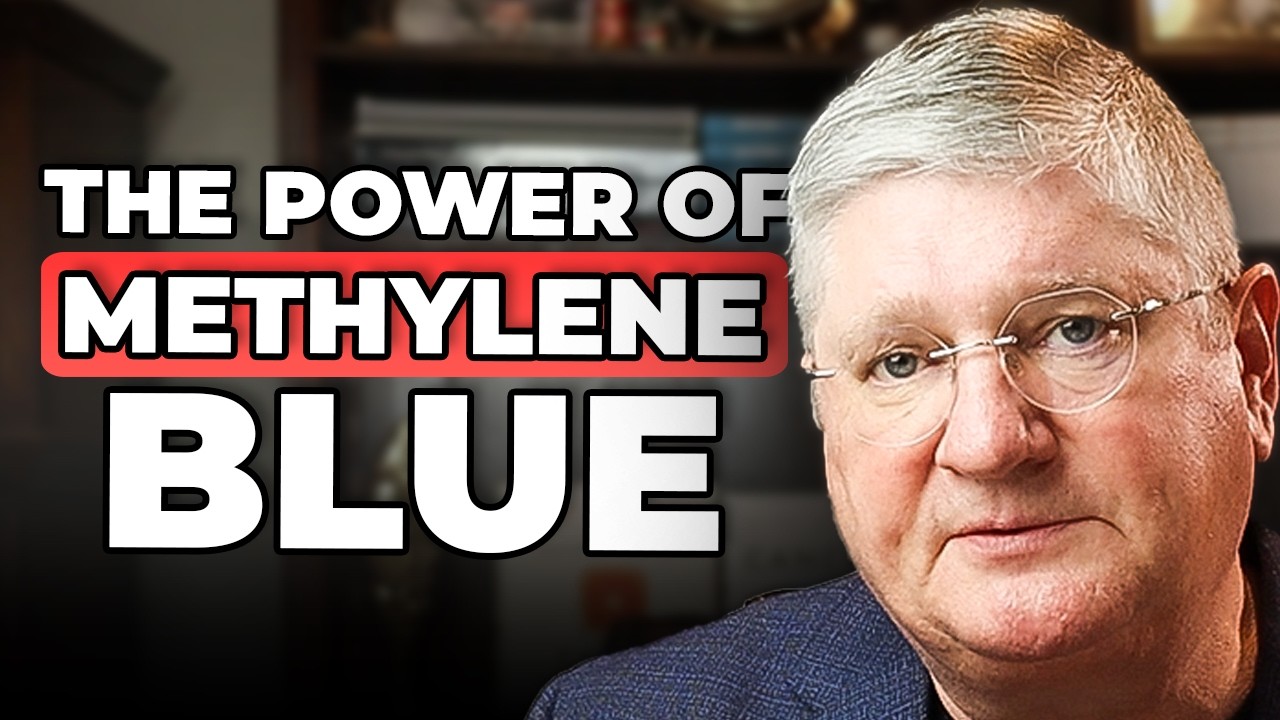
Dr. A, an integrative physician with 30 years of experience, explains methylene blue as a blue dye that boosts ATP production and acts as an antioxidant. Typical doses range from 5 to 50 mg, but pharmaceutical-grade quality matters: industrial versions contain heavy-metal contaminants. Side effects include overstimulation, sleep disruption, and blue-tinted urine and teeth.
Chapters
Could we protect such sensitive organs like the kidneys from certain types of chemotherapies that are going to damage potentially the DNA inside the renal cells? And what has been shown is that because of the metabolic effects of methylene blue, it has a potential to be— Hey, I'm Dr. A. Welcome to my YouTube channel. I've been involved in teaching and researching in the integrative and naturopathic medical community for 30 years now, and I've been seeing patients during that time who have cancer and chronic illness, and I use this channel to answer questions that people have. We've done a few videos about methylene blue. After doing a few of those videos, we got some questions that I thought I'd try and tidy up here. So the first thing that we want to get to is, what is it? It has blue in its name, and it's actually a blue substance. It can be used in industry and commercially as a dye, as a tracer, et cetera. It can, in a more purified form, be used medically. It is used medically in emergency medicine for methemoglobinemia, which is a problem where you have a type of hemoglobin which won't let go of your oxygen very easily. But also it's used in medicine during surgery to see if there are leaks going on during surgery. But also it's used during things like neurosurgery to help protect the brain, protect the mitochondria and the energy-producing parts, because obviously neurosurgery can be traumatizing to the nervous system tissues. It's become much more popular in common use in non-surgical, non-emergency interventions to be used as an agent that will help people with a number of different things that aren't surgeries or methemoglobin problems. So one area is to help with mitochondrial repair, mitochondrial energy production, etc. We kind of look at it like an accessory mitochondrial primer. Methylene blue is an indirect mitochondrial primer where instead of coming at the beginning of oxidative phosphorylation. It comes in on the side and activates the center of the respiratory chain, helping to make more energy through ATP production. The other thing that methylene blue can do is work kind of as an antioxidant substance or a redox molecule. That's one of its big things that it does inside the body. And then there have been some data looking at, could we protect such sensitive organs like the kidneys from certain types of chemotherapies that are going to damage potentially the DNA inside the renal cells. And what has been shown is that because of the metabolic effects of methylene blue, it has a potential to be cell protective and DNA protective, even in the presence of something that's trying to do DNA harm, like certain chemotherapies. So there's all sorts of things that it does. There's all sorts of benefits, et cetera. Now, as I mentioned, it, it's a drug and technically in the United States, it should only be available through pharmaceutical pipelines, but there's a lot of methylene blue that's sold online. So if you are buying it not from a pharmacy that's going to do QC testing, the thing you need to know about methylene blue as a base product is the reason that we don't use the industrial-grade methylene blue or the lab-grade methylene blue for medicine and use in humans is it can be contaminated with a lot of heavy metals, and those obviously are not good for you. So whoever is making it, you want to make sure you look at their information on their website, look for quality control information, and do Do they test for heavy metals and what's the level of heavy metals present? Now, things like methylene blue, there will never be zero heavy metals, but what you want is somebody who's looked at it and they have a cutoff before they pass it. I talked to a pharmacist at a compounding pharmacy that's a 503 class FDA certified type of a pharmacy, but they do custom compounding for you in particular. And this pharmacist was telling me that they will often go through 3 batches of methylene blue raw material to get one batch that passes their heavy metal quality control and testing. So that's just a big thing to know. The other thing is, is that sometimes online you'll see USP, United States Pharmacopeia grade, but down below or on the bottle, if you're looking at it, you'll find out it's actually something called reagent grade, which is not USP pharmaceutical grade. And so that's a very important thing. But keep in mind the experience of the pharmacies where even USP grade, if you don't have QC for heavy metals, that doesn't mean it's still good to use. So just buyer Beware, be careful what you get online. Quick plug here, if you're a healthcare practitioner working with patients with these issues, I have a CE website and I do webinars on this topic and others. So we're gonna put a link in the description below to the CE website link and the particular webinar of interest. Thank you. Now, when you're thinking of doses, the big things to consider are what would the side effects I'd wanna watch out for be if you're taking it? Like there's a lot of 'em that are in liquid drops and you put it in Water and drink it. You'll notice that your teeth can get a blue cast that will come off when you brush your teeth, but that does happen. Obviously it's a dye that goes through you. So in your toilet, you may see something between yellow, green, and blue coming out after someone who's taken methylene blue urinates. And that sometimes can take a little bit of work to clean off of the toilet bowl. So keep that in mind. Well, that's not really a side effect, but what does it do metabolically that you might notice? Maybe you're looking for part of this, but too much would be uncomfortable. That would be excessive amount of Mitochondrial stimulation. So what does that feel like? That feels like maybe you took a whole lot of a stimulant, and so you can feel shaky, you can have trouble sleeping, you can be jittery, you can sometimes be you know a little bit angry or something like that. That is a sign you're probably getting either too much methylene blue or too much too soon. Some people have to work their way into it. Now, as far as oral use, there's also some manufacturers who do quality control that make tablets, so you would swallow them. Those are fine. It absorbs. Really pretty well from the GI tract. And so then you don't have the liquid in your mouth, but it's all going to get to the same place and do the same things. As far as positive things you might be looking for with it, if you're doing it like in those studies they do for cell protection from DNA damage, like in the kidneys, you aren't going to feel that a lot. That's going to be like, you know, you do that and the chemotherapy, and then later when they check your kidney function, that's what you're going to notice. But a lot of people like where we use it in long COVID or post-viral illness or fatiguing illnesses, They will titrate to a place where they feel like their energy is returning. That's because it's helping the mitochondria. So if that is what you're doing, then that's fine. Just know that if you get shaky or overcaffeinated feeling, talk to your provider and back off on the dose. Now, doses are really broad because of individualized digestion and absorption and the product that you're using. There are some products that are extremely concentrated and they'll deliver way more milliliters than another product will. So you do have to watch out for that. Even if it's gone through good quality control, not each strength is going to be the same, especially in the liquid products. But I have seen people have good responses to 5 to 10 milligrams. I've seen other people where it took 50 milligrams and other people where it took higher. But generally speaking, because of this mitochondrial effect, we tend to start low and then work up as we need it. So methylene blue can be extremely helpful. For cell protection. It can help in your redox, the antioxidant system. It can really help with mitochondria. There's a lot of newer research around— your brain has a lot of mitochondria, so regeneration and helping people with neurologically degenerating conditions. It's also used sometimes in what we call neuroaffective issues around maybe ADHD, ADD, et cetera. Some people it's great, some people it's not for that. And then also The rest of your body needs to produce energy too. So if you're just in a low energy state, sometimes that's why it's used as well. All right. Well, I hope this answers those lingering questions on the methylene blue talk we did. I'm Dr. A. Thanks for watching the YouTube. If you haven't, consider subscribing, like, share, do the notification bell. We love all the new subscribers. We love all of our original subscribers and the, the channel's growing. I'll see y'all on the next video.









