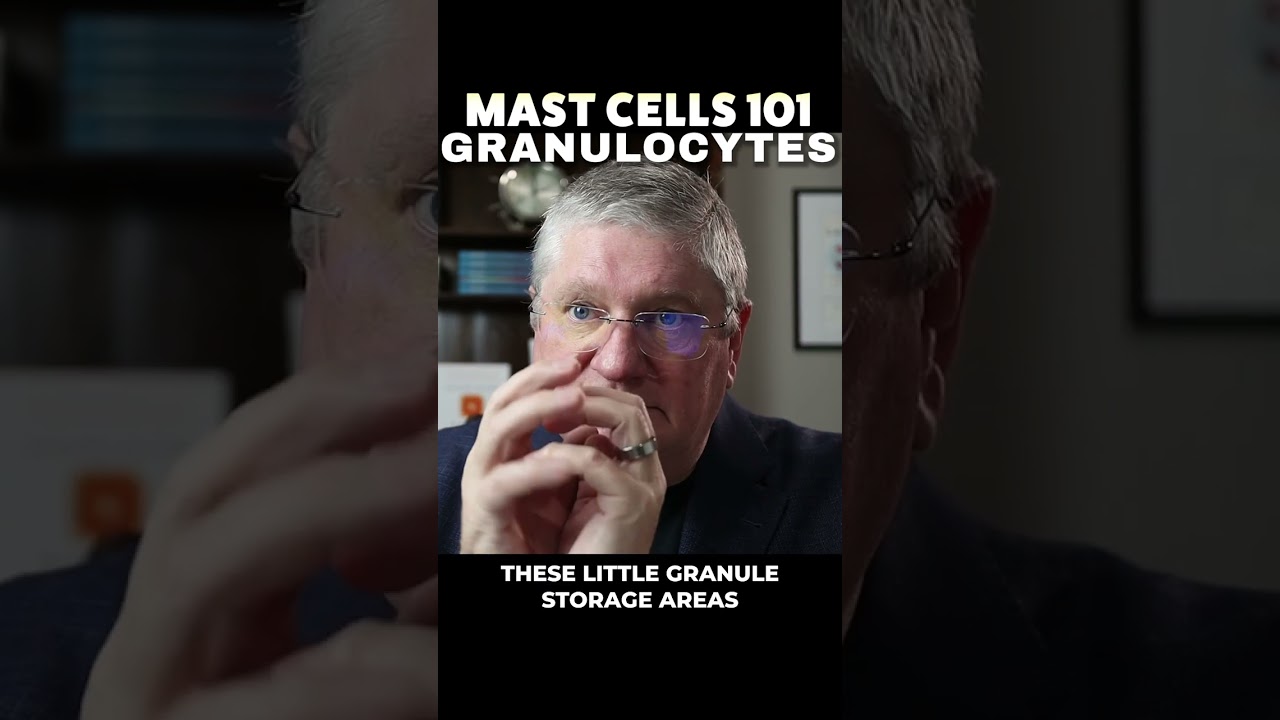
You'd die without these cells.

4 Feb 2023 · 2 min
1:34

In this educational monologue, the speaker explains the historical origin of the term "granular cells" based on microscopic observations of white blood cells with visible granules. The discussion distinguishes granulocytes (cells with granules) from agranulocytes (without granules) and highlights mast cells as a specific type of granular immune cell. The core function of granules is described as storage depots for pre‑made chemical mediators that can be rapidly released when the cell is activated, typically by cytokine signaling. Upon appropriate immune stimulation, mast cells undergo degranulation, ejecting these stored chemicals. The released mediators serve multiple roles: they directly contribute to the immune response, attract additional immune cells, increase capillary permeability, and facilitate the movement of larger white blood cells into tissues, thereby promoting local inflammation and tissue access.


Chapters

More from Matt

6:58
youtube.com

L-Theanine VS. L-Tyrosine | Which is Better for Focus and Stress?

9mo ago
0:49
youtube.com

Amino Acid Transporters: The Reason Timing Matters

9mo ago
9:56
youtube.com

What You NEED to KNOW About L-Tyrosine for Focus and Mood

9mo ago
0:43
youtube.com

Why Phenylalanine May Lower Pain Scores (Not “Cure” Pain)

9mo ago
8:35
youtube.com

The Incredible Impacts of Phenylalanine on Focus and Mood

9mo ago
0:31
youtube.com

Doctor Explains How Tryptophan Supports Low-Mood States

9mo ago
9:32
youtube.com

The Incredible Impacts of Tryptophan on Mood and Sleep

10mo ago
0:51
youtube.com

What Happens to Your Heart When Taurine Drops

10mo ago
8:43
youtube.com

What Happens to Your Heart When You Use Taurine?

10mo ago
0:42
youtube.com

How Nitric Oxide and cGMP Relax Your Blood Vessels

10mo ago
0:35
youtube.com

What Happens When You Take Arginine as a Supplement

10mo ago
See all content


