Saturday Morning Coffee With Matt
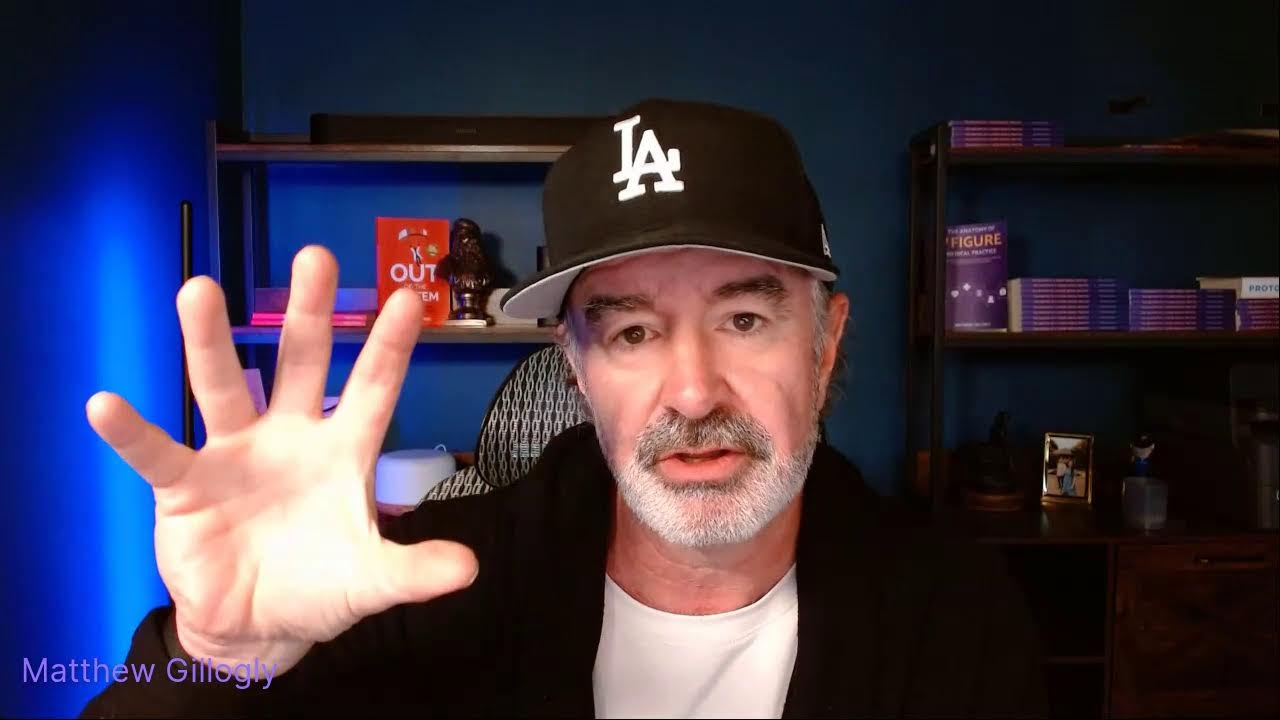
In this livestream, Neo Cantomayor (Matt, Chief Maverick) teaches clinicians how to price cash‑based medical services effectively. He argues that pricing is a psychological message and that doctors commonly make three critical errors: (1) assuming patients want all services covered by insurance, despite rising out‑of‑pocket costs and widespread dissatisfaction with insurers; (2) trying to match or undercut competitors’ prices, which ignores the value of a practice’s unique expertise and the time burden on patients; and (3) using à la carte pricing, which leads to low compliance and low utilization. Matt backs each point with data (e.g., average U.S. family out‑of‑pocket $18,500 in 2024, premium hikes of 22‑45%) and case examples (e.g., a clinic moving from $880 to $3,500 for a two‑appointment package). He explains how bundled packages increase patient adherence (citing a 60% compliance baseline that rises with packages) and improve outcomes across multiple modalities (labs, supplements, therapies). The talk concludes with a call to action to adopt the Mavericks Profit System, read his book Out of the System, and join the mission to transition 100,000 doctors away from insurance‑based care.
Chapters
Paying homage to the LA Dodgers where I live, 'cause they lost. But you know what? Back-to-back world championships ain't bad. So today, what are we gonna be talking about? Well, we're gonna be talking about price. We're gonna be talking about the 3 mistakes that doctors make when offering cash-based services. So we'll get started here in just a minute. If you are watching this streaming, feel free to post any questions or comments. I'm going to pull up a couple of things here and get this running on my end. So just bear with me here for 1 or 2 minutes while we get this going. You can post questions, by the way, in— you can post questions on the stream. You can post questions there. So there'll be a couple of different opportunities and places to be able to post questions wherever you are watching. You'll be able to be a part. So let me just do a couple of other things here before we get started, because I got a lot I gotta cover. Let's see. Okay. All right. Like I said, good morning. It's great to see everybody. I wanna talk to you today about the mistakes you make, the doctors make when it comes to offering cash-based services. There are lots that you make, and I write about a lot of this in my latest book, Out of the System, which is available on Amazon, or you can order it via our site at mavericksprofitsystem.com/thebook. So let's talk about this. So when it comes to offering cash-based services, really what is happening Is that it's all about commanding respect. That is what it's all about. When you are in that space, when you've decided, hey, I'm gonna start doing some of this, um, there's an entire science and psychology at play. And this science and psychology that I'm gonna go over with you is backed by literally 100 years of studies plus based on price. So let me give you some context. Let me give you some understanding. In the world of business, the world of business and medicine are exactly the same. And the reason why I can say that with such confidence, very simply, is that in business, our decisions are based on data. Business is not an emotional, ethereal thing. Now, for some people it is. Some people, it's a totally emotional and ethereal thing. And unfortunately, those are the people that generally don't do very well. Now, it's probably a little— that sometimes they don't do very well. There's always the X factor of when you are creating something new or you are developing something new and it bucks the system, kind of like what we're doing here at Mavericks. But it's also grounded and based in understanding human psychology. And human psychology is human psychology. I don't care if they're buying a shirt at TJ Maxx, a $200,000 Mercedes-Benz, or they're buying functional medicine or regenerative therapies from you, whatever it is. Okay. So there is a science that, that is based on all of this. And what I'm going to be doing is I'm not giving you my theory today. What I'm doing is I'm giving you my hard-fought experience, my hard-fought data. Yeah. About the mistakes that doctors make when it comes to offering cash-based services. Okay. So the first thing is that everybody believes that patients want everything covered by insurance. Well, that's simply not true. What they want is the patients want to get better. And the mistake that doctors make is they believe that every single patient, with the exception of the people who are uber wealthy, want everything covered by insurance. In reality, what they want is they want to get better. All right, so here's some data for you. Okay, this isn't, this isn't Matt theory, this is hard data. The average American family, 60% of the average American families are covered by what's considered a quality plan. I don't know how the U.S. government quantifies what is a quality plan. Okay. I'm pretty sure they don't know what that is. But be that as it may, 60% of the American public is covered by what's considered a quality health insurance plan. The average American family in 2024 4 paid out of pocket after premiums, $18,500. Now that number is up from $16,000 in '23, and it's clearly going to go up again. Okay? It's clearly going to go up again. And the reason why it's going to go up again is that health insurance premiums are going up somewhere in the neighborhood of 22% This year I've seen numbers as high as 45%. Now I live in California and health insurance premiums in many cases are going up 45%. It's just mind-blowing. Okay. So what is happening is that you've been told a lie and the patient has been told a lie. And that lie, if you just think about this, 30 years ago, You— the patient paid you for your services, and then the patient submitted their forms to get reimbursed by the health insurance companies. Well, that wasn't an easy sell. So the health insurance companies came along and they said, here's what we're going to do. We're going to go to the doctors. We're going to tell the doctors we will pay them. And the patient doesn't have to worry about getting reimbursed. So they flip the burden, right? They flip the burden from being on the patient to send in the right forms, and they flipped it to you. Well, when they did that, they created a huge leverage point that you realized, hey, wait a second, I can't survive. And in the beginning, they paid you great, right? They paid you really good money. You got paid right away. You didn't care. And slowly and slowly and slowly and slowly, they nicked away at it. Okay. And so they've started to tell you that your patients won't do anything unless it's covered by insurance. And again, it's simply just not true. What we have found is that pricing becomes a message. And the general message that exists with health insurance If you think about how people view health insurance, do you know anybody? Because I sure as heck don't. So, but let's just assume that 90— let's 97% of the American public. And if you're listening to this in England or Ireland or France or Spain or Italy or Greece or Australia or New Zealand or Canada, Mexico, I would say 97% of your patients are completely dissatisfied with their health insurance, because I certainly don't know anybody that goes, oh my God, my health insurance was so amazing with this. It was so simple. Everything was covered and I feel fantastic. They took care of everything. It was phenomenal. No. I certainly don't know anybody. Okay. Because what the patient wants is they want to get better. That's what they want to do. They want to get better. All right. And so what is happening is that they— when you believe that patients want everything covered by insurance, when you talk to the patients, what they want is they want to get better. Doctor, I'm tired of being sick. Okay. Mm-hmm. So pricing becomes a message, and that message tells your patient everything to know they need to know about your value and your skill set. Okay, so when you, when you learn to charge what you're worth and not just charge more, but you charge more than your competition, and how when you learn how to set price in any market even if competitors charge less And all of these other things, when you start to realize that your patient doesn't want everything covered by insurance, what they want is they want to get better. So that's the first mistake that you make as a doctor. You believe that patients want everything covered by insurance. The truth is they want to get better. Okay? So then the next thing Is that your patient— you believe most doctors believe that they need to be competitive in their pricing. Okay. They believe that they need to not only be competitive in their pricing, but that they can't charge what they feel isn't— well, I'm going to stop there for a second, but they believe that they have to be competitive in the pricing. And here's a traditional conversation and how it goes. The traditional conversation That I have with doctors looks something like this. I go, so what do you charge for, you know, hormone replacement therapy? Well, what we do is they come in, they pay me $150 for my appointment. I send them off to LabCorp or Quest to go get their, their, their panels, and it's covered by insurance. And then it comes back and then we charge them, um, you know, a fee for every single transaction. Okay. How did you develop that program? Well, we modeled it kind of after what our, you know, the health insurance system does. And, you know, everybody said that they wanted to get their, their labs covered. And we figured that would be a great way to keep the cost really down. And then they come back in and I said, well, when you charge them money every single time that they come in, how many times do they come in and see you? They go, well, They come in a long time. I said, okay, well, let's run the numbers. So they run the numbers. What they think is that people come in for a long time when you are doing à la carte pricing, let's say in the functional medicine space or even the orthobiologic space. But I'll— I'm using the functional medicine space as the example here. The number of months that they will continue to come in and see you is 3.5. Well, Matt, I have people that have been coming to see me for 2 years. I want you to take a look at the entire universe of all your clients, all your patients. When you charge them every single time they come in, they charge— they will see you for 3.5 months. And here's why. They get what's called, um, buyer's fatigue. They don't generally like to keep spending money, okay? And they really don't feel like it's It feels like it should be covered by insurance because they have to keep coming back and they have to keep paying you a little bit of money. See, that's how insurance works. So how the human brain works is the human brain works very simply. It takes all this data and it puts it through your prefrontal cortex and it decides— it goes into a fight or flight mode and it says, have I seen this before? If it has, it moves it into that bucket over here. And if it doesn't, it tries to find other buckets that it should feel like. So they can make their— the brain can make the decision-making process. The brain's desire is to make sure that you continue to live. Some say it's because of the saber-tooth tiger. I don't know if that's true. It's a nice story though. So what happens with your prospect is that if you start treating it like it's like insurance and you create the model like it's like insurance, they're going to expect that it's going to be covered like insurance. And so therefore they get really tired of reaching into their wallet and buying and spending money over and over again. So what we do is that we teach our clients to not cover your blood panels with health insurance. If the patient wants to submit it to their insurance company for reimbursement, let them do it. And it turns that plan— it turns everything into— or you can actually charge and then pay the lab yourself, which allows you then to do a markup. We have a client that was in this last week. They charge $880 for 2 appointments. That has gone to $3,500 because, and they're making, they've gone from something that doesn't make them money to making that a profit center. We know that this is gonna work cuz we do this all the time. Okay. That's another, that's one example. So one, you try to create your patient experience to feel and look like what you already know, and that's an insurance-based model. Yeah. Which means that they expect it to be covered by insurance. The second thing that happens when it comes to setting your price is that you think that you have to be competitive. You feel like you have to sharpen your pencil and charge a dollar less than the doctor down the street. Well, that's just not a really healthy way to go. Here's how this conversation goes. I had this conversation with Don Buford. So Don, how did you set your pricing? For your PRP injection? He goes, well, you know, I know that the guy down the street charges $750, another one up the street charges $950. I was at a conference, talked to a bunch of people, they all seem to charge right around $850. So that's just kind of where I landed. That just kind of felt like it was right. I said, okay. I said, is that how you do your injections? You just kind of feel what's right? He's like, no. I said, so I want to make sure I got this right. You talked to a bunch of other dead broke doctors who have a hard time making payroll. About what they're charging. I guess I see your point. Pricing based on your competition is assuming your competition knows what they're doing. How many of your doctor friends have been to business school? How many of them have run retail operations? How many of them have studied the science of pricing? Now, I've owned medical practices, cash-based medical practices, And I've studied all of that. Price is one of the things that I'm fascinated the most about, very much like many of you are fascinated about gut biomes or joint pain or whatever it is. You see, in my world, understanding human psychology and price is everything. It's like you understanding how the body works. And so price When you feel like, oh my gosh, we have to be competitive. We can't charge more than your competition. You're assuming a couple of things. You're assuming your patient has 2 hours for every single appointment. And really the average amount of time that a patient makes, uses to go do an appointment is 2+ hours. They're going to drive 30. Well, it's actually all closer to 3. They drive 30 minutes to the doctor. They check in, sit in the, in the waiting room, wait for you to come in. You perform your exam. They check out, they go back into their car, they drive another 30 minutes back. So they're at your place for at least an hour. And they've got about 30 minutes of driving commute time on each side. So it's 2 hours. You're assuming they have the ability to do that 4 to 5 times with other doctors. It's simply just not true. Well, but Matt, my competitors down the street, they put their pricing on their website. That's fine, but that's not the only factor in making the decision. So for example, um, I am in the middle of doing some cosmetic stuff, right? I know it's going to be expensive and I'm probably gonna go see one, maybe two. I'm gonna do a bunch of my research. I might see a second one. I've zeroed in on a person that I want to go see here in LA, and I've done a ton of research online. I've watched a lot of videos, but I know I only have time to go see one of them. Maybe I'll go see a second. Now, cosmetics is different than regenerative. It's a little bit different than functional health, okay? It's a— it's Because there's a little bit of a— I remember when my first wife was getting breast implants, we went and saw 3 or 4 because it was different. Like, it had— is there an energetic match? That's a little bit different than, say, regenerative therapy. Okay. But it would certainly have nothing to do with price. In fact, we actually chose the one who was the most expensive. The guy that said, if you sign up today and I'll give you 20% off, we didn't use him. Now, we were going to see who we were connecting with, but our decision was not based on price. Okay? So you do not need to be price competitive with your competitors. What you need to do is show your prospect how your services are better. Okay? You're pulling more blood. You're doing more in-depth analysis on blood work. You're doing these kind of blood tests, all of these things. Okay? All right. So then what is the last and final thing when it comes to what is it that people look for, or what are the 3 mistakes I should say that doctors make when it comes to price? And that is they charge à la carte. So we talked about this in the first one. So let me talk about this again. Okay. And I'm going to dive into this a little bit more. At the end of the day, what you want as a doctor is you want compliance. You want your patient to follow the procedures that you're asking them to do. Now, I think what the number is, is that Only something like 60% of patients followed the complete protocol that you give them. That means that they take 60% of the medications that you give them, they do 60% of the exercises or the physical therapy that you ask them to do, all of it. Okay, now I'm no different, by the way, and when I share this statistic with my doctors, they all laugh and they go, yeah, I'm exactly the same way. Okay, so how do we get more compliance? Well, studies show that when you put together packages, people are going to have a significantly higher utilization rate. Let me explain. This is going to give you a perfect example as to why à la carte pricing doesn't work and why package pricing is the answer. We study price all the time, our entire world. How do we get people to spend more, buy more, right? Like, that's, that's what we do, right? How do we get the prospect? How do we create an environment so they spend more and buy more? Whether it's when a retail Or a restaurant, which I've run both. Um, I've— and so like, how do we do this? Environment has a lot to do with it, but also the ways that you price it. So they did a study with regards to people who buy season tickets to the theater. The people who say that they're going to, um, pay as they go utilize about— they'll go see about 20% of the shows. The people who buy the season tickets They're the ones that will hit 80% of the shows. I've only seen— I own season tickets to the theater and I've done à la carte. Currently I do not own season tickets to the theater because I travel quite a bit. Okay. Um, but, um, for years I've owned season tickets to go see the Broadway, to the theater. I love the theater. Okay. And when we own the season tickets, we go to about 80% of the plays. When we don't own season tickets, we forget. Oh, I gotta buy tickets for that. That's right. Oh, I gotta buy tickets for that. That's right. So let's translate this to medical care. When you put people into a package, they will utilize more of everything. Now, I'm not talking about just one thing. I'm talking about when you put together a package of 3+ modalities that they're gonna utilize at the same time in order to improve their output. It might be blood work panel, might be supplements, it might be what they drink in the morning, it might be hormone replacement therapy, might be peptides, it might be regenerative, it might be PRP or BMAC with laser or shockwave and physical therapy. IV therapy, whatever these things are, H-bot, hyperbaric chambers, red light therapy, whatever it is. Okay. When you combine multiple modalities, one, statistically, when we track this in registries like Data Biologics, we know that we're going to get significantly improved outcomes for the patient. 2, we know that the patient is going to utilize Most of that package. It's that simple. Okay, so those are the 3 mistakes. Let me see if I can see if there's any questions. If, if not, just put them into the chat if we miss them. We're learning, still learning a few things about how to do the lives, so just bear with me for one second. Let's see if we have any. Let's see if we have any questions in here. There's a couple of you. I can't wait to see if there's any questions. Um, yeah, so I don't see any questions into the chat. Um, so that's what we have, folks. All right, I hope you enjoyed this Saturday Morning Coffee with Matt. We're gonna do these one or two, one or two times a month. Uh, hope you enjoy it. And you can also catch this on our podcast. Check out our podcast, it's Out of the System. It is on Spotify and Apple and all of that good stuff. So take a look at it and hopefully you enjoy it. Share that with your friends and/or get a copy of our book, Out of the System. It is found at Mavericks Profit System, mavericksprofitsystem.com/thebook. That's it. I'm Matt. I'm the Chief Maverick. Come join us. We're on a mission to lead 100,000 doctors out of insurance-based care worldwide. Maybe you'll be our next success story. That's what I have for you. Have a great day, everybody. Bye.
More from Neo






OUT OF THE SYSTEM | How 100,000 Free Doctors Could Save Healthcare $40 Trillion