How Zumper Is Leveraging AI As A Rental Marketplace With Anthemos Georgiades | EM Group Chat #202
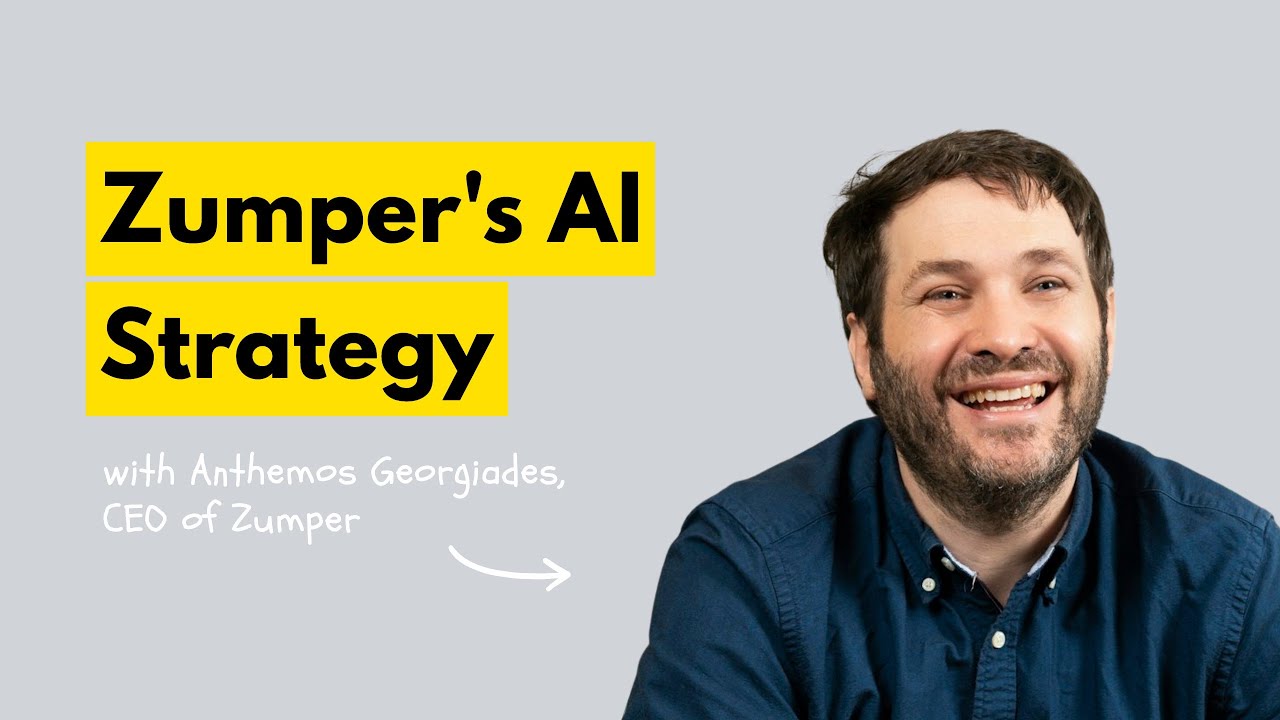
Anthemos Georgiades, CEO of Zumper, discusses how the rental marketplace uses AI to improve lead quality. Zoe, an on-platform conversational assistant, doubles conversion rates despite single-digit adoption. ChatGPT referrals grew from zero to 5% of organic traffic in 2025, and Zumper is shifting to smaller product teams building landlord tools like AI-generated listing videos.
Chapters
Welcome back to Everything Marketplaces, where we talk about founders and leaders in some of today's top marketplaces. So this is episode 202, which is a really great group chat. Just had Anthemos Georgiades, who's the founder and CEO of Zumper. Zumper is a leading rental marketplace that's making the process of renting apartment or home easier. It's used by over 80 million people each year, and they've also raised over $180 million in capital from top investors like Kleiner Perkins and Andreessen Horowitz. So Anthemos is a past group chat guest, so it's great to welcome back on. And we start off with a quick refresher on how they started and scaled Zumper. Anthemos shared how they've approached AI. We did a deep dive into how they're leveraging it as a leading rental marketplace today, discussed topics like answer engine optimization or AEO in detail. Anthemos shared lots of tips for founders. We also had a great group Q&A. I really enjoyed this conversation. You're going to find it a great watch to the end. So Anthemos, it's been a while since your past group chat, I believe back in 2023. And, you know, things have certainly changed in the world of marketplaces with all the advancements in AI. So, you know, really excited to have you join us here today. And I want to start off by saying huge thanks for taking the time to do so in advance. We have a lot that we're going to dive into, you know, when it comes to how you're leveraging AI at Zemper. But I thought it'd be great if you could set off by briefly sharing your background as a quick refresher. And also for those here that have just joined us.
So my background is I have a Greek name, British accent, grew up in London, worked at BCG for a few years in London and then New York, moved to America and kind of was just there. Never thought I'd be an entrepreneur, didn't want to be a CEO, just kind of uh, was renting in New York and then Boston and found the experience like incredibly poor. And so could have ended up as an entrepreneur by accident, as the kind of the type that wants to solve a problem, not necessarily wants to be the CEO. Obviously, as you all know, once you do the CEO job, it's very fun. And you kind of— that then you're kind of born into being an entrepreneur for life. But, um, yeah, I was basically just a frustrated renter who thought there was a kind of a better way to, to kind of build a marketplace in the space. So started Zumper in 2012. So we just turned 13, which is kind of crazy. And, um, we, yeah, we're one of like 3 or 4 large residential rental marketplaces in the US. There's 2 public, 2 private, and we're one of the 2 privates.
That's awesome, man. A great background. So a lot, lot that we're going to get into here. And I know on your Passive Group chat, you know, we focus a lot of the conversation kind of on the, the initial kind of founding story. And, you know, some of the first steps are kind of, you know, challenges going from a 0 to 1, right? But, you know, could you walk us through, you know, the story for starting it maybe again and kind of scaling to where you're at today?
The observation we had kind of in retrospect, it's obvious, but just to summarize, I think pretty like half an hour of our last chat was in residential rentals, it's supply, supply, supply, supply, supply before you get demand. I think there are some markets where demand can come first, but I think in most marketplaces, and I've listened to so many of these as well, it seems like supplies first. And the, the chicken and egg is how do you bring supply on before you have demands? And I think our observation— I think this is true of many other parallel verticals— was offer supply something, whether it was rent data comps or tenant screening services, or you'd syndicate their listing out to the major platforms before you had any MAUs. It was giving them almost like a SaaS product before your marketplace had traction. And then You know, come for the tools, stay for the marketplace. Eventually you end up self-fulfilling into having your own millions of MAUs that then can self-fulfill the supply. But I think that was like the first 2 or 3 years between like seed and Series A was just like building up to like a really comprehensive supply side from both enterprise landlords and small landlords. Then like the next phase was demand. It was like raise the Series A on the back of, okay, now we're going to build a consumer brand on top of this. Uh, that was actually harder. I think people say supply is the hardest thing ever, but actually I think building demand in a world where we have competitors who some of them spend over $100 million a year on marketing is really, really hard. Um, which is phase 2. And then honestly, I'd say phase 3 has been AI, where most AI wins I think have been on the B2B side. Um, B2C is much harder to kind of see massive wins apart from a couple of examples. And I think every marketplace business is still trying to figure out where have the users gone, where their SEO clicks are declining, but their, their kind of ChatGPT or AEO clicks haven't commensurately caught up. There's a massive opportunity to ride that wave, but we're kind of in the middle of it. So I'd say we're in the middle of stage 3 of building the marketplace. Stage 1, supply. Stage 2, demand. Stage 3, Demand 2.0.
That's helpful context. You got a lot of head nods when you said demand is hard side, right? And so that's actually a good transition into talking about AI and how you're leveraging it as a marketplace, because that's what I want to spend a majority of the, you know, the group chat discussing today. But it's also worth noting that you've been leveraging it for a while, right? So pre-ChatGPT kind of moment. So could you maybe kind of take us back to, you know, how you've initially approached leveraging AI as a marketplace, and we'll kind of jump into how you're doing so today?
Yeah, I'd say before the, the like Cambrian moment of November '22 when ChatGPT came out and we all had this form factor that my dad could suddenly understand what AI was, I think we were using AI in like multiple ways. Like many people, I think we called it machine learning, but it was basically the same as what AI does. Uh, one was to score our leads to give predictive kind of analyses of like how likely is like mike.williams@x.com to lease. And we had— we took a bunch of information kind of objectively. Another way was to basically serve our recommendation algorithm of like, think about rentals. We don't see renters very often. Renters rent every 18 to 24 months. But when they are renting, they are super engaged for those 30 days. So we can send you like 6 push notifications a day, 7 emails a day if they're relevant. And machine learning helped us really understand for each renter what's the form factor they want to be hit up on, how many times a day, or do they want a weekly summary? And it really helped us like train a curated model. So I'd say we kind of using best practice things kind of before the, the big kind of explosion 3 years ago. Um, and now it's the— yeah, the, the, the field of opportunity is like orders of magnitude bigger than it used to be. Yeah.
Yeah, definitely. And, uh, you know, on your last, uh, group chat, you know, I believe it was like right after you launched ZumperGPT, you know, as a plugin. And that was kind of more, I would say, like experimental kind of at the time and, you know, novel. So, you know, kind of looking back now, you know, what are some of your initial learnings after launching that?
Well, good question. So on the— yeah, we've thought about using AI at a really basic level of off-platform and on-platform. Off-platform is how do we farm for new users off Xumper's URLs or apps? On platform is how do we leverage it to create a better UX when users hit us? I'd say most of our experimentation has been the first one, which is off platform. How do we find tomorrow's renter where she'll be now? Like where Gen Z renters are acting very differently to millennial renters. In terms of our experimentation, our general philosophy is we should be very, very, very early and risky on every one of these technologies. The two public competitors we have suffer more from innovator's dilemma. That they're not incentivized to see the end of SEO because they've benefited so much from it, even though we benefit from it massively when not in the top 2 positions. So our general philosophy has been to build early and take risks. Most of them, speaking openly, haven't yielded massive traffic. For example, the GPT we built was a phenomenal use case, uh, and like is a, is a actually a great way to like browse Zumper listings within ChatGPT with really specific semantic search. But how many people do you guys know who go to ChatGPT, go to the GPT tab, like most people don't even know it's there, and then type Zumper or apartments or Zillow? Like actually, not many people route it in. So actually, Mike, our observation is building a lot of the early technologies and the early apps and the early plugins didn't yield users. However, what it did yield is when ChatGPT, and I'm sure we'll talk about this, Pretty much in October '24, but then really in January '25 started linking out. We were so well set up for that world, and I think we have disproportionately benefited from it. No apps, no plugins, no GPT, just from the core ChatGPT because we'd been working with them, feeding stuff in. We understood how the algorithm worked. When they switched that on with no warning, we did not know it was coming. we went from seeing basically no ChatGPT traffic from the core ChatGPT app, not the plugins, to meaningful traffic. So I guess we benefited, but in a really unpredictable way.
Yeah, it's really interesting to learn more about. And yeah, it was a good kind of breakdown as far as, you know, like off-platform, they can on-platform. So if we do jump over to, you know, to the second and thinking about, you know, some of the ways that you're, I would say, like increasing some of the kind of conversion on the listings, I believe you have— was it Zoe as far as the agent?
The first major dive we've done is to say, "Hey, can we replace our message button and like the the message form on a rental platform? All of you are bored by it. We've had it for like ten years. It existed ten years before we launched. Can we replace it with conversational AI? Not just an AI chatbot, but like an AI assistant where she'll do things for you, like book into your tours on the weekends. The UX is amazing. If you go to any Zumper listing, you'll see Zoe in green kind of all over it. She's there to help you." Um, the good and the bad. The, the bad is only a single-digit percentage of our users actually engage with her. Uh, it's interesting, even though she's so much more powerful than just sending a message, there is still just a trained use that most of our users still want to just send a message and they don't want to chat. So it's a single-digit percentage of our users on any given session will actually engage with Zoe. But if they do engage with Zoe, they convert twice as well, meaning they're twice— that literally 10% of unique viewers of a page will send a lead to a landlord, say, hey, can I tour, versus 5% if it's just the message box. So what's— what our observation has been, when someone uses it, it's fantastic, it's a great UX, and it's really good for our business. But it's still quite hard to convince users to change their behaviour, even though we have plastered Zoe subtly all over our detail pages and actually even into our map list page. And so it is not just this binary moment where people have gone from like understanding this is how you use Zillow, this is how you use Zumper, to now it's a different way.
You—
we are learning, and we have not cracked this, that you have to lead users through. And there may be different ways to do this. Maybe the— it's the wrong place to have Zoe on a detail page. Maybe it should live in your recommendations and your kind of alerts. And so We're learning as we go, but I guess the on-platform stuff has been, there's a lot of handholding required, but when you get them there, it's fantastic.
That's really cool to hear about. And I guess it's worth noting as well, right, that you monetize as far as like the leads to landlords. So, you know, what are some of the kind of like initial learnings as far as like on the monetization side?
We make, basically to oversimplify the marketplace, landlords subscribe to Zumper almost as a SaaS product for access to our marketplace. And then we can kind of step the price up year on year if we continue to deliver leads and leases. So our currency is, is leads and leases, like connecting those MAUs we have through to kind of landlords who subscribe to the platform. And, um, with AI in the first few experimentations, it reduced the volume of leads we sent. And you can kind of figure it— you can figure out why. Your first reaction is crap, like we're harming the marketplace. But then your second reaction was kind of a product leader is Hang on, like, let's look at these conversations. They're just now not sending messages to properties that they didn't— they weren't interested in because they're chatting to Zoe. They're actually understanding that, hey, you know, 1000 Broadway doesn't take £30 dogs because Zoe can answer that question. So they're not messaging. So actually, net-net, it's a better user experience. But are we comfortable stepping off some of our leads and our revenue currency to do that? And I think that's what every marketplace product team and business team are working through right now, because I think a lot of AI reduces marketplace volumes to increase quality. And I think that in the long term is 1000% the right thing to do, which means it's the right thing to do in the short term. But you just have to work through kind of convincing people of that as you plan your financials for the next year.
Yeah, definitely. That's exactly what I was kind of looking to learn a little bit more about was the kind of, you know, the quantity kind of versus the quality there, right? Some of the kind of trade-offs.
So, and we got it, we actually got it there eventually. Like I said, on the Zoë example, right now, a unique user is actually more likely to convert with Zoë. But that was not where it started. And I think on the first pass, I'm willing to bet 98% of marketplaces will reduce their lifeblood using AI conversation, not increase it. Even like Amazon, right? Like, like when you use Amazon, and they push Rufus to you to summarize reviews and stuff, I'm willing to bet Rufus creates a lot of friction. And probably may even step off some purchases. But I'm also willing to bet that like returns are lower with Rufus because you've actually summarized the reviews using Rufus before you buy something. So I think it's a good thing. I think it's actually reducing like waste in marketplaces. But when a public— if I was a public company, I'd be like, crap, that's going to hit my earnings next quarter. That's annoying. And it's That's the innovator's dilemma all over again.
Yeah, definitely. And kind of related topic to this, and it's something, you know, we're often discussing in the community, is kind of how this like chat style and more kind of conversational search experience, like how it'll kind of not only impact like what the ultimately what the marketplace kind of experience looks like for users, but also to kind of the positioning. So how do you think this will start to kind of play out?
I think the extreme question is, do marketplaces need a consumer front end anymore? So if you kind of think about how this could play out, and I'm actually, I, I'm not scared by this anymore. I actually think there's an enormous advantage, but I, I have a contrarian view that I don't think many people share with me, that in 5 years, I don't think it's gonna be 1 year, but in 5 years, if agents, if personal agents really take off, ChatGPT or Claude could just be your one and done, 1 page you open every day. that's all you deal with. If so, Zumper's front ends, Thumbtack's front ends, Airbnb's front ends become pretty irrelevant because the agent doesn't really need to learn how to use a website like a human, which it does today. If you use ChatGPT's Atlas browser, you can literally see it pretend to be a human. But what, what is Atlas browsing our pages as an AI today, in 3 to 5 years just becomes like an API interaction where then the core service Zumper offers is not a beautiful UI or UX, but actually it's a really responsive API to engage with agents, feed them information back. The agent goes back to the renter and delivers them the 3 listings near a Whole Foods in the Loop, Chicago, that they can tour this weekend. It's terrifying as someone who runs a consumer brand that has tens of millions of users every year who come to Zumper, whether directly or through SEO or AEO. That's terrifying. But the flip side is you kind of focus on what value do we bring, and then you just reframe what you are, which is Zumper's true value has always been a listings aggregator. A million listings every month updated in real time to the unit level availability. That's relevant whether a consumer browses us or whether an agent uses us. And I don't think that world is as scary as I used to. And actually, I think there's a world in which if you bet on that early and your big 2— we have 2 big public competitors— if they do not, there is a world where you're immediately at parity with them if that world comes in. So I think it's a pretty contrarian view. I do not think it's going to happen in 2026. I don't think agents are there yet. We all wish they were selfishly. But I do think there is an above 50% probability they'll be there in 3 to 5 years. And then marketplaces matter so much less in terms of their consumer brands and interface and so much more in terms of the middle layer of providing an API access to an agent. That's the future if you had to ask me.
Definitely really interesting to think about. You mentioned on your past group chat too, the importance of kind of making those early bets, right? That's also a related kind of question was added to the, as far as for the group Q&A related to defensibility in the age of AI for marketplaces. I can briefly touch on that as well. So, well, cool. So you also too mentioned it earlier, and a topic that I want to chat about, which is answer engine optimization or AEO. And I know that's something that you've been sharing about quite a bit on social. And, you know, I guess it's like a starting point. You know, we've seen the big kind of shift from SEO to AEO. You know, so how have you approached, you know, this shift as far as for Zumper? And, you know, I would say, I'm capitalizing on this.
Yeah, similar to what we said before, like as a setup and then kind of go into the more specifics. Zumper was one of the first ever plugins that went live on ChatGPT. And we were one of the first ever GPTs, which was kind of where plugins evolved to go live on ChatGPT. Neither of them yielded much traffic at all. But we learned a lot by doing it. And it's fun for our product team to experiment at like frontier kind of stuff. Where this really yielded, and a lot of you have probably seen this data, but we, we saw it internally, I think, very early because we have millions of uniques a month, so we can see things change quite quickly. Um, in October 2024, we suddenly started to see referral traffic from ChatGPT, and we thought, huh, like, like meaningful, not like a kind of a couple of visits a day. Like, started to see like it would show up in our GA as like a meaningful new source. And we were like, huh, maybe our, our GPT, the second version of our plugin, has started to take off. And then we researched it and we're like, no, this is coming from core ChatGPT. No one has to download a plugin or download a GPT or add it. This is coming from like organic rental queries. Didn't think much of it, didn't move any numbers too far, but we started to see it. And then I think it was in the end of the first week of January 2025, it rocketed. Like, chat— and this was nothing Zumper did. ChatGPT changed the way their algorithm linked out, and the way it cited brands. And all of the work we'd done had accidentally then positioned us very, very well for this world where they internally, with no warning to any marketplaces that work with them, at least not to us, switched on referral links. And I would say this year, 2025, is we've seen 3 stages of this. The first few months of the year, Our traffic was growing 20 to 30% a week on ChatGPT. It was ripping. Uh, at peak it got to 6% of our SEO— oh sorry, I think it became— it went from 0% to 6% of our total organic traffic. So that's meaningful for us when you have millions a month for uniques. So ChatGPT became really big. Then in summer they cooled it off. And I think a lot of marketplaces saw the same. They, they changed things. They didn't link out as often. They cited more often, but most people don't go off to the citations. And they reduced the number of brands they were referencing. Then phase 3 kicked in where in the fall they reaccelerated. So our traffic normally slows off in the fall and winter because the rental season cools off. We're currently growing on ChatGPT again because they've tweaked it again. And so it's been a bizarre year. I think we're around 4 to 5% now of our organic traffic is on ChatGPT, down from 6, but up from zero where the year started. And I used to think we could get to like a quarter of our SEO traffic in ChatGPT by the end of next year. I still think that's possible. But it's all to pay for and they change things on like a monthly basis. So I think this is the new battleground. ChatGPT is like 82% of the market, I think. So like we care about Gemini a lot because it will become Google Search. Obviously we care about like Perplexity and Claude, but, but really for this year in the 80/20 approach, it's been ChatGPT is the only one we care about and it's become a meaningful traffic source for us.
It's definitely a huge opportunity and something that we're commonly discussing here. We even recently did a workshop on it in a little bit more detail. But, you know, as far as like when it comes to SEO versus kind of AO, are you seeing maybe any kind of interesting kind of, I would say, like, you know, maybe a better conversion or kind of quality with the conversion on that since it is more kind of conversational search?
Yeah, interestingly not. I want to say yes, because you'd think that the referrals that come have been so much better qualified. They've asked so many more questions than just, you know, a classic kind of SEO search for us is LA apartments for rent. They land on something, they send a lead. Whereas on ChatGPT, instead of like 5 or 6 tokens or words on SEO, it's more like 25 tokens or words, which is like, hey, I want to live in LA. I've got 2 dogs, kind of a girlfriend, and I need a spare bedroom. Like, you know, it's— you'd think that would convert. We haven't seen that, interestingly. And what one hypothesis could be that it says It's a slightly younger user who's less committal, which outbalances the fact that it's a more specific search. I think that's what's going on. We're seeing more college kids come through, still slightly less committal. They're still exploring kind of like the rental world. But yeah, it's been— it's not as— it's— I think in ecommerce, you've seen it be significantly better converting. We haven't seen that, interestingly. Yet.
That is definitely interesting. So, and another topic that I want to chat about is, you know, the team and org structure, you know. So how has the AI impacted this? And, you know, this is kind of coming from, you know, typically with marketplaces kind of in the past, like sometimes, you know, putting people behind the problems or it becomes a little bit more easier to kind of solve it with more of the advancements in AI recently.
This is topical 'cause we, like, we've gone through so many stages as a company. We've been way smaller, we've been bigger. I think we've settled into a really nice phase now. It's topical because we're actually literally considering changing our org structure at the end of this year to leverage exactly what you're talking about. So we've, we've had a bit of a monolithic, uh, product design and engineering org for the last year on purpose because we, we've actually just needed to make core marketplace investments. We didn't want to split people up too much because there were just 2 or 3 really big pillars of work we needed to do. Now they're done. Now the marketplace is performing well. We've, we've had a really good SEO as well this year after like a really choppy period for basically every marketplace that we've figured a couple of things out. We're actually going to move back to more speedboats. So breaking up the kind of product design and engineering into like 2 or 3 speedboats. And specifically to your question, Mike, one of them is going to be a B2B speedboat for AI. So our marketplace is the consumer speedboat, which is continued investment, building out kind of Zoe, improving our SEO and AEO. But, um, if you think about like AI wins, if you look at all the startups getting funded in AI, this might be hyperbolic, but I, I think 95% of AI wins so far have been B2B. Like, you know, coding assistants, like productivity things, call centers, like all of these things that like have been replaced by AI, they're mostly B2B sales. And so one of our speedboats that we're going to break out of product design and engineering and give them a self-autonomous speedboat with this, you know, GM of the speedboat, is building B2B applications for our landlords. So still completely part of a marketplace, but saying to the landlords that post on our marketplace, that's not all you should do. We can do these other things for you that are really exciting. And one thing we've done that caught a lot of like, um, kind of action quite quickly was highlight reels. So we basically— my co-founder Russ and the team basically took the listings we ingest from landlords and built 30-second, um, programmatically generated avatar-led AI videos that summarize that listing in like a reel that you could post to Instagram or Facebook. And this stuff has taken off. It's an entire B2B AI app. And, um, so back to your question, we are now splitting up our organization to basically go after the B2B opportunity faster while losing no less focus on the marketplace, but allowing a different team to pursue that. And I think now's the time, otherwise we'll miss the wave.
Certainly a window of opportunity. So, and yeah, I was seeing the reels that you, you know, that the product that you launched, that was really cool. So I take it that's generative AI as far as social content and posts for property managers or landlords?
Yeah, exactly. It's like a quite sophisticated workflow behind the scenes. Uh, and where we're now iterating it is we can programmatically generate using AI in this pretty complicated workflow. But now Russ, my co-founder, and Dan, my CTO, are now working on a version where then the property manager can edit their video in our software so that they don't just like email CS and say, hey, I wish that the tone was slightly different when they talk about the pool. They can now do that themselves and adjust the tone, adjust the avatar. It's really cool. And I honestly think there could be— we could have just been a startup that just did that. But I think this is like what's great about marketplaces is the feed we get of their listings into the marketplace is not only what powers the marketplace, but it's now programmatically without any more work, we can build on top of that feed and do so much more in terms of like, imagine like a halo of services that go on top. So I think this is like where we try and explore the B2B opportunity that all these startups are seeing on their own. I think there is, there are B2B opportunities within marketplaces.
Yeah, certainly seems like it's, you know, unlocking more ways that marketplaces can kind of add value more easily, right? Totally. And kind of related topic that you kind of mentioned as far as like, you know, the data layer, right? So are there any maybe like engineering kind of challenges? We can keep it kind of more high level when it comes to thinking about, you know, I would say like building and launching some of these kind of, you know, products with the kind of data that you're, you know, you're sitting on as a marketplace.
Yeah, I think the I mean, the biggest thing is like how not to create slop, because you can get to like an 80% good demo so quickly. Like my, my co-founder Russ, like the first version of Reels, I think he built it in like 2 weeks. And like, I, I honestly think like it was— his first output was unbelievable, but it was 80% good. It was— and the difference between something at 80% as a proof of concept and something at 98% that you can actually sell for MRR or like per use case is quite hard. And I would say that 18% improvement is where the vast majority of engineering works. And so for people that don't work in AI or in startups like this group here, I think it would be like, why don't you just launch the 80% version? But when you have paying customers, the 80% version has so many wrinkles. They really obviously care about their brand. And that final 20%, if not 18%, is where a lot of the work goes in. And like, that's still hard.
It's worth noting that this is the scale that you're at, right? So you can't launch out zero to one kind of experience with that expectation.
I mean, I miss those days, but no.
Yeah. Well, cool. So we're gonna make sure we can get to the group Q&A here, 'cause I know I promised founders we'd save time for it. But right before we do, so do you maybe have a few tips for founders that are, I would say, kind of building more the next gen of AI-powered marketplaces today?
Yeah, I mean, it's an enormous opportunity. What you can do on AEO is what used to take like a year to get on SEO, you can now do in a week. I saw your Ethan, I know Ethan, and I saw your session with him. It was great. We've talked to him too. He's really, really good on this. And I like what Ethan says, where he's not sensationalist. SEO has not just magically gone away. There are fewer clicks from SEO, but I think AEO—I would say AEO is a really, really fascinating kind of distribution channel of attracting users that you can get really quickly. However, it is nowhere near the size of SEO yet, and whereas we all wish they'd cross over so we can kind of take down the incumbents, I think you've got to do both. So hear the AEO excitement, but. SEO still has an order of magnitude more users. So do both. Um, build speedboats, not tankers. There were moments where our organization was— should have been a tanker. There were one or two material structural changes we were doing, but we're going back to pods basically, of like mini speedboats. One designer, one product manager, 3 or 4 engineers. Let him cook. Like that in this world is the right formation for like pushing the team out. And ultimately it's the moat, right? Like you're all reading about this constant battle and I feel like it's swinging back again where 2 years ago everyone thought the power was with the LLMs and the value was with the LLMs. Then in the last 18 months, so many apps and wrappers got funded that everyone was like, oh shit, maybe the LLMs are commoditized and actually all the value's on on the front end. I would say that people are swinging back now towards, no, the foundational models are where the money's at, even if there's 4 of them where they will do the same. Because so many of the wrappers— and again, I don't mean wrappers as a negative term at all. I think they're amazing companies built on top of these LLMs. But you've seen the LLMs gobble up a bunch of their business, whether it was coding or video. And so ultimately for all of us, and obviously we worry about this all the time, what's your unique moat? Like, and I think for us it's not the brand, it's not the UI. I think for us it's the listing infrastructure and the real-time piping of rental availability and pricing that you can't just crawl the internet for. That is the ultimate protection we have. And again, it's never enough. You always want more. But I think that's like that's bought us an amount of time to really have a go at this market and make some real waves. But I'd ask yourselves the same question, which is like, what's the unique data or information, kind of real-time kind of feeds that you have that ChatGPT or Anthropic do not?
Those are great points and getting me tips here for founders. So, well, cool. So I wanted to jump in here and ask a question to kind of help kick things off for someone to ask. And it was on your past group chat, you know, you mentioned the importance of, you know, distribution, of course, and meeting users where they're at. So they were asking, you know, what are some of the distribution bets that haven't worked out for Thumper in the past? And what are some of your learnings from this?
Definitely one was building early products into these LLMs where they was like almost like the app versions. And we're gonna keep doing it, by the way. As you guys saw, ChatGPT launched apps now, which are probably some third version of this. We're gonna keep doing it. Um, one that didn't work for us was brand marketing. So at peak, like, ZURP 2020, 2021, we just raised a large round, had like a fantastic marketing team. We invested heavily for the first time ever in brand marketing. So we did billboards, trains, did YouTube ads, like, and it was expensive. And we were, you know, trying to build a company that, you know, really could compete with like 2 public companies with far bigger balance sheets. And despite all the dopamine and the sugar rush of like seeing your brand out there, you definitely get kind of a short-term sugar rush for sure. Our lesson was, and, and we probably spent low millions of dollars on this, not tens of millions, low millions, but for us that was a lot because we were such an organic marketplace. Um, it's basically a drop in the ocean. Completely irrelevant. Like our competitor Apartments.com in peak year, I think spent over $200 million on brand marketing for Apartments.com and SEM. I think that's right. And I'm spending like $3 million in like 6 cities, just, it's such a rounding error. And we're in an infrequent marketplace. It's not like Uber where people can use us 6 times that week. People use us once every 18 months. Just doesn't work. And we knew these things a priori. And we thought, We should still learn and try and I had no regrets. But I'd say brand marketing was the biggest channel that we failed to crack and still don't do today for better or worse, because it is so expensive with a pretty poor ROI if you're an infrequent marketplace.
Definitely specific challenges with infrequent marketplaces, right? Well, hey, Michael, sorry, raise your hand. Do you want to jump on here? Yeah, thank you. Thanks for taking the time out here. This is such good stuff. I probably have 10 questions, but one that I'm really curious about, as you look at the traffic that you are getting from ChatGPT compared to say traffic from traditional SEO, are there certain types of pages that you're seeing it favor? Like, is it articles, like how-to articles? Is it your individual listings? Is it those like aggregated search pages? Is there any kind of page that's standing out?
Hi, Michael. Great question. Um, 2, 2 types. Uh, I have a much more detailed answer, but 2 types for, for, for this call. Um, I think it's like the 80/20 answer. So one is, um, rent data. So basically someone moving to New York saying, hey, I want to like rent in New York, my salary is going to be X, what can I afford? We have a lot of content where we've published our like rent data and ChatGPT and the LLMs love it because it's updated monthly. So every month there's a fresh dataset. It's programmatic on our side. It doesn't take much work and they love that. It's not our money pages because if someone goes to Zumper's rent data page, they're not— they won't immediately then send a message to a landlord. But obviously it increases the probability that they'll explore our New York page because we try and get them there. The other one which may be surprising, Michael, is actually our money pages. So our, our money pages are LA apartments for rent, New York apartments for rent, Miami apartments for rent. They're the money pages. We actually have every 100 ChatGPT clicks, I think around 40 to 45 go to our money pages. That's a higher percentage at 40 to 45% than from SEO. And the reason for that is on SEO Zump has been very competitive on like long tail or torso SEO, but we've never displaced Zillow or Apartments.com from the top 2 positions. You know, they, they, those brands existed when I was a kid, or like at least like leaving college. And we've, we've never displaced them, which is very frustrating. And so actually, our head term pages as a percentage of traffic do better on ChatGPT than they do on SEO, which you could infer to mean ChatGPT starts with a more even playing field. They, they don't care as much that our domain is from 2012 and apartments.com is from 2012 minus n number of years. And that is very motivating to us because I think it's a more even playing field from the start. Awesome. That's a great question.
Hey, Jeff, you want to come on? Then we'll try to get, get to you. Robbie.
So many questions. Appreciate you coming on. Trying to figure out which one I want to ask here, but I'll ask maybe a little bit more about how you see the future of agents moving forward. So, you know, I heard some commentary recently and like me personally as well, the trust that I have in some of these, you know, like the OpenAI as an example. I think that's like probably the leading example of like, do I really want like that to be, you know, the agents that OpenAI produces to be in all of my stuff, or should I be trusting these, what I'll call like a mini agent? So like, um, you know, a mini agent for home stuff, a mini agent to help me go find these things, or maybe even like programming my own mini agent on a forked, uh, LLM. How do you see that coming about? Have you considered that or had discussions with a team about how that may play out?
It's funny, I literally have— I had literally that discussion with my wife yesterday who runs a startup in, uh, leadership and development. Her— she's a neuroscientist by training, so she gave me the psychology answer, which I— which we disagree, but I loved her answer. Her, her belief as a neuroscientist is people like compartmentalized apps, agents. They, they don't want a monolithic one-and-done, you know, you just use ChatGPT's agent all day long. You actually want the specialization. I, I, I a priori disagreed, but I, I thought her answer was really good and rooted in far more intellectual psychology than I have access to. But I kind of do see a world where in 3 to 5 years we have a one-browser OS on our Mac, or that Sam Altman and Jony Ive and whatever the form factor is going to be of the phone they're going to release, it just doesn't have apps. As an example, there is no way for the Zumper app or X or Y to be on the phone. It is just an interface that has a wealth of systems behind it and logic, but it will route you. But it kind of— Jeff, to your point, it kind of relies on it being a one-and-done and all-encompassing. I think that world will happen, but we're nowhere near it today. My wife thinks human beings don't want the monolith. We, we do want a specialized agent for X and a specialized app for Y. Um, I think we won't know next year. I don't think agents are good enough yet next year, despite this being forecast for now 2 or 3 years in a row that agents are going to take over. I still don't think we're quite there yet, but like, I definitely think we'll have an answer in like the next 2 to 3 years. And yeah, I'm, I'm super curious basically for all of our businesses whether we get a shot at being the agent itself or whether our agent is basically just an API that talks to the god mode agents. And I think it's gonna be more that one. My wife and some other teammates think it's gonna be more the first one.
Hey, Robbie, do you want to jump on here?
Hi.
Hey, we are a marketplace for car rentals, basically like Airbnb, and we are at a zero-on stage. So we're working on both supply and demand. So my question— I had a couple of questions. One is related to maybe like the supply side. How are you able to crack getting supply, especially with the other big players, a couple of companies that are public? Any tips or like top 1, 2 points that really worked for you? My second question is about the reels you mentioned, which is really a great idea in the B2B side, which I think we would love to do for Upcar. So any suggestions on which tools, AI tools that you used? We did not get the enterprise from the beginning, apart from a couple of outliers. We We had to first build for the tail, then the mid-sized landlords, then the big guys, and that took years. Yeah, just for— I don't know if it's exactly parallel to the car dealership world, but if there were tools for smaller car deals or individual people that sell their cars that you could provide, I don't know whether it's pricing suggestions or tips of if you went around the car and tips of what to mark up, which would improve its price. Um, yeah, it's kind of like come for the tools, stay for the marketplace. That would be a good example of come for the tools first because you don't have— say it's day one of your marketplace, you don't have demand. Build the tools first, then bring the demand. Um, but yeah, it's, it's definitely hard, but I'd bet heavily on building self-sufficient tooling for car salespeople before the demand comes. Um, on the second one, um, it's mostly built in-house. There are loads of tools that can help you like convert text and pictures to video online. But they, to Mike's question earlier, they were kind of ones that got us to like 50, 60%. But like, then the hard stuff is to get to 80 and 95 and 98. But it's, I mean, it's weeks, not months, Ravi. So you can move quite fast these days. Like we were able to build it in a few weeks.
Those are great questions. We've discussed a little bit as far as like on that consumer side, right? Just some like observations around like an initial kind of adoption and usage. But when it comes to like selling some of these like AI-powered, you know, tools and solutions to landlords, you know, and businesses, I guess like how have you seen that as far as like the reception there?
My biggest observation so far is a shift in like pricing kind of propensity or kind of interest where we're moving away from charging subscriptions or SaaS and charging to usage. I know that makes a ton of sense. Obviously, markets like Uber have charged for usage for forever. But there are many marketplaces like Xumper that are more like SaaS companies that we charge an annual subscription for access, and then we can step it up every year. The interest we've had in the B2B tools has been high. It's almost exclusively been usage-based, not fixed-based. So basically, people are saying, don't want to just add that on to my subscription, I'll just pay you variably based on if I use 30 of these reels in November, 0 in December, and 400 in January. So that's a really different revenue and business model for us. It's great. It actually allows us to kind of follow our COGS and kind of keep our margin profile. It's a really different way of buying. And I think when people talk about— I think it's been said on a couple of podcasts recently, but like people talk about the end of SaaS, it's not necessarily the end of like SaaS software, but it might be the end of the way SaaS software charges and that we move away from subscriptions to token usage. So there's a ton of interest. We have not blown out Highlight Reels yet because we haven't launched the full editable version. But next year, I think it's the single biggest like rocket ship opportunity we have and we're like pretty pumped for it. But it's still early.
Awesome. Well, be sure to keep an eye out for it. So, well, cool. So we're almost out of time here. So I wanna be conscious of that. But, you know, huge thanks for taking the time to join us today for the follow-up group chat and, you know, sharing all about how you're leveraging AI. also some of your learnings and helping answer questions here. So this is fun to kind of dive into things in more detail. I feel like we could probably keep, you know, keep going on. But, you know, anyways, and, you know, my last parting question, which I think I asked last time, you know, I'll kind of slightly reframe it now, which is, you know, if you could go right back to before, I would say like that kind of, you know, the pre-AI era for marketplaces, you know, what would you tell yourself about it and kind of where we're at now?
Be patient. There is like a quantum leap shift coming. I think AI will revolutionize consumer discovery entirely. You know, it's at 5% of our kind of organic traffic now. So it has not revolutionized it yet. But I think it will be kind of slow, slow, slow, slow, slow, and then overnight, whether it's AIO, whether it's agentic, whether it's something else that I haven't even thought of. So build for the long term, it's coming. It'll take a long time to come, but when it comes, it'll be overnight.
It's gonna be great, great parting advice for us here. And then last but not least, time for a quick plug again. Where can we keep up with you at?
@Zumper on Twitter, @Anthemos on Twitter/X. We publish our data. If you have any follow-up questions, we could even ask him in the Everything Marketplaces follow-up tweets. We can go back and forth there. Happy to.
Awesome. Really appreciate it. Yeah, thanks again for joining us here and all you do to support founders in the community. Really appreciate it. And, uh, thanks everyone for the great questions today.
Thank you.
More from Max




B2B Marketplaces In The Age Of AI With Sonia Nagar From SNAK Venture Partners | EM Group Chat #216

Insights From Investing In DoorDash With Saar Gur From CRV | EM Group Chat #215

Starting & Scaling Fora As A Leading Travel Marketplace With Evan Frank | EM Group Chat #214

Marketplace Investor Insights With Andrew Blachman From Marketplace Capital | EM Group Chat #213


Deep Dive Into ResortPass As A Leading Marketplace With Michael Wolf | EM Group Chat #211


Masterclass On Marketplaces In The Age Of AI With Fabrice Grinda From FJ Labs | EM Group Chat #209