Learnings From Scaling Reibus As A B2B Marketplace With John Armstrong | EM Group Chat #204
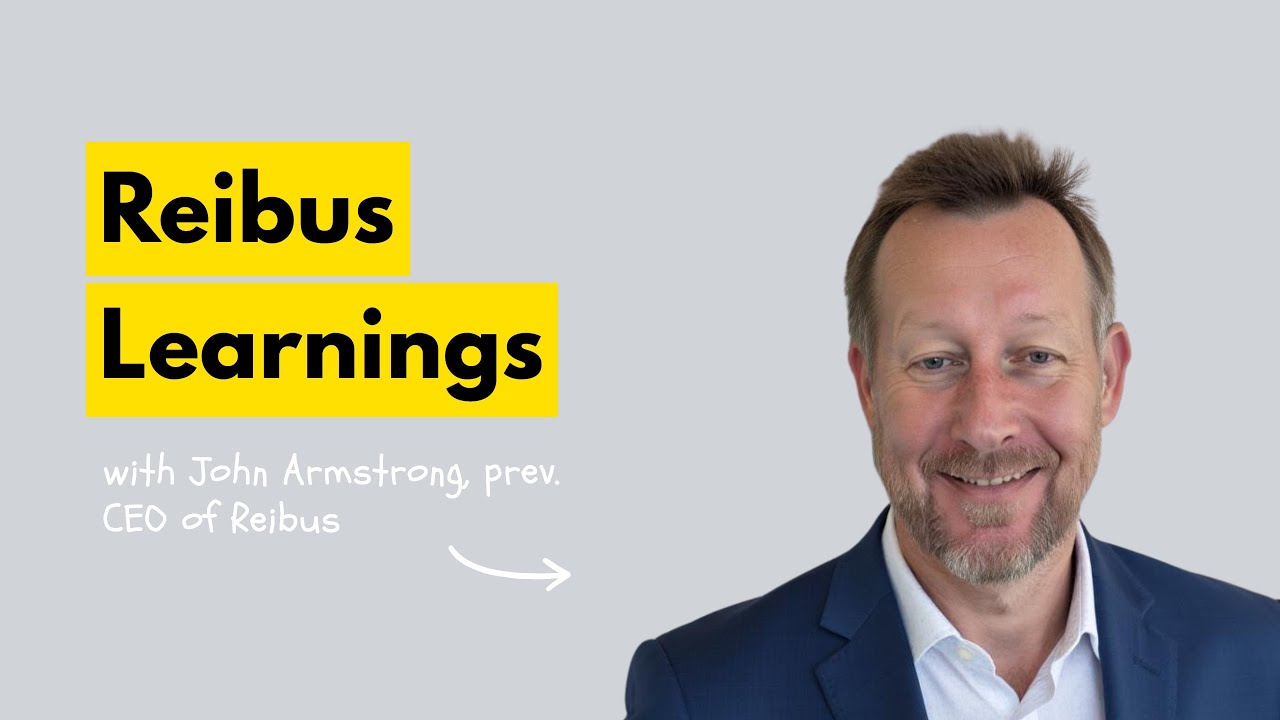
John Armstrong, founder of Rebus, a B2B metals marketplace that hit $1 million GMV per day and raised $120 million, shares how he prevented disintermediation through anonymity, financing, and in-house logistics. He warns against scaling too fast and emphasizes that unit economics and deep industry knowledge matter more than external advice.
Chapters
Welcome back to Everything Marketplaces, where we talk with founders and leaders in some of today's top marketplaces. This is episode 204, which is a really great group chat we have with John Armstrong. John previously started Rebus, which scaled to become one of the largest B2B marketplaces for industrial metals. Rebus raised over $100 million capital from top investors like Battery Ventures, Bowery Capital, and SoftBank while John was the CEO. So John was a past group chat guest, so it's great to welcome him back on, where we started off with a quick refresher on how they started Rebus, how it scaled to become one of the largest B2B marketplaces for steel, and We discussed topics like taking the managed marketplace approach. John shared some of the biggest challenges at the later stages of the business, some of his key learnings looking back now, lots of tips for B2B marketplace founders, and we also had a great group Q&A. I really enjoyed this conversation and you're going to find it great to watch to the end. So John, it's been a few years since your past group chat and you haven't shared much about your learnings after Rebus. You know, so I want to start off by saying huge thanks for taking the time to join us today for the follow-up group chat. We of course have a lot that we're going to dive into with Rebus and all of your learnings, but I thought it'd be great if you can start off by briefly sharing a background for those here that have just joined us and might not know you.
I started Rebus back in 2018 as a B2B marketplace, two-sided. What was unique about the marketplace was customers were actually our suppliers and our suppliers were customers. So it really was properly two-sided. And the problem we were solving was the oversupply and undersupply of the commodity products, so steel, aluminum, copper, et cetera. So that supply chain is very volatile and having the right product in the right place at the right time was a problem we were trying to solve. Business grew really quickly. You know, we started mid-2018 and by 2022, we'd reached about $1 million a day at GMV. We're around 10% take rate marketplace and we'd raised about $120 million worth of capital. So the business really went from 0 to 300 employees in about 3 and a half years. So it was a really quick journey and obviously lots of learnings, good and bad, from that experience. So I'm really great to be here today and see if I can help and share some of those learnings. So, help you folks.
Certainly quite the journey and a lot that we're going to get into here, as I mentioned. You know, I know for your past group chat, we focus a lot on the kind of earlier stages, But, you know, just as a quick kind of refresher, can you, you know, take us back to like, you know, a brief, you know, walkthrough of how you initially started Rebus?
So right at the very beginning, I used to be a procurement specialist in the steel industry and then ended up running a company in that industry. So I was solving a problem I really knew myself. I was solving a problem for me, which was great. So what I had was a really good network with experts in the industry, great knowledge in the industry. And actually, my first 5 or 6 hires came from my network in the industry. So for us, it was really about, it's a snowball thing. So get some supply, turn the supply into sales, get more supply, turn that into sales, and really just pushing that snowball down the hill to get the momentum. So the initial product was really just about curating generating the supply, really targeted focus on the sales side and connecting the buyer and seller together. So that's where we started off. It was just me in my basement for about 3 months, and then we got a little office and it just grew pretty slowly in that first 6, 9 months. We launched really early. Onset was mid-February, Went live on May 7th and got our first order on May 20th. And, you know, it was really quite quick. We were kind of MVP. We just got it out there and started listening to customers and iterating from that point.
That's really cool. And I know you also too mentioned on your previous Scoot Trap some of the, you know, examples of doing the things that don't scale in the early stages that you did as well.
Yeah, very much. You know, a lot of it was with the platform, did it work? The phone did really well just in case. I mean, just call people. One example was we hadn't figured out what logistics needed to be blind to blind because we were buying from one customer to another. And it literally was driving down to logistics company and printing off extra copies of bill of ladings and materials and just handing them to the supplier and the customer. just to overcome something we hadn't thought of in the problem very well.
So I think it's going to be relatable to many founders here. And one thing worth noting is, you know, taking the more managed approach as a marketplace, you know, which usually kind of comes with, you know, more kind of coordination, taking that on complexities and also risks. So, you know, what do you think are like some of the pros and cons of taking that approach? And also to like how you advise founders thinking through that today?
I think some of the pros of a managed marketplace is it can make you much stickier. And at the same time, the revenue opportunity can be much higher. So whether that's on a percentage or a dollar basis, where if it's more of a buy-sell, just flipping the material from either side, that's easier, it's less complex, but you're more prone to displacement from the latest and greatest competitor. and/or the monetization, it's hard to span that monetization because it's too high. You're just inviting that competition. So definitely much more challenging to build a managed marketplace. You'll never run out of problems to solve, I think, if you build a managed marketplace. So that's fun if you like that sort of thing. But on the non-managed marketplace, I think you can get to scale quicker. But as I said, I think there's a risk that you could be usurped quite quickly.
Yeah. And then also too, lots of considerations here specific to like B2B marketplaces, which like a higher kind of AOV here, you know, kind of preventing disintermediation and so forth. So like, you know, those are very topical right now with, you know, founders and teams in the community. So I guess like when it comes to like disintermediation, you know, how did you kind of prevent that as a marketplace?
Yeah, so everything we did was anonymous. So we actually became the intermediary. So, we were the buyer and seller. So, we were the buyer and seller of record. So, what that meant was when a customer, we only ever purchased material once it was sold. So, once somebody had found the material they wanted, they'd actually send Rebus the purchase order. Purchase order from Rebus would go to the supplier, the supplier would invoice Rebus, and then we would invoice our customer. the customer. So that kept that disintermediation out. And then what we learned was to continue that, we had to finance the transaction because if somebody else was financing the transaction, you would lose it. And then the logistics, that's really where the logistics business was born from, is controlling that logistics. So the paperwork, the communication, all of that became an in-house thing. So If you're looking for that blind-to-blind transaction, there's a lot of obstacles you need to overcome. You need to build those processes and systems in-house to stop that.
Yeah, definitely. Well, I'm sure we'll have some more questions during our group Q&A around that. So, and that's actually a good kind of segue. You know, you mentioned as far as like the logistics business, you know, Rebus today looks like a little bit different business today, you know, more focused on that kind of logistics, I guess. So, you know, could you kind of walk us through, you know, what led to that business and then, you know, maybe share a little bit more, you know, at the later stages What that started to look like?
Lots and lots of learnings here. So it's probably quite a long answer, Mike. So buckle up. Look, what I really take away from my time at Rebus, I left Rebus about 2 and a half, nearly 3 years ago now, was that when we started, it was very much about connecting those buyers and sellers. But what we didn't realize at the time was that, and in reflection, and I think about a lot is We were making the industry more efficient. It was an enhancement solution. It wasn't a critical pain point. So I think that's something to think about. Like, it was clearly a better way to do it, but if they didn't do it, nobody got fired and it wasn't the end of that company. So that stickiness, we found continually having to resell the value proposition was something we had to do Very often, and this is even with clients that were spending ten twenty million dollars a year with us. We still had to do that. The second thing we hadn't considered at scale was we were operating in the in the quantity part of the market, so really at the raw material, and the raw material would fluctuate. Our highest, I think we were selling steel at two thousand. $200 a ton. At our lowest, we were selling steel at $550 a ton.
Wow.
So if you take 2023, we grew to $320 million of revenue and significant revenue, like $35 million of that revenue. And steel prices collapsed in 2024, 3x, and our goal was to double. So we actually needed to 6x after 3 or 4 years worth of 1,000% to 3,000% growth. So that was the commodity element of our business was a fundamental flaw in the business model that we got so big so quick we hadn't actually realized. This is cost plus, 10% on a truck of steel could be $1,500 or $6,000. So our take rate was based on the cost of our raw material. So that was something that we struggled with. And then to the point, we actually, for me, the business grew. We ended up in offices in 3 countries. We had a finance business, we had a logistics business, and quite frankly, we did everything way too quick, everything way too quick. And that's a lot to do with our funding profile, how we did who do we decide to take money from, how we set our goals for growth, et cetera. So a lot of responsibility on me for that. But what we really did is we tried to do way too much, way too quickly. And that caught up with us really around that period of time. And so I left the organization and the business decided they could focus really on the profitable side of the business. And what was really interesting about the logistics part of the business. That's a necessity. That's something that doesn't matter the price of steel. You have to move the steel. It's a real function. The pain of moving the logistics due to the shortage of drivers and all those challenges there was very real. So very quickly, that business was always basically breakeven. I've not been involved with that side of the business for a couple of years now, but it's It's a very good business. It generates positive cash flow, it generates profit, and it's a very large logistics business in the steel and aluminum place. It's one of the go-to places if you want to move steel and aluminum. So that's really what happened there. I'm sure there'll be lots of questions about that and I could answer them.
Yeah, no, that's really interesting. So I appreciate sharing with us on that. It sounds like lots of challenges and lots of kind of external factors that impacted the business as well.
Yeah. And the problem was, like some of those were embedded external factors, so uncontrollables. That's pretty hard to push against, particularly if you're taking high growth, big venture capital. That doesn't work with a volatile commodity base, right? So not, you know, having 100%, 200% change in our commodity price outside our control, tariffs, wars, weather, global events, et cetera, all drive those commodity prices. That put us at way too high a risk profile for a business at such large scale.
Certainly. And then you also too, you know, mentioned like that rate of growth and kind of pursuing opportunities, you know, so, you know, how did you approach growth and expansion at Rebus? Was it, you know, primarily kind of based on like the product or kind of geos or customer segments or?
All of the above. Again, back to too much too quickly. So, At Rebus, and I think it's different where the commodity steel is a global product, it's traded and sold globally in a traditional manner. So the geographic expansion was very logical and straightforward. And then the logistics product, for example, that came from the need of protecting the anonymity. So that really came from there. We never, for me, we never actually finished all of the problems I was trying to solve for. So our very original product roadmap never actually got finished. We were always building out that product roadmap and then responding to customers' needs. So yeah, geographic expansion, the financing product again came from necessity and need. if you kind of create that anonymity, somebody needs to finance the product. So we ended up taking on that as well. And then the kind of features within the service model that was much more customer-derived and customer feedback.
And yeah, it was definitely impressive, the sense of scale that you were at on your past group chat kind of right after that as well. So kind of like looking back now, what do you think was like key to the business kind of working and achieving that sense of scale?
And then ultimately what didn't We were really good at execution as a team. We were really good at writing down what we're going to do, setting a target, and then committing to that target, and then really, really focusing on delivering that. So I think that was really, really important. And it's certainly in the first 100 or so employees, we did really good at hiring people that wanted to make an impact, not people that want to join the ride, if you like. So many of our people were high-impact folks along the way. And so I think that really accelerated. We also had tailwinds. COVID hit in the middle, which actually, for an old industry like the metals industry, forced people to adopt technology more. Like, I can remember often we would have people join on a a call, like a call for a product demo, and it would've been the first time they'd used video technology to join a call. So that was certainly a tailwind. And some of the geopolitical stuff, the Trump tariffs, for example, also was a tailwind for us. So I think we did really good at sticking to our plan, executing our plan, keeping focused on our goals, and we had some tailwinds from stuff that was happening.
Yeah, I was actually going to bring up the note on execution and hitting some of your revenue forecasts and targets. I know you mentioned that on your past group chat.
I'm still super proud about that. We executed 11, I think it was 11 quarters in a row. We're forecasting 300%, 400% growth year over year and never missed a quarter forecast. That was really good. That was something I'm still really proud of to this day.
I know we could probably have like an entire kind of group chat, you know, just discussing some of the key learnings. And I'm sure that there's many here, but, you know, kind of like looking back now and reflecting, you know, what are some of those kind of key learnings from Rebus that you've taken with you to now kind of working with earlier stage marketplaces?
Having the right people around you and the right people for the right phase. Yeah. So, so as your business grows and matures and you're going to build more rigor, more processes, until you're there, those people can actually slow down the business and hinder the business, right? So hire the people that are gonna make the biggest impact for your next inflection point, your next role within the organization. Hopefully they can develop and learn into the next role, but that won't always be the case. So be clear to do that. I think also make sure you don't try and do too much at once. If I could go back, I would've focused in more on our core business for longer before jumping into either new geographies or new areas for the business, like the logistics and the finance business. So really understand how your core is built and the weaknesses of it. I think looking back, the commodity weakness, if I'd thought about that longer, it was pretty obvious and I should have probably solved for that at the beginning, not when we're at scale, right? So that would be something. And then finally, I think it's at this, with all of that and every marketplace I work with, I've worked with a few more marketplaces since and continue to do so. They all have their own nuance, right? The problem you're solving, the industry you're solving it in, the market dynamics you're solving, they have those nuances. And if you're a founder from that space, You actually know it better than most humans on the planet. You know the problem you're trying to solve. You know there's issues. So trust that. Now, as you scale and grow, you're going to get a lot of advice from really clever people, people that have seen lots of things, but they will never know your business as well as you know your business and your market. So be careful from the outside voices and stick through to what you are trying to originally build until you're comfortable that you've achieved that. I think that's something I tell people a lot is you will get advice from unsolicited, unsolicited advice, but just remember who's giving you that advice. Do they understand your customer? Do they understand your suppliers? Do they understand your market dynamics? And be cautious there.
Those are gonna be helpful learnings. So you definitely got some head nods when you mentioned, you know, you get lots of advice from others, right? As founders.
Yeah, that's right.
Another topic that I want to spend some time discussing, and I know you and I were briefly, you know, discussing this prior to, you know, when we started recording, but it's on AI and how that's kind of impacting B2B marketplaces because, of course, we've seen the rise of AI and some of the capabilities. It's definitely, you know, reshaping marketplaces, you know. So kind of like looking back now, you know, there's a lot of operational complexities, you know, with, with Rebus. So, you know, if you were to like start it today, what are some of the ways that you think you could leverage AI and, you know, how it might look different?
If only, I would say, I wish it was available earlier. So there's a couple of things. So Rebus was, at its core, was matching data, taking the customer data, taking the supplier data, smooshing that data together and creating those matches. And that was really difficult to do because we were taking hundreds of years of industry experience and trying to put it in a few lines of code. So I layered AI over that where it was actually listening to the calls and understanding the calls and then building those recommendations of the business. And I've worked with a couple of marketplaces that are actually using that tool. I think that actually can improve your customer experience and your supplier experience really quickly. And I also think like sales agent and AI agent helping your sales team, again, transferring that deep knowledge that's driving the marketplace into the hands of new employees and folks that know, the industry as well to improve that customer experience. Again, I think is definitely something that we have seen working and can gather much more traction as we're going through. And then finally, the other one I think is pricing. Eventually, I think we'll be able to use AI to actually have dynamic pricing in the market and building out those models that can actually adjust to the market. And again, that's a little Rebus bias because of the dynamic nature of the product there. But even from a supply and demand perspective, I think there's some significant opportunity there. And finally, like the ability to scale business operations by just using the tools that are out in the market. In my own endeavors now, I find it so much more efficient. So I'd encourage you to look into that with one caveat. whatever your core USP is, whatever the thing is that makes your business the most different business or the business that customers love, just be really careful with that, right? Like it used to be, you would outsource technology, say, to nearshore or offshore technology, but you should keep your core technology in-house. I think your core function, you've got to be really careful about giving too much autonomy to the AI side of your business on your core function, like your real value. You gotta make sure you own that as much as you can.
There's lots of great examples, and I'm glad you mentioned that pricing because I know in your past group chat you mentioned as far as like how you— I think it was, I believe, had a partnership as far as like when it came to like the pricing and the quoting.
So previously it was blind to blind, and we managed to create a negotiation model, and we actually built some pricing rules. I wouldn't call it AI, it's a bit too early, but more like pricing rules and how we would negotiate that pricing in between. So the supplier and the customer would actually negotiate with each other without knowing who they were and set those pricing, but while at the same time protect our margin in the middle at Rebus. So again, that's another example where I think an AI tool could Really improve that process.
Yeah, definitely lots of opportunities there. So I want to make sure we can save time for the group Q&A. But, you know, right before we get to it, you know, what would be like if maybe like, you know, like one or two kind of tips that you have for founders, you know, building out B2B marketplaces today?
Make sure you understand when you do a transaction, where are all the costs that are directly associated to the transaction and where do you shake out from from that transaction? Like what's left for you? And is that a plus? If that's a plus, that's really good. If it's a negative, you really gotta think about it hard. Because in the B2B space, it's people's job to manage price and think about price. You don't have that price elasticity that you're going to get in a consumer marketplace. It just doesn't exist because their job is not to pay that elasticity, right? So I think Make sure your net economics are really correct. And back to my earlier point, the ability to focus with all the distractions, with all the shiny objects, with all the input you get from external factors or worrying about things you have impact on. We're living in a really strong political environment right now. And so much of that is way beyond your control. You can think about it, you can disaster plan for it, but at the same time, you've got to stay focused on building that value that your customers are actually paying you for. And then the final one is make sure you've got people in your team that are smarter than you. They can challenge you, they can bring ideas for you, they can actually take ownership of things, whether they're a co-founder or not. Those next few hires, they need to behave like founders as well. So make sure your unit economics are right. Focus on the core thing that you're building and plan and hold yourself accountable to that. And then build a team of people around you that are behaving like founders, as many as you can, because there's never-ending problems and challenges in building a B2B marketplace. You need as many problem solvers as you can, particularly in the early stages.
That's going to be great tips. So we're going to get to the group Q&A. I actually wanted to help ask a question that was added to the Google Doc, and it was around curation and quality. So, you know, what role did this play with Ariba on the supplier or the supply side?
Grouping the materials together, we could actually identify the customer's needs due to their business types and requirements. And in the metals industry, it's actually a specification. So it's a written-down specification. Now, the challenge we had was the specification came in 1,000 different flavors for the same thing. Nomenclatures, units of measure, yeah, you know, metric to imperial. In the US, they actually decimalize imperial measurements in the steel industry, which is a really unique thing to do. 0.12576 of an inch. Who knew that was a thing, right? So that involves the metals industry. So actually giving the customer a more consistent, homogenized view of this is your product, this is your product, that was important. And then from the quality side, where we were lucky is when steel or aluminum leaves a factory, because we were at the commodity side, it comes with something called a mill cert, which you could describe as a birth certificate. It's a raw thing, it's made, and then it's measured and independently approved at This is their certificate. So we focused in Ardal. We would only sell products that came with a certificate of record. It is a quality stamp, and that creates a direct line to claims. So if there was something wrong with the product, it wasn't Vivas; it was whoever produced a mill certificate. Or if a mill certificate wasn't available, we would sell it. very clearly, this has no mil cert. Obviously, the price is normally affected by that because you could buy an unwarranted car, would be an example. But yeah, so for us, that wasn't as challenging as I thought it'd be.
That's really interesting and helpful to learn about. So, as you mentioned before, there's lots of nuances, right? So, it's a really good point.
Yeah. So, that wasn't as big an issue for us. And look, we had supplier relationship management. So, And we learned very quickly one or two people who would try and usurp the system. We actually had somebody falsify documents or send material that wasn't there, but we would remove them from the marketplace and recover our costs there and really focus on getting the customer what they ordered.
Hey, Lisa, I saw you raise your hand. Do you want to jump on here?
It's really great to meet you. I've been watching your journey because I'm in quite a similar space. We have a scrap metal marketplace. Yes, I'm familiar. And I know you spent a bit of time there as well. So I feel like you are one of a handful of people on this earth who understands the really complex, nuanced, crazy problem that we're trying to solve here at Buddy. And so yeah, I've got a question for you around traditional B2B marketplaces and change management. You know, it's one thing, like you mentioned, you're having to constantly reiterate and almost resell your value proposition to your users. But in terms of getting adoption from people who are quite frankly happy to, you know, pen and paper, spreadsheet, maybe a text message or a call. What sort of things did you put in place and what worked and what didn't around getting behavioral change, you know, deep behavioral change where they're actually not just using it once, but really adopting?
So one, I don't think we actually ever really solved that, right? So that would be, you know, so everything I say, take with a pinch of salt. I don't think we actually ever really solved that issue. And that gets back to the pain point I was saying, Lisa, like I've worked with other marketplaces where they're actually forgiving a ton of sins in the marketplace because the problem is such a pain point. We were making it much easier to do business, but it wasn't something that was harming them every single day. So that's something to think about. The things that worked for us very much is we would get the customer to talk about the problem they were dealing with and get them to and tell us that problem before we would actually sell them that solution. You're gonna get customers who come to you because something else went wrong in their supply chain. And the reality is it always goes wrong in their supply chain. And your point is you're top of mind when that problem always occurs. And then the further example, and we had a great guy that used to work in our product team, and he came from Delta. He actually developed the Delta SkyMiles app. He was one of our product managers. He's went on and built a nice logistics startup himself. So Brent was really good at making it, particularly for the type of customers in the scrap and metal space, making it that intuitive. Like, I think if they're having to learn a new skill or it's funky for them or they find it difficult, I think making sure the product is so intuitive. Who would book a travel agent now? down your local strip mall to book a flight. That's ridiculous because you can do it in 5 clicks on your phone. I like that. I'll go, Delta's, you know, I'm in Atlanta, I got that team service call you. I'm like, get off the phone. I don't want to talk to you. I'll just do it on the app. That was always our aspiration is to have that service that was like talking to somebody, doing it the old way is too painful compared to the software that you're providing. So I think never quite got there at Rebus, but if I was doing it again, I'd be aiming for that type of service. Awesome.
Appreciate it. There's actually a related question that was added around sales that I want to jump here and ask. And it was, you know, what were some of your biggest learnings from sales at Rebus? You know, kind of moving from like founder-led sales to later building a team.
That's something we did really well. We were very deliberate in fortifying the founders' knowledge, not just me, but other industry folks in the business. And building processes and systems and support. So we were very conscious on our training for the salespeople. Still see it today. Oh, we gave the guy a couple of weeks. Well, I had 20 years knowledge of the industry before I started. So how do you distill those really important market-specific knowledge bases into your sales team quickly so they can be very effective? So Simple things we do, we would actually do cognitive testing and personality testing of our high performers. And then we took that into our interview process and we would only interview people that had a similar cognitive score and a similar personality score. So that would give us a higher chance that they're going to be successful. And then we always buddied up people. One of the real practical things we did, we We would have an industry experienced person in each sales pod so that knowledge share would happen. And we even put in pod incentives to drive the cross-collaboration between the teams. So they were financially incentivized to support and help each other. And then always, always, always, every piece of new knowledge you discovered or As much as you can and get that built into your platform. So you're taking away as much of the requirement as possible. So yeah, that's really what we did on the sales side.
There's actually a related question that was added, was around pricing. And I know we've discussed this previously here, but what were some of your biggest learnings around pricing from Rebus? And they're asking, what do you think marketplaces tend to get wrong with pricing?
We need another podcast for that one. That's it. You said, don't ask big Big complicated question. So the quick version I think is, for us again, I'm always gonna caveat with Rebus, your own marketplace, your difference, but Lisa, this maybe resonates with you a little bit. The customer's need, and I think we did pretty well at that, the customer's need would be, was one of the factors we would put into our pricing. So for example, Steel mill goes down, there's a shortage of raw material in the market. This person supplies something in the market. We're going to charge them a hefty markup because they need product. But larger commodity trades, when we were really just the logistics, the software, or the financing solution, our markup, our margin would be less. So not that sophisticated, not as automated, but really that dynamic pricing, I think, depending on the product you sell, is really important. And again, I would encourage people to invest in some discovery with AI to figure out how that dynamic, what factors would impact dynamic pricing in your own market. So making sure that pricing reflects the needs of the market. And again, for us as a commodity business, That was really important. But at the same time, what we did find is that the ease of use of our platform meant like it was seldom we had to sell a product below 5% markup, for example. And that was really the value we're creating from the ease of use, particularly with those consistent customers.
Hey Alex, I saw you raise your hand. You want to jump on here and then we'll try to get to you, Carlo, after.
Yeah, thanks so much for the introduction. Really interesting to hear about all of the work you've done. In terms of looking at pricing and negotiations on pricing between participants in the marketplace, there's one side of it, which is 2 parties are negotiating with each other, but there's also potentially the opportunity for a 3rd party to come in at a completely different price. How did you develop that sort of logic and make it manageable from a sort of a user experience point of view? So we actually created an internal CRM product. So the buyer and the seller actually, so it's like a butterfly, they would have a deal board and on that deal board they could see multiple offers on the different product. And we even started rating the offer. So, you know, sometimes you would have a lower price, the our experience was this customer, this supplier might be late, which if lead time's an important thing, could be important. Or the quality, you know, it's an organic product, steel and aluminum, none of it's perfect, right? So there's always some quality risk as you go through those products. So what we did is give them very much like a deal board and they could see the bids that they had, the different bids that they have, and then we push them in. And then the final part is our, that's When we were at scale, that's actually where our salespeople played, was sitting on top of those deals. So they had their own dashboard and they would know a supplier's price on one side and know a customer's price on the other. And if it got stuck, that's where they would manually intervene and say, hey, you drop it half a percent, you're going to get the order. And hey, if you go up half a percent, you're going to get the order. So, We had an arbitrage model in the middle to set the kind of starting point, and then the supplier would have a— the supplier and/or the customer would have a selection of who to sell it to or who to buy it from. And then finally, when it did get stuck, as sometimes it does, a human would jump in and try and broker the deal in a more traditional way.
Hey, Carlo, do you want to jump on here? So my question is around the financing piece, right? Like, how are you able to solve the financing? Because for example, for us, we're limited to each lender will only cap us because, you know, the risk is a bit high because we have huge orders, right?
So were you able to find like a single lender or did you have like multiple lenders? We really had 3 different ways to deal with it. So we had a really strong balance sheet, so we would leverage about as part of our lending package. We also had a couple of relationships with different banks to do that, but we actually leveraged our suppliers, which is the best way you could possibly do it. So at one point, we were actually cash flow positive. So then we were paying our suppliers in about 36, 37 days, and we were getting paid in about 32. So we had 4 days of positive cash flow. Now, that took time to build that relationship, to build the trade credit. But one of the things I've learned is actually there's ways to really accelerate your trade worthiness, and there's ways to actually accelerate your creditworthiness as well by bringing in people that really understand the trade credit world, which is a separate industry, really, like the people that make money off the money. So I can't answer all those details right now, but there's actually vehicles out there to create liquidity in your business to fund that growth from you, whether it's from the purchase order side, et cetera. And there's ways to actually take the risk completely off your balance sheet, which is something I wish I'd done earlier at Rebus. But by the time I left Rebus, we had $85, $90 million worth of receivables. And zero of that was on our balance sheet.
Hey, Alisa, I saw you raise your hand again. Do you want to jump back on?
John, I was wondering what your view on payment rails are for this type of industry. And I think you probably had the same issue, even though you were, you know, further down the value chain with regards to relatively small margins, but a massive amount of funds that could potentially move through. Did you ever have payment rails? And how did your rationalization of whether to have them or not have them, you know, what were your thoughts?
So we actually, it ended up being a product. We actually built a really comprehensive enhanced credit profiling tool that was automatic for our customer base. Now again, you know your market, Lisa. I knew my market. So there was a lot of industry plus knowledge there that allowed us to do that. And really, for us, it ended up becoming a powerful sales tool as opposed to something that would detract us and stop us getting sales. So we were the person who would actually take the credit risk that others didn't. Again, at Rebus, I had one major credit issue at the time of Rebus that was fraud, like somebody was fraudulent. that they're wanted in many countries around the world for it. So we made that mistake, but we actually turned credit and our flexible credit financing offers, whether it's flexible payment terms, whether it's short-term credit increases, whether it's pay early, pay late pricing, we turned that into a product. So you want to pay in 60 days? Sure. That's extra 1.5% on your media. you want to, you know, suppliers, because we have liquidity, we typically could get half a percent discount, which is a lot of margin on a low margin business by paying early. So setting up those multiple levels of financing and having a really clear credit issue and then partnering with like a credit insurance company, you can create liquidity that way and turn working capital, other people's working capital into an asset inside your business. Easily said, by the way, not easy to do, but that's how I would do it.
Like most things with our marketplaces, right?
Pretty easily said, but yeah, there is a way to do it. And for us, that's why we launched our finance product because it made us much stickier with our customers and it allowed us to become a real player inside the market. You know, we sold $100 million worth of trade credit in 6 months.
We're actually busy building out a trade finance play at the moment. Um, but the payment rails is the thing where we're not, you know what I mean? Because we're a true marketplace. So that's something where we're not, haven't resolved that yet. But yeah, it's good to hear that it became like a big part of your business.
It became an asset. it became like a value add as opposed to a problem.
That was a great question. So I wanted to squeeze in one last question. It was actually around B2B opportunities. And so, you know, what are some specific kind of B2B opportunities that you see right now and maybe those that you're excited about?
I do get to see a lot. I'm really lucky. And again, a lot of thanks to Mike and what he's built, Everything Marketplaces. I get to meet a bunch of marketplace founders. I think the the niche player or the niche play. I'm in Europe today, so the niche play and along with the vertical SaaS element, I think because, you know, I always talked about Rebus as a demographic tailwind and I think that just continues to accelerate over time. Like we're getting close to a tipping point where, you know, decision makers were born with computers and that on. So I see that demographic tailwind. Flipping over. So finding those verticals where you can create that instance of value and then really double down on the service element, the SaaS element there, I think that's where really sticky. Not every marketplace is going to be a multiple billion dollar revenue business. That's just not going to happen. I think there's going to be an opportunity for lots and lots of niche-focused vertical SaaS marketplaces that work in there. I think there's a lot of money to be made there.
So yeah, definitely lots of opportunities. And I know I mentioned to you right before we started recording, you know, the whole kind of new wave that we're seeing with B2B marketplaces right now.
Yeah, like the ability to quickly scale by just using an agent approach while you figure out the stickiness. I think that's changed in the last few years and I think it's Not saying it's easy, but it's easier to go test your market and gain traction and see if you're solving a real, a real pain point.
Yeah, certainly. So we're almost out of time here. So, you know, we'll kind of wrap it up on this. And I think that's a good way to, you know, really appreciate, you know, taking the time to join us here today for the follow-up group chat, you know, going back to all your awesome experience and opening up and sharing some of your learnings as well and then helping answer questions that we had here. And I know I typically ask my kind of parting question, which I know I asked last time, so I'll kind of like slightly reframe it. Which is, you know, if you could go right back to, you know, prior to the kind of the growth stages for Rebus, you know, what would you tell yourself about, you know, marketplaces and the journey?
I'm super grateful for my journey with Rebus. I wouldn't be having this conversation without it. I met a lot of great people. I think it's, I think I would remind myself, and I learned this during my time at Rebus, is Because I was solving a, this is how you should do it problem. You've got to remember, not everybody's going to see it that way, right? You've come from your industry, you've seen something others haven't seen, so you're building it for you, which is a lot of good validation for yourself. But Lisa, to Lisa's point earlier, how do you change and embed it in all industries' behavior types? It's gonna take a lot of time, and I wish I'd been more patient with that at the earlier stage before we'd put our foot on the gas. I think that you can get a false product market fit, and so those early adopters can be significant, but actually getting into new product market fit takes longer and is a bit harder than people think.
Yeah, certainly. It's going to be great parting advice and then a reminder to some of us as well. So once again, I really appreciate it. This is a real treat to have you join us here. You know, you of course paved the way for us all here in B2B marketplaces. So, you know, this is great to have you join us again. And last but not least, you know, time for a quick plug. I know, I know we asked last time, but, you know, we're keen to follow along and reach out.
Anybody who wants to reach out, Michael, share the details. You can reach out and we could just have a chat.
Awesome. We appreciate it. Yeah. Thanks again for joining us for the group chat. And thanks everyone for the, for the great questions.
More from Max




B2B Marketplaces In The Age Of AI With Sonia Nagar From SNAK Venture Partners | EM Group Chat #216

Insights From Investing In DoorDash With Saar Gur From CRV | EM Group Chat #215

Starting & Scaling Fora As A Leading Travel Marketplace With Evan Frank | EM Group Chat #214

Marketplace Investor Insights With Andrew Blachman From Marketplace Capital | EM Group Chat #213


Deep Dive Into ResortPass As A Leading Marketplace With Michael Wolf | EM Group Chat #211


Masterclass On Marketplaces In The Age Of AI With Fabrice Grinda From FJ Labs | EM Group Chat #209