Learnings & Insights From Launching Uber Pool With John Mark Nickels | EM Group Chat #175
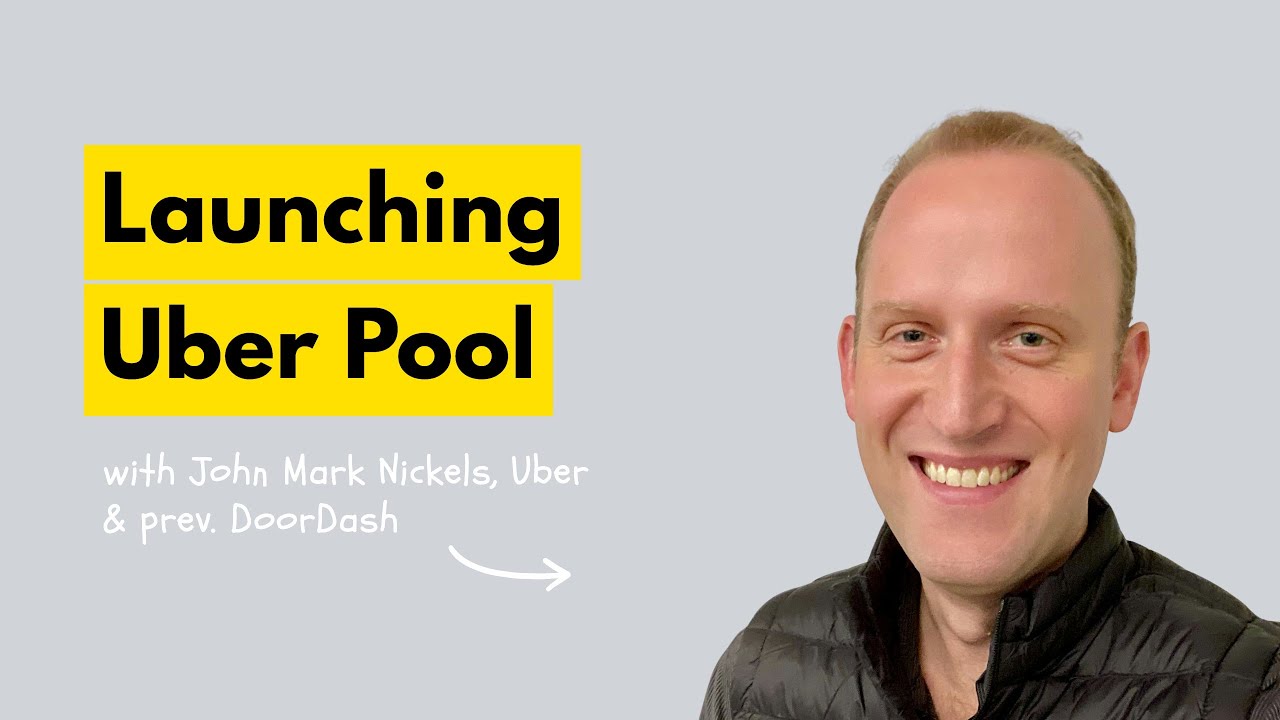
John Mark Nichols, who led Uber Pool's 2014 launch, discusses marketplace design, matching algorithms, and pricing strategy. He covers why shared rides work differently than food delivery, how Uber expanded supply, and product lessons for founders building two-sided platforms.
Chapters
Welcome back to Everything Marketplaces, where we talk with the founders and leaders from some of today's top marketplaces. So this is episode 175, which is really great group chat that we just have with John Mark, or JM Nichols, who's currently the Senior Director of Product Management at Uber. JM was also previously at DoorDash, and before that was at Uber, where he built and launched Uber Pool back in 2014. So he has some really incredible product and marketplace experience. This is a great chat with JM where we got to learn more about his experience early at Uber, Some of his key learnings from launching Uber Pool. He walked us through his experience at DoorDash, some of the specific challenges with it as a marketplace, what he's now working on back at Uber. We discussed topics like marketplace pricing and matching. Jam shared some of his key learnings from all this incredible experience. We also had a great group Q&A. I really enjoyed this conversation and know you're gonna find it a great watch to the end. So Jam, you of course have some real incredible, you know, product and marketplace experience early at Uber launching Uber Pool. DoorDash, and now back at Uber. So I'm really excited to have you join us here today. I want to start off by saying huge thanks for taking the time to do so in advance. So before we jump into all of your experience, I think it might be great to start off by briefly sharing your background for those here that might not know you.
Yeah, totally. Brief intro about me is only child, grew up in a small rural part of Tennessee, and then somehow made my way to Chicago, near Chicago, to go to school and study computer science because I was a computer nerd and decided I didn't really want to be a developer for a living because it wasn't that interesting. Yeah, this is like pre-iPhone. I'm dating myself. Fell into high-frequency trading for like 9 years at a prop trading shop in Chicago, which was a lot of fun. It was like playing a video game every day and writing algorithms and backtesting things. And anyway, and that was super cool. And then I fell into product management kind of by accident. I met the head of product at Groupon in Chicago through a mutual friend, had coffee, and he was like, you should, you know, consider a PM job. I was like, I don't even know what a PM is. But, you know, it was an interesting concept of trying to take Groupon from that daily deal model to like an actual marketplace, right? This was like in 2011, 2012. iPhone starting to be a thing. They're like, we're going to go from the push model of email to everybody to a pull model of inventory of local deals for different people and do more like segmentation, dynamic pricing, inventory management, right? Like kind of a true marketplace. So I was like, okay, I'll go from finance marketplace to local commerce marketplace. So I did that for a year and a half and then ended up following Jeff to Uber after we became friends. And I was the first PM on marketplace at Uber. And had the privilege of building the first version of Uber Pool about 11 years ago and then built out core marketplace. I was leading core matching for many years and rider pricing. After COVID, I moved over to lead delivery marketplace. And then in the middle of the pandemic, I moved over to DoorDash, was leading platform product for white label logistics. So what they called DoorDash Drive and online ordering and in-store ordering, and then moved over to Waymo for a year and a half, was leading commercialization for ride hail, their Waymo One network and fleet management, all that kind of basically building Uber, all the non-self-driving pieces. And then, yeah, ended up returning to Uber in February of this year. So kind of back to where it all began. And my current role is very focused on the mobility side of the business. We tend to try to do that, although there are a lot of product lines that certainly cross. But I have the fortune of being very mobility-focused. So back to Marketplace, I'm leading core mobility Marketplace again, which is all the matching, pricing, and incentives for riders and drivers. and also what we call mobility verticals. So things like how Uber works airports, for example, it's a unique marketplace in itself. And then also other new verticals like shared rides, reserved rides, inner city rides. We're doing some things around rental cars and flights and, you know, a whole bunch of interesting little long tail things. So that's, that's my day job. And then outside of that, I have 3 daughters that are quite young, 4, 7, and 10, and it keeps me quite busy. But I live in Marin, north of SF, which is my happy place. So I'm very, very happy to be here. But that's me in a nutshell.
Yeah, that's a really incredible background. So thanks for sharing with us. I know a lot that we're going to get into, but I did want to mention that, you know, it seems like a common theme here, of course, with, you know, Groupon, Uber, and DoorDash is that they're all marketplaces. So what initially attracted you to marketplaces and why have you continued to, you know, focus on them throughout your career?
Yeah, well, yeah, even back in finance, I mean, really, you know, it's— yeah, from financial marketplaces to local marketplaces to transportation marketplaces and back. You know, I think one of the things that, you know, I was early on, you know, kind of a, you know, a free market guy, you know, very almost overly influenced by the ideals of Ayn Randism or something. But, but the idea that really stuck with me during my finance days and then continued was this idea of, you know, free trade is the best thing that humans have ever invented to increase the creation of resources and the allocation of resources to those who want and value those most, right? And it's like, we used to do this exercise as part of onboarding people of like, give half the room dark Hershey chocolates and half the room like milk chocolates and let them trade and find the exchange ratio and preferences. And it was like a teaching moment, right? Because it's like, that signals to entrepreneurs and people with capital to build and produce more of the things that people value, which means, you know, the whole concept probably, you know, common sense to you guys, but I think It's not maybe widely understood, especially today in the kind of heated political environment. So that really stuck with me, right, as a concept. And like, same with Groupon, it was like, well, there's a Thai restaurant that needs business. They got people sitting around, they got salmon that's gonna spoil, right? There's people that are hungry that would pay, you know, less to, you know, find the right— it's like this idea of the efficient frontier. Like, we need a NASDAQ for local commerce, right? Like, you gotta fill the table at 4 PM at the right price. Right. And that still hasn't fully been built, actually. And then the same was true with Uber. It's like all these cars sitting idle, these car drivers, you know, at airports that are waiting for their, you know, kind of reserved livery ride. And so this idea of just like, you know, unlocking latent utilization and demand, you know, it's just such a win for all, right? Like, you look at Uber now, it's like how many billions of dollars they pay out to drivers, you know, how much more affordable and reliable transportation is as a result. And so for me, it's just like marketplaces are the embodiment of that concept of free trade. that is just like one of the most powerful forces for good in humanity. I like, I'm very passionate about that.
Yeah, no, I can, I can definitely tell. We all are here. So you got quite a few head nods. So you mentioned, you know, Uber and launching Uber Pool. So could you maybe, you know, take us back to the time in kind of 2014 and what all went into launching it at the time?
Yeah, yeah. So I mean, at the time when I joined Uber in early, early 2014, you know, UberX was really taking off like wildfire. You know, it was like we were launching, I don't know, 5 new cities a week and it was like the, Vertical line in trip weekly trip growth. You know, one of those like amazing product market fits that you see, you know, once in your lifetime if you're lucky. And so a lot of the energy in the company is really around that because it was like, wow, we're already, you know, UberX is generally cheaper than taxis. It's like, you know, more reliable, shorter ETAs. So the there was a lot of people like kind of kicking around the concept of UberPool. Some of the like the data science folks had produced some kind of like. know, rough kind of plots of like if we had 0 to 100% of UberX people opt into sharing their UberX, you know, the match rate on the y-axis. And it was like, wow, even in San Francisco in early 2014, it was like, you know, with some rough heuristics, there might be a there there. But it was hard to get momentum because, yeah, a lot of people are like, well, UberX is, you know, already like going downmarket and quite a good product. We should just keep scaling that. But, but I think, you know, we were, you know, careful on the innovator's dilemma type stuff and really There's also a lot of, like, I think, first principles around— and I still have this, right, by the way, I still lead shared rides. I'm back to it after 11 years. It's like my first product loves, you know, this, like, extrapolation of, like, not only, like, if you don't do it at Lyft or someone else will do it, but also, like, the future of cities really depends on it. Right. And that's very true even today in the autonomous world. Right. Which is like, you know, you're going to flood the streets with all these cars, you have this induced demand, all this congestion.
Right.
Doesn't work.
So I think, you know, we were able to garnered quite a lot of momentum to get it started. But the other thing at that time was, you know, Uber was quite small, right? Like, it's— people think it's a massive company now. Like, I think Marketplace, which, yeah, like I said, I was the first PM on, it was like 8 engineers, you know, when I joined. So, you know, it was also just like a little bit of just trying to do everything. It was much more startup-y. It's like we're working on surge pricing and matching algorithms and some airport FIFO queue. And then, oh yeah, we're gonna— maybe we should build a shared rides Uber Pool thing. So it was actually quite chaotic. But I guess sometimes order emerges from the primordial chaos.
No, certainly. It's kind of hard to imagine that at that small of a scale, you know, now kind of looking back. But I guess, you know, were there any specific challenges maybe with it, you know, that I would say, like, you know, kind of set it apart from the core ridesharing business?
Yeah. Well, and remember the core Uber strategy, which has been, you know, talked about probably ad nauseam at this point, you may all be familiar, but it's like, you know, this kind of playbook where you go to a city, you have a launcher, right? You figure out how to go get some drivers, and there's like, you know, you kind of get the supply base, you do the hourly guarantees, and like that way when you turn on the app for riders, you have a reliable service, right? It's kind of the bootstrap the supply side first sort of thing, right? Which is pretty common now. Um, and so when we went to do Uber Pool, you know, we of course already had drivers, but they weren't obviously familiar with the concept of pool. So one of the things that I did early on was, um, and also at this time This is when we actually used to give— if you signed up to drive for Uber, we would actually send you an iPhone 4 in the mail and pay your AT&T bill, which is insane. Think about that cost structure now. But that was just the way of the world in 2014. And so, but also, you know, this App Store cycle and Apple approved stuff and we wanted to move quite quickly on the pilot. We felt like it was very important to have like, you know, kind of a first mover advantage. And it was, you know, this is in the heat of the Lyft-Uber days. And so I definitely did some things that don't scale, I guess, in the Paul Graham kind of sense, which is we built a beta version of the driver app that could support the rideshare piece or the pooling piece, right? Which is I'm gonna do 2 pickups and 2 drop-offs to start. And then we basically called up like our 300 best drivers in San Francisco that had like the highest ratings and, you know, tenure or whatever. And we rented out Fort Mason, we brought them down. Some, some people, some engineers and I loaded up 300 iPhones with a beta build that supported Uber Pool. And I got up and was like, hey, like, we're excited that you guys are going to be the pilot. We were like, well, if we just get 300 drivers, it's enough liquidity to like seed a beta of Uber Pool. And then, and then we can just, you know, ship the option in the rider app. And then that's kind of like how you get the initial flywheel going. So yeah, it was wild. It was like, it's still— I still remember I was living in the Marina at the time. And I took my first Uber Pool, you know, to the office when we were at 1455 Market. And I just remember like the first match, like, you know, I was in the car first and somebody opens the door and gets in. And it was like my first Uber Pool experience. It was like a proud parent because like, ah, you know, I feel like a proud father, like, of having built this. And it was also this sense of possibility of like, wow, like we're building the future, you know, like it's— and so I don't know. I get excited about that stuff.
No, those are definitely really cool stories, you know, to hear. So, so I guess, you know, jumping over to DoorDash, right? And, you know, your time there, that's also a complex marketplace, you know, as a kind of 3-sided. So I guess, you know, could you share a little bit more about, you know, your experience at DoorDash and then maybe some of the specific challenges with it as a marketplace?
You know, DoorDash, it's been interesting to compare, like, say, Uber and DoorDash, right? Like, I think, you know, they started with different sort of DNA and focuses. Like, they're both marketplace. Like, if you just look at the eat side, right?
Like, forgetting rideshare for a minute.
Yeah, you're right. Like Uber Eats, And DoorDash, you've got merchant, consumer, Dasher, driver. But, you know, like, you know, the, you know, Uber started very kind of like rider-focused and then by extension a little bit more eater-focused. And it was like, you know, building selection, say more merchants was really a function of like, well, you might, you know, probably want to have a Thai option and a sushi option and a pizza option. So that kind of leads you to build the liquidity in the marketplace. But it's like kind of like we want to have a You know, a great eater experience with a long list of restaurants to choose from. And we're always like DoorDash, you know, you hear Tony talk about like, you know, he was like working in his parents' restaurant or whatever. And, you know, the whole thesis out of Stanford, right, was like, we just feel like there's an opportunity to help small businesses, particularly restaurants, you know, be more successful. It's like they can't do deliveries because like there's like the husband and wife and they got to be in the store, you know, to like work the counter and the, you know, it is like they can't be delivering stuff. And so delivery was, was always just their first sort of like foray into helping small businesses. But even though they obviously do, like Uber, organize typically around audiences, right, they have a team focused on merchant, they have a Dasher team, they have a consumer team, so forth. But there's a lot more emphasis at DoorDash on the merchant. And as opposed to just being like, well, you know, JM needs a Thai place and an Indian place, it's again that kind of, you know, ethos of like, we want every Thai place in San Francisco to succeed and flourish. And so we're going to like help them. And you'll see, you know, you've seen DoorDash announce stuff like merchant services, right? And point of sale sort of experiments, things like where they can go deeper into the value stack for the merchant side of the marketplace. But they're motivated to help the merchant succeed. And then by virtue of having every Thai restaurant in the city on the marketplace, it just so happens that you have a great eater experience as a result. But it's for— it's a different motivation, if that makes sense.
Yeah, no, that's really great. As far as, you know, you point out that the focus there. And I guess, are there any kind of, you know, maybe kind of stories or examples of that from a product perspective as far as, you know, the focus on the merchant there?
Yeah. Yeah. Well, you know, there's a lot of emphasis at Uber and DoorDash on like, you know, driving, for example, like all the employees should see what it's like to be a courier, see a driver. And I think, you know, but DoorDash, again, with the merchant focus, very much emphasized like the merchant side. Like I remember going to a Pizza Hut outside of New York and like, you know, helping to like I wasn't actually making pizzas, but no, I was like working the point of sale and delivery, and it was like very complicated. They could retype in the thing at the time from the drive orders. It was like very complicated, but there was a lot of focus on that experiencing. You know, I remember going to Sweetgreens and Chipotles and, you know, very like, you know, all the sorts of the merchant side of things, which was newer for me. But another thing I think DoorDash did really well was, but very scrappy pilots, you know, and also very quick to, you know, it's kind of like this. There's really almost no one-way doors in life. I think even the ones that people say are one-way doors are not really most of the time. And it's better to get data and move quickly than deliberate, you know, for weeks. And so, you know, DoorDash should almost take that to an extreme of like ready, fire, aim sometimes. But it was like, well, at least we're running through a wall and we'll find out if it was the right wall or not. But, you know, like things like Facebook Marketplace was one where they— I think I just saw on the news that this ended up not making it. But The idea at the time was, you know, Facebook Marketplace has, let's say, you know, moms that are exchanging kids' clothes. It's very common in the Bay Area and Seattle and all over, right? It's like your kids are growing quite rapidly. I know they outgrow their clothes. You need new ones. You want to buy new ones. There's like a whole marketplace around that, but it's very inefficient, right? It's like, you know, you got to go drive over there and pick the stuff up or sort of things. So it was like, well, what if we just had a thing in the Facebook Marketplace that says, you know, boink, like have DoorDash drive, like deliver this, you know, to the East Bay or whatever. And so then the question was, well, Facebook was interested, but like, of course, their timeline to get that into the Facebook app, it's gonna take like 9 months. And like, is this actually gonna have product market fit? Is this worth it? So we were like, nope, we're gonna short circuit all that. And I had a PM on my team just like set up a Discord channel or, or like get on the Facebook Marketplace, I guess, directly with a bunch of moms. He found like a, a moms group in East Bay or Seattle and was like, hey, do you wanna pilot this with us? And she was like, I'm bored. So you got like, couple hundred moms, and he was like the human in the loop, right? He just like used a web form to manually request a Dasher from address A to address B, and he just like manually fulfilled the stuff just to try to like, again, close the loop. And, and then like, as, yeah, build a 9-month, you know, Facebook app, and all, all the questions that all PRDs have. What happens if the thing's broken? What happens if it is stolen? What happens if there's— is there— does there have to be a box? Like, you know, it's like, let's short circuit all that and just see if there's a there there. And so I think it was a good example of that.
No, it's definitely a great example. So I'm sure you'll get a quote We'll get some, some questions on it when we get into the group Q&A. So I did want to, you know, go back and, you know, transition over to, you know, to Uber. So you're back at Uber now. So could you maybe share more about, you know, your current role at Uber and what you're working on?
Yeah, yeah, totally. So I kind of gave a little preview earlier, which is, yeah, I'm kind of back on Mobility Marketplace. So it's thinking about how we do incentives, pricing, and matching for riders and drivers. And then also, yeah, like I said, kind of airports, shared rides, reserved rides. Product line. So I mean, if you look at Uber, you know, I think one of the really interesting arcs over the last few years, in addition to becoming, you know, a solid, you know, S&P 500 company that's quite profitable and, you know, kind of, you know, escaped some of its storied past, is the expansion of the product lines. Right. Like it used to be like UberX was kind of the primary situation, right, for the riders. And, you know, the— on the driver side, it was, you know, independent contractors. And, you know, that was the whole original model. It's been great. It's been very successful. But, you know, if you follow Uber in the news, you'll see on the supply side, you know, we've— we work with taxis now. It's like almost come full circle. Like you can get taxis in New York City and, you know, other parts of the world. And, you know, we're working with fleet owners. A lot of countries are actually all fleet owners. A lot of, you know, you know, some places in Europe and then in India, it's a big part of the business. And so— and then obviously autonomous cars is the other big thing on the horizon. And if you follow Uber in the news, you'll see, you know, we've got deals with Waymo and Cruise and Motion. And kind of almost all of the major AV players. And one of the things I'm really excited about is that we announced is we're going to— the next 2 deployments for Waymo in Austin, Texas, and in Atlanta are going to be exclusively on Uber. So they're actually not going to be launching a Waymo One app, and you will only be able to get the Waymos through Uber. And Uber will basically be, you know, bringing the demand side of the network as well as the fleet management side of the network. So That's some of the things I'm working on. But yeah, I think that expansion of the supply side into many different supply factors or types. And then on the demand side, again, we've got a teens product, we've got a reserved rides product, we've got a great shared rides product again after COVID kind of shut that down for a few years. And, you know, we're just kind of like trying to build out the whole kind of toolkit of, you know, transportation modalities. So I think that's, that's in a nutshell what I'm working on.
Sounds like quite a, quite a bit, lots of challenges. So, so I'm glad you actually mentioned it as far as, you know, expansion on the supply side. So, and that's something that we're, you know, commonly talking about here in the community, albeit probably a little bit earlier stage. But do you maybe have any kind of key learnings on that when it comes to like the importance of sequencing and, you know, expansion on the supply side?
We obviously think a lot about like supply-demand balance and, you know, growth and all that. But, you know, there's also like A longer-term view of that too, right? Where it's like maybe you're going to be a little bit oversupplied now, but you think interest rates are changing. You know, like there's like long— it gets complicated, especially at scale and different, you know, kind of markets. But I would say the general point of view that I have is that we kind of want every vehicle and every seat in the world to be on the Uber platform. Like, I'm not— we're not like— we don't think we're going to tap out, right? If that makes sense. It's like part of the reason we're going To get taxis and fleets and AVs, as we think that that just further addresses the supply of vehicles to put on the network. We increase shared rides, we bring prices down, we start to eat more and more into car ownership and other personal transport needs. And there's kind of just a sort of a core belief there that like you know we're going to continue to invest in that flywheel, and that we want all those different kind of supply modalities to be on the network. But another thing that was really interesting about about Uber is, you know, like most marketplaces, like ads marketplaces and stuff, you know, it's like there's not that like physical dimension, right? And so like adding more supply doesn't inherently make the thing more efficient, if that makes sense. But the, the, the one of the really things that was unique about Uber, even in the early, you know, San Francisco UberX days, is, you know, when you go from 1,000 drivers to 4,000 drivers and ETAs go from 10 minutes to 4 minutes, That's obviously a much better rider experience. But since the drivers were only paid for the time on trip, that also meant their efficiency went up, right? Because there's fewer unpaid legs between trips. And so just adding liquidity to the supply side actually enabled prices to come down. Right. And also the service to get better, which is unusual. I think it's a very kind of unique thing to Uber's marketplace.
I'm glad you mentioned pricing as well, because that was actually a topic that I wanted to chat about. And I had quite a few founders, you know, that wanted me to ask you about it. So So I guess, you know, starting with that, with pricing and, you know, I guess generally speaking from like a high level, you know, how do you think about kind of pricing at Uber? And if we kind of like drill down into it, could you maybe like share some kind of specific examples as far as like how it impacts the marketplace?
Yeah. I mean, I think, you know, when I started 11 years ago, you know, it was very simple. It was kind of— and you kind of just take, you know, the existing model, which is taxi, which is, okay, there's a meter, there's a time and distance rate, and we just do that.
Right.
And that's, that's You know, it's like, okay, well, might be dogma, but it's the best, you know, existing thing. And so you copy that and go. And then, and then, you know, one of— and then one of the things we wanted to do was almost by necessity with Pool was offer an upfront fare, right? Because like with Uber Pool, it's like, well, now how do I know how much of the meter is me versus you? And like, that's not a great rider experience. Am I going to pay $5 or $10 for this ride? And so we wanted to be able to say you're going to pay $8 for this ride whether you match or not, because as the market maker, Uber should kind of eat that variance, right? Like, we also don't want to tell the driver, hey, you might get $5 from one rider or $15 from 3 riders.
Good luck.
You know, that's not a great— it's like our job as a market maker, right, is to, is to price that inventory correctly. So that required us to decouple prices, right? Move from a time and distance rate, which is very simple, or we charge, you know, whatever. And then we take some take rate, right, which is a very simple model to it. Now we have to like collect money from riders And like balance the budget in terms of how we pay that out with drivers, which was scary for folks at the time. I actually remember the first meeting with Travis pitching this idea of decoupling and, you know, thinking Uber. And he was like, I don't know, like the 2008 financial crisis PTSD or something. He's like, what? You're going to bankrupt Uber if you get that wrong. I was like, dude, this is our job. We got to price this stuff. And I was like, wow, even Travis is afraid of this. It's a good, interesting sign. But no, we obviously didn't fully lean into that decoupled prices. The value to riders of a fixed upfront fare was obviously was very high when we tested on UberX, of course did quite well. And so, you know, now in markets where we're able to do so from a regulatory perspective, we are generally quite decoupled in terms of how we think about rider pricing and driver pricing. And the other big change that Uber introduced and Lyft and others have followed a few years ago is upfront fares for drivers, right? So instead of telling the driver, you know, there's a time and distance rate and here's a trip that's going to this place, they actually get, you know, the fare on the offer card as well, which allows us to kind of, you know, think about how to find the right clearing price based on kind of driver preferences and supply and demand and all that. So yeah, the pricing has gotten crazy complicated is like the short answer.
I'm sure we could probably have an entire conversation on pricing as well. But, you know, another related topic that I wanted to chat about in a little bit more detail is matching, right? And matching, of course, is key to Uber. So could you maybe share more about that, you know, kind of going back and some of the considerations with matching and how that's evolved as well?
Yeah, that's another one that's gotten super sophisticated. And again, yeah, when I started, it was matching was basically a ride request comes in, we find the 8 closest drivers, we rank them according to Haversine distance. So it might be across a river and then we match and we go and, you know, you repeat the process. If the driver one declines, you re-rank and then reoffer and so forth. So that's just Simple version. But yeah, like, obviously that has flaws. So in addition to building out like an actual ETA estimate that uses the road network and routing, you know, we started looking at like, wow, like we just kind of, you know, got this driver to move across town to pick up this rider 15 minutes away. But then like 30 seconds later, this other rider requested that would have only been 5 minutes away. And so you quickly kind of, you know, it becomes quite obvious like, wow, we should be able to swap those assignments or do something more So that's when we started in the early days experimenting with things like TripSwap. And that led to a more kind of global optimization system, which we use today, which is more of a— you can think of it as more like a bipartite graph, right, where you have a set of riders requesting in some period of time and you have a set of drivers and you're trying to do kind of the minimization of the travel time for everybody in the network, right? Not just like you getting the shortest ETA. And so that's kind of the primary foundation model that we think about. And of course, there's lots of bells and whistles you can do on top of that. But that's the general idea is that we're trying to do a global optimization for the whole network.
Certainly sounds like a lot of considerations and, you know, kind of complexities. So that did actually make me want to ask, you know, what is a day in the life of the senior director of product management at Uber like?
You know, it's certainly evolved. I mean, when I started at Uber, I was an individual contributor, kind of a pretty junior PM. I'd only been Groupon doing PM for a year. So, and so it was much more of the kind of the IC life, right? Which is like you work with engineering team, you do sprints, you do bugs, you call customers, you know, all the kind of classic stuff, especially in the early days. And now, you know, I, I, you know, I kind of grew up at Uber and then, you know, I have a more senior role now. I have a team of like about 70 product managers. And so, you know, I don't get to do quite as much hands-on stuff as you, but I actually do. I really value being in the details and I still, I love the whiteboard. I go to the whiteboard all the time that we're back in the office half the time. And I was like, that was a lost art during COVID to get back to the whiteboard. But no, it's a day, you know, I kind of nothing too surprising probably, you know, as I do product reviews, I do kind of operational reviews and metrics and business performance. We have obviously an ops team that we work with. It's very, we collaborate closely on. I do one-on-ones. I'm not like the NVIDIA guy that says just email me. Actually, I think one-on-ones are valuable and I try to carve out career development ones in particular. I think, yeah, but yeah, I don't know that I have any sort of unique secret sauce on day in the life that's that different from probably most people.
I'm sure it's always interesting though. So yeah, so we're gonna get to the group Q&A in a little bit. Otherwise you could and I could just go on talking about some of these topics. But you know, I guess you have some really incredible marketplace and product experience, you know, so do you have any maybe tips for earlier stage kind of founders here when it comes to to product and marketplaces.
I think one, one thing that I saw go a little bit off the rails in the early days of Uber was, you know, again, organizing around these audience teams. You had like the driver team, the rider team, the marketplace team, maps team, whatever. Is there would be this sort of like tension where it's like the driver team is like, well, we're just trying to, you know, more driver love, you know, we need a better experience for drivers, you know, like, you know, not give them whatever, I don't know, low-rated riders or, you know, you know, it's just like, And then the marketplace team is like, well, we're all about marketplace efficiency. We want an efficient marketplace. And somehow it got into this sort of like, is it experience versus efficiency argument? We got a little bit with pool on the rider side too. It's like, well, the rider wants a— doesn't want to take all these detours to pick up other riders, you know, even if that's efficient. And it's like, those things aren't actually at odds. Like, I think they can be on maybe some first order thing, but in the second order, it's like, If we make the marketplace more efficient, then like back to the ETAs are lower, drivers can earn more money, they can be more productive, right? If we can make Uber Pool more efficient, we can lower prices for Uber Pool, which means you can take it more. You know, people are quite elastic. The shocker. And so that would be one piece of advice is if you see that sort of paradox, like find a way to break that. Like, I think efficiency and experience are not at odds with each other.
Well, cool. So we're gonna get into the group Q&A here. Hey, Dimitri, do you want to come on?
Yeah. My question is about whether you see any potential for kind of the Uber Pool model in other applications. So either aggregating demand or supply, either kind of within or across marketplaces. So like Uber Pool is aggregating demand. You could also imagine doing the same thing to supply. You could also imagine aggregating demand across apps. So for example, an app that allows you to multi-home as a rider on Uber, Lyft, and taxis and so on. Do you see any potential for this model in any kind of part of the marketplace ecosystem?
Yeah, it's an interesting question. I haven't thought too much about that. But I, one thought I have on that is like, there is like relationships between different marketplaces that are pretty, I guess, disconnected right now, right? Like, like, I don't know, let's take LinkedIn and UberPool, right? Like, you could build a LinkedIn version of UberPool with recruiters getting matched with people looking for jobs, you know, and then, like, you know, or have the job interview in the back of the Uber. I don't know if that's really practical, but, but, or, or like, yeah, people typically You know, you can take an Uber Pool with strangers, but if you want to organize a pool with people, you know, and then go to a restaurant or go to an Airbnb, right? Or you're going to a concert. You know, there's probably a relationship between— yeah, like, there's like Ticketmaster and StubHub, and then there's OpenTable, and then there's Airbnb and Uber. I don't know. Maybe there's something there around connective tissue between marketplaces for different sort of things where that people typically have connected journeys across. I don't know. But, yeah, bundling.
Oh, interesting.
Yeah. Well, as the Andreessen thing, right? All software is either bundling or unbundling. I love that one.
Well, hey, Dennis, do you wanna come on?
Yeah, we would love to. Poor Mason's story, Uber Pool, that's amazing. Bringing the iPhones out, super, super cool. Fast forward to today, Uber's a lot bigger. Would love to hear how decision makers at Uber stay close to the driver experience and connect with them if there's any one-on-one connections or, you know, surveys? Or like, how do you guys do the same thing now that it's a little bit further from those hacky days?
Yeah, no, I think, um, it's super important and it can be very easy to get away from that hands-on experience, right?
You could say—
I think everyone, there's times you get busy and you fall into like, well, I've got all the metrics and the dashboards, and, you know, the UXR people are talking to the drivers. And but it's like, yeah, it becomes a little bit like a game of telephone and too disconnected at some point. So no, we have a strong emphasis on regular, you know, drive for Uber Weeks where we have like competitions, incentives, right, for people that like to drive and sit at stuff and, you know, get the prizes for the most trips and stuff. And then, um, Sachin, uh, who was a— who runs the driver team, product team, uh, until recently he actually moved to the head of product role. He drives all the time. Like, he, I don't know, he probably drives like every couple weeks or something crazy like that. Like, he's very, and he has a running doc of like, here's all the things I saw and happened and tag people in. And like, it's very— so no, I think it's super important. I tell my PMs too all the time, I was like, we can't become like the ivory tower of, you know, people in some San Francisco office on a whiteboard, you know, in some theoretical situation. So yeah, I think you obviously using the product, driving for it.
Yeah.
If you're on the merchant side, you know, again, doing the merchant thing.
There's just no—
I think if you just do it, like, yeah, and commit to it with regularity, all the right things will probably fall out of it. That's like 90% of the work.
That's a great question, Dennis. Hey, Averall, do you want to come on?
Yeah, happy to. Thanks for asking. Um, so my question is on the lines of, uh, Uber and the aspirations to be a super app. So, you know, there's multiple ways to think about super app, but like, you know, the way I think about it from a consumer lens is, um, aggregation of consumer spend. And, and, you know, you know, what aggregation of consumer spend can you bring under the hood of a company, right? So that's how I think about it. Would love to hear if you think about it like that or not. But if you go with that definition, you know, obviously we have Uber doing rides and Eats. Eats as a, you know, byproduct, you also have groceries, right? Where do you see the growth happening in the aspiration of a super app? And if that, if that is even a You know, a thought within the company.
Yeah, yeah, it's a good question. How super can the super app be? I mean, there's like regional differences too, right? Like you see like the WeChat in China sort of model, right, where you kind of like have the kitchen sink in an app. And that in general has been less successful in the US, right, where there tends to be more dedicated apps and people are happy to have a gazillion apps on their iPhone. So there are like cultural, regional sort of factors and all that nuance, right, which is super important. It's probably part of why the There's a graveyard of Western companies trying to succeed in China. But, but, but yeah, you're right. There's also a question of like how far into what vertical to go. Like, take your eats thing, right? Like back to the DoorDash thing here, right? It's like you could really double down on small businesses and restaurants. You could really double down on grocery, you know, prescriptions or—
yeah.
And even within grocery, do you do the weekly big Instacart kind of order? Are you trying to do the— I need the small cart You know, forgot this or that order. There's like different, you know, obviously trade-offs and all that. And so I'd say one thing is like the search space is quite large, right? And so you kind of have to make sure you're avoiding— or you've got to constrain it somehow, right? Otherwise you might just get lost in the wrong hill ascent or whatever. Within mobility side, which I spend more of my time thinking about, it's a little bit more clear, which is like I think the long-term trend, as I extrapolate, you know, autonomy is largely solved by Waymo already and will continue to be solved in cheaper, more economic ways, probably including vision. I don't know on Tesla's single take. If you know, you could probably make a lot of money betting on that. But, but, you know, the extrapolation is, you know, all the sensors, everything comes down, you know, the remote support stuff comes down. And so, you know, the, the, the basically then what happens, right? Do people still own cars? I tend to think not. There's probably a different view on that. But, you know, part of what I'm trying to do is just have a sort of first principles view of like 10 years from now, what does the transportation marketplace more broadly look like? What's going on with Avis and Hertz at the airport? You know, what's going on with the OEM? What's going on with car ownership? And then how do we build products and services that are complementary to the larger macro trends? Right. And sort of like trying to kind of like be synergistic with them, if that makes sense.
Good question. Hey, I saw Michael. I know you sent me a message. Do you want to come on or— Sure.
This is really— I'm in the transportation space. I own a charter bus company. So it's kind of a fascinating conversation for me. And I was excited about Uber Charters, but then it kind of disappeared. But I didn't really hear the backstory or understand the insights and learnings from what happened with Uber Charters.
I saw that too. It was a little bit before my time. It was during my away time, that charter. I think, I think you're right. It was sort of sunset around the time I came back to Uber.
So I don't unfortunately have the inside story on that.
But I would say my intuition would be, you know, there— if you think about transportation needs, right, back to like, yeah, there's car ownership and all that. But just like from a use case perspective, right? Like there's like going to work, there's like going out to bars and stuff. But then there's like, I want to go to Tahoe for the weekend, right? Like, I'm not going to take even an Uber Pool, maybe with a big enough vehicle. If you do Uber Pool on a charter bus, we can go to Tahoe this weekend. But like the modalities become very different, the use cases, the pricing necessity and so forth, right? And so that's why, you know, you might have people that don't own a car, but they use Zipcar on the weekend. They use, you know, Uber to go out. But then, yeah, they want to go with their team to Napa for an offsite. Yeah, you probably need a charter bus. And so I think, yeah, if you're saying, well, Uber, super app, all transportation needs, great, throw it in the kitchen sink. But the problem is it's not a very adjacent thing. Like, the other thing I think is really important is you want to try to think about things that are more adjacent. Like Uber Pool is very adjacent to UberX, right? It's just a cheaper version where you don't need the whole car to yourself. Same supply, all that, right? Whereas like a charter bus is like a totally different supply form, different model. Like, I'm sure you know more than me, right? Different kind of model and also just very different intent, right? Like, it's not like I'm going from, you know, commuting to, you know, going out on a date in an UberX to going to work in an Uber Pool. It's a very adjacent thing. This is like, oh, I need a bus and you know, book a winery and there's a team offsite and like, you know, whatever though. It's just I wouldn't even think to open Uber, probably most people, right? And so it's just maybe a little bit too far afield from the core product line.
One, one quick add-on, uh, just in this space. I noticed that you guys launched, uh, kind of like an airport shuttle to hotels, I believe. So aggregating demand at the airport and then dropping—
Yeah, New York City as well.
Yeah.
Could you expand on that a little bit?
Yeah.
Yeah.
So we were actually— one of the things I helped launch was what we call Uber Shuttle, your high-capacity vehicles, which again, like extrapolating from, you know, Uber Pool, it's like, well, it's great to get 3 people in a Prius, but, you know, what if we had a bigger vehicle, more people? It could really unlock even more efficiency and lower prices. Right. We're always trying to think about how to do that. And so, you know, I was part of the team that launched in Cairo actually back in 2018. The first version of Uber Boss or Uber Shuttle, and since then we've expanded the consumer-facing product to a bunch of cities in India where it's you know doing quite well. And so you know we had this idea of like yeah what if we you know I think in markets like India and Cairo there's less public infrastructure, and so it's like you know very complementary in the U.S. I think it's a different environment right, and there's often really great you know kind of you know bus and train systems in the core cities, but. You know, we saw airports and stadiums in particular as very underserved by efficient, low-cost transportation. And so we said, well, we'll use the same tech and build, you know, basically, yeah, we were running routes from LaGuardia to different points in central Manhattan. And yeah, it's taken off like wildfire, you know, where we're, you know, it's like $18 a seat and, you know, it comes every 30 minutes. And yeah, it's been all over the news and like it's actually taken off quite nicely. And we launched at Hard Rock Stadium in Miami as well. We had a Taylor Swift concert a few weeks ago. You know, we had it all decked out in Swiftie stuff. It was great marketing, but, but also very popular. Again, getting in and out of the stadium, quite difficult. Also, back to the congestion thing, having a gazillion cars there is not great either. So yeah, we're always looking for ways to like leverage the technology platform and all these different applications.
Cool.
Hey, J.M., actually, I want to jump in here and ask because, you know, you have some awesome experience, you know, throughout the various stages of Uber and of course, you know, DoorDash. Dash too in hypercompetitive markets. So, you know, just generally speaking, you know, how do you think about, I guess, like, I would say kind of the competitive nature of markets and marketplaces when they can be winner takes all?
Well, first you'd ask, is it really winner takes all? You know, how many examples are there of that?
Right?
Like, I don't know, like there's Marriott and Hilton, there's Expedia, and I could say Boston, but, you know, there's, there's Uber and Lyft. There's Coke and Pepsi. I don't know, man. Like, the list goes on. Like, if I extrapolate, I think there's something to a stable equilibrium around like 2. And then sometimes a 3rd tries to come along and there's some little thing. And you see it in rideshares like Bolt in Europe. And, you know, you have, you know, Didi that was primarily in different markets, but now Didi and us compete in some markets in Latin America, so forth. So, yeah, I don't know. Is it really winner takes all? And why is 2 the stable equilibrium?
I don't know.
That's food for thought question I'll leave you with.
Well, hey, Anton, do you want to jump on? I saw you raise your hand.
Yeah, absolutely. Hey, Jay, thanks so much for your input already. Very inspiring. I just wanted to ask, like, because you've seen, you know, building that kind of product costs different companies, what are kind of recurring patterns that you've seen that you've been able to kind of accelerate adoption of the service, especially for new users, getting kind of in the line of like, haven't tried the service to trying it and then just starting kind of nurturing there and of course learning in the same time. So what has been your experience here?
Well, I said already the general marketplace thing, you know, is like bootstrap the supply side and, you know, kind of that's one piece of it. But the other classic thing, of course, is just run incentives, you know, like give it away for free and make them pay later. And of course that can work. But I think one of the things that I really learned over the years is You know, this idea of not, you know, minimum viable cupcake, I guess, instead of minimum viable product. Like, you know, if you— I think incentives can fuel the growth fires, but if you do it too soon on a broken product, you're just wasting money. And, you know, unless it's really accelerating your learnings. But, but so that would be one thing is don't just like— and I think we made that mistake in early days of Uber Pool too. We put a lot of incentive subsidy dollars into it, maybe a little bit too soon over optimistic. And so, yeah, I think taking a rational view on that is super important. But the other thing would be like, yeah, do you have like evidence that there is something compelling about the product, you know, separate from the discount or the price level or all that, right? Like, you know, you want to get to the point where it's like you would, they would, you know, pay, you know, like, you know, it would be like their life would be over if, you know, your product went away, like that scale. of like, you know, necessity in my life. I guess the holy grail would be like my iPhone and, you know, Apple Watch or whatever. It's like, you know, the things that I can't live without. But yeah.
Awesome.
Well, that's a good, good last question. So we're almost out of time here, JM, but, you know, I really appreciate, you know, taking the time to join us here today. So, you know, we kind of packed it in here with all of your, you know, your experience and then, you know, some of the questions here. So we really appreciate it. You know, I actually had one last question for you before we wrap things up, and that's If you could go right back to maybe before you joined Uber, you know, what would you tell yourself about marketplaces?
Well, I think the thing that maybe being a father now and having more of a human touch to it, back then I was more of a, you know, efficiency focus, right? It's like, it's like, it's, it's, but it's almost like numbers in a spreadsheet, right? Like, especially in the finance industry. Whereas now I spend a lot I feel much more connected and close to the human side of things, right? This idea of like, wow, like, you know, I talked to this driver who's able to be home to put his kids to bed because he doesn't have to work this graveyard shift anymore, right? Or like, you know, the people that, you know, I lost some close friends to drunk driving accidents back in the day. And so when I think about, you know, we're helping get drunk drivers off the road by creating a cheaper, reliable transportation thing and the impact of that on people's families and lives. So I spend a lot more time really, I guess I feel more motivated by that human thing and like, yes, building the efficient marketplace and all that. But back then I was much more into like the nerdiness of it, whereas now I'm much more into the humanity of it.
That's going to be great parting advice. And yeah, it's definitely, we could nerd out on it. But of course, you know, it's, you know, if we zoom out, it's like, you know, the ability of marketplaces have to, you know, make an impact is definitely there. So Cool. Well, once again, I really appreciate, you know, joining us here. And last but not least, you know, where can we keep up with you at?
Oh, thanks. Yeah, I'm not super active on Twitter, but I occasionally get on there. Maybe I should get more. @NicholsJM. And then I also have a— we didn't talk about really today, but a strong interest in coaching, particularly around a path of what I call conscious leadership, or other people have called. And so I do some coaching and advising in that. So I have a website called rhythmofbeing.com. Rhythm of Being, inspired by Microsoft Rhythm of Business, but it's like, you know, the personal version of that. And I have some blog posts and other resources there that you might find interesting. But other than that, yeah.
I'll include links. I'm sure lots of founders and teams coming your way. So we really appreciate you joining us here today. And thanks everyone for the questions.
More from Max




B2B Marketplaces In The Age Of AI With Sonia Nagar From SNAK Venture Partners | EM Group Chat #216

Insights From Investing In DoorDash With Saar Gur From CRV | EM Group Chat #215

Starting & Scaling Fora As A Leading Travel Marketplace With Evan Frank | EM Group Chat #214

Marketplace Investor Insights With Andrew Blachman From Marketplace Capital | EM Group Chat #213


Deep Dive Into ResortPass As A Leading Marketplace With Michael Wolf | EM Group Chat #211


Masterclass On Marketplaces In The Age Of AI With Fabrice Grinda From FJ Labs | EM Group Chat #209