Starting & Scaling Eventbrite With Kevin Hartz | EM Group Chat #172
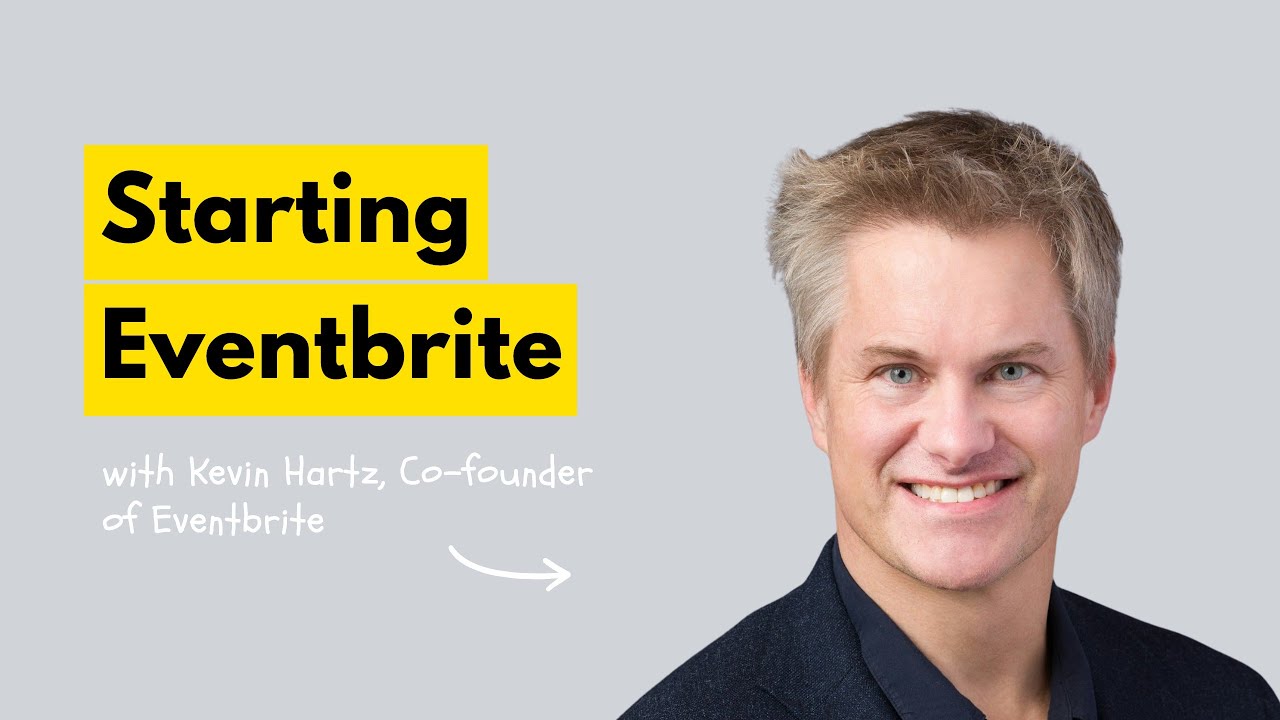
Kevin Hartz, Eventbrite's co-founder and former CEO, talks through the company's founding, early product decisions, payments challenges, the IPO, and COVID recovery. He also covers his angel investing work and his venture fund A-Star, with live Q&A from other founders.
Chapters
Welcome back to Everything Marketplaces, where we talk with founders and leaders from some of today's top marketplaces. So this is episode 172, which is a really incredible group chat that we just had with Kevin Hartz. Kevin is the co-founder and former CEO of Eventbrite, which is one of the largest ticketing and events marketplaces. Kevin is also a prolific angel investor, having invested early in Airbnb, Uber, Pinterest, and Opendoor, and now invests through A-Star, which is a venture fund that he started. So this is a great chat with Kevin where we got to learn more about his early experience starting Zoom that was notably acquired by PayPal. We went back to the founding story for Eventbrite, what the first steps were that, that they took to start at the time. Kevin shared about some of the early challenges that they faced, walked us through how it evolved and scaled, some of his key learnings and lessons from Eventbrite. We discussed how Kevin evaluates marketplaces when investing in them. We also had a great group Q&A. I really enjoyed this conversation and know you're going to find it a great watch to the end. So Kevin, as I mentioned right before we started recording, you know, you've been one of the most requested group chat guests since we first started the community. So it's great to have you join us here today. And of course, I want to start off by saying, you know, huge thanks for taking the time to do so in advance. So we have a lot that we're going to dive into with all of your incredible experience as a founder and operator with Eventbrite and now investing. But before we do, I think it might be great if you can start off by briefly sharing your background for those that might not know you here.
Thanks so much. I'm absolutely delighted to be here. I've Always, this is what I've always wished existed back in my marketplace building. And instead we had to kind of cobble resources, find specialists and so on. So this is absolutely thrilling. You know, we'll start, I'll start just in my second company. I had a very small first, I guess all startups are small when they start, but I started a company in the late '90s. And that company was acquired by a public company at the time. It was a modest exit, but it was important because it got me a little bit of a balance sheet to not have to work full-time. And also with angel invested a good chunk of that money into what became PayPal. And that's also an interesting background because that's informative of me seeing, I got kind of a front row seat to watch that extraordinary PayPal team, Peter Thiel, Elon Musk, Roelof Botha, Max Levchin, Keith Rabois, so on and so forth. But I also seen payments. It was really online payments going on a tear, which it certainly did from, you know, after the dot-com crash in 2001. And it informed me to build related businesses to PayPal. And Peter and Roelof, remember meeting with them and when they were running PayPal and saying, you know, you go after Western Union, that's an old lumbering company. They were the fresh new kind of Stripe of the time platform for us to build on top of. And we were the very first developers. We actually convinced a fellow named David Sachs who was head of product at the time to open up his API. And we jumped in and, and that's very important because you're in most cases, many cases you're looking for platforms to build on top of. And so we were able to build on top, use their licenses, use their bank, not bank charters, but KYC work and so on. And we were able to build a substantial business there. And that's Zoom Xoom, a money transmitter business. Well, I can try to, I'm just probably going to take up the whole offer because I'm so, or so full hour because I'm so old. If I talk through all my experiences, do we want to go a little more back and forth or I can keep moving towards the present in my bio?
No, that's some incredible early experience. So I definitely think it's helpful here. But I did want to go back, you know, to the founding story and, you know, first steps for starting Eventbrite though, because it's of course, you know, a name we all know of today. So, you know, what was that kind of like founding story and first steps that you took to start at the time?
The founding story is that my fiancée at the time, Julia, and I, you know, had, you know, the good benefit or the, of, again, this asymmetrical information that payments, you know, was really cooking. It was like a really fast developing market online and Zoom was up and running and growing. We brought in a really great CEO who's stayed with the company, gosh, almost, you know, 15 or 20 years. And so we wanted to do this again, but instead of the international remittance market, we wanted to do this for ticketing. However, it wasn't ticketing for Taylor Swift or other big acts or professional sports. It was everything, you know, kind of at the bottom of the grand pyramid. So you had a lot of fragmented creators, relatively small creators, and for the first time they could get online Publish an event and start selling tickets. And that seems really basic. And of course you can do that. But back in the olden days, that was kind of a big deal.
Oh, certainly. And I guess, you know, you know, today as far as, you know, Eventbrite kind of has a discovery in there kind of helping as far as when it comes to the acquisition side, you know, driving demand. But, you know, in the very beginning, kind of, did you, did you start out, you know, focusing on the, you know, the event kind of creators? And driving demand?
Great question. So yeah, you know, like every marketplace I've seen just always has like an initial bearing towards one side and usually that extends for the life of the company. So, you know, you're either kind of supply driven or demand driven and, you know, so that determines a lot. We were very much focused on the creator, an event creator. And we took that direction because in, and then focused on onboarding, making it super simple for creators to onboard and then very simple for creators to, you know, publish and promote and sell out their events. And that middle word promote was like our kind of at the time novel and secret weapon. And that is to be able to send out an unlimited amount of email, but of course curtailing people using it to spam, publish to social media, publish to all different directories. And so we spent a lot of time enabling and building features that would actually promote Eventbrite when an event creator is promoting their event. So, you know, if with a million creators on the platform if you basically have a million people marketing for Eventbrite because they're, of course, want to get the word out and get the word out about their event and they want to drive consumers. And in doing so, the event brand really got out there and that's how we grew to such a substantial size. A lot, a lot of other little complexities in there, but that, that's the kind of basis of our supply side Driven business.
That's really interesting as far as that, you know, focus on the creator side, you know, them kind of helping drive that demand. And I guess, you know, in the early stages, did you focus as far as like, or maybe constrained as far as, you know, initial kind of markets, you know, so some of the geos and even categories, or?
We left it wide open because, you know, I think one always like in one's kind of follow-on act, You always like correct for things that cause pain prior. So in international remittance, you, we tried to, it was like a game. If you remember the game Risk, we tried to take over the whole board, the whole world really quickly. So we originally launched in one market in the Dominican Republic, which is actually a sizable remittance market, believe it or not. And so we, we very classically started in a small market to get to a big market, as Paul Graham says. But then we got a little over our skis, a little cocky, and we started adding markets and doing these integrations into banks and, you know, money fulfillment houses and in different groups all around the world. And what happened is we spread ourselves too thin. So, you know, with, in the night, I would say the other challenge there was that, you know, we had a very, we had a lot of transactional elements managing the money, all the regulatory stuff. And we weren't, that wasn't a marketplace business. So with Eventbrite, our creators were the ones that were managing the merchant account. But by the way, we've always had free events are free. And that's another important marketing piece. But, you know, in this case, we, we just let kind of the, we left it open and we made it so lightweight that we would see where people were using it overseas, but we wouldn't formally extend into new markets until we felt, you know, we had, it was kind of in our sights and, and we could manage a well-organized excursion into the market.
And I'm glad you mentioned as far as some of the early challenges of the payments, because I, I did want to bring that up, you know, As far as, you know, it's probably helpful context here for everyone, just, you know, how early you were in this space.
Yeah. Payments, you know, it's, it's payments has been good to the Hartz family and, you know, I love it and, you know, still get drawn back, you know, to the business. Yeah.
So we could probably have an entire kind of conversation, you know, discussing as far as, you know, how Eventbrite evolved and then, you know, some of the kind of pivotal moments in growth. But could you just, you know, briefly just kind of walk us through? I know, I know we kind of, you know, have discussed a little bit on the earlier stages.
Yeah. So it was Renaud Visage who's still based in Paris. I met him through a friend at Zoom and we hit it off. And of course, my wife Julia and the 3 of us launched Zoom and almost for 2 years, again, as a, as a kind of reactionary Muscle move. We decided to bootstrap it and, you know, kind of like OG, get to ramen profitability and beyond. And, you know, it was just at a time where there were so many services that we all now take for granted that you could get this up and running for virtually no cost and just not taking a salary. And That kept us really hyper-focused around the customer and just perfecting that loop of, you know, I worked on product and product design and I would hand them over to Renaud who was 8 hours ahead and then he would work and write code and then we would overlap, you know, in the morning and And kind of wash and it'd also go to Julia who was doing acquisition growth and so on. And so we had this like very nice loop that would go around and we did that for almost 2 years.
Yeah. So you, you know, raised from a lot of incredible investors and of course eventually went on to IPO. But what was the fundraising journey like if we go back to, you know, the very beginning and what was the hardest round maybe?
You know, we'd started putting our own money in And seed was fairly simple. We had a great partner, Jeff Clavier from Uncorked, and then, you know, a bunch of great angels. And so seed was pretty easy. Jeff kind of let us off the hook or no, he, I'd known him before and he was great. He's great to work with. He still runs his fund. And then our Series A, we really didn't go very far. We had, you know, our kind of, if you think about it as like college applications, we had like Sequoia was our like top choice. And then we had a couple safety schools. And, you know, I had known Roelof, I knew Peter Thiel from college. I was in student politics and And he was, when he was in law school and he was involved in student politics. And so, you know, that whole Sequoia PayPal mafia kind of overlap, but Roelof and a fellow named Pierre Lamon started doing diligence on us and we, they, at that time, you really went through the wringer with funding rounds. And so we, but every time they would ask us a question about the business, We would write up a very detailed memo and get it to them, you know, within a matter of hours just to show, because when you're pitching for money and when you're, you know, the venture investor is looking as much as how you behave and how you hold yourself and how you show attention to detail, diligence and so on. So we'd send these memos over to Roloff and Pierre. And we got a term sheet. We had other term sheets, but we had a term sheet twice the value from another fund. But we went with Roloff and Pierre just because they're brilliant people and we're Sequoia-philes. That sounds weird. which I don't know why I promote Sequoia so much because I've got my own fund, A-Star. So that was the Series A. The Series B was a group that had spun off from Lehman Brothers after the financial crash. They were great. And then the Series C was Lee Fixel at Tiger Global. And then we went public in the fall of 2018 and the hardest funding round was not any of the venture rounds by a major, you know, like degree. It was the hardest round was the PIPE that we had to do, the public market financing that we had to do. Really with Julia leading the business at that point as CEO during a very dramatic, you know, the COVID collapse where Eventbrite was hit so hard that we lost 100% of our, or almost 100% of our volume and revenue as a public company and even went into the negative territory of revenue because there were more refunds than ticket sales. And, you know, with 1,500 employees and everything else, it was quite a ride. But of course, you pulled it off fantastically.
Yeah. No, I can only imagine, you know, how challenging that was. So a lot of us had near-death experiences, you know, running offline marketplaces, you know, during that time. So I'm glad you mentioned ASAR because that's something that we're, I wanted to, you know, chat about here in a little bit. But one of the things I did, a different topic that I had actually was in the ticketing and event space. And, you know, it seemed to be a little bit more competitive, kind of, you know, coming up to the point as far as, you know, COVID and then kind of after, you know, with events. So are there any maybe like key learnings from building in this space?
Low barriers of entry, high barriers to success to get into orbit and to get into scale. So, you know, there are probably, hundreds of small ticketing startups, you know, ankle biters out there. But getting to great scale, there's very few. There's also, you know, really thinking about your barriers to entry and what was built, the machine that was built is, you know, it was the free events offering to just drive usage growth and drive awareness and drive, you know, really like just more and more consumers to the Eventbrite destination. But also, you know, there is, there's a lot of fraud that is attempted on the platform. And what I learned at PayPal and what I went through at Zoom was that if you can build a better mousetrap to stop fraudulent events and and, and not impede the good guys, your customers. You know, like when 99% of the customer, your customers are 99.9% are, are good and wanna, you want to grow with you with the business. But you've gotta weed out the bad actors and building a platform that can detect that and deter that without inconveniencing everyone. What typically happens is just that companies make it incredibly hard to do anything like Apple for all its greatness. I'm like locked out of my iPad right now and locked out of, have to do this like too many authentications. And so even the biggest companies in the world like Apple, which is all focused around usability, need to take a handle on that. Think about, you know, how many Apple users there are and how many actually are out to commit fraud. in their commit— in their inconveniencing just an enormous group of folks.
Yeah. I wanted to, you know, talk about investing because you of course have some incredible experience as an angel investing in, you know, marketplaces like Airbnb. So I guess, you know, starting with angel investing, you know, what led you to investing, you know, as an angel?
Yeah, great question. I always saw investing as a way to learn. It's an incredibly expensive way to learn because you end up losing a lot of money. But, you know, on, you end up, I, you know, again got involved during a very, very exciting time. You know, first started investing in the late '90s and I think my second or third investment was the seed of PayPal. And it's one of these things that Sequoia like always says that keeps them hungry is you're only as good as your next investment. So, but back to the point here is that I really invest so I could have a connection with another founder and help them in that journey and have that role as a mentor, but also learn about how they do things. So You know, when I was involved in the seed round of Airbnb, I sound like Jason Calacanis right now where I'm like Uber seed. But when I was involved in the seed round of Airbnb, I would go over to the loft where Nate, Brian, and Joe were living and working out of. And by the way, they'd work 24/7 and just so high octane, it's unbelievable. And there was a lot of similarities, like marketplace similarities with Airbnb, you know, and Airbnb and Eventbrite. And our head of finance at the time, Nels, was a physicist out of Cambridge. And we would all work together on, you know, different means to model out the businesses, different levers we could pull on the metrics. And so having that visibility is great. And then, and so it was really helping inform me in taking ideas that I learned from Brian, Nate, and Joe as much as I could impart on them. Pinterest, very much the same thing, invested in the seed just around the same time. And by the way, the Airbnb seed was $1.6 million pre-money. It's nuts. And then the Pinterest seed was a 5-post. So I just have to throw out those, like, times have changed, but I think it's great. We can talk all about that too. Valuations.
I'm sure we might do in the group Q&A. And then to learn a little bit more about, you know, Astar, could you give us like a brief overview of Astar as a venture fund?
We're mostly focused on the seed. But then we barbell it to also invest in the Bs and Cs and so on, all out of the same fund. But, you know, we have a team of 7 investment professionals and I just have so much fun with the team. I always found it most, for various reasons, most venture funds are very lone wolf oriented, you know, so they're more like, swim team, sim teams where you're in your own lane rather than like a soccer match. I'm using soccer in case we have European or Latin American founders. But so I like, it's a very collaborative fund. It's, we're in our second fund. We just activated our second fund, $300 million, and we love to be first money in to companies in our check size Runs the gamut from $50,000 to, you know, we don't generally put much more than like $4 million or $3 or $4 million into a seed. And that's a special case because we like really lean, like we just, I just signed the term sheet on Friday with a company, one on a 5-post for, it's mostly an idea on paper, but that's around it. And, you know, we just, Love working with founders, love getting involved in them and, and, you know, are putting out the, I guess, putting out the like word to the streets because we're still a relatively new fund.
Well, we can, we can definitely help with that when it comes to, you know, marketplace founders. So, and on that note too, you know, are there maybe specific kind of attributes that you look for in founders and, you know, when it comes to marketplaces as far as, you know, marketplace from the business?
That's the most important question. We try to be agnostic to what segment the founder is in. You know, we, we of course want to understand the market that the founder is in and we're very much mostly or primarily looking at the quality or the, you know, capability of the founder. So what makes him or her really you know, drive so hard. When I say that, I think of Max Levchin, who, you know, I'm pretty sure he still works like 80 to 100-hour weeks at a firm, you know, and he's been like going like this since, I guess since PayPal in '97. And so, you know, we love to see that there's a founder that just is so obsessed with the category they're in, such high performance. That's really what we look like. And I'm always excited when we find great, great, great founders that also turn out to be building marketplaces because I love marketplaces. And I always remember, by the way, because, you know, we didn't have these types of resources. I, Bill Gurley came by one day and spent 2 hours with me, like imparting his knowledge and Bill Gurley's like wisdom of of marketplaces is just one of the best.
Yeah, his checklist post is always being referenced and we had Sarah join as a past group guest as well. So, oh cool. We're gonna go ahead and get into the group Q&A because I know I promised founders I'd save time. But actually one of the questions that is, you know, somewhat related was taking the SaaS-first approach to starting a marketplace today being a little bit kind of, you know, somewhat more common than I would say like in the past kind of eras. And so, you know, how do you typically think about that and, you know, maybe advise founders taking a SaaS-first approach to starting a marketplace?
That was our strategy. I, it's good to know there's a, now a playbook for what we did. So very cool. But you just have to remember, I was actually talking to another investor the other day and he said he'd never seen so many companies go $0 to $10 million in the AI space. And so if that's happening, it just shows how low friction it is to build businesses and get up and running and don't be discouraged by that. When I hear things like that, I kind of get discouraged, like, why didn't I get, you know, why didn't this company go 0 to 10 in a year? But what that means is that you really have to be conscientious of barriers to entry, you know, so these SaaS onboarding kind of platform marketplace tactics are great. You're just, but they can be easily replicated. So, you know, and obviously the best strength of a marketplace is to make that marketplace, you know, is to get the network effects, you know, most exhibited by Airbnb, which is just one of the most masterful marketplaces on the planet. So that's, you know, absolutely a great way to go about it. Find some vertical that needs, the features and convenience and so on of, you know, of a, for the, for a customer's vertical. And then those creators can then, or then you can drive demand and drive consumers towards it.
Cool. Hey, Cara, I saw you raise your hand. Do you wanna come on?
Yeah, of course. Thanks, Mike. And hi, Kevin. It's a pleasure to meet you. I run a company called Top Tier Lessons. We're a marketplace that matches college student athletes with parents looking For sports lessons for their kids. And we just closed a round and we're killing it on the growth, the scaling phase, our partnership pieces, but we're struggling to break through a revenue plateau. We've been testing out a ton of different go-to-market strategies, testing, trying new things, everything from door hangers to parent group chats to anything that we can do. So my biggest thing is, do you have any advice for kind of just Powering through?
Yeah, those, that's a great question and a very interesting and fun challenge and you should look at it that way. Like if this is, you know, you go into these challenging periods, we, you know, they, we call them the winters of a startup and everyone goes through them and usually multiple times. But it's really a great opportunity to kind of step back and, and kind of dissect both the supply and demand side to really understand, you know, which precise area needs, you know, some type of like boost. So, you know, is it, and I would suspect if it's college athletes being matched to kids that, you know, like, so for example, if my, one of my daughters plays volleyball, if she wanted to Talk to a college athlete, D1 volleyball player she could use for service, it sounds like.
Yeah, but all in-person lessons. So localized college athletes.
I see. Yeah. Like, I'm very fascinated with that. You know, I think that like as a marketplace for, so first you have a local marketplace, you know, which is what Eventbrite is, is that You know, your events, you don't travel very far. You do very little destination events. So it's all done locally, but you have to kind of get started and you should look at, I know you should always start in one market and try to get that perfected. You know, it's kind of that analogy of, you know, if you open one store like a Nike store, you wouldn't open 50 more right after it. You would spend time in the first store to get the model right before expanding. That's what I should have learned in my first go around or in the go around with Zoom is not to expand countries so fast. So that's one important part. The second is that is like the engagement side is like how often do the consumers come back? You know, is it kind of a one-off like, Or is there an ongoing relationship? And those, those are hard. Like, again, you know, Eventbrite is episodic. You hold an event and then it ends. And that event holder could be quiet for a year if it's like a music festival that's held once a year, for example. So you have to make up for that or really be conscious just of that. you know, kind of dynamic when you're building. And maybe there is some kind of component that you could digitally use to reengage. I'm sure you're doing a lot of CRM efforts, you know, but isolating where you think in testing and finding out where you think the biggest problems are, then you really work on, you know, fixing that first major problem. And then when you retest, if it's gone down and there's a new major problem, that's a success.
Thanks. Hey, Anna, do you wanna come on?
Thanks so much for being here, Kevin. I'm Anna, co-founder and CEO of Roam. We're working on yard sharing built for dogs. So you can think of it as Airbnb for your backyard. So maybe that piques your interest. So supply side for us has been very difficult as it is. And on top of that, fraud keeps me up at night. Maybe it shouldn't anymore. If you're okay with it, I could be okay with it. But we have dealt with it in the past. And so I'm, I'd like your advice on, were there any metrics or indicators that you used to say, I've made it too difficult for supply side, in your case, like a creator to come onto the platform? How did you find that balance between protecting your guests, your demand side versus making it easy for, for your supply to actually join?
Yeah, great question. I would really focus on creating the most simple onboarding, simple everywhere, you know, and you do that just being obsessed by the analytics, having all the right measurements and so on in there. And at the same time, if you can either you or task somebody on your team with focusing on, you know, I don't know how well you're funded, but if Usually if you're venture funded, you should lose money. It's actually good to lose money because you have to kind of start to see what fraudsters are doing and learn from that and then work on that. But if you're inconveniencing consumers, that's really like the death knell to companies. And so it sounds counterintuitive, but you just gotta remove all friction.
Is it safe to say that remove all friction and then deal And like find the fraudsters and remove them from the platform.
Yeah. Well, what, what the classical setup that we did, both Eventbrite Museum and PayPal did is that you would have fraud operations and fraud, fraud analytics actually, and fraud operations. And, you know, so the analytics side was like the quants and the engineers and they're building the systems to detect a fraudster like behind the scenes and build algorithms to like suspend their account or put them in, or they get thrown into a queue that then fraud ops reviews and says, oh no, this was a false positive. Let this person quickly back into the, into the experience or, oh no, this is a fraudster. And, you know, with those, and I'm seeing this like like a fairly substantial company. But a lot of times it's like, you know, one founder is fraud analytics, fraud ops, and CEO and everything else. But that's generally how you structure it is that the engineering analytics side screens for them and the operations side does all the legwork on, you know, kind of under, like, verifying and then You know, the machines can then learn more about what is fraud and what is not fraud.
Got it. That helps a lot. Thank you so much.
We can put my email in the chat if folks want to follow up with questions or send any presentations for me to review. I'm always excited to see new marketplaces.
That would be awesome. We definitely appreciate it. So on that note too, we're almost out of time here. So I wanted to be conscious of that and kind of, you know, wrap things up. So actually, you know, one last question for you before we do though, and that's if you could go right back to before you started Eventbrite, you know, what would you tell yourself about marketplaces?
I think like the universal statement, whether marketplace or not, is just enduring the pain and anguish and just not surrendering. You know, like you just go through some of the worst, you can go through some of the worst experiences. when things get really tough and they just do. But, you know, you're going into, like, by the looks of it and what I'm hearing, you're going into these very new and exciting markets just from the 2 questions. And, you know, it just takes endurance to sustain the market and keep building and hitting base hits every day. You know, we always hear about like, oh, well, ChatGPT was the fastest to grow to 100 million users or whatever, but that's like one in a gazillion. And that's, you know, Sam Altman, who's a god. But, you know, for the rest of us, like it's just going in day in and day out, you know, like Julia, the Eventbrite CEO, she goes in, we've gotten beaten up in the market, but she's going into battle and, and it's just going to wait it all out and the sun will come out and shine. So stay with it.
Yeah, that's a, that's great parting advice for us here. So we really appreciate it. And, you know, thanks again for, for taking the time to join us here for the, for the group chat. This is, you know, a long time in the works and definitely made everyone's day here. So we really appreciate it. And I know we bounced around a little bit, but I feel like we covered, you know, lots of ground.
So loved it. I'm so impressed with all this with, with the team here and the questions. everything else. And again, if folks want to get ahold of me, you can send me an email.
What about social? Time for a quick plug. Where can we keep up with you and follow along?
I need to get a little more active on X.com. I'm KevinHartz, is one word, is my handle. But yeah, follow me and I DM you. Always delighted to hear from great founders.
More from Max




B2B Marketplaces In The Age Of AI With Sonia Nagar From SNAK Venture Partners | EM Group Chat #216

Insights From Investing In DoorDash With Saar Gur From CRV | EM Group Chat #215

Starting & Scaling Fora As A Leading Travel Marketplace With Evan Frank | EM Group Chat #214

Marketplace Investor Insights With Andrew Blachman From Marketplace Capital | EM Group Chat #213


Deep Dive Into ResortPass As A Leading Marketplace With Michael Wolf | EM Group Chat #211


Masterclass On Marketplaces In The Age Of AI With Fabrice Grinda From FJ Labs | EM Group Chat #209