Starting & Scaling Hipcamp With Alyssa Ravasio | EM Group Chat #205
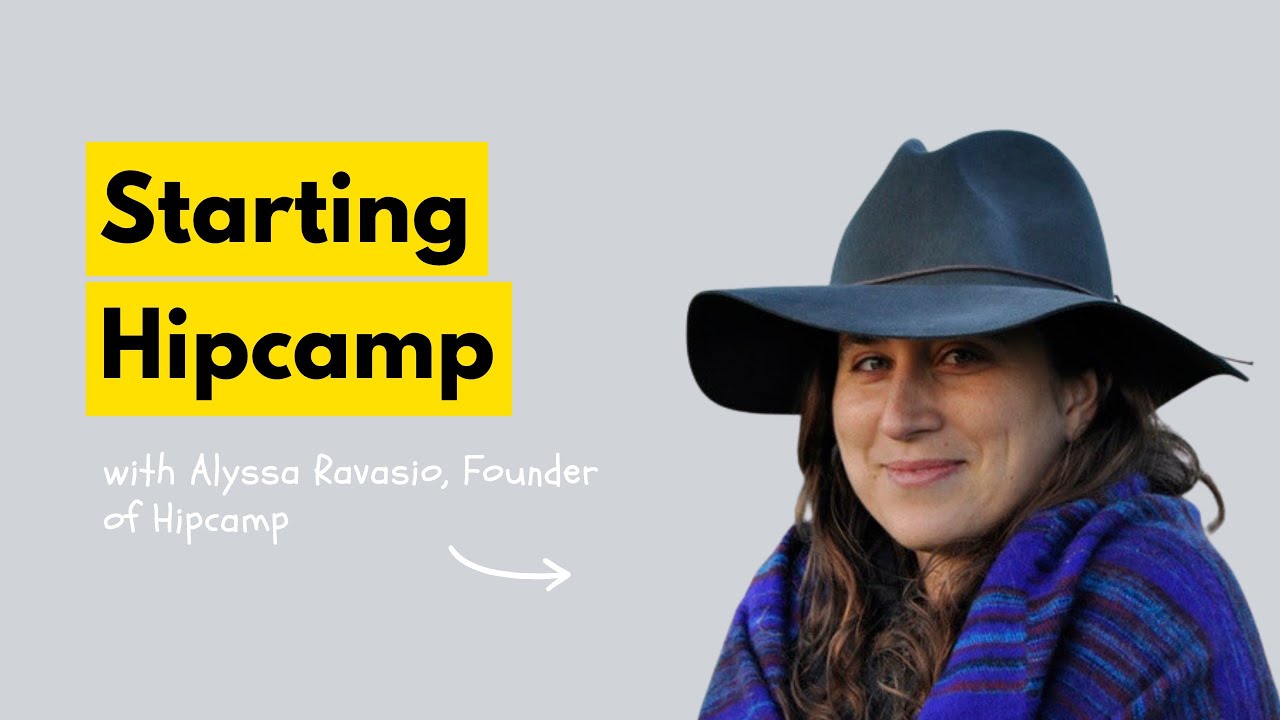
Alyssa Ravasio, CEO of Hipcamp, started the marketplace after a frustrating camping trip made her realize public lands weren't bookable online. She bootstrapped supply using open data, then expanded to private land and four countries. Now she's experimenting with AI tools like pricing assistants and booking agents while staying disciplined about what actually moves the needle.
Chapters
Welcome back to Everything Marketplaces, where we talk with founders and leaders on some of today's top marketplaces. So this is episode 205, which is a really great group chat we've had with Alyssa Ravasio, who's the founder and CEO of Hipcamp. Hipcamp is the largest marketplace for booking campsites, RV parks, and unique outdoor stays. Hipcamp has also raised over $90 million in capital from top investors like a16z, Benchmark, and Index Ventures. So it was a really great chat with Alyssa where we went back to the founding story and first steps for starting Hipcamp. Alyssa shared some of the early challenges, Walked us through how Hipcamp has evolved and scaled. We got to learn about their growth, discussed how they're leveraging AI. Alyssa shared some of her key fundraising learnings after raising over $90 million in capital. We also had a great group Q&A. I really enjoyed this conversation. They're going to find it great. Watch to the end. So Alyssa, you've of course paved the way for many of us here in the world of marketplaces with Hipcamp, and have also been one of the most requested group chat guests since we have started the community. So I want to start off by saying huge thanks for taking the time to join us here today as a special guest. We have a lot that we're going to dive into with all of your experience starting and scaling Hipcamp. I thought it'd be great if you could start off by briefly sharing your background for those here that might not know you.
Well, thanks for having me. Excited to be here. Marketplaces are fun to talk about, so this is a treat on my calendar this week. So yeah, before Hipcamp, just, you know, helped start a couple different startups, actually worked at the State Department for a while. So I'd say I had like a pretty like varied and diverse background, but maybe most relevant for Hipcamp, spent a lot of time camping growing up. So Hipcamp was really about kind of taking this really deep passion I had for the internet and then obviously directing that towards something I thought was like important and good and that I wanted people to be able to access more. And so started Hipcamp a little over, my gosh, 12 years ago now. And just, just have been scaling ever since. Marketplaces are hard. They take a long time, as you guys all know. And I would say increasingly enjoying the journey though, which is fun. It's kind of fun to be feeling like things are getting a little, a little, a little easier. There's like real momentum, but still plenty of challenges, which I'm sure we'll dig into.
Certainly got a lot of head nods at that, and I think it's relatable here. So of course, you know, that's a really great background. You know, a lot that we're going to get into for the later stages. But I do want to kind of go back to the, to the very beginning and, you know, what was the founding story for Hipcamp? And then what were the first steps that she took to start as a marketplace at the time?
Yeah. You know, the idea for Hipcamp came during a camping trip, or actually right after a camping trip where I had spent many hours researching a place, almost gave up, almost didn't go, finally found a campsite. I was trying to show my then-boyfriend, now-husband, that California was beautiful and he didn't need to move back to Australia. And after getting to the campground, found out that despite hours of research, no one had mentioned a surf break that was right in front of the campground, and I hadn't brought my surfboard. And I was annoyed by that. And it was just on the drive home that I said, you know, this is such a hard experience. The supply is so fragmented. That'll be a big theme today. The supply is still fragmented. We're still working on that. But what if we put all that in one map? What if we made that really easy for people to kind of navigate and choose what's best for them? And what if we created a space where the community could tell each other, hey, there's a great surf break here, bring your surfboard. So that was the original seed of inspiration. But also, like, honestly, personally, I needed to not have a job and I knew that. So I was like looking for a company that could kind of be a good, a good outlet for my energies. And also, again, something that I was really excited about, the idea of like harnessing the power of the internet for positive cultural change. So I was kind of already in the mindset of looking for something.
And that's a really cool founding story. And, you know, of course, as marketplaces, we all face the cold start problem, right? When starting out, you know, so how did you initially solve for this at Hipcamp? And then, you know, what were some of those like early challenges you faced? You know, when you initially kind of bringing campsites online and making them bookable?
Everything was a challenge early on, right? Every single thing and day. I think for us, we were kind of creative in the solve in that we had all these great public campsites and the data around public campsites for the most part was publicly available. We did have to do like a whole crazy open data advocacy campaign at some point to make sure it stayed that way. But because of that, we were able to kind of bootstrap the supply side by having the public land. And then once we got campers coming in the demand side, we started adding in like more bookable private land. So we were, I guess, fortunate that we had kind of the public land infrastructure again with mostly open data requirements in place to kind of get it going there.
And since you were so early, you know, you know, how key was like that, like initial kind of education on, you know, getting users to like kind of understand how this new kind of booking process worked?
Airbnb and Booking.com and Expedia had been around for a long time already. So I think we were kind of actually more able to say, you know how easy it has become to like book a hotel or book a car? Like, what if camping was like that too? So I think from the camper education side, it was pretty straightforward. The host education side was a little harder because a lot of these hosts have never had campers on their land before. And so, um, actually that first rant we talked about, I remember. And I actually think we should do more of this today. So it's an interesting question, but I remember actually going there and like helping to hand paint signs because I was like, you've got to show people which road to go down. You've got to like label campsite 1 versus campsite 2. And so the host education side, I think, was actually more of the challenge early on and ongoing, to be honest. It's still a challenge.
I can imagine. Definitely a great example of doing the things that don't scale, as you mentioned in the very beginning too.
Yeah, it's fun.
And then as far as like on the supply side, you know, you mentioned the supply strategy on a previous kind of podcast, right? So initially starting with that kind of public land and data, and then, you know, opening up private land and then moving, you know, more recently to like professional campgrounds and RV parks. What are some of your kind of key learnings on, you know, building and scaling supply?
I feel like I'm always still learning. I— our— my perspective on our marketplace is we still don't have anywhere near enough supply, um, and we see that in our data. Like in Australia, um, because we're in the US, Australia, Canada, and the UK, which is very interesting. And while it's a lot of work, and my head of finance would be telling you don't even consider it till you're really big because there's so much Tax and legal and bank accounts. But the, the good side of that is we have like these little labs and I get to see what happens in different countries. And of course it's always hard to isolate cause and effect, but you can start to infer things. And in Australia, we actually have a lot more supply per person. I think there's about 4 times as many campsites per capita. And the marketplace converts twice as well today versus the US. And so I'm still like, oh, we still need way more supply.
Yeah.
I think, you know, the overall lesson I would say is like, you have to follow what the demand wants. Like, I think if sometimes we would fall into traps of like, this is a supply that's easy to get, can we sell it? And that's like backwards. It's like the— it's often the hardest to add supply is the most important because it's all about, you know, something I say a lot to the team that sometimes is confusing to people, but it's good when it is because then we talk about it. Is we only have one customer, and I'm a really big believer in that. Like, our campers are our customer. They are the ones who are opening their wallets and spending hard-earned money on our product. Our hosts are our partners that we co-create a really good experience with. And so if we're going to be customer-led, customer-obsessed, like, we have to pay attention to what the camper wants most. And so I'd say that's probably one of the biggest lessons on the supply side is a lot of the easiest to get supply is like not what the campers want. And whether that's geography or the specific type of supply or the different amenities, like really being customer-led. And then the other big thing, this is more of a recent lesson, is like really getting smarter about segmenting the campers. And in particular, we're really focused in on campers who camp a lot, which sounds obvious, but is making a really big difference. So there's a specific type of camper that camps, you know, 5 to 10 times a year just naturally, and they have a slightly different type of supply they want. And so focusing more on what they want is just super, it's super valuable because that supply does a lot better on the platform very quickly.
Those are all really helpful learnings. Now we're getting to the specific marketplace topics. A lot of times we're, you know, talking about, you know, frequency and, you know, focus on the customers that, you know, higher frequency typically.
So yeah, definitely. Yeah.
And we could probably have, you know, an entire kind of conversation, you know, as far as like Hipcamp has evolved and scaled. But, you know, can you briefly, you know, walk us through that?
So at first Hipcamp was, well, at first it was called California Camping and it was just me and I'd Recently been to a coding boot camp and I was like, what if I just put all the campsites in California? Like the big insight was, can I put the state parks and the national parks on one map? Because that would be cool. And that didn't exist yet. Um, we then ended up getting into this whole like open data advocacy thing. I spent a bunch of time in DC and Sacramento. It was like kind of this crazy, um, important, uh, sidebar. So that was kind of the first chapter of the company. I would say it's like totally focused on public land. Um, and, and really, uh, successful actually at the open data advocacy. We got both the federal government and the state of California to change their contracts so that all the information about public lands is public, which sounds obvious, but was not going to be the case until we intervened. Um, so that was kind of wild. And then the kind of funny, sad part about that is we won. We had this huge victory. The head of the Outdoor Industry Association told me, we've never seen the government move so fast on a topic so much. Like, Huge win. Wow. But then we learned that the actual time to implementation was probably going to be 4 to 5 years, and we were going to be dead by then. Like, for sure out of money, for sure dead company. And that was actually when we got the, like, idea or the initiative to work with private land. So then there's this whole kind of second chapter of, like, cool, public land's awesome, and we had this huge win, and wow. And if we don't find another revenue model, if we don't find another supply we can actually help people book, we will die. We will go out of business. So So that was kind of this whole second chapter of, is there even private land people want to camp on? Why would, you know, someone who owns hundreds of acres of land that's presumably worth millions of dollars, you know, potentially let members of our community come visit there and kind of figuring out how to really construct a community of trust and a culture that's consistent enough that people show up. Like one of our core values is leave it better. And we like, you know, beat that into people from start to finish. So hopefully for the most part, they show up really respectfully and with a good impact on the land and on the people they meet there. So that's kind of the whole second chapter that really scaled us through our Series B. And again, across Australia, the UK, Canada. And then just recently, a lot of the established campgrounds, so kind of the, we think of them as more the commercial businesses, which are also awesome. Their booking systems just started being open to APIs. This is something we tried to make happen like years ago and they were like, what's an API? We don't do that. And they just started opening up APIs. So we were able to come in and integrate with almost every single major PMS and bring a ton of commercial supply online. So that's kind of maybe our third chapter is taking this more professional supplier and starting to figure out how to have different types of supply. And like, that's really hard in and of itself because now we've got like these, you know, we've got our supply base now ranges from a blueberry farmer with a single campsite on their land That has no interest in being anywhere but Hipcamp, and all that matters to them is that they get enough bookings that they want, that the campers are really respectful, and that the blueberries are like, you know, good. And then like on the other side, we have like some of the largest like real estate companies in the US who happen to also own like 150 campgrounds and like are like listing all of them with their like super, you know, corporate and amazing and intelligent VP of like—
Yeah.
uh, business development. And we're like, oh my gosh, that's a big range. So that's been really interesting. And then the next chapter we're heading into this year, and I really just figured this out last week, is we're circling back to public land. Um, I really want to get that public land bookable on Hipcamp. It's something that is like our most requested kind of feature from our community. And it's gonna— I'm gonna go back to DC this year, I think, to help make sure that that happens.
So it's really cool to hear about all the different kind of chapters, right, for Hipcamp. So And also too, sounds like you've been very kind of, I would say, like mission and values driven since the beginning.
I think for me personally, if I didn't feel like this company was creating a future that I'm a lot more excited about, it'd be really hard to work this hard, especially for this long. You know, there's all— if you're smart enough to start a company, there's a million things you can do to make good money. And I think starting a company is probably one of the hardest things you could choose to do. And so I think if you're going to choose that, it's got to feel, yeah, really worth it.
Definitely. And I guess for, you know, just kind of brief context, you know, can you give us an overview of, you know, Hipcamp today in the sense of scale that you're at?
Like I said, we're in the US, Australia, Canada, and the UK. I think we're up to about just over half a million sites on the supply side. And then we're supporting in the low millions of nights outside every year. So that's like a lot of people booking on the platform who a lot of them are new first time and have like no idea what's going on. We do a lot of like connecting urban and rural people, which is also very interesting thing to do. So definitely operating at a scale now where like I kind of, I was telling you about like painting the signs at the Hipcamp, but I'm like, oh, I miss that scale too. But this scale is fun. And of course, I, you know, when I look at the market, when I look at how big Campiness, we can still easily become in the US, you know, 10, 20 times bigger and still be You know, representing a pretty, you know, reasonable share of the market. So lots of room to go from here too.
Certainly a huge opportunity. So, and, and, you know, kind of, kind of related to the different kind of chapters and later stage, you know, how do you, you know, approach growth and expansion at Hipcamp?
So I would say, I'd actually say we made, I don't want to call it a mistake, but a learning here, which is, you know, during COVID and right after, like everybody in the world, all they wanted to do was camp. And that was really exciting. And so we were like, let's go to a bunch of countries. So we expanded to a bunch of countries. We hired GMs to do that. And again, it's been, it's been helpful in that I've had different laboratories and we've been able to learn in parallel. I think the downside has been the US is such a massive market and we still haven't reached, I think, a supply density here where we're like really seeing what a super healthy marketplace would look like. So You know, I would say that I would probably in the future, if I were ever to build another marketplace, which I don't think I would do, but if I did, I would make sure I reached like escape velocity in my biggest, most important market before diffusing at all. Because it is, even if you're, you know, really organized, like it's still, there's just that one app. Like, Like the, like, like a very real downside is every week we have like our WBR, we look at our metrics, right? We now talk about how is the US doing versus how's Australia doing. We don't as often talk about how is the north part of California doing versus the southern part of Texas, right? Because we've just scaled up that level, which again, there's upsides to that. But there's things that I would love to spend more time on that are kind of within the US too.
So definitely feel like there's a tendency to kind of expand, you know, too soon for marketplaces.
I think like, look, it wasn't just me, like a lot of founders and leaders made the same mistake during COVID of like, it's the easiest mistake to make in the world when things are going really, really well. You're like, this is obviously going to continue because we're amazing and we've been working so hard and we deserve this. And like, here we go. But, you know, there's also upsides to that, right? We were able to raise like a great round of funding and bring in, you know, world-class investors and like they've been incredible on our board and incredible learners. So, you know, it's such a journey. It's all, you know, it's ups and downs on a roller coaster, as you all know.
And, you know, you mentioned this kind of like later stage that you're at now, you know, so What have been some of those challenges now that you're at like the growth and kind of later stages?
We've had to adjust a bit on like what works and what's worth doing. So like, this is kind of an extreme example, but like very early on, it was totally worth my time to sit at a card table in front of REI. And I actually did that a lot. Thank you, REI. They let me do that. It was great. That's not really probably worth our time anymore, but it worked. And so I think like adjusting our mindset from, I think early on it's like anything you can do to create liquidity is worth it. You can actually get people transacting. That's a huge deal. We didn't talk about this, but actually like very early on, like the proof point for me that got me like really committed to the company was one booking. One person booked and I was like sold. I was like, absolutely, this is totally gonna work. So I think early on it's like whatever it takes. And then I think later stage it's become Just getting so smart about like payback and what is the, what's the timeline for payback, which I'm assuming we're all very familiar with those terms, right? But like, if I'm gonna spend, you know, $20 to get a camper, I wanna make sure I get that money back in the first month, for example. And so then that kind of changes the landscape of like what acquisition activities make sense or don't make sense. So that's been a challenge. I think also just like as a founder who's pretty like My skill set's pretty diverse. Like, I'm not— yes, I learned. Yes, technically I was like our engineer and coded the site, but I wouldn't say that's like probably my greatest strength. Like, I really like marketing, but I also like sales and I also like finance. And so I feel like early on I was really— this is probably the biggest shift actually. Early on I was our biggest problem solver, right? So people would like bring me problems and I'd be like, all right, let's solve this together. And then I think as we've gotten larger and the scale of the company's gotten larger, it's become, now I solve problems ideally mostly with people and making sure the right person's in the role. And so my job increasingly becomes, is this the right person? And is this the right role for this person? Versus like getting to actually solve the problem, which I'll be honest, it's still kind of hard for me sometimes. I love solving the problem. There's a lot more instant gratification in that. It's a little harder to know when you swap somebody out or It tells someone it's time to transition. Like, you don't get that immediate feedback that you were right or wrong. But yeah, that's been a big change, I'd say.
No, definitely.
I'm sure that's going to lead to some questions when we get to the group Q&A. Yeah, but I want to spend some time, you know, discussing AI because we, of course, you know, have started to see that reshape marketplaces. You know, so how have you approached leveraging AI at Hipcamp? And are there maybe a few specific examples you can share of, you know, how you're doing so today?
I think AI is totally changing like what marketplaces could exist in the world. I think it's like opened up a window of possibility that wasn't there before. I'll be honest, we got kind of a little burned by AI, I would say this year, like we got so excited and kind of assumed a lot would work that didn't totally work. And we're still learning and we're still using a lot of it. But I would say If you're leveraging AI, like doing really, really good testing on not can it work once, can it work 3 times, but if you do it 100 times, does it work 99 times? Does it work 75 times? And if it's 75 and you're servicing a customer and this is going to be in any way customer-facing versus internal, what's the fallback plan and how do you make sure it's like still just an awesome experience for your customer? Because like if you're especially— I don't know how many people are building consumer brands. This is true for B2B too, but like your brand, the experience people have with your brand is everything. And so it's all really exciting to create new possibilities. It's amazing when something costs 1/100th of what it— 1/1000th of what it used to cost. But I think making sure you're not like getting like starry-eyed about that potential and then not being clear-eyed about what's the real-world on-the-ground implications. So for example, a very easy and obvious implementation of AI that we've been doing for a while but got a lot better over the last year is a chatbot, right? And it's amazing, and it's decreased our ticket volume, and our contact rate's way down, and our— the, you know, the amount of revenue per booking we're saying on our support team is like never looked better. And oh my gosh, look at that scale and efficiency. But man, if one of our hosts or one of our campers gets stuck in a stupid robot war loop in a chatbot, like, what's that worth to us, right? And so being smart about, like, for example, we try to be really good about. If you say you want to talk to a person, we're like, boom, okay, great, here's a form, we're going to get right in touch with you. Like, we're not trying to block you from reaching us, we just want to help you if we can. Um, there's also a ton of amazing internal, um, uses, like within the product. So for example, anything around obviously which campsite are we showing you, which photo are we showing you for that campsite. Um, we just launched something I'm really excited about that's helping with pricing. So kind of showing hosts what we think somebody would be willing to spend based on everything you've shared with us. So there's a million applications. I will say the application I'm still most excited about that we're still— that we're not using, but I hope somebody in this room can use is I just think like AI, specifically agents that can actually go like book things for you or help you book things is really exciting. Um, I think, you know, in the past, like, I'll give you an example. That first booking I told you about that got me so excited that I was like committed to the company and said no to an investor who was trying to give me money for a different company. Like, one booking, I was sold, right? Um, the way that booking worked is she booked something on Hipcamp that was not actually bookable on Hipcamp. I got a text message. I had to go book it for her really fast before someone else did. Um, agents can do that for us now. Well, Depending on what you're trying to book, agents might be able to do that for you some percentage of the time, and sometimes they'll hallucinate and go down a rabbit hole. So I think like that to me, when you specifically look at marketplaces, which are at their core aggregators, right, trying to bring together supply and demand, I think that just totally changed the game in terms of what kind of supply you can bring on board for a marketplace. So happy to talk more about that in the questions, but that's something we're really excited about for the future.
I'm sure we'll get to more questions here during the group Q&A, but it's certainly exciting, as you mentioned, to see, you know, like what's possible now. And so I think also too, like a great reminder you mentioned as far as like to stay grounded on the customer problems and that experience.
I mean, I love technology so much. I think you actually referenced before we started a podcast where I was like, I can't sleep. I'm so excited about AI. That's still true. But I feel like I've gone through my first like crash of like, okay, I was a little too optimistic and here's actually what happens on the ground. So more, more to come there.
But yeah. And, you know, another topic that I want to discuss is fundraising because I believe you've raised over $90 million in capital, you know, from some top investors like A16Z, you know, Benchmark and Index Ventures, you know, so what has the fundraising journey been like and what are some of your key fundraising learnings?
The most important learning for sure is you want to, as much as you can, position yourself to choose your timing because there are moments when fundraising is like, it's never easy. It always is really tough, I think. But there are moments when it's going to go really well and be faster. And then there are moments where you can easily, you know, grind for 6 months and end up with very little. And to me, it's all about, you know, paying attention to your business and how that maps to the market and then like choosing the moment to go. Now, of course, to be able to choose the moment, that means you have to be earning enough revenue that you're not just like burning down a time clock. I know that's like harder to do. But we, from a very early stage, from our seed round, actually, we always, and I think for the most part, I don't want to say always, but probably for the most part, Stay default alive, which is another great Paul Graham concept, which is if we just stopped hiring but revenue kept growing like it is, would we run out of money or would we become profitable? Which would happen first? And we always tried to maintain it so we'd become profitable, and that allowed us to position the timing of our funding so that I think we got to work with really great people because I think, you know, life's too short to not work with really great people. And And then in terms of like the funding itself, I was really lucky to learn from world-class operators and there definitely, it definitely is like a game. There definitely are tactics if people are interested in that or if it's relevant, we can go into more of the specifics. But yeah, just really getting good at the art of the fundraise and the process and running a really good process is also really, I think has really helped outcomes at different times. And it never hurts to be growing really fast. That's the best. If you're growing really fast, it's all going to go well.
Definitely. So I promised founders we'd save time for that group Q&A. So I want to make sure we kind of get to that. But, you know, right before we jump into the group Q&A, you know, what would be your top tips for a founder starting a marketplace today?
Well, my first tip, which is pretty consistent, is please take care of your body. Nothing is worth hurting your body. And I cannot tell you how many friends I have who've exited for $100 million, $1 billion, and then spend the next 10 years of their life being like, that wasn't worth it and I'm sick. It happens a lot. And so nothing's worth hurting your body. Also, I think exercising and sleeping and eating make you smarter and better as a leader. So I know I definitely spent years like convincing myself I didn't have time to like sleep enough or eat enough or work out. And that was, that was silly. So that would be my first tip is like, take care of your body and your mental health and your emotional health, not just your body. And then my second tip would be right now, like AI better be very core to what you're doing. If AI is not core to what you're doing and you can get to profitability quickly, that's awesome. But if you want to raise money, you got to— it's got to be an AI market. It's got to be a, you know, this is actually an agentic marketplace kind of pitch. I think that's the only thing is, as we all know, right, consumer in general has had a very bad decade. It's been a very tough decade. And so I think a lot of investors are like, We spent a lot of money on a lot of companies that kind of sounded like this, and I lost it all. And the only thing that made me money was my SaaS investments. And so I, I do think AI is opening a new door where people are like, maybe. And, and by the way, when consumer companies win, they win the biggest, right? Like, go look at the biggest companies in the world. They're not B2B SaaS, they're consumer. They all are, except for if they're building chips for AI. So I think there is like a window right now where people are like, maybe there's like gonna be a comeback here. Like, I mean, ChatGPT reached a billion users in what, like, I don't even know, like a year. I like, I don't know. So there's a moment where people are kind of open to this. But I think certainly if you're starting a marketplace today, like figuring out how to harness the technology with a clear-eyed, not, don't do what we do. Don't, don't get, don't, don't listen to the siren call of the AI so hard you end up in the rocks. But Um, I think that there's, uh, I think there's definitely a window right now, but I think it has to be like core agentic at its core. And then my third would be just like, use your product. I think if it, hopefully your product solves a problem you have, hopefully you can be a personal user so you can like stay grounded and connected to the on-the-ground experience. Um, I, I still get a ton of value from that every time. I'm going hip camping tomorrow, actually. I'm very excited.
So we're going to get to the group Q&A. And actually I wanted to, uh, you know, uh, start by asking a question here. Which is around trust and safety. So, you know, what role has trust and safety played for Hipcamp? Any tips for founders, you know, at the earlier stages today on trust and safety?
It's so relative to what you're doing as a company that's literally having strangers meet in the woods. It's been core to our success from day one. So very early on, we brought in an amazing advisor. His name's Phil Cardenas. He led trust and safety at Uber and then Airbnb. So he's like Seen it all. And by the way, we'd probably be happy to connect with anyone who's working through trust and safety challenges, especially, you know, on the ground, real world. So I just think we like overinvested. We just knew it was one of those things where like it's not a problem until it is. Like the story of Airbnb and the woman's apartment getting wrecked and then like support being slow to respond. Like that just was so burned in my brain that I think we invested early and often there. And then like considering it, it's so hard, right? Because you always just want, you want revenue and bookings to go up, up, up. And it's hard to directly tie trust and safety to that. But to the extent that it makes sense for what you're doing, like we do have regularly monthly reviews where we talk about what's going on. And like it's sobering when you have millions of people getting outside, like stuff happens, especially when there's like animals and dogs and all sorts of kind of things involved. And so continuing to stay really plugged into that has been important to me. So I'm not like surprised and we can. kind of like I feel like it's like a ratchet. Like when things happen, you, you lift up your levels of quality of, you know, background checks or something like that. And so kind of like going incrementally is really important there.
It's going to be really helpful. So definitely it depends on the type of marketplace, right? But it's a topic that we're always discussing to, you know, one degree or another.
So really personalized, I'd say.
Hey, I saw you raise your hand. You want to jump on?
My question is around supply and what percentage of your demand was driven by supply in the early days? And, or now, and, and do you see it as like a primary growth lever that helped you hit the inflection point? And then what do you do to empower your supply? 100% of my demand was driven by supply. Yeah, I think, I mean, like, it's such a great question because it's all about how do you look at it? How do you slice it? How do you measure it? Remember, our supply at first was not actually officially listed on the platform. We listed them, it was state parks and national parks. Um, but I would still give it credit for driving basically all of our demand because that's how we got SEO going. That's been our big growth flywheel, um, which we should talk about a little bit if people are working on it because it's changing a lot. Um, but having the, you know, I actually had my little sisters and my friend Natalie and we like built out this huge body of work for every campground and we wrote descriptions and we figured out if there were showers and all that. That content is 100% why Google started ranking us. And so without that supply, I don't, we couldn't, what we would have had to like write lots of articles about camping or something. And we didn't have any, we didn't think that was as valuable as just organizing great data. And then I would say today, like we grow, I think it's about 90% now just through SEO and word of mouth or search broadly, including AEO. So for us, All of that word of mouth, and I would still give credit to basically all the SEO, only happens because we have great supply. So the amount of demand that comes from our hosts actually driving demand for us is a lot smaller. I'd say probably 10%, maybe a little more. We don't have great ways to measure it because it happens in lots of different ways. But in terms of like, The overall flywheel, like if you look at our growth flywheel, it starts with supply. So for us, supply absolutely drives demand. It always has. And anything we can do to accelerate the amount of demand a single unit of supply drives is pretty much the highest leverage thing we can do. Do you provide them any tools to drive demand? Totally. Yeah. So we'll do a couple. We've tried a lot of things, but we'll do everything from sending them like press kits so they can like pitch their local newspapers. We give them widgets they can put on their website. We do webinars where we teach them how to create an Instagram account or a Google Maps listing. Some of those have been more, more successful than, than others. But yeah, definitely. Again, anything that can increase the amount of demand each unit of supply can drive is just so super high leverage.
Awesome. That's a great, great question. Hey, Michael, I saw your hand. Do you want to jump on here? Question for you, I guess, on the fundraising front. You already talked about the journey. But a lot of us are maybe bootstrapping it in the community, others maybe starting bootstrap and then eventually wanting to raise formal rounds. I guess any learnings on that front in terms of if a marketplace is bootstrapping initially and how you go from there?
Yeah, I mean, I think that that can be really smart. I do not think every marketplace should go raise $100 million. I think a lot of, I've seen a lot of really great outcomes, Michael, where people have bootstrapped and then make like $50 million. Just, you know, it's just great. They're just like, I only had to pay myself. Look at that. So I think like what I would look at in terms of funding or not, well, one, first of all, can you fundraise? And again, I think like right now with AI, not to be like overly prescriptive, but I would reckon that unless your pitch is this is an agentic marketplace, It's going to be hard to get attention right now out there. Everyone's just so lasered in on this transformative technology and for good reason. And then the second thing I would look at is like, do I need to raise money? So can I, can I get the flywheel going without money? And I think to the extent you can, that's awesome. We actually didn't raise money for the first like year and a half. That was cool, right? Because I mean, by the time we did, maybe we were valued a little higher or just had more confidence. So as you take money, you're kind of committed to seeing it through, right? And so it's nice to kind of get that validation on your own. And then finally, like, do you think money is going to really change? Like, is money just shortening the timeline, or is it going to really change where you go? Because I think, like, if money is just going to shorten the timeline, right? If you're like, oh, eventually I'll be able to aggregate my space. I'm guessing from your name here, you do something in the pet space, which is a huge space, right? So if you're like, I'm eventually going to win this space, Money will help me do it faster. My question would be, do you— why do we need to go faster? And if we— it's because there's competition or there's market forces, then yes, raise money. But if it's just because like faster is better, I would think about the dilution and the impact of like, you know, that need of money. But for sure, if you're like in an Uber-Lyft situation, you weaponize capital 100%. You do. Of course you do. You will lose if you don't. If you're not in an Uber versus Lyft situation and you're more aggregating a niche space that is hard to aggregate and you can do it profitably, I think there's a really good argument to like maintain control of your destiny and wait to raise money until you want to take the model that works in the US to Europe. And then you raise a big growth round and you sell, you know, 10% of the company for $35 million and you own 90%. And that's awesome. So I think it kind of, it depends on the business and the space.
This could be super helpful for founders here, so we appreciate it. Hey, Carlos, do you want to jump on?
I had a quick question. So I'm building a marketplace that helps schools, public schools, and other similar organizations rent out their recreational space to local community groups. It's interesting to hear that at the beginning you were just listing those government entities on your website. And so because we've gone back and forth in debating whether should we do this, should we not do it? So just curious to know if you had any insights or, you know, any specific challenges that you encountered when working with those government entities and any, you know, any strategies that you think that we could also take into listing those public spaces?
We were able to do that because they were already allowing people to book campsites. So we weren't asking the agency to in any way adopt a change of behavior. It sounds like you'd be kind of asking them to like do something a little new.
They technically, legally, they're required already to do so. So people are already renting out those spaces.
Yeah. This is recorded, but I think it's better to beg for forgiveness than ask for permission. If your intentions are good, you're not hurting anybody, and you're creating value. You know, like, if you're just doing it to, like, create problems for someone and scrape a little margin for yourself, that's different. But if you're like, these schools need this money— by the way, that's awesome, big fan of public schools— and you're like, these people need space, why not? What's gonna happen? They tell you to take it down? You know, you still need their permission to book it. But again, that— I hope you're using a lot of AI. Everything you just said to me is like, I hope you have agents going to like reserve. And I know anyway, we— yeah, that's exciting.
Hey, Molly, saw you also raise your hand. Do you want to jump on here?
I'm curious about building early network effects. So what was the kind of density you were looking for and how did you What were the signals that something was kind of catching fire in a specific area? Um, and then I guess from there, like, when were you like, okay, this place has kind of caught and it's time to move on to the next? It's a great question. It's something I feel like we could do better and could have done better, for what it's worth. The US is really complicated for camping because people go on road trips. And so I, I always was a little jealous of like marketplaces that could get a city going. Because for us, that never really worked. Like, even if we were just focused on San Francisco, for sure, having stuff around the Bay Area is important. But then a lot of what they want to do is like go to Joshua Tree. Oh my gosh, now they're going up the coast to Oregon. And if we can't help them there, they're going to find some other tool. So we tried to take like kind of a hotspots view where there were like lots of different markets, a lot of them around national parks and big cities that really mattered. But then there are certain urban areas. San Francisco is one of them. Seattle is one of them. Austin's one of them. Where the majority of camping would happen locally, and we had an opportunity to build more of like a local marketplace that really would fly. Um, what we would look at there is at what point did supply just start signing itself up? That was the big indicator. So early on, we'd have to like call every single person, um, spend money on ads, and then eventually you could just watch the graph take off and like suppliers, hosts were just coming to us and signing up. And that's when we would be like, This is working. Interestingly, that's not when we would like take our foot off the gas, because a lot of times those markets that they were working well were some of the like fastest payback we could find or fastest return we could find. But we have had markets where we, for whatever reason, kind of stopped investing as much there and they were able to really keep growing nicely. But they all hit that same inflection point of like organic supply showing up, which to us was an indicator of hosts are making enough money and are happy enough with what we're providing that they're just telling people, they can't help but tell people, and then those people are signing up. And so that's when we kind of would know it was really working. And then of course you can just track like bookings. We look at retention a lot, like how many people who book come back and book a second time. That's also a really important indicator of supply density and quality. But yeah, it really depends on the market and knowing like, can you build just a local marketplace city by city, or do you have a use case where You really need to have like a good solution across a ton of different markets to be the go-to app for your target customer. Awesome.
Network effects is always a fun marketplace topic to chat about here. So yeah. Hey, Jeff, do you want to jump on?
Can you talk about how your like focus on the heavy campers versus like the one-timers has maybe shifted? And then also how you think about that from like acquisition payback type of Uh, math.
It's a great question. Um, and it's kind of like a math question, I would say, at the end of the day. Um, how much do we spend to get a new camper to try us out? And then how many times are they likely to camp with us after? And what we've learned is that really depends on the person. Um, and so what we found overall, maybe to rewind a bit, if we look back, you know, let's say 5 years ago, early on, we were so mission-driven, we were really focused on How do we get more people to go camping? That was really exciting. It is really exciting to me still. And so we were actually really focused on the one-time campers. We thought it was really cool to get people to camp for the first time. We still love that. But what we learned is like, it's really hard for someone to go camping for the first time and to have a great experience so reliably that they always go camping a second time pretty quickly. Whereas if we're able to show somebody who already loves to camp, hey, did you know there's all these hundreds of thousands of new campsites on amazing private land that you've never heard of before? And you probably have a hard time already finding campsites you love. So one, it's a much easier sell. So we can in general acquire those campers for less money. And 2, they just naturally want to camp a lot more and we don't have to convince them to like camp. We don't have to kind of sell them on that. they just want to do that. And so we've done a lot of, I would say, both market research and then we— our head of design and research also does a bunch of like internal research to help us really segment down to these. We call them adventure vehicle campers or campers who have like a cool adventure vehicle. They tend to be like ready to go. They can just like kind of leave at any moment. They're okay with a bit of adventure. They don't need everything like perfect and polished. And that is a segment that both camps the most and has like the strongest product market fit with our supply today. That focus will evolve and change over time, but that's had a really meaningful impact on, I would say, just like the health of our demand engine.
Great last question and a way to wrap things up. So I know we're almost out of time here, but, you know, huge thanks for taking the time to join us today, you know, share about all of your awesome experience, you know, building Hipcamp, you know, some of your learnings and also helping answer questions that we had here, you know, as founders. So I think this is also a, you know, very inspirational conversation for us all here. And so, you know, I wanted to ask my usual kind of parting question here, which is that if you could go right back to before you started at Hipcamp, You know, what would you tell yourself about marketplaces specifically?
Things often take longer than you want them to. And like the genius thing is not giving up and take care of your body.
Definitely agree. That's going to be great parting advice for us all here. And then last but not least, you know, time for a kind of a quick plug. Where can we all follow along and keep up with you at?
I would say my email is just alyssa@hipcamp. You're welcome to send me a note if I can be helpful. Building marketplaces is like hard, as you all know, but it's also really important. I think we're doing like very important work by creating and unlocking value by like organizing the world. So I'm like, support all of you by default, especially if you're like showing up on Tuesday mornings to learn and grow as people. That's awesome. So I'm— I would love to hear from you and be helpful as I can be.
Awesome. Well, once again, really appreciate it. Yeah, you definitely know, paying it forward. And so, you know, it means a lot for us all here. So thanks again for taking the time to join us here today for the group chat. And, you know, Thanks everyone for the great questions and joining in today.
More from Max




B2B Marketplaces In The Age Of AI With Sonia Nagar From SNAK Venture Partners | EM Group Chat #216

Insights From Investing In DoorDash With Saar Gur From CRV | EM Group Chat #215

Starting & Scaling Fora As A Leading Travel Marketplace With Evan Frank | EM Group Chat #214

Marketplace Investor Insights With Andrew Blachman From Marketplace Capital | EM Group Chat #213


Deep Dive Into ResortPass As A Leading Marketplace With Michael Wolf | EM Group Chat #211


Masterclass On Marketplaces In The Age Of AI With Fabrice Grinda From FJ Labs | EM Group Chat #209