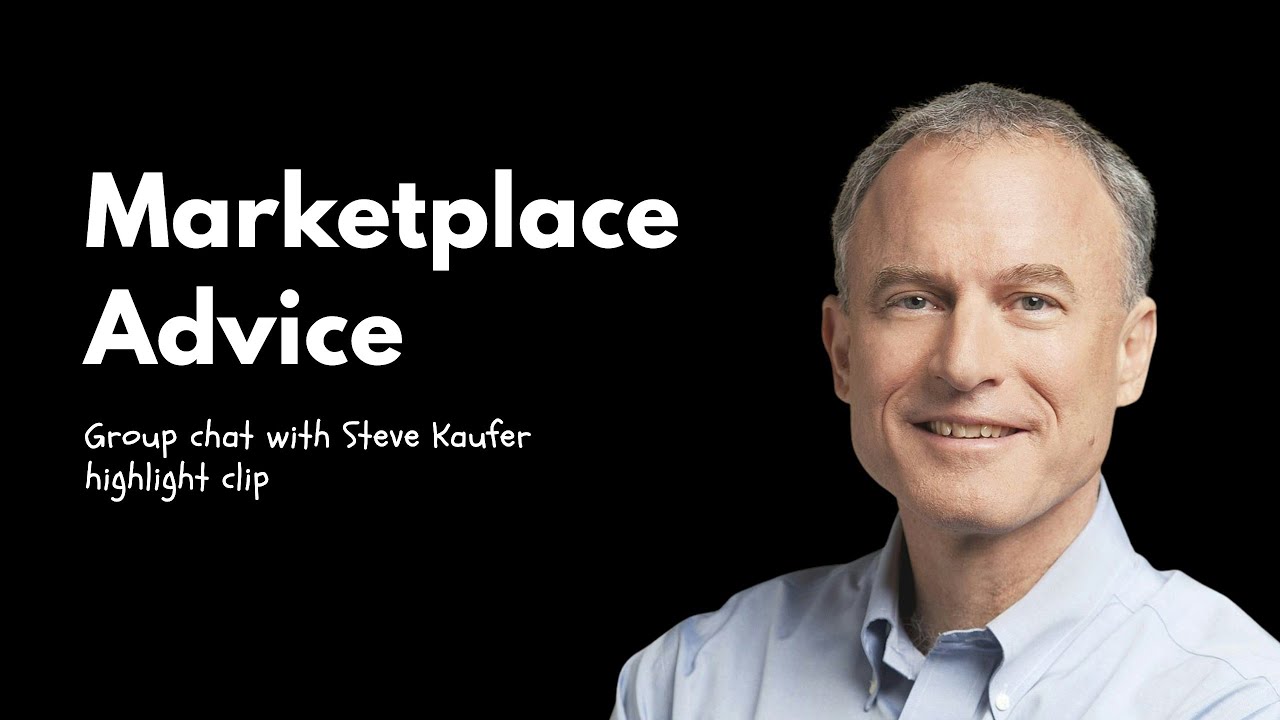
Steve Kaufer, TripAdvisor's founder, explains why he raised $1.2M in seed funding in February 2000 even though a $2M offer came at a higher valuation. He emphasizes raising as much as you can when investors offer it, and planning what you must prove before the next round.
I actually had one last question for you before we wrap things up, and this is my usual closing question, which is if you could go right back to before you started TripAdvisor, you know, what would you tell yourself about marketplaces specifically?
I love the concept of marketplaces, especially like something like TripAdvisor where I would say I go to sleep at night and I wake up And I made more money and I didn't do anything. It just, it was automatically going. The network effects, like if they're not obvious because, you know, you're more of an e-commerce store than a marketplace, like focus on them because they're your barriers to entry. What would I tell myself about marketplaces? You know, I'd have to go back to like, it's all about the people you bring in, the culture you define. And then the standard amount of luck and timing that goes into starting anything. I guess I would add, well, I'll tell you a little anecdote in my remaining minute or 2 because it flows directly into advice I would have for every one of you that I've given 1,000 times before. TripAdvisor raised $1.2 million in a Seed round, you know, in February of 2000. By summer of 2000, I, hey, we were pretty excited. We're getting ready to launch in the 4th quarter and we were offered another $2 million because travel was picking up, you know, the times were good and We didn't have a product yet, so there was no judging of anything, but our investors got more excited about what we were doing. And the risk that I would assemble a terrible team because they invested just in me, or me and one co-founder, was addressed because I had assembled a good team. We'd kept our burn rate low. We were Delivering. So some of the VC risk was removed. They offered $2 million at, you know, 2x the valuation, which was only $10 million at the time. And I'm like, I don't need the money. Why do I want to take a 20% dilution now? We're gonna launch and we'll get our B2B partners and then we'll be off to the races. And one of our board members, Don Abecy, said, Steve, when someone's offering you money, take it. The biggest reason why startups fail is not because they're bad ideas, because they didn't have good enough money to prove that the idea would work. And then he went through this logic with me. He said, Steve, if the company sold for $100 million, And your share was $30 million or your share was $30 million less 20%. Is that going to change your life? Like, no, not at all.
Okay.
If the company runs out of money and you have to start over, is that an impact on your life? Like, well, yeah. Good. So let's optimize for what will prevent the bad thing from happening, or hopefully prevent the bad thing from happening and won't bother you on the upside. So we took the money. If we hadn't taken the money, we would've run out of TripAdvisor money because nobody would've funded us if we didn't have, at that point in time, 0% chance.
Why?
Because Because the business had failed. When we launched our B2B offering, we had zero customers. It took us a year to get a customer. By the way, a year later when we finally did get a customer was right around September 11th. Okay. Nobody's buying anything in the travel space at that time. So there's 100% certainty we would've died if we didn't take that money. And you asked me, hey, we sold, you know, for a great price. And did I care that it was for 20% less to me? Like, hell no, it was non-zero, which was a great answer. So I like, of course you don't want to give away money, but at your stage, number one, raise as much as anyone will give you. Forget the dilution. It doesn't matter. Number 2, have in mind what you need to do to get your next round of funding. Presumably, you're not gonna be breakeven at that point. Breakeven is always the magic number at a startup stage. But presuming you'll need another round, what do you have to prove to the next set of investors? And it's not that I'm saying forget your North Star, but nail what you have to prove. That is the most important thing, not any of the other things that, you know, you'll need to do to make a successful business, but like put together the pitch deck to raise your next round. What do those slides have to say and prove it while you still have someone ready to do so?