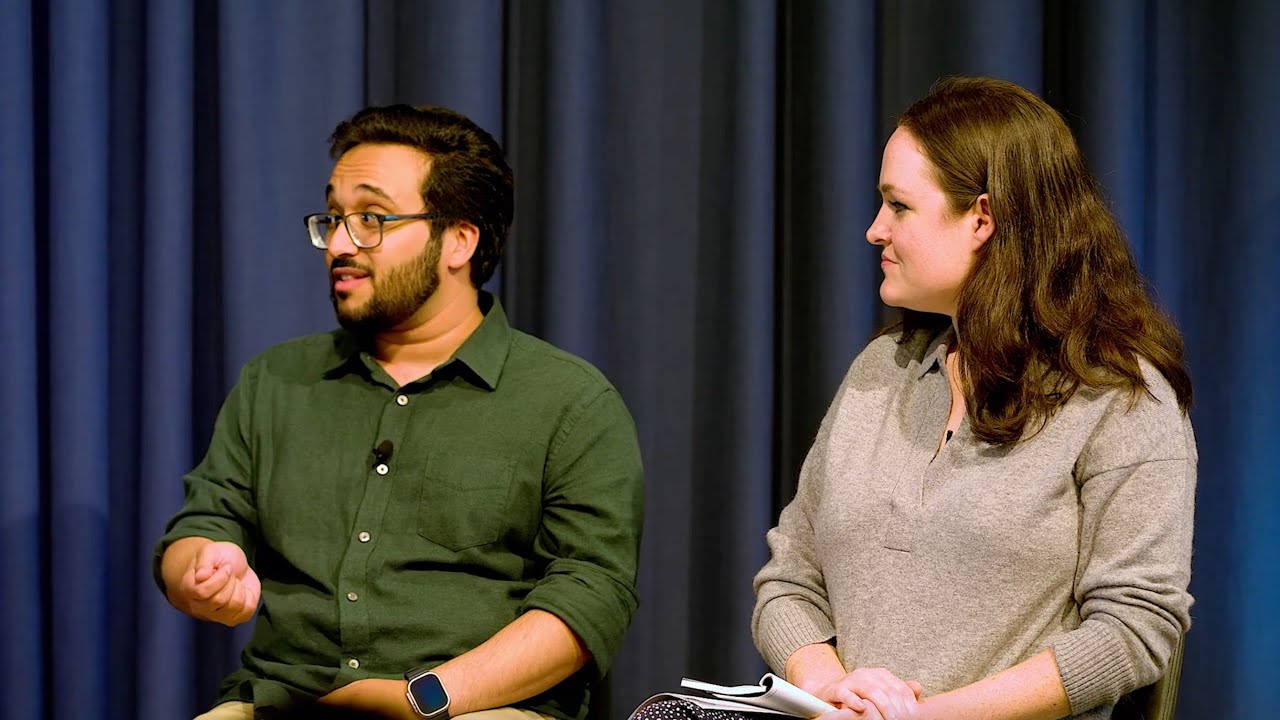
Max Brun and co-founder Mahmoud discuss how Nash raised money after hitting revenue, not before. They set clear fundraising goals and deadlines, chose investors for expertise beyond capital, and stayed transparent throughout the process.
Chapters
So you're going through YC, and then at some point some investor stuff starts to happen. Talk about kind of like the sequencing of that.
I think there's one decision Mahmoud and I made, which is even prior to YC, we've decided that we're not going to raise any money before we have revenue. And that was an explicit decision we made.
Why?
Because we believed that for both of us to have enough conviction in this business, we are going to need to see customers' value created. And if it does not map to dollars, then we will never know if that value creation is real. So this is just a decision we made upfront and it worked for us because at that point in our careers we were able to basically afford that decision. And I think that's just one starting point. And in the The way we ended up doing it is by the time we had started YC, we had our first couple of customers onboarded. Throughout the YC kind of time, we were focused a lot on scaling that customer. Throughout that time, our conviction is growing really, really fast. And the way we approached that fundraising is to basically say, okay, We are going now to a point where we want a little bit of capital to validate this thesis from a couple of customers that see value to a business. And there's a transition and that was the thesis for the capital. And we did the model and calculated it and figured out the number that we want. And this was the core of us. At that point we did run a process, talk to a bunch of investors and our— maybe the— One helpful thing is how did the outcome happen?
Yeah.
I think for us, if you go back to us talking to everyone earlier, we ended up really learning who are the experts in the space. And I think when we met Andrew and Olivia, one thing that fundamentally stood out is the deep understanding. Making this happen, we knew we did not make all the right decisions upfront. There's a bunch of things we made wrong and we're going to need to iterate on some elements. So when you find people who fundamentally understand that space and actually have the resources to support you, it ends up being extremely more valuable than the capital itself. And that was for us a really, really fundamental decision.
And I think especially the founders in the audience might actually enjoy hearing a little bit about the tactics. When you decide to run a process, what does that look like in terms of architecting? How many firms do you put in? How do you decide to pick? To what extent does the offer matter versus the people? Just talk about, give some opinions there.
Yeah, I would say you have to start with your business thesis and business needs. So you cannot run a process if you do not know how much money do you need and what for. A process is not a fundraise maximizing exercise. It's not a thing to do to raise as much money as possible. A process is something you run to achieve your goal. So you have to set your goal upfront. And I think the biggest lesson I've gotten that I think worked really well is to hold yourself accountable for the goals that you want to achieve. And if you ever would deviate from them, from these goals, go back to that point. It takes a lot of discipline to be honest with yourself. So it's very easy for someone to go, yeah, yeah, of course it's better to triple the amount I'm raising or let me take this money because it's a better brand name or 100 reasons that you have. Can you map this to you being honest with yourself about building a successful business? And what that looks like is when you're disciplined, it's really important to project that discipline to everyone else in the process. So being fair was something that was really important for us. So we set a goal. We set a deadline to make a decision. Everyone we talked to knew that deadline. And that deadline— we had to say no to a lot of investors. We still have really amazing relationships with them today. They have no investment in our company. Why? Because we were fair in the process. We were transparent. We were not playing tactics upfront. We had a goal. We told them what our goal was. We had a deadline. Told them what our deadline was. And these transparency elements, I think they're so obvious. They're just so hard to actually stick to during the process because you'll see something and you're like, should I just kill the process? But then there is— I think sticking to it is the hardest part about running the process. And it pays dividends in the long term.
And obviously pitching 50 investors is too many. Pitching 2 is too few. What did you guys decide? And what was the group that got to qualify into the first The first set that you were pitching?
Yeah. I mean, this is the point where it's tough to honestly isolate our own capabilities than maybe some of the ecosystem. A lot of the investor interest, most of it was either inbound or from that network that we've created earlier. So we've biased towards the network to begin with. That was a very clear kind of filtering criteria. And then from the inbound, I think we actually had, if I remember, 90 to 100 meeting requests. Obviously we couldn't do all of it.
That's a lot of meeting requests.
Yeah. So we kind of, I think we just really focused on who is working in our space, who has relevant experience, who has a good reputation.