Why Marketplace Frequency & Average Order Value (AOV) Are Important
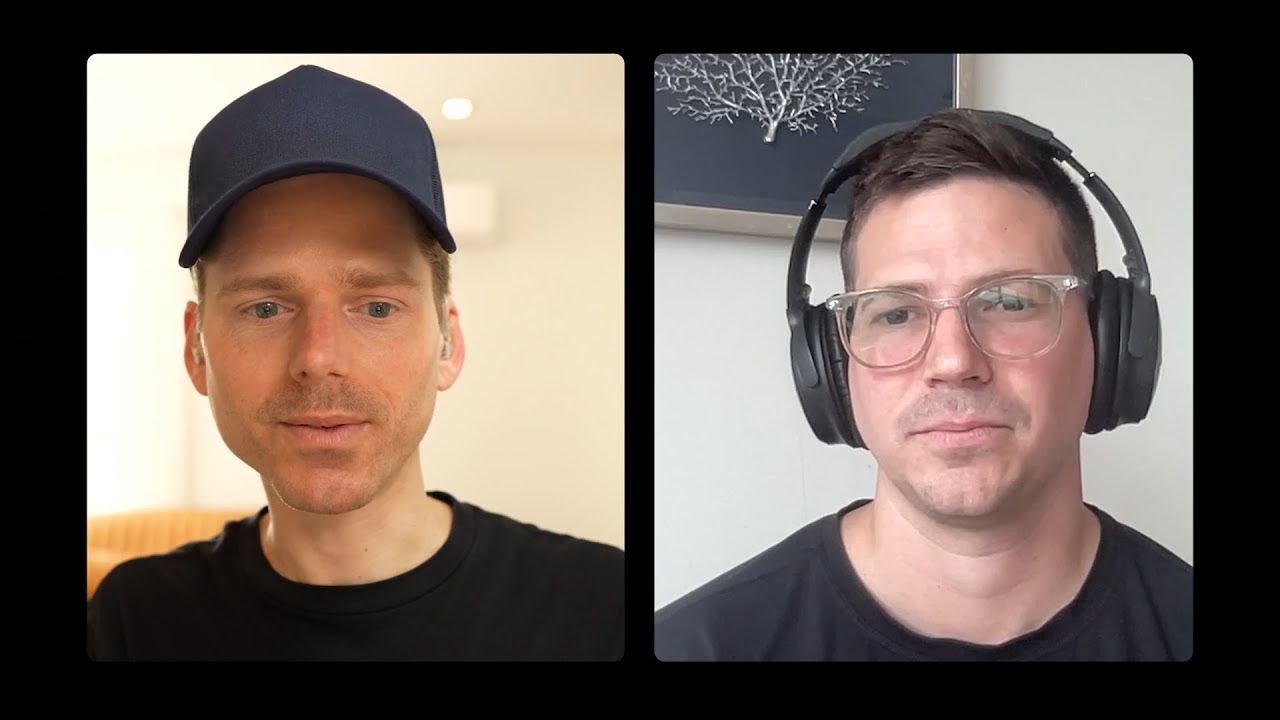
Max Brun and Blake Hurt, Uber's former community EIR, break down why marketplace frequency and average order value drive revenue and unit economics. They compare high-frequency marketplaces like DoorDash to low-frequency ones like Zillow, and cover tactics to increase AOV: longer bookings, add-ons, upsells, and pricing elasticity testing.
Chapters
So welcome to our Office Hours, which are a new video series that we're going to be doing for the Everything Marketplaces community. So these are going to be more casual videos where we'll be discussing common topics, questions, and even some other mistakes that we're seeing founders make in the Everything Marketplaces community. So really excited to have a guest join us here today, and it's going to be our community EIR, Blake Hurt. who of course has some awesome experience previously at Uber and working with earlier stage marketplaces in the community. So Blake, you know, welcome to our office hours today. And now let's just go ahead and jump right into things with the first topic that I wanted to talk about, which is going to be, you know, frequency and why that matters for marketplaces. So maybe we can just start with, you know, first addressing, you know, what do we mean when we're referring to frequency for marketplaces?
Yeah, absolutely. So frequency basically relates to how often does a user interact with your marketplace, right, during a a given amount of time. So generally you're thinking about this in terms of do they operate and transact with you daily? Is it weekly? Is it monthly? Is it annually? Could be quarterly, somewhere in there. Generally the higher the frequency, the better. So if you're a daily product, that's amazing. Weekly or monthly is great as well. Once you get beyond monthly though, that's when you start to become lower frequency and And things start to get a little bit more challenging in terms of how do you make and create a big successful business with a low frequency marketplace. So I think we'll go into a little bit more depth there, but just want to start out there.
No, it's a great kind of starting point for it. So I guess, you know, for some examples, you know, could you maybe share a little bit more about, you know, what we're— if we're referring to like low frequency marketplaces versus higher frequency, just kind of maybe just share a few to kind of help highlight that, you know, the difference there.
Yeah, definitely. So let's just think about some high-frequency examples to start, right? My background is at Uber. Uber is definitely a high-frequency marketplace. We had plenty of users who would use us on a daily basis, or at least on a weekly or monthly basis. DoorDash as well, Instacart. You think about transportation, you think about food, these are things that humans and a lot of consumers need on a consistent basis and on a high-frequency basis. On the low frequency side, you have some examples of Booking.com, Wayfair, Zillow. Those all have differing frequencies, but they're all considered low frequency marketplaces, probably at most once a year. Think about Zillow, that may be only once in your lifetime or only a couple of times in your lifetime. And so those are just, those are some examples. And, you know, when you think about why this is important too, by the way, You know, you want to make sure that your LTV to CAC ratio makes sense, right? What is your lifetime value of a customer and how much does it cost to acquire that customer? If you are a high-frequency marketplace, you can get a little bit of that lifetime value every single time someone transacts. So every time someone transacts on DoorDash, every time someone orders Instacart, you're getting a little bit of value from them and they build that habit. I think that's the big part here is building that habit so you don't have to reacquire them. And that's why low-frequency marketplaces have some challenges is because not only can it be a high cost to acquire them first, but then you have to reacquire them over and over again, especially if you're only using that marketplace once every few years. How do you make sure that that user remembers you? You might have to actually spend some more money to reacquire them and that makes your LTV to CAC, you know, really challenging.
Certainly lots of other considerations. Those are gonna be 2 pretty good examples. So yeah, and I guess I'll just jump in here and, you know, share from some of my own experience. with StudioTime in the past, which you can kind of think of as what's been called like quote unquote the Airbnb for music studios. So essentially, you know, in the very beginning, you know, these are of course like considerations and, you know, we were just really just trying to get things off the ground. And, you know, frequency kind of took us a little bit, you know, a little while to kind of figure out and figure out, you know, how often the nature of bookings were taking place. And I think for us, you know, what we started to learn was that like the more kind of occasional artists that were booking, you know, studios, how can we really focus on like our ICPs maybe and kind of slightly kind of move that to more of like producers or maybe even like managers for artists. that might have more frequent needs, right? And so if we could, you know, initially kind of attract those, those, you know, users on the demand side and acquire them, you know, lots of other considerations, like you mentioned, as far as like LTV was much higher compared to like the one-time kind of less, you know, frequent or even occasional kind of demand.
Yeah, absolutely.
So related to, I guess, you know, other topic that I wanted to discuss as well, you know, as far as the importance of AOV, right? And so let's just jump right into that.
Yeah, so AOV stands for average order value. And so if you take a step back, you know, what's the point of building a business? It's to create revenue, right? I mean, that's at its simplest form, you build a business and the goal is to create revenue. And the equation for revenue is fairly simple. It's how many customers do you have? How many times do they transact on your platform? How much do they spend on your platform each time they transact? And then your take rate. For a marketplace. So AOV and then frequency are 2 big parts of that. So we just touched on frequency. AOV is the other part of the equation. So when a customer comes to your platform, how much do they pay each time? That's what AOV is. And, you know, obviously generally the higher the AOV, the better. I don't think there's really a consensus in terms of what does quote unquote high AOV actually mean. I generally consider anything over $100 to be a high AOV, under $100 to be low, but it's obviously a sliding scale. And generally you're going to have a trade-off between frequency and AOV. I think this is something really important for founders to keep in mind. Now, if you really jack up your AOV, jack up your prices as high as possible, you know, your frequency is probably going to go down. And if you have a very high frequency product where someone's using you daily, generally you're not going to be able to have a super high AOV. If you can do both, amazing, more power to you. Would love to chat with you. But generally you're going to have some sort of inverse relationship and it's important to keep that in mind.
Definitely important consideration, as you mentioned. That's good. That's going to be pretty helpful here. And I guess I'll just jump in here and, you know, help highlight another example from studio time with AOV and maybe even, you know, some specific ways that we're able to kind of increase that. And I think, you know, one was as far as like the, you know, rates, as far as the— on the bookings kind of moving from more, you know, like hourly rates to even like half-day or kind of day rates. So of course, that then, you know, increased the AOV, you know, some others as far as like for bookings to be able to be extended. So for instance, if someone was booking it for like an hour, kind of, you know, half day, the ability to kind of extend that booking and that duration, which thus, you know, increased AOV. You know, some other, I guess, you know, that might be worth mentioning, you know, kind of helpful for early stage founders to think through is, for instance, like adding, you know, services, right? So if there's, you know, services that are typically needed in order to kind of, I think, you know, whatever the nature of that booking that takes place. So in our case, you know, for instance, like booking studios, you know, maybe they need services with like an engineer for the session, then we had the ability to kind of book that in addition as well. There's lots of various add-ons there. And I think another thing that's probably worth mentioning as well, and I kind of hinted at it for the first part as far as the note on frequency, which is maybe even looking at a more kind of professionalized segment of supply, right? So typically they might have a little bit, in our case, had needs for more professional studios and typically longer as well. So those are a few different, I would say, like kind of considerations for us and learnings and ways that we're able to increase Yeah, totally.
And I think, you know, you wanna make sure that you test out your demand elasticity in terms of pricing, right? For some marketplaces, you can raise prices and demand goes nowhere. It actually stays constant, right? Which means you're probably underpricing and you can continue to raise and just see what does that look like in terms of, okay, raise it X amount. What does that do to conversion? What does that do to retention? And just do some A/B testing to figure that out. I think at Uber, we were very, very conscious of wanting to lower prices as much as possible because we saw that users were very price sensitive. And ultimately, we wanted to end car ownership. That was the goal of the company, right? And so the only way to end car ownership is to make the prices so that it doesn't make sense to buy a car, to just Uber everywhere. And so that's one thing, just test out your pricing elasticity. And, you know, to your point, can you sell higher, higher rated products, higher end products? Can you increase the duration and make it as easy as possible, right, to upgrade these services too? I think just decreasing friction, showing the possibilities to these customers like, hey, you ordered this, you could also order this, or if you could upgrade for X amount, you see Instacart, Lyft, Uber, DoorDash, a lot of these companies doing that. really, really well these days of trying to upgrade customers and increase that AOV in a very easy and seamless way for users.
Covered lots of ground here and examples. And, you know, I think, you know, on kind of both ends, right? So it's kind of earlier to kind of growth stage to, you know, to much later stage. So, you know, with all this said, and, you know, we covered, you know, frequency and AOV. So do you have any maybe tips for, you know, earlier stage founders on how they can kind of think about these considerations and, you know, kind of put them into practice when they're building marketplaces?
Yeah, I think ultimately before you even write a single line of code, you know, think about what does your marketplace look like and how do you anticipate that users are going to use you, right? Is this going to be an annual thing or is this going to be a daily thing or somewhere in between? Understanding what that frequency looks like, and then that'll really help you understand, okay, what are my unit economics going to look like here? If I'm an annual product and someone is only going to use me once a year, I probably need to make sure that my AOV is raised to a point and my take rate is at a point where I can get paid back on that customer on their first transaction, or at least very early on. Whereas if you're a super high frequency product, someone's going to use you daily or weekly, maybe you don't need a super high AOV as long as you can pay back that customer within 3 to 6 months or whatever investors are looking for. So, you know, really just understanding that tradeoff and just make sure you understand at the very beginning because it's very easy to overestimate on both sides of these equations. So do your user research, talk to customers, understand how frequently they'll use you, understand their pricing sensitivity, and that'll give you a more accurate forecast of how to build your business and some levers that you can pull to make sure that you'll be successful.
Well, those are some great tips and we'll just kind of wrap it up on that. I know we covered quite a bit here and then I'm sure it'll lead to some questions and conversations. So thanks for joining us here today.
And, you know, if you have any—
anyone had any, you know, questions, comments, or even like to, you know, share their experience, please, you know, leave, leave a comment below so we can chat about it more. Thanks again for joining us here today, Blake.
Absolutely. Thanks, Blake.
More from Max




B2B Marketplaces In The Age Of AI With Sonia Nagar From SNAK Venture Partners | EM Group Chat #216

Insights From Investing In DoorDash With Saar Gur From CRV | EM Group Chat #215

Starting & Scaling Fora As A Leading Travel Marketplace With Evan Frank | EM Group Chat #214

Marketplace Investor Insights With Andrew Blachman From Marketplace Capital | EM Group Chat #213


Deep Dive Into ResortPass As A Leading Marketplace With Michael Wolf | EM Group Chat #211


Masterclass On Marketplaces In The Age Of AI With Fabrice Grinda From FJ Labs | EM Group Chat #209