The Resurgence of Travel & Resilience of ITILITE with Mayank Kukreja, Co-Founder & CEO
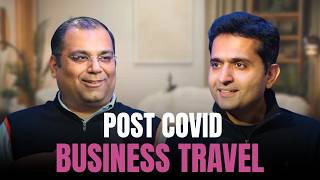
Interview (Dec 26, 2024 upload) of Mayank Kukreja (co-founder & CEO of Itilite) by host Piyush. Covers Itilite’s all-in-one platform for business travel, expense management, and corporate cards; founding story (from engineer → MBA → McKinsey → startup), co-founder match with Anish at Myntra, and values-driven founder alignment. Documents product evolution: started with business travel (2017), added expense product during COVID (2020–21), launched cards late 2023; strategic international expansion driven by customers post-COVID. Discusses market scope (business travel ≈ $1.4T), niche vertical traction (e.g., locum/healthcare staffing ~25% penetration in that segment since ~15 months prior), operational features (touchless hotel check-in via virtual cards), fundraising chronology (seed from Matrix Partners, Series A ~2019, Series B around 2020, Series C in 2022), total VC funding raised (~$50M to date, with Series C round ≈ $30M), team size (~150 employees), early customer count before hiring head of sales (~40 customers), and growth metrics (≈4x year-over-year growth at time of interview). Covers AI strategy (backend augmentation for human agents, Mastermind analytics, fraud detection), hiring philosophy (T-shaped generalists becoming world-class specialists, sports-team culture), founder time-allocation practices, and lessons from COVID-era resilience.
Questions this video answers
2017.
Matrix Partners (seed round commitment pre-launch).
Around 2019.
He signed the Series B term sheet around early 2020—the day the first COVID case arrived in India.
Series C in 2022; the Series C (and related raises) totaled around $30 million for that round.
Chapters
Please buckle your seat belts because the Scale of Flight is taking off now. Only one startup in 25 reaches the million dollar mark in ARR. Only one in 250 gets to the 10 million mark and only one in hundred thousand ever gets past the 50 million mark. Are you losing your sleep over scaling your startup? It's time for you to join Scale Up Flight where we take you on a fascinating journey every fortnight with a founder and investor and operator and ecosystem builder. It's time for you to buckle your seatbelts as this isn't for the faint of heart. Super excited to be here and you know, to realize that the moment has finally arrived that my team and I have been waiting on, waiting for weeks now. We are launching our new podcast that we are calling the Scale of Flight. And I'm absolutely stoked to have with me here the co founder and CEO of Italy, Mayank Kukreja. Mayank, welcome aboard. Great to have you here.
Thanks a lot for having me here. Piyush.
And I know that it's not a particularly sunny, bright and beautiful day that would energize you. It's a pretty gloomy morning and it's been raining all day. But thank you so much for making it on time. How long did it take you to get here?
New York traffic. But you predicted it, right? Just about an hour.
Okay, terrific.
Wonderful.
So I think what we'll do is we'll dive into it straight away and I would like to let everybody who's watching and listening know that IT Light is an all in one platform that simplifies a lot of things and they help their customers save on time and money and really elevate the experience in the travel and expense space. Is that what you do, Mayank?
Yes, we help companies save time and cost in a way employees love.
So there are three different parts to it. There is the travel part, B2B travel part. There is the expense management part, and then a new product that you've launched probably about a year and a half ago, the KAJ product. Is that accurate?
So again, to solve the problem, products keep increasing products. As of today, we do business travel, expense management and corporate cards. But all that is one very tightly knit product to help companies save costs.
All the use cases that you're talking about, be it around spend or travel or your cards product. All of this is in one platform, right?
All of this is one platform. Again, some customers can pick and choose. They can use one of the three products as well. But almost every customer does use three products. If not from us, from someone else. The way we say it, it's a matter of time when they move to us for all three products.
So there is that technology consolidation that happens that they just log into Italy and then the entire life cycle travel all the way through expense and they're getting reimbursements. It's all taken care of.
Absolutely. It's one app where you just, you start your travel book, a travel virtual card is spin up to pay for it, and you are on the travel and you get a meal, you just click a receipt. All that is captured as expense. Everything in one app.
You know, that's incredible. And it reminds me of my days in the corporate, you know, in my corporate life before I pivoted to what I do today. Travel used to be so painful. Oh, goodness me. You know, when we used to get in touch with our travel team, the back and forth conversations around, oh, you can't take this flight, this one is too expensive. It goes beyond your permissible limits and all of that. It used to be absolutely a nightmare. So you've simplified all of that, is it?
It does, it does. And yes, it comes from a personal pain point as well. I have traveled a lot in the previous life. Before. Yeah, I was a consultant with McKinsey for five years. The first two years, I didn't even have a house. So I was traveling all the time.
Living out of a suitcase.
Literally. Literally living out of a suitcase. I did not have a house.
It's interesting, you know, you say that. So you were a consultant with McKinsey and I think so was your co founder, Anish, if I understand that correctly. So at what stage did you decide that enough was enough, you had had enough of that life that you were living right at airports? And at what stage did you decide to build this?
I think it took a long, long time. My first job, even before McKinsey and before MBA, was with a startup. That's where I realized, this is cool. You get to build something of your own. And this is very interesting, but it takes time to make that leap. So felt like, oh, I'm an engineer, let me get an MBA to learn about business. MBA was done and thought, I still don't know practical stuff. Let me go to McKinsey to learn about a little bit more.
So you were already very clear in your mind that that was the journey you were on 100% right from the outset, even when you graduated from your engineering school or your business school, it was very clear in your head at.
The end of engineering School. I was clear at some point after the first job, which was a startup, this is definitely something I want to do.
This is it. Okay, Terrific.
Took a long time to get there, But I think McKinsey was great. As I say, McKinsey is a great finishing school. So I added a lot of skills. But at some point I realized that life is crazy. Not just traveling, but it's long hours and very intense work.
So everybody from McKinsey who's listening and we empathize with you guys. Right?
It's great learning. Last night I met up some friends who are still with McKinsey who joined with me. They have a great life. But I was very clear. Five years with McKinsey. It's not going towards now where I want to be, which is a startup and very clear thinking. I want to solve something which is a large problem, can be solved through tech. I'm a computer engineer. My background and something where I have a personal insight. So I literally had a very large spreadsheet keeping ideas and this was an idea which stuck.
So this is very interesting. You always knew that you wanted to build something and you wanted to get that hands on experience with a large institution and organization which you found in McKinsey. But the problem that you were looking to solve, that occurred to you somewhere along the way. Is that accurate?
Yeah, absolutely. Again, McKinsey doesn't solve travel problems.
McKinsey doesn't solve. But probably that's where the idea dawned on you, saying, this is crazy, this is insane. This is driving me nuts.
Right, absolutely. Again, travel, it gave me exposure to the problem in different ways. Obviously it taught me skills which help in running the business. Sure. But as part of even McKinsey, which is a very expensive consulting firm, when we used to do projects three times in my tenure in McKinsey as part of cost cutting projects, we were looking at travel, a small work stream, but always looking at that. We were obviously booking travel as travelers in McKinsey. I worked in seven different offices of McKinsey and the process wasn't fun to book travel. When I combined that. Okay. As a traveler, I am not enjoying this process. Clearly companies want something more.
Absolutely.
That struck a chord. This is a no brainer. Yeah.
Oh yeah. Wonderful. And what about your founding team? Like how did everybody get together? Like talking specifically about Anish. So did you and Anish graduate from your engineering school thinking we gotta do this together or did you find each other along the way somewhere? IIT Delhi is where I'm from.
IIT Delhi. Anish is from a different College. We joined McKinsey on the same day, in the same office, same day. So we broadly knew each other. I think it's after McKinsey where we met. So I had left McKinsey, I was in the US, moved back to India that I want to start in India and joined a company called Myntra. Sure. Fast growing startup. I said, okay, I will get to see the startup world as well and I can work on an idea which I broadly have loose thoughts about in that company. Anish joined in the same team. So it was a very small team of ex consultants. I was hired initially as founder's team and then founder transitioned to CEO.
So he was literally following you all along. So he went to an engineering school. You guys were in McKinsey together. He was in McKinsey. Maybe you never. Did you bump into each other at all?
We bumped into each other socially. We never worked together, so we knew each other. And then at Myntra, we were working together and I was looking for a co founder. I was very clear that even if I have an idea, I am not doing this alone because there are ups and downs and a lot of downs in the startup journey.
Oh, absolutely.
And you need someone to back you up at that time. So we were in the same team. I think Myntra did a mistake by sending this team to a leadership offsite where we could introspect and think, what do we want to do in the long term? They were sitting in a room and talking about what we want to do in the long term. And I heard this guy also wants to start up.
So it was all company sponsored and funded. That's amazing, right? That's the best way to shape up your idea and really broach this subject with your co founder. So at what stage did you bring it up with Anish saying, hey, you know, I've been bitten by the entrepreneurial bug. I want to do it. I think YouTube.
Absolutely. That off site. We had that session and after the session I said, I have been planning to do this. I have a spreadsheet of ideas. Are you really interested?
It's almost like a proposal, right? Not a marriage proposal, but an equally interesting proposal because you guys are going to be in it for the long run.
It's a longer proposal.
So how did he. How did you react to it? He was like, not the right place to talk about this.
It took me some time to warm him up to this, but I think over the next month or so he was. He was in an early stage of Thinking about starting up, I was very convinced I'm here to start up. So about a month of convincing, and then he was full in.
So did you guys decide to leave Myntra at the same time? Like, how did you go about, okay, now is the time to actually, you know, bring these pieces together to incorporate the company and, you know, get all these different pieces together. How did you undertake that journey?
So we are very practical people, having lived in consulting and then MBAs behind it. So we started. Once we decided we have to start the company, I think we spent about two weeks figuring out our values together before the idea.
And what are you saying the common values were?
I think we spent three days discussing what do we want out of this company? I think that was very, very important. We had basic comfort with each other. We had gone through the same training in McKinsey. So the problem solving, operational business rigor we knew of. But what do we want from this company?
So it was more about what kind of company did you want to build than the product and what you were looking to solve. Is that accurate?
I think what kind of company and what's the personal object? Sure. Just include questions like, okay, one year in, we get a great acquisition offer. Are we taking it or not? Two years in, nothing is working in the company. Are we still continuing or not? Those are the kind of conversations we had, I think, where we were very aligned. The end goal is same. We want to build a company which we want it to be very large, and we want to do it for a very long time. Sure.
So longevity was one, and you painted all of these different scenarios considering both of you were engineers and MBAs. I'm just intrigued. You know, I've got to ask you this, because there's always this debate about MBAs are better managers or, you know, they suck. What is your take? I mean, did your MBA really give you something tangible? And did you think. Do you think it made you a better manager, a better leader?
I personally think MBA helped a lot. I was a very deep engineer.
Okay.
Like computer science from IIT. Everything was deterministic. 0 or 1.
It was all binary.
100%.
Is it still binary? Are you more accommodating about the fuzzy fuzziness of things and things could be gray?
Absolutely. So MBA started it, and then the time at McKinsey clarified it. It can't be zero or one based on incomplete information. You take a call. Whether it goes right or wrong, you still don't know. The alternate would have been better. Right. A lot of decisions are based on incomplete information.
Right. So I know I digressed a little bit here but I want to come back to what you were talking about. So you found your co founder in Anish based on certain shared values and common set of objectives that you had and certain personal goals that both of you had. And I think you outlined some bit of that. But talk to us a little bit about the product. Right. What you were looking to solve. How did you decide that you know you were gonna build a product as opposed to providing consulting services? I mean that was more logical considering both of you were coming from McKinsey. Right. So how did you zero down to okay, this is what we are looking to solve and this is how we are looking to make an impact.
Sure. So as I said a few things I was very clear about. When you are trying to look for an idea to start up, the field is very open, you can go anywhere. So I had to define some things which work for me. I think people talk about product market fit. I was very clear. Founder market fit is very important as a founder. Some things I like and I'm attuned to, I want to do so large problem logically solved through technology. I still identify myself more as a computer engineer from IIT versus mba. So definitely through technology and then some personal insight. These were the boundary conditions and then I listed down a lot of ideas. I came across this very cool thing which Google does internally. They incentivize their employees to save money in travel. This is something which has been around in Google internally made system for a long time. When you travel, if you are allowed to spend let's say $500 on a hotel, if you end up spending $300 which normally people don't do, then Google says out of these $200 you get to keep a part of that that's, that's pretty compelling.
Very powerful.
It's a very powerful idea. Right. All those things you were doing as consultants in McKinsey. Process tight, policy tight. This obviously makes sense. It can save much more money.
It's a no brainer. Yeah.
That was a starting idea that it can help companies save money in a sustainable way in the way employees love. Very quickly as we started talking to companies, we realized the problem is much deeper. If we have to build this, the underlying travel has to be automated and smooth and we can bolt this on. That's where the problem became that first we'll have to solve travel, bring it online, business travel. That's what the example I give a lot of people. If I ask you how do you book your personal travel? Very rarely. You will say, I go to a travel agent. Right, true. Yeah. But in business travel still, people are writing emails to their admin to travel desks. Why is that? We need to bring that online.
Tell me, just to put things in perspective, which year was this? So that we know.
2017.
It was 2017. Yes. You know, there was some degree of automation, robotic process automation, maybe not as much of AI. So those things were already being looked at and being solved for in some shape or form. I guess my question is, where did you see this big opportunity? Where was this big idea saying, okay, Anish and I can come in and solve this particular problem, we'll attack this problem and this is where we'll see the returns. What was that?
I think technology was not the problem. Sure. Incentives of people who are solving this in the industry were the problem solving for employee experience and the control. Why are they asking you to book? Why are companies asking you to book through a admin? Because at some point they want to put some guardrails so employees are not going crazy and booking up the first class ticket.
Absolutely, yeah.
So how do you balance this control and employee convenience? It's a tricky problem to solve and people always go towards one or the other answer. If they are solving for convenience, they say, okay, go and book online and it's fine. Consumer websites are okay. And as soon as they come towards control, they say, okay, this seems too complicated. Let me just put a person as a checkpoint. This has not been solved. This has been solved. The solution was only travel agents and the perverse incentives in the industry that if you try to bring this online, it creates transparency. Travel agents start making less.
Right.
That's where we see that only a new player can come in and solve this. Existing players have no incentive to bring technology in.
So you saw that it was a tightrope. Right. Comfort and convenience. How do you balance the two? Not compromising on one. Right. You had narrowed down on a certain idea that you were going to simplify travel in the process, help your customers identify saving opportunities. And obviously paramount was enhancing the employee experience, the travel experience, which is what you had experienced with McKinsey.
Right.
So, okay, the idea was identified. Did you also look at what was the target addressable market? Did you do all of that study or it was more the founder fit?
Obviously we did. We were too trained by our not to do that, MBA and McKinsey to not do that.
It's probably my naivety to ask you that question.
The large problem, as I Said was the first thing, which first criteria. And business travel is $1.4 trillion and.
This was 2017 when everybody was traveling everywhere. It was peaking right back in those days.
It's back to that number by the way. So $1.4 trillion. The market size was not an issue at all. I think getting the how do we, where do we start? That's something we had to really figure out. Given the market is so large, we were very clear that we will have to define who we are serving. We can't be everything to everyone. A 5 people company, 100 people startup and a Fortune 500 people company have a very different need. First few customers define who you become as a company. At that time probably we didn't know that so well, which I now realize. We were fortunate that because of our network we went to the right companies, we went to series B, C stage tech companies who are more open to technology. And when we Talked to their CFOs, the first answer we got was travel is broken. And every provider is exactly the same.
Especially in startups.
Right.
Because you don't think about bringing in those kind of systems or putting together those policies and procedures and processes. So that was the market segment that you identified.
There was no system. The first conversation, the answer we got was clearly this is broken and I want to fix it. I don't know if there's a solution.
Okay, wonderful. So that validation was already there from your customer base. Okay, wonderful. And fast forward seven years. What is your market segment? Is it still the startup, the mid market space or are you doing more enterprise?
So we have expanded a little bit. We do bin market to small enterprise, but within that there are certain segments which do very, very deeply. Well sure there are certain industries. For example is locum stuffing. This is an industry I was not aware of a few years ago, but today we dominate that industry. I think last check, 25% of companies in that industry are using Italyte.
And when did you venture into this segment?
15 months ago.
15 months. And you have how much? 50%.
25%.
25% market share. That is incredible.
I think that's where we discuss this internally. For the people we hire, for the markets we go after, a T shape is very important. We are very horizontal software. Anyone who travels can use it a lot.
Absolutely.
But for some specific people we have to be very, very good. That segment we keep finding and keep expanding. Healthcare staffing or locum staffing is one of that.
What are some of the other areas like locum staffing in which you have deep expertise and a niche of such.
So different kind of things industry wise. Construction is another one. Then there is a capability which we have cracked using our cards and travel. We can solve for companies which don't want to issue corporate cards to every company, every individual and still want to pay for the traveling individuals. Think of construction crews. Right. A person goes to a hotel, they have to stay there for three months. How do they pay? That person is not carrying a credit card where they can swipe for three months. Right. How does the company pay? This is what we have solved. That when you book travel through it light, we will generate a virtual card at that time and send to the hotel automatically so that company is paying. The person can still check in.
So the entire complexity around authorizations and somebody who's at the hotel like you talk, you know, you spoke about locum staffing where physicians and nurses and PAs are traveling all the time and they at midnight check into a hotel.
Yep.
And then there's this back and forth around, hey, I don't have a credit card on file. Hey, you're not authorized. It takes about 30 to 45 minutes. So. So you're saying you're solving for that by making sure that there is a virtual car of such.
You don't have to touch anything. We call this touchless hotel check in. Right. Just to put things in perspective, even today in hotel industry, fax machines get used.
Right.
You have to get a form from the hotel, fill it up with your credit card details, send it to the hotel many times through fax.
So in this day and age where Everybody's talking about AI co pilots and AI agents and, and AI, AI and LLMs and what have you, that's still, that still exists. Oh, oh goodness.
10% of hotel payments from corporates happen through credit card authorization. It takes the company anywhere from 30 to 45 minutes to make one payment. Sure. We make that touchless.
So I just want to put this in context in terms of your journey. So you started off identifying the startup segment, the mid market segment, where you saw a real opportunity for you to come and make a difference. Because the processes, the systems, it was all archaic. It even is today for the most part like you said. I guess the other thing is you started off in India probably at what stage did you look at international expansion? At what stage did you realize that you had to go beyond India and explore the larger global markets?
Frankly, our customers took, it took us outside India. Interesting times. I said we started in 2017. So clearly we have gone through Covid as a travel company.
Oh goodness. And, and was there ever a stage when you decided you and Anish spoke about it and you're like, that's the end of our founder journey?
Not really. But yes. Revenue went to zero for almost a year. We were not in survival mode. Have we had enough money? But we had to really change what we do on a day to day basis. Sure. I think those were a few mental changes how we run the company. We said this is a positive. We don't have distractions from customer asking. Feature A or feature B. Let's build what we want to build. We're already two, three years into our journey at that point. So we expanded our product. We changed our segment from just startups to very enterprise companies. Our product got ready for that. So that was first shift. When Post Covid Book travel started, I think within six months we were at 3x the volume of Pre Covid volumes. And these were large enterprise companies. We were serving them in 10, 15 countries. One dominant part of that was US. Right. So we said that now these companies are forcing us. Serve my team sitting in the US Serve my team sitting in Southeast Asia. So we brought our consulting hats back on is that we'll have to build serving capability. What does serving mean? The supply is different.
Sure.
In US rental cars are commonly used in Southeast Asia or India. It's always a driver with a cab.
Absolutely. That's the way it is. Still the old fashioned way.
That's a small example. So we had to change supply, build some things. While we are doing that, why not look at the overall market? And that's where we realized the market is larger, the problems are similar and still getting solved in broadly the same way.
Right. So your customers in India literally handheld you and said, hey, are you able to help us in our other global markets where we have our operations?
Absolutely.
And like you said, the timing was opportune post Covid. Correct me if I'm wrong, but now the travel volume and the spend is back in the US at least to 99% of pre Covid days.
I think the projection is in 2025. It will be higher than pre Covid days. Yeah.
So we are going to end the year surpassing next year.
We're going to surpass Pre Covid time.
Surpassing Pre Covid time. That is phenomenal. That is phenomenal. And we clearly have come a long way. Right. We could have never even imagined like two and a half years ago that this was going to be a real. Okay, that's wonderful. And I was just looking at some numbers. So in 2019, travel contributed to 4% of the global GDP. So we are somewhere around that mark again.
I think so again, business travel is right now expected to be 1.5 trillion spend. But that is not just the contribution. This is just company spending on flights, hotels and rental cars. But when you go to a hotel, there is a whole ecosystem of people serving you. Right. So I think the second third order impact of travel is much higher. Not just GDP for a lot of countries. A large part of the workforce is involved in travel. Hotels, flights. These are very, very large sectors which employ a lot of people.
Absolutely. So you made a very interesting point that Covid also, while it was an absolute killer for the travel industry, it also presented an opportunity in a very unique way. Because the focus then shifted to building a better product. Right. Addressing real problems and taking into account customer feedback. Is that when you build a card product, which I believe is the. Is the most, you know, is the newest introduction in your overall portfolio.
I think Covid 2020, 21 we built expense product. At that point we were only travel. We had realized that problem very early on. I think one year into the company we realized we will have to be travel and expense.
Right.
For sure. This is a combined problem. And we had started actually partnering with a lot of expense products so that our customers could get our integrated travel and expense.
But the first couple of years was only travel. You're not doing expense, it's only travel.
With a very clear understanding the problems solution has to be travel and expense.
Right.
Even with integrations, two different companies integrating their products doesn't work fully, seamlessly. So that's where when we had the opportunity in Covid times that let's expand the product so travel and expense fully combined became the product.
And that's what you took to the larger global markets when the markets bounced back.
Yes.
Okay, wonderful.
When we came especially us started scaling payments is a huge problem. Huge problem in travel.
Can't agree more.
Imagine a company spending a million dollars a year in travel. This is still very small company. An average transaction is $500. So the number of line items is one of the largest in a company's P and L. For this you look.
At the folio, it would drive you bonkers. And like you mentioned, a lot of these companies would still be looking at people's emails saying okay, John Smith traveled to Minneapolis on so and so date. Oh, he was booked in this hotel.
There is still in a lot of companies. At the end of the month, someone in finance team sits down has a credit card statement in hand and invoices from travel.
It's unbelievable.
It is still a dominant part of companies are trying to do this. This is what we said. We have the same problem solving for time and cost in a way employees love. One of our core stakeholders, which is finance teams, is going through this painful journey. We'll have to solve this.
So it's very interesting. I just want to double click at this time, you know, in terms of what your footprint was like. So post Covid, when you were ready for this expansion, your expense product was built out. At that point in time, what was your team size, how many people were there? Was a product organization totally built out? You know, talk to me a little bit about how you were structured and how much of it light was built.
I think interesting thing, Anish asked me this in the first year of the company, when will our product be completely ready?
It's iterative and I still believe never.
Right. As a founder, you ask me, I'll have a list of 200 other things I want to have in the product. Right. But broadly speaking, pre Covid, our travel product was great. 21, 22, we made it a great travel and expense product. And I think 23 is when we started working on our cards product. We launched it towards the end of 23, so just about a year now. Today, I believe we have the most comprehensive travel, expense and credit cards product as one platform in the world. There are a lot of other companies who are trying to offer this by bolting on, integrating others, but natively in one app doing this seamlessly, we have the most comprehensive platform.
Okay, let's look at this, right, Pre Covid and post Covid, what did your company look like pre Covid, how did it change post Covid in terms of team size, the markets you operated in, number of customers, growth percentage terms and funding? Most importantly, where was the money coming from? I'm pretty certain during COVID you and Aneesh would probably have had some sleepless nights. So talk to us a little bit about the fundraising process. At what stage did you decide that, okay, fine, we are going to explore the VC route.
I think we have been very good or very fortunate in funding. I would like to believe I am great at fundraising, but a lot of it is luck as well. We raised our first round literally on.
Day zero when you and Anish got together.
Before I left my job, we had a commitment from a VC to raise a round.
And that was your pre seed stage.
This was a seed round.
Seed round. Okay.
Which we raised from Matrix Partners, sure, about three months we had already spent while we were in the job and we had decided we will start this company. We were doing something on the side and we realized that the scale of the company, the scale of the problem we are going to address, we will definitely need external funding. We can't incrementally build the product. This is not a completely new industry. Travel has been around for a long time. Even the players which exist have built a lot of tech. So even if we build something new just to get the basics right, we'll build, need to build a lot. So definitely bootstrap is going to take a long, long time there. So we're very clear this will have to be a VC route company. Started talking to some VCs. That was one of the good things. Had moved back to India, was a very strong network and we've been fortunate. Every round we had multiple term sheets.
So it was not particularly difficult as it would be for a lot of startup founders who graduated from college, worked for a few years. It was pretty straightforward for you to.
Think, I think relatively easy because we had done a lot of work. One, your pedigree matters definitely does. It gives confidence that people can work hard and are reasonably smart. But I think on the problem we had done very, very, very deep research before talking to anyone. So the first time I remember I spoke to a VC and they came in incoming through common friends. They figured out I'm trying to start something. I said, no, I'm not looking for funding right now because I am not confident. I have flushed out the idea. Two months later I went to them, I have fleshed out the idea, I need money. So it was a relatively easy conversation. Still took a lot of time, but we had a soft commitment before we left the job. The second round happened, I think at clockwork. Every, every 18 months we have raised around.
That's. That's phenomenal, right?
So again, numbers were going good. We had proof of concept. We had a bunch of startups who were using our product and loving it. So one of our early angels said, I will step up and lead the round. He used to run a fund and said, we want to do this as well. And we had two other term sheets because, I mean once you get a commitment it becomes really easy.
So this was your Series A round.
This was Series A round.
And which year was this?
This was 2019.
So 2017. The company was built and was formed in 2019. You did your Series A round 2018 end.
We did our Series A Round.
Okay.
And similarly again, 2020, beginning just before COVID I remember the first. The day I signed the series B term sheet was the day first Covid case came in India and that was.
2020 and everybody got jitters. And did your VCs tell you, hey, we've got to revisit this?
Unfortunately not. I think we have been very conscious in choosing the right VCs.
Sure.
As I said, every round we had multiple term sheets. I felt questioned myself in almost every time we chose the term sheet, which was not the highest valuation, which is not the highest amount of money, because you felt the partner was right. And that has turned out to be very true.
And what has been your definition? Let's double click on this. Choosing the right VC partner, choosing the right investor. Everybody's talking about it. How did you go about picking the right one?
It's some logic and a lot of gut. Some logic. To me. Some of the things were that I had been very clear in all my VC conversations. I don't want you to run the company. I am running the company. How much are you involved? My ideal answer there is, it's up to me to decide how much they will be involved VCs. I will come and ask for help. I understand how they can help. They should not offer unnecessary help. That's the first priority.
Sure.
And then second is how deeply is the person convinced or understanding the opportunity? Are they. And There are some VCs there, are they investing or interested because three other VCs are interested or are they interested because they like you and the idea and the sector? It's very important.
It's very interesting you say that. So it's obviously a combination of the terms, the numbers and people and the vibe and the feel that you get. In your case, how would you apportion the weightages? Was it more the people that you were working with and just the comfort that you felt in terms of deciding factor?
Was that. So in every round, I was clear that this is how much I want to raise with this much dilution. Anyone who meets that and is above that, I'm okay with now. Within them, it's the how much I like the person and how much they are convinced about the company is the deciding factor.
And you've seen both sides of it. You've raised when it was relatively, as many would say, easier to raise. There was a lot of, you know, capital available. And now, you know, you've also seen a time when it was not particularly easy. VCs were going very, very hard in Terms of doing their due diligence and founders, startup founders found it very, very difficult to raise their funding. What do you think has changed, you know, in both these times and what advice, if any, would you offer to young startup founders?
So we have not really raised in what is called a typical tough environment. My last fundraise was 2022. Beginning. You would call this the end of that crazy era. But I think now what I still talk to a bunch of VCs and other founders who raise. What we were doing back then as a company is what people are looking for now. We were never in the, in that zone that I have raised the money I have to use all of this in 18 months. We will invest in our mind. We still look at rois very, very, very deeply. I will invest only that much money on which I can get great roi. When the ROI is less, the money will not be spent.
And that's not a typical VC model as we all know it. Right. It's like double down on growth. It's about burning the cash that's there and nobody's thinking about profitability. So you're saying that you've always taken a different approach to this.
So that doesn't mean that we are going slow, but if we are not clear and confident that this additional spend will have the high roi, we don't spend that. And that goes back to I decide how I run the company. When I say I the company, the founders decide, not the vc. We go and tell them. This is what we are comfortable with. This is how we know we can spend with high roi. We don't know beyond that. If you have ideas, please share. Otherwise I'm not spending the money.
No, absolutely. And probably that's the reason you guys survived and are now thriving, right when all hell broke loose during COVID So.
Again, one thing I've been very clear with the Visa is this company cannot die because it will run out of money.
So when was your series C round, man?
2022.
It was 2022. And how much did you raise, if I may ask?
The overall raise was around 30 million.
30 million. So till date you've raised about $50 million or thereabouts in VC funding. Okay, wonderful. All right. That's phenomenal. And how big is the team of Italyte right now?
We are about 150 people.
150. Okay, wonderful. I think that's one element that I do want to talk about because it's something everybody finds interesting. Co founders come together, you know what you're looking to Build. How did you go about building that founding team?
Right.
What are the different attributes that you look for at least in your founding team, saying, okay, this is the desired profile of the person that we're looking to bring on board.
Yeah. So as I mentioned earlier, a T profile. What does a T profile mean? First of all, the early employees have to be generalists. First hire was an engineer, but I did not test him on anything engineering. It was purely problem solving, product skills and things like that. Our second hire was in operations and in her 7, 8 years he has been with us. He has done everything from operations to sales to customer success to product. Those generalists are the easiest. Problem solving hunger and being able to pick up stuff is very, very important. The reason I say T profile is at some point those people should also be able to go deep into one thing very, very much. They cannot say that I know everything a little bit. Sure, Jack of all trades is great. That's a required thing. But then one thing at least, you build very deep expertise in. That's the team profile. The other thing which has worked very well for us is overall for the team, the way we have set the expectations from day one. I have been very clear. We are not a family.
We're not a family. We are not a family. I'm glad that you said that. I mean, you know, my ears almost pain and hurt when I hear that, oh, we are a family. Family. And, and clearly, I mean, it's justified when employees say that families don't fire and families don't let people go. It's a different relationship. So I'm glad that you're calling a spade a spade.
You're born into a family or not born into a team. It's more closer to a sports team. Interestingly, that's how I ran the company for a few years. That's when I came across Netflix philosophy and all that. This completely gels to what we are doing.
Right.
So the one is that it's not a family, it's a sports team, which means we will invest into making you better. We will make sure that you perform better. But I'm not obligated to support you for life if you don't perform better. Right.
It's very performance based and outcome based.
It has to be performance based. It's a business. Developing people is very ingrained into Anish and me. We worked at McKinsey, both of us, for a long time. And McKinsey takes professional development very seriously. In all interviews, even till today, my promise, when people ask me what's your culture? That I'll tell you what I focus on as a founder. Every six months, if you look back, you should be a better professional. Will you have the most fun time? I'm not guaranteeing. Doesn't mean it's not a fun place, but it's not my priority. My priority is every six months, you should be a better professional.
And if you're enjoying your job and if you're growing and if you're becoming a professional, better professional. The underlying assumption is that you're enjoying what you're doing and there is fun at work. That is very refreshing. I'm glad you put it the way you did. I guess the one question that I do want to dive into and spend some time talking to you about is at what stage did you decide that, okay, now is the time when we are hiring professionals to let go. I think founders find it difficult to let go. Right. And build an organization. Talk to us about that journey when you started hiring professionals for certain specific roles. And I'm sure there would have been times when you thought that, hey, I could do this. Right? I could be involved here in product, build in sales and go to market. Talk to me about that process and what it feels being a founder.
I think every couple of years as a founder, you have to figure out your own job. There was time, I think two years in, where I was very uncomfortable. I think I'm supposed to do a different job. I just don't know what it is.
Right.
A friend, he's very senior and has sold a company for a billion dollars. And I asked him, how did. How did your job change? Because even today, I have to evolve. Does it get tougher and tougher from here? Sure. And he said a very interesting thing. The amount of effort a founder puts in at a $1,000,000 arrangement or $10,000,000 ARR or $100,000,000 ARR is not different. Because if it. If that scales, the person will go crazy. Right. You're already working crazy hours and intensity at 1 million. Right. You can't do 100x, but the things you do change. And I think that's the journey I personally evolved in and the team involved in. In the initial days, you just do what seems right. This is the next thing to do. This is the next thing to do. At some point, I started monitoring my time. Even today, for the last five years, every Friday evening, half an hour slot is there where I evaluate my own time.
Could I interject here? Because you make a very, very interesting point here. Now, on that timeline 2017 to 2024. Let's look at where you and Anish have been spending your time. How has your focus changed? So take me through that journey. Let's talk about 2017, 2019, 22 and 24.
The first two years is just building everything yourself. Right? So I was deep into building product engineering. Reported to me I was deep in the product used to do some individual sales because the CEO has to show up with larger customers. And Anish was managing sales. Customer success and a lot of operations. Travel has a lot of operations which was not fully automated for us at that time. It was a lot of individual contribution.
Stuff into the trenches, rolling up your sleeves and getting stuff done.
Again, I had to call out, Anish, why are you booking tickets?
So tell me this, at what stage? Like how many customers had you acquired before you hired a sales director or a head of sales or whatever that may be?
I think the first 40 odd customers was just between Anish and me.
You writing the proposals, negotiating contracts back and forth, making it happen, implementation, everything.
Everything.
40 customers. Wonderful. Okay.
And that was very conscious, right? We are very hands on people and we were clear that even when we go hands off and we were clear, we will have to. I need to be able to command that authority and give confidence to my team that I know this stuff.
Right.
Even today, now I lead sales for the company. And it's interesting because Anish and I both are very generalist, so we can keep on switching stuff. I probably still listen to the most amount of sales call in the company. I'm not in sales calls, but I have this morning routine where I'm on a morning jog, I'm just listening to sales calls. So still very deep. But two years in, we realized now can't scale with just us doing this stuff.
This was 2019. 2020, sure. Okay.
And that's where I said that I started feeling uncomfortable that am I supposed to do it? I'm supposed to do a different job. But what that is spoke to a lot of people who were a couple of years ahead in their journey. What do you do and all that. I think the best thing which came out was logically you know the answer. Logically you know where you should be spending your time. Right. You're just not doing that. Just monitor your time.
Well, so is it your gut or are there certain key business metrics that that tell you as a founder that you gotta pivot now? This is where you need to be spending more time.
I think a logical answer is very clear to you.
Right now, it's very intuitive.
You're closing five customers a week, let's say, right. If you have to take it to 15, it can't be you. Sure, it'll have to be different people, but to enable those different people to do that, you need to be doing different stuff.
But the fact that I could do it better, I could get the deal as opposed to somebody else making the pitch, Right?
So you write that down when you are logical that, okay, I should be spending time hiring people and training them and only some time selling, but then you have to monitor it. Did you really do that?
Right.
I think that's something. That's the shift we had to make around that time. My logical sense says I should be spending time on X. So even today, I would say I personally enjoy doing product work a little more than sales.
This comes to you more naturally. And between you and Anish, do you kind of switch responsibilities every now and then saying, okay, you know what? I think it needs a fresh pair of eyes and a different perspective. Is that the approach you take every few years?
But even then, what we do is we figure out what's the biggest bottleneck for the company. And in that bottleneck, we go all hands in. It's not your area or my area in that we put all our founding team. So I haven't talked about it, but we have a founding team construct a couple of people who are just extension of founders. We put the full founding team and founders in that bottleneck problem. But I think monitoring your time has been very helpful. As I was saying, left to myself, gut based, I'll start spending more time on product today. But every Friday I sit back and see how much time in product, how much time on sales, and how much time on the bottleneck area. And that helps me correct myself, that process. First doing it for myself, then doing it for the other leaders in the company, I think has been very transformative and bringing in new people, bringing in new talent, and making people focus on the right things.
So at this moment, at this stage, how close or how distanced do you feel from what's happening with an actual customer in terms of their experiences with it? Light challenges where you are gaining vis a vis competition, losing vis a vis competition. Talk to me about that.
I think still very, very close. Very close. Very, very close. I think more close than I would admit I should be. Right? But as a founder, I feel that the product market fit has to be constantly evolved. I talked about niches, right? We built this credit card authorization automation. It does not come from numbers. It doesn't come from over 20 customers who are asking for this. Right. It comes from connecting the dots and having that conviction to connect the dots. You need to have the dots and those dots can't come second hand.
Very true.
That's why it's still very, very connected.
So it's a function of what you hear from your customers, what they tell you, their tacit and explicit needs and what you see, the trends that you see around us.
Absolutely. It's not just customers saying those are some data points into it, but then taking a bet based on that. So I think it's very important to stay close to the customer that way.
Absolutely. And I think you make a very, very interesting point. And one thing that I'd love to talk a little bit more about is, is your scaling process. What's next right where you are now. Where do you see yourself a few years down the line and how you're embracing. You touched on automation a little bit. I want to talk about how you are embracing AI and what trends do you see in terms of AI adoption in travel industry as a whole?
So I have a slightly unpopular opinion on AI. I absolutely think it's a very transformative technology. But all the noise you hear around AI, a lot of it is being made for investors and PR versus for customers. Customers want to get a problem solved. True. Most of them, apart from we don't care about how it is getting solved. Apart from a few exceptions where there is a mandate to get AI into the system. Customers want to get a problem solved.
Very true. They don't care how you do it.
So when Internet came or when again, let's say a new database technology comes, you don't go and popularize that I'm using this technology, you're still solving the customer problem. So that's where I think talking about how we are using AI is more the PR and for investors, not for customers. If you see it light does not talk a lot about AI. We do a little bit. In fact, a lot of our marketing material explicitly says we are powered by AI. Plus hi artificial intelligence and human intelligence.
And I found it very, very refreshing. I looked up your website and did my own research that one of the key differentiators that customers think, you know, they've experienced with it is, is the fact that there is somebody there, there's a human who's already there on the other side travel when somebody is calling you. They're probably stuck at the airport, stranded, somebody's not able to check into a hotel. At that point in time, you don't want to talk to a bot or you don't want to talk to an AI agent. And I think that's, that's where you start.
Part of our sales pitch is when you contact it alight, you will get absolutely amazing support by a human, by an expert human.
Right.
Our customers, especially in business travel, get jittery when they hear AI because the first use of AI is support. And people don't want AI to do support in business travel. I missed my flight. I don't want to talk to any. So where we use AI is a lot of it in the backend to enable those humans. When a call comes in, they have all the context, deep context about the person. We use a lot of AI there. We write a lot in the company because we want organizational memory. A human cannot read all those things in one go. That's where we use AI to enable that human. But it's all in the backend to enable that human.
So it's not AI on the customer experience side, which is where a lot of people are using it, chatbots and what have you. It's more on the backend. Do you also use IT in spend in terms of identifying potential saving opportunities for companies doing. I read a couple of use cases around spend classification.
Is that on the admin side or the buyer side? We use AI very explicitly. A lot of it is used in analytics. We have a product called Mastermind which is almost in common language, what I would have done as a consultant to a company looking at their travel 10 years ago, that this is how you can improve stuff. Our product actually does that. Rather than showing you graphs and charts of your data, it tells you these are the five things you can improve. We use very explicitly AI there. We also use very explicitly AI in solving for what I said, matching your card statement with your travel statement. So those things are okay. Support AI is a no, no.
That's wonderful. And next time we think of using a travel platform in our small little company, maybe we can think of edilight because I would hate to talk to an AI bot.
Absolutely.
You're stuck at an airport, you're trying to reschedule your flight, and especially during the holiday time, right. Christmas, you want to go meet your family and you're thinking about all the good times and here you are talking to an AI agent. So I really found it very powerful as to how you're using human intelligence. Like you said, so it's a people plus software play. I do want to talk about the AI applicability in travel and expenses when it comes to things like fraud. Use cases like fraud. Talk to me about the success that your customers have had using AI to predict fraud, identify things that shouldn't be happening in the enterprise.
So there's a lot of stuff in expense management and again using corporate cards where it's applicable to fraud, open to fraud. You start with heuristics. There someone is spending, for example a common one, a corporate card at a Best Buy store or to buy a PlayStation is probably wrong. You build those heuristics. But then now you have a lot of data across so many organizations and organizations are telling you where do they put a chargeback, where do they put a fraud? That's where a lot of AI can be used to bring that power to every one of your customers. We are serving now hundreds of customers and have feedback from them on what is a good transaction versus a bad transaction. That data is now being fed into serving the new customers.
So it's not that you have a rule based deterministic engine which says okay, if this happens, then it is fraud. It is more intelligent. It is continuously learning and becoming smarter.
You start from there, but then become smarter. Because the example I gave Best Buy transaction, the rules can't work because I could be buying a projector for an event I have to conduct. So which is a valid transaction. So to go second, third level deeper, you need deeper insights. Which is what AI is best suited for. This is a good use case of AI versus support.
And internally in terms of your own scaling journey and scale up journey, how do you think AI has had an influence there? Do you think you can do a lot more with less and that's how probably in terms of number of people that you've added to the company that's not grown to the extent that you would have expected in 2019, 2018, 100%.
We, we are able to do more. Again, I would want my team to do even more with AI. So that's a constant push. We have an internal channel where we think put interesting things you did with AI in the last week we put there so that other people feel inspired and are able to do more. Just last week, because my designer was very busy, I used AI to create a bunch of images for myself. Wonderful. Okay, there you go.
Yeah, but look at the low hanging fruits. And you go from there.
Absolutely.
Terrific. Wonderful. My last question on AI Right. And then we'll talk about the more human aspects. What are your big bets around AI? Is there something you would want to talk about on this platform.
I think around what we focus a lot around what can be done with the combined use of our three products. I just don't want to build the best travel platform or expense platform or a cards platform. A lot of companies are doing that because we have all three together. How can you build a combined platform which increases the value? And to do that there's a lot more use cases which can be solved using AI. Credit card authorization is the best example. It can't be done by a company which only does travel or only does credit cards. We did it because we have travel plus cards. And then I briefly touched upon how AI can be used for reconciliation and to identify fraud. I think that's where we are spending a lot of time and effort. Our product called Mastermind which gives people just future ideas is just a start. I think around that as we go to more enterprise customers, the need for fraud detection is immense. So we are putting a lot of effort in that area.
Wonderful, great. And the last dimension that I wanted to talk about is your recruiting, how you're building the organization, the kind of people that you're looking to bring on board. Now, now that the company is at a certain size, what's your growth rate, if I may ask?
Last year or this year when we are ending, we are ending at about 4x of last year.
Forex, that is. So you're a hyper growth company. Talk to me about how you want to build your leadership team. What kind of skills do you want to have on your team and what kind of people do you think would be best suited to take up these leadership roles? And these could be the CRO, cmo, you know, demand generation, all these different roles in the company.
So I briefly mentioned it earlier as well. We still value being a generalist quite a lot. Even at a leadership level, ability to problem solve, go deep is very, very important. Now obviously we don't hire people. Fresh graduates are leaders anymore. We don't hire people who have not done that job at a very senior position. Sure. So your skills which are functional is just table stakes. I want and I. He really loves it. But the person who leads product engineering for us, he's sitting in our problem solving around marketing and sales and vice versa. Again, my finance head is sitting in our product discussions and roadmap. Right.
That's contributing there. Very interesting.
Yeah, I think being able to have those skills is extremely important. The second thing we look for is where is your bar for acceptable? I think people's own bar of what Is great. Is same across life, whether it be food, whether it be the shows you watch, whether it be hobbies you have or your work. When you think, what is world class, can you really push the boundaries? Sure. In our early part of our journey, we said, okay, generalist people who are able to do reasonably good stuff and go deep is good enough. But then we realized some of these people could push themselves to really be world class, while others could not. Today we definitely need people who can build world class stuff. So where is your personal bar of excellence?
Are you too content in life or are you still looking to push the envelope?
I think that is the internal push. But when I show you something that this is how this work has been done, what is excellent for you, for example? Personally, I am never satisfied with my own outcome. Both me and Anish keep pushing the bar. It's not very healthy. But rather than looking at, oh, see how much we have achieved, we're like, but this can be better as well.
Absolutely. That's a founder's itch, right? You feel all the time.
I think that trait in a leader is very, very important, actually. Everyone, right? That's how you push the bar. At some point you have to stop and celebrate. We force ourselves to do that. But being able to push the bar, that I have to be better. I have to be better or my work can be better is very important. Right.
That's great advice and hopefully it gives everybody who's tuned in some perspective in terms of what founders of companies that are scaling so fast as yours are looking at in terms of attributes and competencies and behaviors and skills. I do want to now talk a little bit about your personal journey. I mean, this has been, you know, quite fast paced and I'm sure it's taken a lot out of you. There's probably never been a dull moment for you. And Anish, how has it influenced and impacted your personal life, where you are today? If you were to, you know, look back in retrospect, would you have done anything differently? What are some of the regrets, the, you know, trade offs you've had to make? Talk to me a little bit about that. Mayank.
I think as a person, I don't have regrets. Sure. But very consciously, I look back and do this check, if not twice, maybe at least once a year. Should I be doing something else if I had the opportunity to do anything? And this is one of the things I'm doing. But I was on a path to become a partner in McKinsey. If I go out, I can look for another job. Is any of those prospects still interesting enough? And the answer is very clear that I should not be doing anything else. This is something which is very interesting. This is something which is aligned to what I want to do and is doing reasonably well. So I think that part is clear. What I would wish to do more is balance work and personal life better.
How's your family adjusted with all of the international travel? I remember meeting you in Dallas a couple of years ago and now, and I know between that you probably made a, you know, a dozen trips to the US and to other, you know, so many others to other parts of the world. How, how do they adapt to your not being around in moments when they probably need their dad, their husband, you.
Know, so my wife is also a founder selling between India and us.
Oh, there you go.
And since we started the company, our level of understanding has gone through the roof.
Right.
She fully understands what we are going through. But I have a four year old son. I think that was the biggest turning point where I first time realized I have to balance work and personal life more. Weekends are sacrosanct. I spend time with my son. Weekdays I get to spend a little bit of time. But earlier there was no balance. I used to work like seven days as a founder. Today weekends are with my son. I would like to spend more time on personal health that I have still not figured out how to hack that into my brain, but I think that's one thing which I'm trying to get towards.
All right, so you don't literally sleep, growth, breathe, growth, you know, growth, growth, growth. Growth is not the mantra. I mean, you've got to be able to unhook and disconnect at times and focus on the equally important things in life.
So I think focus is very important. When I'm working, I'm in that mode.
Right.
But I am able to switch contexts that now work is off and I am in the family time. So this is family time. I'm 100% available. I realized it's not the amount of time I'm spending with family, but the time I'm spending. There is no phone. I'm fully with my son. That's more important.
So based on where you faltered, now that you look back at things, you know what you could have potentially done differently in any piece of advice for our other startup founders who are more upstream early in their journey, I was.
Very restless again, putting in so much effort. You are doing this, you expect results quickly. I think just mentally coming to a point that it's a marathon. And being a marathon does not mean you run slow. The best marathons in the world are actually sprinting throughout.
Sure, absolutely.
So it's a very, very long journey, but you still have to run very fast. Results will take time. I started by saying I will do this for the long term, but was expecting results and outcomes very quickly. Just mentally adjusting to that I think is very important. It's for peace of life and mental health.
And I think all the founders at some stage in their journey would come to a point where you know which you experience when you know Covid hit and travel industry was the worst impacted. What's the piece of advice there? When such a change happens to the macroeconomic environment, things that are completely beyond your control, what do you do and what do you fall back on? Any piece of advice there?
I think being able to step back, it's a jargon consulting world, but step back is extremely important. Being able to step back and say this is where we are. What are the options going forward? A lot of time people do spend time thinking, what if I could have done things differently? What if this has not happened? Right. Makes no sense. Right? That's where you need to be like a spock. Be super logical. What are the options with me going forward? As I mentioned, every year I sit back and relax and think about is this a thing I want to be doing for the next three years? I've done this for now, eight years. The answer is an absolute yes. That's why I'm doing this. Being able to do this in good times and the bad gives you the right answer. A founder has a lot of context. Just need to step back.
Those are some incredible words. Mayank. An incredible piece of advice. This has been an absolutely wonderful conversation. I appreciate you being forthright, transparent and literally sharing a lot of things which are very personal which people wouldn't feel comfortable talking about. So I appreciate that sense of vulnerability and you sharing that with us on this platform. Thank you so much for being on this show. It was lovely talking to you and we are going to be rooting for Italy sitting on the sidelines.
Thanks for having me here. It was a pleasure.
If you're listening to us on Spotify, Amazon or Apple, if you like the content and what we are talking about, please, please, please go and hit those five stars and leave us a review that goes a long way. And if you're watching us on YouTube, then please like and subscribe. In that way you can be absolutely assured that our content reaches you and we follow you along, you know our journey and we hope to bring to you more founders, more ecosystem builders to talk about their scale up pursuit. Thank you for flying with the scale up flight. We hope you'll join us again soon.