How to Start an Automation Agency (First Client in 72 Hours)
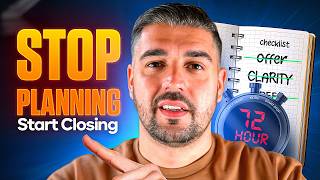
A three-day sprint to launch an automation agency: pick a niche and write a one-page offer on day one, build a four-hour delivery system and demo on day two, then cold outreach to 30 leads to close your first client by day three.
Guys, listen, I've been in business for 14 years and you do not need six months to start a business. You definitely don't need six months to start an automation agency. You don't need a fancy website or a huge portfolio or even a single testimonial. You need three days and a plan that sells outcomes, not ours. And guys, I know, I know it sounds insane because we've all been fed the same lie. You have to build your brand first, don't you? You have to get your systems perfected, don't you? You have to wait until you're ready to shoot that exact perfect moment, don't you? But meanwhile, six months passes, a year passes and you're still preparing instead of earning. So guys, here's what actually happened when I tested this exact framework with a friend who'd never landed an automation client before. Day one, we positioned a clear offer. Day two, we built one repeatable system that could plug in hundreds of clients. And day three, we had two discovery calls booked by day seven. By day seven, the first client had signed and it was seven and a half K USD. Well, why did this happen? It's not because he was the most skilled. It wasn't because he had the best, most expensive tools. It was because he moved with speed, clarity and a system that made the decision easy. You'd be scared if you realized how easy this was to do. Because I've built and scaled multiple automation businesses, I've helped dozens of people go from zero to their first five figure month using systems that don't require perfection, they require execution. And here's what I've learned. The people who win aren't the ones with the most knowledge. They're not. They're not the ones with the biggest brains. They're the ones who can package that knowledge into something a client can buy in under two minutes. So why am I saying all this? Because today I'm breaking down the exact 72 hour sprint that turns you from I want to start an automation business to I just closed my first client. This isn't theory, this is a step by step playbook that I have used and walk the path myself numerous times. Three days, three segments, one business. Let's build it. If your offer requires a paragraph to explain it, it won't sell. Period. Here's what I, and probably you have watched happen a hundred times. Someone gets stuck on day one, not because they don't know enough, because they're trying to be everything to everybody. I do automation integrations, workflows, AI CRM setups, And you can feel it when they sell it, that quick, quiet desperation of hoping that something sticks. But here's what you're about to realize. Clients don't hire the person that does 10 things. They hire the person who solves the one problem that keeps them up at night, that gives them nightmares. And once you see yourself as that person, the specialist, not the generalist, the entire game changes because you're not convincing anyone anymore. You're diagnosing. And people pay for diagnosis. I did this too, by the way. My first attempt at an offer was literally like a Google Doc with 17 bullet points in it. I called it Full Stack Business Automation Solutions or something like that. Like, trying to convince them that I had the solution to everything. The client stared at it for about 10 seconds and said, so what do you actually do? Like, what's going to happen here? And I had no answer because I was terrified that if I picked one thing, I'd miss out on everything else. I would lose it. That fear, it cost me six months, probably 10 clients. But more than that. So when I tell you to pick one problem, I'm not being reductive. I'm saving you from the mistake that almost killed my business before it started in the first place. So here's exactly what you're doing today. Step one, you're going to pick a vertical market. Not small businesses, not entrepreneurs. Pick a niche where people are already spending money to solve problems. For example, I'll give them away for you for free. Some of the good ones, real estate agents, are a great one. Dental clinics. Dental clinics have massive, massive margins. Dental clinics are great customers when it comes to AI Home service, H vac plumbing, roofing, you know, the old school job. E commerce brands, they have massive data processing issues. Mortgage brokers. Why? Why these businesses? Because these businesses have predictable bottlenecks and a proven willingness to pay for solutions. The moment you stop asking, what niche should I pick? And you start asking, which problem can I solve faster than anyone else, then that's when the niche picks itself. All right, so we pause here for a second. What niche are we actually going to go with? What are you going to choose? I'm genuinely curious here. So if you're thinking real estate, med spas, E commerce, drop it in the comments and let me know if you're stuck between two. Tell me, and I'll tell you which one that I would pick if I was in your position. Sometimes you just need someone to say, yeah, that one. So let me be that person for you. So now we've got our niche. We need to identify one painful bottleneck in that niche. Go to Reddit, go to Facebook groups, YouTube comments, get Apify on the go scraping comments for individual comments on channels. Right, for your niche's biggest problems, your niche lead response time, your niche data processing problems. You're looking for patterns. What do they complain about? Constantly scan review sites. What are they complaining about constantly? For real estate agents, leads come in, but by the time I respond, they've already gone with someone else. For dental clinics, we lose patience because our intake process is a mess. You know, for home services, the phone rings, we miss the call, the customer books with a competitor. That happens all the time in that industry because they're working actively. They don't all have sales departments find the pain, not the mild inconvenience, the expensive reputation damaging revenue, killing pain. And here's what happens when you find it. Suddenly you're not selling automation anymore. You're selling sleep at night. You're removing the nightmare, you're selling the deal. They didn't close. That's what people pay for. So the third step of this process is to craft a fixed scope outcome offer. Not I'll build your workflows, not I'll automate your business. Nothing. There is no outside of scope issues here. Here's the shift. I build a speed to lead system that replies to every inbound lead in under 60 seconds, automatically qualifying them, booking appointments and notifying the team. Do you see the difference? Do you see the difference in that? It's specific, it's an outcome, it's measurable. And most importantly, the client immediately knows if they need it. Now, this point is absolutely critical. Okay? This is where most people freeze. They write the offer, they look at it and they think, is this too simple? Should I add more? What if they think I'm not experienced enough because I haven't put enough down on the paper? I. And that's the voice that keeps you stuck because by the time you've written the offer, something clicks. You're no longer wondering if people will buy it, you're wondering which client to call first. The difference, you moved through the dao instead of camping there. Instead of setting up camp, you move through it with conviction. So we're through the trees, no camping. You need something that you can send that makes the value obvious in 30 seconds. It's a really simple structure, but the client needs to believe what we have to say. So we start with this. This is how we do it. We start with this structure. We start with a problem you're losing deals because you respond too slowly. That would hit home to the majority of businesses, to be honest. But that's the problem. Example. The promise will get you responding in under 60 seconds automatically via SMS and email. Proof. Here's a demo of it working this section, you can include a screenshot, a simple diagram, but my personal favorite is a personalized loom link. Because when we're starting on a three day blast, we have to put that additional effort in. Price. $2,500 set up plus $300 a month or whatever you want to go with to get yourself off the ground. You don't necessarily have to quote that I as a setup. If you want to get the client through the door, then that can be it. That's it. One page, clean, clear, no fluff at all. And here's the secret sauce. When you make it simple, you make it buyable. Right? You clients aren't rejecting you because your offer isn't good enough. They're rejecting you because they don't understand what you are selling them. They don't understand the issues that you can solve. So why do they need it? If they can't understand it, why do they need it? That's exactly how they think. Clarity beats cleverness every single time. And once you've experienced that moment when a client reads your offer and says yes in like 60 seconds, 120 seconds, you will never ever go back to vague positioning. So now you've got an offer people can actually say yes to. It's down on a bit of paper. But here's the problem. You can't sell them something you can't deliver. And what I'm about to show you in day two is the part most people refuse to do because it feels too simple. And that's exactly why it works. Deliver the same transformation 100 times, that's a business. Deliver a different version every time, that's a business. But it's a chaotic one. Here's where most people get stuck. They land a client, say yes to everything. Build something crazily custom, spending 60, 80 hours on it. Deliver it late, late for timelines, getting complaints from clients, become exhausted and never want to do it again. That's not a business. That's a job that you hate. The goal isn't to be a custom developer. The goal is to become a product company that happens to use automation as its vehicle to success. And the moment you realize that, that's when you stop building from, you know, scratch every single time and start deploying the same proven system. That's when your income multiplies without hours of multiplying it. That's where the real value comes and money is made. So how do we actually do this? Right. We build a modular workflow that reliably solves their major bottleneck from day one. Right. Their biggest issue from day one. Let's stick with the speed to lead example because it's a great example and probably somewhere where I would advise that you start. Your system needs to do this. It needs to capture the lead. Form submission, sms, email, phone call, classify the lead. So qualify it based off a simple criteria. Could be anything. Like in the dental space. It could be whether it's like implants or whether it's a checkup or whatever. Right. Classify the lead, respond instantly personalized auto response via SMS and email. Make it two way. Conversational is my advice for when it comes down to SMS marketing. Book the appointment. AI can now book conversationally for the meetings. You don't have to worry about sending a calendar link and them not clicking it. They literally end up in that position and then notify the team. So send a slack message, probably an email if you wanted to make it more generic, suitable to everybody, or an SMS to the sales rep if they wanted an added bonus to their flow. But I would stick with email there to make sure that it's usable for everyone because everyone uses email. That's it. Five steps. Build it once in make.com's AP or NAN picture this. You're looking at a workflow you just built and instead of thinking I hope this works, you're thinking I can't wait to deploy this ten times more often. That's the feeling you're going for. You're going for that feeling. Step two when you're doing this is to standardize the configuration with checklists and templates. You need to be able to deploy this for new clients in under four hours. That's the key. Four hours in under four hours because that keeps you consistently flowing. So you need to create a setup checklist. So what info you need from the client, template responses. That includes accesses by the way, template responses, SMS and email copy. They can customize or you can use AI to customize based off of their website, et cetera. There are many routes you could go to this and then connection guides. So how to link to the CRM forms and calendar, it can depend varying on what there's gonna. You're gonna have variables inside of this. Even though we're building one piece of thing, there are going to be a Couple of variables. Because people will use different things and might want information sent different places. So it depends on how you structure your original flow. Think of IKEA instructions. Modular, repeatable, fast. That's exactly the way you should think about it actually. Ikea. I hate putting up furniture, but IKEA instructions are probably one of the clearest ones. By the time you've done this twice and you've onboarded two clients, you'll notice something shift, you stop feeling like a freelancer scrambling to figure it out. And you start feeling like a system architect who's done this a hundred times. And yes, I know systems architect sounds way more boring than automation wizards or workflow ninjas or whatever they're calling themselves these days. But here's the thing. Clients don't hire ninjas, mate. They hire the person who shows up with a checklist and says, this is exactly what I need from you. This is exactly what happens next. And when you look at business, boring wins every single time. Save the energy from the ninja point of view for your LinkedIn bio or LinkedIn post or something. Then we need to record a 10 minute loom demo showing exactly what the client gets. This is your closer, right? This is everything. This has to be 100% bulletproof, okay? Walk through the workflow step by step. Here's what happens when a lead comes in. Here's the automatic response that they get in 30 seconds. Here's the appointment that gets booked. Here's the notification that you receive once that appointment's booked. The key here is the trick is to show the before. So show the chaos and mislead. Show them that example in their CRM or whatever. And after. Speed, certainty, revenue. Now imagine this. You're up in on a follow up call or like you've sent them demo over you. You're up in on the sales call and instead of explaining everything from scratch, you literally just say well what did you think to the demo? And watch what happens. The energy just shifts. You're no longer selling, you're revealing. People don't resist revelation. Like they don't. They will be mind blown. They will be more excited for the call than you are. Now I know what some of you are probably thinking, right? What if I record the loom video and it's not perfect? What if my voice sounds weird? What if the workflow breaks mid demo? Here's the truth, right? Your first attempt is going to be awkward. Mine was when I first started in my career. I didn't answer the phone, right Now I'm creating YouTube videos for you. So, you know, I had exactly the same feeling. I said 47 times, I probably have in this video, accidentally muted myself twice, probably as well. But you know what happened? The client still signed. So at the end of the day, you don't need a perfect loom, because they weren't judging you based off of the exact functionality of your loom, like it was AI generated. They were judging you on your production quality. They were judging whether you could solve their problem. This loom becomes your product. It's what you send in sales conversations. It's what proves you can deliver. Imperfect proof beats perfect silence every single time. If you're silent every single time, you can never win. So let's keep it pushing. When you productize, three things happen. You can sell before you build because you know exactly what you're doing. You can scale because you're not reinventing the wheel every single time. You can onboard clients in under four hours, as we've discussed. And you can charge premium prices because clients see a proven system, not a gamble. Most automation freelancers charge like 50 bucks an hour and, and wonder why they're exhausted. You, you're charging two and a half K, 5K, $1500, whatever, for a system that takes you four hours to deploy because you've done it 20 times before. That's the difference between a freelancer and a business owner. And once you cross that line, once you've deployed the same system two or three times and gotten paid two or three times, you'll look back at custom work and wonder why anyone does it in any other way, Right? You've got a clear offer, you've got a repeatable system. Now comes the only thing that actually matters. Finding someone to buy it. And you've got 24 hours to do it. But here's what nobody tells you about day three. It's not about being perfect. It's about being in motion. And that rings true for a lot of things in life, but definitely here. And that's what separates the people who launch from the people who plan forever. You don't need ads. You don't need a funnel. You don't even need a website. You need offers inside of inboxes. Most people spend weeks building their audiences before they've made a single dollar, before they made a single dime. They post on LinkedIn, they wait for organic reach. They hope someone finds them. That's not a strategy, right? That's procrastination with a social media account attached to it. Day three is about speed. You're going direct. You're creating conversations. And what you're going to discover in this is that the moment you start putting offers in front of real people, everything you thought you needed, the perfect branding, a huge social following, you know, social proof, the credibility suddenly doesn't matter as much as what you thought it did. And listen, I do understand it. I do get it, right? Sending cold messages feels uncomfortable, right? You're worried you'll sound, I don't know, desperate, maybe salesy, sleazy, I don't know. But like, you're bothering people and you're in a position where you're just taking up someone's time in their day. But here's what I realized. The only people who think outreach is desperate are the people who've never had to close a client to pay rent, right? That's just the fact. Real entrepreneurs don't wait for permission. They create conversations. And the beautiful thing about solving a real problem, you're not interrupting anybody. You're offering them relief. That's not desperation, that's service. See, as I smash this third section on the nose, right, this is exactly what you're going to do. You're going to create a micro list of 30 qualified leads. You're not building a list of 10,000 people. This comes later. You're finding 30 humans who have the exact problem that you solve. Where do you find them? Where do you find them? Upwork. Search for recent job posts in your niche. Filter by budget. Apply with your one page asset and loom LinkedIn search. Niche + Owner or Niche + Manager or Niche + Director. Send connection requests with a note. Your network people that you already know in your target niche. Maybe friends, family, former colleagues. Ask for intros. Ask your business owners that you know for intros. I have given so many intros, it's frightening, right? Introduction. That's the way business works. Successful businessmen, they don't. Or business women don't Gatekeep they they share. They will. They will be happy to intro you if you've got a solution that helps. Facebook groups, Reddit. I've been big on this in previous videos. Join niche specific communities. Look for people asking about the problem that you solve. Write down 30 names. I would use a bit of paper if you have to write down 30 names, 30 real people or businesses. And here's what happens around name 1213. You start to see the pattern. You realize these people are all asking the same questions, complaining about the same bottlenecks. And that's when you know that you're onto something. Then in step two, you send Each a concise, tailored message. Here's the structure of that exact message and exactly how it needs to go. You pinpoint their pain. Hey Sarah, I noticed you're in real estate. Curious how fast she's typically able to respond to new leads right now. Line two, picture outcome. I hope agents like you respond in under 60 seconds automatically so you never lose a deal to speed again. Line three, include the loom preview. Here's a quick 10 minute loom or wow, it might not be that quick, but here's a loom of a demo of how it works and how we operate. Line four, invite for a call or wait till later. That's a decision for you. You know. You know, would it make sense to jump on a 15 minute call this week to see if it fits your process? That's an option. Or you can provide value first and wait. That's it. Three or four lines. No fluff, no life story, just a problem, a solution, proof and potentially a call. By the time you hit message 15 something clicks. You're not reaching out anymore. You're not reaching out anymore. You're offering something that they've been looking for, they just didn't know where to find it. You can feel the difference in how you write and so can they. Like they can feel it inside of themselves. Don't think I'm sat here making this sound easy, right? When it comes down to this, you're probably going to have to offer a risk reduced deal because you haven't got anything to back it up. Clients to show whatever. So for the first three to five clients you're onboarding, you're optimizing for speed and testimonials, not maximum profit. You're building up your portfolio. You can offer low flat setup fees, performance based bonuses, maybe, you know, if they close an additional X amount, however you, whatever data you've got access to and however that frames you're in your industry. Or you can even offer a pilot rate with a case study agreement where you get the video testimonial, you get the review, you get everything you need to then go on and make you a success layer. Play the long game, right? Yeah, make it stupid, easy to say yes. Make it so they can't say no. Because here's the truth, right? Your first three clients aren't buying your system, they're buying your certainty. And the more friction that you remove, the easier it is for them to feel that certainty too. They will feel the certainty too, inside of them. If you operate in this manner, out of the 30 messages eight to 10 will respond. Four to five will watch a loom. Two to three will book a call. One to two will sign. That's all you need. One client, one proof point, one foundation to build on. But here's what nobody tells you. And this is what will make or break you. Right? Those first 30 messages, most of them will ignore you. I just covered the numbers a minute ago. Roughly, most people will ignore you. And that's going to sting a little bit. You'll check your inbox. You really. You need to have realism and understand that we're building this in three days. But no one likes rejection. Okay, you'll check your inbox 15 times. You'll check your DMs 15 times or whatever. And you'll wonder if your message was bad, if your offer sucks, if you should just give up and get a real job or whatever like most people do. That's exactly what happens. They quit as soon as it gets hard. They quit when. But the thing is, is when something is hard, when something is hard, it is hard for everyone, not just you. So that's. I love it when things are difficult. Because when things are difficult, it means I'm going to win. Because I know that everyone else is going to quit. And I just physically will not stop. I've mentioned this before. I will not stop producing YouTube videos until I get to a healthy amount of subscribers. And that is the reason why I am doing what I'm doing. I'm sharing all this wisdom, but there's not a huge portion of people watching it. But that's the moment that separates people who launch from people who quit. It's literally there because the math doesn't care about your feelings. 10. Respond. 5. Watch. 3. Book one or two sign. Who cares about the other 28 or 29? Who cares? Not me. I don't care. Like, I had an offer. You missed out. I could have made you more money, but you chose to ignore me, or you chose to not proceed or whatever. Once you've signed that first one, once you've gotten paid to solve a problem that you know you can solve, that's when everything changes inside of you. It did for me. I remember that first dollar. Because now you're not hoping it works. You know that it works. You know that it works. The rejection didn't matter. The math did. Okay, so the real question, because I know this happens to everyone, is have you ever sent a message you thought was solid and just crickets or worse? Someone replied and it was pretty brutal. Yeah. Share the worst one of those examples in the comments, I'm going to put mine down there, share the worst one in the comments. At first I will pin mine, then I will pin the next one. Right? It's either going to make us laugh or it's going to make us wince. But you know, honestly, once you see that everyone has been ignored or roasted, at some point, it stops feeling like a you problem. It's just noise. You filter through it, find the yeses, forget about everything else. And the reason why you forget about the noise is because you're not asking anyone to believe in your potential. You're showing them exactly what they get, how it works and what it costs. You're removing friction, you're removing risk, you're removing decision making. Like you're making it easy for them to make a decision. And when you do that, people buy. Three days later, you're not dreaming about an automation agency, you are running one. Now, I don't want to get too philosophical on you guys, but here's what most people get wrong about starting a business. Yeah, they think that they need to be ready. Like, they think that they need more skills, more time, more credibility. But here's the reality. The market doesn't care about your readiness. It cares about your ability to solve a problem. Right now, the three day build works because it forces you to do the only three things that actually matter. You make your offer simple enough to sell it in two minutes. You make your delivery repeatable enough to scale, and you put that offer in front of people who need it today. Everything else, noise. Let's think about it for a moment and just like have a bit of a recap. So day one, it eliminates confusion. Your clients know exactly what you're selling and why they need it. That's really important, that you can't overlook that anything that you've ever bought in terms of a service, especially if you run a business, any SAS tool you use or other like premium LLM subscriptions you've got, it's because you need it, right? And that's all you've done with your offer. Day two eliminates the chaos. You know exactly what you're delivering and how long it takes. You know exactly the game plan to deployment, right? And then day three eliminates waiting. You're not hoping someone finds you. You're creating conversations. Speed without strategy is just reckless. But strategy without speed is just expensive planning. So this framework gives you both. And three weeks from now, when you're telling someone about your first client, you'll remember this exact moment. As the turning point. Not because you had everything figured out, but because you moved anyway. I have personally seen people spend two years getting ready, right? Getting ready to start an automation business. Getting ready to start a business. And I've seen people land their first 5k client in 6 days using this exact sprint. The difference is simply just the execution speed. So here's my challenge to you. Directly to you. My challenge. Block out the next 72 hours or the next 72 hours that you can block out. Don't tell yourself you'll get to it when you have time because you won't. Schedule it, protect it. Treat it like the most important client project that you have ever had. Day one, pick your niche to find your bottleneck. Build your one page offer. Day two, build your repeatable system. Record your loom demo. Standardize your delivery. And then day three, build your list of 30 people. Build your list of 30. The magic number. Send your messages. Book your calls. Three days from now, you'll either have a business in motion or another excuse. The choice is with you. But here's what I know. The people who actually do this, who block out the time and execute the sprint and take the calls, they don't come back and say, I wish I'd thought about it longer. They come back and say, why didn't I do this six months ago?









