If I Started Freelancing From Zero in 2026, This Is the Map
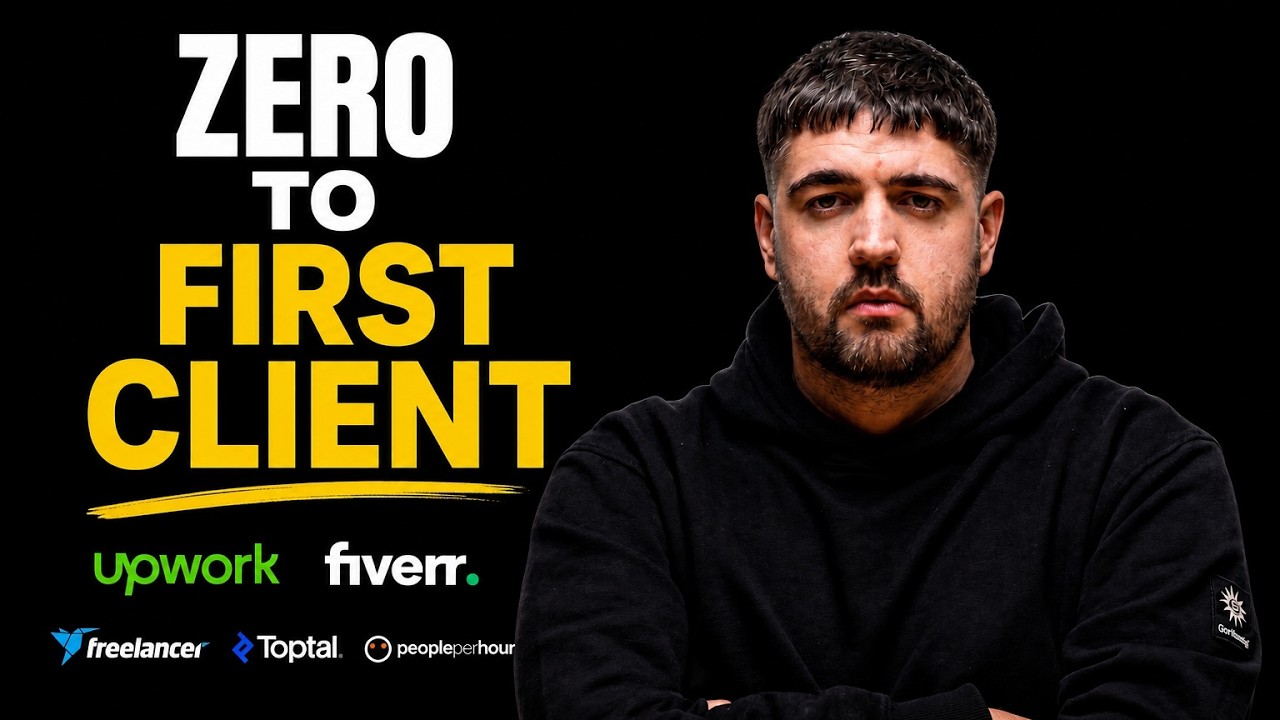
Michael Elliott maps out five steps to launch a freelance business in 2026: pick a focused service niche, build a repeatable monthly offering, choose one platform, land your first client with low pricing and proof, then survive the revenue lag. He's made over $6 million freelancing and stresses that monthly recurring revenue beats one-off gigs.
Chapters
How do you actually start freelancing in 2026 with no experience, no portfolio, and no money to put in? Well, that's this video. The whole map: lane, service, platform, first paying client, 10 minutes. And well, you shouldn't take this from anybody who won't show you the receipts, so here's mine. This is my Stripe dashboard. Over $6 million of client work inside of it. That's £4.67 million through Stripe alone. I also have over half a million dollars in earnings on the Upwork platform, which puts me in the top 1% globally. Every penny of this started at zero. One warning before we start, there's a mistake that kills more freelancing careers than everything else combined. It's at the end. It only makes sense once you've seen the map. So step 1 is your lane. And yeah, the lane comes before you choose the platform. Every single day I watch freelancers get this backwards. They go, they sign up somewhere else, they wonder what they should sell, they fail, and then unfortunately, they quit. The order is literally the whole game here. So before you touch any platform, you need one sentence. I help this type of client get this result. For example, I help local businesses run ads that make the phone ring, or I help coaches write killer emails that fill their programs. It's one type of client with one result. Everything you build after, well, it hangs on that sentence. That's why it comes first. And picking it is where people, they freeze. So use the test. It's 3 questions. Can I deliver this consistently to a high standard? Do I enjoy doing it? And do I get satisfaction from watching it work for somebody else? Where all 3 answers are yes, that's your lane. It's not the shiny new thing that everyone's shouting about this month. Boring lanes delivered excellently outearn exciting lanes delivered in an average manner every single day of the week. And let me show you what one lane actually does. I have calls with freelancers all the time. On one of these calls, a freelancer was trying to do 3 things at once: automating leads, building landing pages, and writing the content for those pages. All at once, offering it out. It was crazy. They were offering it for free to get moving. I told them, drop 2 and focus on the automation. The rest will come. A fortnight later, $3,170 in revenue. 2 weeks. It wasn't because they suddenly got better. It was because they would stop being 3 average freelancers And became focus one. And you've got more lanes available to you than what you think, I guarantee you, because the job you're in right now, or the thing that all of your mates always ask you to fix, it feels ordinary to you because you're the one who can do it. To a client, it's exactly the magic sauce and the thing that they can't do. That's the entire reason that they'd pay you. Step 2, you have to turn the lane into a service and run it through the one filter that decides whether you're still broke this time next year. Can any version of this service be monthly? That's the question. Because one-off projects, they're how you start, yeah, but monthly is how you eat. A web developer, they sell a website once, but hosting, maintenance, updates, that's every month forever. If your service makes someone money or saves them time or is critical to their business, there's a monthly version of it. Find it now, even if you don't sell it yet. The freelancers who stay broke, well, they're the ones who start every single month back at zero. And a word about AI, because half of you are wondering if there's any point in starting. AI has not killed freelancing. It's killed lazy freelancing, yes. The tools can produce the work, but what they can't do is understand a specific client's business and be trusted with it. The freelancer who turns up as an actual human who did the homework is worth more in 2026 than they ever have been. This map is how you become that person. Step 3, now and only now, the platform. And I'll be straight with you in a way most of these videos, they won't. Fiverr. Clients come to you, and if your service is rinse and repeat, the same thing done the same way over and over, it can work really well. Just know the pricing races to the bottom. The premium invite-only platforms, doors shut at zero experience, ignore them today. Your own network, local businesses, communities, it's massively underrated. There's more in a minute on that. And then you have the king, Upwork. More real client money than anywhere else in freelancing. Billions in deals done every single year. The platform that my account earned half a million dollars on. But before you pick anything, you have to understand the game that you're actually entering. On every one of these platforms, the best freelancers don't win. The safest ones, they win. A client staring at 80 proposals cannot tell whether you're the most skilled or not. They can only tell who looks the least risky. Every decision you make from here is really a trust decision. Hold on to that thought. I've ranked every major platform, the real money in each one, the fees, who they're for, in another video. Link below. One thing that nobody tells beginners about the king though, applying on Upwork costs real money. Every proposal has a price tag. It's not a reason to avoid it at all, but it's a reason to turn up prepared. For this map, you only need one rule. Pick one platform. The person who works one platform properly for 90 days beats the person dabbling on 5 for a fortnight. Every time. Step 4, your first client. And this is the wall because clients hire proof and you haven't got any yet. There's 2 moves and I've used both. Move 1 is make the proof. Raid everything that you've already done— jobs, projects, results— and write each one like a little case study for you. If the cupboards are truly bare, do the work for a client who doesn't exist yet. You know, take a client with a terrible landing page and redesign it. Write the email sequence that a real brand should be sending. 3 pieces. Finished. Specific. Move 2 is price so low that saying yes is painless. On the platform, that's small fixed-price projects. When this account was brand new, I sold, and still do to this day, $5 audits. And the reviews that they bought were worth 100 times that fee, if not more. Off all platforms should not be overlooked here because it's one fixed piece of work, free work, in exchange for a video testimonial. You find people in Facebook groups with your problem, you reach out to them, you offer this fixed amount of work in exchange for a video testimonial. 30 seconds of a real human being saying that you delivered. That's not working for free. That's working for the one thing that no program will ever sell you. When I quit my job with $3,000 in the bank and a 4-month-old baby, free work for testimonials was the business plan. It built everything. Set your launch price Low. $35, $30, $25 an hour depending on your lane, where you live, and how desperately you need the money. But you have to write yourself a note that says this number is reviewed in 90 days. It's a launch price for a reason. It's not your worth. Set your clock properly. Month 1 is building. Month 2 is getting out there. Then somewhere in month 2 or 3, the first real money lands. Anyone promising faster is selling you something. Quick one. I know that you're probably unsure about the lane, so comment the lane that you're gonna pick or that you're in. One sentence. I helped this client get this result. I read every single one, and if your lane has a monthly money version you haven't spotted yet, well, I'll tell you what it is. Right, stay with me now. The mistake that I warned you about, the one that ends more careers than everything else combined. It's not the wrong lane and it's not the wrong platform. It's quitting during the lag. Because when you start, there's a gap. Sometimes it's weeks, sometimes it's months between doing everything right and anything coming back to you. And inside Inside that gap, a little voice turns up. It says, this isn't working. It works for other people, not you. You can't do this. Last Friday, me and my 14-year-old daughter had a work together day, and the most important thing that I told her had nothing to do with platforms or proposals. I told her about the tree. A tree grows in 2 directions at once. It has to. Up towards the light— that's the part that everybody sees, the success— and down into the dark with its roots, in the dirt where nobody's clapping. You don't get one without the other. The growth everybody sees is paid for underground. In darkness that you have to be ready for. That's what the quiet stretch is. It's the plan failing. It's roots. I sat in that exact silence for months before this account earned its first $374. And nearly every freelancing career that dies, well, it dies right there. While the results were already in motion. The silence, it's not rejection. It's lag. And the only people who lose for good are the ones who aren't standing when it catches up. So that's the whole map: lane, service, platform, first client, in that order. And then you have to have the patience to let the lag catch up with the work. If you've picked Upwork and if you're serious about getting paid, because that's where the real money is, my complete Upwork course is coming on Thursday. 45 minutes inside my real account, every single step And it's free. Go and write your one sentence, subscribe, and then go and watch it. And one last thing actually. Of everything that I've built, one of the most valuable turned out to be the thing that you're watching. Telling the story in public. This channel is still new. It's still small. I'm building it exactly the way I've just told you to build. One lane, out loud, ready for the dark days. So if you want to watch how it actually goes and see if I'm successful or if things don't go my way, not just the highlight reel, subscribe. You're early, and early is the best thing you can be. My name is Michael Elliott. Go and check this video out here. I'll catch you in the next one.









