I've Sent 4,721 Upwork Proposals - Here's What Actually Converts
Michael Elliott, a top-1% Upwork freelancer, shares what converts across 4,721 proposals. Proposals get opened when they diagnose the client's specific problem instead of listing credentials. End with a simple question mark to boost replies, keep it to 150-250 words with a one-line opener and 3-4 bullets, and prioritize human connection to command higher rates.
Chapters
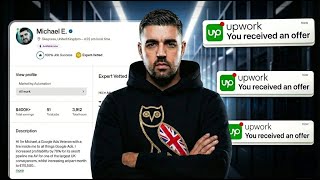
What if 60% of the clients you pitched actually read your proposal? Not 10%, not 20%. Six out of 10. That's my last 10 applications. And every single one of them got viewed and turned into a conversation. Meanwhile, most freelancers are sending 50 proposals a week and getting ghosted, bleeding connects, wondering what's wrong. The difference isn't talent like everyone thinks it is. It's not experience. It's not even price. And at the end, I'm going to show you the exact proposal that landed me my last $10,000 job. Juicy one, right? But it all starts with psychology. For Context, I'm top 1% globally on the Upwork platform. I've sent over 4700 proposals, and I've earned over half a million on the channel. The landscape on upwork changes every single year. AI proposals, boosted connects, new algorithms. But us humans, we don't change at all. So while everyone's chasing tactics, I'm going to show you the psychology that makes clients pick you, even if you're five times more expensive than your competition. The ironic thing is that the goal of your proposal isn't even to get hired. And it sounds backwards, right? But stay with me, okay? Because the goal of your proposal is to get viewed. That's it. Get opened, get read. Because here's the reality. In 2026, you're competing against boosted proposals. Now look at my screenshot again. The four that didn't get viewed, I got outbid. So someone paid more connects just to jump ahead of me in the queue. And the best part about this is this works. Whether you're brand new and struggling to land your first client, or you're already top rated plus, but you're losing momentum because upwork is only a race to the bottom. At the bottom. Let me show you what I mean. And like it or not, that's the game. Now, it's pay to play. Upwork is pay to play. But here's the thing that most people miss. If your proposals actually get viewed, and it is good, the replies come naturally, they flow. You don't need to close in your proposal. You just need to be worth responding to. I like to think about it like copywriting, okay? Like, the headline gets them to read the first line, the first line gets them to read the second line. You're not closing. You're opening. And if any of you do need some motivation, go and create a client account on upwork now and look at how poor some of the profiles are that are winning jobs in your field. It will show you how Easy it is for you to win. So stop trying to win the job in 200 words and start trying to win the conversation. Now, once you understand that shift of getting the conversation started, the next question is what? What actually makes a client want to reply? Because there's one trick that increases response rates by over 50%. And you know what that trick is? It's one character in a loom. That's all it takes. A question mark. When someone reads a question, their brain cannot ignore it. There's an open loop. They feel pulled to respond. It's literally human psychology, right? It's what the brain does. Unfinished things create mental tension. By ending your proposal with a question, you increase your reply rate by over 50%. I guarantee you it's an easy springboard to start the conversation. But here's where most freelancers mess up. And I certainly made this mistake a lot in the beginning. They asked the wrong kind of question. What's the big vision for the company? Where do you see this in five years? That's homework and mental load, right? They don't want that cognitive load. They don't want to know that they don't know you well enough to write an essay to you yet. So they pick someone else. I am about to show you how you can make them pick you. But if you could just do me a favor. Hit. Like hit subscribe. Other freelancers who need to see see this and understand how to win more jobs on At Work would appreciate it, and I would as well. But what you do is you ask something that they can answer in 10 seconds or less, yes or no. A number. Low friction. Would Tuesday work for a quick call? Is this project live yet or still in planning? Roughly how many leads are you generating per month? Because easy questions get easy replies. Replies become conversations. And guess what? Conversations become contracts on At Work. All right, guys. So so far you've mastered the mindset. You know to end with an easy question. But none of that matters if you make this next mistake. And honestly, it's probably cost me about 150,000 USD in lost contracts before I figured out the solution. Absolutely nobody cares about your experience. Harsh, maybe, but true. Most proposals I see are full of people trying to convince clients that they're the right match. I've got five years experience. I'm really passionate about what I do. My service includes this and it includes that. And I'm the best. But clients aren't bothered about whether you went to university or not. They're not even interested in what software you use. They're Thinking one thing. Can this person solve my problem? And it's the me problem. Everybody wants to talk about me. Well, no. The fastest way you can prove that you can do that is to stop talking about yourself and start talking about them. Before you write anything, do the work. Open their website, if you can see it. Check their ads if you can see it. Look at their funnel. Look at their history on upwork. Find something specific, a gap, an opportunity, a mistake, something. Then lead with that. So let me give you a concrete example. Client posts a job. It mentions needing someone to lower their Google Ads CPC. A generic freelancer writes, I have five years experience in Google Ads and lowering CPCs. Here's my portfolio where I've done this before. What I would write if the landing page was available. For example, I looked at your landing page. Your CPC isn't your issue. Your quality score is tanking because your ad copy doesn't match the landing page's headline. Fix that alignment and your CPC is probably going to drop 15 to 20% without touching your bids. Do you see the difference? One talks about me, the other one diagnoses their actual problem. That minute shift, that tiny little change from me to you, is what makes the client think this person actually gets it. And it makes all the difference. They're not hiring skills, they're hiring understanding. So we're cooking now, okay? Right. But you could have the best insight in the world. Perfect diagnosis. If you make this next mistake, they'll never even read it anyway. If your proposal looks like a wall of text, then it is dead from the beginning. Put yourself in the client's shoes. Right? They've got 20, maybe 50 proposals to read. They open yours, it's this huge block of unbroken text, massively off putting. No easy way to scan it to see what you're saying. They just click next and not swipe right. Clients aren't reading word for word. The scanning, the skimming. Right. They're getting too many applications to go through them all. They're looking for signals. Here's the structure that works. A one sentence opener, something specific about their job. Okay. Not I saw your position and I'm excited. Da da da da. Something that actually proves that you've read it. Three or four bullet points in the middle. Real observations, quick hit value that can scan in five seconds. Maybe here's a few things I noticed. Or here's my initial thoughts. Problem 1, 2 or 3. Then a loom attached. So you attach a video of yourself. 90 seconds maximum of you covering a few points about their job. Maybe experience related to it that you've done historically. And then one easy question at the end that we've already covered that the total word count, 150 to 250 words maximum. That's it. Dense, skimmable, valuable. Respect their time and they'll respect yours. It's like this video, right? I could easily make it 50 minutes long, but the goal is to make it easy to create consume for you. So I'd like to think you're not sat there thinking what the hell is this guy going on about at this stage. But now you've got the structure, you've got the psychology. But there's one last piece that took me over a year to figure out, and this is the one that 10x my contract value the best clients don't buy services, they buy people. People buy people in general, in Life. For my first year on Upwork, I focused on timelines, deliverables, budgets, etc. Very transactional. Very, very forgettable as well. Then I changed my approach. I stopped treating proposals like contracts and started treating them like conversations. I'd ask what they were actually trying to solve. Not the surface problem in the job listing that they've got from ChatGPT, the real one underneath. Try and meet them where they are at, right? Be human. Ask about their passion behind the business. Find that real pain point. Find something that you can actually understand. Because on reflection of my life and my career and upwork, here's what I've learned. Clarify. Clients will pay four times more for someone they trust than someone who just ticks their boxes, right? Budget matters, timeline matters. But only after you've built connection. Lead with curiosity, the money then follows. So, fellow upworkers and freelancers, be honest with me. How many proposals have you sent that were basically copy and paste, no judgment? I did the same thing for months. Drop your number in the comments, let me know if it's still a problem. I want to know that I'm not the only one who had to learn the hard way. And if you've started implementing any of these, especially the question mark thing, let me know if it's working, because it will. So I read every single comment and I'll check it out. Alright, so there you have it. Quick recap. 1. The goal is to get viewed, then get a reply. Stop trying to close in the proposal and create an upwork client account to see how bad your competition is. 2. End with a question. Make it stupidly easy to answer, but so tempting that they can't say no. 3. Talk about them never. You diagnose the problem. Do not list your credentials like everybody else. 4. Structure for scanners, 150 to 250 words, dense and skimmable for the customer. They won't read it otherwise. And five Be human. First, build connection before scope. These five shifts took me from wasting connects to consistently landing high value clients. Precision over volume. That is the difference. You're not just sending proposals anymore, you're starting conversations with people who already want to hear from you. Now, that $10,000 proposal that I mentioned at the start, I've put an exact template in the Google Doc below. Just go down there, head to Gumroad and grab it. I'll catch you in next one.









