My Journey From Rock Bottom to $500K on Upwork: "Nobody's Coming to Save You"
In this candid interview, Michael Elliott recounts his tumultuous path from a poverty‑stricken childhood in Sheffield and Skegness, through a series of personal crises—including the near‑deaths of his father, brother, and nephew—to a period of teenage fatherhood, heavy drinking, drug use, and deep depression. He describes how he secured an entry‑level PPC role, spent 7‑8 years climbing the ranks at a small agency, and eventually left to launch his own freelance business. Leveraging relentless cold‑outreach, community networking, and a natural talent for sales, he built a $500K+ Upwork practice, diversified into investments, and now runs an agency (AdTrain) while mentoring other freelancers. Throughout, he shares a "tree" metaphor distinguishing visible, phototropic success from the hidden, gravitropic effort, emphasizes a servant‑leadership style, rejects material excess, and outlines his long‑term goal of giving back to his community and securing his daughters' future. The interview concludes with practical advice: believe in yourself, persist despite doubt, and be prepared for the grind.
Chapters
I'd nearly lost my dad, my brother, and my nephew all in the space of 9 months. Now, my dad had a heart attack, my brother had a bike accident, and my nephew had open heart surgery and was born with Down syndrome. Nobody's coming to save you. In fact, nobody gives a fuck what happens to you, like, apart from your family. Yeah, it was, it was like just an entry-level PPC job, but I got it, and I remember getting it and being like, that's amazing. And then I spent the next like 7, 8 years or something like that, like working there. Money's never changed a single soul. Yeah, ever. Yeah, like if you were a dick when you had money, you were always a dick. You just couldn't be a dick because you didn't have any money. I don't spend any of my money. I invest into businesses. The real success in business comes from the gravitropic stuff. Gravitropic stuff. My zero to my first million dollars was like somebody going from $1 million to $1 billion. It does not matter what that number could be. I would never be happy with money.
Yeah. What's, you know, sort of the biggest thing you're sort of learning from this process in terms of starting your own channel?
I started my own channel to share knowledge. I started my own channel to provide value, give people insights. I think my Upwork success is just one part of that. The diversification, the investor arm, all of these things, they come into it.
So I think that's everything covered. Is there anything else you want to say to the viewers before we go? Maybe one bit of advice?
Believe in yourself, because no one else will. If you've ever wanted to see behind the curtain of a top 1% Upwork freelancer who has gone through the rough, the smooth, and just about everything else in between to get to this point, this video is designed to show you all the way from the beginning to where I am today and what the next steps are, because the tree grows in two directions at once. It grows up and it grows down, and the roots grow in the dark, in the dirt that nobody sees. And in this interview today, you're gonna see the dark and the dirty. Let's jump in.
So before we get into the later details about your life in terms of Upwork, your businesses, and then other things that you've got into, um, I wanted to roll it back into your earlier life and maybe your childhood growing up?
Yeah, well, I mean, you'd have to go a long way back to do that, um, and I guess we will. So I was born in Sheffield and I lived there until I was 8 years old. It was a bit of a crazy personal story, and I guess maybe the viewers would be interested in this, but I'm very lucky, and so are you, to even be here, as you know, because I nearly lost my dad, my brother, and my nephew all in the space of 9 months. Now, my dad had a heart attack, my brother had a bike accident, and my nephew had open heart surgery and was born with Down syndrome. So I was in a position where there was a lot of struggle early on in life, but what that did is put a lot of pressure on my mum and dad, and they decided that they were going to move to a place called Skegness. Skegness. And it was a transition that was difficult at that age, but just about early enough for me to still resettle in. The problem with a place like Skegness is that there is no opportunity. So I was yet to know this, but it would harm me later down the road in terms of where I was going to go with it. My childhood was really good, mate. Like, I was— I grew up well, you know. I had a good time at school. I had some great friends. I never really got in trouble. I really enjoyed school. And I think that when it comes down to the childhood that I had, I think what's really important to note is, like, when I was born, my family was really poor. Like, my mum and dad were really poor, watering down milk literally to feed me. It was crazy. Like, mum and dad would make it a priority to have, uh, 2 meals a week that had meat, like, on the table. It's crazy. It's not a sob story, but it's the reality of where they were back then. Like, working multiple jobs, not earning enough money to feed the household with my older brother and sister there. All of that fast forward and then transpired to me living in Skegness. There was a very mundane, real, really, story. Happy as a child, happy secondary school, but there wasn't too much going off in my life at that stage that's outside of what any other normal 13, 14, 16-year-old would do.
Okay, awesome. So moving on then from being 13, 14, um, more towards 16 years old and looking at, you know, you sort of go out into the world from there. What was your sort of, um, mind— where was your sort of mind at from there in terms of jobs or university, etc.? Where did you go from there?
Nobody really has a clue, so I think anybody would be lying if they gave you an answer. And, you know, I'll tell you the God's honest truth, when it comes down to what I did, it was— I genuinely did this. So I was sat in sixth form, a mate of mine at the time who I was friends with, he picked a university course at Sheffield Hallam University, and I was like, I'm just going to pick that because it kind of rolled into what we were doing at school. And so I had no career direction. I just went to university because it was like the thing that everyone tells you to do, and it's why I tell my kids that they shouldn't, like, unless you really want to specialize in something like a vet or whatever. There's never been as much opportunity, so So maybe billions is high, but what I'm saying is that I went in at the deep end. I— you end up paying all that back. It was like, you know, something that I've had to pay back over the years. I've just paid off now, but it was, uh, it was one of those things. But my degree was literally picked because a kid who I knew was going to there, and I wanted to go to the same place as him. So there was no strategy in place, but what happened when I got to university was another story.
Yeah, so I think it brings one purpose to more— there was obviously something that really critical that happened in your life around that period, and I think it'd be a great, um, sort of, you know, sort of almost like almost hitting rock bottom to where you are today. So I think if you share that story with the viewers, it'd be, it'd be a great personal story to understand who you are really.
Yeah, I mean, so full cards on the table, when it comes down to my— from probably around 17 onwards. So around 14, I met my childhood sweetheart or whatever, like, you know, I had a girlfriend basically, and we were together for 8, 9, 10 years maybe, whatever it was exactly. And at the same time that university was on the horizon, like university had started, in that first year she fell pregnant. You can imagine, mate, like you've got an 18-year-old lad just gone to uni, drinker's degree, like I was drinking all the time, whatever. A baby comes in the mix, and for me it was a really, really, really confusing time. And it's only later in life, as I've become more successful and like, you know, better, that I've understood more about what I didn't do that was my responsibility. Yeah, there's certain things that happened that shouldn't have happened, but when it cut— at the end of the day, I don't care outwards anymore. Like, that's one thing I've learned on my entrepreneurial journey. I only care what I feel inwards because I know only the only person who really knows you is you. Like, for everyone else, you're just selling yourself. So I know what happened during that period of time. I know I didn't step up to the plate when I was needed. I didn't do certain specific things, and it had nothing to do with the baby or the individual even. It was just down to the fact that I was a young kid, like, who just had a baby, and it was rough. I've— I literally slept in dorms with a baby in a basket next to me. In dorms, mate. Yeah, everyone's smashed, getting hammered, coming home, and there's a baby in the dorms. And like, I lived through that. And unfortunately, the relationship ended in, in regards to the Poppy. Like, she's my eldest, I love her to pieces, and she's 14 now and I'm only 33, which is like scary. Um, but yeah, like I had the baby, and the thing was is at the time all of that was sort of good. I kind of brought it, brought it on myself, I guess is the way you could say it. But I also think for me it was natural as a young man. Like, if you stuck 1,000 men in my position, in that position, there might be like 50 that get it right and the other 950 are going to get it wrong, do you know what I mean? Because they just— we don't know at that age. I'm not— you don't think like I think now. I went through that, and what happened was it followed was a breakup. So the breakup happened. For about 6 months after the breakup, I didn't feel anything, but there was a big change in my life at that period of time. And what had started to happen was I started to drink heavy, party heavy, and take a lot of recreational drugs. So I was going out like 5, 6 nights a week, like going out, out. I think about it in my city, my city mind, younger mind, I'm 18 years old, I can go out, I can do what I want, or I'm 20 years old. It was actually a little bit later if you think about it, because I was at uni for 3 years from 18, so it was probably around 21 when this, this all came to, to, to happen. Yeah, the drinking, the mix of drink, drugs, and I woke up one day and I was just, bro, like, eeyore. Like, I was like— and I say that as like a joke, but it wasn't funny. I woke up and I felt like there was like a 10-some weight on me. I was like— and it was, it was depression. And I've never like spoke about— oh, I've mentioned it before, but like I've never gone into detail like, like this, like trying to share with, with people who follow me. But like the depression hit me, it was a whole mix of things. I think it was number one, the baby, 100%. That's always been the case, like to this day, you know. There's only, there's only 3 people that in my life that I know will always be there, and it's my mum and my two babies. Like, that's it. That's just the way it is. But when it comes down to the breakup, I think that had a part in it as well. Obviously, I've been with her for so many years, I've split up, I've caused the issue, I've set the firework off, I've lit the fire. You have to live with that. The realization doesn't hit you till later. You're too busy going out, drinking, doing whatever you're doing, getting up to no good. Everywhere I was was no good, basically. At the same time that, that rock bottom hit, there was a lot of external pressure, like, from different areas, like, and that's private, but it was all— I never had an issue. I always saw Poppy. I always had that problem, but I just, I felt the weight of a thousand men on top of me, like, carrying it on my shoulders. I literally didn't leave the house for 6 months. I think I probably went to walk to the shop, like, twice, like, and the shop's about, like, 100 foot from the house, you know, you know where, like, Hewison's on the corner, like, um, that's it. Oh, I used to walk there, I used to do that. But at the same time, I'm still drinking really heavily. So the drugs stopped, but the drinking— I was taking— I was drinking really heavily to like get through it. And it was a crazy time. My parents were worried that it like might be the end of me, like that I was like literally gonna kill myself. And honestly, like, they, they didn't know if I was going to wake up the next day. But sometimes, like, sometimes I didn't even think that I might. Yeah, like I didn't know what I was gonna do. It was like I was out of control. It was crazy. Fast forwarding, because I don't want to make this too depressing. It's important for people like entrepreneurs, freelancers, Upwork, you know, people who want to make anything of their lives. It don't matter where you came from, it's like it's where you finish, you know what I'm saying? I had all of that happen, and at the time it was the worst period in my life. If you could say like what was the most painful It was, it was, it was that. Yeah. But if you also ask me, what period of your life are you most thankful for now? It's that exact same period. And the reason is because it builds resilience at a young age. It built a lack of people who are extremely risk-averse, you know, like they don't want to take a gamble, they don't want to, they don't want to do this. I don't have any of that in me. It's like I still struggle with mental health to this day, but it's in a different sort of format when it comes to entrepreneurship. It's like it's just all go, and I'm ready to gamble in the right way. If I see an opportunity, I'll try and seize it, and if it don't work out, then it don't matter, I'm just back to where I was. It also did that, but it did do other things that were deeper, like my heart's frozen now. It's like You see me, like, on the way, on the way here today, I'm not going to say on a camera what I did, but I did something for that little girl at the petrol station. Like, I'm full of love and, like, giving. Like, it's what I love to do, but, and I do it for everybody. Retired my mum and dad into an annex on a caravan park, like, things like that, like, all selfless. I think when it comes down to that individual situation and timing, I think it did freeze me. And I think it's still in me to this day. It's— I, I am cold-hearted when it comes to relationships and understanding people because I don't trust people. Like, I'm always in a position where I feel like there's the potential for somebody— I realized that somebody that I, I never— even though it was my fault, I realized that somebody who I never thought could hurt me hurt me. And as soon as that happens to you, it changes you.
Yeah.
Because at that point then everyone around you, you feel the same way, but you know that what you think can't happen can actually happen. And that's always at the front of my mind. And that is, if I spoke to a therapist, they'd probably say you need to let go of this. But in the same breath, I like to think that it keeps my eyes open.
Yeah, certainly. I think knowing you as you are today, you've obviously come a long way, personal journey. But I think what would be good to understand then, obviously you've gone through a big, you know, 6-month period of you know, barely going out. You mentioned going out twice. I think it'd be great to hear what actually then lit a fire in your stomach to, to, to keep on going and then, you know, sort of make that, that, that transition of becoming who you are today.
Well, 100 million percent, I wouldn't be here without my mom and dad. That's, that's a fact. I lived at home with my mom and dad and I wouldn't be here. Yeah, like seriously, I wouldn't be. Like, I'm not joking. It's like, it's a serious matter and it's all— it's why you you'll probably know this from being around me, but like, I always like to check in with people of how they're feeling. Even I always ask them whether it doesn't matter because I want them to open up like I do when I'm feeling bad or I'm feeling anxious or I feel something. I bring it up, I say like, I'm not feeling great, like, because speaking about it helps. But when it comes to like what ended that, it wasn't actually anything that I did, or at least that I noticed that I did. It wasn't medication, it wasn't anything. I just— I remember waking up one day and I felt 1% lighter. Like, I felt 1% lighter than what I'd felt previously. I woke up one morning and I just said to Mum and Dad, I was like, I don't know why, but I just feel this much more normal. And I was like, what? And then every couple of days I'd get that same feeling again. And it's like a sunrise. Yeah, it was really weird. The sun was rising and like I could feel it almost. And by the time I got back to like 50% of myself, it was I was like, whoa, like, you've come out of this. Obviously there's battle scars, but I came out of it and I was in a position where at the time a lot of things had happened, like gained a lot of weight, drinking, drinking really heavy, bad habits. But I also didn't have a job because I can't get out of bed, literally crying in the shower, all sorts for hours. You sit there for hours, mate, it was horrible. But like, I didn't have a job because of that. It then rolled me into like, well, now you need to get a move on. Yeah, no one's coming to save you. Like you. And this is why I say it's the biggest blessing. Nobody's coming to save you. In fact, nobody gives a fuck what happens to you, like, apart from your family. So it gave me a lesson really early. It was like, nobody's going to give you nothing. Like, I try and give people opportunity. That's the only thing that you can really give somebody. But like, outside of that, nobody— there's not many people like me walking around the Earth. You see people, they just walk past you like, you know, whatever. I try and help. I started applying for jobs because I needed one. There was two jobs. Do you know this story?
Yes, I was going to ask you about this story because it's an awesome story. So I think maybe before you get into the story, maybe explain a little bit about where you're from and the sort of the seasonality about Cegnes as a whole.
And again, yeah, okay, yeah, yeah, yeah. So because we live by the coast, because I live in Skegness, right? Um, it really rarely snows. It's like, I don't like it. Obviously Sheffield, where I'm from, really hilly, snows all the time. Like every year you can guarantee that you're getting stuck in your house for 3 days if you live on a, you know, colder side of Scotland, whatever. I applied for these jobs and I had 2 interviews in 1 week. So it was the first round of interviews from my jobs that would— that I'd seen. One of them that I wanted was a PPC executive job. Because it just fit more. I didn't, you know, it wasn't like I loved PPT. I touched on different areas of it in my degree. I had that, and then I had another one, and this other one was like a kitchen and blind fitting company. And you know me, it's completely not me, but at the time I just had that fire in my stomach that's still there to this day, the exact same feeling. It's like everybody wants you to lose, so you need to make sure that you win. That's the feeling that I have all the time. And it's not about anybody in particular, it isn't about them. I have a great relationship now with you know, mailed this mum and stuff. It's not about that, but it's the— when you're emotionally damaged like that, like from your own doing. Yeah, when you're emotionally damaged, you, you have that, that fire. And where I live, it never snows. So I've got a Tuesday interview and a Thursday interview. The Tuesday interview is at the Blind Company. It's not there anymore. I drove past it this morning. It's not there anymore. No. And then there was another one at a PPC agency. And I swear, because of the climate and the salt in the air, whatever— there's some— ask a scientist, someone comment or whatever, like— but like, for some reason, but when you buy the coast, it doesn't snow, right? You just— it's very rare that you get heavy snow. It's very rare. And I woke up for this job interview. I've gone for this job interview. I've gone outside to my car. It's like 3 foot in snow. My car's on a hill. Like this, so I can't get the car off. Yeah, right. I turn up 5 minutes late to the interview, managed to like jimmy it around the road to get, or whatever, off the steep hill at Nanans, and I got to the job interview 5 minutes late. So you blew it. Yeah, you got— the guy had like 8 people interviewing that day. You're never gonna get it. And he was asking me like, why have you got a computer degree? And I just knew like straight away, like, what the vibe. That happened. And then when it comes down to the Next job, it was like it was fate because that job had skipped. If I'd have got that job, I wouldn't be sat here. Yeah, but because I didn't, and I, I walked into the PPC job and they were like, listen, this job's been advertised for like 8 months and we haven't had one applicant. And they were like, we don't know why, but there's been issues with like the job posting sites and stuff that we've had, and you've come in at a degree. But the thing is, is it was minimum wage at the time. So I was earning like a grand a month or something, whatever it was. Yeah, it was, it was like just an entry-level PPC job, but I got it. And I remember getting it and being like, that's amazing. And then I spent the next like 7, 8 years or something like that, like working there. And I worked my way up to the senior position there, like, yeah, you know, like SEM director or whatever. I can't even remember whatever it was called. Teams underneath you, big teams, managing lots of accounts. That was my calling to learn. Now, I learned a lot, but it was all self-taught because it wasn't like an agency where you went through different things. It was a small family-run agency that then grew to be bigger, and client volume-wise was massive. And yeah, worked with some big brands, to be fair. But when it comes down to the career trajectory that I took from there, that environment, that heat— there's two people that worked at that agency that now work for me.
Yeah.
And the environment was, although was good from a learning point of view, was something that was so good to get out of at the same time. Like, you know, like looking back now, I'm like, I can't believe you made it that long. But it was a good— it was good in some ways, like in ways that it shouldn't be. Yeah, you know, like, I don't know.
I think in terms of it being good in, in some ways, from a, from a person who works for you as well, I think when you see the bad side of a place, you sort of, when you've got your own, when you get your own thing going, it's sort of, you flip it on its head then. And I think, you know, I can't say a bad word about you, working for you, so, you know, you're always there for me, always around. I mean, if I need a question, support, whatever it is I want, and time off, you're always there. So I think when you said that, I think it's sort of, it's true in terms of it's sort of formulated your brain from a, from an owner's point of view, um, for you, for AdTrain.
Yeah, well, thank you for that. I do appreciate it genuinely. Like, I think the thing is with money, right, is this as well. Like, so the company is one thing, but money, money's never changed a single soul. Yeah, ever, right? Ever. It doesn't change anybody, but what it does is it brings out the real character of that individual. It doesn't Like, people say money changes and money changed you. It didn't. Yeah, like, if you were a dick when you had money, you were always a dick. You just couldn't be a dick because you didn't have any money. Do you get what I mean? So that's the way that I've always seen it. It's the way I've always looked at it. It's what I've always felt. And everything that I get, I give away. I don't spend any of my money. I invest into businesses, but I don't, like, drive, like, a Lambo or, like, whatever. I could live significantly above my means from what I've done in the last 5 years, but I don't. Like, I keep it in the real world because that's where I'm from, do you know what I mean?
Yeah.
And when it comes down to looking after people and staff, I just treat people the way that I would want to be treated. It's like, you know, like, you should be able to talk to me and tell me if you think that I'm wrong. Yeah. Just like, what if I'm your boss? It doesn't make any difference. Like, to me, I'm not your boss. We're all a team, right? Like, there's two types of leaders. One stands on the boat, shouts his team to row. The other sits in the boat and rows with them.
Yeah.
And I row with them. Yeah. Do you agree?
Yes, 100%.
I row with them. Like, I do all of this stuff. My job's different, jobs are different, the tasks are different, and what I do is different. And the freelance side of what I do is also mine. But when it comes down to, you know, what I, what I have from a character perspective, it's always been there. I've always been a nice person. That's the, the summary. The agency was good for experience, was bad for— I don't know, just thinking about the way that they treated people. Not mainly— not me, mainly others. Yeah, that was like—
that was more of that, more of a general atmosphere, I'm guessing.
Yeah. And that's why I hire him.
Yeah, I mean, yeah, yeah, 100%. So obviously you was at the agency for 7 to 8 years. And then you then left the agency to do something by yourself. So what made, what made that switch in your brain turn on and think, okay, I'm actually really good at what I do, um, and I'm doing it for someone else rather than myself? So what decided that switch for you at that time?
So I've got a friend called Dean. He came around my house one night for tea and he said to me, he'd left the agency. We shared an office and he left the agency a year before this, roughly. Before I had this conversation. And he came around, then he was like, looking at you now shows me everything about why I made the right decision to leave. And he was like, don't take it offensively, he's like, but I'm just telling you. And I handed my notice in like the next day, and it was like an opening, an eye-opening thing. At this point I've got a new baby, so I've got a baby 4 months old, I've got £3,000 in my bank account, which would have probably like made it last about 5 weeks, and I've just like flipped the chessboard over and and said, I'm not having it anymore. Like, that's not it. Like, there's more to life than this. You're better than this. Not because working a job is bad or anything like that. I just knew I had more in me. And this is where that— I'm so thankful for that thing inside of me that made me cold, because I was just really cold. I was just like, what's the worst thing that could happen? Yeah, like, you're broke for a while and then you get another job. Yeah, that's, that's what made me take the leap. A lot of people want to be entrepreneurs Right, a lot of people, they want to be successful, they want to have money, they all have this big idea, right? They think that this is going to be it. I can tell you now, life is a— is the— it's not a living hell, but the pressure that you are under on a consistent basis as a business owner, and then when you're a serial entrepreneur, is absolutely massive. And people watching this thinking that it's going to be easy when you become an entrepreneur, it's the complete opposite. You think that it's going to be easier because you work for yourself you're going to work less hours, you're going to do this, but you don't. You do more of everything that you did previously. I was setting alarms 3 times a night to message us, to message Australian, uh, American West Coast and some East Coast clients back when I was hunting and scavenging in Facebook groups and stuff for clients. 3 times a night. I've got a 4, 5, 6-month-old baby, however old Rosie was, and I did, I did all of that the way that I like to explain it, and I've seen it on podcasts previously is a tree grows in two directions at once. Tree— if you go outside, some beautiful trees out here.
Yeah, yeah.
You go outside, you look at a tree, it looks beautiful. You look at it, you're like, whoa, that's been here like 100 years or whatever. Look at the size of that tree, whatever. But it grows in two directions at once. So there's the phototropic arm of how it grows. And then there's the gravitropic arm. Gravitropic grows down. Gravity pulls it to the center of the Earth. The roots of the tree, dirt, dark. The phototropic element is light, is what everybody sees. So now when people look at me, they see the phototropic stuff. The real success in business comes from the gravitropic stuff. Gravitropic stuff that absolutely nobody was there to help me with. All of that stuff I put on my back and I did it. There's nobody else. I didn't need anybody else. I did it. I got myself there. People often see the tree and think, that's amazing, how lucky is he? But what they don't see is all the pain, scars, late nights, difficulties, client problems. Yeah, phone calls later, all of this, the long working hours. The traveling around the country. And now with what we do, like, you know, with this, like, going on, they don't see all of these things. They just see the fact that you own a business, you make more money, and you do. And I would advise people to make— to start their own business if they want one, but you just better be prepared to commit 100-odd hours a week minimum to it and to struggle for a certain period of time and build until you build your reputation. I was a bit of a, in my opinion, a bit of an anomaly because I did it with no money in the bank and I just went for it. My chances of making it work were quite slim, but the thing that got me through is that I'm very, very good at sales.
Yeah.
So I was— I can always sell. I could sell anything. So I knew that, and that put me in a position where I was in— I knew that I could make it pay. Do you know what I'm saying? I knew I could sell, so I therefore I knew I could get clients, which is the biggest thing. If you can't sell, if you can't talk, if you can't— if you're not a personable, likable person, then you're going to struggle in any business. But yeah, that's where the, the agency sort of decision came from and why I, you know, had that. And that feeling of the tree was probably like the follow-up question to that. But yeah, you know, like, it's hard. People don't see what happens in the dark, including people closest to you, which makes it difficult.
Was that one of the hardest things then, um, sort of suffering in the dark while, you know, people just think, you know, you're crazy, you're leaving a decent paying job to do it by yourself? And sort of, did you have any sort of— no one that sort of believed in you before, before doing that, or was it just a case of just, just going from there in terms of when you left.
This is it. So I'm successful now, relatively speaking, and that's relatively speaking to a normal person. If you go to where I was when I was in that shower crying to now, I've climbed the biggest mountain that anyone's ever climbed. I've— my zero to my first million dollars was like somebody going from a million dollars to a billion. Yeah, it was like there was no way. And I know some people watching this are going to be like, do you know how many? Because I've heard the comments about how long time is in seconds, but for a million versus a billion, the point I'm making, the underlying point I'm making is like, this was never meant for me. It was like, you have to understand. And the reason why that message is so important is because the position that you're in right now does not shape you where you're going to be in 5, 10 years' time. Things can completely change. You could be the owner of one of the biggest tech companies or whatever, literally 7 years from now, they don't even exist, and you won't know unless you pull the trigger. And that's something that's not for everyone, but is also really important for people to understand. I think the how far I've come to get to this stage is important, but at the time when I started the, you know, like, started the business, I called around everybody. And how many people do you think told me to start my own business?
Zero. Yeah, not many.
Everybody told me no. Yeah, everybody told me not to do it.
It's crazy.
You've got a baby, you do this, you got that, you got this, you got that.
So you, from knowing that, you know, when you, when you rang around and people are saying, come on, it's risky, you got, you know, roses here and, and whatever else, and what was the feeling like when you landed your first actual client for, um, for your business?
The way that I would explain this is like, but you don't— so you don't know where you're gonna be, right? I didn't have a clue. I sat down with a bit of paper and I drew squares. It was like, people you know, but business. Drew that, nothing there. Didn't know anybody. Everyone's like, everyone's in a pub somewhere. So come back over here, like, then it's like, uh, paid ad spend and media. Can't do that, you got no money. Yeah, back down here, like, I don't know, whatever. Like, uh, cold outreach, I think was the one. I was like, meh, X that off. Even though I do do— I send like 10,000 cold emails a day now. Like, that was different. Then when it comes down to the one which actually stuck on, it was communities, Facebook communities, which Reddit communities. And I was like, these are free to join, nobody can do what— anything. And I can offer to do work for free for referrals or, or for testimonials or do whatever. And that's literally all I had. So I'm sat in a room with a laptop and a phone, and all I've got is literally Facebook and Reddit communities. And that was my only way out.
Yeah.
And I, uh, I use— every time somebody said no, it made me want to do it more. So every phone call I made to people who I knew who own businesses talking about it— you want me to run like your services, like, you know, you— I know you pay for marketing— no, no, no, no, no. Even with the experience, it was like, no, doors just get shut. Now, like, now it's the other way. It's like, can you help me? Well, no, fuck off. Yeah, you know what I mean? Like, yeah, when I needed you Like nobody was there. So, and that's not a dig either at people close to me, so like family and stuff, because that when it comes down to that, like they can't predict the future. That could have all gone belly up and I could have been in a worse position. I've just come out of a depression. Yeah, like, you know, they're gonna be worried about me obviously if everything goes wrong. But I think that under— archingly now, if someone just took everything from me today, I wouldn't really care because if I was doing this for somebody else I've already proved that I've beat— like, I beat you, I've smashed it. It don't matter. Like, I don't— nobody else— I don't need— it's not about financial either, even though that's part of it. It's just like, I was meant to just be nothing, but I turned into something. Yeah. And that's what means that I won. But I'm doing it for me so I can teach my daughters that there's a different way. Don't listen to the schools about how they tell you to get a job and do this and do that. And like, you know, you can go create your own business. You have to pay your dues, you have to go and work somewhere, learn how to do stuff and do it for a long time and get in a position where you know that you can do it. But as soon as you know that you can do it, you know, Daddy's gonna help you, you know what I mean? Yeah. And, uh, that's the, that's the thing with two daughters, you know, they'll always have that opportunity, the door to open for me to invest in their business. And it's more of them, it's not, it's not about the money either. It's like, because I won't just give them money for nothing. It's like they'll understand from the growing up around me, like the time that they spend with me. I'm not working a 9 to 5. Yeah, they see me when I take calls, 9, 10, 11 PM when they're in bed. Poppy, my oldest, complains about it. Yeah, because she's like, I want time with you, and I get it, and I do try my best to make that time whenever I see her. One thing that's important is like you have to sacrifice. Yeah, there's a massive sacrifice that's, that's given. Do you think I want to be up there at 11 o'clock? Yeah, I don't want to be up there, but I do it because I know I have to in order to keep the lights on. Yeah, so that's what is expected of me. It's like, this is what I've— this is what I've built for, for myself. The personal brand stuff is new. People need to hear this and listen to me because when it comes— and what I mean by that is not just because it's me and da da da, but it's because I came from nothing and I made it. Yeah, and there's not many people that can say that, actually from nothing, like watering down milk. Yeah, people say they had nothing but really all the bills were paid, they had decent jobs, they just, you know, they could only afford to go to Tenerife twice a year. Yeah. Me, it was like I grew up in a house where there was nothing.
Yeah.
It was like, you know, they didn't have any money at all. It was like broke. And you know, one thing about— I'll just on that before you can ask me another question— is even though we didn't have any money, I wouldn't have had a clue unless my mum and dad told me, because the love that was in that house, mate, is the reason why I'm so loving today because my nan and grand— obviously you're my nephew for any viewers watching— but nan and granddad, my mum and dad, they, as much as a dunce as my dad is sometimes, um, like they are, they're so loving in terms of family. It was like you never knew that you didn't have anything because you had everything. Yeah, you get what I'm saying? Yeah, you, you had it. I had everything. I had nothing, but I had everything at the same time. And you know, I thank them for, for that. And when I got older, supporting me through that. And I hope I've repaid them by helping them retire.
Yeah, yeah. So I suppose, um, just going back to what I'm— to what I mentioned previously was, you know, so the feeling of when you get your first client, it wasn't a case of, oh, I'm buzzing, or I'm really happy now. It's a case of, I know I've got one, how many, how many can I now get?
As soon as I got one, that was it. Yeah, I knew You win one client and then the story goes like, I set financial targets and I'd not won over, and then I just set another one straight away. It was the same with clients. It was like, yeah, I won one client, but now I want three. Yeah, okay, well now I'm earning my salary. Okay, now only two months has passed and I'm earning triple my salary. All right, now like six months have passed and then boom, and then before you know it, um, a true story. Yes, like staff members for the agency side of what I do. Yeah, because obviously I have the freelance side, which is mine. And like, I have those individual areas, but when it comes down to my goals, I'll just be truthful. The goal started off at £10,000. I wanted £10,000 in my bank account. I'd never seen 10 grand before. Like, I'd never seen it. I wanted £10,000 in my bank account. And that goal grew. That got knocked down in like 4 weeks or something. And I was like, right, as soon as you smell blood like a shark, it was like, I just knew. Because remember, I've got nothing. Everybody like expects me to fail. Everybody's telling me you can't do it and I'm here doing it. So I've got that thing of just getting up every night, middle of the night, 3 times a night, constantly for months, like a demon. It's like someone took over me. I wish I could get that back. Yeah, because I have 90% of it, but I don't have 100% of it anymore. Yeah, you know, they say in boxing, like, it's, uh, hard to go for runs in your silk pajamas. Yeah, exactly. Yeah, like, you know, it's hard to go for running runs in your silk pajamas. So I have that, but long story short my target ended up going from 10 grand to a million liquid, and I hit it. And I remember the only thing I did when I hit that million mark— don't forget, I had nothing. So when I hit that million mark in liquid money that was mine, I sent a picture to my mum. Nobody else, didn't tell anybody else. Yeah, sent a picture to my mum because my mum had known that it had been coming, like, and she— I was obviously speaking to her, and I was like, it's a big goal for me, this big— it's a big deal for me. It's a big deal. I remember it hit. I listened to a few of my favorite Drake songs. I think I put on like, I don't know, like A Milli by Lil Wayne, like, like enjoying like that moment. And I swear to God, like completing Grand Theft Auto, I woke up the next day and it was like, well, what now? Yeah, because my goal's it. What do I do? Just make it 5 million? Make it 10 million? Like, what do you do? And at that point, I realized that it does not matter what that number could be, I would never be happy with money. Yeah, I realized it that day when I— when, when— don't get me wrong, it was the best 10 minutes of my life, right? I was pumped, bro. Like, imagine, like, you've come from nothing, you see it. But then, like, after, when it had settled and I looked at it again, I kept looking, and I was like, actually, what the— what the fuck does this even mean? Yeah, this doesn't mean anything to anybody. Yeah, nothing's changed, you know what I mean? Kids are still hungry in the world, there's things going mad. It's like everything's going off. Like, that was just a crazy feeling. And I, yeah, I kept knocking down clients until I hit that. And then one thing about me is I've never let the quality slip, and that's something I'm really proud of. Yeah, because everywhere else that I've been, wherever I've worked and what I've seen and things I've done, it's all about putting as much pressure on as physically possible and taking as much money as you can, reinvesting in the business. Yes, but like anything that I've seen from— not, not from just when I was at work, like since then, people who I've met, clients I work with, the way they operate their businesses and stuff like that. They're happy to watch someone struggle and be in a position where they're, you know, they're extremely wealthy. And I think for me it's more like now putting good back into the world. And like, that nothing would make me happier than if I continue down my trajectory of success. I've got a couple of businesses now. I'm working on some big stuff, like, as you know. And then from there I'll be in a position where I can go and help people, like, like children in the area, like housing, or like, you know, you know, whatever. Like, seriously, I just— I'll get to a point where I know my daughters are good. If my daughters and their daughters are good, at that point I don't need anything else. Do you know what I'm saying?
Yeah.
Like, what do I need it for? I genuinely don't. So that's my end goal. My end goal is to have left this— when they put me in the box like they put everyone else right? Like the same place everyone else goes, no matter how much money you've got, right? You see that crazy guy who's like trying to live forever? Yeah, like him. Like, no, like that. Whenever they put me in the box, I don't just want to be like the guy who came from nothing and made it. That's great. I want to be known as that to my family and people around me. Like, you came out the mud and made it and then took it to another level, which is what I'm looking at now with the personal brand and stuff and being like that. Because I know the service I offer is incredible, so I don't have to worry about it. But once I get to that stage— I'm not quite there— but once I know that all my family are good for life, once I know that that's there, probably in, in, I don't know, we'll see how long it takes, but in a few years' time, helping other freelancers, helping other people. But then more importantly, with the money that's made from doing so, giving that to a good cause is something that's really important to me. Like I want to build sports facilities. Like, obviously, as you know, I'm a massive basketball fan. Yeah, massive Knicks fan. There aren't any basketball facilities anywhere where I live. I want to build like basketball facilities for kids and have these things on, get them off the streets doing crazy stuff, you know what I mean? And get them in the gym and doing whatever. I don't know, that's my end goal, is to like leave it. Because when they close the casket, if I could sit up one more time and someone just say to me like, what do you think it'd be? You left something behind that actually stayed, not just your kids, you know what I mean?
Yeah, yeah.
When someone says like, you know, Michael Elliott in where I'm from, I want them to say, you know what, like, the guy came from nowhere, did all this. He didn't just blow it on all of this rubbish. He actually put it into the community and gave back to the kids at the area and stuff. And yeah, like, that's my genuinely my my end goal. So we'll see. I'm going to put my family right first. Yeah, that's what every man should do, should put his family first. But, you know, once my daughters, I know, are set to a certain level— they're not getting a silver spoon— to a certain level where I know they're comfy and I don't have to worry about them if something happened to me tomorrow, then after that, that's when that project starts.
So moving on then from, um, now you've sort of set up Had Train and we're a few more years down the line now. You start— you've started your personal brand, as you know, people are watching now. And what's, you know, sort of the biggest thing you're sort of learning from this process in terms of starting your own channel?
I started my own channel to share knowledge. I started my own channel to provide value, give people insights, honesty as well, like this interview, for example, or this discussion, whatever you want to call it. I see the personal brand thing being a voice to freelancers. It— they might have been in that position, they might have been in a worse position than me. There's people in worse positions than that. They might have come from that and they might need a North Star, someone they can go to who's going to give them proper information. Um, I'm not going to sit here and say that I'll never sell anything through my channels, like, I'd be lying if I said that that was the case. But I know what I do sell is going to impact them and make them 10 times, 100 times whatever they pay. That's where I come in, whether that's one-to-one coaching at high value, whether that's whatever that's what I'll do. I think my Upwork success is just one part of that. The diversification, the investor arm, all of these things, they come into it. And I'm— that's why I'm in such a strong position, because I have a point of an angle from a business owner's perspective, and I have an angle from a freelancer's perspective. I know both sides of it. So when I'm discussing with anybody, I know how to pitch and speak to them.
Awesome. So I think that's everything covered. Is there anything else you want to say to the viewers before we go? Maybe one bit of advice?
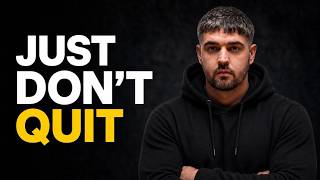
The advice has to be just don't quit and don't let anybody tell you that you can't do it, because you can do it, whatever it is you want to do. Make sure you're ready for the fight, then step up and fight if that's what you want. It's very easy in this world to become lost, be— struggle to pay bills, etc. But honestly, if I can do it, literally anybody on planet Earth can do it. And that's what I think I would leave the final message as, is just believe in yourself because no one else will.









