The 5 Step Upwork Closing Sequence Top 1% Freelancers Use
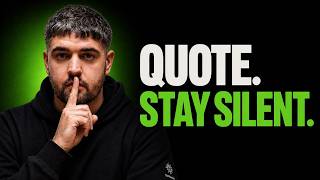
Michael Elliott, who claims $100 million in closed deals and 14 years of Google Ads experience, breaks down a five-step process top Upwork freelancers use to land clients: respond within minutes, push toward a call with every message, deliver free work first, run two separate calls, then quote and stay silent. The template and scoring rubric are free to download.
Chapters
I lose deals when I keep talking. The freelancer who shuts up at the right moment wins every time. And guys, this is the most undervalued skill in freelancing. Speed isn't the problem. Skill isn't the problem. What you say after the price comes out of your mouth, that's the problem. And nobody teaches you how to handle that moment. So today I'm walking you through the exact 5-step process that I run from a client's first reply to a signed contract. Score yourself as I go, 1 point per step. You're already running. The total tells you why you're winning or why you're losing. I've closed over $100 million in deals. I've got 14 years in the Google Ads arena selling services consistently. I'm expert vetted on Upwork with over half a million earnings on the platform. 5 steps, 1 number, let's go. Step 1, speed of response. If you've ever opened your Upwork inbox the next morning and watched a job that you wanted go to somebody else, this is where you lost it. Not at the proposal stage, at the reply speed stage. The moment that a client replies to your proposal or sends you an invitation, the clock is ticking. They've messaged 5 other freelancers, maybe 10, maybe even 50. The first one back doesn't always win, but the last one back almost always loses. Guys, I respond within minutes. Even when I can't get on a call, I will always respond immediately. The point isn't to seem desperate. The point is to seem available. And clients on Upwork are reading two things in your first reply. One, does this person actually exist or am I gonna wait three days for an answer? And two, does this person take their work seriously enough to be online when business is happening? Both questions get answered the moment the reply lands in their inbox. And there's a quick rule: keep Upwork open in a tab during the working day, especially in the working day for the target countries, US, UK. Notifications on. Treat client messages like they're worth more than whatever else you're doing in that moment, because they are. It's cognitive from the client side, but the first freelancer to respond instantly looks more credible, even if there isn't no substance to the response. And the thing is, this is the easiest step to win. Most freelancers lose it because they only check Upwork twice a day. Score yourself. If you reply within 60 minutes of the client message, give yourself a point. I'll give you an hour. If you reply same day, half a point. But if your reply normally goes into the next morning, you get zero points. The freelancers losing this step are the ones still bidding on $50 logo gigs. That's the level that you're competing against if you score zero here. Step 2: The conversation that earns the call. If you've ever sent a client 3 messages and watched them go silent without explanation, this is why. You pitched when you should have asked. Once they've replied, the goal is one thing: get on a call. That's the whole game. You can't sell to a ghost. Not pricing, not scope, The call. Most freelancers in this situation panic. They get a response and they pitch in their first message. Here's my rate, here's what I do, here's what I charge, when can we start? That gets you ghosted faster than anything else does. The client doesn't want a quote yet. They want to know that you understand their business and their response. So how do you go about this? Well, I ask questions. Not too many, not homework. 2 or 3 specific ones tied to whatever they said in their job post Or in their first message to me, if their campaigns are tanking, I mentioned I recently helped another business out of the same situation. If they're brand new to ads, I ask what they've already tried that didn't work outside of that platform. The questions show that I've read what they've sent. The reference shows I've solved the problem before. Neither feels like a pitch. And then the real trick is this: I close every message with a two-option call request. Are you free for a call today or tomorrow? 'Are you free for a call this morning or this afternoon?' Two specific options. Not 'let me know when you're free.' That's a homework assignment. Two options, and they pick one, or they propose a third. But either way, the client responds and the call gets booked. You should never leave a message open-ended, because every message that you send needs a reason for them to reply. If your message ends without a question or a clear next step, you're inviting them to disappear. So once again, score yourself. If your last client message ended with a clear 2-option call request, give yourself a point. If it ended with a "let me know what you think" or "looking forward to hearing from you," that's a homework assignment. 0 points. Freelancers who don't book the call very rarely win the contract. Now, step 3: the deliverable that closes the deal before the deal even happens. So if you've ever quoted a price and then watched the client go quiet and wondered what you did wrong, This step is the one that you skipped. The freelancers who win, they do not pitch harder. It's actually the opposite. They give more before they pitch. This is where I separate myself from most freelancers. Before the close the contract call, I give them something valuable that's completely free. For me, it's an audit of their ad account, generally speaking, or a research document. I show them the leakages, the wasted spend, the mistakes. Often I find 5 figures a month being wasted. Sometimes it's been 6. For new advertisers with no account yet, the deliverables then obviously change. It's it becomes the research document that I mentioned. Their industry, competitors, who's currently running ads in their space, keyword volumes, budget guidance. Same principle, different format. You're probably watching this and you aren't a PPC manager. If you're a web designer, you do a quick design critique or a wireframe sketch, maybe. If you're a copywriter, you take their landing page and rewrite a couple of paragraphs of that page. If you're a developer, you spend 10 minutes reviewing their code and flag a couple of things that are out of whack. The deliverables change by craft, yes, but the principle never changes. Changes. Give value before they hire you. And a really good way, guys, for you to be able to connect with a client and win them ultimately is tell the client that the audit— or in my case, an audit— takes longer than what it does. I tell the client an audit takes 48 hours and then I aim to deliver it in 24 to 36. And well, why? I'm technically— I'm going against what I'm telling them. Well, there's actually two reasons for this, and the first one is A freelancer who gets something valuable back to them usually closes the deal because they're first back and they open the gate first. The second is the client's first impression of my work ethic is set before they've paid me a penny. Late on a free deliverable means late on a paid one. Early on a free deliverable means competent on a paid one. Now, the audit itself is a Google Ads doc that I write by hand. For larger projects, I add a Loom walking through it. It contains every problem that I find. But also anything genuinely good in the account. Because if I just sit there and critique everything inside of a client's account, they clock it instantly. Transparency wins in a world full of fakeness. I say, here's what's broken, but here's what's already working. Make the audit be honest, not pitched, and tell them exactly how you would do it. At the end of the day, it's free, no obligation, no ask attached. It takes me 3 to 7 hours maybe, depending on the size of the account. That's a real-time investment, yes, and it's why my close rate is what it is. 'cause I spend time doing it. Score yourself. If you've given client free work in the last 90 days, an audit, a critique, a sample, a projection, anything that took you more than an hour, give yourself a point. If you've never given anything away, you give yourself zero. The freelancers stuck under $40K a year almost never give anything for free. The freelancers making more almost always do, and that's the difference. Pause for a quick second. If you're a freelancer right now and you've never given a client free value before they signed, try it on the next conversation. Audit, critique, sketch, whatever it is. Anything in your craft that takes a few hours shows them what you actually do. Drop a tryin' it in the comments. I read every one, and I want to see how this lands. Step number 4: the two calls. If you've ever felt the call going really well and then watch the client say, let me think about it at the end, you ran one call when you needed to run two. The discovery and the close are different conversations. Most freelancers They compress them and lose both. I run 2 calls before any contract gets signed. They do 2 completely different jobs. Call 1 is discovery and qualification. No pricing yet, no pitch. The job is to learn what they actually need and decide if I want to do the audit and work with them. I open with greetings and try to make them laugh inside the first 30 to 60 seconds. Not a joke, not something unprofessional. A small comment and observation. The smile or smirk is the signal. Once that's landed, the relationship has shifted from formal to human, and after that, the call is mine to run. Then I move into the work softly. Specific questions tied to their job post. Today we're going to discuss X and Y based on your post. What you're looking to achieve is X. Can you tell me more about why? They start talking about their actual problem, and I take notes. I've put them at ease, and now we're making progress. Now, the bit most freelancers skip is this: somewhere On that first call, I tell them honestly, listen, I'm not gonna be the cheapest option available to you on the market. So if you're looking for cheap, I'm not your guy. If you want this done well and done correctly, I'm exactly who you're looking for. That line does two jobs at once. It positions me as premium before they've even seen a quotation number, and it gauges their reaction. If I see them flinch, visible discomfort, vague 'we'll see' responses, sudden questions about budget, they're never gonna pay my rate, and I'm not spending 6 to 7 hours of my time on an audit for I close the call politely and I move on. Now, if they didn't flinch, and most don't, they've already mentally committed to the idea that I'm worth investing in. The audit becomes the proof and the substance. So then I do the audit and get on call number 2. Call number 2 is the close, and I walk them through exactly what I found transparently— the leakages, the wasted spend, often 5 figures a month, sometimes 6, as I mentioned earlier. I phrase it in business language. A business owner understands it. No technical jargon, no PPC speak. They want tangible numbers about money lost and money to be saved or money to be earned. This is value proposition. By the end of that second call, if I've shown them that they've wasted, I don't know, $20,000 a month, and my retainer is, say, $5,000 a month, the math sells itself. I don't have to say anything else. I just need to not get in the way. One more technique that runs me through both of these calls is I mirror character. If the client is laid back, I'm laid back. If they're corporate, I'm corporate. Even if they're aggressive, I'm aggressive. In the, in the conversational sense. People hire freelancers that they feel comfortable with. It's not manipulation, it's making the conversation feel like two people who already get along. Score yourself. If you run a discovery call before you ever talk pricing, give yourself a point. If pricing comes up on the first call, zero. The freelancers that I see and know who hit 7 figures and beyond consistently never quote on call one. Step 5: The close. And it's the most important moment out of this entire process. As a freelancer, you have definitely done this. Trust me, I have. If you've ever quoted a number and immediately heard yourself say, but I can be flexible, or try and explain why you quoted that number, this is the step that separates freelancers who earn from freelancers who survive. You've done the speed of response, you've earned the call, you've qualified them on call 1, you've delivered the free value. Via the audit. You've run call 2 and shown them the maths. Now comes the moment most freelancers lose the deal that they have already won. It's this simple: you quote them the number and then you shut up. That's it. Quote and shut up. Beginners blow this every single time. They quote a number— the retainer is $5,000 a month— and then they immediately keep talking. They justify the price, they explain the value, they preempt any objections to what you've quoted them, discounts, offer flexibility. But I can do it for less, but if budget's tight, or we 'Start with a smaller scope,' or 'Maybe we begin with a 1-month trial,' etc. And I'll tell you this: every single word you say after you've quoted reduces your chances of winning that project. The right move is silence. Quote the number and wait. Let it land. The first person to speak after a price is mentioned is the person who loses the negotiating leverage. That should be the client, not you. Trust me, I've closed over $100 million in deals. If they push back, you negotiate then. They might, they might not. If you've done the previous 4 steps properly, if you've qualified them on call 1, delivered genuine value through an audit or whatever is your variation of that, run call 2 through the terms, etc., they don't push back at all. They ask, when can you start? The qualification on call 1 is what makes this work. You— it's the trigger. By the time you're quoting on call 2, you've already filtered out the clients who'd haggle. The ones still in the conversation have already decided that you're worth what you charge and spending time on a second call with. Quote and then be quiet. Let them confirm what they already know. Now score yourself. If you can say a quote and be quiet for 10, 30, 60 seconds, however long it takes, give yourself a point. But if you repeatedly start rabbling after you've given a quote, it's zero. You have to quote and then be quiet. It's the most expensive lesson most freelancers will ever learn. So 5 steps: speed of response, the conversation, the value-first deliverable, the 2 calls, the closing silence. Add up your score. 5 out of 5, you're lying. You've already closing contracts that you should be. But everybody in negotiation has made the mistake of talking after a quote. If you're in the 3 or 4 space, give yourself the point. You're leaving money on the table potentially because there's areas of improvement. 2 or below, you're losing deals you've already won, and I just showed you the 5 reasons why. Selling is the most undervalued skill in freelancing and in life. Your skill gets you the proposal, your selling gets you the contract. So just for you, I've put together a free Upwork closing process template. It's the 5-step sequence that we've just discussed in detail and more as printable, plus the exact 2-option message I sent to book the call and the audit framework that I use for new clients that you can adapt to your own business. Link in the description. Run it on your next Upwork conversation and I guarantee it will work. Quote and shut up. This video, if actioned, will add some zeros to your bank account. If you've enjoyed this type of content, you're gonna love this video right here. Go and watch it now. My name is Michael Elliott. I'll catch you in the next one.









