9 Systems You Need To Build For A Successful Business
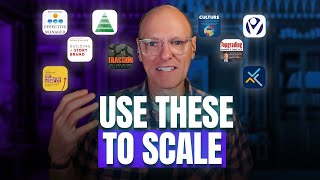
Nine operational systems for small businesses: EOS for strategy and execution, StoryBrand for marketing, Net Promoter Score for customer loyalty, The Effective Manager for one-on-ones and hiring, Gallup Q12 for employee engagement, Culture by Design for translating values into behaviors, and a three-part hiring stack using Topgrading, Culture Index, and Criteria Corp testing.
Chapters
Something I learned when I was running a business is I thought I had pretty unique problems. As I did more and more business, I discovered people have already gone and solved all of these problems. And it was this idea that I learned that 85-90% of what every business does is almost universal. Every business, no matter the type, has to hire people. Every business has to do accounting. All of those things the same no matter what kind of business you're in. And I went and found the very best systems for each one of those things and I I want to share them with you today. Even if you don't have a premeditated system, you still have a system. It's just a really sucky system. So if you're going to use a system to do hiring or you're going to do it around managing or creating culture, why don't you just use the absolute best system? It'll make your whole life easier. The first of the 9 systems, it's called EOS. EOS does something pretty magical for a business. It's called the Entrepreneurial Operating System. It's described in a book called Traction, and it solves really 6 different things that every business does, which is how do you define your processes? What's your strategy going to be? Where is your vision to where you want to take your business? How should you design your business to do those things? And how do you set goals? And it gives your small business or any business a roadmap of things to go after. And it basically allows you to say, okay, 10 years from now, I want to be here in my business. And then it sets interim steps, 3 years, 1 year, down to the quarter, and then down to this week, and how you articulate all of that with your team and run that process. So instead of trying to figure out how you're going to do team meetings, instead of figuring out how you're going to do offsites, all that kind of stuff, it just tells you and you just follow the rules. So imagine what you do with EOS, the book called Traction that we just talked about, in terms of doing strategy, vision, all that kind of stuff. But instead of that, you have the same set of templates and the same set of rules and process that you follow through doing that for marketing, right? How do you make sure customers know that you actually That's what marketing does. And what I love about this book, and I love about this system, is it's called StoryBrand. And StoryBrand is basically the same thing where you're following the system that's created, and you're basically filling out these worksheets that ask you very precise and interesting questions about how you're going to reach your customer, who they are, and all that kind of stuff, and how you're going to talk about your business to be unique and to show the value you have to your customers. And you do that through this system, and it's done by this book called StoryBrand, which by Donald Miller. And it's basically— what it does is, the beauty of it is it takes the same things that made movies like Star Wars or Harry Potter so popular, and it uses that same kind of universal idea called the hero's journey to turn that into highly effective marketing for your small business. And all the great companies that I work with, they use this to figure out how they're going to separate themselves from the competition. And they just say, hey, here's how our marketing is going to work, and here's how we're going to talk about our business. And they don't worry about how to do all that. They just worry about what the answers are going to be by following this particular system. So you have customers and you want to figure out if they're happy or not, if they're satisfied. Here's the first answer to that question, right? Every business needs to know how their customers feel about the business and feel about the service. There's a real problem. There is no perfect solution for measuring customer satisfaction. They're all terrible, but one of them is less terrible than all the others, and it's called NPS. And you'll see it in lots of different companies use it. And it's very powerful because it just asks one particular question: How likely are you to recommend this product or service to a friend? And basically what you're looking for is this idea that you want people out there who are customers, who are delighted customers, who go and tell their friends about your service and how much they love you. And then that turns into the best possible marketing that you have, these delighted customers who love you, and you use those to offset the people who hate you. And Net Promoter Score is a system that you can use to then turn around, measure how you're doing in the marketplace and how happy your customers are, and therefore what kind of future prospects your business has. And so basically this idea is, and it's beautiful, if you have a high net promoter score, customers do your marketing for you. And it's, it's a genius idea. It's not perfect, but if you're going to measure anything, this is the one I like to measure in terms of satisfaction for my particular businesses. And you can learn more about it. You just buy the book for it. You're noticing a theme here. A guy named Fred Reichheld, and it's called The Ultimate Question 2.0, talks about net promoter score. You can then turn around and use that in a bunch of different ways. But you can understand by reading this book, like, just read it and you'll start to understand, okay, well, I have to measure how happy my customers are, because that tells me everything about the future of my business. And therefore, I am going to use this particular system and this particular question inside the business. All right, next system called The Effective Manager. So there are a bazillion management business books out there, you know, and they're, they're all these different kind of highfalutin ideas and how you turn into a great leader and all this particular stuff. But I have never until recently found a book or a system that just tells you, hey, I'm a new manager. Here's what you need to do to manage people well. And this lays out the steps tactic by tactic and uses those principles and techniques and then says, go do those things. And I think about this is really like what we talked about with EOS or the systems that we've talked about so far, like StoryBrand. Like these are basically workplace templates where you're just like, just do this system. And things turn out super well. So I think about this as like EOS, but for being a manager. So anytime I run across somebody who is like a new manager, I say, go buy this book and read it and just do what it says. And this enables you to really drill down and say, here's how you do a one-on-one meeting. Here's how you do a performance review meeting. Here's how you do hiring. Like all of this kind of stuff like ties in together. And it's just a beautiful book that I highly recommend. All right, system number 5. So we talked about measuring how your customers feel, right? Rate, and that's through NPS. There is a system that I like to use to measure how my employees feel. And there's this idea that the highest performing organizations have hugely engaged employees. And Q12 is a system, it comes from Gallup. And basically what it does is allows you to go through, ask a handful of questions, turns out there's 12 of them. You do that on a quarterly or biannually basis, and you get an insight into what's going on with your workforce. Basically, you answer these questions, the employees rate themselves, And it can give you a really good idea of how engaged your workforce is, because engaged workers who believe in what's going on, they're on a great mission, they're on an inspiring team, they feel valued, they have that ability to reflect that. And then when they feel all those things, they perform better and they deliver better results for the company. And it's a win-win. The employees are happier, and you as the manager, you as the owner of the company, get higher performance. So this is one of the systems that are out there. It's called Q12. It's not the cheapest one. Basically, there's some free copies of it that you can Google and find. A lot of other people, they just pay for the one that comes from Gallup. It's an information organization. So people do that. But you can start to use this. Now put an asterisk next to this one. Number one, whenever you have a business, I highly recommend running a tool that measures employee engagement. Now you would ask, like, does it have to be this one? No, this is one where you could really swap it out for another one. There's different ones that come from different systems. But you need to measure this to really understand how your workforce is doing. Huge fan of this particular one. And a number of my companies use it and it's proven very valuable. And actually, when we acquire companies, we will measure the Q12 before we acquire them, and then we'll measure the Q12 after we have them for 6 months to see what we've been able to do. And the goal is to quantitatively improve employee engagement, and we'll know that will translate into better performance for the company. Today's sponsor is Employer Flexible, and what Employer Flexible does is really function as a fractional HR department for your company or business. Um, I've used them numerous times in putting together my companies. I've used them when I've bought companies. I've used them when I started from scratch. And basically when you're moving quickly or when you don't want to spend the time putting together your own HR department, benefits, all that kind of stuff, and you want to get the scale of being part of a larger group, you can reach out to Employer Flexible. And what Employer Flexible does is give you that buying power as if you're, you're part of a bigger group and all that kind of stuff. And for me, I love working with them. For numerous reasons. One is I know the owners and a lot of the staff, and they've always treated me super good. And then the second thing is I hate HR. Like, I don't enjoy it at all. And this way I can know it gets done right. I get the benefits of having a big, fully staffed HR department and the flexibility of having a vendor like Employer Flexible being there as a partner throughout my journey and making sure that everybody I work with is happy, taken care of, and we can focus on what really matters in our business, which is take care of our customers. So, uh, you can find their contact details, locations of their very off— various offices, as well as more details on how they will help your business by going to employerflexible.com. And again, that's employerflexible.com. And thanks to them for sponsoring today's episode. The next system is called Culture by Design. And this is an idea that I really love. And think about what we've done so far, right? It's like EOS, StoryBrand, all these systems I told you about, they're basically like paint-by-numbers for how you create the organization you want to have. And this is not a widely popular book, but I've loved it ever since the time I heard about it. And it basically has this key insight, which is most of our companies, they put together these core values and they say things like, we're going to be honest, or like, we're going to be like friendly or collegial. And the problem is, is when you take those things, they're very difficult to translate into the types of behaviors that you want your organization to have. What's going to be important if you're like a customer service, you don't say you're welcome, you say at my pleasure or at your pleasure. It's this uniqueness way of the types of behaviors that they want to have throughout their company. And what Culture by Design does is it encourages you as a leader to create a system to roll out the types of behaviors you want to have inside of your organization. And so for example, one of my buddies uses this particular system and has created the culture he wants to have inside of his staffing organization by defining the types of behaviors he wants to have. For example, one of those behaviors he wants to have is we return phone calls the same day. We don't not return phone calls. And so he lists that down as a core behavior. And what's powerful about that is it becomes super actionable for your employees. You're not in a situation where you're trying to have to guess, like, am I more honest if I return the phone call on the same day? It's like, no, this is just what we do. We are the type of people that return the phone calls same day. Those are the behaviors we want to have. And instead of having 4 or 5 core values, which other systems will encourage you to have, you're going to define 15 to 20 to 25 core behaviors that your organization needs to have. And this becomes super powerful because they're so actionable. And it fixes the problem with core values, which is they're not actionable. Like, okay, well, how do I use my core values as rubrics to actually do things? And it's very difficult because they're so vague. And by doing this through the Culture by Design system, which I love, Again, it's a book, you can go buy it on Amazon for $12. You can basically run this process to design the culture that you're going to have. And I find it beautiful, right? It's an intentional system that somebody has already used. And you use that as a way to craft the type of company that you want to have. Moving on to number 7, I use these systems together to do hiring. And basically, there's 3 components of it. There's one book, which has some ideas that I love, and 2 pieces of software. This is where I spend money, I spend money on the software, it's just part of the deal. And to me, I do it because hiring is just that important. The mistake of making a bad hire can cost your company $10,000, $20,000, $50,000, $100,000 if you hire the wrong person, and sometimes more. And so I want to invest heavily in doing this in a very detailed way, do it in a very thorough way, and do hiring in a way that minimizes the risk to the company if things go wrong. So let's talk about this first component of hiring. And this is a book that I love, and I also hate it. It's called Topgrading. It was done by Dr. Brad Smart, uh, who was actually on my podcast a few years ago. Very nice man and super kind to do it with us. And basically what he did was take a look at how the common wisdom around hiring was just broken, and he wrote a book about it and changed things drastically in terms of how to think about it. And so like a great example that I, I talk about is, um, typically in an interview process they'll bring you in You do 10 interviews with 30 minutes each with different people. You never really get into any of the details. They look at your resume, they see if you're likable, they see if you're like them, and then they decide if they're going to all like you or not. And then you get hired. And what this book does is say, man, that's kind of stupid. Like, don't we really want to get into the details with these people? Don't we really want to go deep to understand these people who are going to be signing up to spend years of our life with us? And change that and flip it on its head in terms of changing the format and how things work. And so he has a handful of insights that I think are great that really changed my mind on how hiring should be done and turn it into a much more data-driven and a much more foolproof process in order to bring the right people who are these high performers that he calls A-players into your organization. Hiring system number 2. Some people hate using personality assessments or data assessments for people that are applicants. I like them because I want to have more data. This is one that we use. I use this early in my hiring process. It's called Culture Index. There are other ones that are out there like this. This one cost me thousands of dollars a year. And basically these are personality assessments that are scientifically backed. You can use them as part of hiring process. Myers-Briggs, DiSC, some of the other things that you hear about, you can't use them in hiring processes to kind of understand the personality of how people are wired because they have been shown to be discriminatory. So this is a system that I love called Culture Index, and this is an optional one. But for me, it's essential because I want to get a bunch of data in terms of understanding who I'm hiring and how I'm hiring them. And I like it because it really causes me to step back and understand every person is different. And it's my job to find the job that's going to be right for them inside my organization where they can really thrive. So Culture Index is the one I like there. There's other ones out there. Google it, you can find it at cultureindex.com. This one costs money, so it's not suitable for a lot of small businesses. But there are other ones out there, and I encourage you to use this one. Next hiring system is really tied into what the data says, which is frankly the right mental mindset. The mental RPM is the right thing that you need to have, and the right job skills are what you need to have in order to do really well on a job. So for me personally, I want to have people on my team that are quick, that get stuff done quickly, that can mentally jump through the cognitive challenges that we have. So I use this one, Cognitive Assessment through Criteria Corp. They also have job skills tests for things like writing or accounting and that sort of thing. And so we use these. I like them a lot. We did a survey of the the different ones that were out there. Criteria Corp is, I think, about $1,500 a year these days for an unlimited number of tests. So a very good one. And this is the one that I use and like a lot. So those are the 9 that I use in every single one of my companies. If you want to find out more about each of these, there's links below in the show notes. And, uh, I'm new here to the YouTube. If you enjoyed this, leave a comment below. And if you've used any of these systems, leave a comment below and tell me which one is your favorite. I would love to hear from you. So thanks a bunch for listening, and on to the next one.










