Build A Bear Workshop - Why they're successful
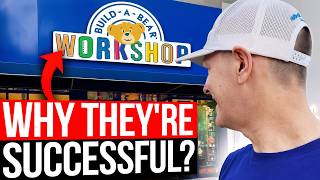
Maxine Clark founded Build-A-Bear in 1997 as an experience-driven retailer, but mall decline and e-commerce crushed it by 2012, losing $48 million. New CEO Sharon Price John closed weak stores, went omnichannel, and pivoted to adults and licensing deals. By 2022 revenue hit $468 million and the stock surged 46-fold in five years.
Chapters
So I'm here today in a Build-A-Bear Workshop on a Saturday afternoon, and the line is nearly out the door. Believe it or not, this has been one of the most successful companies in the last 5 years, with their stock up over 46 times. If you'd invested $100 in it, you'd have $4,600 today, just 5 years later. But believe it or not, just a decade ago, this company was about to go out of business. They had 8 straight quarters of losing money, and they lost $48 million in one year alone. So what explains the rise, the almost fall, and the almost death, and now resurgence to stock market darling of the Build-A-Bear Workshop? That's what this video is about. This channel is about fascinating stories, typically the rise and fall of companies and the lessons we can learn from those things. If you like that kind of stuff, I took the top 10 lessons from the videos that I've made. There's like 25 videos so far, and I put them in a handy one-page download. and typically you can find that in the posted first comment below and download it for free. And we just passed 100,000 subscribers for the channel, and I'm on my way to a million. So if you're not already following, which 90% of you are not, please give me a follow and a subscribe. Uh, it would help me feel better and help us achieve the goal of a million someday. We'll see. So Build-A-Bear got started in 1996 by a woman named Maxine Clark. And she had an entrepreneurial bent. She wanted to start something cool. So she left her job at Payless ShoeSource, where she was a senior executive, with the idea of starting something new. So Maxine actually got the idea for Build-A-Bear by talking to a friend's 10-year-old daughter. And at the time, Beanie Babies were a big deal, and they couldn't find the Beanie Baby that they wanted. So the 10-year-old girl said, you know what, we should just make our own. And that's where the idea for Build-A-Bear came from. But that wasn't her only idea. Actually, Maxine had a whole panel of ideas. So she actually convened a focus group of kids ages 6 to 14, got them in a room and asked them to pick which of her ideas they liked the best. And they overwhelmingly liked the idea that would become the Build-A-Bear Workshop. Great entrepreneurs are like Maxine. They'll trust their intuition to try to get inspiration for stuff and especially creative ideas. But when it really comes down to it, they'll look for data to back up what they believe in the market. And that's exactly what she did with this panel of kids. With this validation, Maxine went all in on the Build-A-Bear concept, and she did something that was pretty unique. She actually went and hired a professional design firm to help her flesh out the concept and get all the details right. And I think this is absolutely genius as I learned this story. I mean, a few years ago, I incubated and started a coffee chain here in San Antonio, And looking back on that experience, I would have brought in some experts and had them come in and help us really create a unique concept. And as it was, like, we kind of ended up with a me-too idea. But here Maxine was smarter than me. She went in and actually hired some experts to come in and be brains on the field to help her come up with something that was totally polished and totally unique. Maxine was willing to bet her life savings on this concept because she also saw something that was really smart. Which was plush toys like teddy bears are super duper high margin. A little bit later in this video, I'll show you my trip where I went with some relatives of mine to Build-A-Bear here in San Antonio, and I spent $115 on 2 bears. And there's a pretty good chance that that cost the chain about $5 or $6 in ingredients. Just crazy. And Maxine loved the idea that plush animals could be so profitable. So a year later, in 1997, she opened the very first Build-A-Bear Workshop in the St. Louis Galleria Mall, and it was an instant total smash hit. Lines were out the door. People came in from all over, and in the first few months they did nearly $400,000 worth of plush toys. Just incredible. Build-A-Bear wasn't just a toy store. It was an experience. Some people call it retailtainment, where basically you would come in, you would pick out the skin for your bear, you would name your bear, you would buy accessories for the bear, you get a birth certificate for the bear. They would stuff the bear for you. And it was just an experience. And parents love this idea that differentiated it totally from just picking out something from the shelf at a Walmart or Toys R Us at the time. And if you've watched my videos about Panera or Chipotle, one of the ways people make a lot of money is by creating what is an entirely new category. In the case of Panera and Chipotle, for the respective food types, they created the fast casual idea of food where you get high quality food, but it's delivered quickly to you. Well, in this case, Maxine had stumbled into an entirely new type of retail that was basically this retailtainment category, which was both a combination of an experience and also a toy store. And it was genius. This type of experience struck an emotional chord with folks. You know, we saw it. We took our relatives there and the kids absolutely loved the idea of creating the bear and personalizing it. And this turned into remarkable sales numbers. For the Build-A-Bear chain. They were doing $600 per square foot at some of their locations. And I can attest why this happened. I mean, again, I bought 2, 2 plush bears and I was in and out and spent $115 in an hour. Like an amazing machine at getting money out of my pocket. And guess what? The kids had such a good time. I was happy to do it. It was a once in a lifetime experience. So with most entrepreneurs who are bootstrapping, Eventually, if you have a great opportunity like this, you start to run out of capital to expand. And same thing was here for Maxine Clark. So in 1999, she went to outside investors and she raised $5 million to start to grow the stores faster. Best I can tell is she sold about 25% of the company for that amount of money, which is pretty incredible considering she had just started the company just about 18 months before. She put the chain on overdrive. In the next year or so, they expanded from 1 to 11 stores. and they were doing double the typical retail throughput on a per square foot basis as a typical mall store. The chain grew incredibly fast using this outside money as jet fuel. They reached 100 stores in 2002, which also happened to be the 100th anniversary of the concept of the teddy bear. It was super cute. Maxine had hit a come on the concept at the exact perfect time. At this point, millennials were comprising the bulk of the kids And you had baby boomers who were the bulk of the parents, and millennials want nothing more than to create something unique and special that's entirely them. And baby boomers wanted nothing more than to break out their credit card and do something nice that involves spending some money and showing their love for their kid via teddy bear. It was a perfect formula at the perfect time. Just 7 years after founding in 2004, Maxine took the chain public and they went public on the New York Stock Exchange to raise more money. For what, you may ask? Ah, to grow even faster. By the mid-2000s, a Build-A-Bear could be found in almost every suburban American mall in the United States and some beyond. And by 2007, the chain hit $474 million in annual revenue. That's a lot of teddy bears. But just when things looked like they couldn't ever end and the good times would never stop for Build-A-Bear, that's when things started to change and those tailwinds started to turn into headwinds. Build-A-Bear was a chain built on malls, and in the 2000s, that's when we started to see them closing a lot, like people weren't going to malls anymore because e-commerce was easier and you could get the goods that you wanted. Similarly, electronic devices and online and TV and the internet and all the games around that started getting better and better and starting to get more of kids' kind of time. And those headwinds were going to get worse. By 2010, we would see the iPad introduced. And we saw in some of my other videos, I'll put a link up here. What the iPod helped to do in terms of killing Toys R Us. Well, it wasn't going to help Build-A-Bear either. And lastly, the chain hadn't figured out how to get people coming back. It had been kind of like Topgolf was, if you've seen that video of mine, a one-trick pony where people bought a bear and never came back again. And that wasn't good if you needed repeat customers to keep coming back and keep shopping in your store like Build-A-Bear did. By 2012, things had turned for the worse. They had 8 consecutive quarters of declining profitability. And in the year 2012 financial year, they showed a $48 million loss. Basically, they lost 10% on every dollar that they brought in. And at that point, things were looking bleak. And similarly, what was once a stock market darling was suddenly a stock market pariah. The valuation had gone from $400, $500, $600 million, depending upon the year you looked at it in the early to mid-2000s, to its low during 2019 It was valued at less than $50 million. One characteristic of boards is that they're notoriously slow to act on stuff. But one thing that can get them moving is when a chain or a company starts to show significant and big losses. This loss in 2012 meant that in 2013, the board stepped in and the chief executive officer, Maxine, who had founded the chain and brought it to this point, she stepped down from the role. Oh, and Maxine's title had been Chief Executive Bear. I don't know why, maybe it's been a long weekend, but I think that's so cute. I wish I could have been the chief executive bear. But the board seeing all of this, I need to bring in somebody to make some changes. And they needed somebody who knew how to run a turnaround. And a turnaround is when a business is in big trouble and may not survive, where you bring in an expert to come in and turn the thing around and get it back on the right course. They brought in a lady named Sharon Price John to run the turnaround of getting the business back on track. And she had come from the shoemaker Striderite. And you're like, what does that have to do with bears? Well, before that, she had worked at toymakers Hasbro and Mattel, and they had done licensing in and out to propel their toys with folks like Star Wars, Disney, Harry Potter, all that kind of stuff. And her expertise in this would be key in turning the chain around and show up later in the story here. And Sharon walked into what she described as a really challenged situation, quote unquote, for the chain. And while Build-A-Bear had 400 locations, many of those were in malls that were now dying, meaning fewer foot traffic and fewer people who would stop in spontaneously and do like I did and drop $115 on a couple bears. And being in malls with no foot traffic meant a lot of those stores were not making any money. And that was a drag on profits and a big part of why they lost $48 million in 2012. Underneath the chain, the core customer hadn't changed. It was still kids and their parents who wanted to have a special moment. But the behavior and the environment of those kids and their parents, and the shopping world had totally changed. E-commerce had become a real thing. These kids have been born with tablets in their hands, and the chain, well, basically just hadn't kept up with the times. And to quantify the problem with malls here in San Antonio, we used to have 7 malls back as late as the 1980s. Today there are 2 that are still thriving and the rest are dying. And many of those 7 malls here in San Antonio at one point had a Build-A-Bear in it. And I guarantee those stores weren't making any money. Sharon went and closed 60 underperforming stores in 2013 and 2014. Those stores weren't making money. They were getting out of the portfolio for Build-A-Bear. And at the same time, she started to focus on turning around the inside of the stores. They had stale product mixes, wasn't interesting. They weren't paying attention to detail. She went through and streamlined a lot of that stuff to make it better for the customers. In a turnaround playbook like Sharon ran, you come in, you worry about cash, you make sure we have enough. You try to increase sales and revenue, and you try to reduce costs. And, uh, you do as many of those things as you can, as fast you can, to get the business back on track. Based on everything I've read about this business a decade ago, well, Sharon did a pretty darn good job of it. Shockingly, Sharon discovered that in 2013, uh, only 5% of Build-A-Bear's sales were done online. And this is an era where e-commerce was rising. By this time, for furniture and stuff like that, you were seeing 15, 20, 25% of furniture sales happening online, including toys, right? Amazon, other folks, and even Toys 'R' Us were players in that space. But it was just incredible that Build-A-Bear had been so dependent on this in-store experience that they had missed the opportunities of what online could be for them. Sharon and her team started to execute on true omnichannel and true online. Omnichannel being the idea where you could order a bear online, get it done, come pick it up, that sort of thing. And this proved to be a critical choice that'll play a lot in the story later. Mostly, if you're interested, you can see the other side of it. Go check out my Bed Bath Beyond video that I'll link right here, and you can see what happened to them when they avoided omnichannel. Sharon also realized there was an opportunity to expand their market beyond just kids, and she saw that when she went and talked to customers, that the same people who were kids in 1997 when Build-A-Bear first opened were now adults in their 20s, 30s. And guess what? They had a lot of nostalgia for their earlier days. And it was incredible when she came in, the percentage of like adults and teens who were buying bears was really small. These people called kidults, who are adults who buy kids' toys and love to play with Star Wars or whatever. I don't. Have fun, guys. But, uh, they comprise 25% of toy sales. If you wonder why the toy market is actually doing pretty well these days, it's because of the kidults. Uh, and Build-A-Bear did this even better. By 2022, 40% of their sales were going to adults and teens. Sharon was a genius. It just wasn't about kids anymore. I saw this when I went in to Build-A-Bear the other day. Everything was a partnership. There were tons of partnerships with Marvel, Disney, Pokémon. You could get a bear for any of that stuff. Or if you wanted to, you could get a Dallas Cowboys bear. I mean, if you like losing, but you just see how that's the type of thing that is going to bring in adults and teens, whereas before, you know, it was just kids getting generic teddy bears. And they continue to run with this. The Mandalorian promotion that they did where Baby Yoda Grogu was released as a bear you could get at Build-A-Bear Workshops, it got a billion views. The announcement of it got a billion views within the first few days on social media. It's crazy. They even went a little further, which to me feels kind of weird. They created an After Dark series of Build-A-Bear Workshop bears where they were a little edgier. And then they also did a level of Valentine's Day gifts that were kind of more adulty. And look, can't blame them, you know, you need to expand your market when you have fixed cost. That's what they did. So it was a genius way of solving the age-out problem where the customers of Build-A-Bear had been turning into adults and then disappearing forever until they had their own kids. The way to do that was you partner with Star Wars or The Office or any of that kind of stuff. And I saw some of that stuff when I went in there and I told my wife, hey, Would you be interested in coming back here for date night? I think it'd be fun. We could make, you know, little toy bears and do a good little activity. She was not as excited as I thought she'd be, but I at least thought of it. And I know other adults do too. Remember how Build-A-Bear had been getting killed because they were in malls and malls were dying? I mean, by some numbers, 25% of them are still set to close between now and 2030. Well, they started to go where the customers were and they recognized that people were in heavily trafficked areas. That's where they were. So they need to have Build-A-Bears there. So instead of just their standard mall footprint, they went out and they started to do kiosks and even vending machines where you could go in and get a Build-A-Bear in these kind of other places, cruise ships and that sort of thing. By 2022, it totally worked. 35% of Build-A-Bear sales were coming from non-mall locations. That's super smart. Sharon and her team also doubled down on the in-store experience. And I could tell you, having gone there this past weekend, everything was dialed in. Down to the lady at the checkout who tried to sell us a $5 gift certificate that would be worth $10 if we came back in the next month and bought another bear. I mean, they were dialed in. The people that were stuffing the bears, they were well trained. They were so cute with the kids. Like, they had it nailed and it was working, and I can see the results of what Sharon and her team did. And all these changes worked. Uh, by 2017, the chain came roaring back and roaring back to profitability and sales growth again. It was great. Then in 2020 came the pandemic. Can you remember pandemic lockdown? The last thing you were able to do was to go into a mall and build a bear with a bunch of snotty breathing kids. Just wasn't going to happen. But it turns out all that work that Sharon and her team had done in the 2010s to make the online experience really good, it was perfect in a lockdown environment. People would get their bears done, they would do them from home. It was a great activity if you were stuck in your house with your kid. To go do a bear, drive over, pick it up, and man, just all that work had done was genius. One thing we'll talk about in this video is the idea of being lucky and the idea of being good. And the next thing that happened to the chain was it got pretty darn lucky, which was the pandemic and all of the things that have happened in the world and the trends in demographics and all that kind of stuff have given a rise to a thing called the nostalgia economy. Nostalgia economy is people who are interested in buying things that remind them of the older, simpler times when they were kids and that sort of thing. And guess what's great for that kind of stuff? Licensed Build-A-Bear products. If you want to be reminded of Harry Potter and get a bear around it, well, they got you covered. Surveys show that over 60% of millennials and Gen Z respond positively to the nostalgia economy. Sick. My generation, that didn't care so much. Gen X. Also lucky for Build-A-Bear is their in-store experience. It's a moat against e-commerce coming after them. There's just no way Amazon's going to be able to replicate the experience they've created. And malls, to some extent, they love this type stuff because 80% of purchases at Build-A-Bear are premeditated. That's what people are coming in to do. And when we went this past weekend, that's what we did. We went to the mall, went to Build-A-Bear, dropped $115, got back in the car, went back home. So Build-A-Bear was smart in the way they fixed the business over the 2010s, but then they were also lucky. And this is one of the things that, as I've spoken to a lot of entrepreneurs, like, I admire about some of them, which is not only do they recognize that they were smart and did smart things the way, you know, Sharon did with her team in the 2000s and '10s, and the way Maxine did to get the business off the ground— these were smart people. The cool thing about this business is it's to some extent doing so well now because some things really turned in their favor. And that's where luck comes in. It's just part of the deal. So 2021 and 2022 were record profit years for the Build-A-Bear chain. Lucky and good. It's a great combination. In 2022, revenue hit $412 million, which was basically where it was back in its early 2000s heyday when Build-A-Bear was a super duper fad. And then it surpassed that in 2022. Hitting $468 million. And remember how they lost $48 million in 2012? Well, they made $48 million in 2022. And over the 2022-2023 year, they actually allocated $30 million towards stock buybacks and dividends, contributing to the stock market loving Build-A-Bear stock. And the chain doesn't appear to be stopping. Despite licensing things from Disney and Marvel and other folks, something a, uh, also success in the chain, in the toy space. Lego has done to great success licensing all these different things. Uh, Build-A-Bear's taking it even a step further and they're building their own intellectual property around these particular characters that they've created. And the great news about that is when they own those characters, they don't have to pay license fees to Disney and other folks like that. They get to keep all the money themselves. And they're even releasing movies around these characters, which to me is just like Okay, cool. You guys are playing some 4D chess. I like it. Fast forward a day and the triumph of Sharon and her team, and before that Maxine, uh, is pretty amazing. Uh, if you bought a share of Build-A-Bear back in the very lowest point during the 2020 pandemic, uh, you would basically be up 46 times based on the stock price that I looked at today. $46 ain't bad. But here's another comparison that'll blow your mind. Uh, the most valuable company in the world right now, as the time of this recording, is NVIDIA. During the same apples-to-apples comparison period as with Build-A-Bear Workshop, during that time NVIDIA has been up 1,500%, while our friendly plush-making, teddy bear-making folks, they're up 1,600%. They outperformed even AI darling NVIDIA. And the cool thing is Sharon got rewarded for all this value she created. Her shares that she was presented as being hired as CEO, based on the research I read, are worth upwards of $30 million. A well-deserved payday. The biggest takeaway for me of this story is the importance of luck, but how important it is also to be prepared for good luck to help you. And if Build-A-Bear hadn't made all these smart choices, hadn't done all the e-commerce stuff, hadn't streamlined their their stores, hadn't done licensing, they would have been ready to make a fortune when things turned in their favor with Cadults, the nostalgia economy, and the post-COVID return to shopping. All right, that's the story of Build-A-Bear. A lot of you asked for a win story, so this is a win story. So if you like it, please comment below and it'll help boost this video and get views, so I'll do more wins as well. And let me know what you think of this video and what you would have done in the Build-A-Bear situation, or if you like Build-A-Bear. I know a lot of people do. Let me know in the comments below. Talk to you later.










