Fireball built a billion-dollar brand, then lost it
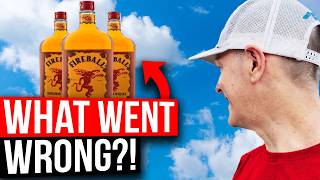
Fireball went from a nobody Canadian whiskey to America's top shot by 2012 through guerrilla bar marketing, then Sazerac flooded convenience stores with malt-based mini bottles that weren't actually whiskey. Sales crashed from $1 billion in 2015 to $700 million by the early 2020s as the brand lost its identity and faced a $5 million lawsuit over the misleading bottles.
Chapters
So back in 2024, a woman walked into a gas station and she bought a little bottle that looked like this, a Fireball whiskey, uh, and then she went home and she called her lawyer and together they sued. A woman is suing Fireball for $5 million saying some mini bottles are misleading customers. And it turned out it was a pretty smart move by her cuz she was right. These little bottles like this, I got this one at a liquor store and it's actual whiskey and it says whiskey on the side of it. But the one she bought, well, it said Fireball and it didn't say whiskey on it because the one she bought at the gas station wasn't actual whiskey. It was a malt-based beverage. Same thing as like Buzz Balls, which is another video on this channel, are made from. And they're designed to circumvent liquor rules so they can be sold at places like convenience stores. And the problem is she saw it was that this little bottle that she had bought, not this one in particular, but a little bottle that looked like whiskey, acted like whiskey, had the same logo as whiskey. Well, basically it wasn't whiskey, and that was misleading consumers. And in this video, I'll tell you how all that ended up in terms of the lawsuit, but also explain to you what's going on with Fireball. It has gone from one of the most kind of magical consumer product good stories of the 2010s, going from just a little over $1 million a year in sales to billions, uh, today being at the forefront of basically the slow death of the liquor industry. And Fireball is one of the ones feeling the brunt of it. This is the rise and fall of Fireball, and it is a complicated, complex story of which the anecdote I just gave you as part of it. And because my videos seem to do better when I have props, not only do I have this prop, which is a tiny little bottle of Fireball, and then I also bought one of these, the big boy bottle, uh, at the same liquor store. Uh, yeah. And so that was pretty entertaining. And so as with most of these things, I'm going to do a taste test of this. Well, or try to, but there's quite a problem, which is 2 years ago, like many people, I stopped drinking. So if you stick around to the end, you'll see how I solved that problem. Figuring this out and trying Fireball without, well, starting drinking again. Oh, and by the way, thanks to Bolt.News for sponsoring this video. More on them later. Oh, and by the way, I turn every single one of these videos into a deeper dive companion document. You can download them for free off my website, girdley.com/youtube. Fireball didn't actually start as the product we know and love today as Fireball. Well, you may love it or not, but that's a you problem. But it actually came out of Canada. It was known back then as Dr. Miguel Cutty's Fireball Whiskey. It was the type of stuff that found found its way into liquor stores on the aisles with Goldschlager, uh, those types of, uh, Jägermeister type of stuff. If you're a college kid out for a party and you're looking for something kind of sensational to drink, you would buy it. The company behind it all was named Seagram. They are a Canadian liquor giant and a beverage giant. They're behind everything from Seagram's, uh, to Crown Royal, to, uh, well, Tropicana orange juice. Dr. McGillicuddy's was their fun brand, as I talked to you about before, type of stuff a college kid would buy before going to a frat party. and this particular Dr. McGillicuddy's was just another item in their lineup. Nothing really special. Well, I mean, it was cinnamon flavored and burned a bit as you, you know, drank it, but other than that, well, it was just another liquor. 1989, another company had a vision, and this company's name is Sazerac, and they come up a lot in these videos that I do about the liquor and alcohol industry, and they are out of New Orleans, and they came in and bought the Dr. McGillicuddy's brand from Seagram's. They are one of the oldest family-run distilleries in America. They own things like Pappy Van Winkle, Buffalo Trace, all that kind of stuff. Here's the funny thing. They're serious whiskey people. They own those serious whiskey brands. And if you did my bourbon whiskey rise and fall video on this channel, you'll see that they played a major part in it. But here they were coming in and buying basically a novelty brand, this Dr. McGillicuddy's thing. For 20 years after they bought it, the Dr. McGillicuddy's thing basically did nothing. And then in 2007, Sazerac looked at their portfolio and looked for an opportunity. and they saw one in Fireball. First thing they did was get rid of the Dr. McGillicuddy's name. Heck, you see how hard it is for me to even say that. And they just changed the name to Fireball Whiskey and added a dragon to the bottle. They did next basically broke every rule in promoting liquor brands. Well, the whole playbook for it that had been run for years, these guys decided to break every rule in it. But to understand why they could do that, you first have to understand who the customers are for Fireball. Back in 2007, Fireball was selling 50,000 cases a year, which you're like, cool, that's a lot of cases. That's basically a rounding error, uh, in the marketplace of hard liquor. By 2014, they would be selling 5.5 million cases per year, over $1 billion a year in sales. Just a magical increase in 7 years. And hard liquor is a category where 10% annual growth is considered a huge win, even more so in today's market when liquor consumption is basically declining and dying. Historically, up until this point, and because of the American monoculture, right, where everybody watched the same channels, basically watched, listened to the same radio, read the same magazines, your playbook was pretty simple when you wanted to release a new brand. You do Super Bowl ads, big blitzes on billboards, and then everybody comes along and buys your product. But instead of doing that, Sazerac was genius. They went out and did guerrilla-level marketing where you basically go in to individual bars and they sent ambassadors out. Basically, the idea was to go into these party bars and give people free shots. And the way the industry describes these type of people is "young and charismatic." In other words, I'll read that for you and interpret it for you. That's hot. They hire hot people to go in, talk up bars, and give away free shots. That's how it works. This is no secret in the world of human nature. People have done studies, for example, on LinkedIn. If you're doing cold outreach to people and you have an attractive female profile picture, your chance of getting an answer is much, much higher. Same thing happens in pharmaceutical sales. Go look at the people that sell pharmaceuticals. They all look like they came out of the good-looking frat at your college. That's who they are. And so these ambassadors' job was to go bar to bar, location to location, with a case of Fireball, walk in, get everybody excited, buy everybody a shot, and then see what happens. At the time, this was revolutionary. You see, I had grown up in the time when Absolut vodka became a thing back in the '90s. I remember kids in my college had the Absolut articles that they had cut out of magazines, the advertisements, and had them plastered on their walls. Absolut Limón, all that kind of different stuff. That's how it worked. But Sazerac here with Fireball, instead of dropping 6 figures for ads in People magazine or whatever— who read magazines anymore in the 2000s? They were going in and they were just buying rounds for the entire bar, doing it basically in person. Normal brands at that point, like I talked about Absolut, all the different vodka brands that you see out there, they were trying to make something exclusive and special. And you did that through all this mass marketing, made it feel like the Gucci of liquor. But Fireball did something else. They played to the millennial attitudes of the people that were coming of age then who wanted to be part of something unique as part of a group. And what better way to do that than go in and make it feel like a special event that only you and your friends got to see when somebody showed up with free shots. They leaned hard into bartenders specifically. If you could get bartenders to promote your brand, when somebody walked up and said, "Hey, we're here to party," and a bartender would pour out 6 shots and recommend Fireball, that'd be huge for the brand. While most whiskeys like, uh, you know, Buffalo Trace and all these fancy things are meant to be sipped while you play, after you play a round of golf or whatever. Fireball did exactly the opposite. They were straightforward and said, "Look, this is a drink you slam at a bar when you're out to have a good time." And it was a perfect product for that. Young people are the ones typically doing this type of partying. Heck, they have the energy I don't at my age. But the cinnamon sugar profile basically would, would cover up the harsh taste of the whiskey and make it easier if you're a young person with strong taste buds to get it all down. It was sweet enough that people who hated whiskey would drink it, and the people who basically wanted to sip, you know, a fancy whiskey, they just avoided it entirely, reinforcing the fact it was a special thing just for that group of people. When I grew up, Jägermeister was the number one shot you would get at a bar when you went in. And in 2012, Fireball's plan entirely worked. They surpassed Jägermeister to become the number one shot ordered in the United States of America. Neither one of those two is a good product. Nobody wakes up and says, "You know what tastes good today? Jägermeister." Nope, it does not happen. But what Sazerac figured out was they could beat Jägermeister by being a better story and being better positioned for the customer that was coming of age for them. And then the next thing happened is the 2010s came around, which was the internet and the Instagram era started to become real. People were starting to post and sing about these things. Country stars basically talked about Fireball in their songs. Uh, this was perfect, and they were perfectly positioned for the coming of the internet age. But right at that moment was where Sazerac decided to keep playing games and experimenting, and this is where things would get them in trouble. Greed can bring down many brands, and in 2013, Sazerac saw that they were dominating the bar scene and they wanted more. Like many companies, they looked at their sales data and they realized people weren't buying Fireball to drink it at home. They were buying it at bars and they already had all the bars. Why, why try to expand there? There was this new frontier of people at their houses and that's where they pivoted to go into the mini bottle. So I showed you one of those at the beginning of this video, looks like this, and they were able to put that into convenience stores. Well, there's a problem with putting liquor into convenience stores. Like here in Texas, you can't put hard liquor in convenience stores. You can only put beer and wine and the equivalents. And you're like, well, that's okay. Well, the problem, like here in Texas, is on Sundays, like, our liquor stores are closed. That's one day a week Fireball wouldn't be sold to consumers drinking at their house. Sazerac figured it out. And one way you do that is the same way Buzz Balls, if you've seen that video I did on our channel, did, which is you turn it into basically a high alcohol wine-based product. So it's not technically a spirit, but it's also not a whiskey when you do that. And that's how they got themselves into convenience stores. Sazerac loved it because basically they were able to leverage the brand they created inside of these bars at well, a place sold close to the customers. And they flooded convenience stores across the country with these little bottles. They were Fireball whiskey, except they weren't actually whiskey. By 2016, the growth was going great. Fireball became the number one mini bottle sold across the United States of America. Here they had dominated an entirely other market, and you started to see them everywhere, from tailgates to backyard barbecues with a little bit of twist. You know, people having a good time. They had flooded the market. But suddenly in convenience stores were Fireball bottles put next to Slim Jims, Buzz Balls, and Bud Light Tall Boys. There's a problem with that. Remember, Fireball had become a big brand because they had created a great story and a situation around it. It was a place that you went to a cool college bar and did shooters of to kick off an amazing night or finish a bad one, either way how you look at it. But in this case, suddenly they were going away from that story and repositioning the entire brand, and suddenly they were in a weird place. They were making more money than ever, But underneath everything, they were destroying the entire foundation of what had made Fireball so big. And this would come back to bite them later on. But in the meantime, the success would continue. So stay tuned in the video. I'll catch you up on how things get bad later. But before we get into that, I want to talk about today's video sponsor, Bolt.new. Right now, AI can generate code, but most of it breaks when you try to turn it into something real. It's inconsistent, hard to manage, and doesn't translate into usable products. Bolt.new fixes that. Bold.new is an AI app builder that lets you go from idea to a working application fast. You describe what you want and it builds something functional inside of a structured environment. What stands out is that it actually produces usable apps, not just fragments. You're not stitching together outputs or debugging endlessly. You're building something you can test and iterate on immediately. So whether you're validating an idea, creating internal tools, or moving faster without waiting on engineering, Bolt.new gives you a direct path from concept to execution. So if you want to start building apps faster, check out bolt.new using the link in the description. There is a thing that happens in American industry and part of why the system works so well. The moment you figure out how to make money, somebody else is going to try to figure out how to make money the exact same way by copying what you learned. And the moment Fireball started to show that their entire story and brand and the appeal of this particular recipe was there, Every other brand in the United States started to try to copy them. Crown Royal did like an apple thing that came out in 2014. It was an instant hit. Even Jim Beam came out with Kentucky Fire, their own version of a spiced whiskey. Even some of the fancy brands and some of the kind of above average brands, Old Crow and that sort of thing, they started to do their own versions of, you know, spiced whiskeys as well. Crown Royal and Jack Daniel's had a higher brand perception than Fireball did. So they could actually sell their product at higher margins and higher prices. And while Fireball and Sazerac had first mover advantage in this category, they were coming up against a problem, which is these companies that make these big liquors and, and that sort of thing, they're big for a reason. The bigger you get in this industry, the more distribution power you have, and the more influence you have over retailers to stock your products and not other people's. Fireball wasn't stupid as they saw this happen in the mid-2010s, and they reacted to it. The problem was they were just going to react in the wrong way. Fireball had a choice at that moment. They could either go upmarket and try to become a more premium product and maintain their brand cachet, or they could go downmarket and try to win on price and availability. And they chose to go downmarket. They pushed even harder to go out into convenience stores, focusing on these mini bottles which weren't actually whiskey— big brand problem— and then pushing even harder inside of bars. There's an interesting kind of thing which is Sazerac is a private company, so unlike a public company with shareholders and analysts watching it and people seeing what the financials are and reporting on and providing feedback, a company like Sazerac is closely held. So for them to get feedback, well, sometimes that's more difficult. If you were Diageo, for example, or Brown-Forman, or one of these big public companies, analysts would have been complaining to you on conference calls each and every quarter when you were talking about your financial results. In this case, Sazerac didn't have any of that. And it's funny because in a lot of stories on this channel, I've talked about how public companies operate very like short-term thinking, and that's because the managers are typically hired guns who are thinking short-term. And here exactly the opposite was happening with what should have been patient long-term capital from these private, you know, owners of Sazerac. To some extent, I can't blame the Sazerac owners. In 2015 and 2016, sales kept climbing and increasing, but the numbers can hide the fact that a brand like Fireball was trading its future for sales today. And at that moment in 2014, it only took basically a match to light the fire that was happening underneath the Fireball brand. And that was in 2014. The Nordic countries— Norway, Sweden, and places like that— came out very publicly and did a massive recall of Fireball. They found that there was an excessive amount of a chemical called propylene glycol, which by the way is the same thing in antifreeze. And while these bottles were good with the United States limit of that chemical in Fireball, they exceeded what the Nordic countries would allow. And while this was overblown, regulators love to make a big deal about stuff like that. The competitors for Fireball pounced on it, and suddenly Fireball was the whiskey you would buy that had chemicals in it. And if they just stayed inside of bars, uh, and had a limited kind of presence there without getting greedy and pushing themselves in gas stations, uh, it might have not been so much of a damage to the brand. But here they had set them up for a big liability with this recall. And all the while, each year, year after year, Fireball was basically becoming the Natural Light of whiskey, and customers who had first come for a story, they were both aging out and getting older, and then secondarily drinking less, and third, basically seeing that, well, Fireball wasn't as cool as it used to be, and it wasn't a brand they necessarily wanted to associate with. Oh, and by the way, if you enjoy this, I do put effort into it. My editors asked me to ask you to please consider subscribing, uh, so that our numbers will grow there and more people will see the stuff. I'd appreciate it. Thanks. So this leads us up to the moment that in the early 2020s, uh, the lady walked in the convenience store and bought a bottle of what looked like Fireball whiskey, except it wasn't whiskey. That scandal didn't help with folks. Uh, it didn't help with the brand perception. And you started seeing it in the numbers. In 2015, 2016, Fireball had peaked at $1 billion a year in sales. In 2020, they were at around $850 million. And just a few years later, just over $700 million by one industry analyst estimate. And it's a complicated story of what's killing the brand now. We've talked on this channel about how younger people demographically are drinking less. You talk to a lot of young people and they'll tell you they think that any alcohol at all is poison. There's also another problem. There are fewer younger people out there, and post-COVID, the birth rate has continued to decline since it peaked back in 2007. People just aren't having kids, and when there's fewer kids, that means fewer young people ordering Fireball. It ain't my old-ass generation buying Fireball, by the way. If they are, I don't hang out with those people. But the second thing that has hurt Fireball is kind of a crazy function of the death of the monoculture. So remember, back up until the early 2000s, we all watched kind of the same TV shows. We all watched the same channels, same radio, same newspapers, all that kind of stuff. So it was easy for a brand like Bud Light or somebody like that to come in and dominate the entire thing. But the monoculture didn't die all at once. It actually fragmented over time. And today you look up and basically, like, if an advertiser wants to reach somebody like me, good luck. Like, there's maybe a few sporting events that matter, but otherwise, like, you're competing against against everybody else who's putting money into Google or TikTok ads to try to find a consumer like myself. But from 2010 to 2014 was kind of this magical point that was great for Fireball, which was we were just seeing the slow death of the monoculture happen during that point. So it was a period in which brands of a certain size like Fireball could step up and still pay for things and reach audiences. And that window started to close in 2014 as everything started to fragment more and more. And as that fragmentation continued, what had originally worked, the guerrilla marketing of going into these bars, getting friends to talk about it, it's showing up in popular songs, that just doesn't work like it did back then. Now the last problem is Fireball has gone from what was cool 15, 20 years ago to what now, if you go talk to young freshmen at colleges, they don't think Fireball is cool anymore. It's basically entered the Jägermeister land where it's also not cool. And as brands go through a typical life cycle, they can either do one of two things. They either die a quick death or they find a new audience and figure out a way to keep growing. And here Fireball has a problem. They're too big to die a quick death, and they're also too big to find a bigger audience and a new audience. What's fundamentally killing Fireball beyond all those other headwinds is that they have an identity problem. The people who used to drink it 15, 20 years ago, they're 35 or 40 years old now, and, uh, Fireball, well, that feels like kids' stuff to them. And the new kids think it's lame. There's a different world in which Sazerac hadn't gotten greedy and pushed everything so far out into convenience stores and maintained a prestigious brand around Fireball. Well, as prestigious as it was gonna be. And today, perhaps there'd be people in their 20s out of colleges who think that Fireball is a cool, unique thing that was special for them and not just something you pick up next to a Bud Light Lime or a Slim Jim at the convenience store. It's still a crazy story of a brand that went from $1.5 million a year to $1.5 billion a year in 7 years because of some creative marketing and a lot of luck. But in the end, short-term thinking can destroy anything. And you see this over and over again when people don't think long-term and rush for that almighty dollar that they can get in the bank account right now with their company. I think that's a lesson, and I think that's a lesson anybody can learn, uh, for their business, whether big or small. Thinking long-term almost always pays off. All right, let me know what you think about Fireball. Oh, and I promised, uh, to do a taste test to this and explain to you how I was going to do it now that I'm not a drinker. Well, it's not drinking if you spit it out. So that's my plan. I'm going to open it up, see what we think here. Hopefully this is better than the Sriracha from the other day. It tastes like mouthwash. Yeah. This is— Yeah. Okay, well, I can, I mean, I can see the appeal, but I don't, yeah, maybe if my taste buds were like 30 years old. That's one of the crazy things about getting older, your taste buds start to get burned out and stuff like this just doesn't hit like it did when you were 22, like you are when you're 52. Yeah, I think 22-year-old me would be pro Fireball. 51-year-old me, zero out of 10, would not drink. Okay, cool. Well, that's it from the drainage ditch. Catch you next time.










