How to Get the Money to Buy a Business | Holdco Lecture Series Ep 2.
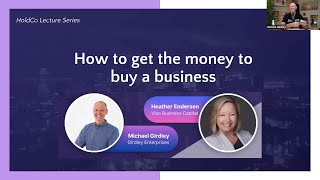
Michael Girdley and Heather Enderson break down how to finance a small-business acquisition, covering personal savings, SBA loans, seller notes, and investor equity. They walk through a $7 million deal example and answer questions on HELOCs, the ROBS program, and what happens if an SBA loan defaults.
Chapters
Heather, thank you for being here.
Thank you for having me. This is fun.
Yeah, so this is the first— well, this is the second one of these that we've done, but the first one with a co-host. So do you want to give like a 30-second introduction of yourself and then we can get going?
Absolutely. I'm Heather Enderson, spelled E-N-D-R-E-S-E-N, uh, and I am the owner of Viso Business Capital, and we are a loan brokerage for SBA loans specifically to acquire businesses. So check us out at visocap.net. And we also have a Zoom call that we do every 2 weeks when you want to get really into the nitty-gritty details about using an SBA loan to acquire a business.
Right. Okay. Well, cool. And I'm just going to assume everybody knows me. If not, you really don't want to. All right. So today's topic is how to get the money to buy a business. We've changed the title like probably 4 different times, but it's basically like you want to buy a business and you don't have the money or you don't know where to get the money. That's what this talk is about, and we're going to be very high level. This is good for beginners, but we're going to have lots of time for Q&A. And so just like last time, encourage folks that are here. The reason we do these live is so we can do the Q&A and have it be part of the content. And then we record all this and we'll have it on YouTube so you can watch it later if you want to. But I encourage folks to type questions in and then, Ty, you're going to moderate those and help us do that. Or how do you want to do it today?
Yeah, just throw in your questions and I'll just be flagging them. For Heather and Michael as they come up, and we're going to try to do most of them at the end. But if there's anyone that's like super relevant at a time, I'll cut in and let you all know.
Right on. All right. Well, thanks, everybody, for being here. Let's get going. Let's see here. Okay. First slide, mission for today. I think if you found out about this on Twitter, you will see this same, the same agenda. We're going to go through these. Each one is basically one or two slides. Heather and I will tag team on these. While answering your questions through it. So basically the idea of today, after 45 minutes to an hour that we spend together, is you should leave with a basic understanding of how to get the money to buy a business. So there's lots of different ways to get it and there's lots of different ways that can all come together in order to go acquire a small business. And so when we talk about business, we're talking about a $50,000 business or maybe a $5 million business or maybe a $50 million business. These principles all tend to apply around those things. So we'll talk about types of funding sources, where to get equity. We'll talk a little bit about what equity is, investors, debt, deal sizes, multiples, deal structuring, the end goal of all this, SBA borrowing, of which Heather is an expert, the processes and some tips around that. We will have one slide of us promoting some of the other stuff Heather and I do, and then we'll have Q&A at the end. So that is what we know and we'll keep moving here. All right. So let's talk about funding sources. So funding sources are you want to put together the money to go buy a business. So let's say, for example, you're going to buy a lawn care business from somebody, which I would not recommend. But let's say that's going to cost $7 million. Well, there's different places you can go get those dollars to go acquire that business, right? Your seller wants to be paid. They don't necessarily have to be paid all upfront when you buy the business, but they will want to be paid. And typically they're paid in US dollars here in the United States. In other countries, you can do your own thing. I've heard, Heather, I don't know if you've heard of it, Canada actually has their own money as well. It's great.
I didn't know that.
Yeah. So that's your first joke for lunchtime, guys. So sorry. So types of funding sources, obviously there's you, right? Right. A lot of times the way people end up finding the money to go buy a business is by money they've saved and they have in their own bank account. So pretty straightforward. There is an asterisk, I would say, next to you, which is also like friends and family or like your parents. There's a lot of people who get their start buying a business. They get money from granddad or mom and dad. There's no shame in it, but it does happen a lot. But one type of funding sources is obviously money you have, right? There's another funding source for dollars, which is investors. So these are third parties with whom you're not related. Sometimes you treat mom and dad like an investor, sometimes you don't. But it's another place where third parties come in and provide money to basically help buy the business, and they expect something in return typically for it. There are lenders, and these are people that will loan money who, who expect to be paid back. That's what a loan means. Heather, I'm not sure if you're aware of this, but I found out recently when somebody loans you money, they typically want to be paid back. It's, it's crazy talk, but I am well aware of that one.
Yes.
So yeah, and lenders tend to get lower returns than people that put money into your business and invest in it, meaning they expect and get paid interest, but they want to be paid first and they want that to be done at lower risk. So we'll talk a bit about that as we go through the presentation here. But lenders are another place in which you get the cash to buy a business. And then the last two here I think are pretty interesting and I see get used more and more. Number 4 here, this is called non-dilutive. And I put examples here are grants or customers. And we'll talk a bit about how those work and can be used to structure deals. And then the last is other, of which an example there is the seller themselves, right? Your seller can help provide— can provide ability for you to make a deal work by agreeing to things such as an earnout. And an earnout is where the seller agrees to get paid over time after the purchase of the business and they get paid based on the performance of that business. And there's lots of ways that that can be done. So, all right, Heather, anything to add to this slide? Otherwise we'll move on to the next one.
No, we're going to talk more about investors in another slide. So definitely we'll touch on that.
All right. Cool. I would say Ron asked the question. I would say let's save that one. Tie for when we get to the, the SBA stuff. That's a good other question.
Yeah, for sure.
Cool. All right. So, you know, as you go acquire a business or buy a business, here's an example. I talked about our $7 million lawn care business. That's a total example. I don't think anybody should pay $7 million for a lawn care business. But if you do want to pay $7 million for a lawn care business, I will start one and I will sell it to you. So just, you know, DMs are open. But so in the end, when you put together the purchase of a business, you end up with this thing called a capitalization table. So basically you capitalize the business and you're able to pay for the things that you need to buy it, to buy out the seller and own that business yourself. Right. So funding types there, let's say in this example, we put together $7 million. The math here should add up to $7 million. It happens at closing. And so you have debt, for example, in this case we use an SBA loan. We'll talk about those types of loans here later in the presentation. Here we use the seller note. So that's where the seller provides a loan to the business and they agreed to get paid over time for $500,000. There's equity, which is preferred equity, which in this case the buyer who put this deal together raised money from other people to be investors alongside them. And then buyer equity. This is where the, the buyer themselves came out of pocket for $150,000. So they had $150,000 cash that they had saved up and they put that in there. And here in the case of this particular deal, they got a grant, which we'll talk a bit about how those work. They're relatively rare, but they do happen where people get grants to go buy a business, and those will often come from things like economic development departments or that sort of thing. So there's different nonprofits that do those as well. But so here you have these 5 different types of funding that came together to put together that transaction to buy the business. And now after this capitalization and closing happens, The person who bought this $7 million loan or lawn care business has a business. So cool. Heather, anything to add to this one? Otherwise I'll move on to the next one.
No, that was perfect.
Oh, somebody said FYI. Were they correcting me, Ty, on one of my, one of my explanations?
Our math is wrong a little bit. It was 7.1.
Oh, so, okay, so here's a content creator trick. And you'll see this happen oftentimes. We didn't do it here, but content creators, when they write tweets and stuff, will intentionally leave mistakes in sometimes to get you to reply to them, to get the algorithm to show them more. So pro tip, if you see somebody like me making a mistake, sometimes it's intentional. This time we're just stupid. So we couldn't, we couldn't do math. All right.
Okay.
So let's talk about equity and types of investors. Heather, over to you.
Yeah. So sources of equity. The first one is something that a lot of people don't know exists. It is a ROBS program. So we're saying savings, but what ROBS means is you can actually use your 401 or your IRA money without paying the penalty. Like you leave it in the qualified plan and you invest it directly in the business that you're buying. Um, so we have folks that use that and you get, you basically set up the ROBS through a third-party provider. The one that comes to mind is Guidant Financial. They do a lot of them. But it's a nice way to use funds that you have without having to pay penalty on, you know, the IRA money. Next is friends and family as a source of equity. As Michael mentioned, yes, sometimes your family members have the money and are willing to put it into the deal. I will tell you, it's— as a lender, from my perspective, it's not my favorite source of equity. It's a fairly— it's a totally fair one to use, but there's another one that I think is maybe a little bit better, and that is actually investors. Actually, the next two I think are actually better for de-risking a deal, and that is investors and seller rollover equity. So the seller doesn't have to sell 100% of the business. They can sell you 80% of the business or, you know, 85% or whatever it is, and they retain an ownership percentage and maybe stay involved. Maybe they change their role to more oversight than, you know, hands-on, but having their involvement sometimes is really you know, something that de-risks the deal. You do have to be careful, I think, with rollover equity because you're entering into a long-term relationship with somebody that you don't know maybe that well. So you have to be careful about that. So when we talk about investors, the types of investors, so high net worth individuals, you know, a lot of them have family offices or they're just lending directly. They want to diversify their portfolios and the space, you know, of lending or investing in small business acquisitions is pretty hot as an investment vehicle right now. So there's a lot of interest. There's a lot of individuals out there in all kinds of different networks. There are platforms you can go to to find these individuals. So you've got high net worth individuals just sort of doing it directly. You've got what's called a family office, which is what a high net worth individual or a group of them might put together, a staff and a team to invest their family money. And they'll often want to do these types of investments. And then there are investment funds now that, that lend or not lend, but invest into these small businesses on a fund level. So they raise money from a lot of different investors and, and then they select the deals that they'll invest in and set the terms, you know, for the investment itself. That's what I find really exciting is in the last, you know, 8 years, the, the amount of investors and the dollar amount of investment that is chasing small business deals has grown exponentially. It just wasn't there 10 years ago like it is now. So it, it, there's all kinds of different ways to find the investment money. And then finally, the last one is serial small business investors. These are kind of my favorite personally because they're usually folks who have bought a business or even founded a business and maybe sold it, and they're back in the game because they love it. And they, they often are very good investors because they mentor you and they, they not only mentor you after you buy a business, but they, they really talk through the deal points with you and help you structure and they become a real team member with you. So I really love them as investors. Those are the reasons I don't like friends and family as much because often they don't have that kind of experience. They don't have that ability to mentor you. And I like what I call value-add investors a little bit more for de-risking the deal because they add that mentoring value and helping you put the deal together. Anything to add, Michael?
Yeah, I think it's super good. I was going to add also there's kind of a risk trade-off with a lot of these folks. And by that, I mean, like, if you take money from, like, Cousin Jimmy, right? And you lose cousin Jimmy's $50,000, like Thanksgiving's got the potential to suck for the next couple of years, right? Like, so there's kind of a trade-off there. There's also with like, say, high net worth individuals, if you're dealing with like a, like a dentist, right? They're kind of classically the worst investors these days. Like potentially you run risk that they're just going to be crazy investors because they're not professionals. Whereas family offices, like they've professionalized it, the investment funds, they professionalize it. These are like people that do this 24/7 and you have a like a trade-off there. Look, the trade-off is investment funds and family offices. They have a higher barrier to want to invest in a deal. So it's going to be typically harder to get the money from them. But, you know, when you do, you're going to be happier about it because they're more professionalized.
Mm-hmm. Good points. Yep. Okay.
Oh, one thing we should talk about, I realized, like, We should just make sure everybody understands what equity is. Equity is like ownership in the business. It's like stock or LLC interest. Like it's actually— there's a corporation that, you know, when you buy a business, it has this new corporation and people own shares in it. That's what equity is. You own shares in these businesses. There's different types of, of equity, but it's own— it's straight up ownership and it typically sits behind debt. Debt gets paid first when, when, when you liquidate or sell a business. That's why they take lower returns. And equity is the ownership that sits behind it.
Yep.
All right, let's talk about— well, okay, so we talked about equity. Let's talk about debt.
Okay.
I'm supposed to start talking. Listen, are you talking?
I think you're going to take the first one.
Okay, cool. Yeah. So basically we just want to give you an idea of, okay, so people will lend you money to go buy a business. Who are the types of folks that are in the universe of potential folks as you think about putting together a deal? And the way we did this was we actually listed it in who is order of least likely of wanting to own your company. And when Heather gets to the bottom, she'll talk to you about how there's people that are commonly called like vulture lenders. They are scary people. You want to stay away from them. At the other end of the spectrum, there are folks like— I listed this because it's a relatively new thing— these nonprofit community lenders. So we have one here in San Antonio called Lift Fund. They discovered decades ago that typical banks were not lending to underserved communities. So they will do things like do loans to help people start small businesses or help people buy small businesses that are more focused first and foremost on developing that underserved community and secondarily getting a return. So they do those types of lenders. So if you're part of one of those communities, you can look around and see if there is somebody that is kind of tailoring to that. And they're usually nonprofits in this type of lender, but it's still a business. They're still lending money and they do expect to get paid back someday and they do charge interest. It's just not their top priority, unlike some of the other folks.
Yeah, and, and I add that they're CDFI. That's a, that stands for Community Development Financial Institution. There's this whole network of CDFIs all over the country and they've got missions kind of like that. They're, they're supporting the community, uh, and they make loans and some, sometimes they even make small SBA loans and they will do that for acquisitions as well. Uh, but they'll be on the smaller side, and again, all about the community benefit from making the loan. That's, that's really what drives them to do it. Next bullet point is, of course, my favorite, SBA. And I think probably the most prolific source of debt in this space, small business acquisitions anyway. So it's a great program. It's, you know, you can get a loan up to $5 million. There's a few lenders that will actually go a little bit above that with their own conventional loan. It is very simple. It's 10 years. It doesn't have a lot of requirements on you personally. You, you do have to personally guarantee it, but you don't have to have a lot of net worth or the net worth to back it up. So it is, it is a very popular source. It is actually not from the government. It is the— what happens is the banks are, are getting risk protection from the government, the agency SBA, and they are— the banks are actually making these loans to you directly. So that's, that's a big source of funding in this space, a growing source. And then there's Main Street banks. So this is like your local community bank that might make a loan that's not an SBA loan. And, you know, maybe they're not going to require the same things that SBA would require, or maybe the deal just wasn't eligible for SBA, but, but it's still a good deal and the Main Street bank will do it because it's local and because they know the business and they can underwrite it a little bit better that way. So Main Street banks are a good source. Sometimes I think that, you know, the far fewer deals are actually funded there in the Main Street banks, you know, without SBA. And I think most are actually funded with SBA. And then I know, Michael, do you want to take the customer point?
Yeah, this is a relatively rare thing, but just want to talk about how it is something that happens. I have had friends who have bought businesses and say that business has 2 or 3 very large customers there. And those customers are very interested in seeing a business, say, that's distressed or not doing well or doesn't have some transition plan, that the customers have been part of that process of lending money to make sure the deal happens. And sometimes they've done that as, as equity investors, but sometimes they've been like, hey, we're going to loan you money to be able to do the deal. I've seen it happen with startups as well, where, where customers will go in and say, okay, well, we're going to We're going to prepay this stuff and we're going to treat it as debt on the, on the paperwork. But we're going to do that because we want your startup to succeed. So startups can be also part, or the customers can also be part of that lending process.
All right. And then the private lenders, like Michael said, this is, this is where it gets a little tougher. You probably aren't going to go to them if you can qualify for any of these other vehicles for debt because their terms are going to be a lot tougher. They're going to have a much higher interest rate. They, a lot of them are SBIC funds that do what we call mezzanine lending, but basically they're non-banks. And some of them are private debt funds. And they, because they're not a bank, you know, they have to charge more. They don't, they're not depository institutions. So their, their capital structure is very different. But they can sometimes stretch and do things that the cash flow lenders or the banks just can't do, such as software deals where the deal really needs to be structured around annual recurring revenue rather than cash flow. These are the types of lenders that might step in and do those kinds of specialty underwriting situations, but they are, they can be aggressive, as you said, Michael.
Yep. Yeah. And I had a buddy who had an $80 million a year business. He went and borrowed $10 million from a lender who was a private lender like this. And those people were in the loan-to-own business, right? They, they crafted the loan to him that he was likely to become in violation of it. And the second he did, they came in, kicked him out and took over the company. So they got an $80 million a year company for $10 million. So that's, that's why, you know, to me, like once I start to deal with kind of private lenders and folks that are not Main Street regulated banks, I start to like it's red flags for me because I know a lot of those people are in the loan-to-own business and it's kind of scary. So, so, Heather, there's a couple of questions. Maybe we take 2 seconds on it or one comment. So Leonardo said there's 1,400 CDFIs nationwide. He says to look at them. Oh, and then it disappeared. But yeah, he said there's a bunch of them.
Yes, there are a lot of them and some of them specialize in certain industries. I mean, it's a huge network of them. Absolutely.
Uh, and then we do have somebody who is a Canadian, uh, who is curious about Canadians being able to loan— to get loans to purchase US-based businesses.
They can't use SBA unless they have a 51% ownership that is either a US citizen or a green card holder. So, um, some folks figure it out in their cap table to do that, but if you can't do that you're unfortunately not eligible for SBA and you'd have to look at Main Street banks. And there is a program in the state of California that's a state guarantee program. So if the business is in California, they don't have the citizenship requirement. They would, they would work with a visa or something like that. But it's your, you lose one of the biggest sources of funding, of debt funding in the SBA if you're not a US citizen or a green card holder.
Or there's just a crazy option, which is try to become an American. Hey, all right, we'll keep moving on. Sorry, not funny to our global friends. Okay, so one of the things we want to talk about is this slide, which is kind of like, okay, how does fund— how do businesses tend to get funded at different sizes? So Heather, maybe want to talk kind of through this, just give people an idea. Because I know sometimes people are like, oh, I come and do a $200,000 deal. I'm going to go hire a business broker. And it's like, well, no, it's not going to work.
Exactly. So that the term EV here means enterprise value or purchase price, however you want to think of it. But those, that's the vernacular is enterprise value, just as the purchase price. So if you're buying a business where the price is less than $250,000, like Michael said, you're not going to get anybody working on that for a loan. That's too small. It's, there's no way a bank could make money doing doing that kind of, you know, it's a lot of work basically to do a business acquisition loan and they can't get paid enough on these really, really small deals. In fact, most SBA lenders have a minimum size of about $350,000 to $500,000 depending on which bank you talk to. So if you're going for something this small and there's nothing wrong with that, you need to find funding that's not gonna be bank debt. So your savings or personal debt, like you could potentially use a home equity line of credit and draw it down, find some other way to borrow personally That's the best way for something really small like this. Next is like, this is the, the, the place that I play in, the under $7.5 million enterprise value business or purchase price business. And this is the vast majority. I would say almost all of the deals that are done that are traded in this size are funded with SBA, some cash from the buyer or the person who's going to be giving the personal guarantee on the, on the SBA loan and some cash from investors. We're going to talk more about investors in another slide, but it, but it again, that's a really interesting point that we have the ability to bring in these investors. It doesn't have to be your own savings. You just have to put some money in yourself and then you can bring the investors in for the rest. SBA loans only go up to $5 million. So that's the reason sort that this is sort of the, the cutoff here of under $7.5 million of purchase price. Now when you want a company that's larger than that, You've got banks that will do conventional loans, and you've got investors that are interested in that space. Conventional debt for these size deals is, is actually very much more difficult to get than an SBA loan. SBA loans are sort of homogenized because there's this government program and there's these rules, and obviously the banks have this risk protection from the government. And so it's just a much easier process to raise debt with SBA. When you have to go for conventional, it is fewer banks, far fewer banks that you're going to be working with, at least on this size level, and they're going to require a lot more equity. They're going to have covenants in their loans. It's a very, very different prospect once you're at that level. But obviously, there's some great companies that are worth more than $7.5 million, and so this is generally how they're funded. And then finally, when you're way up there, up the food chain at over $75 million, then you're talking about institutional funds and investment banks that would be the source of, of funding there. Anything to add, Michael?
No, I, I, well, I think the only one little thing I would say, and some of this is, you know, I made this slide, I think, was the, the less than $250K EV. Sometimes money comes in from investors, so there's no like hard and fixed rules here. I think we're just trying to give an idea of how it typically works. So sometimes it comes from mom and dad, and, or if your parents are really rich, sometimes your $75 million deal, uh, could be money from mom and dad. If you have that kind of rich parents, kudos to you. All right, so let's talk about, uh, the tools that people have to put together a business purchase. The tools, the tools to come up with money.
So you could go all equity, of course, um, and, and I've certainly seen deals that did, uh, some of reasons people might want to just not have any debt at all is they, they know that they're not going to have the cash flow to pay back the debt, or they're going to use the cash flow to grow, you know, just, just invest it in whatever they're going to do to spend on to grow. There's times when it just doesn't make sense to have debt in the cap table. And if there's significant growth opportunities, this is where you tend to see maybe 100% equity going in. The more common is the, is the debt and equity structure, right? So, um, your typical SBA deal. So when you're talking under that $7.5 million enterprise value, your typical debt and equity, uh, structure is going to be, let's say, 10% equity, uh, 10% seller note somewhere in there, and, uh, 80% SBA loan. That's, that's a very common structure. You could even do less equity. You could do a special kind of seller note that's on standby and even do less than 10% equity. If the multiple on your price is on the lower side. So that is very common. That's, I think, you know, what I certainly what I see the most, but maybe that's because of what I do. And then, of course, this one, cash flow and profit share. I'm going to let you take that one, Michael.
Yeah. So that's some stuff like using— so let's say a seller says my number is I want to get the $7 million that we came up before, and that's using things like future cash flow percentages or profit shares as a way to make that happen. So you could do things like, for example, say like, say like, okay, well, here's what I'm going to do. As part of this, you're going to get 50% of the cash flow for the next 3 years after we, after we finish up, right after we do the transaction. So they get like a profit share, you know, cash flow as a proxy for that. Or you could just say, hey, I'm going to give you 10% of the profits. For, you know, for 3 years after we're done as an additional kind of earnout or ability to create value for the seller. But it's not money that you have to come up with at the time when you buy the business.
Okay. Understood. And then there's royalty or seller notes. So, you know, the seller, as we talked about earlier, could be part of the debt and they could be all of the debt. I've certainly seen deals where a buyer was able to get the seller to carry the whole thing. They give them a little bit of cash, they bring in some equity, and they let the seller carry the note on the rest. Sometimes the seller might even want to do that if they're doing some tax planning. Other times they do it because the debt, the ability to get the debt is, is, is too difficult, whatever the circumstances are. So sometimes the seller will fully fund it. What did you mean by royalty here, Michael Girdley?
So cash flow profit share is like a way of structuring earnouts where the seller gets paid on profits. At the— from the bottom line. And then royalty or seller notes are where the seller gets paid from the top line. So royalty is you could go to— you go to a seller and say, okay, well, like you want $7 million total, I want you to put your money where your mouth is. I'm going to give you 5% of the cash that comes in the business before any expenses in the next, you know, for the next 5 years or whatever. Right. And so that's a way of doing that. That often gets done with, with assets. So there's a whole marketplace where you can buy and sell actually like royalty rights. For things like songs or patents and stuff like that. Seller notes are kind of in the same bucket as royalty, which is they get paid from a top line typically, right? Cash comes in the door and the seller gets paid their note before— doesn't matter what the profit is in most cases there. So it's just kind of the difference there is it's an earnout or a structure in which the seller gets paid. Cash flow profit share is from the bottom line, taken off, taken depending upon what the profit is. And that's in your favor if you can structure that one. As a seller, you want to be paid from the top line because I don't give a crap if you're making money or not. I just want money. So royalty or seller notes are just different ways of getting people paid, but not at closing.
Right. Got it. And of course, there's preferred equity. So preferred equity kind of, it looks a little bit almost like debt in some cases, because the investors are going to, the preferred investors are going to be sort of a separate class of stock investors, and they're going to get a certain coupon or return, or like, almost like an interest rate that doesn't have to be paid like debt. It doesn't have to be paid out every quarter order every month, but it accrues and it kind of builds up. And that, you know, kind of juices those preferred investors' returns. So a lot of times when you're bringing in investors into the deal, like the professional type of investors, not the friends and family, they're going to want to structure their equity as preferred equity. And that's— it's very common. It's a great way to go. And then of course, obviously, you can do a combination of all these things. And often there is like— what I do, I see a lot is is debt and equity with preferred equity and seller note. You know, all 4 of those will usually be in a typical SBA deal that I would work on.
Rob, I have a question that I think is relevant here. It's cash flow, bottom line calculations can be manipulated by business needs. How do you structure these so there are no surprises? Any thoughts there?
I have a joke I can throw in before Michael answers it.
Go ahead.
I heard an attorney tell this joke, so I can't take credit for it, but he said earnouts that that are structured around EBITDA or bottom line are just deferred lawsuits. So to your point, yeah, exactly.
Yeah. I mean, to some extent, that is exactly the, the reason that, you know, if you're going to do it and the last line here is have tax and legal folks in there, like if you're going to do it, it has to get defined and written down really well to avoid to avoid problems in the future. A number of ways people will do those, for example, if they are going to structure them, is they do them based not on EBITDA or on NOI, net operating income, which are kind of book definitions of stuff that can be manipulated. As you say, they'll do it based on dividends above a certain amount. So say, for example, I've seen structures where, say, somebody invests in a, in something and basically what will happen is, is the investor or the seller in this case would get 50/50 profit split by 50/50 of split of cash distributions for some period of time until they get all their money back. And that has to get defined like, okay, well, what does it mean? What counts as salary? What counts as money coming out? Anyway, long story short is like it can be really problematic and ultimately comes to this like next thing we really recommend is if you're going to buy a business for the first time and it's like the only time you're ever going to buy it, you want to have experienced like advisors working for you that— and especially a lawyer who's done these types of deals before and knows what market is and knows where the pitfalls are. And that's, you know, ultimately how you kind of avoid those lawsuit situations or avoid doing it at all if it's not going to be something that, you know, can turn out positively for everybody. Yeah.
Yeah, just for sake of time, I encourage us to keep moving because there's a lot of SBA questions lined up in the Q&A that we'll want to get through.
Yeah, let's move fast and then we'll get to these. So look, the end goal is really what matters here. And, you know, to some extent people expect in a talk like this, first, we'll be like, okay, this is how you buy a business and this is how you always structure it. And it turns out like the situations are so different and it all starts, for example, If your goal is to hold a business forever, you're going to structure it differently than if you're planning on selling it 5 years from now. And that, like, if you're planning on selling it 5 years from now, that structure of what you're going to use and how you're going to treat the business actually differs by what industry you're in because different industries get treated differently from a tax perspective. So those are all important. And again, like, that's why having like a deal lawyer who's worked with you through this process, who's— who does buying and selling of small businesses or large businesses all the time and help you— can help you can think through structuring it and protect you through that process is really important. And like what your end goal is and how the parts get put together, it's a creative exercise and you really need somebody who's experienced in your corner, especially if this is your first time buying a business and especially if you're— this is your first time buying or selling a business and the other side has done it a ton of times because they know all the ways to screw you and you need a lawyer to keep that from happening. Yeah. All right, let's talk about the SBA.
Okay, what is it? It's a, it's a government-guaranteed loan for small businesses, and it can be used for a lot of things besides just buying a business, but we're talking about buying a business today. So it's a, it's the, the code that it's under is 7. That's why we say that. Uh, and a bank is basically getting 75% of the loan, uh, covered by the bank or by the, uh, by the government so that if there ever was a loss, the bank would only take 25% of the loss. It doesn't affect you and your personal guarantee. A lot of people think it does. That does not. It only protects the bank. But because the bank is protected, they're super excited about doing these loans, and we have lots of lenders out there to do it and lots of competition. And so we all benefit from that. When do you use SBA? You know, first of all, it has to be the right size deal. We talked about that already, generally under $7.5 million of enterprise value. And when you're, you know, ready to sign up for that personal guarantee, that's kind of a big consideration about whether whether you're going to use it or not. Why is it great? Gosh, it's great because the equity requirements are so low. As little as— I've actually helped a client close a deal with only 2.5% cash equity, and the other 7.5% was from a seller note. So it's great because of low equity. It's great because it's a longer term. It's a 10-year loan versus 5 or 7 that you might get without SBA. And it's great because there's no covenants. You can, you can invest in growth of the business and not worry about being in default like you would in a conventional loan. So those are the reasons that it's great. What are the trade-offs? Well, the trade-offs are primarily the personal guarantee and the rules. You have to structure a deal within the rules of the SOP, which can be, can be restrictive. They, they take away some things you might want to do like a true earnout. You know, that those can be tricky with SBA. and you know, your personal guarantee is obviously a lot on the line with, with your personal guarantee. You also have to sometimes pledge real estate as collateral. So that can be something to consider. And, I get to do my little plug here. So, SBA loan brokers, that is what I do. So we help our clients match their deal to the right bank. Um, and not only in terms of the deal structure, but also in terms of getting the best terms and pricing and service, and it's all paid for by the bank. Banks. It's a beautiful thing. So we get basically a free debt coach, a free deal team member, then, and we go to over 30 different banks for you. So that is what's so exciting about SBA.
All right. Okay, let's do this slide about process, and I think we should do the Q&A really quickly about, about the SBA stuff. Look, I think this is the one message I think you should have around this is a lot of people try to go line up the financing to get a deal done before they find a deal. The hard part is to find a business to buy. Like, like, so what I encourage people to do is focus first and foremost on finding something they want to own and something they want to do, then go put together the debt and equity. But the key thing is you need to understand what is actually practical for you, right? Let's say you don't know anybody that wants to invest in you buying a business. For some reason you don't qualify for an SBA loan and you have $10,000 in your bank account.
Account.
Okay, you should not go try to buy a $10 million a year business. Like, that's just not going to work. So that's where, you know, understanding and listening to a talk like this of kind of understanding what is financeable and doable, listening to Heather around SBA stuff and becoming a student of M&A and buying businesses and what you're doing today is a great thing. Then the focus really is finding a deal. And then once you have a good deal, like, debt and equity is relatively easy to get. You can see how the SBA makes it pretty straightforward for folks like ourselves who want to be entrepreneurs and buy a small business from a seller. Like, it's all there. And then, then that's when you go through the process after you have the right lawyer involved and finish your diligence, and then you buy the business. So this is a massive simplification of what the overall process looks like. There's lots of good books out there that we recommend, and we can talk about some of those in the Q&A if that's helpful for people to really get into the nitty-gritty of buying and selling and how the process works. But the one thing I wanted to share with you is like like the hardest thing to find these days when there's tons of money out there and assets are expensive is finding a deal that's going to work at a price you can make work, right? And so that's what I tell people, like, understand the landscape of stuff, then go find a deal, and then the rest of it is relatively easy. But you just got to find a good deal first.
Mm-hmm.
Cool. Do you want to talk— I guess I just set you up for talking about these other things, that ways people can get up to speed on—
Yeah, yeah, the HBR guide. This was like, to me, the original Bible of buying a small business. It's written by two Harvard professors, Rick Rubach and Royce Yudkoff. And I, I'm actually going to be on their new podcast coming out pretty soon. So check out, you know, be on the lookout for that. They are great and they wrote the Bible, I think. Now then, Walker Deibel came back, came along after them and wrote a really great book too, Buy Then Build. A lot of people really go by that one. It's, it's very, very helpful as well. Twitter, who knew? I didn't know a few years ago that it is a fantastic place to be. If you're interested in this topic, because there's just people on there that are experts talking about all kinds of stuff relative to this all the time, and you can learn a lot. Brokers and experts, you know, I help educate my clients. We do a special Zoom call. If you go to my website, you can sign up for it. And experts, you know, vertical experts, industry experts, there's all kinds of people to talk to about this space, people who have bought and sold a business, and most people are very willing to speak with you. Shopping for advisors. This is a kind of a sneaky one. As you kind of put your deal team together, like, who's going to be my lender? Who's going to be my lawyer? Who might I use for Q of E? You're going to interview all these folks. And in those interviews, you're going to learn stuff. You know, you're going to be asking questions and you're not just interviewing for the best lawyer or the best Q of E provider. You're learning stuff in all of those interviews about what you should be doing. So definitely take advantage of that. And and, you know, ask dumb questions. There are no dumb questions, right? Or I feel like I've asked a few dumb questions, but maybe there aren't any.
Well, I think people go into this and if it's your first time, like, don't be afraid to look dumb, right? That's, you know, that's— you can have a lot of bravado and false confidence and it'll cost you a lot of money. So it's just people want to help you and, you know, be okay asking dumb questions.
Yeah, cool.
Okay, we promised only one slide before we get to Q&A of us promoting, uh, stuff. So I'll do mine and then Heather, you should do yours, and let's do Q&A. Uh, so I am partnering and becoming part of the Holdco Conference, which is a conference that's been done for a couple years in Cleveland. I encourage you to check it out if you're somebody that wants to learn how to incubate businesses, wants to learn how to grow businesses, wants to build a portfolio of businesses. That's what holdcoing is about. We have a conference for you and we're moving it Cleveland to the mountains of, of Utah. We're going to be at the Sundance Resort. It's going to be a small intimate conference done with total badasses with great speakers and it'll be next year. So we'd love to have you please join us and check it out. So yeah, oldcodeconference.com.
Cool. And my business, Viso, Viso Business Capital, come to our website visocap.net. I also have a blog post there about the default rates for SBA acquisition loans. A lot of people are very interested in that data. Check that out. We do free pre-LOI debt consultations for our clients. So, uh, we educate you, we give you the templates to understand kind of how to prepare, and, um, we will do that for our clients. So check that out. And we also have software to help you model the deal and answer all the questions that lenders are going to ask. So please come to our website and then maybe come to one of my Zoom sessions. I do them every 2 weeks where I go into the details on what it takes to qualify for an SBA business acquisition loan.
All righty, let's, let's dive into some questions. I've got them queued up. Ron at the beginning asked, I'm planning on using a HELOC on my home to use as a down payment for an SBA finance business. What are the pros and cons of this? Thank you.
Yeah, so the SBA does allow it, but there's a little underwriting nuance. They make the bank prove that you have some other income to repay that payment, that HELOC payment. So it adds a little layer to your underwriting at the bank if you're doing it that way. There's another school of thought which says just draw down on it, put it on your personal financial statement in your bank account, and maybe the bank won't realize where it came from. You know, I don't know which was the best way to go, but that's the only nuance to it.
Got it.
The next question from Daniel was, can you buy a foreign business with an SBA No, I mean, technically you could buy a SaaS business that's, you know, doesn't have US tax returns. But the reality is there's no lenders that want to do that the way the rules and process work. I would just say no, it really doesn't work.
Got it. Can Daniel ask, can you elaborate a bit more on the ROBS program? Who again offers them?
Guidant Financial. Check them out. They're the— I think they're the number one providers. And they set up the legal paperwork. It's an IRS allowed— and I'm sorry, I don't remember what the ROBS letters stand for, but it's within the IRS code that this is allowed. And you're basically taking your 401 or your IRA money instead of investing it in stocks in the stock market, you're investing it in small business stock, the business that you're buying. That's the extent of what I know, though.
Got it. So this might be a tough question to answer, but an anonymous attendee said his tax advisor is now telling him that the IRS hates Rob's programs and recommending that he takes penalties for early distributions. And he just basically asked, does he have an out-of-touch accountant/tax advisor on that? Have you heard anything?
Maybe because guidance is a pretty good source and they're still doing lots of them. I think there's an issue. You can go kind of down the rabbit hole and see. I think if the business didn't perform well, you could get stuck with penalties then, like if you had to unwind it. It. And I think that's sort of the downside of it. But to my knowledge, you know, I think, I think maybe the IRS doesn't like it, but they allow it. I always find that funny because people do that in the SBA world too. They say the SBA doesn't like something and it's not in their rules. So I mean, if it's not in their rules, what do we care what they, you know, whether they like or dislike, I guess.
Got it. And this question got brought up multiple times. Are interest rates between an S like, how different are interest rates between SBA loans and conventional loans?
They're roughly the same, to be honest. What's interesting right now about interest rates is there's a very big gap within SBA from the lowest rate lenders to the highest rate lenders, and it's all based on how they perceive the credit risk of the deal. But when rates were low, it was very, very minor difference between the best quality SBA and the, and the worst. And now it's about 4 points different. So a bigger, bigger gap based on, you know, what your deal looks like to the lenders. And that's one of the advantages also of working with us, is we help you find the best rate that you can get for your particular deal.
Got it. Someone else asked, uh, when we take money from investors, do we have to give them equity, or could it be treated as a loan?
Well, if they're, if they're investors, it's equity. Uh, if they're otherwise, they're lenders. Um, you, you could go get private get Artie's to make you a loan. I suppose it's very rarely done because that's not the kind of returns that investors are looking for. They're looking for those equity returns and taking the risk sort of that way. So, but it's not impossible. You could do it that way.
Someone asked, I'm considering using a buy-side M&A advisor to help me find a business. My understanding is that my retainer I pay them can go towards my equity injection for the deal. If I'm responsible for the layman fee at close, does the SBA allow me to overfund the deal to pay that fee, or how should I be looking at that?
Yeah, I think that the SBA limited— it depends on how you structure the retainer. If it's a success fee, I believe the SBA limited that to $30,000 of success fee that could be included in an SBA loan. So check that out, that you might have a nuance there. Otherwise, probably you could include it in the deal as long as the cash flow was there. It's a transaction expense. And if you can document it, you should be able to include it.
Got it. Renee asked, if you don't own a home, does it complicate the SBA loan process?
It doesn't complicate it. It just changes where you fall on the risk spectrum. So if you come to one of my Zoom sessions, I'll show you a graphic on that. But, you know, we do SBA acquisition loans for people who don't have real estate collateral all the time. They just go to the lenders that charge a little bit more in the interest rate. If you have real estate, you're probably going to pay less less interest rate than you are if you don't, but it doesn't complicate it.
Got it.
Someone asked, does the HELOC actually protect your home slash equity?
It could. So the, the SBA SOP says if your house is levered at 75% loan to value or more at the time that you're coming in for the SBA loan, it's not what they call a worthwhile collateral. So the lender does not have to take it. The lenders could still opt to take it. So that's, that's their choice, but they usually won't. So if you have a HELOC and you can lever your home up above 75%, that's a strategy some people use to avoid having to pledge it. But again, it will change your interest rate. You don't have real estate collateral in the deal. You're going to end up paying a little more interest rate. That's the trade-off.
Robert asked, have you seen crowdfunding used to raise the equity piece of an SBA deal?
I have not seen that. I think that would get really tricky when it came— comes time to verify the equity injection because you have to get 2 months of bank statements and information on every single investor. So it would make for a crowded cap table. I haven't seen it done, but maybe someone's done it.
Craig had asked back to like the hypothetical cap table shared earlier, what would be the buyer's ownership percentage?
Hmm.
That is totally something. Oh, in that case, or that particular one, I think so. That's what it is. So I think it's important to know that cash and ownership don't necessarily go in pro rata, right? If somebody puts in $3 as an investor and you put in a dollar, that for a total of $4 to buy a business, that doesn't mean they own 75%. That's something that gets negotiated. If you— let's say hypothetically in this case, the buyer, the buyer just did it straight up based on dollars going in. The buyer would own like 7% here. The reality is most deals don't get done that way. You would do something where there is, you know, a different set of common shares or a different set of ownership or a different price for these common shares paid, like in order to make sure the buyer his or herself owned more of the business. So for example, you could structure it in a way where the buyer, if he was able, he or she was able to talk investors into coming into the deal and they were willing to pay $1.4 million for half of the business, the buyer could say, okay, well, I'll own the other half for $150,000. So it's all negotiated. And ultimately it's the buyer not only talking to the seller to convince them to do a deal with the buyer, but the buyer convincing in this case case where we have investors coming in doing preferred equity, which is equity that, that sits above the common, which is the buyer's equity in the cap table. So has preference. It's the, it's the buyer also selling the deal to the investors. So you'll see that kind of stuff happen. So short answer is it's negotiated. In this case, could be all kinds, anywhere from 6% to whatever buyer negotiates with his investors or her investors.
Got it. Brandon asked, when hunting for deals, how much of the bottom line going to servicing debt is too much for you to consider?
For me personally, or I mean, so the SBA has rules and the lenders, they have their rules. You know, personally, I like to, I like to be in a situation where I imagine the worst possible outcome I could see, right? So typically when you model a deal, you have like an optimistic outcome, you have your most likely outcome, your base case, and then you have a pessimistic outcome. And sometimes you have like a worse one than that. So basically, like my general rule of thumb is if things go half as good as my worst outcome, am I still going to be okay and get my money back and not go bankrupt? If the answer to that is yes, I'm going to feel pretty comfortable. And that all ties back to what are my debt service coverage ratios look like and all that kind of stuff. That's a general rule of thumb for me, just because the number one rule of thumb in all of this is like, don't lose all your money. And so that's, that's a general place I think about it. Do I vary from that? Possibly. But in general, in general, I'd rather make sure things can go horrible compared to what I expect and I'm still going to be okay. Yeah.
Somebody asked, could you describe generally what the process looks like if a business SBA loan did go sideways? Ways. I know historically a small likelihood, but how do you get things worked out structured with lenders if the worst case does happen, i.e., how likely are they to take your house, etc.?
Yeah, it is, it is not a pretty process, but it's, it's called an offer in compromise. So let's just say you tried everything, you've defaulted on the loan, the bank and the SBA have taken a certain amount of loss after they've liquidated the business assets. And, you know, usually there aren't many business assets to liquidate at that point. So there's this loss. And again, it doesn't matter how much the SBA is taking versus the bank. You are on the hook on that personal guarantee for that whole loss. And you, you go through a process called offer in compromise, and you can Google this and go down another rabbit hole. But basically, it's like a 2-page document where you disclose your assets and you negotiate with the, with the SBA and the bank for a settlement. You settle either a lump sum that's pretty significant portion of what you have, or you settle sometimes for a 5-year pay plan based on what you can earn going forward. So yes, they will. If you pledged your house, they're going to liquidate it. And if you didn't have to pledge your house, but you have real estate with a lot of equity at that point in time, that's going to be on the table in that negotiation too. So frankly, most people sort of figure out it is easier to do this PG, this personal guarantee, when you don't have a lot of assets versus when you do. The folks that do it, that personally guarantee, that do have a lot of assets, they tend to structure the deals really conservatively so that the odds of, you know, anything like that ever happening are very, very low.
Yeah, kind of follow up on that. Jacqueline asked, curious to clarify what personal collateral is required for an SBA if I don't own a home and don't have a lot of investments out of— outside of a 401, like like, and outside of the down payment to buy the business, am I disqualified from using SBA?
You're totally qualified if you don't have real estate, so that you can, you can still borrow and people do it all the time. So I, I think one of the loans I did in the last 6 months for a client was someone who had a negative net worth. They had a lot of student loans and no other assets and they bought a business with an SBA loan. So you definitely can get the loan. If you— the only collateral that the SBA says a lender has to take is real estate. They would never take cash collateral or anything else. So it sort of negatively impacts you if you have real estate equity, you have to pledge it, and the person right next to you might buy the same business without real estate equity and they don't have to pledge it and they still get the loan. The only difference between those two examples is the person with the real estate will pay a little bit lower interest rate and the person without the real estate state will pay a little bit higher, but you'll still be able to get the loan. So that's great.
Rod asked, for a given deal you're evaluating, how many other buyers are you typically competing against? How is that level of competition trending in a higher rate environment? Are there ways to stand out in a more competitive deal other than price? Michael, I know that's something you've got opinions on.
Yeah, actually, we did a whole— back— I did two courses that we did, and the second one was online, was how to find a deal deal to do, and that was one of the big topics was going in strategically, thinking about what's happening with the buyer market and the seller market and all that kind of stuff. And anyway, we still have them for sale, but we're— they're not a priority for us. But if you'd like to buy it, please buy our course called How to Find a Business to Buy. You can find it on my website. It helps pay Ty's salary and he gets really excited because he can take his wife to Olive Garden. Anyway, the— I hope you're laughing at that, Ty. Please don't quit. Anyway, Anyway, you know, in short, there is still so much money trying to chase returns. And part of the reason why doing it, doing and buying small businesses and rolling them up is because people can't get returns in the regular stock market. VC is drying up, PE is getting flooded with cash. Like, so it is still so much capital trying to flood into buying small business. The good news is there's still just a ton of small businesses. It's a long-tail asset class. But because of that amount of capital and the amount of people that see small business entrepreneurship as buying one is a short, short circuit to getting there with a number of search funders and the college programs, it's just going to keep getting more competitive, more and more competitive. You'll see lots of deals, especially the good ones. They will have 100+ people sign NDAs and try to do seller calls. So, you know, for you, that's why, you know, my real recommendation is to try to figure out how to specialize and stand out as a buyer. And so specialization is like say, I'm going to concentrate just on this very narrow niche. I'm going to get very good at this. I'm going to develop insights into this market that other people don't have. And that could be an industry that you say, I'm going to be really good at, like lawn care. Or I've talked to somebody recently who's doing it with summer camps, right? They're just like, they are just going all in on summer camps. You pick that thing, you become really good at it. You can also do it geographically. I've spent time with a searcher who's just like, I'm only doing Napa Valley, which to me sounds pretty get that given it's 100 degrees in San Antonio today. So those are the ways to stand out. And then there's a bunch of hygiene, you know, that's the strategy. Then there's a bunch of tactical hygiene stuff to do to help yourself stand out. But look, the reality is every single good asset is getting multiple bids no matter what's going on with the rates these days. There's just so much money trying to chase return and it doesn't want to sit on the sidelines anymore.
Got it. We probably have room for one more question before we close out. So the last one is do new SBA rules allow you to acquire 51% ownership in a company and have the current owner stay on at 49%? Would you recommend this route for a first-time acquisition in order to get more mentorship from the owner or just buy the whole thing? Would love Girdley's thought on that.
The rules do allow rollover equity now. The problem with the 51/49 is if any one seller has more than 20% owner ownership post-close, they would have to personally guarantee your loan, and they won't agree to do that. So you might do some rollover equity, maybe at a little bit lower percentage, and work out, you know, a way to keep them involved in the business. But I caution you have to really feel very, very compatible with that seller before you do that, because that, from a relationship perspective, doesn't always work out. But it can be a very good strategy, and the SBA used to not allow it, and now they do. So it's a good option.
Great.
Ty, Ty, if you want, I could spend like 3 minutes and just knock out a lot of these ones that are not SBA ones. And then I feel like a great place for folks to go to get their SBA questions answered would be Heather's next call, which is coming up. Is that right?
Yep, in 2 weeks.
So we'll send that out to everybody. But I don't know what you— what do you think, Ty? What do you want me to do?
Up to you. If you want to answer a few more questions, we're at time. So So if you want to like power through and answer some and then we can close it out, that's completely cool.
Lots of—
okay.
All right. Is preferred equity a way to give up a bit less equity percentage in exchange for investors' money to help you go after a larger target? Potentially, yes. Sometimes, you know, the thing about preferred equity is it's preferred over common equity. So it means it gets paid first when there's a liquidation. So it's lower risk, right? Liquidation being a sale of the business or whatever. Sometimes what people will do is also put a preferred return on that equity. So say like there's 10% and they're guaranteed a 10% IRR on their money and they get paid first before you get paid if you own common shares behind them. And then there could be all kinds of different stacks of preferred equity. It's something that's really an option there. But yeah, if, if it de-risks it for people, they will tend to accept a lower return. And so kind of how it works, that's why T-bills pay 5% or whatever. How are preferred equity investors typically bought out, paid off before a full exit? There's different ways to do that, one of which is you can do a return of capital to them. It typically all gets defined in the structure of how that gets put together with your lawyers. Otherwise they just get paid. What the lawyers will do when a business sells and does a full exit or a partial exit is there'll be like a liquidation kind of waterfall of money comes in and it goes to these other people on the other side. Heather, does a personal guarantee need to be equal to the value of the loan?
You're personally guaranteeing the whole loan, but you don't have to have assets to back up the loan, if that's the question.
Perfect. How do you determine what size of company you can qualify for as a borrower?
You know, it's not really by borrower. It's really like, what does your skill set look like? Are you going to be using investors? And kind of back to your point earlier, Michael, it's the deal. You get the LOI signed and it's a good deal. You could be buying a bigger business than you think if you have the skill set and you can get investors to invest. So it's not really, it's not really based on just you individually. It's based on a lot of other factors.
What is the typical percent side seller note you see with SBA deals?
10 to 15% unless there's some hair on the business and then bigger to cover that hair.
How does SBA handle requests for working capital buffers?
Some lenders are better than others at that, and we help our clients get to the right lenders when they need more working capital included in the loan because some banks are not very good about doing that.
Okay, well, I think we're good here. Here. There's a lot of SBA stuff, um, that I would encourage folks. And I'm sorry we didn't get to everybody, uh, everybody's question. What financing am I using for my old co? All of it.
So cool.
Uh, how can— how do we connect directly with Heather Anderson? That's a question from Robert Hefner.
We will be sending out a link to Heather's website with like booking links and all that good stuff. So, and we'll also be sending out the recording here within the hour. Um, so all of that will, will be headed y'all's way.
Perfect.
Awesome. Hey, great job today, Heather.
Thank you. Thank you for having me. Thanks for everybody who showed up. I, I really had fun.
So the next, next one of these, we'll send an email to everybody. Next one of these, we're going to do hire to— how to hire, uh, offshore teams. There's been all the rage lately. So me and one of my co-founders at our offshoring business are going to do that one, and we'll teach you how to do it and not get scammed, which is totally possible because I've been scammed by offshore employees before. So hope to see you guys there. And then hopefully Bill and I are gonna do one, Heather, our podcast co-host. So we're talking about doing one in August, so we'll see if we figure out. Fun.
All right, I'll be there.
Thanks everybody. Thank you so much. Talk soon.
Thank you.










