Lessons From Building a $100m Holding Company (feat. Michael Girdley)
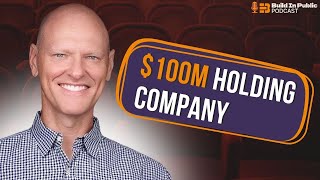
Michael Girdley built a $100M+ holding company overseeing a dozen ventures after growing up watching his entrepreneur father. He credits CEO peer networks like EO and Vistage for combating founder loneliness, and a Silicon Valley stint for teaching him to think bigger.
Chapters
Once again, super thrilled to have Michael Girdley joining us from San Antonio. He's got his hands across multiple industries, as you can tell. He's also a partner at the Geekdom Fund, a seed stage fund, a VC fund that has invested over 50 high-growth tech companies. Who are your favorite business heroes, alive or dead?
Man, so many. I mean, this week you have to be a hero, a fan of Satya Nadella, like Microsoft CEO. Like when we're recording this is the whole like coup they pulled up with OpenAI. Yes. Like, man, you got to— that's— that guy's got to be a hero for sure.
What's your favorite part about being on Twitter?
It is a marketplace for ideas and somebody who wants to live in ideas and think creatively about things. It's super powerful for me. Sam Altman is not some magical technologist. He just knows how to say the right things to the right people at any given time. And he's also not afraid to make sure he comes out on top. Like, that's right. That's some psychology plus some self-confidence. Every great Twitter writer has is a deep understanding of human psychology. And I love that aspect of it. It feels like a video game.
Hey everybody, welcome to the Building Public Podcast. I'm your host KP, and on this show I interview world-class entrepreneurs, ambitious startup founders, creators, and builders on the internet who are boldly building the future in public. This podcast is my excuse to take you all on a curious journey to understand, learn, and hopefully be inspired by the worldviews, insights, and stories of these fabulous people changing the world. So far, I've gotten the rare privilege to sit down with incredible guests like Gary Vee, Alexis Ohanian, Kat Cole, Sahil Lavingia, and many more leaders. So check out the full podcast listing at buildinpublicpodcast.com. Now buckle up and get ready for our latest episode. Hello everybody. Welcome to yet another episode of the Build in Public Podcast. I'm your host KP, and today I am once again super thrilled to have Michael Girdley joining us from San Antonio. I have to say a few words about Michael before we, you know, kick this off because he's got one of the best resumes and accomplishments that I've ever seen. He's been building companies in the entrepreneurship game for over 30 years, and he has a holding company over $100 million in revenue and about 12 companies, like I said, that, you know, uh, that he has under that. I think more often we'll find out today, which include companies like Dura Software, Scalepath, Near, Llama Fireworks, CodeUp School. He's got his hands across multiple industries, as you can tell. He's also a partner at the Geekdom Fund, a seed stage fund, a VC fund that has invested over 50 high-growth tech companies, has a massive Twitter audience, about 94K. I love his content on Twitter. I'm sure you've seen his tweets and his threads, including his, you know, biking photos. Loves to teach and is from San Antonio. As I said, he was born Man of the Year, part of my favorite parts of the— Man of the Year by San Antonio Business Journal in 2015, and also received Geek of the Year award from Geekdom in 2016. I love those parts. So welcome to the show, Michael. It's an honor to have you here.
Yeah, thanks for having me, KP.
Which of the two awards means a lot more to you, Man of the Year or Geek of the Year?
Uh, the Geek of the Year one is cool. I mean, nobody has that one. Yeah, I would have to pick that one. I know, I know I'm supposed to say, oh, they're both very special, but like when you're like Geek of the Year and like, yeah, like that's clearly, that's not a BS award. Like they don't give that out unless it's real. Right.
That's right. You can buy it too. Like especially, right? You're bad of the year. Maybe, you know, you can, you really have to. I mean, I think this kind of is a great segue for us to go into maybe a formative part of your childhood. Um, cause in my next 45 minutes, I want to make sure, um, our audiences, a lot of our audience are tech founders and some of them are investors. Uh, but there's also a big portion of them that are aspiring founders. So you are a perfect candidate because you've, you know, spent 30 years around entrepreneurs. And so I think a lot of your knowledge and insights around the early stages, I think, will really inspire, you know, which is what I try my best to get more people into the arena. So what part of your life story, especially the formative years, what I'm curious here is, you think that led you to consider entrepreneurship? You know, like, was there anything in your childhood?
Yeah, 100%. The thing that was the greatest privilege I ever had was growing up, you know, as the son of entrepreneurs. You know, my dad is an amazing entrepreneur, took a company, in the case of our family business, from just a handful of locations and single-digit million revenue to 10, 15, 20 times that over the course of 30 years. And then I watched him also just be really intelligent and wise about how he was going to evolve into the next phase, which is what he's currently doing, which is retirement, where he's not day-to-day and doesn't, you know, doesn't run anything other than his, you know, his portfolio of stuff. And, you know, I think back on being a kid and everything we did, you know, my dad, my dad had this really great thing where he would be like, look, I want to make every vacation pay for itself. And it was just like a weird thing where he wanted to learn something or he wanted to see a business opportunity or he wanted to develop a connection with somebody that was going to make it to where spending that time on the way to the office was like not only a benefit for the time he got with the family, but he left making making money, creating more value than he expended. And so I had the privilege of really growing up in that environment, and it was huge in terms of demystifying like all of this stuff around entrepreneurship for me.
It's fantastic. You talked about the role your father had, um, on you sort of thinking about creating value and turning your ideas into companies and businesses. You talk about geekdom, you know, what has it meant to you? Like, I'm curious, when did you discover that you were a geek, and what does it even mean to you? Because I feel like everyone has definition. And so I'm curious about that.
Yeah, it's, it's been something that's, I think, had a complicated relationship in my life with me. You know, when I was in my teens, we moved to a high school that I would describe as, you know, very high pressure, you know, very strong social scene. It was an old money part of town. And by the way, I live there now. I just don't participate in anything that they do. But, you know, I think as an early young child, I was always into computers. Like, I wanted to follow my interests. I was curious about all kinds of different things. And, you know, I went to a high school where it wasn't cool to be weird. And, you know, I think it was that type of thing where that gets you beat up. By the way, the '80s were very different than today. It's one of the things I don't think a lot of kids these days or even millennial, you know, folks that are in their 30s and 40s understand. Like, I grew up in the tail end of where literally the first day I went to high school my freshman year, every, every freshman knew that there would be a group of seniors standing near the emblem at the entrance to the high school. And if you stepped on that as a freshman, they were going to beat you up. Like, that went on in the '80s. Like, when I went to high school in 1989, that was still a thing. Like, they were going to kick your ass. Fast Times at Ridgemont High. And so, you know, based on that experience, like, it became a tough relationship for me to adopt being a different person, right? I was, I was gravitating towards math competitions and computer science classes and all this stuff. And, you know, at the same time, there's a school where it's like, be cool or you're not going to fit in. And, um, it created a very complex kind of dynamic there. Also, it turns out, like, I wanted to talk to girls, and girls, like, you know, what impresses them is not necessarily like remote control computers and math, right?
Yeah.
So, so, you know, I think as I've gotten older and now these days, like, I think being odd for anybody is a superpower. I consider it a superpower for myself and, and really enjoy it and embrace it. And I don't think nerd or geek or somebody interested in oddball stuff is— that's a bad word anymore. And, you know, for the past 15 or so years, like, I've loved it.
Yeah, I feel like it's gone through a phase where it went through a full transformation. Now it's almost like— I like how Gary Tan, the CEO of YC, uh, he describes himself as an ambitious nerd, and I love that. I'm like, that's kind of like the new, you know, especially in our bubble, in the tech bubble, in tech companies, startups, like being a nerd is such a superpower, okay? That signals to me that you're insanely obsessed and you're gonna go through, you know, some of the stages of anything, discovery or whatever, that most people won't go through that much, you know? So it's fascinating. It's like you said, it's always like the context in the past has been fascinating to look back now in hindsight. You also, like, I actually did some research and I found this surprising thing about you, Michael, which is, uh, you don't talk much about this on, on the, on the Twitter feed. But so the part that I found super surprising was his Web Programming with Java, the book you wrote in 1996, 512 pages long. And it's just a textbook almost, right? And oh man, tell me about the story. Like, what's the, what prompted you to write that? And that, that's wild. Yeah.
So it was crazy. Um, So harken back to junior year in college. I learned that one of my friends or frenemies in computer science classes, and he and I got along fine, but there was always kind of that rivalry between the two of us. But he started doing consulting, building websites for people, installing networks and all kinds of stuff. I was like a 20-year-old. I was like, well, you know, I need money. Like, I'll start selling stuff too. So I launched my own consulting business and back then You could go and game the search engines like super easily. Like, so for a while I had like the number 1 and number 2 links for the word Java, like above the island, the programming language, a lot of stuff. Cause back then you could just like build a page and write the word Java a million times and like Ask Jeeves and, you know, whatever the search AltaVista would like rank you first. So for months I was the number 1. So I was getting all these calls from people that wanted Java projects, websites built, all this kind of stuff. And the phone number was the phone number that went into my dorm room because back then you didn't have cell phones. Everybody had landlines. Wow. This is in the '90s. You know, the '90s were pretty metal. And so I'm sitting there at my desk and I get a call and I'm like, hello? And the lady's like, is this blank blank consulting? And I'm like, oh yes, thank you for calling. You've reached our offices. Yes, we're a small shop. How can I help you? And they're like, oh, I'd like to talk to somebody about writing a book. And it turned out the lady was this lady named Grace Beekline. And who is the sweetest person ever. And she was looking for somebody to write a book because back then, like, that's how you learn stuff. Like, you want to learn about technology.
There were no YouTube channels and Twitter Reels, threads, stuff like that.
YouTube didn't exist. Twitter didn't exist. You know, it was email and AOL, those, and maybe Usenet. Those are your options. So, you know, getting a trusted source was very difficult. And so, yeah, there were thriving publishing operations back then. And this was a mark called Sam's Net, which was, I think, a subset of Macmillan Publishing. And they were looking for somebody to write a book. Book and they were doing it on a short timeline. They wanted to get out in 6 months. And I said, "I'm your guy. Sign me up." And so, from that little consulting venture as a 20-year-old, I got a contract to write a book and I ended up writing about 60% of it. Co-authors wrote the rest of it. We got it out in about 6 months and it was pretty good. Like, yeah, but that's—
How did you feel like the day you became an author, right? When it was finally a physical copy, did you share it with your dad or whoever and you were like, "You finally published author." How did that feel to you?
Uh, it's a pretty great feeling. I still go to my mom's house and, um, and she has a bookshelf and there's like my books in Korean and English and—
Oh, it was translated too. That's so cool.
Yeah, it was pretty cool. So yeah, it was good. I mean, realistically, like, I think I have a problem being an author for books, which is like when I do something, I want to do it so well and I want to take the time that that creates just an enormous amount of work. And you could put out a crappy book really easily. The systems are all there, but if you want to put out a good book, like, good luck. Like, that's going to be an all-consuming thing. And so I think when I was done, I don't remember being feeling that much of a sense of accomplishment as much as relief that it was over, that I wasn't going to be like, because that summer when I wrote it, I came back home my junior year and I was writing a book for 6 to 7 hours every single night. I was working out because I was trying to get ready for swim season in college, and then I was working a full-time internship. So I would go work. I basically get up every morning at 6:00 AM. I would go do morning swim practice with the summer swim team. I would go to my internship job at Southwest Research here in San Antonio. And then I would come back to my house, I'd get something to eat, maybe take a nap, and then I would stay up till 10 or 11, maybe later, writing book. And I would just do that every single day for like 15 hours, 16 hours. And it was like—
it's wild. Yeah, talk about work ethic. And just talk about like the, the amount of commitment, you know, I think you had while you were in college. I was listening to you. I don't know if you listen— did you get a chance to listen to this? There's a great episode on Bill Gates, and you remind me Your young sort of life reminds me of young Bill Gates because it's fresh of mind for me. I was listening to David Senra's Founders Podcast and he did an episode on him. I forgot the number, but it's about Hard Drive, the book, and highly recommend it. You— I feel like you'll smile a lot because there's so much of parallels in terms of how you did the small shop consulting and like, you know, just like working like this, like working like crazy and like, you know, so he has so many of— so many examples like this in that book too.
I mean, there's— there's like— I love Senra's stuff. He's awesome. You know, and I think there is, there is a correlation. Like everybody wants to get rich easily or accomplish things easily, and that's just not the way the world works, right? If that's the way the world works, then, you know, the people who are working hard wouldn't get ahead. And realistically, that, that's something now that I think, you know, if you can build that ability as a founder or an entrepreneur or as somebody who is an employee, like having a motor and producing a lot of stuff and continually being more and more efficient about it, like, that's a superpower. So I don't know, I feel like I've always been able to work hard, like, work ethic and just grind is not really a problem for me.
How much of this is tied to the fact that you really did what you loved most of the time, so you really forgot time and you were not really like— did you ever feel like you were working hard, or was it mostly like you just poured yourself into something you're obsessed about anyway?
No, I think there's a level of my personality where if I just decide something's gonna happen, like, I just will not relent until it happens. It, you know, I don't— and I don't let it happen that often that I just will something to existence or say this is not going to happen. But like, you know, they're just— it's just how I'm wired. And those— a lot of those things feel like work. Writing a book felt like work. Like, yeah, doing bookkeeping feels like work. Like, yeah, I mean, anybody who says like you're gonna tap dance to work and enjoy every minute of what you're doing, I think that's kind of a bullshit thing because there's always things in your job that are going to suck. But ideally you're in a position where you're doing something that is so perfect for the reason— as a match for the reason you're on this planet— that you couldn't imagine doing anything else, even though aspects of what you're doing. So anyway, that's a nuanced take on tap dance to work, because I think it's, you know, it's going to surprise a lot of people when they get to work. They're like, well, wait, I really believed in this mission of being in sales or consulting or whatever, and some of it sucks. I'm like, yep, that's life. That's just the way it works.
That's life. Yeah, there was a— I forgot the exact quote, but there was actually a question that, uh, in a particular meeting that Warren Buffett and Bill Gates get asked about what was the one thing that you learned from, you know, one factor that really helped you in your success. And they both apparently simultaneously answer saying, uh, focus. And in your is what I'm really curious is you have— I think the big question that everyone wants to know from you is you have more than 12 companies now. Like, the holding company thing seems so scary for a lot of people because they think that, oh, it's split focus, you have to split the focus, and it's very hard to manage, etc., etc. How do you maintain great output, and, and how do you perceive this while managing so many other things? Because you're also a very involved, you know, dad and, and, you know, family man and all that.
Look, I think, uh, well, number one, Bill and Warren, who I call them first names even though we've never met and they have no idea who I am and they'll probably never know me, and that's totally fine. Like, they're a lot richer than me, so definitely like consider listening to them, uh, in terms of stuff. You know, I think in terms of the idea of holdcos versus focus, like, I think that what I focus on is, you know, in parallel with a high level of focus. Like, I study business all the time, I work on things about business, I think about my businesses all the time, but I'm not doing that as CEO of any of those businesses. I'm trying to be the absolute best board member I can be. And like, if you look at my life. Like, there's a ton of focus. Like, what do I talk about all the time on business or on Twitter? Business. And like some life philosophy, but generally only as it affects being successful in business. Like, so I have a ton of focus. And so I think, you know, I think people have a misconception about holdcos in that way. Um, and they also have a misunderstanding about what I actually do. Like, when you have a holdco— like, here's a great example: Warren Buffett is not CEOing any of his companies that he's an investor in unless something goes horribly wrong. And the last time I know that happened was Salomon Brothers, like in the '80s, right? Otherwise, like, his job is just to do what he does and focus entirely on that. And so for me, being a coach and a mentor and a board member for CEOs, whether they're starting a new venture with me or whether they're, you know, an existing CEO of a stable business, like, that is what I do. That's the focus. And look, I don't think there's— the last point I'll make about this is I think doing a holdco style thing, I think just like most people should probably get a job rather than be an entrepreneur, I think most entrepreneurs should just focus on one company like What I do every day is very different than being the owner-operator of a single company as a CEO. And it's not for everybody. You have to want to live a very different lifestyle and a very different work style to make that work. So anyway, that's my last soapbox thing on that.
But no, that was good. That was good. In your earlier part of your career as an entrepreneur, Michael, I'm curious, was there a period where you went all in on one company? You focused on just operating and running and everything about just one company, and what was that?
Yeah, that was the, the second, you know, maybe, maybe the second of many privileges I've had in life. You know, the way I got into entrepreneurship was through joining our family business. My dad wanted to retire and then I was CEO of that business for almost a decade. And it taught me a lot about what hard businesses are like to run and how you have to work very hard and be smart to survive in them. And that's our family fireworks business that we still own and is still very successful.
Right. Okay, so that is your, I mean, answer to sort of like that. You, you were operating for a decade, and so obviously then you were doing all that stuff, right? And so that, all those lessons probably now translate into what you're doing now and at a higher level for other businesses.
Yeah, and I think, I think the biggest gift of being a CEO, and I did it for two different companies, and, you know, for, for more than a year each, you know, our CodeUp, our second business, uh, I did that as CEO early on as well. And I think the thing that I take away as the biggest gift from those years is a level humbling about me truly understanding what I'm good at and what I'm bad at. And, you know, I think people become CEOs and entrepreneurs because they have the maximum confidence in their ability and stuff like that. And I think I've been humbled enough in life to know like there is somebody better out there to CEO our fireworks business than me. There is somebody better out there to CEO all of the businesses that I'm involved in, just because I've seen all the things I suck at and I'm I'm at an age now, I'm 48, like, I admit those things, and my job is just to figure out how not to have them negatively affect— my weaknesses should not negatively affect my life. That's, that's my goal.
I love that. I mean, that comes with self-awareness, you know, and so that's awesome. You've worked in Silicon Valley for a while for, for a tech startup, correct?
Yeah, I worked, uh, I never worked in a venture-backed startup. I worked for a startup that had sold 2 days earlier to a big conglomerate, and I joined right after they were acquired. If I had joined like a month earlier, it probably would have been, you know, instead of leaving with a few million, I would have left with a few dozen million. But, you know, don't worry about that part. But yeah, and then I worked at an enterprise software company called BEA. That was my second kind of big role out in Silicon Valley. And that's where I started to, you know, kind of get further away from the engineering ranks and closer and growing more in the executive ranks there.
Business side. Yeah. So the reason I brought that up, um, bring that up is because I'm curious to understand, like, how did those experiences, like those particular roles, but also the ecosystem of being in Silicon Valley, how did that shape, you know, your thinking? And when you came back to San Antonio, how— what did you bring from that culture over to where you are now?
Well, it's cool because those years in Silicon Valley, it was dot-com time. It was a magical time to be there. It feels like as you look back, there's always magical times to be in the Bay Area. But in short, like, I feel like I left there from those formative years in the Bay Area with a very kind of Bay Area mindset. Like, how do we think bigger about this? How do we make a bigger impact? How do we keep pushing to hit the extremes of stuff? I came back with that mindset, uh, very much so. Uh, my wife and I, who met in San Francisco and we live here in Texas now, like, we came back with a very Bay Area lifestyle as well. We like healthy food, we want to be outside, you know, we want to, you know, live a balanced life. Like all travel, all that is kind of stuff that I brought back. And actually, if I look at my frustrations with Texas, it's every time I try to live like a San Francisco Bay Area lifestyle but do it in San Antonio. It's like last night we were lamenting about restaurants. It's like, well, where do we go to just get something like this? And she'd be like, you know, she said, well, like, you know, in San Francisco we could just walk down the street, there'd be tons, right? Um, but yeah, I think all that came back and, and, and that's been fine, you know. Um, It's been both, you know, a superpower and I think a hindrance to try to be, you know, the black sheep to some extent of living that lifestyle, but in the wrong city. But I wouldn't trade it for the world.
The other thing I've noticed you say a couple times, which resonated with me, was on Twitter, is about like how being a founder, especially being a CEO, is a job that gets lonely and lonelier and lonelier. And you talk about, you know, investing time and energy into peer groups and just being part of other CEOs, even if they're not in the same line of business. But like being around other CEOs is a great way to to balance that. First of all, why do you believe that founders should surround themselves with founders, which I believe in too, but like your unique sort of point is what I'm curious to hear about. And second, what are some options today? You know, how can people find community either online or offline?
Yeah, and I think it's— it really depends upon which niche you're going to be in. Like, are you an aspiring founder? Are you an aspiring entrepreneur? Are you an established, you know, owner-operator CEO? And there's all kinds of different options out there, so I'll talk about some of them. You know, there are the classical kind of old-school CEO peer groups groups, EO, YPO, Vistage. I've done Vistage for over a decade. Like, I discovered, done right, when I was a CEO of a company, that you can be friendly with your employees, but you can never be truly friends with them, right? And you need a place where you can go and have peers who are on the same journey as you to both make you smarter, but then also, like, not make you feel so alone. Because I can remember just feeling so alone driving out to our company every single day as CEO. And my brother eventually joined, and we had that level of partnership as co-owners, but, you know, it was so lonely. And so that in-person stuff I think is definitely an option. It's relatively inexpensive to join those kind of groups. For people that are not in a city where they have those kind of groups or running a smaller business that can't qualify, we started a business last year called ScalePath. It is a CEO peer network designed for those businesses that were being left behind by EO and Vistage. So you can check that out at joinscalepath.com. I highly recommend that. It's really affordable and a good place to find your tribe and community. Um, I think if you're somebody that's an aspiring founder or aspiring entrepreneur, um, you know, one thing I learned from Silicon Valley is you're not going to find entrepreneurs sitting inside of big corporations. They've been selected out. They went and lived the entrepreneur lifestyle. So if you're going to do that, like, get out of those big corporate environments and find places you can go to, to associate with other founders, whether that's working at a startup or that's going to the right coworking space. Um, that's where I found almost all my business partners was through a coworking space here designed to accelerate tech startups in San Antonio called Geekdom. And, uh, like, I think those are Those are all, those are, and we named our venture fund after it. Those are all kind of the tips and tactics I would give people, but really depends on where you're coming from and what you want to accomplish.
Yeah, I love that. I saw, I saw Scalepath and I think that's one of the things that I was really, you know, like impressed by with the pitch. So a couple, couple last questions and then I'm going to do a rapid fire round if that's okay. Okay.
I love it.
All right. So the, One of my last questions is this, uh, who are your favorite business heroes, alive or dead?
Man, so many. I mean, this week you have to be a hero, a fan of Satya Nadella, like Microsoft CEO. Like, when we're recording this is the whole like coup they've pulled up with OpenAI. Like, man, you gotta— that's— that guy's got to be a hero for sure. And look, I think as I look beyond that, I think I see some of the things that people have done, uh, that caused me to really admire them and see them as heroes, or at least that aspect to them. But also I've— for all these people, I've gotten to see their— the rest of their stuff they've done.
And yeah, the human side too, right?
Well, I mean, for example, like, God bless Jeff Bezos, right? Built an amazing business, transformed the world. But there's some stuff that, like, he's done in his personal life, like, I'm like, really? Like, that's not— you know, and it's kind of a funny pattern because Warren is kind of— Warren Buffett's kind of the same way. Like, he's a self-admittedly not very good dad. And look, I'm not the best dad in the world. I'm sure there's better dads there, but I've tried hard to Parenthood be in harmony with businesshood.
And so like, from that angle, I kind of like Charlie Munger a bit more on that side because he— I feel like he was the more complete, yeah, you know, well-rounded person. And I agree, like, to your point, like, if I could trade— I always think about this, Michael— like, if I'm 85, if I only had 1/10 of my maximum potential wealth, but I had everyone in my family love me, admire me, and I have a loving time with them And I just love being a human being, like being, you know, giver, like helping my communities. That's a win. Yeah. Even if you had 1/10 of, right? Which is ironically, Munger's got $2.5 billion and Warren's got like, I think some $150 billion or something like that. That's exactly what their story is like, you know? Yeah. So, yeah.
Yeah. Well, here, here's a fun, here's a fun, like, you know, mental exercise. Like take two 85-year-olds. One is worth $1 million and one is worth $100 million. Which one is going to be happier? And the answer is it has nothing to do with the money by that point.
Exactly right. Wow, that's a good one. I was going to say, I'm like, where's the part about the family? And where's the part about all the, you know, all the other parts like giving back and all that? But yeah, yeah, that's good. Yeah, my sister, my sister works in the movies in India, and one of the things she talks about is like how, you know, some of the— like at the end of, uh, the equivalent of the Oscar Awards for India, right, at the end of an award show, she's seen more more people going back to the room and crying than she's ever seen in high school. And she said like, I cannot believe it, like you just won the biggest award ever, now you're going back to a hotel room and crying because you don't have anyone to share with, you know. And so we always talk about this, like be very careful, like not being super obsessed, because I'm obsessive a little bit about business and whatnot. And she's like, always be careful because I have a 2-year-old son. And she's like, make sure you spend— which I do, but you always look at the model of like making sure we reverse engineer from what we would want when we're older.
It's interesting. I think I will— there's stuff about, you know, the way I— about business, about the way I was a dad, the way I was a friend, the way I was a community member. I think it's just human to have regrets. Like, I definitely—
yeah, like, is it also just part of just getting older? You will have something you look back and you're like, you know, I could have done something better.
I think it comes with— anybody that would tell you they have no regrets or things they wish they would have done differently is being intellectually dishonest, or they're mentally ill or whatever. But I think, you know, if you're the type of person that is approaching life from a continual growth standpoint where you understand, like, my job here is not to finish first, but to do my absolute best to be a better person every single day and make the best decisions based on good principles and being a good person. Like, you know, if you're in that continual growth pattern where you're reflecting on things and you're thinking about what went right and what went wrong, it's impossible not to have regrets because that's the human condition. So that's how I feel about it. Like I'm at peace with regrets, if that makes sense. And I think that's the only way to live.
That's a great way to look at it. It's just kind of, you know, accepting, accepting that there are also going to be some, some regrets. So you, yeah, you touched on one or two examples. Any others that stand out? Any other heroes that stand out for you?
Look, one I haven't talked about a lot is for sure my paternal grandfather, Harvey. You know, Harvey didn't care so much about the money or winning. Harvey cared about being everybody's friend and teammate and helping them be successful. And, you know, he was so courageous when my dad, who's very different than my grandfather, got into the business. Harvey was very supportive of him and let him take the reins very quickly. And I think when you looking back on Harvey, like, who cares about the money? Like, you care back that everybody that went to his funeral had something great to say about the man. And there were a ton of people there. And I think that kind of stuff, you know, being a hero in business and life, like, is really beautiful. I'd have to, I'd have to say him for sure. And of course my dad's number one. So let's, uh, let's not forget.
Shout out. Last question before we go to rapid fire round is what is one piece or three parts of advice you would give to your younger self at 18?
Yeah, I mean, younger self, I think, uh, as I look back on all my regrets, the theme really is one of inaction rather than action. You know, there's people that are like, oh, I shouldn't have done that deal, or I shouldn't have started down that path, or I shouldn't have tried that. And, uh, I feel like all my stuff is the other part, which is, you know, I should have done something and— or I should have tried it sooner. And, and look, I know it's also easy for me being 48, like, stable in life. I know who I am. I know where I want to be. Like, it's a beautiful place in life. But it's very different going back to talk to 18-year-old Michael and being like, hey bro, like, you need to do it.
I feel like you would— he would probably not even listen to you, right?
That's part of the challenge, right?
It's right. Yeah, you wouldn't even Like, yeah, my 18-year-old wouldn't listen to me even if I told him some good advice.
So I think I have a lot of compassion for that. But the pattern I would share with myself and whether I would listen or not is like, look, most of your regrets are going to come from inaction rather than action. And the sooner you realize that that's the pattern and get past your fears and get past the blocking that's stopping you from being decisive on things and taking action faster, the more successful the more successful you'll be, and that will compound over life. And then I would sit back and be okay if 18-year-old me just ignored me, because I probably would.
What's your favorite thing about Twitter? Because you love— clearly you love teaching, you love being there, you're very active. You're one of the few people that I think is super active but also super authentic.
Yeah.
What's your favorite part about being on Twitter?
I love many things about it. You know, it is a game. A— it is a marketplace for ideas and somebody who wants to live in ideas and think creatively about things. It's super powerful for me. But I think also I love the psychology of it, right? In which you're trying to think about, okay, how does the audience think? How are they going to react to this? What patterns am I seeing there? How do I speak to those? How do I change this word or that word to play off of that? And there are some people that are total masters of that, and I love playing that game too and watching some of those. Nikita Behrer is one like that, dude. Yeah, that dude knows human psychology better than probably every single psychologist on the planet.
Yeah.
And I enjoy that. And you see a lot of these folks, the common thing every great Twitter writer has is a deep understanding of human psychology. And I love that aspect of it. It feels like a video game. Interesting.
I wonder that maybe that's why a lot of founders are on there and there's an overlap between being a founder, 'cause being a founder is also a masterclass in learning about human psychology.
That's business leadership is just an exercise in psychology. Like Sam Altman is not some magical technologist. Just— he just knows how to say the right things to the right people at any given time. And he's also not afraid to make sure he comes out on top. Like, that's some— that's some psychology plus some self-confidence that, that I, you know, I don't have that Machiavellian level stuff that guys like.
The conviction, right? The conviction is fascinating. Okay, so we're, we're on to the rapid fire round. I got a few questions, and they start with the, with the silly ones, or like the light-hearted ones, and then they go into like some of the deeper ones. In-depth, in profound ones. All right, first one, favorite cuisine.
Favorite cuisine, definitely interior Mexican.
Please say Tex-Mex, you're in San Antonio.
Oh, I was going to say interior Mexican food, like Mexico City Mexican food.
Oh, okay.
Delightful.
Favorite sports team?
San Antonio Spurs. Yeah.
I have to say. Have you met Pops?
Never met Pop. I've seen him at restaurants and stuff. I'm the type of guy that's just like, oh, you're famous and leave him alone. But I've met Manu, who's amazing.
Oh yeah.
Wow. Tim, I think I said hi to Tim once, but he wouldn't know me from, from Adam. Uh, and then David Robinson. I know Dave Robinson pretty well, like I've talked to him on the phone and, and stuff like that. So been involved in business.
Pop is such an icon, isn't he? I mean, I just— again, talking about this, you know, leadership and, you know, it's like, like, uh, being an exemplary person, I think really qualifies in my, in my books.
Uh, I love the values, you know. I think that, I think that San Antonio has a great organizational culture. I think that, uh, you know, Pop needs to moderate some of the things that— some of his attitudes I think we need to have more of a servant leader attitude because it's not just about the players, it's also about the community and the organization. And there's a lot of people who believe in that. And anyway, that's just my two cents. I think there's an opportunity to tone some of that down for the better of him and the organization.
Gotcha.
What do I know?
Okay, so a favorite question here is, is favorite book you wish you had read sooner?
For sure, Traction, the EOS book.
That really—
I wish I had started running that in my businesses 8 years before I did. Yeah. Like, if I think about one book that made me more money than anything else, it's the EOS book, and it costs $15. Wow.
Your favorite artist, musician that hypes you up?
Grateful Dead, Dead Company. Those are two, one and the same. Yeah, like, I listened— if you go look at my listening, I've listened to those more than anything else.
Favorite project in your career?
Oh man, starting CodeUp for sure. Uh, that's been, you know, when you can look back and realize that we've trained and helped thousands of people become better versions of themselves and be that Yoda for them to unlock their dreams at scale. It seems like every week somebody's like, you changed my life, or CodeUp changed my life. And, you know, I think if you look back on the regret, you know, regret minimization framework, like, million percent, like, that feels better than anything else. Now, is it going to make me rich or buy an island? No, but it's a beautiful thing to have created.
That's the thing about education businesses though, the satisfaction is through the roof, but it's not, you know, the most lucrative business to get into. Would you agree?
Yeah, it's like parenting that way. It's like you have to pay this privilege to have a start with like a tiny end poop all over you and vomit all over you, and then you finish up 18 years later having to pay for a teenager to think it's your fault that he has to go or she has to go to college, and you have to pay thousands of dollars for the privilege to send them off. It's pretty— it's kind of the same way. You're like, wait a second, where's the ROI here? There's— turns out it's not monetary.
That's funny. That's so funny. I also have an education business, you know, and so that I fully relate to. One of my mentors told me, KP, like, uh, if you asked me this the last last line of business you should start. Like, don't start with this. But I was like, I just love community, I just love education. So yeah, definitely not lucrative. How would your parents describe what you do for a living? I think that question may not apply as much for you because you kind of, you know, have been very close to your dad from the get-go.
Yeah, I think they would, uh, describe that I spend my time working on businesses and being the board member for them and then helping and supporting them and doing everything from the fireworks business to the coding school to all different types of things that I'm involved in.
So, well, so here's another funny one. If Jeff Bezos calls you and offers you unlimited supply of one item from Amazon, what would you pick?
Money?
No, that's not— they don't sell money on Amazon. $5 bills.
My first reaction, and maybe this is a more telling answer to the whole thing, is I would look at which one of— which item would be the easiest to resell at a profit.
And oh my God, that is the most creative answer I've ever gotten on this rapid fire question.
I just, I gotta be honest. Honestly, I'd be like, okay, well, there's nothing I need an infinite supply of, so how do I figure out how to make infinite money from this?
Even if you made like, I don't know, like a, you know, you know, a $2 profit, right? Like, this just—
let's go.
Yeah, that's funny. Okay, this is a bit deep, but I'm curious to hear your take. What's your definition of success at this point?
Yeah, I think success should be lived by being the best version of yourself, right? It's, you know, how do I, how do I take and be the best human that then translate that into the best positive impact into the rest of the world. And so for me, the reason I exist and here, like my mission in life is to create things that help other people at scale and create opportunity for them. And the more I get to do those things, the more full my life's going to be. And I think, you know, I think those are general principles that work with everybody, and then everybody gets to decide how they're going to do that in practice.
Awesome. That's it. That was the last one. Nice. Thank you so much, Michael. This has been such a pleasure. And I, you know, you're in many ways kind of the person that I want to be when I'm, you know, 48, I'm 35, not purely from just the revenue and like the net point of view, but I'm pretty— for the fact that you balance multiple companies and you seem so approachable and you're such a teacher. I love that. And so there's a lot of overlap between how you— who you are and, you know, who I want to be. So thank you for all that you do on Twitter and for all of us. And just, you know, thank you for being here too.
Yeah, man. All right. Thanks, KP. I appreciate it.
Awesome. Have a good rest of the day. All right.
All right. Thank you. Bye.










