Meta Burned $90 Billion on the Metaverse… For Nothing
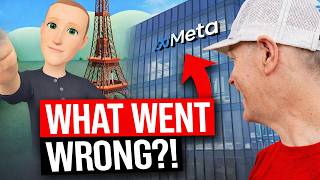
In this video Michael Girdley chronicles how Meta (formerly Facebook) poured roughly $90 billion into building a metaverse, only to abandon it by 2026. He traces the story from early VR roots – Palmer Luckey’s Oculus Rift and its $2 billion acquisition – through Mark Zuckerberg’s 2021 rebranding of Facebook to Meta amid scandal (the Frances Haugen leaks) and a PR crisis. Girdley explains the massive $30 billion VR investment, the launch of Horizon Worlds, and the parallel Web3 hype, highlighting the lack of consumer demand, low user numbers (≈300 k peak), and internal documents showing ghost‑town usage. He details the financial fallout: Reality Labs losses of $10‑$16 billion annually, a 70 % stock drop, massive layoffs across the industry, and the collapse of VR‑related venture funding. The narrative pivots to the 2022 launch of ChatGPT, which demonstrated clear product‑market fit, prompting Meta to shift its focus to AI in 2023, dramatically increasing AI mentions on earnings calls while the metaverse was quietly shuttered. Girdley concludes that human nature prefers technology that augments reality rather than replaces it, using examples from Google Glass, Apple Vision Pro, and Meta’s own AR glasses, and extracts lessons about product‑market fit, CEO decision‑making, and the perils of betting on un‑wanted technology.
Chapters
On October 28th, 2021, Mark Zuckerberg got on the stage at his, uh, annual developer conference. And, uh, Mark always looks calm. That's part of his kind of genius, uh, and his public persona. But behind the scenes, things were not going well. Former employee named Frances Haugen, who had worked at, uh, Facebook, had given a bunch of documents to the Wall Street Journal, and they were pretty damning. Facebook itself had known that its products, including Instagram, were harming teenage girls. And also importantly, that they were spreading disinformation, and Facebook had known all about it. One of the things that leaders often do when they're stuck with problems is create distractions and promise a new future in order to get their way out. And Mark's answer was gonna be something new. It was gonna be called the metaverse. In fact, Mark was so serious about this idea of the metaverse, a new kind of virtual world where people would exist outside of reality, a virtual reality, so to speak, that he was renaming the entire company to Meta. You get it? Metaverse. He was going to bet tens of billions of dollars on it. At the time, the promise of the whole thing looked really big. Apple was working on their virtual reality headset. Oculus was a thing. Meta glasses were yet to come, and it looked like that was the future of reality. In fact, there were entire movies done about the metaverse.
A whole virtual universe.
But it's a big question as to what killed the whole thing, because 4 years later, The metaverse is officially dead. Facebook has burned through $90 billion in chasing that dream. Well, it's not the future. AI is. This video intends to explain it all. This is the rise and fall of the metaverse. And if you enjoy this type of stuff, I have deeper dives of each individual video that you can download on my website, girdley.com/youtube.
Thank you to Zapier for partnering with us on this video. More on them later.
So back to our story. It actually goes back much earlier than the announcement in 2021. Goes back almost a decade. Back in 2014, a teenager in his parents' garage, a guy who's become pretty famous since then named Palmer Luckey, built something in his parents' garage. He would call it the Oculus Rift, and he put it up on Kickstarter, and it was wildly popular. And Mark Zuckerberg had gotten one of them. He put it on and he saw what he thought was the future. Mark was such a convert of the idea of the Oculus that he went and bought the entire company from Luckey for $2 billion, uh, and look, that was twice what they had paid for Instagram, uh, and at the time it was kind of crazy. The Oculus had no customers, no product, and no revenue. I remember when he paid $1 billion for Instagram, at the time they already had a billion users. He was paying $2 billion for something with basically zero users. Mark made VR at the time, over the next 7 years, his pet project. They poured over $30 billion into development of virtual reality. Around in 2021, Mark was already pretty much committed to the idea. He couldn't go back. Humorously, the word metaverse wasn't invented by Meta. It actually comes from a science fiction book back in 1992 written by a guy named Neal Stephenson. It was called Snow Crash. Heck, I read it as a teenager. I remember it. And Mark had actually read the book as a teenager as well. It predicted a dystopian future where people extracted themselves from reality and lived in a virtual one that was better. Mark had read the book too, and he was trying to make it, well, science fiction turn into reality. That brings us up to October 2021, when Facebook is at one of its worst places in terms of PR in its history. And suddenly Mark is declaring the path out is to go all in on virtual reality.
Our company is now Meta.
Here's the way these big tech companies work. And if you look at our economy today, there's the Magnificent Seven, which are kind of the big 7 companies of which Meta is one of them. And together they comprise a huge amount of wealth being created in the United States. It's highly concentrated. So that means if one of them starts to innovate in a certain area, the other ones tend to copy it. So this whole thing of Meta making this announcement, it kicked off a frenzy. If you want to see my video of the aftereffects of all this, it cost Apple tens of billions of dollars too. In the case of the Vision Pro, I did a video on that on this channel as well. And when most people talk about the metaverse, they talk about actually the two different metaverses that were happening at the same time. One is this idea of a virtual reality world. The second one was what was called Web3, which was based around the ideas of crypto and cryptocurrency and digital assets and all that kind of stuff. I also did a video on that too, when I talked about the rise and fall of NFTs. A lot of you liked that video and a lot of you hated NFTs. It's pretty funny. Started to see things where Nike and folks like that started to brand things and do trademark things in the metaverse. In fact, the bank, JP Morgan at the time, actually went so far, uh, that this whole metaverse idea that they decided to open a bank in virtual reality in a thing called Decentraland. Yeah, kind of crazy in retrospect. Snoop Dogg went and bought a, uh, virtual mansion for $4.3 million, uh, in a virtual reality platform called, I think The Republic was the name of it. Just crazy stuff in retrospect. He also bought a lot of NFTs, so. And those are now worth zero. Seeing all this happen by the big companies, venture capitalists poured nearly $7 billion into virtual reality startups in the year 2022. They thought if Microsoft, Facebook, Nike, and all these people were going to be dumping money into it, well, that would create opportunity for these little businesses to become big someday. And at the core of it was Facebook's vision. Well, Mark's vision of their virtual reality, which is going to be called Horizon Worlds. Welcome to a place of limitless possibilities. And remember that product name because it's going to come back later in the story. As people look back on the metaverse now, they generally attribute the fact that the technology just isn't ready, it wasn't any good. But there's a more fundamental problem than that. But I disagree with the, uh, conventional narrative. That problem is, if you try these products, the metaverse products, even the really good ones like the Vision Pro, they're supposed to take you into a different world. They kind of aren't something I can really want. Like, I don't know what I would use it for. In the Vision Pro video, I talked about that as well. Like, there's just not really an interest by me or anybody else with getting away from reality. What we really want from technology products is to help us make reality better, not to replace it. Meta's product didn't really care about that. They launched Horizon Worlds in late 2021. By February 2022, they peaked out at 300,000 users. Put that in perspective how much of a failure that is for a Mag 7 company. Roblox, a game for kids, has 60 million active users of kids on their version of stuff, right? My kids are on Minecraft all the time, which is frankly another kind of alternative reality, but it's a video game. It's not trying to replace reality. It's trying to make them have more fun when they're sitting in the house. Internal documents found by the Wall Street Journal show that the vast majority of the places in Horizon Worlds weren't even getting visited, or if they were getting visited, they were getting visited by less than 50 people. The metaverse was basically a ghost town from day one. Internally, one of the things Meta executives noticed was that their own employees weren't using the product. They couldn't even get their own folks to eat their own dog food. Famously, there was a meme that went around in August 2022 when Mark posted a selfie of him inside the metaverse. It was blocky and made him look a little dorky. Wasn't anything that was going to be appealing to new customers. After spending $10 billion a year to make the metaverse a reality, Basically, the only thing that had come of it was Mark Zuckerberg becoming an internet joke. And then even worse, when you went and looked at those 300,000 users, the vast majority of them were using them for video games like Beat Saber, which is actually a pretty cool game. I played that. You'd actually like use like lightsabers to like basically slash things coming at you.
Pretty good.
Like it had a good use case, but it wasn't an alternative reality. It was just another video game. No matter what they did on the engineering side, that wasn't gonna fix the fact they had built a product that people just didn't frankly want. But before we get to that, I wanna talk about today's video sponsor, Zapier.
If you look at what's happening right now with tools like Claude and OpenAI, the capabilities are exploding. You could generate content, analyze data, and automate decisions, but the real bottleneck is still the same. None of these tools are actually connected to your day-to-day workflows, and that's where things start to break. Zapier fixes that. Zapier connects the apps you already use and automates the workflows between them. And the key part is there's no coding involved. I don't write code. My team doesn't write code. You just set a trigger, define an action, and Zapier handles the rest. So instead of copying data between tools or manually following up on tasks, everything automatically runs in the background. For example, when somebody fills out a form on our end, Zapier pushes that data into our CRM, notifies the team, and logs it into our tracking system instantly. Nothing gets missed and nothing sits in a queue. And that's the difference. AI tools are getting more powerful, but Zapier is what actually makes them useful inside of a real system. If you want to automate your workflows without hiring engineers, click on the link in the description below and try Zapier for free.
Oh, and before I dig into what happened next, do me a favor. Consider subscribing. I'm trying to get to a million subscribers someday, and they don't give you anything for— well, they do give you something for a million subscribers, a little plaque, but here's the secret. Those plaques for us, they're made out of plastic, and, uh, we don't get anything special for them, but it would make me happy if you subscribed. Reality Labs was the name of the division at Facebook. They lost $10 billion in 2021, $13 billion in 2022, and $16 billion in 2023. Each year was getting worse. On October 27th, 2022, Zuckerberg went out and asked investors to be patient. This will all pay off someday. And guess what happened? The stock decreased by 25% in one day. Over that year, the stock would go down nearly 70%, wiping off $600 billion in share price. Mark himself lost $70 billion that year because of the metaverse. The rest of the industry saw this happening. Snapchat disbanded its entire kind of alternative reality team. Microsoft had a 100-person team that were working on virtual reality solutions for the industry. Uh, Tencent, a Chinese company, laid off their entire virtual reality team as well. It wasn't working. Disney had created an entire digital virtual reality storytelling team. In March of 2023, they laid off all of those folks. Between 2022 and 2023, investments in the metaverse went down by over 90% from over $7 billion to just over $700 million in less than a year. All of those virtual reality worlds like Decentraland and virtual whatever they were called, basically land prices started to crash. And folks like Snoop Dogg, who had bought a $4 million mansion inside of one, were on the path to lose everything. Ironically, this is something everybody should have seen coming. Back in 2013, Google had launched a product called Google Glass, which was the very first shot at creating augmented reality and virtual reality. Engineers loved the idea, just like Mark had loved the concept of bringing science fiction to real life. The problem was consumers didn't. Google Glass users were, uh, called glassholes by people that saw them wearing them in public. Glassholes. Uh, kind of the same thing that happened when people were in the Vision Pro. Or Oculus Rift. Like, people looked at them and were like, "What's wrong with you? Reality's just fine. Why are you ditching us?" And they were derided and made fun of. If you look at what happened with every single piece of technology that came in and changed the world, they eventually became invisible. They weren't things that you were publicly advertising that the real world wasn't for you and you didn't like other human beings. Eventually they just became part of your daily life, whether that's the PC, the cell phone, smart speakers, all the same. VR does exactly the opposite. You cover up your face and suddenly you separate yourself from your fellow humans. And implicitly that creates an insult for them, which is like, hey, hanging out with you is not cool enough and I don't like you, so I'm gonna go find an alternative reality. Apple, to its credit, had seen this problem when they launched the Vision Pro. They put a screen on the outside of it that would make it look like your eyes were looking through it, even though they really weren't. The fundamental problem was all of these VR headsets in the metaverse had run face first into something that was kind of critical. Which was human nature. And human nature was stopping people from wanting this thing. Who cares if you got motion sickness? Who cares if there weren't any good apps? Fundamentally, human beings were wired not to like virtual reality. And one thing you'll see with great CEOs like Steve Jobs, or in the case of Mark Zuckerberg, they are incredible at recruiting great talent. And Mark had actually recruited a guy named John Carmack. He was the guy who had programmed Doom, the revolutionary video game that was one of the first VR things many of us ran. Basically, he recruited him to come work on Oculus. Zuckerberg joined back in 2013 as CTO of the Oculus division, uh, inside of Facebook. He would make it for about 9 years inside the company. He wrote a pretty damning memo when he quit. He said the company was too corporate and wasn't able to make good decisions on the product because it had too many layers of management. It was too insulated from reality. But what I think Carmack had missed, being a technologist, right? You look at the world and you say, oh, better technology will fix this problem. Didn't fix the core problem with these virtual reality headsets. Which is human nature doesn't want them. Better tech isn't going to fix that. But there was something else happening in 2022 that basically reiterated this thesis that I have, that human nature doesn't want virtual reality. Human nature actually wanted something else to help make reality better. On October 30th, 2022, OpenAI released a product called ChatGPT that would basically change everything. This product, which many of us use— well, I've switched to Claude since then, but you know, you know what I'm saying— reached 100 million users faster than any product in history. ChatGPT. The initials GPT stand for Generative Pre-trained Transformers. It automatically answers questions based on written prompts. And remember Oculus Rift? It only reached 300,000 within 2 months. That's really a sign of product market fit, which is the way VCs talk about companies that really build something that people want. And OpenAI had built one. Meta had not. Suddenly everybody could see based on the numbers, which weren't lying, that Mark screaming that the future of the internet was virtual reality, that wasn't right. The reality was people wanted to interface with their computers in radically different ways than they'd been in history. And here's something you'll see about good CEOs, and Mark's one of them: they face reality when it hits them in the face. In this case, Mark announced in March 2023 that Meta was pivoting entirely to AI.
We're basically positioning our company to ride this wave of, of AI innovation And it just makes all of these different services better. So we're making, we're making big investments in this and, you know, we're going to keep on doing that. Um, you know, obviously we'll modulate it a bit if there's a recession, but we're going to keep on investing pretty heavily.
They would go from spending tens of billions of dollars a year on virtual reality to spending it on AI. Next earnings call, Mark would say the word AI 28 times and metaverse only 7.
Our AI discovery engine, our AI infrastructure, AI But look, here's one thing.
Even smart CEOs are very emotional. And Reality Labs, the division inside of Meta that was making virtual reality, didn't stop bleeding. They were still spending tens of billions of dollars a year and losing it through 2024 and into 2025. And through today in 2026, when the metaverse has finally got its coffin and, uh, buried dead and gone, the total is kind of extreme. Meta has lost $83.6 billion. But to put that in perspective, that's basically the GDP of Morocco. Like an entire company. They've bloated on something that people didn't want to buy. Last December 2025, the Wall Street Journal reported that Meta was finally cutting the cord on the metaverse. Guess what happened to the stock? It went up 7% in one day. January 2026, Meta announced they were laying off 1,500 employees who had been working on virtual reality and shutting down 3 game studios. And just this month, March 2026, Meta announced that they were shutting down Horizon Worlds entirely. You wouldn't even be able to buy it anymore for the Oculus Rift. In 2024, they lost nearly $18 billion to generate $1 billion in revenue in the Reality Labs division at Meta. And it's a crazy phenomenon. We saw it with Apple and we see it with these other big companies, Amazon and their Fire Phone as well, another video I did on this channel. These big companies who have immense amounts of money and free cash flow from their core business, they can afford to keep investing in stupidity for longer than you or I could, for sure. The good news is Online advertising these days is basically split between two companies. Depending on who you ask, it's 80 to 90% of online advertising revenue either goes to Meta or to Google, and they split it between themselves. So Mark and Meta can afford to blow that kind of money. The rest of us, well, we couldn't, and we have to listen to what the market's telling us. In this case, Meta could do it for a while, but eventually they had to listen. Even they started to run out of money. But fundamentally, the metaverse and VR and all that kind of stuff reflects what humans really want. We want things that are gonna make real life better, not replace it. And the counterpoint in all this is that AirPods are becoming very much an augmented reality product that are helping us enjoy life better through things like translation and noise cancellation, all that kind of stuff. And same thing with the Apple Vision Pro. If you go look at what's going on, like that failed 'cause it tried to replace reality. Meta's own Meta Glasses, which are Ray-Bans basically with little cameras and audio in them, Like, I got two pairs of them. They're great. Why? They make reality better. They don't try to replace it. Fundamentally, great CEOs and small businesses think a lot about why humans do the things they do and why we're wired. The ones that tend to fail are the ones that don't listen to reality and don't face the facts that humans are going to do what humans are going to do. And here it took almost $90 billion for Mark to learn that lesson as well. By a lot of economic measures, Mark is a lot more successful and has done a lot more to impact the world with different things than I have, so don't take this as a criticism of him. Man, that guy's a lot better at business than I am, for sure. But in the end, I think this is a fascinating story we can all learn from. Let me know what you think of it in the comments below. Do you like the metaverse? I do not. All right, catch you next time.










