Neglecting a $1M+ Business | Beautiful Business Advice EP 1
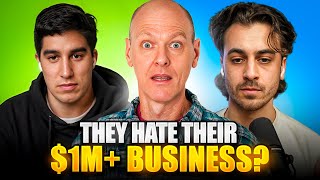
In this episode of Beautiful Business Advice, host Michael Girdley interviews Henry and Dylan, the co‑founders of Clipt, a managed marketplace that provides high‑quality video editing services. The conversation reveals that Clipt generates $1.2‑$1.5 million in annual revenue with roughly 50 % gross margin, yet the founders have failed to convert the 100 million monthly short‑form YouTube views they produce into paying customers. They admit to severe operational shortcomings: a 15‑person overseas content team with no clear systems, a non‑existent sales pipeline, and a lack of product‑market fit for their core service. Henry and Dylan express a strong preference for the creative side of the business and a dislike for sales and management tasks, which they view as a “necessary evil.” To address scaling, they plan to bring in Henry’s brother Jack, a former Goldman Sachs employee, as an operating CEO. The discussion dives deep into Jack’s potential compensation—base salary, profit‑sharing, equity, phantom stock, and the challenges of aligning incentives with both founders and overseas staff. They also explore lead‑generation ideas, such as using their massive YouTube audience and newsletter, but note that past attempts yielded few, poorly‑qualified leads. The episode covers the founders’ vision of growing Clipt to a $10 million business with half of that as profit, the need for clear job descriptions, a structured hand‑over, and the importance of win‑win‑win arrangements for all parties. Michael offers advice on avoiding one‑way‑door commitments, establishing memoranda of understanding, and ensuring transparent, critical conversations during the transition.
Chapters
You've got 100 million views a month on YouTube, and that translates into how many leads for your core business so far? Zero.
It's kind of amazing that the business does as well as it does. We're like not great managers. There's kind of no systems.
We didn't even count all the people that were on our team until like yesterday and we're like, holy shit, it's 15 people that are just on payroll, not making any money for us.
We hate selling. We hate asking people.
Also, we didn't believe in the product and still almost don't.
So today I spent nearly an hour with Dylan and Henry, and they are two of my buds from the internet. We haven't met in person, but they are just great guys. And so if you don't know them, they run a company called Clipt. So Clipt has evolved over time, but basically it is a pool or a marketplace of really high-performing editors that are located overseas that help people make beautiful YouTube Instagram video clips, right? You take your content, they edit it, and it comes back and gets published into this beautiful stuff. So the funny thing about it is they are consumers of their own dog food. They have used their editing team to generate over 100 million views a month of Shorts that they have created on the YouTube platform. And to put that in perspective, I am getting like 30,000 views a month, like just nothing in comparison to how talented these guys are. You know, I think what had me ecstatic about this conversation was as we talked about where the business is, which It's sometimes profitable, sometimes not. And the reason it's not is because they pour it all back into what they love to do, which is to make amazing content. And they also haven't figured out how to take that 100 million views a month that they're getting on YouTube and translate that into more customers for their business because they should be growing like crazy. So we dug into how the business works and what the solution is to try to solve for the big problem they have, which is how do we find somebody who actually wants to do business building when they just want to do creatives, which I think is great. And I talk about why I think that's great and I I know some of you are listening to this and like, what is going on here? Like, who doesn't want to work on their business? Well, not everybody does, including me. So here's the episode. Let's jump in right as we started to talk about what the core problem was. So tell me about where the business is right now.
Let me give you the kind of like last 2 years of background. So we spun up this thing, uh, kind of managed marketplace of video editors. Folks like Michael Girdley come to us, they have a bunch of video they want to make. They don't know who can actually make the video. So we'd match them with a video editor from our team. We did $1.2 million our first year. Margins are like maybe 50% in theory. In theory, Dylan and I kind of hated it. We actually tried to sell it to your team, so we did a little diligence with your team.
Then you tried to DM me and ask me to buy it at one point and I was like, well, how much do you want? And you were like, a lot. And I was like, okay, no thank you. Yeah.
So we stuck with it another year, but Dylan and I kind of got out of the business. We were like, we're doing everything, but like, we're also kind of the bottleneck because we're like not great managers. There's kind of no systems. So we eked out $1.5 million last year. And then, yeah, we kind of have this huge team of editors and animators that work on our own content, which should in theory be lead generation, but we've like never run a proper sales pipeline. We like don't capture leads properly. It's kind of amazing that the business does as well as it does in spite of Dylan and I not really systematizing anything. The plan is to bring my brother, who's a little bit older than me, a little bit more experience in, to come operate or CEO the thing in the next few weeks. He's wrapping up a job at Goldman Sachs. So maybe we could jump off from there, either talking like, how do you go from 1 to 10? Because I think we're at, call it 1. Dylan and I got us from 0 to 1. Any initial thoughts?
What are you worried about the most? What's your biggest concern?
We've always been caught between, uh, this awesome content, like YouTube career. So we kind of scaled that team, which then destroyed all the profits of the company. So we're kind of like jumping back and forth between like, I don't know, maybe there's a fire one day and we'll go and like work in the business or we want to like pioneer this new business model, which we've been testing even with your team, sort of headhunter model, trying to like lock in the model, lock in like incentives for the people that are running it. So Henry's brother plus, uh, one or two sort of Filipino operators that we think are awesome. Ideally, we can just focus on YouTube. And creating the funnel to, to push to Clipt.
So you've got 100 million views a month on YouTube and on short form, on short form YouTube. And that translates into how many leads for your core business so far? Zero.
We've mostly been pushing them to our email, which is Smart Nonsense, uh, and that, that has like 40 or so thousand subscribers on it. We hadn't been pushing them to the business because we didn't like the business.
We've never really marketed the business.
It's mostly been like Twitter, random Twitter people that hear of us.
Yeah, like me.
We're not random. Cool people on Twitter, I should say.
So you guys look forward to 5 years from now. You potentially have Henry's brother coming in. What do you want the business to be? $10 million? What do you want your life to be around that business? Have you guys talked through that?
Yeah. So kind of what we're leaning toward is just like when people think of video, they think of Clipped. So the idea is like our YouTube channels are sort of like the fashion show runway for our Clipt product. It's like the craziest, awesome edits you can ever imagine. And then they have like a little watermark. It's like edited by Clipt. And that pumps a bunch of leads, whoever sees our videos, to Clipt. And then they can whatever, subscribe or buy editors. And ideally that's doing, yeah, like $10 million a year ballpark. And then ideally half of that is profit.
And we're kind of like, at least in our start, we've been kind of like lifestyle business people. So we're like kind of prioritize a few headaches, distributing profits out, you know, that, that kind of deal. But maybe that's part of our problem is we don't really do any like long-term kind of vision setting. We're, we're very much of like the, the David Heinemeier Hansson, Jason Fried Basecamp guys, which is like we don't have— we don't necessarily have this big hairy mission thing. We just kind of take each day, day by day, and try and do a little bit better. Maybe that's misguided.
Basically what we've been doing though is like anytime we think we have profits, even if we don't, we just hire another animator for our personal team. Like, that's why we have 15 people on our content team, which is absurd. It's like, literally, like, we didn't, we didn't even count all the people that were on our team until like yesterday, and we're like, holy shit, it's 15 people that are just on payroll not making any money for us. And that's why, you know, we end up costing like $50,000 to the business a month. But I do like the idea of we have like the core business kind of is finding the best talent for editors. So if we can just take like the crème de la crème and use them on our own content and just keep growing that into some like Disney-esque entity, I think that's really cool because no one else can do that.
Okay, so to pare it back, what I just heard from you, it sounds like what you guys love doing and like your day-to-day is really like much more like the creative side. If you do the love-hate devil angel thing, like the angel is you guys love this process of creating, ideating, making beautiful stuff. And then there's the other stuff, which is just not as appealing. Is that it? Do I hear that?
I, well, I think that's correct. And I think what's hard for us is we feel like we're uniquely good at the content thing, the market marketing thing. So it's like every minute we spend on like processes and systems and the business, we're just like, we're— it's like, I think we could be great at that, but we would have to go and like figure out management and like scaling a company and hiring, like all these—
it's a lot less fun for us. Yeah. So we want to be as out of that as possible, and we're just like, demand. That's— let's just like get everyone excited about Clipped. And then not have to operate it.
Look, and I think that's my two cents as a 49-year-old. Like, I think that level of introspection and, and comfort in where you guys have the love, like, I think that's amazing. Like, you guys are like way ahead of your years. Like, I know people my age that still haven't figured out what they like to do in life. So like, I think it's awesome. And just my two cents, I don't think you—
you—
there's a little hint of guilt you guys talk through when you're like, well, you know, the other stuff, like, we don't really like it. And you, you have a little guilt when you describe it. It's just a twinge. Like, I would encourage you, like, you should feel no guilt about that whatsoever. That's what I think. And it's the, it's the same thing how, like, in the media business, the way we've set up so far, you notice I have not talked to anybody in your team. I haven't talked to you guys. I haven't done any contract negotiation. I haven't done any of that stuff. 'Cause guess what? It makes my eyes bleed too. Yeah.
But I think the double-edged sword is we're fearful of, like, we know we're very scrappy and we can keep this thing hovering at a million and a half bucks a year. And Dylan and I, like, we can always go find business and sell and Yeah, that's kind of our zero-to-one scrappiness. I think there's this fear of like, can somebody else keep this thing on the tracks and scale it without us? Because we haven't seen it.
Yeah. So I don't know if I fear that. It's more right now it's just been a waiting game for Henry's brother for like 6, 7 months and we're just like waiting for his bonus. It's like there's no way. Basically what we're going to do in the next month is like figure out how how much we can systematize everything with our existing team. So just like our really good, they're two awesome Filipino teammates who I think could operate this really well, or who we think can, and just put them in place and see like, kind of like take our hands off and just see what happens. Like worst case scenario, in a month Henry's brother Jack just comes in and kind of like fixes things. Best case, it turns out like with a little bit of freedom and responsibility, they just crush it. Um, that's like helping out a little bit, but anytime we like start to dip our toes in too much, they default to we're responsible for everything.
Right.
So now, like, you know, our shit's on the line, basically. Sorry to swear. Our skin. I don't know what the phrase is now.
We could curse all the fuck we want.
Yeah.
All right.
So, yeah, our necks are on the line, I guess, is the actual phrase. But so we've been scared to step out because if something breaks, then we come back in, but we come back in too heavily. And right, yeah, we're back in it.
And there's just, there's this continual, continual tug of war where business building and all that kind of stuff and process building is a necessary evil. And you guys love what you love. So, so, so far the solution to get this business— what I've heard from you, you want to scale it to, you know, from 1.5 to 10, um, and do all the kind of accoutrement around that to make it happen and business building stuff. So, so far the solution is Jack's going to get his bonus from Goldman, he's going to quit, and he's going to come join the thing. So like Walk me through how's, how's that happening and like where are we at in that process?
Yes. So, uh, okay. So a little background there that I think is interesting. He was working for a fintech company that got acquired by Goldman. So he kind of just happened to be there on accident, totally hated it. So he was looking for like, he's also got 3 kids. So he's like, I want to find something where I can be my own boss and I can have like a path to make as much money as I want, basically. Uncapped upside, um, so which was kind of nice timing for us. So because like Clipt is like razor-thin break-even, operating at a loss on paper because we have this huge content team, so with him it was kind of like, all right, we can't necessarily comfortably, comfortably bring him on and pay him. So it was like, he'll wait out his bonus end of year, wrap things up there, um, and then what we need to do is kind of come back around to figuring out like, what's the comp like? What's the upside? Um, how do we structure that? Uh, which we'll probably end up doing in the next week or two.
Yeah.
And he's of the mindset now, like, I think we can get really creative with it. He's like, I might have to pay myself out of my own pocket for a month or two, or we figure out some profit sharing where all— every X dollar I, I make over a certain point goes into, you know, whatever. Um, like, we have a lot of liberty to kind of divvied up any way we want.
Yeah.
What, um, for Jack, what has he said a perfect outcome looks like for him? He wants to be his own boss. He wants to have an unlimited upside. Does he want to own part of a business? Like, what is— what have you asked him? Like, what is he solving for?
Um, yeah, I think it's like he wants to make like $300 grand a year on a good year with upside to make, I don't know, $500, $800, $1 million. Does he want to own something? Unclear. It's interesting. Like, he's, he's a little bit— he's, he's kind of cut from a different cloth, right? Like, it's a little bit more risk averse, obviously. So does he want to, like, start something from the ground up and take on a lot of risk?
No.
Does he want to come into something that's already at one and, like, take it to wherever? Yeah.
But he's also probably not opposed to buying in for equity if that were ever—
wouldn't be opposed. Yeah. We floated that in the fall when we were talking about it.
Yeah. What was his response? He was like, that sounds good.
Potentially.
Yeah. Yeah.
So I don't know. And how do we know Jack is the absolute best person for this besides his obvious qualification as a, as a brother?
We don't. Yeah, we don't. I think for us we were like, okay, we kind of need this person. He's probably more so that person than we are. Yeah. We liked the idea of like doing business with family, you know him, you trust him, right? Like, I know all his quirks. Like, there's no hiding that. And then we— I guess we just didn't want to spend time trying to find someone else because it's hard.
Yeah. When it's also— it's a very businessy, buildy thing that's kind of annoying. It makes our eyes bleed, which is like, right?
Or like, do we want to go find more people and interview more people and trial more people?
And I think what we realize is like, it's, it's not super complicated. It's like We just match people that want an editor with editors and then arbitrage differently. Like we make money in the middle. Uh, so it didn't seem terribly complicated. Granted, like SEO, which it sounded like Near, that's how they really took off. Like we don't know anything about that. I don't know if Jack necessarily does, but like, I don't know. Uh, basically everyone said like, hey, you shouldn't work with family or friends. And then like, we kind of proved that wrong so far. It's been like the best thing ever. It's like, okay, we just want to like, can we do that again? Um, were not anymore. Um, but since you moved to Chicago, he's dead to you. Yeah, pretty much. Um, but Henry's just like awesome, and his brother's awesome, like the most trustworthy people on the planet. So like, it's just, it makes everything easy. Um, granted, like maybe there are other people that have grown agencies from like 1 to 10 million and they would be more qualified on paper, but like, I don't know, I feel like Jack could do the same with Yeah. So like 6 months of training.
100%. So he's, he's a smart guy. He cares. So when you think about the unfair advantages you guys have, you have this short-form video machine and your longs are good too. Like I've watched your longs, they're really good. Like, um, I love the celebratory one you did at the last big milestone. So anyway, as a, as a long guy, I think congratulations. They're really, really— I watched this and I was like, dude, we need to be this good. So, uh, it was really good.
Uh, it's a totally different beast. Yeah. We're, we're still trying to like figure out, and we don't have the time yet, but figuring out long form.
Uh, yeah, it turns out I just get on there and act like an idiot and I get like 2,000 views. So when I figure it out, I'll let you know. Um, yeah, I'll let you know. Um, but like, it seems your unfair advantage is the audience that you've built there. And like, one of the things that Jack will need to do is figure out how to translate that into. Leads for Clipt. Have you tried to convert people from the newsletter? Has that worked?
Barely. We've like tried one.
Barely tried.
Barely tried.
Barely worked also, probably.
What is barely tried?
Barely tried is we maybe ran like a little native ad in the middle of a newsletter to Clipt. Got maybe 10 leads, but they were all bad fit.
All bad fit.
Okay.
And but out of— and you're—
and we did that weekly. Yeah. No, daily. And we did that maybe 3 times and then pulled the plug.
And so you're doing daily newsletters?
Yeah. In theory, there may be 2 or 3 a week right now.
Perfect.
We kind of, we kind of— there was this joke where we like, instead of like going 0 to 1 and then getting out and like everything's smooth, we go like 0 to 0.8 and then get out and then everything crumbles and then we like move on to the next thing. I'm like, oh fuck, that thing's crumbling. And then we just end up juggling content, a newsletter, a company, we leave, we leave like 10% too early.
Yeah, it's perfect.
But it doesn't cross the threshold.
So, well, what I was starting to probe on is as creatives, there's a natural tension for us where the business buildy kind of sales stuff, um, like starts to, we have to get comfortable with that happening. Yeah. And it's not us clicking send on it, but it's like, for example, like I have a course, right? And like we sell the course and, um, Like I have, I have a newsletter, which I love giving away the newsletter cuz we teach people stuff through the newsletter. But like at some point we had to just send one of our issues of the newsletter that was just like, hey, please be my customer and here's a sales pitch. And it was one of those things where like as a creative I was just like, oh, I hate selling. And then yeah, like I was just probing like, this is one of the things Jack is gonna have to do to make this work. Like you have to, we have to have some asks. Like, are you guys gonna be okay with that?
Yeah. Like it. Is that an archetype thing though? Like, because I think both Dylan and I, we hate like asking, we hate kind of selling, we hate asking people.
Also, we didn't believe in the product and still almost don't. So it's extra scary.
Yeah, but it sounds like a micro project for Jack.
Yeah.
Granted, the product's a lot better now that we've come back. Like the last 2 months we've been like figuring it out. So I think it's going better. But traditionally we haven't wanted to promote anything because we're like, we basically hired a lot of animators for our company and most people just want video editors and it's a totally different skill set. Like they can kind of do editing well, but it's like literally a different software that you use. So we just had like the wrong product fit, product market fit. I don't know what you wanna call it. So that was always like eating, eating at us. It's like most people just wanna make like cool clips for their podcast, but we have like the best people for making an Apple ad and like the crossover doesn't make sense. So that was one issue with promoting it.
Yeah. Henry, you were saying something else?
Um, well, it sounds like as a creative you had the same kind of like, uh, I don't, I don't like selling my stuff.
Oh, I hate projection. It's just wild. I never went into sales. I make a bad salesperson. But yeah, there's this, um, I mean, the huge motivator for me I think is ultimately the motivator you guys have hit on, which is like You're like, crap, we just spent $30,000 this month giving away all this content for free. Like, somebody should pay us for this. And I think that my bank account ultimately, like, came over my fear of rejection. Uh, so it totally worked.
Yeah, we're getting in there.
Uh, so, okay, so totally dig it. So look, the, the one thing you said that I want to hone in on, and I think is so critical for the business going forward, is how you're going to set this stuff up with Jack. And like, he's coming in, you have a business that is running at 50% gross margin, but it's not really generating a lot of profit. So Jack trying to make $300,000 a year, $25,000 a month, you know, and balance all that out, like there's a tension as he's coming in that has me kind of concerned, right? Especially when he says something like, well, I could work for free for a month or two. It's like, whoa, I've got— I mean, I've incubated businesses or started businesses. I worked in one of them for 2 years without getting paid anything. Now, Was that an extreme example? And I was able to do that. Yeah. But like there's, when people come into like a risky situation, like you guys have created with a new business, you know, the CEO and an incoming CEO or partner in the case of Jack, maybe needs to be somebody who's able to act like an entrepreneur and not an employee, if that makes sense. Right. And when I hear, oh, I could work for a month without any money, that has me, little red tiny flag goes up. That, that's something we need to solve for.
Yeah. Yeah. He, in the past, I know we haven't, or I haven't talked to him too much about it, but like he was cool or seemed okay with like the idea of like a relatively big pay cut or like taking like $100K a year, for example.
Yeah.
Um, and then, you know, a little bit more upside, whatever that number is or something like that. So that, that was like in the ballpark of acceptable. Stuff when we talked about it a while back.
Yeah, and but I think, Henry, you mentioned a bigger number. Is that— did I misunderstand?
Oh, I think you were asking me for like what's his ideal world.
Oh, his perfect—
I think like in 2 years, like he'd love to be— he doesn't need to make $300 grand this year. I think like his base at Goldman's maybe $180. Um, I think his— I forget what his, uh, just kind of like monthly burn is, but we did, we did talk about this like maybe you just make $100 grand base, $120 grand base, and then we figure out the upside thing.
Yeah, yeah. I think what would be really interesting there, if you think he's your guy, is there's some sort of scenario where he comes in, gets a base that's relatively low at this point. Over time, that goes to a market rate, and ideally he would buy into the company, um, at a certain point, right? Become a partner. Because, you know, as I talk to you guys, like, you have your zone of genius and like, I would encourage you to figure out a way to like structure it so that you can live entirely in your zone of genius. And also you don't have to do the stuff that is required to like manage a CEO and run a board and all that kind of stuff that I do that you guys—
it—
I, I'm just hearing you, it's going to make your eyes bleed if you have to do that stuff. And the best way is if we have a partner that comes in to the company that's complementary to you guys. And hopefully Jack is this guy. It's just about getting it structured right.
I think he is, like, based on all conversations we've had. Like, I think we— every time I talk to him and I tell Dylan, I'm like, he's way more measured than us. He looks at our balance sheet and P&L in like a much more analytical way. So I think he'll definitely be better. And like Dylan said, it's a really simple business, right? So I mean, yeah.
And so you, you think buying in is critical versus like a profit sharing thing?
Trevor, look, I think there's— in your shoes, what I would do is talk to Jack and figure out a phase in which he can come in and there's a mutual level of exploration. Like it's something where it's like, okay, we can pay you a salary and you're going to get a percentage of profits for this period of time. But after we get past that, like, we would love for you to buy in and then get married. And I think I would encourage you to skip— to not skip the dating step of working together on this, because two things can happen. One, he may get in and learn some things about himself. That he's not interested in it, wants to get out. And if he buys in initially, that creates a one-way door that's really hard to get out of. Or you may learn he's not the right fit for you guys, right? And all of that will happen in the first 90 to 180 days. Make sure it's good for him, make sure it's good for you, and then you start to turn into full partners. Do you see what I'm saying there? That's what I would do. I wouldn't jump straight into—
yeah, we've only flirted.
Oh yeah, yeah, this is just, uh, Not even a date, this is just DMs recording. And so how do you think about figuring out the upside, like percentage-wise and stuff like that? Or total comp?
There are no really, there's no formula for how to do it. You know, ultimately what I love to do if I can is come up with something that is going to be appealing for everybody involved. And everybody's going to feel like it's fair. Um, so that's a rough way of saying, like, you talk about what the other person really wants to get to. And we talked about he would love to get to $300K a year all in or more. Um, like, I would solve for that and start to think about how can I align his upside with my upside. So for example, the absolute best thing for you would be if he comes in as CEO, takes a relatively low base, and then profit, meaning free cash flow coming out of the business, is how he gets paid the majority of his income, because that's how you guys get paid as passive owners of the company and, well, the de facto marketing department. Um, so that's the ideal. Then you have to see what actually works for him, because he may ultimately say like, okay, $100K base is not sustainable, or $50K base, or, you know, whatever is not sustainable for me. I don't know where he's living with his 3 kids, but that's where kind of the negotiation can happen. But, you know, I would optimally love to see him have a meaningful portion of the business. And for you, like, the more you can align his incentive comp around your— align around what you want to have happen, the better you're going to be, if that makes sense.
So when you say meaningful, uh, because I brought this up with, uh, Andrew Wilkinson before and he laughed at me at some conference. I was like, oh, it'd be cool if we're all like third partners and we all made the same. He's like, What, it was actually a room of people and they all laughed at me. Um, cause they're like, he didn't start the company. Like that's unheard of. Like the max we've ever paid was like 17%. Um, so I, sorry, I got people in the background. Um, so I'm, I'm wondering like ballpark ranges, like what is, what is roughly, cause we're totally out of, first of all, those people in that room, that's not very nice.
I don't like that.
They don't have full context.
So it's like, it's just not a very nice thing. Thing. It's just not very nice. Sorry, it goes against a very Girdley core value, and I would just say in a very nice way, that was not very nice. Um, look, I think that's where everybody's opinion starts to really matter. Um, and then secondarily, I think that's where what opportunities, um, you know, Henry's brother has on the open market also starts to factor, because that's one way this needs to be sustainable. This needs to be the best thing that Jack could possibly do as his next career step. Right, for him to feel fulfilled. And monetary is part of that, like, all that's part of it. So, you know, I think that there is a calculus here that in your shoes, I would say, like, look, like, we have— we, the two founders so far, have been in this longer than Jack has. Uh, we've built the business up to a certain level. It's not that profitable from a, from a net margin standpoint, but it's there. And we have 100 million followers on YouTube, and we have a pretty darn good brand and track record. Like, those of us on Twitter, we know you guys because you're really good. So you've brought those four things. So obviously it's fair to you, in my opinion, for Jack to come in and day one get like a third of the business or whatever. Like, yeah, it would be kumbaya if that was there, but I don't— as your friend, I don't think that's fair to you guys. Um, feeling-wise, I think there's a balance of that level of what you guys are bringing with making sure that there's enough upside for Jack. And if Jack wants to make, you know, $300,000 to $500,000 a year, you guys are going to try to turn this into a $10 million business. And that means that $10 million business is hopefully throwing off $2 to $2.5 million a year in profits. that's a good way for Jack to make $600,000 or $700,000 a year, you know, owning 25% of that business. So that would be kind of where my calculus would be. I think you guys really need a Jack desperately. Uh, I think I would allocate somewhere between 15 to 20 to 25% of the business over time, depending on how good he is, to have somebody like that in there that you could trust as a partner. And that may be a little aggressive, but I think that, uh, a lot of times you have to pay up for good talent. And if Jack's really good, like, he'll make you a ton of money. This is a much more valuable business if you get it to $10 million versus if you get it to $5 million.
We were operating off this heuristic when we were talking about it, talking about comp and stuff in the fall, initial conversations with him. It was like, and I forget who it came from, but it was like, you want to make the person who's going to make you rich, rich.
Yeah.
Um, which kind of gets to your, like, you know, make sure it's fair, make sure it's a win-win.
That's an ambiguous term. I think that was the issue. Like, What's rich for us is not rich. Like, my mom's rich is like making $80 grand. So it's like, that's where the disparity comes up.
Well, there's another, there's another way to do the phrase where it's like, you want to make the people working with you rich and you want to make yourself wealthy.
So anyway, that's good.
Some of the people that might have laughed at you in the room would think that way.
But yeah, yeah.
But yeah, look, I think that's, that's what life is about for me and for everybody else. And it sounds like it's for you guys too. Like, life is much more fun when it's a win-win-win. And I think, Dylan, when you suggested it's like one-third for everybody, like you were kind of going down that path of understanding, like that harmonious way of living with your business partners is a lot of fun, right? And totally there. So I'm totally with you. It's just a matter of adjusting that a little bit to where there's enough upside for Jack to feel like he's going to win and can win big time with you guys. but also you guys deserve credit for what you've brought so far. So I think that's where I think a third is way too high, but like 10%, I feel like my gut feeling is that's way too low cuz it's not fair to Jack, right? There's somewhere in the middle that's, that's a better fit.
That's, that's helpful.
Um, quick question just while we're talking about incentives. We were thinking with those two, uh, Filipinos that would be operating, like one sort of doing sales and one making sure the clients we do have, if they're like subscribed to Clipt. They don't leave. We're thinking about doing like profit sharing with them. Would that be, have you done something like that before? Is that too crazy? Do you just prefer like, hey, if you sell someone, you make $500 and then do it that way? Um, I don't know if you have any thoughts on that.
Yeah, so I mean, the typical way that salespeople get incentivized is comp based on what they actually sell, cuz they're the most output-based measurable group, right? Like, and that's the way most salespeople are, are compensated. But in my opinion, if you have an opportunity to directly incentivize a sales rep based on the dollars they bring in the door and the new deals they sell, like you should do that. Um, especially for a junior person, for a senior person, you may have to give them equity in the form of stock options or whatever. In your case, especially with, um, with folks who are overseas because of the difference in laws and all that kind of stuff, a lot of times folks overseas just want to know like, how do I get paid this month or this quarter? And they're less interested in stock options and stuff like that. And they're hard to deal with, especially across border. So for the sales rep, I would start with that and see if that's going to make them happy, you know, and help them achieve their dreams. Um, one thing you can do is kind of a middle ground between bonuses and equity is you kind of go in this middle and you give them something that, that looks like, looks like equity or performs like equity, like ownership in the company, but it doesn't tie you into them owning the company portion forever. And so there's different ways that this is called, like one of is called phantom stock, and it's basically just say like, look, we're going to pay you a bonus each month, uh, or each year, like you own 2% of the company. And here's how it works. When $100 comes out in profits, we give you $2 of it, like you own $2. So the downside of that phantom stock idea, which is basically just a different name for a bonus program, but the downside of that for US employees is it gets taxed like bonus. So the tax rate is much higher, but for overseas employees, they don't care. It's once a dollar goes to Philippines, the dollar goes to Philippines. That's just the way it works. So that would be something I would consider trying with this retention person because ultimately, like, the best way you can design your business is to have as many of the critical decision makers and influencers inside the company aligning their interests directly with yours. You know, in the past, in certain companies, we've allocated 10% and just said this is going to be the profit pool and we're going to have a profit sharing plan amongst all of our folks and we're going to be transparent to them and they get to split 90 and we get— or they get to split 10 and we get to split 90. And it's proven to be really good. It's helped with retention and people feeling like they're owners. And ultimately, the more people you can have act like owners, the better the business is going to do.
What was interesting when we first started working with folks overseas is we took this very much like Silicon Valley company culture. There's this whole thing in like Netflix is right. We took a lot of our business model from, from Netflix. And we tried to superimpose that on like culture in the Philippines. They didn't care about any of that stuff. None of it. They're like, I just want to get a stable paycheck every month. That's, that's what I care about is my job security. And we're out here like core values and one-on-ones and like, they're like, we don't, we just don't care.
Yeah. So I would, yeah, I would encourage you guys when you have the time, Dylan, you're, you're still in New York or where are you at these days?
Yeah, I am in New York.
Yeah. So that means, you know, going to spend an hour or two with, with Jack, try to hash out some of these issues and get to some specifics and try to, you know, get in a room and find alignment. Everybody should talk about what their dreams are and onboarding it and then try to write it all down kind of on a one-piece paper. I've done a thing on Twitter about MOUs, you know, just have a memorandum of understanding to everybody kind of understands what the plan is. Give them a chance to come in, understand the business, make sure this is what he truly loves, and then a path to make it his forever thing after that. But You know, I think if you're not going to have Jack in there, you need to find somebody else. Otherwise, you're just not going to be true to yourselves. And the best way to get after that is to, well, go talk to Jack as quickly as possible.
Is there anything, um, that you think we would mess up in particular in this process, in the transition even?
Um, look, the, the biggest worry is that you go through a one-way— for me, that you go through a one-way door with Jack, you're stuck with him, and either he or you decide he's not the right guy and suddenly don't you're stuck with him as a partner. You're stuck with him as somebody that, you know, it just didn't work out right. And you don't have that equity anymore and there's not a clear path out. So that's number one. I think number two, like, we're creative types, right? So like, we are going to avoid having kind of crucial conversations and tough conversations to talk about our what's and all that kind of stuff. Like, that's where you guys, I think, are really just don't be scared to have crucial conversations through this process, both with each other but also with Jack, and just get your feelings, desires, dreams, and all that stuff on the table. Because ultimately business is about creating win-wins. But sometimes you got to get through a non-kumbaya thing to get to that win-win and make sure everybody's, everybody's there.
And what about like operations-wise? Like I've heard people say, you know, if you're going to hire a CEO, like Dylan and I, we need to get out and never come, never come back, or like get completely out, at least for that dating phase. Is there like something operations-wise we can do to set him up for success or something we should avoid?
Yeah, I think he needs a clear job description of what you're going to be expecting him to do. You should write that down, roles and responsibilities. I think based on that, you should be able to identify what things you need to do to train him to get there. And then you guys need to have what your job description is going to be. And then as you go through that process, everybody will understand how it's going to work and also understand that he's their new boss and you're not disappearing. But ultimately, like, he's in charge now. And I am a fan of doing that as soon as possible. And the way to make him— or do that immediately, like when he's there, is be like, okay, this is our new CEO and we're going to support him, but Jack's in charge.
Yeah.
Yeah, that's good. Historically, I think we're really bad at, like, we don't, we don't have specific roles. Dylan and I, um, are two folks that are kind of on the admin team inside the business. It's like a little bit in flux. Everyone wears a lot of hats right now, but I do think we need to get rigorous about clearly defined stuff.
Uh, look, right, right now, I think you guys have a great opportunity to make this a nicely profitable business where you take home money and you know, you can balance that out while doing exactly what you want to do, which is creating. And I think making this change to bring in a professional manager who's more business-oriented— and it's not that you guys can't do it, it's just that he wants to do it. He should want to do it if he's the right person. I think it'll make you guys a ton of money and you'll be super happy.
Awesome.
Sweet.
Thank you. Fingers crossed too.
Fingers crossed.
Yeah, cool. All right, well, good luck with that. Um, yeah. But, uh, so happy to, you know, follow up with me if you want, email me. I'm happy to look at your job description. If you guys, you know, I'll keep everything in confidence. We're gonna look at Jack's, uh, any MOU or give you feedback on it. Uh, totally happy to do that. Um, free of charge for being awesome guys and friends of ours.
That'd be great. Thanks.
Awesome.
Let me know how I can be helpful.
Sweet.
Yeah.
And, uh, someday, I know Ty mentioned this to me earlier, we gotta figure out if we ever have some partnership too.
Yeah, we'll talk some partnership. Sounds good.
Yeah. Yeah. One day we'll figure out this first step, but super cool.
You'll be talking to Jack about that, hopefully.
Yeah, I won't.
I'll send him to Ty and Jack. Ty and Jack. Yeah, we'll have our— we just hang out. We shoot videos. We'll have you on our shorts. Right. All right. I love you guys. Sweet.










