The rise and fall... and rise again of the Las Vegas Sphere
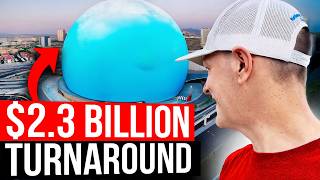
In this YouTube video, Michael Girdley narrates the full business saga of the Las Vegas Sphere, from its ambitious 2016 conception by James Dolan and partnership between Madison Square Garden Corp. and Las Vegas Sands, through massive cost overruns (budget swelling from $1.1 B to $2.3 B) and an early operating loss of $193 M in its first quarter. He explains why traditional concert residencies (e.g., U2) and early content experiments (Darren Aronofsky’s Postcards from the Earth) failed to generate sufficient profit, leading to a plummeting stock, CFO resignation, and the spin‑out of Sphere Entertainment. Girdley then details the strategic pivot: licensing and heavily customizing the classic film The Wizard of Oz for a 4‑D immersive experience, investing $80‑100 M to exploit the venue’s unique tech. The film’s blockbuster run (over 500 k tickets sold, $65 M high‑margin revenue) revived the venue’s finances, boosted the stock >50 %, prompted a $300 M buyback, and opened the door to future IP‑driven shows and new Sphere projects worldwide. The video ends with an entrepreneurial takeaway about perseverance and a sponsor plug for Factor meals.
Chapters
When the Las Vegas Sphere was originally conceived as a one-of-a-kind concert venue in Las Vegas, the idea was to build it for about $1.1 billion. Then eventually COVID came, inflation hit, and construction delays caused the cost to balloon to $2.3 billion. And with so few artists able to do the types of residencies that worked inside of the Sphere and it being dark so many nights of the week, the very first quarter they posted a $193 million loss. And I know about this because I did this video right here about the topic a few months ago. But since then, it turns out that management has figured out a way to turn the whole thing around and save the Sphere. This video is the story of the rise, the fall, and the redemption of the Las Vegas Sphere. And by the way, this video is sponsored by Factor. More details on that later. The idea of the Sphere came in 2016 when James Dolan, yes, that James Dolan of the New York Knicks ownership fame, decided to build the world's most interesting and unique concert venue in Las Vegas. It would be 2 football fields wide and 36 stories tall. And the tech was going to be crazy. It was going to have 16K screens, wind and smell effects, just all kinds of stuff inside of a one-of-a-kind— well, basically the largest spherical building in the world. In 2018, Madison Square Garden Corp., the corporation run by Dolan, partnered with Las Vegas Sands Corporation to build the Sphere on a vacant parcel next to the Las Vegas Venetian Resort and Hotel and Casino. The $1.1 billion project was so audacious that the construction by itself became a spectacle worthy of Las Vegas. They even had to import cranes from Belgium to make the thing work. Crowds came around to watch the thing being built. But Dolan and his team, they were pushing the envelope. So construction delays, COVID, inflation, and technological challenges meant that the original $1.2 billion budget eventually ballooned to $2.3 billion, which is a huge figure when you consider that the new NFL stadium, Allegiant Stadium in Vegas, only cost $1.9 billion. So when you invest money into a project like the Sphere, what matters is not how much revenue you bring in, but what your return on your investment is. And suddenly, with this increase in cost, Madison Square Garden and the Sphere were behind the 8-ball. They were going to have to outperform massively for the finances to work. In July of 2023, the Sphere was finally done, albeit a bit late. Fireworks lit up the sky. The LEDs on the outside started to bring attention from everybody near and far, including the internet, which went wild. And the new and first residency for the Sphere was going to be the band U2. U2 played over 40 shows over 5 months for an estimated 700,000 fans. Rough numbers by analysts are that those series of shows brought in nearly a quarter of a billion dollars, $245 million to be exact. So while fans were raving on social media about the Sphere, and look, it was pretty cool, and enjoying the concerts themselves, U2 highlighted a big problem with the Sphere, which was it was dark most nights, meaning It was just empty. In the first full quarter of operation, they brought in a respectable $168 million in revenue, which was mostly due to U2 and a film that they were running from a guy named Aronofsky. Pretty respectable. But that amount of revenue didn't stop the fact that the Sphere had been massively over budget and was being underutilized. And in that first quarter, they showed a $193 million loss. And some of that includes some non-cash charges, but they were still burning cash after investing, well, a metric ton of money to build the thing. By 2023, pundits were wondering if the Sphere was yet another kind of white elephant set of projects that had come through, gone way over budget, and lost a ton of money in Vegas. And things started to look bad. The Sphere Entertainment stock went down 30%, and the CFO resigned after yet another money-losing quarter where they lost $98 million. And in a sign of things going poorly, Madison Square Garden Corp had planned a second Sphere to be built in London, done a bunch of investment on making that happen, and then pulled the plug on that project when the Las Vegas started so poorly. They lost $116 million in lost fees for making that happen. And Madison Square Garden Corp owns Madison Square Garden and the Knicks and a bunch of other stuff that's pretty valuable. And, and a real sign of how bad things were going, they spun out the Sphere into its own stock, effectively saying two things. One, insulating Madison Square Garden's balance sheet from one of the poor things going on with the Sphere. And secondarily, telling everybody, hey, things are going bad at the Sphere. The U2 residency highlighted what was the core problem with the Sphere, which residencies don't work that well for the vast majority of bands. Only a few number of acts worldwide can draw in the type of people who will come in and fill up a 17,600-person seat theater like that 2 or 3 nights a week. And the Sphere can't host individual bands for one-night shows because of all the work required to customize the shows for the massive indoor tech that goes on inside. But James Dolan was not afraid of all of this. He famously came out and remained optimistic. He even referred to the Las Vegas Sphere as the first pancake. You know, the first one you threw on the griddle that sometimes comes out a little burnt? Well, that's what was happening. Other attempts to monetize the Sphere had fallen flat, and one of those was the outside LEDs on the outside of the dome. The idea was to sell ads. Well, they only brought in $3 million in that first quarter in ads when the thing was at the hottest of the hot, which is just a drop in the bucket when you spent $2.3 billion to build the Sphere. In the end, the Sphere would need to figure out how to make money inside if it was going to work at all. And we already figured out residencies weren't going to be the whole solution. And there was a hint of something that might work. And you see, the Sphere, when it had opened, had paid $100 million to get a film about nature from a guy named Darren Aronofsky. It's called Postcards from the Earth. And it did respectably well. They would bring in about $390,000 per show, filling a few thousand people to come in and watch the movie. And in the first few quarters, it had grossed over $100 million across 257 shows. Not too shabby. And the film had something that the live performances didn't, which was it could be played any time and the Sphere got to keep 100% of the revenue versus having to pay out to the band. In a typical live concert at the Sphere, the band sets the ticket price, say $200, and a sold-out 17,000-person show means the band gets to keep about, let's say, $3.4 million of that, leaving the Sphere with roughly $1.2 million from food, drink, and merchandise. But compare that to a film. For 5,000 seats, they would charge, say, $150 each, making $750,000 per show. And they could run 2 shows in one night and you gross about $2 million, which is far better than the $1.2 million from a single concert night. And they could do even better. If you do a concert on a Saturday night and run 2 film showings during the day, that's about $3.2 million in revenue in one day, roughly $2 million in the concert alone. Where's the problem with the Postcard from the Earth movie? It sucked. People would complain it was too woke for them and it was kind of boring. It wasn't compelling content, so people weren't coming in like they could have. A few months ago, I did a video about the Sphere, as I mentioned before. Got about half a million views here on YouTube. Uh, and you know how many of the comments about that thing mentioned "Postcard from the Earth"? Exactly zero. Nobody liked that film. But it was a hint of something that could work to save the Sphere. But look, people kept wanting to come to the Sphere. In 2024, revenue was at an all-time high for the venue. They did $420 million in tickets and concert sales that year, but revenue wasn't the problem. Profits were. The dang thing was so expensive to run and so expensive to build that they needed to figure out how to make higher quality revenue where they would make more profits.
But before I tell you how they solved it, I want to talk about today's video sponsor, Factor. So today's a good day. Our sponsor Factor sent me my meal box that comes in on the regular, and I am excited to open it. There are two reasons I love Factor. Number one, the meals are super convenient. You know, the, the hardest thing about staying healthy these days is all the time it takes to do meal planning, prep, and you're usually having to do that when you're super hungry. When you have Factor meals, uh, I love the pre-prepared nature of them that you can just like warm them up, be ready to go and ready to eat super healthy. And then the second thing I like about them for sure, uh, is the level of customization they have now. You can do everything from calorie restricted to keto to all those different options depending upon the strategy you're taking to keep yourself healthy. So I'm excited to dig into the box and see what the week has in store because it'll be good stuff. I also love that Factor makes a real intention to use high-quality ingredients. They've banned over 175 kind of not good ingredients from their products, and so you end up just eating a lot of real food, which is the way to get healthy.
So you can sign up for Factor yourself.
So head to factor75.com or click the link below and use code GERDLEYFB50. That's GERDLEYFB50. To get 50% off your first Factor box plus free breakfast for a year. And that's code GIRDLEYFB50 at factor75.com to get 50% off plus free breakfast for a year.
That offer is valid only for new Factor customers with code and qualifying auto-renewing subscription purchase. So the Sphere needed something that would work and be compelling as content to come in. It needed to be something that people really loved. And so they went out and found it. And that thing was The Wizard of Oz, a beloved film from nearly 70 years ago. They licensed the film and paid the studio to put it up, but they didn't just show it as a normal film. They went and invested to customize it for the Sphere, adding another $80 to $100 million of their own investment to make it a perfect film to take advantage of all the cool stuff the Sphere could do. And the thing was an absolute blockbuster. It released just a few months ago in August 2025, and within a few weeks it had sold 6 months of tickets out. And it was helped by the fact that it was a respectable $150 as opposed to what you'd pay typically for a concert ticket of $200 or $500 or $700. And people were absolutely in love with the idea of the Wizard of Oz. And people were absolutely loving the unique stuff that they did. They did 4D Thrills where there would be wind and smells of poppies. And then famously, they would each show drop foam apples from the ceiling. Reminiscent of the scene when, uh, Dorothy's walking around in an apple orchard. Uh, and people have loved it so much that the folks that catch these apples have been caught reselling them on eBay for as much as $1,000 apiece. Fast forward to September 2025, they've sold over 500,000 tickets in advance for The Wizard of Oz, and that's over $65 million in pure high-margin revenue for the Sphere. The Wizard of Oz is selling out so consistently that it's now out-earning even the very best of the live acts in the Sphere. And now the Sphere has a consistent slot machine that pays off every day whenever they want to run Wizard of Oz movies. And it's going so well, they've extended the run through April 2026. One firm predicts that once they bring in other IPs like Harry Potter or Star Wars or Raiders of the Lost Ark, the Sphere could do $400 million in movie ticket sales alone in the next 12 months. The genius of all this is it complements the live concert venue stuff rather than replacing it. And as I talked about before, they could run the movies 2 or 3 times during the day, get a couple million dollars from each one of those runs, and then have a concert at night. Oh, and if they really want to, they could run the movie after that too. Why the heck not?
It's Vegas.
Remember how the Sphere Entertainment stock had been spun out on its own? Well, post Wizard of Oz, people are taking note. The stock itself is up over 50% after the good news of Oz came along. And remember First Pancake James Dolan? Well, he's led them to announce a $300 million stock buyback. Meaning he and the other insiders and the people on the board believe that things are going to go really good. And they've been buying shares as high as $50 a share, a sign they believe good times are in the future for the Sphere. And with this momentum, they feel like they figured it out. A new Sphere is in the works for Abu Dhabi, and they're also planning on smaller 5,000-seat or smaller Spheres in a town near you. The big takeaway for me from this story and what they've done is, man, just keep at it. That's what entrepreneurship is about. When you're in the middle of it and you feel like things are going wrong, you just keep grinding away and solving a little problem after a little problem. Then pretty much you look up and one day your own Wizard of Oz has showed up and helped you turn around your business and turn into something great. And, uh, man, having gone to a show at the Sphere, I saw Denton Company there. It makes me happy that this thing's becoming more financially viable because I definitely want to go back. It's a hell of an experience. All right, that's it for this video. Let me know what you think in the comments below. It's fun to see the Sphere winning. Uh, let me know what you think about it, and I try to read all your comments. Catch you next time.










