The rise and fall of 23andMe
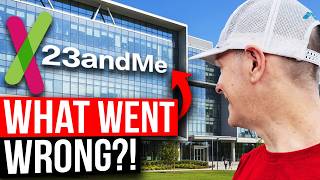
The video chronicles the trajectory of 23andMe from its 2006 founding by Anne Wojcicki to its 2025 bankruptcy and private acquisition. It begins with Wojcicki’s Wall Street background, the inspiration to let consumers learn health and ancestry from a simple spit kit, and early backing from Google’s Sergey Brin and a $3.9 million seed round. The narrative follows the company’s clash with the FDA, including a 2013 cease‑and‑desist letter, a two‑year, 7,000‑page regulatory fight, and eventual partial clearance that allowed health‑risk reporting. The film then examines the flawed business model—one‑time kit sales with no recurring revenue—its 2021 SPAC merger led by Richard Branson, soaring valuation, and the inability to generate profit despite over $1 billion in funding. A major strategic pivot is detailed: a 2018 $300 million partnership with GlaxoSmithKline to use the 23andMe genetic database for drug discovery, the creation of a 150‑person therapeutics team, and the eventual scaling back of that partnership. The story turns dark with a 2023 data breach that exposed millions of genetic profiles through a compromised “relatives” feature, and the company’s defensive legal response that blamed users. Financial strain deepens as revenue falls, the stock sinks below $1, and the board resigns in 2024. Wojcicki attempts a buy‑out at 40 cents per share, but the company files for bankruptcy in March 2025. A nonprofit (TTAM) acquires the assets for $305 million, placing the 15‑million‑person DNA database under Wojcicki’s private control, prompting a California Attorney General warning and mass user data deletions. The video concludes with broader lessons about hype versus sustainable revenue, the perils of relying on speculative drug pipelines, and the importance of core business fundamentals.
Chapters
In November 2013, the FDA sent a cease and desist letter to a tech startup called 23andMe that told them to shut down basically all their testing and results immediately. Anne Wojcicki had just spent 7 years building the product of her dreams that would use your DNA to help you learn more about your health. And the FDA had just told them they couldn't sell it anymore. But instead of backing down, she kept fighting. She submitted over 7,000 pages of evidence to the FDA. And 2 years later she won. In the post-COVID money boom era, the company went public via Richard Branson-backed SPAC and was valued at over $6.5 billion. GlaxoSmithKline, the drug company, they invested over $300 million in the company. But less than 4 years later, the company would have been hacked. Over 7 million people's data would have been exposed. The entire board would have quit. And the stock would have gone down 98%. How could a company that was so high-flying and doing something so revolutionary that in theory had so many uses from everything from drug discovery to finding long-lost relatives, how could that go so far and then down so fast? This video is the rise and fall of 23andMe. And before I get into the story, I turn every single one of these videos into a deeper dive document that you can download off my website. Girdley.com/youtube. Download it for free. Oh, and by the way, thanks to MasterClass Executive for sponsoring this video.
More on them later.
Wozniewski grew up basically on Stanford's campus. Her dad was a professor there. Her sisters, one of which became later the CEO of YouTube— hey, YouTube— the second one became basically a professor at UCSF. Wozniewski was also an overachiever, and Anne, after she went to Yale, went to work on Wall Street. One of the things that frustrated her about healthcare, especially in America, was that nobody basically made money, was what she heard, by keeping people healthy. That was not good. So after leaving Wall Street, back in California in 2006, with a couple co-founders, she founded 23andMe. And the idea was that you or I could spit in a tube, send it off to a lab, and we'd get a report back. And it would tell us things like health risks, who we were related to, and things we could do for our health. You'll be able to explore your reports and use tools to compare your genetics with friends and family. See how your 23 pairs of chromosomes help tell the story of one incredible you. And if you haven't gone to biology class this century, uh, basically 23 refers to the number of chromosomes in a human cell. So 23andMe, get it? Very punny. And remember Anne's sister Susan? She had been the 16th employee at Google, and so that enabled her to meet a guy named Sergey Brin. Who was one of the founders of Google himself and a multi-billionaire, one of the richest people on the planet, basically. Uh, and after getting to know him, they fell in love and they got married. And after marriage in 2007, Google coincidentally invested $3.9 million in, uh, Anne's startup, 23andMe. The first kits would launch in November 2007 at $999. Eventually they would get them down to $99, and millions of people would send in their spit to their labs. Time magazine at the time— believe it or not, people still cared about Time magazine back in the 2000s— called it the invention of the year. But something we'll come back to later in this story was that the kit was never the real business, even though they were charging for it. When you start shipping out health products, one group in the government takes notice, and that's the Food and Drug Administration, the FDA. In 2009, they came calling and started to ask for meetings with 23andMe. Over the next 4 years, the FDA would have 14 meetings with 23andMe. They asked hundreds of questions and basically wanted to understand how the product was working and how it benefited consumers. 23andMe would keep saying that they were working on the answers. And by May of 2013, basically a 6-month period came where there were no more submissions to the FDA and no more responses from the government. There's one way to frustrate bureaucrats and get them mad at you. And by the way, you don't want to do this. The worst thing you can have happen as a small business owner is a government bureaucrat decide it's their job to get paid by the government to come and ruin your life as a business person. And so one of the things you want to do is avoid getting them mad at you. In this case, 23andMe did exactly the opposite by ignoring the FDA and then in the next step going and spending a ton more money on television advertisements to grow their business. Suddenly they were doing the worst thing you possibly do to the FDA. 80% get genetically meaningful health info from their 23andMe DNA reports. 80%! That's 8 out of 10 people who could get something enlightening. So if 80% get genetically meaningful health info, the question is, will you be part of the 80%? Do you know what the future holds? On November 22, 2013, the FDA sent a warning letter to 23andMe saying that they were concerned that the company was making unsubstantiated health claims. For example, flagging people for breast cancer risk when it wasn't true. 23andMe, the genetic testing company, coming under fire for false negative results in its breast cancer screening test. And remember, the 23andMe product had been basically a couple of aspects. One was ancestry, the other one was to give you basically a roadmap for your own personal health risks. And suddenly here was the FDA telling 23andMe they couldn't do half of what their product was intended to do. And one of the things you'll see in life is, uh, good things tend to come in batches and bad things come in batches as well. In the case of Anne, she had perhaps what was one of the worst years in history, uh, besides all this stuff going on with the FDA, the business getting shut down, her marriage with Sergey, the Google co-founder, also broke up that year. But Ann, like most great entrepreneurs, didn't fold in the face of adversity. She kept fighting. And so she went to battle with the FDA, and over the next 2 years, even though the business was close to failing, submitted thousands of pages of documents— 7,000, in fact— and basically went to war against them, trying to prove that their product was safe and it was useful. In what became a multi-year battle, or war, that she won, she started to win incremental battles. First, they got the ability to reporting the data at all. That was kind of the first thing. A couple years later, they got the ability to report people around breast cancer risk, cancer risk, and all that stuff over the coming years. Well, hey, Raja, thanks to genetic testing, cancer detection may be within spitting distance, literally. 23andMe says its test is step one in finding out if you might have cancer. And here's the thing, the government does not move fast. So that means when you're in a war with them, it takes years to get back to where you want to be. In this case, she had just given up years of her life trying to fight and eventually win against the FDA. By 2018, 23andMe was back in business. They had over 5 million customers. Here's one of the things they've been able to do. By gathering all that genetic data, they had started to build the largest genetic database in the entire world. One of the smart things they'd done is ask customers if they would de-identify their data and make it available for genetic research, uh, and 80% of the people had said yes. And this was what was the real business that she had been planning all along. And in July 2018, GlaxoSmithKline, the drugmaker, invested $300 million in a deal with 23andMe. The idea was that they were going to use this data to streamline and develop new drugs. And if you're like me and don't know much about the healthcare industry, on paper this looks pretty brilliant. Suddenly Glaxo was fast-forwarding to a treasure trove of data that nobody else had. 23andMe built a 150-person drug discovery team. They started over 50 different programs targeting everything from cardiovascular disease to cancer. One antibody that they produced actually made it to a Phase 1 trial. The logic wasn't entirely crazy. If you start with some of this genetic information, uh, it gives you about a twice as likely chance of bringing a drug to market and having it be successful. But just the drug itself and this genetic knowledge wasn't what really matters in drug discovery. What really matters is being able to navigate the entire market of all these steps and studies and peer feedback and politics and navigating the FDA. And then there's the big one of all, which is time is the most important thing in bringing drugs to market. Takes years, if not decades. And suddenly 23andMe was about to make a decision that forgot about this idea of time. They were gonna accelerate everything by going public.
Before we get into that, I wanna talk about today's video sponsor, MasterClass Executive. There's a gap that's starting to show up in a lot of careers right now. People are putting in the effort, they're busy, they're learning, but the output isn't really compounding the way it used to. And a big part of that is that the environment has changed. AI is reshaping how work gets done, how decisions are made, and what actually creates leverage inside of a business. But most people were never trained to operate in that kind of environment. They're adapting in real time without a clear framework. And that's what MasterClass Executive is trying to solve. It's a 12-week program built for professionals who want to translate effort into actual outcomes in this new landscape. And instead of theoretical content, you're learning directly from people who have already operated at scale, like Mark Cuban, Indra Noori, and Ray Dalio. What makes it different is that it's designed around how business works today, including the role AI plays in strategy and execution. It's built in partnership with the University of Chicago Booth School of Business, with collaboration from OpenAI, so it reflects what's actually happening, not what used to work. And compared to a traditional MBA, it's a fraction of the cost, which makes it a much more practical way to build relevant skills without stepping away from your career. The value here is having a structured way to think through change instead of reacting to it. If you want to build skills that actually compound in the AI era, check out MasterClass Executive at the link in the description below.
Remember back in 2021, we were in the post-COVID era in which money had been pushed into our system like crazy. And something that had happened then was a thing called SPACs, special purpose acquisition corporations. This is where famous and rich people would go raise a pool of money and then use it to go find a company to public. One of those guys was Virgin Galactic and Virgin Enterprises billionaire Richard Branson. His SPAC took 23andMe public at a valuation of $3.5 billion. That day the market was excited. Valuation peaked at $6 billion. Here's the deal though. Branson, he is a media guy. He's the guy famous for stunts and launching airlines and music and all that kind of stuff. He's not a drug discovery guy. And his view basically was that 23andMe, he believed in the vision. Problem was, well, he's not a drug guy, but he was good at pumping and he pumped the 23andMe stock and suddenly Anne, well, she was a billionaire. There's a thing about being public, which is the public markets want you to make money or at least have a path to make one. There was a problem with 23andMe. It had never made money since founding, since 2006, not a single penny. Over 18 years, they had raised over $1 billion from investors. Now they were a public company and never made a single cent of profit. 23andMe is a great case study in the different types of revenue that are out there. And sometimes you can get a thing called recurring revenue, in which people pay you a monthly subscription, like if you're paying for YouTube Premium. Thank you very much. But then there's other types of revenue, which is recurring, which is people come back and buy from you often. Like let's say you're Home Depot or Walmart, you have recurring revenue. We visit every week. It's just not necessarily the same amount of spend. Then there's kind of the worst type of revenue, which is one-time project revenue. Where people buy from you and never come back. And 23andMe was exactly that. Your DNA and my DNA, they don't change. So once we get it measured and we figure out what our ancestry is, we pay our $99 and then we just work on down the road. There's never any reason to come back because DNA don't change. Behind the scenes, the cost to acquire new customers for 23andMe was growing each and every year. The low-hanging fruit had been picked. The people that wanted it, well, they had bought it. And the people that were going to be harder to like find and talk into doing it, like me. I'd never do it. I'm not going to give the government my DNA. You think I'm a crazy person? Anyway, so like, we're harder to sell. You're going to have to spend a lot of money to get somebody like me to convince to do it. Even still, I still haven't done this. Like, last thing I want to do is give my DNA to some database that who knows who has access to. And later we'll see that who knows who got access to this database. And funnily enough, people promoting 23andMe had tried to call it the Google of spit. Basically, you spit in this thing and it tells you— basically what Google does for the internet, it would do for your DNA. Problem was exactly what we're talking about. You go back to Google repeatedly. You don't go back to this. Anne and her team are not stupid. They realized that this was a problem, so they tried to fix it. They offered a thing which is, I think, called 23andMe Plus, which is basically like a DNA subscription service. Like, you would check it each and every year. It totally flopped. Genealogy is our thing. Plus is all the things. That beats and beats and beats. Drops the beat. Minus 40% this holiday. 23andMe Plus is more. Hence the big bet on drug development. Look, if you hit it big on a drug, let's say like, uh, some of the stuff out there now, GLP-1s, or even a cure for cancer, like, you can make big money. Promise, that's just not consistent revenue. It's hit or miss. And there's a reason only a few companies are really releasing tons of drugs on the regular. Uh, that's because it takes a lot of capital and takes a lot of time and it takes a lot of know-how. It turned out 23andMe, by going public, had made sure they had none of the three. And early results were not great. Remember, this is a crapshoot to build and bring drugs to market. So GSK, GlaxoSmithKline, by mid-2023 was seeing the handwriting on the wall. They downgraded their partnership from one where they were paying hundreds of millions of dollars a year to just a $20 million data licensing deal. In 2023, 23andMe had done nearly $300 million in revenue. The next year that would be down by nearly 30%. And that year they would lose $667 million. And while the stock had peaked at over $17, by mid-2024 it was down at less than a dollar, which is the danger zone if you're a public company. They don't want stock prices under a dollar. That's called penny stocks. They don't want that stuff. But things were about to get much, much worse. And before I tell you how that happened, do me a favor. Please consider subscribing to the channel. My editors will be happy and they will stop texting me asking me to ask you to do that on these walks. The next thing to go wrong was that in October '23, a hacker named Gollum, they had hacked the entire database of 23andMe. A hacker claims to have leaked 4 million genetic profiles, including members of the royal family. The hacker goes by the name Gollum and published the genetic profiles on the cybercrime marketplace called Breach Forums, citing anger at Israel and its supporters as a motive for the leak. And, uh, well, they claimed, and posted millions of users' data and DNA on the dark web. It was actually a really creative attack. Rather than to break through the front door and try to hack the entire database, they'd actually started to go in through user accounts and used passwords that people had reused on other sites to get into their accounts on 23andMe. And most people are not that stupid with their passwords, so only 0.1%, about 14,000 accounts, actually got hacked. 23andMe had not predicted this being able to happen, and the problem cascaded. Basically, they had created a feature where you could view the information of people that were close relatives, and so that meant that only 14,000 accounts basically had a path to over 7 million private, you know, accounts of private information on the site. To put that in perspective, they were at 14 million customers at this time and records in their database. That was nearly half of them. Even more embarrassing, it focused on some ethnic minority groups Chinese, and Ashkenazi Jews. Um, just not cool. So normally in a situation like this, companies have learned you got to come out and own the problem, announce it to your users, and say what you're doing to fix it. 23andMe did not do that. Instead of acknowledging that they needed to be party to fixing this, and by underestimating the stupidity of some of their users, 23andMe instead decided to have their lawyers send a letter and say, "It's not our fault, the problem was the users." So while fundamentally because 23andMe had this DNA relatives feature that enabled this to happen and people browse other people's information, they were suddenly saying that was the user's fault. And I told you earlier in this video how I didn't trust anybody, including 23andMe, to have that kind of information on my behalf. Well, suddenly here, 23andMe was proving to me and everybody else that my distrust of them was well-founded. Revenue cratering, options for growth basically going to nowhere with a breakup of the GraxoSmithKline partnership. And suddenly the stock was below a dollar on NASDAQ. Stock, which meant that if they didn't get things turned around quickly, they faced being delisted, meaning kicked off the stock exchange. Ann stepped up. I don't know where she got the money from, maybe from the divorce, but suddenly she came in and told the board that she wanted to buy the entire company and take it private to own it herself. Her offer price? 40 cents a share. And Ann had structured the company in a pretty interesting way, the way a lot of tech startups with high growth and big futures do. Facebook, Google, all these guys have these different share classes that enable them to control the company no matter how much of the share they own. Ann owned 49% of the voting power of the company and had veto power on who the board could decide to sell the business to. And basically, here she was making an offer to buy it herself. So this created a standoff. The board didn't want to take her offer and she wanted to take the offer. And so on September 17th, 2024, all 7 independent directors resigned from the board. A month earlier, Anne's sister Susan, remember the one who'd been employee number 16 at Google and CEO of YouTube, she died of cancer. And here she was going through all this kind of drama. And the board, well, of 23andMe, there were actually some pretty heavy hitters. The new CEO of YouTube was one of the board members, pretty famous venture capitalist, a guy who was running Sequoia Capital at the time named Roelof Botha. Like, these people were on the board, and ultimately they decided the situation for them was hopeless. They needed to just resign and get out of the way. And publicly called these resignations surprising and disappointing, and she was the only board member standing at 23andMe. In November 2024, 23andMe laid off 40% of their staff, including the entire therapeutics division. The whole dream of becoming a drug company was formally dead. Revolutionary genealogy company 23andMe is planning to lay off roughly 40% of its workforce, their CEO announcing over 200 staffers will be let go. They were burning cash, Reserves went from $216 million to $177 million and revenue was cratering. March 23rd, 2025, the company formally filed for bankruptcy and the company that had been one time worth over $6 billion was down $99.7 million and worth less than $20 million at the time of failure. Leading bidder in bankruptcy was a nonprofit named TTAM. TTAM. Guess who controlled that? And did. And she bought the assets of the company for $305 million. Turns out she got what she wanted. It just took going through bankruptcy and shareholders to lose all their money for it to happen. And that meant the 15-million-person database of DNA and information was suddenly under her exclusive and private control with no public oversight at all. The California Attorney General issued an alert saying that people should delete their data from her database. Uh, that was 1.9 million people did it. Over 15% of users asked for their information to be deleted. One of the things you'll see often in business is people get hyped up about something that seems really cool, but it obscures the big problem, which is fundamentally you have to have a good business for a business to be worth something. In the case of 23andMe, here was a type of revenue that wasn't attractive, uh, basically hopes and dreams of drug discovery that wasn't real. In the end, hype doesn't last. 'Cause ultimately you can only ignore the numbers for so long until they tell you the real story of what's going on. And the same thing happens in small businesses. As a leader, it's easy to get excited about the next shiny object or cool initiative you're gonna be doing, when in reality the most profitable thing for you to be doing is just doing your core business better. All right, let me know what you think of 23andMe in the comments below. I tried to ruin 'em all. Catch you next time.










