The rise and fall of 7-Eleven
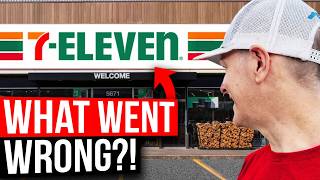
Michael Girdley’s video essay traces the full arc of 7‑Eleven, beginning with the 1927 Southland Ice Company in Dallas, where dock worker Jefferson “Uncle Johnny” Green began selling groceries after‑hours, inadvertently inventing the convenience‑store model. The company rebranded as 7‑Eleven in 1946, pioneered 24‑hour retail, and created iconic products like the Slurpee (1966) and the Big Gulp (1976). A 1973 licensing deal with Japan’s Ito Yokado allowed the brand to enter Japan, where Tomishumi Suzuki rebuilt the format into the ultra‑dense, fresh‑food‑focused “konbini” that would later dominate the Japanese market. In the 1980s, Canadian financier Samuel Belzberg used junk‑bond financing to take Southland private; the debt‑laden buyout collapsed after Black Monday, leading to a Chapter 11 bankruptcy in 1990. Japanese owner Ito Yokado rescued the chain for $430 million, eventually acquiring full ownership in 2005 and shifting strategic control to Tokyo. While Japan’s 7‑Eleven thrived on fresh meals and multiple daily deliveries, the U.S. operation lagged, relying on cigarettes, gasoline, and low‑margin packaged goods. The decline of smoking and the rise of food‑centric competitors (Buc‑ee’s, Circle K, Wawa, Sheetz) eroded margins. In 2017 7‑Eleven bought Sunoco stations and in 2021 purchased Speedway for $21 billion, loading the company with debt just as interest rates began to surge. Competitive pressure from delivery platforms (DoorDash, Uber Eats) and a fragmented franchise model further hurt foot traffic, which fell 7.3 % in August 2024. A hostile takeover bid by Alimentation Couche‑Tard (owner of Circle K) in 2024‑2025 offered $47 billion; 7‑Eleven’s Japanese parent invoked a “poison pill” and secured a national‑critical‑infrastructure designation from the Japanese government, ultimately rejecting the offer. The deal collapsed in July 2025, and 7‑Eleven announced the closure of another 645 U.S. stores in April 2026, postponing a planned IPO of its North‑American unit. Girdley concludes that cultural mis‑understanding, strategic mis‑steps, and an inability to adapt to modern retail trends have turned a once‑dominant global empire into a declining business.
Chapters
2024, a Canadian gas station chain walked up to the people that owned 7-Eleven. The people, you know, 7-Eleven, that invented the idea of the convenience store. And they offered them $47 billion to buy their company. These Canadians wanted to buy every Slurpee, every Big Gulp cup, everything down to the 7-Eleven logo. And the 7-Eleven folks, they said no. But just 8 months later, they had turned down that offer, and the folks that own 7-Eleven were forced to close over 1,000 stores, including they announced a few hundred this past week here in 2026. Put this in perspective, 7-Eleven is so dominant for so long, they had 85,000 stores and now they're rapidly on decline. The story of why it happened is totally fascinating. This is the rise and fall of 7-Eleven from a rainy day in San Antonio. If you wanna see more videos like this one, do me a favor, please like and subscribe. We're trying to get to a million subscribers someday. Maybe I'll get there. I'm almost at a quarter million, which is pretty crazy because I'm out in a park in the rain.
Thanks to Remitly for sponsoring today's video. More from them in just a moment.
How we got here today in this crazy decline actually starts way back in 1927 in Dallas, Texas. There's a company called the Southland Ice Company. Southland was like many businesses at the time. We didn't have home ice makers where you could make ice at your house. So people actually bought it from big suppliers who owned the machines that could do it. And at this company was a guy who worked on the dock. Everybody called him Uncle Johnny, and his real name was Jefferson Green. But he noticed something would happen, which was customers would pull up way after hours, 7, 8, 9 o'clock, when they were getting ice, and they would ask him a funny question: Have you got any eggs or milk or bread back there in the store? So he did what anybody else would do. He started to go buy some of those things at wholesale, and he stocked them in the warehouse. And when customers came up and asked, He sold him that stuff, and it turned out he was shocked. That stuff started to sell better than any of the ice products did. When this worked, he was loyal to his employer, and he went up the chain to a guy who everybody called Jody. His name was Joe C. Thompson, and he said, "Hey, we got a real issue here. There's this huge opportunity." And these two guys had invented without knowing it the idea of the convenience store, to be open and sell core consumer products that everybody needed at a convenient time when it was right for them to be shopping. In other words, after hours. The ice business would eventually find its death the way you would imagine. People got home ice machines and the Depression came in 1932, so they went bankrupt. But in 1933, prohibition of alcohol sales got repealed in the United States. That was perfect because in 1928, Southland had started this chain of stores called the Totem Stores, and they were the very first line of these convenience stores. After World War II in 1946, they renamed the chain to 7-Eleven. Based around the hours it's open, 7 AM to 11 PM, 24— well, not 24 hours a day, but every day. This was actually radical. Nobody stayed open past those extended hours. Uh, people were kind of flabbergasted that something would be open that, that open. It was the Amazon Prime of its day, basically. 1963, they had stuck to the 7-Eleven kind of hours, but then something happened that basically made them stay open 24 hours a day. And that was that the local University of Texas football team played a big game, and so many people came into the store after the game that they just decided to keep serving them all night long, and they stayed open. 1971, the chain goes public on the New York Stock Exchange. By 1974, they have 5,000 stores. By the mid-'80s, there's over 7,000. In 1966, 7-Eleven invents the Slurpee. In 1976, they invent the Big Gulp.
Big Gulp. 7-Eleven's Big Gulp. The big drink for a big thirst. Our best value.
And that is so revolutionary to sell sodas that big that automakers are forced to redesign future models of cars to fit the Big Gulp cup. 7-Eleven became so dominant that it became basically the word to describe a convenience store, much like soda, pop, or Coke. It basically replaced the category with its own brand name. In 1973, they also made a very fateful decision, which was they went and licensed the 7-Eleven brand name to a small Japanese chain named Ito Yokado. With the idea of allowing them to profit when Ito started to build the 7-Eleven business out in Japan. But like many stories on this channel, this small decision, which was probably just a footnote on their annual report, would eventually eat 7-Eleven alive. But we'll come back to how that all that happens in just a bit.
One thing that doesn't get talked about enough when businesses start scaling internationally is how messy moving money actually is. You close a deal, you owe a supplier, or you're paying a contractor abroad, and suddenly you're dealing with hidden fees, bad exchange rates, and no real clarity on when the money is going to land. That uncertainty alone can mess with your cash flow, and that's exactly the problem that today's sponsor, Remitly, is built to solve. Remitly is an international money transfer platform that gives you clear upfront pricing so you know exactly what you're paying and when the money will arrive. No guessing and no surprises. You could send money on-time payments to 100+ currencies, which is useful when you're working across different markets. So instead of stitching together wires, hoping things clear on time, and losing margin in the process, you get a much more controlled and predictable way to move money internationally. If you're dealing with cross-border payments and want to simplify that side of your business, you can use code BUSINESS to get a $100 bonus after sending your first $300 on the platform.
Check out the link in the description below to get started. What would happen next in the 1980s was emblematic of the entire economy back then. This was the era of junk bonds in which people were just lining up to do these high-interest debts to allow financiers to do crazy deals. Junk bonds enabled different financiers to come in and with very little of their own equity, borrow a bunch of money at high interest rates from big institutions and public funds and stuff like that. And they would turn around and buy entire companies hoping to flip them. And over the next couple of years, 1987, a Canadian financier named Samuel Belzberg ran this exact play. He used junk bonds to come in and buy Southland, which was the corporate name for 7-Eleven. But the family that owned it was the Thompsons, and they panicked. So they decided to do exactly what Bellsberg had wanted to do and do their own management buyout to take the company private off the stock exchange. This was financed almost entirely with junk bonds for a price of nearly $5 billion. Debt as a vehicle to do kind of moves like this can work great as long as things go in your favor. But in most situations where things go wrong, and you can see it on this channel and over and over again, when there's a high amount of debt put on a business and 2 or 3 or 4 or 5 things all go wrong at once, that's when trouble comes. The Thompsons closed their deal in 1987 with a plan to refinance the whole thing at better interest rates in 1988. It would prove to be pretty bad timing. In 1987, we had Black Monday in the stock market. Basically, we had a crash and the entire bond market where people could borrow money froze indefinitely. Athlean at this point is sitting on $1.8 billion of high-yield debt. Meaning it has high interest rates, and they had no way to refinance it. The company has to go into a panic and basically a fire sale mode, selling everything that's not nailed down or associated with the 7-Eleven brand. Everything from oil refineries to the distributorships. The next 3 years they would lose $1.5 billion, and by 1990 they couldn't do it anymore and they filed Chapter 11 bankruptcy. Remember Ito Yokado, the Japanese licensee? Turned out they had run their business a bit better, and during this period of time in the 1980s, it was the boom time in the Japanese economy, so they were sitting on a ton of cash and the perfect group to come in and save 7-Eleven. The American economy in a tailspin, there aren't many buyers for an asset like 7-Eleven, so Ito Yokado is able to buy the entire chain for $430 million, less than 10% what the Thompsons had paid just a few years before. American economy is full of stories by the dozen of people like Ito Yokado who have made fortunes by having cash when everybody else is scared to deploy it or doesn't have any. And for a bargain price, they were able to get over 7,000 stores, IP that was hugely valuable, Big Gulp, Slurpee, and well, a ton of history. But they did play nice with the Thompson family. They had retained 5% of the company, but it was a far cry from the fortune they had created. And lost over just a few months. Fast forward to 2005, Seven I, the name of the company, the Japanese company, bought out the rest of 7-Eleven and was suddenly the entire owner of the chain. The Thompsons, well, they were gone. And if you look at 7-Eleven today, the entire brain and operation of the company, it happens back in Tokyo, not in the United States. As the coming years happened, uh, the face of 7-Eleven would radically change. Today there's over 85,000 7-Elevens across the globe. Only about 15% of those are in the United States. There are over 20,000 7-Elevens in Japan, an economy a fraction of the United States' size. And believe it or not, Thailand has more 7-Elevens than the United States does. But the funny thing about 7-Eleven between the United States and Japan is these share the same name, but they are radically different stores, almost down to the individual items and where they're located. That happened is back in 1973, a man named Tomishumi Suzuki in Japan had rebuilt the entire concept of 7-Eleven from scratch, specifically for Japan. In Japan, they offer tiny stores in densely populated areas, and they'll do 2, 3, or 4 deliveries of merchandise per day. Much of it is fresh food. Because of the Japanese work culture, many people are stumbling home from their jobs at 9 or 10 PM they buy a prepared meal and they just eat it at home. My family went to Japan a few years ago for spring break. The kids were blown away. You could basically get a restaurant-quality meal made with fresh food basically inside of a convenience store. And they were better than the food you would typically get at a United States restaurant. And Japan's 7-Elevens have expanded to be centers of commerce for entire neighborhoods built around walkability and mass transit.
You could pay your taxes there.
Do all kinds of crazy stuff to live your life. Utilities, bills, it all happens inside of a 7-Eleven. They had become so essential to Japanese life that the konbini, what they call them in, in Japan, basically were deemed essential infrastructure. And while so many other things closed down in the 2020 era for COVID's pandemic, basically they got to stay open. And so while in Japan basically the 7-Eleven has integrated itself to be a key part of everyday life. It's infrastructure to live. In the United States, it's basically cheap gas and a warmed-over taquito under a heat lamp. 7-Eleven convenience store model in the United States is built entirely on cigarettes, packaged goods, outsourced food, and the hope that gasoline that's reasonably priced brings you in the door. But in the United States, by 2012, things started to change, and one of those things was the decline of smoking. Cigarettes for decades had been the highest margin item sold inside of convenience stores. By 2012, between then and 2013, they had gone from like 28,000 a month in sales per store of cigarettes at a typical 7-Eleven. By 2023, the number would be less than half that for the highest margin product they were selling. In 2004, food was just a handful of percent of a typical convenience store of a 7-Eleven, but by 2014, the number would be closer to 30%. And that's good for a 7-Eleven. Unlike gasoline, which runs at 3 to 5% profit margins, gross profit margins, food can run at 40, 50, or 60%. All the while, because they were in Japan and weren't really focused on understanding the United States market, 7-Eleven Corporation fell behind while other stores, everything from Buc-ee's to your local neighborhood Circle K, figured out food and these changes. And Circle K— well, 7-Eleven was way behind. As the 2010s started to happen, 7-Eleven realized they were behind in the United States. They had missed their window to grow out their network, get bigger scale, and keep up with the times. So they turned to the one thing they could do, which was to spend some of their hard-earned Japanese capital. In 2017, they bought the entire chain of Sunoco gas stations, and then in 2021, they did the largest convenience store acquisition in history. When they bought the entire chain of Speedway. Speedway's deal was $21 billion for 23,000 stores. But they were about to repeat a mistake that had been made in the '80s when the Japanese stepped in, which was they borrowed a bunch of money. $21 billion, in fact. And interest rates for 7-Eleven tripled between '21 and 2024, precisely at the moment that borrowing money was about to get a lot more expensive. Meanwhile, the competition during this era was not waiting around. Tons of private equity money was flowing into different chains. And then also some of the old-line ones were continuing to grow as well. Everybody from Wawa to Sheetz to Stripes, they're all dumping tons of money to making their stores better and, well, building more of them. These guys had also gone all in on food while 7-Eleven had not been ready and asleep at the wheel. Casey's in the Midwest has quietly become the 5th largest pizza chain in the United States. Other folks had started to play riffs on the model. Buc-ee's, based out of Texas near where I am, building their first store near Luling, Texas, which is about 30-40 miles east of here, basically created something so compelling for customers that people would drive right past the 7-Eleven to stop at a Buc-ee's, or they would hold it for a few more miles in order to use Buc-ee's celebrated bathrooms. At the same time, Dollar General, Family Dollar, and the likes of those types of local Dollar General stores started to come after the convenient market as well, placing themselves very near lots of urban, suburban, and exurban American consumers. But as the late 2010s happened, something else was about to go horribly wrong for 7-Eleven, which was the rise of DoorDash and Uber Eats, where suddenly 7-Eleven and their likes had been the most convenient, clean thing accessible to you and I, uh, they still required us to drive down the street Now I could pay a few bucks extra and get DoorDash and Uber Eats to bring it to my house. Hilariously enough, we got Uber Eats a couple weeks ago and somebody, uh, the driver actually delivered our order mistakenly, uh, to somebody else and brought us somebody else's order. Their order, they had gotten delivery for $8 of a single donut. And I called the guy, I was like, why'd you bring me a single donut? Who ordered this? He's like, somebody did. Yeah. And that's how crazy Americans have gotten in the late 2010s. And as the late 2010s came about into the 2020s, something else happened, which was the way 7-Eleven had structured itself had been a total mess. Whereas most other chains were entirely owned by corporate and able to dictate things and move quickly, 7-Eleven had this weird mess of company-owned stores and franchisees. Of the stores that are being closed right now, a big chunk of them are actually franchisees. So they're basically telling these folks you're not allowed to be in business anymore. And the feeling's mutual. Some of those stores are doing so poorly that the franchisees see no reason to keep putting the 7-Eleven brand on their stores. The agreements are so broken and the incentives are so disaligned that nobody wants to keep working together. People started to study foot traffic in 7-Eleven stores. In August 2024, based on all these headwinds, they lost 7.3% of traffic that month alone. And if you look at what's killing 7-Eleven and why the thousands of stores are closing, it's pretty clear why. They don't have a compelling reason to exist. They're not the best at anything. They don't have the best locations. They don't have the best food. They don't have the best brand. And it's just a confusing mess. Meanwhile, back in Tokyo, the American business is just kind of an afterthought. They're a $69 billion empire and they're just letting the American— North American stuff kind of kind of bleed a slow death.
Brings us to 2024 when a fateful decision is made by 7&I Holdings in Tokyo. And that's when a company based out of Montreal called Alimentation Couche-Tard, who owns Circle K, comes in with an offer to buy the entirety of 7&I Holdings. The entire thing. The whole globe. The initial bid is $38 to $39 billion. And 7&I says no thank you. 2 months later, Couche-Tard comes back.
They've upped their offer to $47 billion.
All cash for the entire empire of Seven I. The combination would create the largest retail chain in human history. Over 100,000 stores, an economy the size of a small country, and 30 countries of presence. Seven I does something different to protect themselves from this offer.
They don't want to do it.
They're a Japanese company, they want to stay Japanese. So they do something that American companies don't do, which is normally we adopt a thing called a poison pill, which basically makes it economically unfeasible for a company to have a hostile takeover. But in this case, the management of Seven I go to the Japanese government and they ask for a favor. The government agrees and defines Seven I as national critical infrastructure. And look, they're not that wrong. If there's an earthquake or there's a big disaster in 7-Eleven, people go there for water and shelter. Like, it's pretty normal. This would only work for a bit of time because they still had to figure out what they were going to do about this incredible offer from Couche-Tard. The Ito family, the guys who had bought the American operation with a check back in the 1990s, they go trying to do a management buyout, but the ability to finance it doesn't materialize.
The tables have turned.
Whereas once the economy in the 1980s in Japan was booming and in the United States it was sluggish, in the United States now our economy is booming and Japan has been in stagflation for decades. March 2025, Seven I, the Japanese company that owns the whole globe, Basically, they do something really radical. They install the first non-Japanese CEO in the history of the company, a guy named Stephen Dacus. His mandate is to turn the chain around, especially North America, close stores and get it back on track, preparing the whole thing for a public offering. By the summer, Couche-Tard gets frustrated and takes their $47 billion offer and officially rescinds it, saying they're not willing to play the games anymore. In one of the most insulting business breakup letters ever, Couche-Tard basically says they're stopping the pursuit of the merger because 7-Eleven has had a history of confusion and delay and obfuscation, basically being like, yeah, they were playing a bunch of games and we got tired of it. So they walked away in July of 2025. Months later, in April 2026, 7-Eleven has to announce they're closing another 645 stores on top of the 400 they announced they were closing back in 2024. Japanese plan to spin out the North American operation into its own IPO. Is permanently on hold. Well, semi-permanently.
They said they pushed it to 2027.
Interestingly enough, if you trace the entire story here of why the Japanese did not take the $47 billion offer, a lot of it lies, in my opinion, in the culture of Japanese. The last thing they wanted was a bunch of French Quebecois coming in and telling them how to run their empire. There is so much about history and community and harmony that happens in the Japanese business world that the idea of some swashbuckling French-speaking Canadians coming in had to seem incredibly scary. As you look at business, there is this nature that each individual geography is much more different than you think. Uh, and in the case of Japan, it is a radically different market than the United States. And heck, even inside the United States, what happens here in Texas is extremely different than what happens in New York, not to mention places like California or Florida. The great business people who succeed in expanding around the globe, uh, they basically understand that everybody is radically different You have to tailor what you're doing for individual markets. And in the case of Seven I and the whole 7-Eleven story and saga, you can see how time and time again the Japanese didn't really realize what was going on in America and vice versa. And ironically, Couche-Tard out of Quebec, if they'd understood the Japanese a bit better, probably could have saved themselves a lot of heartache with all the flying back and forth to Tokyo to negotiate. All right, it's a sad story. I remember buying Slurpees as a kid.
Let me know what you think of this video in the comments below.
If you say nice things, it encourages me to make more. Catch you next time.










