The rise and fall of Amazon Fire Phone
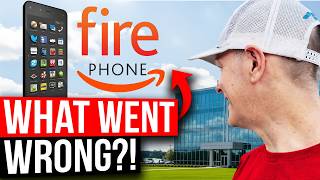
In this video Michael Girdley examines Amazon’s brief foray into smartphones, tracing the Fire Phone’s conception, launch, and rapid demise. He explains how Amazon’s earlier hardware successes— the Kindle e‑reader and Kindle Fire tablet— relied on a loss‑leader strategy that subsidized devices to drive content sales. Jeff Bezos, seeking to make Amazon “cool,” pushed a secret Lab126 project focused on a 3D “Dynamic Perspective” camera, despite engineers lacking a clear use case. The phone was split into a high‑end “Otis” model and a low‑end “Duke,” but Bezos killed the cheaper version, positioning the device as a premium product priced like the iPhone 5S. The Fire Phone suffered from an under‑populated app ecosystem, an exclusive AT&T launch, and a brand mismatch— Amazon’s value‑oriented image clashed with a luxury‑priced phone. Within weeks sales were negligible; Amazon slashed the price to $0.99, yet the product never recovered, resulting in a $170 million loss, unsold inventory, and the first mass layoff at Lab126. Girdley shows how the engineering work from the phone was repurposed for the Echo smart speaker and Alexa, turning a failure into a later triumph. He highlights cultural issues such as Bezos’s micromanagement, suppressed dissent, and the danger of prioritizing “coolness” over customer need, offering broader lessons on corporate decision‑making.
Chapters
In 2014, Amazon released its very first smartphone, entering the market to compete against Android and the iPhone. They'd had 1,000 engineers working on it for over 4 years. Much like Steve Jobs had been with Apple products, Jeff Bezos had been hands-on in every single product design meeting, uh, and one feature that he had controlled above all was something the engineers really struggled to figure out a use for, which was a special 3D screen for the Fire Phone. It would all prove for naught. 6 weeks after launch, the Fire Phone went from $199 down to 99 cents. In other words, code for we couldn't give it away. And, uh, Amazon took a $170 million loss on the project. It's interesting to wonder why a company as formidable as Amazon could make such a huge gaffe and failure on a product launch when they've been so successful in so many other things. And in this video, we're going to figure out why. There's also a funny narrative out there that this failure of the phone might have turned into Amazon's greatest success of all time. Well, maybe not. Oh, by the way, thanks to Quo for sponsoring this video.
More on them later.
Before I tell you how it all went down, I do want to tell you that every single one of these videos, we do a deeper dive companion document that goes into it, and you can download it for free at girdley.com/youtube. So how this all happened. The story starts back in 2007 when Amazon launched the Kindle. If you remember this thing, it was ugly and kind of not very feature-filled, but it did one thing really, really well. It lets you read books on a mobile device. In other words, you could download books, but it was a success. And off this success, Amazon decided to get into the tablet business and they launched the Kindle tablet, the Kindle Fire tablet specifically in 2011. It cost them $201 to make it and they were selling it for $199. But by December of that year, they were moving a million units a week. But this loss was actually part of the whole strategy for Amazon. They wanted to make money on selling content to these devices that they put out there, the Kindle and the Kindle Fire. In other words, instead of outcompeting and out-innovating against Apple, their whole plan was to just make money a different way via content and lose money on the hardware. This was a proven model that had worked numerous times for different folks in history. Uh, I've done a number of videos on the video game console business. Exact same thing here. Amazon had a proven playbook. But Jeff, he was about to go down a path of not following it at all. In 2010, Apple released the iPhone 4. Inside of Amazon, they decided they were going to go head-to-head against it. And this place was called Lab126. It was their secret kind of skunkworks place, and they greenlit creating a prototype of a new mobile phone. At the time, Lab126 was working on 4 different projects codenamed A, B, C, and D. A was the Kindle, which came into market. B was the phone. C was a 3D hologram device. And D, it would be a smart speaker that would come to play very important in this story later on. But the specific phone project was so secretive that when people got hired to work at Lab126, Amazon wouldn't even tell them that the project existed. The logic for Amazon to build a phone was actually pretty smart. If you look at Apple and Google, those guys are printing money through their app stores. In some situations, they're taking 30% of every single transaction that goes through the apps that go through it. But despite having a pretty standard playbook of how they would bring things to market, in fact, one of the things Amazon famously does is write with the end in mind. They build something with the end in mind, which basically they write the press release of the device or product they're gonna release. And so they basically understand exactly what the customer's gonna see at the end when they decide to buy or not. But in this case, Jeff went a different direction and what he was talking about in an internal memo at the time was a thing called Amazon.Love. And he had noticed that there were two types of companies out there. Those that were like universally beloved and fanatical from customers like Disney, Nike at the time, Apple, and then people that just kind of, well, companies that are on the other side of it where people just kind of deal with them. Walmart is a great example where it's just like, well, yeah, we all shop at Walmart, but nobody wakes up wearing a Walmart t-shirt. His thesis was that first batch, the people that, the companies that people loved were ones that took risks out in the market. And risk-taking was cool in America. And if you wanted to be cool, you had to take some risks. Hell yes. And if you look at the core of the cultural problem and the decisions that led to the failure of the Fire Phone, it starts with this, right? Like instead of trying to build something that customers want, they're trying to be cool. And if you remember from high school, nobody gets rich being cool. And Jeff had supposedly— and this is all from third-party reports— seen a video from a Carnegie Mellon researcher in 2007 demonstrating basically a 3D screen that would track your face and interact with you in a way that was kind of compelling. Nintendo famously did some of this stuff where they were using a camera to track people's movements and integrate them into what was happening on the screen. Engineers inside of Lab 126 put together all kinds of dummies, fake wigs, mustaches, all that kind of stuff, trying to make this 3D camera and feature work. The problem was nobody really knew what it was going to be useful for. And remember, Jeff is taking a different approach to the Fire Phone. He is incredibly hands-on. He's in every design meeting, basically bringing his taste to exactly what the product was going to be doing. And he was so excited about 3D. And one engineer who was later, like, interviewed about the whole thing said Jeff used to talk about 3D over and over again in each meeting. The problem was none of us really knew what he was asking for. So while Amazon normally built things working backwards from what customers wanted, here there was one customer, a multibillionaire, who was really excited about a potential piece of tech because theoretically he wanted Amazon to be cool. The team inside decided that they would split the phone project into a high-end brand called Otis and a low-end one called Duke. And Jeff, well, he killed the cheap one because he said he thought that would hurt Amazon's brand. One designer at the time reinforced what I just said. He, uh, basically felt like he was building the phone for a customer. Just unfortunately, that customer was Jeff. On June 18th, 2014, Bezos took the stage at Seattle's Fremont Theater to introduce the phone. Can we build a better phone for Amazon Prime members? I'm excited to tell you that the answer is yes. In a very Apple way, they had decided in the marketing department at Amazon to call the 3D feature Dynamic Perspective. A camera would model a 3D version of your head and then it would get used inside of the phone. What? But remember, Amazon's a retailer, so they had a second feature they called Firefly. Basically, you could use the camera on your phone to scan any item and it would automatically buy it for you from Amazon. It was priced $199 with a 2-year AT&T contract or $650 without one. And this was the same price as the iPhone 5S. And much like the iPhone had done when it had released nearly a decade earlier, they went exclusive with AT&T. But there was a problem. When you went to those AT&T stores in the next few days after the phone was launched, AT&T reported nobody was buying it. The problem wasn't the hardware. They were spending $205 for pretty high-end stuff, Snapdragon chips, all that kind of stuff, good cameras, competitive with everything else. But that wasn't the problem. And unlike the playbook that had worked with the Kindle, where they were subsidizing the hardware and selling it for below cost in order to make money up on the back end, Suddenly Amazon was doing the opposite. That $650 phone, they were suddenly trying to chase Apple's high-end gross margins. To enable all that kind of crazy 3D stuff, they had created Amazon's own version of the operating system on the phone. So unlike Android or iOS, which have hundreds, if not hundreds of thousands of native apps, everything from Google Maps to Facebook, there was barely one-sixth the number when you basically bought an Amazon phone. The second was that back in 2007, when the iPhone was launched and it was exclusive on AT&T, it was so compelling and revolutionary at the time that people would break their Verizon contract to switch to AT&T to get the iPhone. The difference was in today's market, when that was happening, nobody was breaking their Verizon contract to get a kind of useless 3D-enabled camera, some limited number of apps, and a button. That would let you shop easier on Amazon. The last fundamental problem was that Amazon is a brand built on value. Apple is a luxury brand. Everybody uses it. Amazon, well, sometimes. Most of us do. And here we were with Amazon trying to produce a premium phone and competing with Apple when its whole identity was exactly the opposite. And remember, here is Jeff, the CEO, micromanaging the whole process. And in the end, when the CEO sometimes sits in meetings like this one, people are afraid to speak up. And you can hear it in the interviews that I quoted here earlier in this video.
But before we get into that, I want to talk about today's video sponsor, QWO. There's a pattern you see when you study businesses over time. Most problems don't come from one big mistake. They come from small systems that never got upgraded. Communication is one of the biggest examples. Missed calls, scattered text, and no shared visibility are missed opportunities to connect with your customers and often mean lost revenue. Today's video is sponsored by QWO, formerly OpenPhone, the modern AI-powered business phone system used by over 90,000 and businesses. Every missed call, slow follow-up, or dropped handoff isn't just inconvenient, it's lost revenue. And most business owners don't even realize where those leaks are happening. Qo helps solve that by making sure calls and texts are answered, routed, and followed up on automatically, even after hours. So when a customer reaches out, the opportunity doesn't just disappear. It also turns conversations into insights. Qo logs calls, generates AI summaries, and highlights next steps so owners can actually see what's working, what's not, and where money is being left on the table. QWO works wherever you are, right from an app on your phone or computer. Your whole team can work from one shared number, see the full conversation history, and respond with context, whether they're in the office or on the go. And if you wanna turn more conversations into revenue, check out QWO. Try it for free and get 20% off your first 6 months at qwo.com/girdley20.
And that's a lesson for us as leaders. You have to cultivate a culture where people are willing to speak up and say the emperor has no clothes. But here, it clearly wasn't that. Oh, and second call to action. My editor reminded me, "Hey, I need to be asking people to subscribe because we're trying to get to a million followers someday. We're at like 220,000." If you would do that, click that button, it'd make me happy. And maybe someday I can afford a newer hat. After all this happened, famous tech reviewer MKBHD, who by the way makes good videos, I like watching him. He doesn't walk in a forest though, so maybe there's a lesson for me. Anyway, he declared the phone, the bust of the year and said there was no real reason to buy it. In the first 20 days, they sold an unbelievably low 35,000 units. That was 0.02% of the active smartphone market. Panicked, and 6 weeks in, Amazon basically cut the price to $0.99. It didn't matter. People weren't buying it. In October 2014, Amazon lost nearly half a billion dollars, and $170 million of that was money they lost from the Fire Phone debacle. They had $83 million worth of the phones sitting unsold in warehouses. In 2014, Amazon stock was down 22% while the S&P 500 was up 14%. In September 2015, Amazon threw in the towel on the Fire Phone. It only took 14 months to go from a, well, basically a wannabe hero to a total zero. As is the case when something bad happens to the organization, it's usually not the CEO or the owners who take the first hit. In this case, dozens of Lab126 engineers and developers were laid off. It was the first mass layoff in the company's 11-year history. Amazon basically cleaned house in Lab126. Some leaders went on sabbatical, other designers were marginalized, and other ones were just kind of pushed out the door. One employee felt they were, uh, basically taking the blame for a mistake that basically emanated from the top. Based on the research I did, you can't really blame them for feeling that way. So remember how I mentioned that there were 4 different teams and 4 different efforts inside of Lab 126 that the guys working on the smartphone didn't know existed? It was an intelligent interactive speaker. And when the phone failed, all of those engineers who'd been working on it moved over to the smart speaker effort. A lot of what would show up in that smart speaker, uh, basically was introduced and engineered as part of the Fire Phone. For example, you ask it to play a song and it goes and speaks to you and plays the song. That came from the phone. So 4 months after the phone died, Amazon released the Echo speaker with its voice assistant Alexa. The Echo was actually everything the phone wasn't. It was novel, it was bare bones, it had relatively specific use cases, and most importantly, it wasn't going into a crowded market where existing competitors had huge moats against competition. By 2019, they had sold over 100 million Alexa devices, and by 2020, it reached the hundreds of millions. Bezos used this opportunity to take the lessons learned and the engineering done as part of the phone and basically turn it into a triumph. That, uh, the Echo and Alexa existed because of the mistake of the Fire Phone. By 2020, Bezos had basically put his attention elsewhere. He stopped mentioning Alexa in his updates to shareholders, and according to internal reports, his, uh, interest was elsewhere. If you're going to be running a business, in the grand scheme of things, most important thing to understand is interpersonal dynamics. And you have to understand that when you go into a meeting or you go into an effort, there are a bunch of other people in the room that are all biased in one way or another, either to speak or not, by who you are and what position you have coming in. In this case, Jeff was so convinced of his vision and the coolness that he wanted Amazon to be that he didn't slow down to think about whether there might be scared people around the table that just weren't telling him the truth. And that's where today Amazon basically failed. Then declared victory, and then in reality kind of failed again. Kind of a fascinating dynamic. But in the end, the whole thing gives you a lot of insight as to why a lot of times companies are so irrational, and that's because they're run by irrational beings— us humans. All right, what do you think caused all this? Let me know in the comments below. I try to read them all. Catch you next time.










