The rise and fall of Blockbuster: How an $8 billion empire vanished
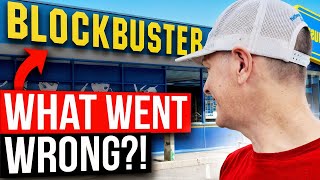
The video chronicles Blockbuster Video’s trajectory from its 1985 founding by David Cook, through rapid expansion under waste‑management magnate H. Wayne Huizenga, to its $8.4 billion sale to Viacom and subsequent decline. Cook’s tech‑savvy inventory system and super‑store model gave Blockbuster a massive early advantage, but cash constraints forced him out and Huizenga took control, abandoning franchising in favor of corporate‑owned stores and a factory‑like rollout that grew the chain to over 9,000 locations and $5.9 billion in revenue by 2004. Viacom’s acquisition turned Blockbuster into a cash‑cow for its media assets, but the conglomerate’s debt‑heavy structure limited reinvestment. New CEO John Antioco attempted to modernize the business, introducing revenue‑sharing with studios and a brief DVD‑by‑mail/brick‑and‑clicks model, yet failed to pivot decisively as Netflix (mail‑order DVDs, later streaming) and Redbox (kiosk rentals) disrupted the market. Blockbuster’s reliance on late‑fee revenue, massive debt from the 2004 spinoff, and half‑hearted digital experiments led to bankruptcy in 2010 and a final sale for $320 million. The narrative ends with lessons about technological disruption, the importance of timing exits, and the cyclical nature of entrepreneurial success.
Chapters
At its peak, Blockbuster Video had over 9,000 stores worldwide, served 65 million customers a year, and made over $800 million each year in profit from late fees alone. But fast forward a decade and Blockbuster was bankrupt, crushed by the very technology that it had somewhat ignored and a ton of management mistakes. This video is the rise and fall of Blockbuster Video. In 1985, David Cook was laid off from his job in the oil business and he went to go work at a friend's video rental store. And he noticed the place was booming, so he decided to join the action and open his own store. In 1985, October, David and his wife opened the very first Blockbuster in Dallas, and the store was an instant hit. You see, at the time, the typical video rental store had a few dozen tapes, and you had to go ask somebody at the counter to go get it for you. Blockbuster had over 8,000 videotapes and basically felt like a big superstore. It had bright aisles, big selection, family-friendly atmosphere, no adult section, and it just felt like a good, healthy place to go. In the oil industry, Cook had worked in software, and he brought that same ability to his first Blockbuster. He computerized the entire inventory and innovated by doing crazy things at the time, like barcodes, when most other stores were doing things with pencil and paper. That meant faster checkout times and a broader selection than mom-and-pop stores could. With pencil and paper, you just couldn't do 6,500 titles like he could. And this enabled him to do something other stores couldn't, which was not just stock the hits. He could also do a lot of back catalog style tape. Tips. In fact, in those early days, 70% of rentals came from stuff that weren't the modern hits. It was from older stuff from a few years before. By 1986, fresh off the success of that first store, he had 3 more. But he ran into a classic growth problem, which is to keep growing stores, you need more cash. Cook had planned an IPO to raise money, but a negative newspaper article about his oil industry background had scared off a lot of people, forcing the cancellation of that. Without the expected injection of funds, the company started to run low on money. And actually because it had been investing so much in growth in 1986, showed a loss of $3.2 million as a company. And while Blockbuster was a hit, it was going to need somebody with deep pockets to keep the growth going. Enter the next hero in our story, a man named H. Wayne Huizenga. He didn't care much for movies, actually, but he did like to make money. He'd already built a company that many of us know today called Waste Management into a Fortune 500 company, and he'd done it by rolling up lots of mom-and-pop and small garbage haulers across the country into one big corporation. So in 1987, Huizenga and two former Waste Management colleagues invested $18.6 million in Blockbuster Video. They got a third of the company and more importantly, they got voting control. Well, there was a problem then because Cook and Huizenga, they didn't see eye to eye. They had different philosophies about how to grow and how to run the business. So in 1987, Cook, our original founder, he exited the building, taking away a package of $12 million. Good for him. But at that moment, the fortunes of Blockbuster were about to change. With Cook out of the way, Huizenga wasted no time doing exactly what he wanted to do, which was make Blockbuster Video as ubiquitous as McDonald's was for hamburgers. While light-pocketed Cook had pushed franchising as a way to grow quickly and not require a lot of capital, deep-pocketed Huizenga saw control in owning all the stores. So he stopped franchising and started building it out his way. Huizenga's team aggressively started buying back franchises that Cook had set up. And creating basically a land grab move to try to get as much of the emerging video rental market as possible. In 1987, Hysink and his team bought two rival chains, Southern Video and Movies to Go, to enter new markets quickly. Why add locations one at a time when you can add them 100 at a time, right? By the end of 1987, Blockbuster had ballooned from having 35 locations to 133, becoming along the way the nation's fifth largest movie rental chain. Sales that year leapt from $7 million to $43 million. And they were just getting started. In 1988 and 1989, Blockbuster was opening a new store, an astounding every 17 hours on average, more than one per day. In 1988, Hising and his team went and bought another rival, adding hundreds of more locations called Video Library Inc, and then did a deal with United Cable to franchise over 100 new locations as well. By late 1988, Blockbuster Video now had 415 stores and had leapt in just over a year from number 5 to number 1 nationally in the video market. Just 3 years earlier, it had been a one-store video rental upstart, and here it was, early king of the hill. Huizinga and his team got so efficient at opening new locations that they created a factory-like system where they would load up a single semi-trailer with everything needed to open up a Blockbuster Video. They would ship it to a new town, and their crew there that they had just hired would open up a store in a matter of days. Huizinga also brought a number of the tactics that he had learned from his garbage days. If a local competitor wouldn't sell out to them when they wanted to enter a new market, he'd just fill their market with tons of new Blockbuster videos, offering dirt-cheap prices, massive advertising, and great deals until the competitors either went out of business or sold out. By mid-1989, 2 years after Huizenga took over, Blockbuster had 700 stores. Sales had tripled, profits had gone up 400%, and the stock— it was up over 7 times in that same period. They kept going. By 1990, they had over 1,200 stores. That was more than the next 375 competitors combined in the video rental market. The mom-and-pop video rental place was suddenly an endangered species. In 1991, systemwide annual sales hit $1.1 billion with $83 million in profit. Just an astounding level of profitability for a company growing this quickly. By 1993, the Blockbuster marquee stood over 3,400 stores worldwide. The company accounted at this point for 25% of the worldwide video market. It was bigger than all of its major competitors combined. New stores became instantly profitable because humans and Americans were basically addicted to movie night and renting DVDs for that. You couldn't get stuff over the internet. You couldn't necessarily want to go to the movies every single night. And broadcast TV was kind of boring. It was still just basically lame cable. And there were a bunch of kids and families around, so it was perfect. And Blockbuster rode that wave. At its height, Blockbuster employed 84,000 people. Across 26 countries. But a big part of that profitability came from something we all, well, hated, which was late fees. Customers hated being charged $10 a day for returning their videotape a day late on a $3 rental. But Blockbuster, they loved it all the way to the bank. By the late '90s, Blockbuster was earning over $800 million a year in profits from late fees alone. By the late '90s, the company was feeling invincible. I mean, how could you not feel like you couldn't lose given the amount of dominance they had created? So they started looking for other ways to keep growing and keep the train going. Huizinga started dabbling. They started to do things like do video game rentals. They opened some music stores and even audaciously, they started to open and considered opening a Blockbuster theme park in Florida. But beneath all of this, you could see that trouble was starting to brew underneath the surface. At its core, the video rental market, the growth was starting to slow, especially as the market got saturated by so many Blockbuster stores and their competitors. At the same time, new technologies were definitely coming. This This was the early days of the internet and we could all see the promise of where it was going. And people were starting to talk about things like DVD by mail and the kiosk where you could rent DVDs. Like these were all things that were going to threaten the basic monopoly that your mom and pop or Blockbuster Video had on at-home entertainment. So Huizenga in 1994, after a decade of work, pulled a master move. He sold the entire chain of Blockbuster to Viacom for $8.4 billion in cash and stock. He personally took home $900 million for, you know, a tough decade of work, I guess. And he made Blockbuster, well, somebody else's problem. This is a recurring theme from this video. You'll see that great entrepreneurs like Huizinga and another guy who will do it later on in the video as well. Well, they know when to sell and it's time to sell at the top. See, Viacom at the time was a media conglomerate trying to basically be a vertically integrated combination of theaters and production houses and TV networks. And they wanted Blockbuster. As a way to guarantee distribution for the films that they were producing at Paramount. And also the cash flow was important. They needed the cash flow to pay and service the debt they were using to buy Paramount Studio. It also meant that those pictures coming out of Paramount could get a 25% distribution because that's how much of the home video market Blockbuster owned. And this meant that Viacom was going to be forced to treat Blockbuster like a cash cow and maybe not be able to reinvest in the business like the times coming ahead would require. And investors saw the same thing. By 1996, just 2 years after the merger, the value of Blockbuster had fallen by over half. So in 1997, Viacom tapped a new CEO, a man named John Antioco, who came from various enterprises, one of which was Taco Bell. And he had 2 jobs. One was get Blockbuster back to the basics of renting movies well. And number 2, get it ready for the digital age. Antioco did make some smart moves. He revived the famous Make It a Blockbuster Night campaign and got people, well, coming back in and doing family movie nights again. Tonight, make it a Blockbuster night. He did some things to streamline operations and cut costs and that sort of thing. But the smartest thing that Antioco did was actually go and rethink the entire model of movie rental. And he could only do this because Blockbuster was so big. He went to the movie studios and said, hey, we're not going to buy your VHS tapes upfront like we did before. We pay $65, $105, $150 to own this tape and then we rent it out. What we're going to do is this: we're going to pay you a small amount up front, and then we're going to give you a percentage of revenue for each individual, like, rental that we do. So this meant that Blockbuster could easily stock 100 copies or more of a hot new release, whereas a local mom-and-pop might only have 3 or 4. And this solidified Blockbuster's availability of the really hot movies that everybody wanted to watch. Blockbuster in 1998 actually swung to a profit. They made $54 million that year, which was pretty awesome compared to the fact they lost $318 million in 1997. But while they were rearranging the deck chairs on the top of the Titanic here and Anteoka was making good moves, they still weren't changing the direction of the ship in face of the icebergs that were dead ahead. You see, in 1997, a little startup called Netflix had started up and they had started to send people DVD rentals by mail with no late fees. And people could keep the videos as long as they wanted. Burning cash in early 2000, Reed Hastings, CEO of Netflix, actually approached Blockbuster and tried to sell their business to become the digital vision of Blockbuster Inc. They wanted a cool $50 million for the business. If you're familiar with the story of Blockbuster, this is normally where people say, oh, these leaders of Blockbuster, they were such idiots. Well, I'll explain to you why that's not actually the case. The first one is that Netflix at the time was losing millions of dollars a year. And remember, Blockbuster had been bought by Viacom for cash flow. The last thing these leaders of Netflix could do was go to Viacom management and say, Hey, we need to start losing some money. Second, at the time, Netflix was not what it is today. It was a DVD-by-mail operator only with really no moat. You see, Blockbuster had this moat of real estate. It was hard to compete with them. With Netflix, like, you could just open up a distribution center next door, and as long as you had access to the postal mail, you could do the exact same business. Third, the threats for Blockbuster at the time were a basic whack-a-mole of different stuff. Netflix wasn't the only threat. Redbox was coming too. It had been born out of an innovation lab at McDonald's, and it was about to start offering kiosks renting DVDs for a dollar or less at like locations across the country. And fourth, and perhaps the most important, was Blockbuster was still growing like crazy in the early 2000s. At this point, by 2004, they had reached over 9,000 stores. When you're spewing cash, it's easy not to feel like you need to make some, well, basically dire moves. And like most stories of disruption on this channel, management actually saw the icebergs coming. In this case, they just didn't react appropriately. And even if somebody on the team had gone to Viacom and said, you got to buy this Netflix startup, It's unlikely Viacom would have told them yes just based on cash flow alone. Blockbuster management actually did put together their rival to Netflix in 2004. They offered their own version of DVDs by mail, and they had their own streaming service, believe it or not, partnering with Enron in 2000 to offer their own Blockbuster over the internet. Now Blockbuster is as close as your mailbox. Introducing Blockbuster Online. Choose your movies online. Receive and return them by mail. Enjoy unlimited rentals and keep them as long as you want. But internal disputes, ownership requirements from Viacom, and all this stuff meant that these moves would be too little, too late to save Blockbuster. Even still, the company peaked at $5.9 billion in revenue in 2004. And in that year, 2004, Viacom saw the upcoming tech disruption and more importantly, the lack of growth in Blockbuster. So it did the smart move. It spun out Blockbuster into its own company. But along the way saddled the company with $1.45 billion in debt. And in the way many of these deals got structured, Viacom shareholders got a special cash dividend of that debt of $905 million. But the problem was this amount of debt set Blockbuster up not to be able to weather the upcoming storms. So as disruption came from all different directions and customers started to go to those other options, well, Blockbuster went after its number one customer complaint. Late fees. In 2005, they rolled out the No More Late Fees campaign. No more late fees! No more late fees! No more late fees! But it was filled with so much fine print that it angered customers, and 47 states' attorneys general sued Blockbuster over their business practices around it. So in a desperate move to win customers back in 2004 and 2005, the company dumped over $400 million into two initiatives. One was a DVD-by-mail initiative, and the second one was getting rid of late fees for good in an effort to win customers back. But there was a problem. Late fees were between 15% and 17% of their total revenue. For a while in 2006 and 2007, it looked like they had solved the problem. They had created the Blockbuster Total Access program, which allowed you to basically rent DVDs by mail and then return them at your local store and vice versa. But the new CEO, John Keyes, he shut it down because he felt like it was costing too much money. This is the true tragedy of the Blockbuster story, which is they had finally developed a true omnichannel bricks-and-clicks model that Netflix couldn't replicate. They killed it. But Blockbuster at this time was so financially broken and laden with debt from its spinoff in 2004 from Viacom that it couldn't afford to invest in its own best idea. And through the early 2000s, all that money that it spent been spent laying telecom lines to people's houses during the dot-com boom. That and all the tech disruption, it was coming hard for Blockbuster. By the late 2000s, YouTube was becoming a thing. Netflix was offering online streaming and phasing out their DVD-by-mail business. And from the bottom, you have Redbox renting DVDs outside of virtually every retailer in the United States for a buck a night. Then the Great Recession hit in 2008. Consumers pulled back from spending or traded down, and suddenly Blockbuster was left with all these expensive staffed stores while customers weren't coming in and spending. Blockbuster, which still had the billion-plus in debt left over from the time it was spun out from Viacom, well, it was finding it hard to make debt payments at the time. So in 2010, Blockbuster finally threw in the towel, filed bankruptcy, uh, and they had over $900 million in debt on their balance sheet. The once mighty giant was broken up and sold for scraps when a satellite TV provider bought the Blockbuster chain for a paltry $320 million. By 2014, virtually all the Blockbuster stores were gone, save a few franchises here there. The obvious lesson from this story is tech can create businesses and destroy them just as fast. And you see, that's what happened to Blockbuster, enabled by the VCR, was eventually killed by the internet. But I think the more important lesson from all this is that you watch the really great entrepreneurs who build businesses, they understand that businesses have a life cycle. And if you're going to make the most money like Wayne Huizenga did and Sumner Redstone did at Viacom, you got to figure out when you're at the top and you got to figure out when to cut your winnings and take your chips home. And both of those guys did that. And that's a great lesson for all of us. If you enjoyed this video about Blockbuster, check out this one by my friend Connor Gross. He did one recently about the franchise network of it. I think you'll find it fascinating. Catch you later. Let me know what you think in the comments below. Bye.










