The rise and fall of Chipotle: From $50B to disappointment?
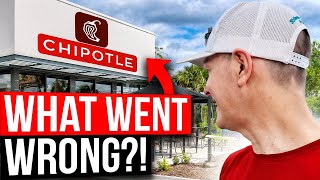
In this video, Michael Girdley narrates the trajectory of Chipotle Mexican Grill, tracing its evolution from a modest 1993 startup founded by chef Steve Ells—who introduced fresh, fast‑casual Mexican food using fine‑dining techniques—to a $50 billion‑valued chain backed by McDonald’s. The partnership with McDonald’s enabled rapid expansion, minimal advertising, and a cult‑like following built on transparency and perceived healthiness. By 2015 the brand faced massive food‑safety scandals (E. coli, salmonella) that triggered a sharp sales decline, a $25 million fine, and the ousting of its co‑CEOs and founder. New CEO Brian Nichols, formerly of Taco Bell, introduced technology, online ordering, and standardized, factory‑style processes to improve safety and capitalize on the COVID‑19 shift to takeout, temporarily reviving growth. However, the focus on efficiency led to reduced portion sizes, skimping on ingredients, and a loss of the original value proposition, resulting in poor customer reviews, a net promoter score of 17, and a 5 % same‑store sales drop. Girdley concludes with a lesson: turnaround strategies must align with a brand’s core promise; applying a Taco Bell playbook to Chipotle eroded its unique appeal, leaving the chain struggling.
Chapters
So today I'm here in the parking lot of this restaurant, Chipotle. And, uh, something you'll notice is kind of funny. There's not many customers here and the place is kind of dead. It's actually Friday afternoon around 12:30, peak lunchtime. And it really exemplifies something that's going on with the chain, which is it's not doing very well. And this chain has gone from a restaurant chain that was once valued at $50 billion, got investment from McDonald's, was beloved by customers, to today is something that customers hate. It has some of the lowest approval ratings in the industry. And worst of all, the numbers show it. Last year, the same-store sales went down 5% year over year at Chipotle. Just horrible. So how did such a beloved and iconic restaurant brand go from beloved and iconic to where it is today, which is hated and failing? Well, in this video, I'll explain to you the rise and fall of Chipotle. If you're new here, my name is Michael Girdley. I make videos about the rise and fall of iconic brands and what we can learn from it. If you're interested in that kind kind of stuff, I've taken the 10 lessons that have come over and over from all these stories that I've told, and I put them in a document below. You can download it. Click on the link. It's usually the first comment below this video. So Chipotle was started in 1993 by a classically trained chef named Steve Ells, and he borrowed $1,000 from his parents and took what he had learned in fine dining restaurants and used it to open up a fast food restaurant. But the thing he didn't do was what McDonald's and the other guys do, which is use prepackaged, frozen, non-fresh food. Instead, what Steve did was pretty miraculous. He took that fresh food and preparedness that he used in the big restaurants, and he put it into a fast food place with this kind of footprint. And his big goal with opening a fast food place was eventually he wanted to save up enough money to build a fine dining restaurant. Well, there was a problem with that plan, which was when he opened the first Chipotle with fresh food prepared there with unique kind of recipes and things that people just like could only get typically at fine dining restaurants. When he did that and provided it cheaply and quickly to people, a problem happened. Customers loved it. So eventually his idea of opening a fine dining restaurant and that dream, well, it went by the wayside. And by 1995, he opened the second Chipotle and the third and the fourth one by 1998. And he did it by keeping things super simple. He kept a simple menu, simple recipes. He just made it so it was easy to replicate and do it over and over again. While it was tempting to make it complex, he didn't do that. And he was like a lot of really smart CEOs. They're always looking to keep their businesses as simple as possible. And Steve did that. Then in 1998, McDonald's came calling and they put $360 million in the chain. They were impressed by what Steve had built, and then he used this to grow the chain even further. And so Steve was really smart with his partnership with McDonald's. He leveraged their expertise in real estate and scalability and their money to take his chain from 16 restaurants in 1998 to over 500 by 2005. And he created a partnership that was exactly what you want out of a partnership. A win-win. And in this case, each side brought something really good. And in this case, 1 1 3, or in this case, 1 1 500, for in the case of the number of restaurants that Chipotle had. And by 2006, the chain went public. Investors ate it up just like the customers did. People love that you could walk in, you see the kitchen, and you saw the food getting prepared right in front of you. While a McDonald's felt like you were eating in a factory, uh, this place, like, you felt like you're eating inside of a restaurant. And customers, they absolutely loved it. And this unique position in the market created almost a cult-like following for Chipotle. Back in the early days, people loved the fact that it was going against the ideas of big food and manufactured food and chemicals and all that kind of stuff. And it was perfect. It's what we wanted to eat at the time. I used to love going into Chipotle. It felt like, well, felt like real food. It didn't feel like a microwave TV dinner like I got at McDonald's or another fast food place. And something magical happened for the chain. Because they were so compelling, they didn't actually need to spend on advertising. Their product was the advertising. They only spent 1.5% of total revenue on advertising, which was an order of magnitude lower than what some other chains were spending to get people into their place. And when your product's really good, other people will talk to each other about it. And that's what helped for Chipotle. And by 2015, they were opening a restaurant nearly every 2 days. And they rode this wave of revenue growth from $1.8 billion in 2010 to over $4 billion by 2015. And just when it looked like things could never go wrong for Chipotle, well, that's when it did. And I talk a lot in this channel about the thing that creates your business is often the thing that comes back to kill it. And the same thing happened here at Chipotle. You see, Chipotle had built its entire business upon making food fresh in individual kitchens without ingredients and preservatives and all kinds of stuff that were coming from factories and freezers and stuff. But that put the chain at risk. And by 2015, they had grown so quickly that they had outgrown their ability to keep the food safe that they were preparing for customers. And in 2015, there started to be a series of health outbreaks of people getting sick from eating at Chipotle. They were getting E. coli, salmonella, you pick a foodborne disease. Well, somehow somebody was figuring out a way to screw it up, and the kitchen at their individual Chipotle was making them sick. And this happened to hundreds of people. And so the stock went into freefall. It went down over 20% over the course of a few weeks after people started getting sick. It was not a good time. And those famous long lines that the chain had enjoyed for so many years from devout fans, well, suddenly if they thought that Chipotle wasn't healthy anymore and might get them sick, they weren't coming. And those famously long lines, they were gone. And the fallout from these sickness episodes went on for years. And in 2016, the chain declined in revenue for the first time ever, uh, losing over $600 million in sales in that year alone. And eventually Chipotle paid the biggest, uh, foodborne illness fine in history of $25 million. And by 2017, both of the co-CEOs, a structure that I hate, by the way, you get any one leader, guys, don't, you don't get to have two. But both of them were pushed out, including original founder Steve Ells. And frankly, the job had just outgrown the both of them and eventually showed up in a lot of people getting sick. So clearly the board needed to do something about the food safety issue. About the fact that Chipotle had gotten left behind in terms of technology and online ordering. So they went and ordered up somebody who could do that really well, a guy from Taco Bell named Brian Nichols. And he was the guy that created Doritos Tacos Locos and other things, including some of the promotions that had worked so well for Taco Bell. And so he came in to bring his knowledge from Taco Bell to Chipotle. The first thing that Nichols did was bring Chipotle into the 21st century in terms of technology. He brought in food safety measures and online ordering, allowing you to order from an app for the first time and maybe get it delivered to you. Stuff that historically the chain had totally avoided. And to address a lot of the problems with foodborne illnesses and stuff, he brought in a lot of the standardization and kind of some of the factory-level stuff that was being done in other chains like Taco Bell and McDonald's. The upside was that stuff was a way to make sure your food was safe. The downside was it wasn't quite as fresh. We talk about a lot of times in this channel about how it's better to be lucky than good. And at this time, the changes that they made as Chipotle, they got really lucky. I mean, nobody saw the COVID pandemic coming, but if you were to pick a time to prepare your chain for online ordering, delivery, and takeout, 2018, 2019 was the perfect time to do it. And well, Brian Nichols had come in and done all that stuff, and they got pretty fortunate because when the pandemic came, Chipotle's business switched to over 60% was takeout and delivery. It was perfect. And the third thing that Brian had done, which was really smart, was prepare the chain for the competitors. You see, over the 2010s, a lot of people had seen what Chipotle was able to do, and they came in with things like Cava, which was basically Chipotle for Mediterranean, and other similar kind of knockoffs. Even people doing burritos in a fast casual, upscale kind of way, the way that that Chipotle did. So it was time for the chain to start acting like the other chains. Word of mouth and buzz and the uniqueness was, was over. And Brian intelligently brought in marketing, menus, promotions, things that would change over time and help kind of, well, keep the place interesting. And by 2023, the chain had shown a remarkable rebound. The stock was up 700%. Profits were up 700% and the revenue had doubled. All of that kind of factory-level stuff, systemization, digitization, all that had worked, except there was a problem with that. The focus on profitability and efficiency had done something to the value proposition for the customers. Whereas once the chain created a lot of loyalty because they were giving ample portions and friendly environment when people walk in and say hi, and you felt like you knew the people that working at your Chibole. Today it felt much more like the impersonality of going into a McDonald's. Where you're just a name and a number and your food comes out like everybody else's. And while the chain increased prices, it started to get skimpy on portions. People were getting less food. And actually, eventually, after denying it, Brian Nichols admitted that an internal survey of their chain had showed that 10% of restaurants were actually skimping on ingredients in order to maximize profits at each individual location. And guess what? Customers noticed, and it turned off a ton of the loyalists. In preparing for this video, I went and looked at the reviews for local Chipotles. And if you're familiar with my Pizza Hut video, one of the things I said in there was how if you have less than 4 stars as a restaurant, that basically means you're terrible. And there is a whole swath of Chipotles near me that people are absolutely hating, uh, because they have 3.5 stars. Heck, one even has 2.5 stars. That means you're That means you're bad. So today the chain is where it is. The same-store sales are down 5%. They have terrible reviews. Customers hate it. And the place is struggling again. And Brian Nichols, the guy who was bought in in 2018, well, guess where he is now? He's over there turning around Starbucks. So we'll see how that goes. And then the numbers for this particular chain, they're awful. One measure of how much people like a place is called a net promoter score. It's how many people are saying positive things about the restaurant to their friends. At the high end of restaurants is like In-N-Out Burger. They have a score of 63. The folks who are here at Chipotle, they have a 17. It's less than half the average. So people are saying bad things about Chipotle and they're telling their friends and it's showing up in the results both online and in their bank account. For me, the big lesson of the story of Chipotle is you have to be very careful in how you go about turning around a failing business. You see, what built Chipotle and made it really special was a great value proposition and a welcoming environment. But they ran a playbook to fix it under Brian Nichols that basically ran the Taco Bell playbook. Well, Taco Bell is not Chipotle. It's a different place. And when they ran that, it changed things forever. And they are where they are today, which is customers who've left and don't appear to be coming back. All right, that's it for this video. Let me know what you think about the story of Chipotle and what would you have done differently? And yeah, have you had this experience or not? Let me know in the comments below and we'll catch you next time. Thanks.










