The rise and fall of Cracker Barrel: Inside the collapse of a $3B chain
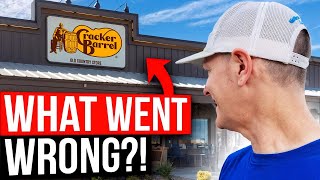
Michael Girdley traces Cracker Barrel from its 1969 founding as a roadside hybrid to a $3 billion chain, then through decades of missteps: a 1990 anti-LGBTQ policy backlash, failed side bets like Punch Bowl Social, and a 2023 rebrand that tanked the stock $100 million. The chain failed to adapt as boomers aged and younger generations moved on.
Chapters
Cracker Barrel went from a single restaurant in Tennessee founded in 1969 to an absolute behemoth with hundreds of stores and nearly $3 billion in sales by 2019. But fast forward a few years later and the chain's in trouble. 16% of the customers that were regulars before the pandemic have never come back, and their latest rebrand that was $700 million spent has caused a political firestorm with even the president himself tweeting about the rebrand and how much he hates it. Well, with this level of ups and downs for the chain, what explains the rise and the fall of Cracker Barrel? That's what this video is about. If you're new here, my name is Michael Girdley and I make videos about the rise and fall of iconic American companies, and I use those stories to explain fundamental business topics. And, uh, if you are interested, every few weeks I do live lectures on the internet as a way to get back You can sign up for those in the link below. Would love to have you. They're free and you can ask all the questions you want. They're super fun. Also in this video, I took my son over to go visit a Cracker Barrel and potentially eat. And, uh, if you stick around to the end, he's 16 years old. I'll tell you what he thought about Cracker Barrel and how long he lasted inside. So Cracker Barrel starts back in 1969 with an oil salesman named Dan Evans. And Dan saw the rise of car traffic and car travel happening in America. It was a car crazy country at the time. And his idea was to build a restaurant along the brand new interstate system that would provide people with a one-of-a-kind experience. And so Dan built the first Cracker Barrel on an interstate exit, and it was a one-two punch. He put in a restaurant serving nostalgic country food, the kind people's grandparents would eat and serve to them. And to get to that restaurant, you walk through a gift shop, and that gift shop would sell souvenirs and kitschy items. And it was perfect for the kind of nature of America at the time. We loved buying things and it was kind of perfect for baby boomers and their greatest generation parents who were out exploring America. And this was a time in the '70s before Yelp or Google Maps when you wanted a chain that you could trust to get good food and a reliable service and a welcoming place. And so at the time, nearly 40% of the traffic that was going into a Cracker Barrel was from people on road trips. It was a perfect combination, and the concept was an absolute genius gold mine. It ended up going public in 1981, and through the 1980s, the chain rode the wave of car travel and its base concept success to grow 20% year over year. And by 1993, they were so efficient and effective and dominant that they were doing twice the revenue per square foot of any of their kind of pure restaurant competitors. And what Cracker Barrel offered was a return to nostalgia, to a simpler time of America and Americana. And the food represented that and the types of gifts that they would sell as well represented that. And baby boomers and their greatest generation parents, they ate it up. And one thing that chain did super well was training its staff and picking really good people to work in the restaurants. They were famous for their down-home and welcome vibe that basically made people feel like they were at home even though they were out on the road. And it was easy being a chain out of Tennessee that focused on country America, doing things the old way. To become, well, basically an insular kind of company and think about things from the inside rather than thinking about things from the outside in terms of what was best for the business. And this showed up in 1990 when they had a political backlash, when Cracker Barrel basically instructed its staff not to hire anybody who kind of outwardly exhibited traits of being LGBTQ. In other words, if you wanted to work at Cracker Barrel back in the '90s, they instructed their folks that you needed to act straight. I think smart business people, everybody from Elon Musk down to your local car wash owner, learn pretty quickly that their best bet is to stay out of politics because your best outcome if you get into politics is that half the people are mad at you. And that's exactly what happened at Cracker Barrel. But even that wasn't enough to screw up the momentum of the chain. By the early 2000s, the chain of Cracker Barrel had won the best dining award for 19 consecutive years. It absolutely had product-market fit. And by 2011, Cracker Barrel had $2.4 billion in sales and 600 stores across 42 states. Absolute monster. And it's natural when you run a business like a Cracker Barrel or anything to listen to your customers, especially your best customers. Well, it turned out those folks had a lot of varied desires. They wanted all different combinations of things on the menu. They wanted breakfast all day. And so eventually in the early 2010s, you entered a situation with Cracker Barrel where they have these ginormous menus, which by itself would be okay. But when you're trying to get people back out on the road, the last thing you want to do is put a lot of stress on your kitchen staff trying to serve all that different stuff and serve it well. And Cracker Barrel had made the decision to have what I would call a big corporate structure rather than create managers and owners of the individual restaurants that were very entrepreneurial, say like at a Texas Roadhouse where those managers have bought in. They typically own 10% of the location that they're managing. You had a situation at Cracker Barrel where those managers were just reporting KPIs back to corporate, who was making all the decisions behind some glass walls somewhere. And with managers having little incentive to act like owners of these restaurants, uh, you started to see the little details start to suffer. Uh, you started to see corners get cut. I'll put up a tweet here from a friend, uh, who talked about some of the stuff he saw in the 2010s when he was at Cracker Barrel. And you can attribute that all to the fact that these managers were just incentivized in the total wrong way. And in the early 2010s, something else happened that would come to be bad break for the chain, which was Gen X parents and millennial parents came to dominate the types of people that you were hoping would come into a Cracker Barrel. The baby boomers were aging out, they were grandparents by this time, and the Greatest Generation folks who were, you know, alive after the war, right, they had started to pass away. And what mattered to folks who are millennials and Gen X is very different than the approach that boomers and the Greatest Generation had, which is millennials and Gen X didn't want to go to a big corporate chotchkie type place and basically be overwhelmed overwhelmed by a bunch of white noise and, you know, kind of imported stuff from China in a gift shop. And while Cracker Barrel kept their menu heavy and big and full of gravy and all that kind of stuff, millennials and Gen X wanted to eat healthier and get lighter and more authentic fare. And you saw other chains like even Subway and Chili's and Applebee's, they got this and they started to build the right kind of food to talk to that kind of audience. Or if an audience like a millennial or Gen X was more ambitious, I've seen us on car road trips, you know what we do? We go look on Google Maps and we go find something authentic with good reviews and we go there rather than some big chain where everything tastes the same and we know nobody really cares. And this is a window when Cracker Barrel probably could have gotten it, quote unquote, and figured it out. And there is a chain that did and figured out how to speak to millennials and Gen X, and it's Buc-ee's. If you go to Buc-ee's, you can buy food, you have clean bathrooms, and a gift shop. Sounds very similar to what you get at a Cracker Barrel. Except the difference is Buc-ee's feels much more modern, feels much more authentic. Everything from how much they pay their people to the things they say on the merchandise. Where you go into a Cracker Barrel, man, it looks like it's straight out of 1975. And so by the early 2010s, founder Dan Evans had retired. He'd been replaced by basically paid professional managers and a board that, well, basically made some decisions that turned out to be not very good. They kept the dividend going, which means they kept paying their shareholders money quarter after quarter because they were generating cash, but they didn't do things that really were going to be required to deal with some of these challenges. And as an example, in the 2010s, instead of working on their core business, they invested $133 million in a chain called Punch Bowl Social, and that chain was designed to target Gen Z. And instead of kind of fixing the core business and focusing on how they provide more value to their customers and stay up with the times, they started throwing money around around in risky investments. And during this time, it's not like people weren't sounding the alarm. In fact, activist investor, a guy named Sardar Biglory, who happens to be where I'm from here in San Antonio, he fought numerous proxy battles to try to get on the board and make changes at Cracker Barrel. But instead of actually listening to outsider suggestions and making changes to the business for the better, the board spent its time fighting him and keeping him from getting on the board. And so by the late 2010s, the tailwinds the chain had experienced from baby boomers who were doing road trips from those types of folks coming in who love the big heavy meals that Cracker Barrel was serving. Those people had started to age out and because they had missed their window to improve the business, well, basically sales flatlined. No new customers were coming in because basically it wasn't a product that was attractive to them. So sales basically stalled at around $3 billion for the late 2010s. Growth just wasn't coming anymore. And one theme I've talked about a lot in these videos is that the same thing that creates your business, that's a strategic advantage, it often becomes a strategic disadvantage. And one thing that was unique about Cracker Barrel is they had built these 10,000-square-foot stores that were a combination of retail and restaurant on the sidelines of interstates where people who were doing their road trips would travel along. Well, when you have a facility that big out in the middle of nowhere or at the edge of towns, basically to run it, you have to have a lot of staff and you have a lot of fixed costs and you have to bring a lot of people to stay profitable. And if sales start to flatten out or even shrink, you're in big trouble. This is the idea of fixed costs. These are costs you have to pay no matter what when you own a business. And well, Cracker Barrel had a lot of them. And it turned out that also labor was getting tighter. As I've talked about a lot on this channel, people are having fewer kids, which means there's less young people who want to come in and work for the type of wages that are getting paid by restaurants like Cracker Barrel, especially ones that are way outside of the population centers. And by the time the COVID pandemic came around in 2020, perhaps no chain of restaurants was less prepared than Cracker Barrel. They had no takeout, no delivery, no digital offering, no appeal to young people. Basically, they were caught totally flat-footed. And at that point, with their core baby boomer base starting to age out, those are the only people they were hoping that were going to make it into the restaurants at that time. And those people, well, they were, as the aged and the older folks, some of the most scared about getting sick during the pandemic. So they certainly were not coming in. And even worse for Cracker Barrel is that the pandemic permanently changed consumer behavior in the United States. The average American is spending 70 minutes more per day in their house than they did pre-pandemic. And if you're a restaurant like Cracker Barrel that expects people to get out and see the world and come into their restaurants, well, that's not good. With more people working remotely, fewer taking work trips, and more just kind of staying at home and figuring out how to get food delivered to them, Basically, that has hammered Cracker Barrel. Management says that of their regulars who were coming pre-pandemic, 16% of them never came back post-pandemic. They just went away and they haven't been seen again. And post-pandemic, inflation has been a big problem. There's been a big divergence in terms of the haves and the have-nots. And management has said that people are coming in and typically they're coming in to eat, but they're not spending in the gift shop the way they did. In the years before the pandemic. People are just tighter with their wallets than they once were. So the retail arm of Cracker Barrel, while once a strategic asset that brought people in and got people excited back in the boomer days, well, today it's now a liability. Consumers are not buying there and it's just taking up space and costing them money to have all of those items stocked inside of all these stores. And many of those people that they had hoped would be customers of Cracker Barrel? Well, they're the people that work there too. And in 2021, the best data that I have is that management did a survey of their stores. And this is kind of at the peak of the pandemic. They reported that a quarter of their stores couldn't hire the staff they needed to function, and 10% of them were what they called critically understaffed, meaning I don't even know if there was somebody who was available on the staff to be able to open the store up every day. And fast forward to 2023, in one quarter, the profits for the chain dropped 68%. As commodity prices and labor prices and a reluctant American consumer, uh, started to squeeze the business. So fast forward to today in 2025, and a perfect storm has arrived for Cracker Barrel. It originates with their kind of insular corporate culture where they just didn't really want to listen. But you throw on top of that things that are happening with global trade, deglobalization, the tariff stuff, uh, inflation that's affecting their workforce, and then the changing trends of their customer base not wanting what they have. Well, all that together is just a perfect storm in the face of, well, why stuff's really kind of changed at Cracker Barrel right now. So today, Cracker Barrel is a chain that's forced to try to catch up to reality. You know, it still is a business and I just went into one. Feels like one built for a world that doesn't exist anymore. And the good news is, after decades of kind of ignoring the outside world and pretending that bad things weren't happening out in the field and all these bad decisions they made, headquarters is finally forced to wake up and react. And it turns out eventually when you're not profitable for a while, you as a management team have to do that or the market will make you. And the bad news is the response from Cracker Barrel headquarters and management is not going well. In 2023, new CEO Julie Massino, she came in from the outside with the idea of investing $700 million to update and upgrade the stores. And unfortunately, when you're a chain, that selling point is basically history and Americana and memory, and you come in and make slightly the wrong changes, which they did. Well, people hate it. And even though the data from the renovations and store changes show that the stores that have been renovated are actually increasing in terms of sales and profits, uh, most people who are seeing it from the outside hate it. And most importantly, the folks I've talked to that are Gen Z who look at the new store design feel like, well, it's kind of like a Holiday Inn. No personality. And perhaps a testament that they haven't figured out how to pay more attention to the world outside of headquarters. They've managed to figure out how to make themselves part of the culture war. And that's how we end up with President Trump tweeting about the rebrand, his son tweeting about the rebrand as being too woke by removing Uncle Herschel and his barrel from the logo. It is ironic that Cracker Barrel— remember back in the '90s when telling folks not to hire gay-speaking, gay-acting folks— picked the exact wrong time to be anti-woke, and now in the 2020s is picking the exact wrong time to be woke. The stock market similarly hated the rebrand of the company and the rollout of it. The value of the company went down $100 million in stock market value just in a couple of days after the new logo was put out. About a week later, The company came out and said, just kidding, we're going to go back to the old classic logo and, uh, we're sorry. So where the chain goes from here is still a big question mark to me. Uh, I looked at some of the designs of the rebrand. Not good. I think they've continued down their path of executing very poorly. In their shoes, I would definitely try to figure out how to do some of the things that Chili's has done and execute really well. Uh, I do think there's hope and a future for Cracker Barrel. They just need to make some better decisions. Cracker Barrel, in the end, is a story and a lesson about how hard it is to do business. When people tell you it's easy, it's not easy. It's freaking hard. There's so much data and so many unknowns, and it's easy for somebody like me who's Monday morning quarterbacking to think about what they could have and should have done. But if you look at the core problem that has plagued the company and the chain for decades, it's this insular culture where they aren't in tune with what's going on in the world. They sit inside of a glass house in their boardroom and they make decisions. And I would be willing to bet that they are not spending that much time out in the restaurants talking to their customers, because if they were over the past 30, 40 years, I don't think they'd be making the same decisions. Oh, and I promised to tell you what my son thought. So he's 16 years old. We went in and he said, "That place gave me a migraine." And I kind of agree with him. As you walk into the retail part of stuff, it felt like an old school retail place with noises everywhere and smells and stinks and just like Stanley Cups with little pithy sayings on them. And he's like, "Why do I want to go here?" And we left. And while this store that we entered was one of the old school ones that hadn't been renovated, it just shows they have a long way to go to win over some young people. Who are definitely not interested in what the Cracker Barrel is selling these days. All right, let me know what you think in the comments below. I try to read them all. See ya!










