The rise and fall of CrossFit: 15,000 gym empire for sale?!
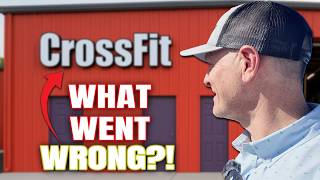
In this 30‑minute business case study, Michael Girdley chronicles the meteoric rise and subsequent decline of CrossFit, the once‑dominant fitness brand that grew to over 15,000 affiliated gyms worldwide. He explains how founders Greg Glassman and Lauren Janai launched CrossFit in 2000 with a contrarian, open‑source licensing model that let anyone pay a modest fee after a weekend seminar to open a "box". The model, combined with a strong online community and the appeal of a third‑place social hub, drove explosive growth—13 affiliates in 2005, 5,000 by 2008, and 13,000 by 2013, generating $30‑50 million in annual licensing revenue and attracting a $150 million Reebok sponsorship and televised Games. The narrative then shifts to the factors that eroded the brand: a growing reputation for dangerous workouts and inconsistent coach quality, competition from franchise‑based concepts like F45 and Orangetheory, and oversaturation caused by an unrestricted licensing model. The COVID‑19 pandemic forced 20 % of affiliates to close, while Glassman's ill‑timed, controversial statements about George Floyd and the pandemic triggered a massive backlash, loss of affiliates, and the departure of title sponsor Reebok. Subsequent ownership changes—first to former affiliate owner Eric Rosa, then to tech‑executive Don Fall—failed to stabilize the business, with fee hikes further alienating gyms. The 2024 drowning of athlete Lazar Dukic at the CrossFit Games added a tragic PR blow. By 2025 the brand is again up for sale, illustrating the perils of tying a company’s identity to a single founder. Girdley concludes with lessons on brand risk, community value, and the importance of sustainable growth models, inviting viewers to discuss the future of CrossFit.
Chapters
So at its peak, CrossFit was an absolute juggernaut in the world of fitness. It had over 15,000 locations, which is more than 3 times the number that its closest competitor had. It had title sponsors in the form of Reebok, and millions of people were doing the sport. But fast forward just a few years later, the brand is up for sale a second time in 5 years. It's been through 3 CEOs, and it's mired in trouble. So this is a video that is about the rise and fall of this iconic fitness brand. My name is Michael. I record videos that talk about the rise and fall of iconic companies, and I use that as a way to explain business. So if you're interested in that kind of stuff, do me a favor. I do biweekly lectures on the internet. They're free. You can come in via Zoom and I talk about business concepts. If you're interested in learning and helping your own business, come see me. There's a link below. You can sign up. And if you stick around through this whole video, I will explain to you why I'm recording it in front of a building with for lease sign on it that used to be a former auto garage and now has a bunch of graffiti on it. Uh, it might surprise you. So husband and wife team Lauren Janai and Greg Glassman started CrossFit back in 2000, and it was basically the perfect counter to everything that was going on in fitness at the time. In fact, to understand the story of CrossFit, you really have to understand the personality of Greg Glassman. He's somebody who is just a natural contrarian. If you say the sky is blue, he's going to tell you it's green. And that's just the way he operates. And the thing about CrossFit is it took everything that existed in fitness at the time and did the exact opposite. Instead of gyms where you showed up whenever you want, there were set class times. Instead of long, kind of boring, low-intensity workouts, you did short, high-intensity bursts. And there was all kinds of other things that they did when they invented CrossFit that was just the opposite of the way everybody else did things. And one thing that they did that was totally the opposite was use basically an open-source model to do their workout system and do the CrossFit brand. It was something that they had borrowed from the open-source software movement, which is you give away the product for free and then you make money by selling other stuff on top of it. And this was all enabled by the internet. Distribution costs were basically free. You post it online, anybody can download it, and then you basically go from there. And one thing that was easy to do on the internet was to build the sense of community. People would gather around those types of things, and CrossFit was built around a website, CrossFit.com, where people would go. And it turns out that millennials who were coming of age at the time and older and younger Gen X, they were hungry for this sort of thing. They wanted to go and belong to a community. And CrossFit, well, it offered that around this fitness methodology. And the early 2000s saw the lowest decline we'd seen in history of what's called the third place. So if you think about society, typically if your first place was his home, second place is just where you go to work. And the third place is this other place where you go to find meaning and substance in life. And for a lot of people, For decades, that was church. But early in the 2000s, we reached our lowest church participation in history. We dropped below 40% in the United States. And for many, you could go and join your tribe at a CrossFit box. They didn't call it a gym, by the way, because that would've been too conventional. And there you could find your tribe and your third place and a place to socialize. It was perfect for folks who were hungry for that kind of stuff. And up until this time, the way that fitness change grew was one of two ways. One is you grew company-owned stores, meaning you owned all the stores and controlled them and invested your own money in them. The second way was through a franchise model. You would work with independent entrepreneurs, they would join your franchise system, and they would follow your rules. But CrossFit did it a different way, which enabled them to grow faster than any of those other concepts. They did it through a licensing model, and basically you would show up, pay for a weekend seminar, go through their training, pass a small test, and then you had the ability to pay CrossFit an annual fee to name your gym and call it a CrossFit gym. And in the business world, what CrossFit did was take the idea of counter-positioning to an extreme. And counter-positioning is when your business goes in and take some fundamental aspect of the other people's businesses and you just do exactly the opposite and create a business model that they can't compete with. And in the case of everything they did from the franchise, anti-franchise methodology to the licensing stuff, to the way the exercise worked, to the way the brand worked, it was all just going exactly the opposite of the way everybody had done everything up until that point. And it worked incredibly well. From just 13 affiliated gyms in 2005, they were up to 5,000 by 2008 and 13,000 by 2013. And you can do the math. If your average affiliate is paying $3,000 or $4,000 a year times 13,000 gyms, that ends up being $30, $40, $50 million a year in licensing revenue for the chain. Just incredible. And by 2013, there's no exact measurement of how many members were doing CrossFit at these gyms or doing them outside the gyms. But some estimates went as high as 5 million participants worldwide. And I know there was a lot of people excited about it because I was one of them. 2009 was when I first got into CrossFit. And, uh, man, it felt a little bit like joining a cult. And the joke back then, and still to some extent now, is, how do you know if somebody's a CrossFitter? Well, don't worry, they'll tell you within 5 minutes. And I was definitely one of those people. I had the t-shirts, the whole deal. And validation came with that amount of membership. In 2011, Reebok came calling and they signed a $150 million, 10-year sponsorship deal to become the title sponsor for CrossFit that year. And similarly, ESPN started to televise the Global CrossFit Games, the championship for the fittest alive on their TV stations. CrossFit had totally arrived and the brand did something incredible in terms of its competition, the CrossFit Games. You see, people of any sort could enter globally and be part of the competition. And by 2018, 425,000 people that year entered the CrossFit Open and you just followed the rules. You paid your $50 or whatever it is to enter it, and the winners of each successive level would go to the world championship, the CrossFit Games, to be held wherever it was that year. I think it was in Madison, Wisconsin. Just an insane level of participation of people participating in this stuff. In 2018, that seemed like the moment that everything was going incredibly right for CrossFit. It seemed like the brand couldn't stop and it couldn't lose. But at that moment, it was when everything started to turn against the company and the brand. And the first thing to go against the brand was it started to gain a reputation as a dangerous exercise methodology. And that had kind of always been part of it because it was all about being extreme and pushing yourself to limits. In fact, even the early mascot for CrossFit was a character, a clown-looking thing, if I recall correctly, that was called Pukie. And the idea was that you were pushing yourself so hard during these highly intense short workouts that you would vomit. And that kind of pushing yourself to limits, eventually that kind of getting out of control behavior can start to lead to people getting injured. And while CrossFit had always kind of fought this idea that CrossFit could be dangerous, The reality was the low barrier of entry for these different coaches who would just take a weekend seminar and then suddenly start having people do highly complex barbell movements and stuff like that. You had a wide variety in the quality of instruction that was happening at these different gyms and at their size with 13,000, 15,000 gyms, even 0.5% of the gyms being unsafe or unhealthy was a pretty high exercise risk in terms of people getting hurt. And so while the vast majority of gyms were, I would say, extremely safe, people started to notice. Folks like the New York Times started to write articles about it. The National Strength and Conditioning Association, they started to do things and studies about them. And what did CrossFit do? Well, they did some stuff to try to make it safer in the gyms, but in reality they were very combative. And, you know, that comes from the top. You know who's a combative, rebellious guy? Greg Glassman. And so while CrossFit is being seen as a somewhat dangerous exercise methodology, you have another thing happening, which is competitors are coming up. And a lot of the things that CrossFit had done early on, like being a small gym concept, being short, intense exercise, those are pretty unique early on. But later on, new competitors started into the market. And so concepts like F45 and Orangetheory, who were franchise concepts, they would eventually over the 2010s open thousands of gyms respectively. And I had friends that would go choose those concepts because they saw them as safer than some of the complex movements that would be done at a CrossFit gym. And they were happy. And the third thing that started to go against the chain was the success of the licensing model itself. You see, in a normal franchising system, there's a limitation on how many gyms or how many franchises can be opened up. But in the case of CrossFit, there was no limitation. It was simply a licensing model and the headquarters had no input on how many gyms were to be opened and where. So you had many situations where a gym would be open, be successful, and then somebody else would come in and open up right across the street. And suddenly, instead of having one very profitable gym, you have two gyms and neither one of them is making any money. And lastly, while the spectacle of the CrossFit Games had gotten people really excited about, you know, the competitive sport of fitness and brought people in, it started to do the opposite later on. It got people to associate CrossFit with hardcore exercise and over-the-top endurance and all that kind of stuff you would see on the TV, when in reality, the vast majority of people were very much interested in getting healthier and looking better naked. Well, The CrossFit Games were not a good testament for that. And so this leaves the chain early in 2020 with a polarized image, one where people are kind of scared of the brand. You've got basically this dichotomy of not really understanding whether they're a fitness brand or a competition brand. And then you've got in the worst case, the gyms themselves not doing very well because there's just too damn many of them. And that left the whole thing really unprepared for what was to come next. And that thing was the COVID pandemic. See, CrossFit was a gym concept built on in-gym participation. And during COVID it was impossible to go into the gym. And if you can't go in the gym, where are you going to keep paying money? And so faced with this kind of stuff, 20% of the affiliates closed their doors during the COVID pandemic. It turned out for them, Zoom workouts just weren't going to cut it. And with Peloton and Mirror and other concepts like that booming, during the 2020 pandemic era, many customers left and they just never came back. And remember how the personality of Greg Glassman kind of created this almost cultish-like feel for CrossFit that many people bought into? Well, the next thing happened was that Greg went out and said some stuff he shouldn't have. He went online during the whole George Floyd issue and during the whole COVID issue and basically said the exact perfect wrong thing at the time. He basically diminished both of those things at, well, the exact wrong moment. He declared basically both of them to be a hoax and not worth talking about and to be orchestrated. And that was exactly the wrong thing to say during that particular moment. And the whole community and the business community rebelled against what he said. They didn't like it. He basically got canceled on the spot, and 7% of the gym affiliates announced they were quitting within a few hours of him doing that. And his title sponsor, the folks funneling a lot of money into the brand, Reebok, they quit too. And finally waking up to the error of what he said, Glassman, who was initially kind of resistant to making any change, was forced to make an apology. But the reality was the people in the community and the folks around it, they didn't buy it because just a few hours earlier he had been attributed to saying inappropriate things to a private chat of affiliates via Zoom. And in June 2020, the man whose personality and to some extent personal brand was synonymous with the idea of CrossFit, he was pushed out by the community he had created. And as we saw in the Subway story in this video right here that you'll see on screen, there's a real danger when a brand associates itself with a single person. In this case, Greg did a lot of damage to CrossFit. So leaderless and aimless at this point, the brand was in trouble. An entrepreneur named Eric Rosa, who'd owned a CrossFit gym himself, he stepped up and with a group of investors came in to buy CrossFit and try to basically save it. It was unclear at this time if Eric would be able to save it. A lot of damage had been done, but Eric did his best. Like, he's a good business person and he came in and made a lot of good changes to try to rebuild goodwill, try to stabilize things, try to cut costs. And a lot of that helped. It helped stem the bleeding. And without Greg Glassman and his polarizing views and personality in the picture, things did stabilize a bit. And in 2022, the affiliate count rose to over 10,800 again. And things didn't look so terrible for the chain. And in 2022, Eric departed. It was reported that it was over a disagreement with his fellow investors, and they brought in a new CEO, a man named Don Fall, who was a former tech executive and a Marine. And the idea was to keep turning around the brand. But a lot of times when you see a change like that, it's because one group wants to be making more money more quickly and another one wants to be thinking sustainably and building a community. And it looks like in this case, the investor types, the money types, went out. And in 2023, the brand kept kind of doing things that would alienate its affiliates. It raised fees, so people who are already kind of struggling to stick on, they would be even struggling even more to configure— continue their affiliation. And with many affiliates starting to scatter again, in 2024, kind of the worst thing possible happened for the CrossFit brand. The CrossFit community is remembering the life of Lazar Dukic, a man who was competing at the CrossFit Games, the championship Games in 2024 in Fort Worth, a man named Lazar Dukic. He was participating in an open water swim event at the championships and he drowned and passed away. And initially, as reports are, that, you know, CrossFit handled the PR aspect of it pretty poorly, though I did watch some of it from afar. And frankly, like, they picked up the pieces after a while and started to do a better job. But in the end, nothing could fix the fact that a competitor at the highest level of fitness was doing CrossFit and passed away. And that is bad if you as CrossFit are trying to find a place in the mass market where lots of people are going to want to come do your very safe, quote unquote, exercise and get healthier. And in 2025, the brand has now put itself back up for sale a second time with the hopes that a new owner can come in and change things from the trajectory they're currently on. So it'll be interesting to see if it happens. But man, for a fitness company that is built totally on the brand, they really put themselves behind the 8-ball with the actions of multiple different folks and some bad luck. There's a lot of lessons in the CrossFit story. For me, the biggest takeaway is the danger of associating a single brand with a single person. You run so much risk if something goes wrong with that person or they make just one mistake. And in the case of Greg Glassman, he did that and it cost everybody tens of millions of dollars, including him. Oh, and I promised to let you know why I recorded the hook for this video in front of that red building. That was a closed-up garage. Well, that used to be a CrossFit gym. I went to that gym for over 10 years. I was a member there and I did over 1,000 hour-long CrossFit classes there over a decade. I was that part of the community. And I have a lot of great memories in that place, so I wanted to record the intro there. But that's what I did. And oh, by the way, that CrossFit gym, it does have another CrossFit gym right across the street. Yeah, case in point. All right, so what do you think about this? Do you think CrossFit is something worth doing? Do you think it can save itself? What would you have done differently if you own the brand? Let me know in the comments below. Or if you like the video, tell me you like the video and I'll keep making them. Thanks for being here.










