The rise and fall of JCPenney
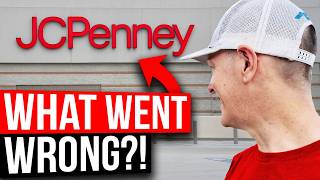
The video chronicles the full arc of J.C. Penney from its humble beginnings in 1902 to its 2020 Chapter 11 bankruptcy and subsequent rescue by mall REITs. It begins with founder James Cash Penney’s “Golden Rule” philosophy, early profit‑sharing, and rapid expansion that made JCPenney the nation’s #2 department store by the 1970s, driven by catalog sales, mall anchoring, and credit‑card offerings. The narrative then shifts to the mid‑2000s, when low‑price competitors (Walmart, Target) and upscale rivals (Macy’s, Nordstrom) eroded its customer base, while the rise of Amazon and a weak e‑commerce execution further hurt sales. The 2008 financial crisis deepened the decline, prompting activist investor Bill Ackman to back a radical turnaround led by former Apple/Target executive Ron Johnson. Johnson’s “fair‑and‑square” pricing and “town‑square” store concept eliminated coupons and sales, alienating JCPenney’s core, coupon‑loving shoppers and causing a precipitous sales drop, massive losses, and his dismissal. After a decade of failed leadership changes, the COVID‑19 pandemic forced JCPenney into bankruptcy. Two mall REITs purchased the chain to preserve their anchor‑tenant model, and the brand was later folded into the Spark/Catalyst Brands conglomerate alongside other distressed retailers. The video concludes with lessons about testing, learning, and the danger of believing untested visions.
Chapters
In 2007, JCPenney's stock hit $20 a share. By 2020, it was trading for less than $0.20 a share. At its peak in 1973, it was the number 2 department store in America, and JCPenney operated over 2,000 stores nationwide. How did one of America's most iconic retailers go from $20 billion in sales to bankruptcy? This video is the rise and fall of JCPenney. Looking smarter than ever. JCPenney.
Oh, and by the way, thanks to Quo for sponsoring this video.
More on them later. James Cash Penney, aka JCPenney, was born on a farm in Missouri back in 1875. He had a crazy upbringing. At age 8, his father made him start paying for his own clothes. He learned early on that if you wanted something, you were going to have to work for it. After his father died suddenly, Penney moved west for his health and ended up in Wyoming, where he started working for a small retail chain called the Golden Rule Store, where they treated everybody by the golden rule: Do unto others as you want to have done to you. In 1902, at the age of 27, he'd saved up enough money and gotten the ability to get a loan to open his very own Golden Rule Store in Kenamore, Wyoming, a small mining community. He followed the golden rule: treat customers, employees, and everybody else the way you'd want to be treated. Give them good value at fair prices. In a somewhat revolutionary move for the time, he gave employee profit sharing. And in some cases gave general managers ownership in the stores they were running. And you know how every retailer these days calls people partners or associates? Well, J.C. Penney was the first company to do that, calling their people associates rather than employees. By 1913, Penney's moves here had been successful. He was operating 34 stores. So he rebranded the whole thing around his name and his brand, J.C. Penney. It was a hit. By 1929, he had 1,400 stores. And he was doing $190 million a year in sales, which is about $3.5 billion in today's dollars. During the Great Depression, a lot of retailers failed, but Penny, he stayed alive by cutting prices and giving customers good value for their money. By 1936, sales had grown to nearly $250 million with 1,500 stores operating. And here's a fun fact I learned in researching this video. A man named Sam Walton, who founded Walmart, Well, he got his start in the retail business working at JCPenney in Des Moines, Iowa, in 1940. And he would go on to found, well, the Walmart we know today. In these years, JCPenney got big by being innovative. One of the first things they did was move away from being cash only in 1958. They moved away from basically cash only to operate store credit cards. And they started to offer appliances, electronics. They wanted to compete with Sears. Then in the 1960s, car culture meant that the department store era was coming, and it was coming in suburban malls. So like Sears and other leading retailers of the time, they flocked to these malls. And that would prove to be something that later on would both kill and save the JCPenney chain. And so while many of their competitors stayed on Main Street, JCPenney moved out of the downtowns and started to occupy suburban malls, riding the wave of suburbanization in the United States. And even in 1963, they started to compete with Sears on the catalog business, launching their own version of the famous catalogs. When JCPenney, James Cash Penney, died in 1971 at the age of 95, he left behind a retail empire that was doing the equivalent of $35 billion a year in today's sales. JCPenney was seemingly everywhere. By 1973, they had 2,053 stores. They were doing billions of dollars in sales, $5 billion alone from their catalog business. The catalog was a cultural phenomenon. It was called the Big Book. People would hover around it like they did the Sears catalog, waiting to see what was going to be on sale and available to order for each holiday season. Back-to-school shopping, big events, weddings. If you needed something fixing out your house, right, you went to JCPenney. It was that much of a fixture of American life. In 2006, revenue hit $20 billion. That year, the stock price went up just like it, hitting $85 a share in 2007. But it was just at that moment that it seemed like JCPenney couldn't lose that cracks would start to form and the end would start to come. But before we do that, I want to talk about today's video sponsor, Quo.
When you study businesses over time, most problems don't come from one big mistake. They come from small systems that never get upgraded. Communication is one of the biggest examples of that. Missed calls, scattered texts, and no shared visibility quietly turn into lost revenue. Today's video is sponsored by QWO, formerly OpenPhone, the modern AI-powered business phone system used by over 90,000 businesses. As companies scale, the cost of slow or missed customer communication compounds fast. A dropped call, a delayed follow-up, or a handoff that never happens is not just inconvenient. It is revenue that never comes back. Qo helps prevent that by making sure calls and texts are answered, routed, and followed up on properly, even when teams are busy or spread out. It also turns conversations into insight. Qo logs calls, generates AI summaries, and highlights next steps so owners can actually see what's working, what's not, and where money is being left on the table. What stands out is that it works wherever you are. Your team can operate from one shared number, see the full conversation history, and respond with context from a phone or computer. That keeps communication clean, visible and professional instead of fragmented. If you want to turn more conversations into revenue for your business, check out QWO. Try it for free and get 20% off your first 6 months at qwo.com/girdley20.
Thanks to them for sponsoring today's video. At this time in the middle 2000s, you started to see JCPenney get attacked from all sides. The first of those was from the bottom. Walmart and Target were coming in with better supply chains, lower prices, and they were stealing value-conscious customers. At the other end, you had upscale customers, people who would normally go to a Macy's or Nordstrom's. Those people were kept going to those stores and those guys would take away that end of the business from JCPenney. And as a direct assault, you had the whole idea of a retail store coming under attack. Amazon and e-commerce, they were coming fast and growing at double-digit rates year after year. And like most retailers, JCPenney had seen the challenge coming from the internet. In fact, they were doing pretty good with e-commerce. Their online business was doing $1 billion a year by the middle 2000s. But it's hard when you're a specialist in real-life retail to be good at digital as well. By the early 2010s, just poor execution meant that Amazon and even Macy's were outperforming JCPenney's in online sales. And while folks like Sears had shut down their catalogs in the 1990s, the JCPenney Big Book lasted until 2009. Believe it or not, they were still printing out a big 100-page catalog and mailing it to people back then. It wasn't that long ago. In 2008, the financial crisis and the Great Recession hit JCPenney really hard. Their customers were working-class, middle-class families, and they were the ones hit the most by the Great Recession. Sales from 2006 to 2010 fell by over 10% per year, and 2010 would be the last year that the chain would show a profit. Investors saw this, and in the early 2010s, the stock crashed from $85 to $25. And it was clear investors saw it. Everybody did. And things were going to have to change at JCPenney. Entering the picture is a guy named Bill Ackman. He's an activist investor. These are guys that raise money from institutions, endowments, that sort of thing. Then they go out to the stock market, they invest in shares that they think are undervalued, then they force management to make a change. And that's what Bill Ackman wanted to do with JCPenney. His fund, Pershing Square, had $11 billion under management. In 2010, Ackman and his fund started buying shares at around $25 a share, eventually deploying over $1 billion and owning a big chunk of the company, almost 20%. His thesis wasn't complicated. It was they owned real estate, which was valuable. The brand was valuable and operations were poor, and together they could all be turned around. So Ackman got himself on the board and he immediately started looking for a rockstar CEO, somebody who could come in and turn the whole thing around. A Steve Jobs of retail to come in for JCPenney. And he found that guy. He was working at Apple, and the guy that he found was a man named Ron Johnson. And this guy had a pretty incredible resume. First and foremost, he had helped Target kind of create its brand niche where it was about cheap chic, and that people had loved at that time. But the other thing he'd been famous for was coming in and figuring out the entire strategy for retail at Apple. If you're not familiar with Apple Stores, they are a unicorn in retailing. They do about $5,600 in sales per square foot, which is the highest of any retail operation in the United States. And they had done it at the time by making Apple Stores different than anything else you'd see in retail. They felt like destinations and experiences. They were radically different than everything else in the mall. Given this track record, it made sense. Let's go hire Ron Johnson to come in and come to JCPenney. And he did in 2011, getting a $52.7 million signing bonus to come in and transform the chain. And in a cool move, Ron was so all in. And confident about what he was going to do that he invested $50 million of his own money into JCPenney when he took the job. When Ron announced his transformation plan in January 2012, the stock jumped nearly 25% to over $43. Investors, well, they were excited. Ron's idea was to transform each individual JCPenney into a mini mall, a town square with coffee and different shops lined around this gathering place where you would come and do your shopping. And behind all of that was a radical rethink of the pricing scheme at JCPenney. And he called it "fair and square." You get it? Town Square, fair and square. Yeah, very punny. Me too. Here was Ron's logic. And he theorized that the consumers, they were tired of playing the department store game, which was to mark everything up and then give you coupons and discounts and run sales so you felt like you were getting a deal. In other words, it was just a big racket. Johnson wanted to end the charade. He wanted no more coupons, no more gimmicks, just low prices every day and giving you good value. It sounded logical. Why not cut the BS? We all hate BS, right? And that especially makes a ton of sense if you're the type of guy who can invest $50 million in a company when you take a job. But there was one problem, and it's the same thing that makes casinos work. People love playing the game, even if it means they're getting screwed a little bit. And JCPenney shoppers weren't like Apple customers, and they certainly weren't like Ron Johnson. The typical one was middle-aged, female, household owner, and makes between $50,000 and $75,000 a year. These people weren't flying in on private jets or shopping at the Apple Store, I'll tell you that. Much like Bed Bath Beyond and other chains, these people were looking for some entertainment, and they loved the thrill of the hunt when you were walking inside of a JCPenney trying to find the deals. They loved seeing that you saved $47 at the bottom of their receipts. And this was so true that 70% of JCPenney transactions involved a coupon or a discount. That's how much customers loved it. So without any testing, which will come back to bite them, by the way. Johnson removed all of this overnight. Gone were the sales, gone were the coupons, gone were the red tags. Here are your regular prices. Take it or leave it. Game is over. So when sales started tanking, Ron famously went and said, "Oh, you know what? Our customers just don't get it. They don't understand yet, and we need to educate them," which is code for our customers aren't smart enough to get this, which is not a good thing to say to your customers. So when reporters and analysts asked Ron why he didn't test any of this, his answer was, well, we didn't test anything at Apple. But that comparison was missing something kind of important, which is Apple controls one of the greatest software and hardware monopolies in the history of the universe. That's very different than when you're JCPenney and you're selling the same stuff everybody else is in a mall full of me-too shops and products. And to show how in touch he was with the company, Johnson ran JCPenney from California and he would commute to Texas every week by private jet. You got to get out there and you got to talk to your customers and you got to understand what they want. And it's hard to do that when you're flying private at 35,000 feet. The reaction was immediate. In 2012, sales started to fall off a cliff. In Q4 2012, which included the holiday shopping season, same-store sales were down nearly a third by 32%. Stock analysts called it the quote unquote worst retail quarter in history for any major company. In 2012, the stock was down over 50%. Revenue was down by 25% for the full year, and the company showed a net loss of over $1 billion. JCPenney's rating in the American Consumer Satisfaction Index jumped to the lowest mark in history for any major retailer. In April 2013, the board had seen enough, and after 17 months, Ron Johnson, he was let go. The board brought in Mike Ullman, who was his predecessor, to come in and clean up the mess. Which is always a good sign. You were doing poorly before that you need a new CEO. Well, let's bring in the old guy who was also doing a bad job. Nice work. Bill Ackman's JCPenney bet was in ruin after getting into a very public fight with the other directors. He sold all of his shares, lost about $500 million on the trade, and exited stage right. JCPenney had spent hundreds of millions of dollars rebuilding and renovating all of these stores and the brand, well, it never recovered from this damage. Where all these loyal customers, much like my Bed Bath Beyond video that you can see right here, they left. And once the game was done, they never came back. So if you've seen these videos that I do repeatedly, you're like, okay, cool, well, they're going to go bankrupt, right? And they should disappear. But turns out there's still a lot of JCPenney stores even operating today. Well, how the hell did that happen? I'll tell you the rest of the story. From 2012 to 2019, things were so bad at JCPenney that they lost money every single year except for one year. Where they squeaked by with a $1 million profit. Over the decade of the 2010s, the company had no fewer than 4 CEOs, each of whom came in, promised to make some changes, and then was shown the door. So here you're at in the late 2019 era. JCPenney has made all these huge mistakes and there are massive headwinds coming after them. E-commerce is getting better. Amazon is getting better. Walmart is getting better. Target is getting better. All these folks are coming after the core JCPenney business. And, well, you can see where this heads. Store closures accelerated from over 1,000 stores left in 2012, down from thousands in the 1970s. They eventually finished the 2010s in 2019 with just over 800 stores. And then came a final blow: COVID in 2020. At the time, in March 2020, all in-store shopping was basically banned because of the pandemic, and JCPenney closed all of its stores temporarily. With $4 billion in debt and little cash on the balance sheet, They didn't have the runway to deal with COVID like this. On May 15th, 2020, the company declared Chapter 11 bankruptcy. And after 118 years, the company that was founded on the Golden Rule suddenly didn't have enough cash to pay its bills. The stock was delisted from the New York Stock Exchange after trading for over $85 a share during the Ackman era just a few years earlier. It was now worth less than $0.20 a share. But look, Bed Bath Beyond, Sears, all these guys, Toys R Us, they closed their doors and they're gone forever after bankruptcy. Well, something entirely different would happen to JCPenney. You see, malls around the United States are typically owned by big companies, and they're often called REITs—Real Estate Investment Trusts—that are traded publicly. And two of the largest ones, they stepped forward to buy JCPenney for just over $800 million. So why the hell would a mall operator come in and save a struggling chain with not much future? Well, it turned out they needed JCPenney to keep their malls going. See, JCPenney, when it moved into malls in the 1960s, became an anchor tenant in these malls. And if those stores closed down and departed, well, that would be horrible for these mall owners. For example, many of the leases that they would have signed with other tenants in those malls would be able to be voided if JCPenney or other anchor tenants left because suddenly traffic would go way down without the big draws. So JCPenney was suddenly needed as a tool to keep these malls going and emerged from bankruptcy in December 2020, a leaner, meaner, and operating machine. Under new CEO Mark Rosen, the company has gone back to basics. Focusing on their working-class customers, providing quality, just dependability. And as of January 2025, JCPenney was merged into a conglomerate with a bunch of other kind of has-been and once-struggling retail chains like Brooks Brothers and Aeropostale and stuff like that. And there's about 8 or 9 of them. Well, here's the funny thing. Almost all of them have been bankrupt at one time or another. And while this group called the Spark Group has over $9 billion in revenue and 1,800 stores across all of their brands, it is interesting to think of the Charlie Munger quote, which is, you know, if you mix raisin with turds, they're still turds. And the company now known as Catalyst Brands, it'll be interesting to see if they can take all of these kind of has-been brands and turn it into something good in the future. As I think about JCPenney, kind of phrase I've talked about a lot on this channel is one from Mark Twain. It's the things that you believe with all your heart to be true that eventually turn out to be untrue that will come back to bite you and kill you in the end. Now, I look back on the Ron Johnson era. He believed so much in this vision of transforming JCPenney into this town square kind of thing, that he rolled it all out without doing any testing whatsoever. And one way to think about your business is it has to be a learning machine. You should be running little tests all the time to try to learn as much as possible. In this case, Ron skipped that step and went straight to the answer he believed in his heart. It ultimately turned out to be hugely wrong and cost him a lot of money, over $50 million, and got him fired. That's it for JCPenney. Let me know what you think in the comments below. And if you like the video, tell me you liked it. Makes me feel good about going for a walk in the winter in this drainage ditch. Catch you next time.










