The rise and fall of JoAnn Fabrics
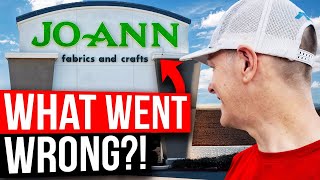
In this 30‑minute narrated video, Michael Girdley chronicles the 80‑year life cycle of Joann Fabrics, from its 1943 founding by three German‑American families in Cleveland to its 2025 liquidation. He explains how the chain grew to 850‑plus stores by riding post‑WWII sewing demand, the super‑store trend, and later diversification into scrapbooking, yarn, and décor. Girdley then details the cultural and demographic shifts that eroded Joann’s core customer base: the move from a sewing‑necessity generation (Silent and Greatest) to baby‑boomers, followed by millennials and Gen Z who preferred fast fashion and digital experiences. He outlines Joann’s competitive consolidation in the 1990s, acquiring rivals such as House of Fabrics and Cloth World, becoming a category‑killer. The pivotal moment came in 2013 when private‑equity firm Leonard Green bought Joann for $1.6 billion, loading the company with roughly five‑times‑earnings debt and annual management fees, which forced cost‑cutting, CEO turnover, and under‑investment. Despite a COVID‑19‑driven DIY surge in 2020 that temporarily lifted revenue to $1.9 billion, the post‑pandemic market reverted, exposing Joann’s outdated store experience and lack of community engagement. Financial distress deepened, leading to a Chapter 11 filing in March 2024, a partial debt‑restructuring, a brief emergence, and a second bankruptcy in early 2025. The assets were sold to competitor Michaels, and the final store closed in May 2025, ending 19,000 jobs. Girdley concludes with the lesson that assuming headwinds will not materialize, especially when combined with excessive leverage, can doom even a once‑dominant retailer.
Chapters
For over 80 years, Joann was America's fabric store. They had over 850 stores, controlled a third of the United States sewing market. But in May 2025, they closed their last store and 19,000 employees lost their jobs. This video is the rise and fall of Joann Fabrics. And this has been my number one most requested video, uh, of all time, basically. And the first one that I'll actually feature input from readers and viewers of my channel. Who sent me comments and opinions on Jo-Ann Fabrics. That's how passionate people were about this business. Back in 1943, we're in Cleveland, Ohio, and 3 German families pooled their resources to open a fabric shop. World War II was a time very different than today. Resources were scarce, there was rationing going on, uh, people had to make stuff last, and mending and sewing your clothes was something you had to do, and for that, buying fabric was essential. As the business expanded in the post-World War II boom and into the 1960s, they changed the name of the company, naming it after the first names of two of the founding family's wives, Joe and Ann. In 1969, they went public, and by 1980, they had over 500 stores nationwide. They rode the superstore-ization trend that we talk about a lot in this channel, where everything from electronics to toys got its own version of superstores. And they also rode a huge generational trend. All of those women that had gone through the Great Depression and then through World War II, well, sewing for them was a big part of their livelihood and how they lived. And in fact, the average American woman was sewing 4 to 6 pieces of clothing on her own for herself per year. And by 1958, it was a billion-dollar-a-year industry. And a lot of the reason they did that was because ready-to-make clothes were super expensive, totally different than it is today. In fact, if you went to a department store to buy an outfit, that might cost you a week's worth of wages back in that time. But with a pattern and some fabric and a sewing machine, you could do it for yourself in a fraction of the time. Women, and especially related women, would get together and sew, and that was part of the way they socialized back then. And you would even see the skill of sewing passed down from grandmothers to mothers to daughters to granddaughters. Back then, they taught a class in schools typically called home economics, which is basically like, we'll teach you how to be a homemaker. And it got so popular that in the 1950s, the Home Economics Association had over 50,000 members. Joann's customers during its golden era were the Silent Generation and Greatest Generation ladies, and many of them had grown up through the Depression. For them, this was how they were ingrained to think. Like, you treated stuff with care, you made it last, and part of the way you did that was by sewing. Those women started to age in the 1970s and 1980s. Remember, a lot of them were born in the '20s, '30s, or even earlier. And so you had, starting in the 1960s, a new generation coming to adulthood, and that was the baby boomers. Baby boomer generation is stereotypically all about accumulating things and working hard and playing hard and showing that stuff off in terms of their wealth. And in this case, uh, they didn't have a lot of time to sew because they were busy out working, trying to make money. And others of them had seen that the previous generations had been stuck behind a sewing machine. Baby boomers had zero interest in that. In fact, they were very much more wanting to be liberated. And as their customers aged, pushing into the 1990s, another thing started to happen for JoAnn, which was globalization started to happen. You started to see the rise of Asian supplies of clothing and fabric. By this time, America was being flooded by clothes from Vietnam, China, Thailand, and other places where labor was cheaper and it was easy to churn out cheap outfits, much less than what they used to cost back in the 1950s. In this world, baby boomers who who had already thought about sewing as kind of what moms and grandmas did, saw little reason to continue on the tradition and pass that on to their kids, the millennials and Gen X. Schools reflected this. The home economics trend started to die out in the 1990s and 2000s. Doesn't really exist anymore. You might find culinary programs, but no longer are there high school programs teaching you how to sew or do a grocery list. And while budget cuts prioritize STEM and learn to code and all that kind of stuff, by the early 2020s, only 25% of high schools offered anything even close to what home economics had been. So entering the 2000s, as the millennials start to come of age, sewing has gone from a necessity that everybody did to a niche hobby. And by this point, there's nobody to teach these young ladies and men who might be interested in sewing that it's something they should be doing. And there's little economic incentive to do it. At this point, it creates a time bomb that was ticking underneath the business. Of Joann. And the economics didn't make sense either. By the early 2020s, a t-shirt could cost you, say, $5 off of Shein, shipped directly from China or Thailand. Just to buy that amount of fabric at a Joann might cost you $10 or even $15, and that's before you even did the work. In the 1960s, it was incredibly common for women to get a sewing machine as a graduation gift. In the 2010s, I haven't seen that in, well, forever. Nobody does. At the same time, brains have been scrambled by the internet and instant gratification of Amazon. Why spend hours creating yourself a dress or a t-shirt, uh, when you could just click a button and have it in 30 seconds delivered to your home? And one viewer of this channel sent me an email and he said it's not just sewing that's in decline, it's anything that requires Americans to sit down and do something with their hands that takes hours. Model railroading, model cars, RC cars, all that kind of stuff. Well, it's dying right alongside sewing. Back in the '60s and '70s, people would join things like crafting guilds. Uh, by the '90s, those things were basically extinct. People weren't joining those clubs anymore. And before I get into what all went wrong with Joann Fabrics and how this bomb exploded underneath their business, well, here's a quick word from our sponsor.
But before we get into that, I want to let you know that I put every single one of these video stories that I do into a one-page summary cheat sheet. It's a great way for you to remember the key beats of the story and take away all the great lessons that come from it. And maybe you could be the cool guy at the party who is telling interesting business nerd stories like I do. Join the club. Anyway, you can get all these cheat sheets totally for free at girdley.com/youtube. Just put your email in and you'll get this video's cheat sheet automatically, plus all the other ones I've done. Now let's get back to the video.
As the world entered the early 1990s, there were actually 6 major chains competing with Joann's Fabrics across the country. Everything from Fabric World to some other ones that I can't remember the names of. By the 1990s, those 6 chains would dwindle down to 2: Joann Fabrics and a company called Hancock Fabrics. Hancock would eventually go bankrupt in 2016. Joann pounced on this opportunity as everybody else went bankrupt. House of Fabrics went bankrupt in the mid-1990s. Joann's bought their stores and acquired another 250 locations. Cloth World went bankrupt. They bought their stores and folded them into Joann's. And this created basically a category killer in Joann's. They own the category. They have nearly 1,000 stores nationwide at their peak. In the 1990s. While they'd taken on debt to buy these competitors, they were the undisputed king of their space. But their size wasn't changing the fact that underneath the entire business, the whole market was shifting against them. The change in demographics in the United States and the onslaught of manufacturing from overseas. But things were still good for now, and by 2010, uh, they had started to diversify into other footprints beyond just malls, going into supercenters as well, and they had 840 stores and the stock hit an all-time high. Part of this is they intelligently had moved on from exclusively fabrics. They'd gotten into scrapbooking, yarn, seasonal decor, other stuff that people wanted to buy. And right at that moment, just as Joann's was at the top in the early 2010s, a private equity firm came calling offering to buy the entire company for $1.6 billion, a 34% premium over what it was trading for on the stock market at that time. And at that point, Joann's was run really well. They essentially had no debt. They were the market leader in their category. But that no debt thing, that was about to change. This is private equity, after all. Leonard Green's firm, the private equity firm, didn't pay that $1.6 billion in cash. They took most of it out in debt and they put that straight on Joann Fabrics' books. And as you can see on other videos on this channel, everything from Toys R Us to Panera, when a company gets saddled with a lot of debt, it can create a hamstring on the things it can do to keep its business up and competitive. And Leonard Green leveraged the business to the hilt. They put 5 times earnings of debt on the business of Joann's. In addition to that, they set it up that Joann's had to pay them annual management fees for the privilege of them doing what they did. Management was suddenly hamstrung. They couldn't run the business for the long term. They had to focus on servicing the debt. So things like the stores started to look tired, inventory levels dropped. It was all about paying the creditors, not making sure the customers stayed happy. Between 2011 and 2023, 9 different CEOs post would rotate through the door at Joann Fabrics. It's hard to deliver good results when you can't spend any money on the business. All the while, the headwinds that had developed as the original 1950s, '60s, and '70s era customer died off, uh, those kept getting stronger. In 2019, the year before COVID Joann lost $546 million. Rating agencies put them as a risk of default. Joann's entered 2020 with $900 million in debt. And an aging-out customer base and an onslaught of overseas, basically clothing items. They needed a miracle to survive. And then March 2020 happens. And if you remember that time, it was the COVID pandemic. Suddenly everybody's stuck at home with a ton of free time and they need to find a way to keep themselves busy. And in that moment, Americans rediscovered crafting. Using the beauty of the internet, people were able to pick it up and learn just from videos on YouTube and other places like that. And even to some extent, Joann became part of life or death. People would buy fabric there in order to sew masks, but they also started to do other stuff. They knitted and built quilts and, well, all that kind of stuff that I just have never found interesting. For the first 9 months of 2020, revenue exploded. Revenue hit $1.9 billion. It was up 25% year over year after losing $188 million the year before. In 2020, they showed a net profit of $174 million. The CEO at the time noted that younger customers had shown a drastic shift towards DIY and sewing. Suddenly, well, seemed Joann's had gotten pretty lucky. But here's the thing, these new millennials that were coming in and Gen X folks and Gen Z, they weren't like the older customers that had come in in the '60s and '70s. These people wanted social media experiences, they wanted community, they wanted to be part of a group thing. And Joann Fabrics was still running just like a discount fabric store. Joann would perhaps have you wait 45 minutes to get your fabric cut on the way out the door, uh, as a internet meme once said, "Ain't nobody got time for that." Uh, especially not in the world of Amazon, grab-and-go, and people on the move all the time. And this fabric cutting, it's not like it was an easy problem. Uh, the year before, Amazon had actually bought a business called Fabric.com for $93 million. They ended up shutting it down. The reason why? Cutting fabric was really labor-intensive and difficult. If they couldn't make it work, how was an old-school Joann Fabrics gonna make it work? Leonard Green saw this moment to cash out and get out of the whole deal. They took Joann Fabrics public in March 2021, and while they had hoped to hit $15 or $17 a share, they still got $12 a share for their, for their interest. And, uh, well, they remained majority holders, but they started to cash out. But here's the deal, and you've seen this happen post-COVID. So many of the things that happened during that environment turned out to just be a blip as things reverted back to the normal. And after the pandemic restrictions ended, people stopped sewing masks. They also stopped it with the DIY stuff. They went back to just what they were before. In fiscal year 2023, Joann Fabrics did $2. $1.3 billion in sales, shrinking just under 9% from the year before. Uh, and there was a problem. They lost $200 million. The CEO at the time called it a quote unquote challenging environment and then proceeded to resign in May 2023. The board hired two co-CEOs as interim co-CEOs, hoping to stabilize the ship. Uh, they would never have a full-time CEO after that. By October 2023, Joann stock fell below $1 per share. Nasdaq issued a going concern warning saying that they threatened that they were going to delist the company. And the value of the company had gone down 98% since the IPO just 2 years earlier. Joann's market cap was $8 million for a company with 800 stores and billions of dollars in sales. But while Joann was saddled with all this debt, there was a case in point that it didn't have to be this way. A company called Hobby Lobby located out of Oklahoma had started in the 1970s and been quickly and quietly expanding throughout the 2010s. But while Hobby Lobby had a smaller collection of fabrics than Joann's. They had something Joann's didn't, which was a clean balance sheet without a bunch of debt they were forced to service. And they could be competitive and almost as good as Joann's. And by this point, Joann's management was a bunch of people who didn't understand anything about sewing or crafting for that matter. One buyer for the company talked about the higher up you would go in the Joann's management team, the less likely you are to find somebody who could operate a sewing machine. And because of the debt, which meant that Joann had to cut its most expensive employees, The people who were total lovers of sewing and the entire hobby, they had been long gone. The idea of any sort of community or place where a person in the hobby would want to go and hang out, it was long gone by this point. And when a chain like Joann's is near the end, you'll see that happen with the employee satisfaction and morale. Uh, and towards the end, the stores got messier, bolts of fabric piled up. Uh, it was a disaster. In March of 2024, Joann filed for Chapter 11 bankruptcy. The debt on the balance sheet, $2.4 billion.
The Hudson-based fabrics and craft retailer Joann Incorporated has officially filed for Chapter 11 bankruptcy.
The plan worked out with the bankruptcy judge was to shed $500 million of that debt and emerge as a company with a stronger balance sheet. Leonard Green would forfeit their equity stake and take a loss on the remaining investment that they had. It worked. In April 2024, Joann's emerged from bankruptcy and it looked like the chain might survive. In January 2025, The end came for Joann Fabrics. The headwinds were not able to be something to be circumvented, and they filed for bankruptcy again.
Joann Fabrics has filed for Chapter 11 bankruptcy for the second time in less than a year.
In February of 2025, they announced they were going to liquidate and give up and throw in the towel. And at the end of May 2025, the last Joann Fabrics store closed and 19,000 people lost their jobs. A week later, Michaels Stores, another chain of kind of, well, stuff that I don't shop at, announced they were buying the Joann Fabrics assets, including their website. And today, if you go to Joann Fabrics website, it redirects to Michaels. And searches for fabrics on Michaels websites are now up 77%. Not to mention the business that has gone to Hobby Lobby. Debt on these businesses is often assuming that headwinds won't come. And that's where you get in trouble. And you look at the case of Joann Fabrics, they assumed which the green private equity partners did, that things would continue on forever. And that kind of ignored the headwinds that were coming, and there were multiple of them. In the end, this combination of headwinds plus too much debt, I mean, a beloved kind of institution of Joann Fabrics ended in the dustbin of business history. If you like this video, let me know in the comments below. That does encourage me to make more of them, even when I'm getting over being sick, like right now. If you want to see another video, of a business hamstrung by debt, check out this one by Toys R Us right here. That's one of my favorites. See you next time.










