The rise and fall of Kraft Mac and Cheese: From 80 million boxes to a $15.4B collapse
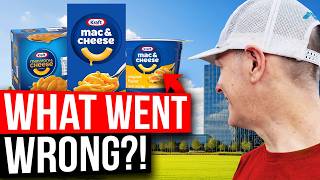
The video chronicles the full lifecycle of Kraft Mac & Cheese, from its 1937 invention and wartime boom that made it an American staple, through decades of market dominance, to the 2013‑2015 acquisition by 3G Capital and Berkshire Hathaway. It explains how 3G’s zero‑based budgeting and aggressive cost‑cutting (mass layoffs, plant closures, 30% EBITDA margin) initially boosted profits but later led to deep cuts in advertising ($400 M) and R&D (0.36% of revenue). These cuts eroded brand equity just as consumer preferences shifted toward clean‑label, healthier options, allowing competitors like Annie’s, Goodalls, and private‑label brands to capture market share. In February 2019 Kraft Heinz announced a $15.4 B write‑down, triggering a 25% stock plunge, an SEC accounting probe, and the ouster of CEO Bernardo Hees. The brand’s market share fell from 45% to the high‑30s by 2025, while Goodalls grew to 6% of the market. The video concludes by questioning whether short‑term cost cutting or failure to adapt caused the decline, inviting viewer commentary.
Chapters
Today I'm in front of what is arguably the best-run grocery chain in the entire world, H-E-B, located here in Texas.
But before we go in there and I show you what this video is about, I want to set the stage for you about this story. In February 2019, Warren Buffett, perhaps the greatest investor of all time, went on national television and admitted a mistake.
One of the deals he had done was one around Kraft Heinz, and he came out and admitted, I was wrong in a lot of ways about Kraft Heinz. And the first one was, we overpaid for Kraft. You see, days earlier, Kraft Heinz had gone public and announced a $15.4 billion write-down off their balance sheet, wiping out billions in value off the stock.
In fact, they'd lost a quarter of their value from the stock market just in that one day alone.
And the big driver of that decline had been what was once the crown jewel of Kraft, their instant macaroni and cheese. Macaroni and cheese had been something that millions of people in America had grown up on through World War II, through the Great Depression. It had been a dominant force in households for years, but suddenly it was failing.
How could something that was going so right for so long go so wrong so quickly?
Was it management mistakes? Was it change in consumer tastes? Was it billionaires getting greedy? Well, the answer will surprise you. This video is the rise and fall of Kraft Mac and Cheese.
Oh, and by the way, thanks to Zapier for sponsoring this video.
More on them later.
You see, back in 1937, the table was set for all of what would happen eventually with mac and cheese. Back then, a traveling salesman named Grant Leslie, uh, had the idea of boxing up noodles and cheese all in one box to make it an instant, easily accessible dinner for people. Kraft, being the typical kind of big business that they were, caught wind of the idea. They went and copied him, and they built their own version of Kraft Mac and Cheese with the tagline that it would feed a family of 4 in 9 minutes. The grand price tag?
19 cents.
It was an instant hit.
They sold 8 million boxes in their first year.
And then World War II came along and turbocharged the entire thing. Women had to go into the workforce, so they didn't have as much time to cook, and meat and things like that were rationed for the war effort. And in fact, you could get 2 boxes of Kraft Macaroni and Cheese for 1 ration stamp back then. And in 1943 alone, they sold 80 million boxes of Kraft Mac and Cheese. Just incredible.
And for the next 70 years, Kraft Mac and Cheese was the undisputed king of grocery aisles.
Especially like the one I just went into here in H-E-B.
Selling millions and tens of millions of boxes a year.
Innovating with new things like spiral shells. Heck, they even had their own mascot, the Cheesosaurus Rex.
Cheese Spirals, fill your mouth with the cheesiest.
Cheese me!
Every kid, every kid including me, grew up eating this stuff. I mean, my parents, man, a lot of the calories I got as a kid came from these boxes. And by the 2010s, Kraft was selling 350 million of those boxes each and every year. They had 46% market share in the macaroni and cheese market. No competitor even came close. But right as they were looking pretty and sitting atop the entire world, that's when some new rich guys came in and started to change everything. In 2013, a Brazilian private equity firm called 3G Capital teamed up with Warren Buffett's Berkshire Hathaway to buy Kraft Heinz for a cool $23 billion to create a giant in the food industry.
3G had built their entire business using a pretty proven playbook that I'll talk about a bit later in this video. They'd done it with things like Burger King, uh, Anheuser-Busch, and they were ready to do that same playbook, uh, with basically Kraft Heinz.
So in March 2015, the deal was announced, uh, the merger of the two companies and a $46 billion deal. Suddenly the third largest food company in North America was created. To sweeten the deal for Kraft shareholders, They paid a $16.50 special dividend, nearly a quarter of the share price at the time, in cash to Kraft shareholders for agreeing to the merger. 3G partner Brazilian Bernardo Hees was about to become CEO of the combined companies.
And they were going to deploy their playbook. 3G has a pretty set playbook. They come in, they rip out costs, and profits soar. And they've done it multiple times with Burger King and Anheuser-Busch and others.
And so remember this moment and this fateful decision.
It would come back to haunt them entirely.
Before we get into that, I want to talk about today's video sponsor, Zapier. We actually use Zapier in our business. Once you're running multiple tools, things break fast if they don't connect properly.
CRM updates in one place, sales data somewhere else, notifications buried in Slack or email.
Zapier is what keeps all of that coordinated without relying on people to manually move information around. Zapier connects the tools you already use and turns them into a single system. When something happens in one app, the rest respond automatically. That means information shows up where it's needed, when it's needed, and teams are operating off the same reality instead disconnected snapshots. What matters here isn't automation for speed, it's automation for alignment. Zapier gives you visibility across systems so decisions are based on what's actually happening, not assumptions or outdated data. As businesses grow, the biggest risk isn't competition, it's internal fragmentation. Zapier helps prevent that by keeping systems talking to each other as things scale. If you're running a business and your tools feel disconnected, Zapier is how you bring them back into alignment. Thanks to them for sponsoring today's video.
3G runs a pretty special system with the way they do companies to cut costs, and it's called zero-based budgeting.
You see, in a normal company, if you want to do a budget, you start with the previous year's basically expenses and profits and income, and then you go and you build changes to that. Basically, that's your starting point. Zero-based budgeting shifts all that on its head. Basically, every expense every year has to be justified. You start from zero and then you base every expense that you actually have to make that year. And in practice, you end up cutting a lot of costs out of the business using the system. Within 7 months of buying the business, 3G would lay off 5,000 workers, over 10% of the workforce, and they closed plants left and right. At first it worked brilliantly. They got to 30% EBITDA margins across the whole business. And to put that in perspective, another giant food giant, Nestlé, well, they run at just 20%. In other words, these guys were doing nearly 50% better just a year out the gate.
And the stock peaked at $96 in February 2017. Analysts on Wall Street, they loved it.
The stock soared.
And here's the deal with cost cutting. Eventually, once you run out of fat in a cost-cutting effort, you end up starting to cut muscle and bone. And that's exactly where Kraft Heinz started to go. For example, the company had historically been spending $1 billion a year in advertising.
In other words, convincing consumers to buy their brand of mac and cheese over others. Well, they cut $400 million off of that a year. The good news was that was $400 million of additional profit they got in the short term. The long term? That was $400 million of brand damage they were doing by not reminding customers why Kraft was better.
Kraft Heinz would spend only 0.36% of revenue on R&D. And to put that in perspective, other big giants in the food industry like Unilever, they would spend 1.2%, 1.5% in order to develop and improve their products. When you spend less on R&D, things like innovation, efficiency, all that stuff gets gutted. People weren't spending time inside the company investing in how to make the products better and create things that people actually wanted to eat. By 2016, organic growth of the company, meaning natural growth without any acquisition, it turned negative. They were shrinking their top-line revenue. And at one point that would be okay, except the world around mac and cheese, it started to change in the 2010s. And remember how I grew up on these boxes? You know what doesn't get served at my house anymore? This stuff. And there's good reason for that. Attitudes have changed. We don't see that kind of stuff as healthy anymore. While 3G and the guys were basically focusing entirely over spreadsheets and how to make as much profit as quickly as possible, American habits were changing. Gen Z and millennials, and heck, even my family, we want to know what's in the box. And we're not interested in a box with a bunch of things with chemicals on the side of it. I mean, there's sodium phosphate, calcium phosphate, oleoresin, whatever the hell it is, like We just want to eat food. And a lot of food, like this Kraft box, has things like, you know, yellow dye number 5 and number 6, things that have been banned in the EU for years. And it took a food blogger in 2016 to come out and get a petition put together for 350,000 people to sign it to get Kraft to actually remove that stuff from the boxes. And while Kraft made the change and sold over 50 million boxes with the new formula removing some of this stuff like these dyes, Nobody noticed because Kraft didn't tell anybody. The problem was suddenly becoming one of perception, made worse by the fact they weren't spending money on advertising. Wholesome-looking brands like Annie's Homegrown, which had been around for a while, were starting to gain traction and market share on Kraft Mac and Cheese.
Their sales were going from $200 million to $400 million to $800 million, growing year after year, simply because customers had the perception those brands were healthier than the blue box Kraft. And while Kraft was cutting marketing budgets, basically General Mills, the owner of Annie's, was adding 4 million new households annually. And you know what? You go to my house, there's boxes of Annie's there.
You saw what I just bought inside the store. I actually bought something else besides the blue box mac and cheese, a product called Gouda. And it's this. Launched in November 2021 by an entrepreneur named Jen Zezute. I may be pronouncing it, but you know, that's how it goes.
It came out and went directly for what customers are wanting now. Things that felt more wholesome, and you got to see what was in the box, and you weren't eating a bunch of chemicals. Look at actually what's on the ingredient list here, and it's right. Like, this is a bunch of stuff that, like, I can pronounce the names and I know what it is.
Whey, buttermilk, salt, turmeric.
Like, I know these things. Whereas the blue box, well, it tastes like chemicals because it's full of chemicals. And here's the genius of what Jen did, uh, instead of going head-to-head with Kraft and going after the kids market, They went after the adult market, which is genius because like the number of kids is going down. Our birth rate's way down, as you can see in other videos on this channel. So we're not going to go head to head with Kraft. We're not going to outspend them. It's not possible. Instead, we're going to do modern marketing. We're going to bring in influencers like Gal Gadot and folks like that, and we're going to try to target the adults with a healthy package that they want to eat. And guess what? When the adults have kids, well, they're going to ask their kids to eat the healthy mac and cheese too.
And it totally worked.
In between 2021 and 2022, the Goodall sales tripled— I'm sorry, not tripled, 33x'd between the two years and then tripled again the next year.
And by this year, 2025, they were selling a box every 4 seconds out of grocery stores. And if you just went into where I was in H-E-B, like the Goodalls were prominently positioned. And I'll tell you which one I would have chose, like the Goodalls. And private label mac and cheeses like this are now 14% of the total market. And guess what company's share that's coming from? Yeah, Kraft. Because unfortunately, these mistakes mean that the public perception of the Kraft brand as a desirable one and a premium one, well, because they cut out on advertising, like, that's gone. At the same time, you go into H-E-B, like where I just was, and it's full of generic, cheap versions of it that will sell for 50% less. Kraft mac and cheese is suddenly stuck in the middle without a home to call home.
And in February '19, That brings us back up to where we started the story, which is Kraft Heinz announcing the $15.4 billion write-down, which ended up costing them 25% of the company value in the public markets on that day. To make things worse, the SEC launched an investigation into the accounting practices, and 3G CEO Bernardo Hees, he was pushed out.
Warren, who had been one of the big financial backers of the whole thing via Berkshire Hathaway, the deal cost him $3 billion personally, and he had to go on CNBC and admit some stuff that he wasn't excited to admit.
Hit, which was a loss. 3G Capital quietly started selling, and by 2023 they had exited their position entirely. But things haven't stopped going bad for Kraft Heinz. Kraft Mac and Cheese in just 3 years has gone from 45% market share to into the high 30s. And who's benefiting from all that? Well, Goodall's has gone from basically nothing to 6% of the total market share in that time. In the 40 weeks ending November 2025, Kraft Mac and Cheese lost another 4% of market share. Kraft Heinz, the owner of Kraft Mac and Cheese, has had reduced sales, shrinking sales for 8 consecutive quarters. And they recently announced that they're splitting the company up into 2 pieces. The obvious answer to why all this happened would be too much cost cutting. You've seen this over and over again with Panera, with Burger King, with Anheuser-Busch.
Eventually, if you think too short term, it costs you the long term.
And it's easy to think that's what happened here. But at the same time, it wasn't just all that. You have to remember that companies like this have to stay hungry and adapt to what's changing in the world. And in the case of Kraft Heinz, the world changed underneath them and they kept the recipe exactly the same. All right, let me know what you think in the comments below. Was Kraft Mac and Cheese doomed all along? Was it the cost cutting? Uh, what caused it to happen?
Curious your thoughts.
I try to read 'em all.
Catch you next time. Oh, and if you're interested in another video like this, here's my video on Panera. Very similar story, uh, just slightly different outcome.










