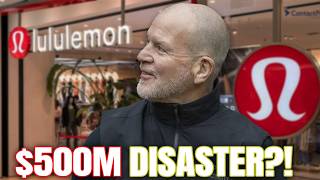
In this single‑host video, Michael walks through Lululemon’s trajectory from its 1998 founding in Vancouver to its status in 2025 as a $1 billion‑plus apparel company facing slowing growth and a 40 % stock decline from its peak. He outlines the early hypergrowth driven by a premium, four‑way‑stretch yoga product line, community‑focused stores, and a strong brand identity that created pricing power. The narrative then shifts to the 2013 see‑through pants scandal and founder Chip Wilson’s fat‑shaming comments, which sparked a backlash, a costly recall, and leadership turnover. Subsequent CEO instability further destabilized the firm. Michael highlights the $500 million Mirror acquisition during the pandemic as a strategic misstep that pulled focus from Lululemon’s core clothing business, culminating in a $443 million impairment. He details external pressures: a flood of athleisure competitors (Nike, Adidas, Athleta, Fabletics, Alo, etc.), inflation‑driven price sensitivity, a fashion shift toward looser silhouettes, and the brand’s perceived staleness. The U.S. market, once a growth engine, is now saturated, with same‑store sales falling and durable products reducing repeat purchases. Supply‑chain disruptions, rising air‑freight costs, and increased Chinese import duties further squeezed margins. Financially, Lululemon cut its 2025 growth forecast to 8‑9 % and saw its share price drop 11 % on the news. The video ends on a more hopeful note, noting strong international sales—especially a 39 % jump in China—while warning of geopolitical and competitive risks. Michael distills three lessons for business owners: leverage premium products wisely, stay focused on core competencies, and continuously innovate to keep pace with evolving consumer trends.
Chapters
Lululemon built a billion-dollar empire dominating yoga and athleisure, and it grew into one of the most admired apparel companies in the world. But cracks in leadership, changing consumer habits, fierce competition, and failed bets like the Mirror have slowed its growth dramatically. In this video, I'm going to break down how it happened and what business owners can learn so, well, we don't make the same mistakes they did. So to explain how things went wrong with Lululemon, well, it's important to start back at the beginning because the problems, well, they've come from a long way ago. And in 1998, Lululemon was born in Vancouver, right as yoga was expanding globally. The first retail store opened in 2000, selling premium form-fitting yoga apparel. And they didn't just sell clothing, they practically invented the athleisure category, comfortable workout wear you could wear all day. And by 2007, because of all of the growth, they went public and revenue that year had grown 77% year over year to $149 million a year. And the IPO, well, it valued Lululemon at $1.4 billion. From there on, it was hypergrowth. They had hit into something in our society. And by 2012, sales crossed the billion-dollar mark, and Fortune named them one of the fastest-growing companies 3 years in a row. The secret? They had created a high-end product using special 4-way stretch and that sort of things in their fabrics, and they had solved some things that made it so you could, as a lady, wear athleisure out in public. And with that came a strong brand identity. And they added to that community-focused stores that created brand evangelists, and they almost never, well, discounted, much like a luxury retailer would. Between 2009 and 2019, revenue skyrocketed from $353 million to $3.3 billion. And then, well, things started to unravel. The pandemic came along, and while many retailers struggled, well, Lululemon thrived for a while. And in 2021, revenue soared 42% to $6.25 billion. Homebound workers living in leggings drove athleisure demand through the roof. And Lululemon, well, it passed giant Under Armour in sales that year. And this is the first lesson from the beginning of the story. When you create a premium product that people love, well, you you can dominate that niche and really capture pricing power. You can charge more than the next guy and ensure a lot of profits for yourself. But with all this success came problems. The first major stumble came in 2013, and that was, well, the see-through pants scandal. And the company recalled 17% of their pants that had been sold in the past couple years because they were too sheer. You could see through them and see, well, people's business. And they had to be recalled, costing the company $67 million in lost sales. And quality control had obviously slipped amongst all that growth. So founder Chip Wilson, well, he came in and he made things worse. He publicly suggested that some women's bodies weren't right for Lululemon pants. That fat-shaming comment triggered massive backlash. It was precisely the wrong time to say something like that. And, well, it forced him to step down as chairman soon after. And for many, like, the brand never recovered. I know ladies that are my age that, well, they won't shop there just because they remember all of that going down. And leadership turnover followed. And if you follow this channel, you'll see that this tends to be a common theme. A revolving door CEO office tends to be companies that just don't recover. Like, well, this video here where I talked about this at Harley-Davidson. CEO Christine Day resigned, then her successor Lauren Potvin was forced out for misconduct in 2018. Even as the company recovered financially, those leadership disruptions, well, they created instability at the top. But wait, things got worse. During the pandemic, Lulu made a massive $500 million acquisition, buying technology company Mirror, an at-home fitness tech startup. Well, instead of worrying about, well, what they do great with, that's which was athleisure and clothing. The bet? People would keep working out at home post-COVID. But as gyms reopened, consumer interest in expensive fitness mirrors and even Peloton, well, that stuff just vanished. People didn't care anymore. They wanted to be out and experience the real world. And by 2023, Lulu admitted Mirror was a flop. They took a $443 million impairment charge, basically writing off nearly the entire investment. And this is lesson number 2 for business owners. I see this often. You forget what your core business is. And in the case of Lululemon, they made great clothing and they needed to just stick with that. But instead, they chased hot trends outside of their wheelhouse. And much like I've seen it happen with other companies, it got them away from their core focus and it burned them. And all the problems weren't just inside of Lululemon. Outside forces made things even harder. The athleisure gold rush, well, it attracted competitors, especially since Lulu was now vulnerable. Their brand had been tarnished and, well, they had blown some money on some stupid stuff. From the top, this brought in well-funded competitors like Nike and Adidas and Athleta. It brought in names like Fabletics, and even Target's in-house lines were coming after the core Lululemon business. And from the top down, that was scary. But then bottom up, you started to see these online startups and folks that are just frankly hipper than what Lululemon is. Alo comes to mind. As I go around my town, I don't see women, especially affluent ones, they're not wearing Lulu anymore. They're wearing Alo and Viore and some of these other brands that are just, well, frankly, hipper, cooler, and, well, I've spoken to the younger generations better than Lululemon does. And if you were a consumer who was suddenly like overwhelmed by inflation and you had dozens of alternatives that were maybe cheaper to a $100 pair of Lululemon leggings, well, it was a great time for you to figure out how to save a few bucks by going to an alternative. And inflation, it wasn't helping this. Consumers became more price sensitive and many, well, they were trading down, buying cheaper activewear while cutting back on these premium purchases like Lululemon. And frankly, the biggest thing that's hurting Lululemon right now is fashion trends have also shifted. Loose-fitting clothing became more popular, baggy sweats, wide-leg pants, oversized styles, none of which, well, Lululemon is known for. Heck, Lulu has fought having plus-size stuff for a long time. And so all this together had people saying, even longtime customers, that Lululemon, well, it feels stale. And by 2024, the company came out and publicly admitted a lack of newness was hurting sales growth in their core women's business. And look, this is another lesson in this whole story. You can't sit still as a business owner. Even dominant brands have to keep innovating to stay relevant. And trends and tastes, they always evolve. Whether you're making Coca-Cola or you're selling athleisure, you have to stay up with the market. But let's talk about the biggest thing that's hurting Lulu, which is the United States is about 25% of the global economy. And Lulu hit a wall here in the United States. Same-store sales fell in the Americas by over 2%, which is huge if you're a retailer. U.S. growth has been flat for the first time in years. Analysts are warning that Lululemon may have maxed out the U.S. market. Simply put, nearly everyone who wanted a Lululemon already owns some. And frankly, the fact that their clothing is so good hurts the brand. You know what I'm wearing right now? An 8-year-old pair of Lululemon shorts that I absolutely love. But I bought it 8 years ago. They got the money and I'm not buying a new one because they're still perfectly great. That's very different than if you go to Zara where the clothes last like 15 minutes and fall apart on the way home. Lulu, its own luxury is like hurting it and its own quality is hurting it. At the same time, COVID That has caused the supply chain to become even more complicated for Lulu. Factory shutdowns in Asia during COVID well, they created delays. Air freight costs to catch up, well, they ate 4-5 percentage points off margins for Lulu. Again, all of these things conspiring together, hurting the company. Oh, but wait, there's more! I'll put up the article here. Lulu came out and announced to the shareholders that Chinese import duties are increasing their product cost and really going to hurt them. Frankly, just the trade war is coming at a bad time when the whole world seems to be conspiring against Lululemon. So margins are getting squeezed, growth is slowing, and the stock market, well, it's noticed. In March 2025, Lululemon cut its full-year growth forecast, predicting only 8-9% revenue growth, far below investor expectations. And the stock, well, it went down 11% on that day. And by 2025, shares are down nearly 40% from their peak. And look, is it all over for Lululemon? Well, it's a lot of stuff is hurting Lulu, and it's not going to be turning around all at once. But there is some future for the business. And like other big American retail giants, like this video here that I did on Starbucks recently, Lulu is betting heavily on international expansion. And in late 2024, international sales had grown 33% year over year. As difficult as the United States is for Lulu, well, it's going well overseas. China sales, for example, jumped 39% in just one quarter, and global growth is now the primary lever keeping revenue rising for the company. And China in particular has become their key frontier. But it comes with new risk, like there's geopolitical tensions with China, trade wars, economic slowdowns, and an aging population in China. And oh, by the way, increasing competition there, too. And the U.S. market, once Lululemon's strength, has become mature and saturated. It's kind of scary. And look, you can build a great brand like Lululemon did and dominate for years, but it's easy to get distracted and chase shiny objects. And if you stop innovating, or you stop paying attention to your customers, potentially your edge fades. And also, the market, well, it can turn against you. And if you look at what trends originally caused Lululemon to be a thing, well, they've gone away. And women don't necessarily want to be seen with their, you know, stuff all tight in Lululemon pants out and everywhere when styles have gone the other way. And so you have to be disciplined. You have to see what the world is doing to you. And Lululemon, well, it's a $1 billion company that proves even the big boys aren't immune to these outside forces. And hey, my name is Michael. Thanks for being here. If you enjoy this kind of content, do me a favor, engage with this. Leave me a comment and a follow, uh, and it will help the algorithm show this to more people. And we'll see you next time. Oh, and let me know below, do you think Lululemon's gonna survive? Curious your opinion.