The rise and fall of NASCAR: How America’s race lost its speed
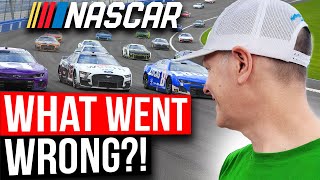
In this 20‑minute analytical video, Michael (co‑founder of Near) chronicles NASCAR’s trajectory from its 1940s Southern, bootlegger‑rooted origins to its peak as America’s second‑most‑watched sport in the early 2000s, and then to its steep decline by the late 2010s. He attributes the early boom to a confluence of cultural relevance, massive tobacco sponsorship (the Winston Cup), and national TV exposure—first via a blizzard‑forced Daytona 500 broadcast and later through ESPN’s 24/7 coverage. Star drivers such as Jeff Gordon and Dale Earnhardt provided narrative hooks that amplified fan attachment. However, structural decisions—most notably a revenue split that funneled 65 % of income to tracks and 10 % to the France‑family‑run league—created a governance model that prioritized track owners over teams and fans. Missteps like the confusing 2004 playoff overhaul, the bulky “Car of Tomorrow,” and an overly long schedule alienated both traditional and casual fans. The 2007 Great Recession stripped away Fortune‑500 sponsors, while an aging fanbase, declining teen driver‑licensing rates, and a cultural shift away from car‑centric entertainment left NASCAR unable to attract younger audiences. Social controversies (Confederate‑flag ban, MeToo pressures) further split the core Southern fanbase. Recent attempts to revive the sport mirror Formula 1’s playbook: introducing the Next‑Gen car, promoting marketable drivers (e.g., Bubba Wallace), courting celebrity owners (Michael Jordan, Pitbull), reviving historic tracks (North Wilkesboro), and leveraging digital platforms. Michael concludes that the root cause is the entrenched revenue and control structure favoring track owners and the France family, and that without a fundamental governance overhaul NASCAR may continue to decline.
Chapters
So NASCAR started as a motorsport from humble beginnings in dirt tracks and ovals in the Southeast back in the 1940s to what became by 2005 the number 2 most watched televised sport in America. It would regularly draw crowds of 150,000 or 200,000 people to big races for a weekend, and it had 130 of the Fortune 500 as sponsors. But fast forward to 2018 and the brand is mostly irrelevant. Their viewership is down by over half. The average age of a NASCAR consumer is pushing into their 60s and it's basically irrelevant. So what explains the rise and fall of NASCAR? If you're new here, my name is Michael. I make videos about the rise and fall of businesses that are iconic brands here in the United States and beyond as a way to teach myself and teach you about business. These videos actually cost me money to produce. And so today's video is actually underwritten by my company, Near. It's a company I co-founded that helps American companies locate and hire talent that is working in Latin America. So besides the obvious cost savings, you can find really good employees who wanna work remotely for your company. And if you're interested in working with them, I'd appreciate you giving them a shout out and tell 'em I sent you. Here is a link to find their website and they will give you a discount off your first hire. If you reach out. And this video is about the rise and fall of NASCAR, but if you stick around towards the end, I'll also tell you about NASCAR's plan to save itself, and it kind of is reminiscent of what's happened with Formula 1. So stick around for that. NASCAR got its start in 1947 when a man named Big Bill France got a group of former bootleggers, racers, track owners, and just kind of Southern folks together with the idea of creating a racing league. And the idea was that it would be built around kind of the Southern culture that had emerged in the post-bootlegging era from Prohibition. It was kind of authentically South and authentically represented that culture. I mean, there was quite a liberal number of Confederate flags thrown in with guys with nicknames like Fireball and that sort of thing participating in NASCAR in those early days. This was perfect timing. In the 1950s, Americans were still in love with the automobile. Heck, we were making most of them for the world. And in the 1950s, there were about 25 million cars on the road. Just a short couple of decades later, that had quadrupled to over 118 million. This was before the time that people started to hate traffic and started to hate their cars and their commutes. We were in love with the automobile, and NASCAR was a perfect reflection of that. NASCAR was different than what you saw in other sports. Whereas things like Major League Baseball had the Yankees and kind of that East Coast kind of spirit, NASCAR was unapologetically and authentically about the Southeast. It adopted that culture and it emerged from it. And guys like Richard and Lee Petty and folks like that, they represented that ethos and the consumers loved it. And the first thing to go right was that NASCAR caught a lucky break. And that lucky break was the US government. You see, in the 1960s, America had begun its war on tobacco and cigarette smoking. And one of the byproducts of that was they made television advertising illegal for cigarettes. Well, there's a lot of money in cigarettes and a lot of money in tobacco because people are addicted to it. And so companies in that position making the cigarettes, they went to go look for a place to advertise. And so in 1971, The company behind the Winston brand of cigarettes, R.J. Reynolds, came calling and they put an enormous amount of money backing the NASCAR Cup to the extent that they renamed the entire thing the Winston Cup. And that made in 1971, $100,000 being the top prize, which if you account for inflation, it's an enormous amount of money. And that prize money would keep growing year after year as sponsor dollars came in, both from Winston and beyond. By 2003, that prize money had gone from $100,000 to over $17 million. With $4.5 million going to the champion of the Cup. Remember the 1970s? We were only watching broadcast TV. This was at the early days of things like HBO and ESPN. They were barely relevant at the time. But in 1979, the NASCAR organization and NASCAR as a sport caught another lucky break. And that lucky break was a massive blizzard hit the United States. And that weekend the blizzard came just happened to be the moment that the first 500-mile Daytona 500 race was broadcast live on national TV. and suddenly millions of Americans, they couldn't go outside because the blizzard was, well, the blizzarding. And so they ended up watching the Daytona 500. And it was incredible. Nearly 15 million Americans at the time tuned in to watch this particular race, and it became the spawn of hundreds of thousands, if not millions, of future NASCAR fans being exposed to the sport. While national TV was a huge help for broadcast, it was just broadcast TV and there was a lot of stuff on there. But something else came along that was another lucky break for NASCAR, which was the rise of cable television. And in the mid-1970s, we saw the rise of HBO. Well, something else came along in 1979, and that was ESPN. And it turned out ESPN was super hungry for content. And one of the things they wanted to bring and they could afford to buy and show you was NASCAR. And with the rise of NASCAR on ESPN, suddenly you had nationwide coverage. And you had things, well, where basically the TV channel was going deep in NASCAR with everything from the live coverage of the events that would happen on the weekends to nightly specialized NASCAR shows to highlights being played on SportsCenter. It was a real deal. And if you think about why people actually like sports, men, women, children, young, old, it's because there's actually narratives in those sports. Each year you take a look at the season and you see what's gonna happen and you hope your team is gonna make it. And then the stars whose faces you know and whose names you track, you live or die buy with those people. Well, this was perfect for NASCAR because before ESPN, people hadn't been able to get that level of detail about NASCAR the sport. And now with it being on every night and everything from SportsCenter to the weekend broadcasts, they could do that. Then in the 1980s and '90s, the growth was propelled even further. They caught another fortunate break, which was a wave of very brandable stars in auto racing came through the NASCAR portfolio. Guys like Jeff Gordon, who were immensely kind of photogenic and, well, to some extent, very polarizing. You had Dale Earnhardt, all that kind of stuff going on where there were names that people still know today entered the sport and super fans, well, they loved to figure out whether they liked or hated those drivers. The tracks grew similarly as well, almost to absurd levels. You had Texas Motor Speedway that could host over 200,000 people for a weekend. You had names like Talladega and places like that as the sport expanded. Riding these waves nationwide. By the year 2000, the sport was riding high. It rode these four waves to basically the crest of pretty amazingness. And this is an amazing stat to me as I did research for this video. NASCAR was the second highest watched sport in America, only behind the NFL. That's ahead of baseball, basketball, all of the above. NASCAR was seemingly number two, which was amazing. But here's something to know about the way NASCAR was set up, and this would be really important later on in the story. At the time, 65% of the of revenue for NASCAR went towards the tracks themselves. 10% went to the NASCAR organization controlled by the Frances, remember the family that had originally founded it, and only 25% went to the cars and the team owners. And what's interesting about this is it's the exact opposite of the way most franchise systems for major league sports exist in the United States, where the owners of the teams themselves are the ones that are capturing all the value. Not the league. So while times were good, the car teams could do fine. Sponsorship dollars would come in, but in reality, they just captured 7% of the total value of NASCAR while everybody else, the track owners and the NASCAR Corporation, they are the ones getting super duper rich. The second structural decision they made, which would prove to be challenging in the future, as we'll see, is that the Frances basically had very strong and broad control over the entire league. Whereas if you look at an NFL, the commissioner there, he works at the pleasure of the owners. He is supposed to represent all of the desires of the owners and make good decisions for the collective. But when you have something like the Frances who basically run the whole thing and have control over everything, suddenly they're just looking out for the Frances. But none of that mattered yet because the money was still pouring in. And when money keeps pouring in, it glosses over a lot of structural problems. And at this time, NASCAR had figured it out. They had gone from this core of kind of basic Southeast, good old boy, type, type culture and environment, and one that had managed to appeal to the masses, with millions of people nationwide loving and following the sport and the drivers that drove the cars. In 2001, NASCAR signed a $400 million a year broadcast rights package with Fox and NBC. The brand had truly made it, and they had done it by kind of figuring out how to take this very niche southeastern sport and make it one with basically national appeal in the United States. But just at this moment, as it seemed like everything was going perfect and the brand couldn't lose, that's when things started to turn against our friends at NASCAR. The first thing that happened was in 2004, NASCAR decided to introduce a new playoff format and a new scoring system designed to basically engage fans more. But there was a problem with it. This change here, which was kind of confusing to your casual fan, and then the subsequent tries to fix it, that they did, which felt like tinkering to long-term fans, basically did something horrible. It alienated your existing fan base who were in love with the tradition of what had been done in NASCAR for 50 years. And then on the other side, the casual fans were turned off because, well, it was basically so complicated they didn't understand it. The schedule itself to meet all these new tracks went from February to November each year with 36 races that rivals basically the length of a baseball season, which by itself is enormously long as well. So basically you end up with a lot of people with schedule fatigue. Like, I don't have the stamina to keep up with the sport for that long each year. Like, I need a break. And most casual fans, they need the same. And remember I talked about kind of the centralized decision-making of NASCAR and how basically the people that were really around the table making the real money were the track owners. You're starting to see that in these decisions. Basically, these are all decisions that the track owners love, but the fans and especially the drivers too, they don't like these changes. See, in 2001, Dale Earnhardt had had a kind of tragic death inside of NASCAR, which prompted them to make some changes to the race system, arguably to make it safer. And in 2007, NASCAR rolled out a thing called the Car of Tomorrow. And this is a new kind of bulkier design that really signaled, unfortunately, to the core customer base that NASCAR was going even further from its roots. While everybody agreed that NASCAR needed to be safer, like you couldn't do that in a way that would take away the core of what had made NASCAR great, which was the difference of the brands, the stories of the drivers, and basically exciting races that were fun to go to. And the Car of Tomorrow was just a signal to a lot of folks that these ideas were going by the wayside in favor of some ideas that, well, basically NASCAR HQ and the track owners wanted to see happen. And so this well-intentioned idea to make the racing safer actually made it a lot more boring. And the races weren't as competitive and they weren't interesting to the fans. So they started to turn off. In the end, NASCAR was kind of turning like into a hamburger restaurant that wasn't very good at making hamburgers. And, well, people will come in and stop buying your hamburgers if you do that. Then in 2007, the United States suffered some bad luck from the perspective of NASCAR, which was the Great Recession. And if you remember during that time, the entire economy seemed like it was about to stop. And you know who else is tough for? A lot of the sponsors of NASCAR. Remember, 130 of the Fortune 500 had been sponsoring NASCAR at its peak. And now you saw a lot of those folks were actually going bankrupt, like Chrysler and Dodge and automakers like that. Good luck getting them to sponsor your car teams when they're not actually able to produce and they're having to get government bailouts. And the economic pullback was so wide that you saw the pullback as Attendance dropped and the sponsors basically disappeared from the NASCAR universe. Given that the teams themselves were almost entirely dependent on sponsors to survive, many of them started disappearing as well because suddenly their gravy train of these Fortune 500 companies like Home Depot putting their names on the hoods of cars, they were gone. There was just no way they were going to be able to survive. Into the 2010s, NASCAR faced another crisis where they had had a number of very marketable, famous faces like Earnhardt Jr., Jeff Gordon, those types of folks who were around back in the 2000s to help drive star power behind all of these basically growth of NASCAR. But those folks started to retire and they got unlucky in NASCAR. There wasn't a group of new stars that were very marketable who walked in at that time and could capture both the interest of the older fans and the interest of the newer fans, the younger folks. NASCAR, by and large, struggled to get young people to join the fan ranks during this time because Younger people were fundamentally growing up with different priorities than baby boomers and Gen X and even some of the older generations had done and had been in love with cars and that sort of thing. I mean, in fact, a lot of young people, they're not even interested in driving. A lot of parents my age have to talk to their teenage kids about actually stepping up and getting a driver's license. And that shows in the numbers. The average 16-year-old is half as likely to have a driver's license today than he was, say, 20 years ago. They are just not interested in car culture. And that's what NASCAR is about. And young people definitely don't have the patience to sit and watch a 3 or 4-hour oval track race on TV, especially with commercials. They're not going to do it. They want to watch faster-paced stuff that speaks better to them and connects to them with stories on platforms where they're watching, like YouTube and stuff like that. And NASCAR, well, they just didn't understand it. And it wouldn't be for a long time that they even got an inkling. That the world had moved on from underneath them. But wait, it got worse. Remember, NASCAR's roots was one based in kind of a conservative southeastern ideology and kind of approach to life. Well, in the 2010s, that was the peak moment when the world started to change. Remember, we were heading into the MeToo movement that would happen just a few years later. Well, that kind of group of people, they're not interested in seeing sexualization of women. They're not interested in seeing kind of the stuff going on with Confederate flags. I mean, let's be real. It took them until 2020 for NASCAR to ban the Confederate flag at races. Like, they were not being progressive or even ahead of the curve on this stuff. NASCAR, like any other organization, chases the almighty dollar. So they did what a lot of other folks would do in basically response to this. They started to soften the edges of the brand. They started to make rules around what would happen at the races. They started to get rid of some of the older tracks that were probably more tied to history in favor of more boring and more corporate tracks in places like California, for example. But while executives at NASCAR and the advertisers saw this as smart moves to try to, you know, be an inclusive place where they could bring in all of the audiences, the core market of kind of diehard blue-collar Southeastern NASCAR fans, they saw this as basically betrayal. You're turning your back on the core values and the people that we are. In favor of kind of chasing the money centers in California, Vegas, and Chicago where they were building tracks. So because of these changes and shifts underneath the business from 2005 to the 2010s, NASCAR lost over half of its annual attendance, both live and TV fans. They were drying up. And to illustrate this split in the customer base for NASCAR, there was a funny incident. They ran a program in 2015 where they would swap out people's Confederate flags that they brought in order to give them American flags, and they would do this free of charge. This is a NASCAR program. Well, some reports were that zero people elected to do it on a given race day when they came in and wanted to swap 'em out. It just shows you how much the NASCAR fan base was bifurcating, splitting in half, and they were unable to really talk to either one very well. Fast forward to today, and NASCAR's viewership is at an all-time low. And also worse, the viewership is getting increasingly old. It is in the high 50s as a median age now, and it looks to hit over 60 by 2023. Basically, NASCAR viewership has become a sport for the geriatric and retired. As the fan base has shrunk and disappeared, so have the sponsors. Recently, Comcast, who owns Xfinity, they gave up their $200 million sponsorship of the Cup. You're starting to see sponsors like Home Depot and other folks like that who had been around for decades with some of these cars and the system itself, they're gone and they're not coming back. There's no eyeballs. Why are they going to pay to advertise to them? So I promised to tell you what NASCAR is trying to do to save itself. They're trying to copy the Formula One playbook that Formula One has run over the past few years. They brought in a handful of new stars that are much more marketable, folks like Bubba Wallace and those sort of folks. And then they're also adopting reaching young people where they are. You're seeing a new breed of drivers who are actually going direct to consumers. They're having YouTube channels, they're vlogging their daily activities. Look, it's at least something, even if it's a bit late. They've also brought in new owners with folks like Michael Jordan and Pitbull, though Michael Jordan has been involved with lawsuits with NASCAR to try to get things more equitable for the, the team owners. They're also doing things around the cars. The Next Gen car that came out recently is designed to make racing more exciting again while maintaining a level of safety. At least like they understand this is about the races being exciting and people getting emotionally attached to the stories behind them. And maybe it'll work or maybe it won't. And recognizing that the history matters a lot to folks who are NASCAR fans, they brought back a long-closed track that had been closed since the '90s, one called North Wilkesboro, for an all-star race back in 2023, signaling to the fans, hopefully, like, hey, we're going to keep respecting the past and respecting the roots of the folks who got NASCAR off the ground and eventually were part of making it big. The success of Formula One over the past 8 years or so since it got big would drive to Survive and stuff like that shows that it didn't have to be this way for NASCAR. But if you look back as to what is the root cause of all of this, it is the structural decisions made about how revenue and control got split up. And when you have certain groups who are going to make decisions, you have to have the right layout of structure and the right layout of revenue to give people the right levels of power such that the greater good gets looked at and not just the good at a subset of people. And if you look at what has gotten NASCAR off track. It is these decisions that benefited the track owners, that benefited the France family, and didn't look into the needs of the drivers and most importantly, the fans. And that's where they are today. And Formula 1, they figured it out. NASCAR missed the boat and screwed it up. So if you're a NASCAR fan, you probably could tell from this video I am not a huge NASCAR fan. Never have been. That's okay. I'm a loser. I'm fine with it. But also, my apologies in advance if I got any details wrong. I did the best research I could. And if I got it wrong, I apologize. I'm sure you'll let me know in the comments below and tell me what you think about this story from NASCAR. If you liked it, please tell me you like it below. That encourages me to make more of these. And otherwise, let me know what you'd have done if you were running NASCAR and what you think about it now in the comments below. We'll see you later. Bye.










