The rise and fall of Nike
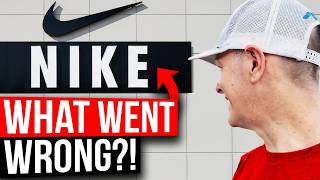
In this 30‑minute YouTube video, Michael Girdley (with a co‑narrator) chronicles Nike’s journey from its scrappy 1960s origins to a $50 billion empire and then to a dramatic market‑value collapse in 2024. The narrative begins with Phil Knight’s 1964 trip to Japan, the partnership with Onitsuka Tiger, and the creation of the iconic Swoosh. It highlights the pivotal 1984 signing of Michael Jordan and the “Just Do It” campaign that turned Nike into a cultural brand. The video then shifts to the 2017 Consumer Direct Offense, where Nike cut thousands of wholesale partners to go direct‑to‑consumer, believing e‑commerce would boost margins. Girdley explains how this move ignored the role of specialty retailers, mis‑estimated e‑commerce costs, and alienated high‑end runners, opening the door for competitors On Running and Hoka. Leadership changes—John Donahue’s data‑driven restructuring and later the return of veteran Elliott Hill—are examined, showing how organizational reshuffling eroded Nike’s sport‑specific expertise. The consequences were mounting inventory, heavy discounting, a shift from product innovation to marketing, and a $100 billion loss in market cap by 2024. The video concludes with lessons about hubris, the importance of retailer relationships, and the consumer’s ultimate power. A downloadable cheat‑sheet and a personal anecdote about the presenter’s favorite Nike apparel are offered at the end.
Chapters
So back in 2017, Nike made a decision that would destroy over $100 billion in market value for the company. They walked into the offices of hundreds, if not thousands, of their retailers and folks they worked with that were partners, folks like Zappos, DSW, Foot Locker. And they said, hey, we've decided we don't need you anymore. They decided that the world was changing and for Nike, the world was going direct to consumer and they were going to concentrate on just 40 strategic partners. The rest of the people, they'd be left out in the cold. Nike was in effect telling these people who had been partners for them, some for decades. They didn't need them to help figure out what the right clothing for you and me was, or the right shoes to go on our feet to make them feel good. In other words, they arrogantly thought that they were the brand that mattered, not the other guys. But 7 years later, this decision would cause the CEO to get fired, competitors to take over the shelf space that Nike formerly, uh, occupied, and the stock price to crater. This is how the world's biggest sports brand, the one that basically created the entire category, basically created its own downfall. This video is the rise and fall of Nike. And two more things. I take each and every one of these videos and I turn it into a deep dive cheat sheet that you can download alongside the video. You can get it on my website for free, girdley.com/youtube. And if you stick around to the end, I will show you the one piece of Nike clothing that I wear almost every single day, especially when I film these videos. So stay tuned for that towards the end.
To explain how we got to where we are today, the origin is important. And back in 1964, a 26-year-old accountant, a guy named Phil Knight, had decided that German American running shoes could be beat by some of the ones being made in Japan.
So he flew to Japan, flies to Japan and convinces a company called Onitsuka Tiger to let him sell their shoes in the United States. And at first he starts out totally kind of doing grunt style moves. He starts to sell them at track meets out of the back of his car. Coach was a legendary guy named Bill Bowerman. He's pretty famous if you're in the track and running circles. And the guy was so obsessed with creating basically lighter weight shoes that they would pour rubber into waffle molds and try to, in order to create the perfect running shoe. And that famous swoosh, it was also created in a really scrappy manner. He paid $35 to a graduate student to create it. Later on, he gave her 500 shares, which if she kept them would be worth $10 million today. Not bad for drawing a couple lines on a piece of paper. By the 1980s, Nike got complacent. They were so dominant, they didn't see all the niches that were coming online in that time. Reebok famously rode the aerobics trend and almost ate their lunch. Man, I used to have the pump shoes. They were pretty cool. And by this time, Phil had stepped away. But at that moment in the '80s, the shares and market share went below 20% for Nike, which meant that Phil Knight had to come back in and turn stuff around.
Here, Nike lived in the 1980s and saw that a cultural shift can kill your business if you don't pay attention to it. You see it over and over on this channel. Things change outside the four walls of your company and you just don't stay up with it, and it can lead to disaster. The saving grace for the company, amongst other things, was in 1984. A young basketball player named Michael Jordan entered the NBA and Nike signed him to a shoe deal. One of those was that they created a custom shoe for him called the Air Jordan. It actually famously was against the NBA's rules and they fined him $5,000 every game for wearing it. Controversy was helping propel the brand and it started to propel Air Jordan to the stratosphere. And Nike had expected to sell $3 million worth of Jordan brand shoes in the first year.
I had a pair and they actually sold 126 million.
They went to almost every kid in the suburbs. It was crazy. And that's how good Michael Jordan was. In 1988, they took this lesson and they launched the Just Do It campaign. And Nike went from selling what was just shoes and clothes to selling an identity.
By the 1990s, if you are a top-tier cultural icon in sports, you are getting money from Nike and promoting their stuff. You're Bo Jackson, Charles Barkley, I think Carl Lewis. I mean, if you name it and you were famous, you're getting money from Nike. And it was a win-win, right? Nike would promote culture and promote what they were doing with these ideas of these individual excellent athletes. Those athletes would get paid a lot of money. 2003, Phil Knight stepped back, and over the next 20 years, revenue would go from $10 billion a year to over $44 billion a year under different leadership.
When companies get big like this, they start to stay on autopilot and they get complacent.
That's precisely what happened next.
I don't know if you've ever been to the Nike headquarters in Oregon.
It's a pretty crazy place, and I could see how if you were working there and that was your day-to-day every single day, you'd get a perverted sense of reality. It's that pretty.
It almost feels like you're in the middle of a castle. Like, that is how pretty the Nike campus is.
And I could see how you could make some crazy decisions. And the next one that we're about to make is the one that we talked about at the beginning of this video— getting overconfident and greedy. And in June 2017, Basically, Nike announced a new program called Consumer Direct Offense. And the whole idea behind the thing was instead of trusting these partners who had relationships with the customers, we would take Nike directly to those customers' hands and sell direct to consumer.
There was reason to believe this was a good idea. E-commerce at the time was exploding. This was peak kind of optimism for everything in terms of e-commerce shopping. Didn't look like the growth was ever going to stop.
Digital sales for Nike were growing 30% year over year. And even better, the people that bought online spent 4 times the amount on average that walk-in consumers did. And Nike started calling their retail partners and ending relationships. By 2022, they had gone from 30,000 wholesale accounts down to 20,000. In that same year, direct-to-consumer revenue for the brand of Nike went from 28% to 42% of total sales. And Nike, well, felt like geniuses. But back in 2017, they had started to systematically cut ties with specialty running shops. You see, these kind of runners who are hardcore folks, they don't just go on Zappos and click, give me marathon shoe. These These are people who are spending hundreds of hours a month training to run these races, and they want to go in and talk to a trusted partner in these shops who can get them a good shoe. And when you walk in there, you'll say, "Here's what I want out of a shoe. Here's my issues. Here's how I run." And then it's up to that salesperson or that consultant to help you pick the right thing. So at that moment, they actually are creating a customer who might be there for a lifetime for Nike. And there's a worse thing about human nature. We each look to the people faster and more sophisticated to us. We're social animals. To figure out what we should buy. And in this case, if you're showing up at a racetrack and seeing a bunch of really fast people wearing some other brand and not Nike, well, that means it's probably not the brand for you if you aspire to be fast someday.
It's at this moment in the late 2010s that two new brands, On Running and Hoka, went first to try to bring these kind of high-end buyers. So by the time casual runners saw the elite people wearing shoes or were considering them, they were already wearing those other brands because they'd gone to the shops and bought them. And in this case, Nike had missed the window in which they were going to be able to basically be an influential brand for new runners. So Nike had fundamentally misunderstood how adoption of running products worked out in the market. They had also fundamentally made another mistake, which was they didn't understand how direct-to-consumer actually worked. And in this case, their internal models, when they put together how they were going to do direct-to-consumer, showed that by getting rid of the retailers, they were saving 6% of margin.
They thought, well, that went straight to them.
But there's a fundamental problem. They didn't include the 4% that you typically see as an e-commerce retailer in terms of chargebacks, disputes, and returns. And then that 4% is another problem.
You have to pay online to get those storefront eyeballs replaced.
In other words, you have to pay Facebook or Google so that people will find you and buy your Nike shoes. Basically, in the US, depending on who you talk to, between 80% and 90% of online ad spend goes directly to two companies. Meta and Google. And those companies are huge and they make a lot of money. If you're looking for passive shoppers, people not actively looking for something, there are basically two places you go to get them: Facebook and Instagram. And between 2020 and 2023, costs on those platforms skyrocketed. But wait, it gets worse. The Nike executives had also not understood the nature of working with retailers. When you're working with a Foot Locker or Shoe Warehouse or one of those guys, they do you a favor.
They buy your inventory and then they take the inventory risk.
It's their own capital deployed in those buying those stuff from you. You get the capital right away. The problem with direct-to-consumer, suddenly you, Nike, are the ones taking that risk. If it doesn't sell, that's your problem. In other words, fundamentally Nike had spent the time over the 20-teens not understanding their own business and trying to do the right thing by anticipating where the world was going. 2020, they leaned into that even more.
They brought in a guy named John Donahue to take over the business. He came from eBay and ServiceNow. Notice I did not mention that he worked at a sneaker company or an athletic company. That wasn't him. He was a digital transformation guy.
You can see this theme over and over again in big businesses. Disney, GE, folks like that who run entire businesses based on spreadsheets. The problem is spreadsheets are pretty darn tricky if the numbers don't tell you what you want to hear. Donahue ran the spreadsheet playbook. He centralized, he cost cut, But the problem was when he started to do that, Nike started to lose its soul. Before Donahue, Nike had organized each kind of sport in its own functional area inside the company. There was the basketball division, the kids division, softball, well, and swimming, all that kind of stuff, right? And so each one had a leader who would dig in and truly understand the soul of that sport. Instead of doing that, Donahue basically reorganized the whole company around customer segments, men, women, kids, that kind of thing. And instead of individual departments or divisions inside the company, understanding what a basketball player wanted or a softball player wanted or a swimmer wanted, suddenly you had those people diffused across the company. And how are you going to innovate and, you know, really understand that market if the people that loved it and thought about it every day were spread all over the place? In 2017, that was the last year that Nike released something truly innovative, and that was the Vaporfly running shoe. And in a true NBA fashion, what they started to release was a bunch of retro stuff. Air Jordans again, old Dunks.
Basically, if it had been run before and it worked, They were bringing it back out again and trying to milk it for profit.
They're basically doing what movie theaters are doing to Spider-Man. You trot the old guy out and see if people keep buying it. And the last sign that Nike didn't really understand how their customers bought stuff: they had anticipated that online sales would continue going up and up. People would go online, find Nike, click a button, and the shoes would show up at their house. But here's the deal: most of us, when we buy shoes, we want to walk into a store. My feet do not fit normal size shoes, and I have to kind of guess and try them on. And it turns out most of us are like that. There's actually a funny story from World War II where they did a big huge study of building the perfect cockpit for an average human being, an average man in the United States. And they built the cockpit to fit this average human being, taking the averages of all the measurements of all the men in the United States. And then they ended up with a seat that didn't fit anybody. Everybody was uncomfortable. Shoes are like that. Each one of us is very different, and most people want to go in and try them on. And again, Nike demonstrated here in this direct-to-consumer move that they just didn't understand how real people thought. And it's easy to feel that way when you're locked in a beautiful pastoral headquarters in Oregon. It's at this moment that Nike gave their competitors something that they hadn't had for over 4 decades: an opportunity to get into retailers. And the 2 big brands to rush in were Hoka Shoes, which, by the way, my brother-in-law is a marathoner. I walked in one day, I was like, oh, you don't wear Nike anymore? He's like, no, Hoka, they're super comfortable. It turned out the French were right, they wanted cushion, and it totally worked.
The other one was On Running, and all my yuppie friends, they show up playing pickleball these days with On Cloud shoes on. That's what it is.
Roger Federer famously invested in those guys, and suddenly people would go into these running stores, want to buy Nike shoes, or even if they were— had a brand affinity— suddenly had a bunch of sales reps who, by the way, are often paid on commission telling customers that they don't need Nike. They should buy one of these other brands. It helps that that would, you know, pay the salesperson. Locker, Dick's, all these guys, suddenly they needed something on the shelves. And these other guys were happy to oblige. Hoka grew from $400 million in revenue in 2018 to $1.8 billion by 2023. On Running during the same timeline grew even faster, $250 million to $1.7 billion. In the running category, Nike's market share went from 34% to 26%. For high-end runners, the people running marathons, Nike went from 66% to under 34%. Then the next thing that happened was suddenly Nike was stuck with a bunch of extra inventory, so they had to do something yucky for their brand. They started to flood other channels— TJ Maxx, uh, all the discounters who would take this stuff and sell at a dirt cheap price. Retail, this is called a markdown special. You have a brand that deserves a premium when people will pay up for for it, and then you suddenly have to start selling big chunks of it at a discounted price, which then hurts the brand, which means fewer people want to buy the brand at a high price, and it just goes on and on until the brand starts to die. Now remember I talked about Vaporfly in 2017? Innovation swapped from doing new things in shoes to actually just kind of putting new labels on stuff, bringing in guys like Travis Scott, hoping they would help you sell more running shoes. Nike spent between 2019 and 2023 $18 billion on stock buybacks and only $11 billion on research and development. Meanwhile, On and Hoka releasing new and better models that customers were happy with, or at least felt like there was innovation helping them run faster. Inside of Nike, one designer described it as Nike had gone from an athletic brand, an athletic shoe company that had gone from selling products to a marketing company that just happened to sell products. And looking at the numbers, it was hard to tell this kind of Destruction was happening inside of Nike.
It was still a $50 billion company.
They were still making a lot of money. But underneath, the foundation of Nike was falling apart. And in 2024, that's when the whole thing collapsed. June 28th, 2024, Nike had to go out to the stock market and say that their future earnings potential looked weak. Analysts predicted double-digit declines in North America, the biggest market in the world, and the stock went down 20% in a single day. Losing $28 billion in market capitalization. Inside of Nike, several folks came out and acknowledged that they needed to bring their retail channel back and try to bring back folks like the shoe warehouses, Foot Locker, Dick's, and so on. But Dick's, Foot Locker, and others had decided they weren't gonna be up for getting burned twice.
They had moved on. And the specialty running shops that Nike had burned, they certainly weren't gonna sign up for another round of, of pain.
Uh, the last thing they needed was to go through another transition when the work with On and Hoka was doing just fine. In September 2024, the Nike brand fired John Donahue and brought back an old timer from the old days of Nike.
And you'll see this pattern a lot when boards bring back somebody from the olden days. What they're really saying is we want to take things back to where they were when they were good. Guy Elliott Hill had retired 4 years earlier and he'd been a 32-year Nike veteran. And the board of Nike, 10 of 12 of them had MBAs. I don't have an MBA, so I poop on those types. But yeah, I've read all their books, so they're pretty good. Phil's first earnings call was brutal. And this is something new CEOs will do, like when they come out and take over from the previous one. One thing you'll hear them do, they don't paint it rosy because they want to set low expectations from where they're coming from. But he came out and basically said as directly as you can in modern-day America and corporate culture that they had had unacceptable market share loss and Nike needed to get back to basics. Donahue's tenure from '21 to '25 The stock was down nearly 50%. Over $100 billion in market capitalization was vaporized.
Remember Phil Knight, the guy who had built the entire business into a multibillion-dollar enterprise from a $50 shoe order from Japan? Well, he's now 87 years old. Interviewed in 2023, they asked him what he thought they should do about the strategy at Nike and the situation. And he said, "It's complicated." And you'll see this pattern repeat over and over in corporate America. Often in bigger companies like Nike, but it happens in small ones too. You go for so long having relationships with your customers and seeing them come back kind of no matter what you seemingly do, that ultimately you'll think that you're in charge and they're not. But in the end, great businesses and the ones that are sustainable, the Chick-fil-A's of the world and folks like that, they stay that way forever because they never forget who's actually in charge.
And that's consumer, because ultimately they're the ones who get to decide where they're going to spend their money.
And Nike showed the exact opposite of that. The hubris that can get any company of any size in trouble. All right, that's my take on the rise and fall of Nike.
Let me know what you think in the comments below. And if you enjoyed the walk and talk today, let me know in the comments below because it encourages me to make more. See you next time.
Oh, and I promised to show you what piece of Nike clothing I wear every day is. It's this. It's a fanny pack. It says Nike on the front. It's kind of retro, and it's very helpful if you're carrying around a camera in the middle of a forest.










