The rise and fall of Panera Bread: A $7.5B empire collapse?!
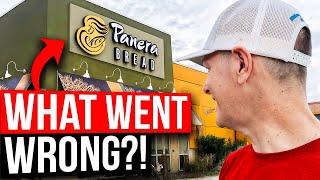
In this 25‑minute YouTube explainer, Michael Girdley chronicles the trajectory of Panera Bread, beginning with Ron Shaich’s 1993 acquisition of the St. Louis Bread Company and his vision to create a fast‑casual, suburban‑focused chain. He details how Shaich’s long‑term, founder‑owned mindset drove rapid expansion, pioneering innovations such as free Wi‑Fi, loyalty programs, kiosks, online ordering, calorie labeling, and a “clean‑food” pledge, propelling Panera to over 2,000 stores and $2.8 B in revenue by 2016. The narrative then shifts to the pressures of being a public company, the 2017 $7.5 B sale to JAB Holdings (a European private‑equity firm), and the subsequent departure of Shaich. Girdley argues that the new PE‑driven owners, lacking founder‑level ownership and operating on 3‑5‑year horizons, dismantled Panera’s culture, over‑expanded franchising, merged it with unrelated brands, cut costs by outsourcing bread production, and faced lawsuits and declining service quality. These moves led to the first year‑over‑year revenue decline (‑5 % in 2025), a plummeting Net Promoter Score (‑12), franchisee bankruptcies, and a tarnished brand. The video concludes with Panera’s 2024 “Era” menu and a three‑year “back‑to‑basics” turnaround plan, while emphasizing the broader lesson that incentives shape outcomes: founder‑aligned long‑term incentives versus private‑equity short‑term returns. The speaker ends by inviting viewer commentary and noting Ron Shaich’s current role as chairman of Cava, the very competitor Panera now faces.
Chapters
The Panera Bread Company went from a small chain of bread, soup, and salad stores located in St. Louis called the St. Louis Bread Company to a worldwide phenomenon with over 2,000 stores, billions of dollars in sales, and loyal customers. But fast forward to today, the chain has seen its first reduction in revenue year over year of over 5% in history, and they're not even making bread in this place anymore, and customers are pissed. So what explains the rise and now the fall of the Panera Bread chain? That's what this video is about. My name is Michael, and if you're new here, I make videos about the rise and fall of iconic companies and use that as a way to explain business so we can all understand it better. And today's video is actually sponsored by my company, a company called Near. They're available at hirewithnear.com. And what they do is help American companies hire great employees in Latin America. And it's not just about cost savings. It is also about hiring great people who will be inspired to work on your mission and be part of your team. So if you're interested, you can get a 5% discount on your first hire. Just click on the link below, hirewithneer.com, and tell them I sent you. And if you stick around till the end of the video, I will explain to you why I am recording part of a video about Panera in front of this kava, which has nothing to do with Panera, or so we think. So to tell the story of Panera Bread, we have to start with entrepreneur Ron Shaich, and the man was a freaking genius. He was fresh off the success of creating the Au Bon Pain chain of urban-style sandwich shops, and he had taken it public in 1991 to great success. And despite the success of Au Bon Pain, Ron saw that the future was going to be out in the suburbs. So they went looking. And in 1993, for $23 million, they went and bought a company called the St. Louis Bread Company based out of, well, St. Louis. And what Ron and Au Bon Pain saw at the time was that urbanization of America was pretty much over. What you saw was suburbanization was the trend. It was much easier to go out and open up a field and build a bunch of single-family homes and a couple power centers than it was going to be to build high-rises. And that's the way the wind was blowing. Ron saw that people were getting busier and they didn't have time to do a fancy sit-down meal that might take an hour or more. They wanted good, high-quality food that they would get at a nice quality restaurant, but they didn't want the low-quality stuff you get at fast food. In other words, they wanted fast casual. They wanted the idea that you could get great food but served to you quickly. And that was what the St. Louis Bread Company brought to the chain. And whereas later on folks like Chipotle would do it for Mexican, Cavo would do it for Mediterranean, Shake Shack would do it for burgers, the St. Louis Bread Company, which they renamed to Panera, would do soup, salads, and sandwiches and fresh bread made at high quality and served fast. And it was perfect timing because remember back then in the '90s, the idea of what was healthy was really different than what it is today. Back then, high carb, low fat, deli meat, all that kind of stuff, high salt soups and sandwiches. That was the stuff that people ate. They thought it was healthy and it was a perfect combination for the market. Customers ate it up. Well, literally. And Ron and his team were super smart. They went all in on this concept of Panera and expanding into the suburbs. In fact, they sold the Au Bon Pain chain, which was focused on urban environments, for $78 million. Focus was the name of the game, and they went all in on Panera. By the mid-2000s, Panera was a massive hit. They were on track to open over 2,000 stores, and a new store was opening every 5 days. It surpassed over 1,000 locations by 2006, hitting $800 million a year in revenue. Ron and his team were masters at execution. They would come out with things that people hadn't even thought of yet. They were already releasing them out into their stores, like free Wi-Fi. They They had that by 2004 with the idea that you would come for the Wi-Fi, stay for the sandwiches and the soup. And it turned out they could be the perfect combination of great execution and they had the ability to think long-term because they were big owners of the business. Undoubtedly in the 2000s and on, the Panera chain was the leader in restaurant innovations. They were one of the first to roll out loyalty programs. They were one of the first to roll out kiosks. They were one of the first to roll out online ordering. If it was out there and an innovation that could set them ahead of their competitors, they would do it. And frankly, during this period of time, the competitors couldn't keep up. Ron and his team were just executing that well. In 2010, they announced that they were going to be the first chain to put calorie counts on all their menus. They did it voluntarily before any rules made them have to do it. In 2016, they announced that they were going to be providing the first 100% quote unquote clean food source for all their customers. And this sort of behavior just made it that customers loved it and the competitors, well, they couldn't keep up. Impressively, Panera managed to raise their store sales year over year every year from the '90s until the 2010s. Didn't miss a year, including the 2008 Great Recession, in which case they were one of the few chains that didn't have to resort to discounting during that period of time to keep margins and sales up. And by 2016, the chain had over 2,000 locations and over $2.8 billion in annual revenue. Pretty incredible. So the 2010s started to bring storm clouds on the horizon. On one hand, this was a public company, and investors in public companies, they don't think in years or decades like somebody like Ron could. They think in quarters and that sort of thing. How, how can the next quick hit come in terms of revenue? And on the other side of things, you had competitors like Sweetgreen, Cava, and even Chipotle getting much more competitive in this fast casual space. To stay ahead, Ron and his team wanted to roll out the last parts of what they called Panera 2.0. This would be online ordering, a digital presence, kiosks, all that kind of stuff to once again push the chain ahead of all these competitors and leave them in the dust. The only problem was it was going to cost $150 million to do so. Spending that kind of money at the time would have been really bad for the stock. Investors would have been unhappy. So Ron was in a pickle. So he had to figure out what to do. How could he get an investor base that wasn't going to be thinking quarter by quarter, month by month, week by week, and would think like he did, which was, how do I build an enduring company that'll be here and winning for the decades to come? So Ron made a move that was pretty darn bold, just like a lot of the moves that had made Panera what it was at the time. And in 2017, they sold the business for $7.5 billion with a B dollars. To a private equity firm out of Europe, specifically out of Luxembourg, called JAB Holdings. And the company was public no more and taken private. Then a pivotal moment happened shortly thereafter. Ron, our hero, stepped aside from the CEO job. And for the first time in 36 years, Ron wasn't the CEO. And the new people around the table, they weren't founders and they definitely weren't the kind of people that we're going to be thinking in decades like he did. The amazing thing about founder-led companies like Panera during this time is you have somebody running the company who is both a great operator but also a huge investor in the business. They have a huge chunk of their net worth tied up in this one business, and for them, this is their one shot. So they got to make it count. So you can see this behavior of incentives in a guy like Ron during this time where he was thinking in decades and longer. And how does he build something? Well, just magical. Well, the new people around, they didn't have that same kind of incentive that he did, and definitely not the same level of ownership that he did. A typical private equity fund might have a 5 or a 7 or even a 10-year horizon in which those people are deploying capital and look for a return. So when you're thinking in 5 to 7 years, you make different types of decisions. The same thing goes for the types of people that you hire in those scenarios as well. A paid hired gun CEO of a company like Panera, this is just a tour of duty for them. It's not it's not their life's work like it was for Ron. So they're also making decisions that are going to optimize for the next 2, 3, 4, or 5 years when they go into their next job and not thinking decades. So what happened next under JAB was a slow, deliberate dismantling of the culture and the vision and the focus that had made Panera Bread so great for those decades. The first thing that JAB did was take Panera Bread and merge it with the original parent company of Panera, Au Bon Pain, the company that Ron had jettisoned decades ago because it didn't have as good of a future as Panera did. And they also merged it with some other companies that they owned, Caribou Coffee and something else that I forgot, but another business that was not anywhere near the same as Panera. So instead of being a company that was world-class, focused on being the absolute best Panera Bread they could be, they are now a conglomerate of a bunch of different stuff. Bagels, breakfast, coffee, urban, suburban, totally lacking focus. If you're in private equity, this is the type of setup that looks like a good idea on paper. You can see and say, oh, well, we have all this real estate tied up in Panera. Why don't we get Panera really good at breakfast and coffee? Well, we'll combine it with these other brands. And it's the type of stuff that looks good on an MBA kind of spreadsheet when you're putting together your pitch deck and they call it synergy. In practice, you often end up with a business just is too spread out and too spread thin to really be amazing at any one particular thing. Remember Ron's 2016 push to have the company be the world's cleanest food provider? Well, that went by the wayside as well. And in the late 2010s, we started to see lawsuits against Panera. In fact, one of the lawsuits claimed that Panera's food had the same chemical in it that Roundup weed killer came in it. It's just disgusting. But even with all of these missteps, things were still really good for the chain. This was a brand and loyalty and customer relationships and real estate and offerings that have been built up over decades and a huge level of trust. And by 2021, the trust was still there with customers. They were still coming in and it seemed a perfect opportunity for private equity to get out. In fact, they were approached by restaurant legend Danny Meyer and his SPAC to take the company public again. And the idea was PE would get to take the company public, get a nice return for themselves and their investors, and move right along. If you're going to go public, one of the things you do as a company is tend to focus on some short-term decisions that will make your books and balance sheet look better. And the company did just that. They went through and laid off 350 employees from corporate HQ. They started to basically cut costs and try to increase revenue where they could. They started to make some short-term decisions. But then some bad luck came in, and in 2022, the IPO market basically cratered. The easy money that had been pumped into the system and the low interest rates that were making IPOs really hot, those basically ended. And the deal with Danny Meyer's SPAC and the opportunity to go public, well, that got put on pause permanently. There had been other changes made since 2017. Portions had been shrunk. They had reduced the menu. They had streamlined stuff in order to cut costs. They had done the same so with staff and the service in the restaurants just wasn't as good anymore. And so the value proposition for customers, it had declined in those years. J&B also changed how Ron had done franchising over the years. See, Ron had been very thoughtful about how he approached franchising for Panera Bread. He only kept about half of the stores as franchises. And the reason he did this is he knew if he had a big chunk of corporate stores, he could stay very close to the customer, very close to the innovation. And very on top of the quality control with those. So while franchising is awesome because your franchisees bring the capital to open up the new shops for you, owning a balance of the company stores and the franchise stores enabled Panera to basically have a competitive advantage that all franchise shops didn't have in terms of basically insight into the customers. And they had the same advantage against people who were doing solely corporate-owned stores. Which meant that Panera was much more capital efficient. And it had been exactly the type of move you would have made in Ron's shoes if you were thinking in decades and not years. But JAB was not thinking in decades like he was. JAB was thinking in years and how to get money for their fund in the next few of them. So they pushed super hard into franchising. In fact, they kind of pushed too hard. And a little bit later on in the story, I'll tell you about some of the blowback of that and how it really embarrassed the chain. Perhaps the biggest signal to everybody that the heart-filled and soul-filled way that Ron was running the business was not happening anymore was the decision by the chain to save money by changing how they make bread. Remember, this was originally called the St. Louis Bread Company. It's called Panera Bread, and they eventually decided to send half-baked bread into stores in order to save a few pennies and not have to spend as much on creating bread basically from scratch inside of each location. And if you're a bread company, you should have pretty freaking good bread. And it's amazing the owners didn't understand this at the time. So fast forward to today, and customers are noticing all this. They're seeing that portions are smaller. They're seeing that the bread is of lower quality. They're seeing that the stores are not as clean. I went and looked at the reviews of my nearest Panera Bread and looked at the most recent ones. There's a ton of 1-star reviews in there for bad service, bad food, not cleanly stuff, not clean place at all. It's kind of nasty. Today, measurements of a customer satisfaction score called Net Promoter Score, NPS, for Panera have the industry lowest score, -12, meaning people are running around saying Panera sucks to their friends. And you compare this when they're trying to get business back from places like Chipotle, Sweetgreen, Cava, and others who have positive promoter scores because people like what they're doing. That's bad for the chain. A big part of the reason why the stores are so dirty and nasty and the service is so bad is employees aren't engaged. Ron Shaich himself noted this as well. He says he's seen the culture change. He quote unquote said, "No employee has ever woken up today and said, 'You know what I want to do? Create an extra penny of value for shareholders.'" That is just creating an environment in which the whole chain is pursuing a profit-first culture rather than a customer-first culture. And it's showing in the results. And to make things worse, in the period since Ron left the company, JAB has 3 different CEOs have come through the chain, basically bringing in different priorities over those number of years. So you have different things happening where at one point the CEO comes in and says, "We're gonna do cost cutting." The next one comes in and says, "We're gonna be digital." And the third one comes in and says, "We're gonna go back to basics." Well, if you're a chain at the scale that Panera is, that's no way to have a business that you can count on and run well with priorities changing like that every few years. So today Panera is officially in turnaround mode. They've laid out a 3-year plan to go back to basics, basically to try to win back customers with a refreshed menu, with higher quality, with better offerings, with cleaner stores, and, you know, trying to fix the ship that's been sinking. In 2024, they launched their new Era menu designed to address a number of those things. They've launched $10 and under basically dishes with the hopes of bringing customers back. But as you can tell, this is a pretty competitive market with Sweetgreen and Cava and others out there. Many of those customers left and they're never coming back. And then in 2025, just a few months ago, a franchisee in Houston, which had over 15 stores, collapsed suddenly, declared bankruptcy, and owed upwards of $50 million in debt to creditors. So pretty embarrassing outcome of the decisions that were made to go heavy and aggressive on franchise in the pursuit of the fast and almighty dollar. By JAB Holdings. So this year in 2025, they had a milestone moment. Sales went down 5% year over year, the first decrease in the 2000s. Well, basically since the chain kind of reached its modern, its modern picture. And this is really bad. It just shows that this was a beautiful business who's made some pretty horrible decisions over the past 6, 7 years post the sale. And here we are today. So it's hard to be optimistic about the future for Panera. I mean, fundamentally, this chain got really big because Ron was somebody who thought smart, worked hard, and thought in the long term in terms of decades. But now what you have is a different set of folks around the table who are hired guns and private equity folks who basically are motivated to think in the next 3 to 5 years. And a company this size that hopes to be around for decades, it can't think in that short of terms. So for me, you can see all of these incentives have played into the troubles that they're in now. And makes me very pessimistic about the future. So instead of thinking long-term, these guys are thinking short-term. And remember the guy who did a really good job of thinking long-term, our hero, Ron Shaich? Well, guess what he's doing now? He's investing in companies that are thinking in the food service space in the long-term, and he's the chairman of a company called Cava. And it's ironic that, and that's where I recorded that part in the beginning in front of Cava, because our man Ron, he's chairman of that company. And best I can tell, they're eating Panera Bread's lunch. The big takeaway from all this story is— reminds me of the Charlie Munger quote, and he's a famous investor. You should totally look him up if you haven't already, where he said, show me the incentives and I'll show you the outcome. In this situation, Ron was entirely incentivized to build a business that would last for decades and be great. And in the case of these private equity folks, they're incentivized to get paid in the next 3 to 5 years. And that creates just a situation where Ron was going to make some really smart long-term decisions. And the private equity guys, they were going to make some dumb short-term ones. And it's showing in the results and the numbers, the unhappy customers, and the state of the business right now. Let me know what you do differently for Panera. What do you think about this situation and what could they have done differently? Let me know in the comments below. I read them all. Catch you next time.










