The rise and fall of Pizza Hut: A $5.7 billion collapse
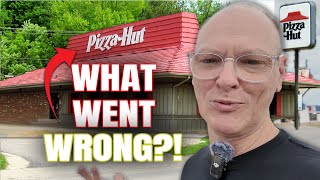
In this video Michael (the host) and Speaker B chronicle Pizza Hut’s trajectory from its 1958 founding by brothers Dan and Frank Carney to its peak in the mid‑1990s and subsequent decline. They explain how early growth rode three macro‑waves—rising dining‑out rates, suburban car‑culture expansion, and cheap subsidised cheese—propelling the chain to over 7,500 U.S. locations and 25 % market share. Ownership shifted to Pepsi and later Yum Brands, treating Pizza Hut as a side‑hustle rather than a core brand. Menu gimmicks like stuffed‑crust and the two‑foot “Bigfoot” pizza drove sales to $5.7 billion, but the advantage of cheap cheese eroded as chicken and other proteins became cheaper, and the side‑hustle mindset led to weak franchise oversight and declining customer reviews. A broader cultural shift in the late‑1990s—faster lifestyles and less willingness to spend hours dining in—favoured delivery‑first competitors. Domino’s, under a new CEO in 2010, embraced digital ordering, rapid delivery, and product quality upgrades, overtaking Pizza Hut. The video concludes with lessons about the dangers of treating a successful concept as a peripheral asset, the need for strategic focus, and the importance of adapting to technology and changing consumer habits.
Chapters
So today I'm at Pizza Hut, and, uh, at one point Pizza Hut was an absolute juggernaut.
Uh, they had over 7,500 locations by 1995, and, uh, believe it or not, 25% of the US pizza market. Just kind of an insane level of growth that all started with just one pizza shop back in 1958. And fast forward to today, the chain has gone through multiple owners, everybody from Pepsi to today Yum Brands.
And in the past couple of years, they've shut down over 1,000 locations. And one of their biggest operators declared bankruptcy. So a crazy story about the rise and fall of Pizza Hut. And this video is about, well, what went wrong.
So I'll explain that all here and tell you what lessons we can learn from.
If you're new here, my name is Michael. I like to record videos about business lessons because I'm a business nerd and I really like business. And one of the things I have for you, if you're interested, the link below, there is basically a guide. I've taken all the lessons that I've learned from studying these businesses, put them into a PDF. You could download it.
So the link's below.
So check it out.
And, you know, leave me a reply. It'll make me feel better about my life and doing these kind of videos.
So Pizza Hut itself started back in 1958. Two brothers, Dan and Frank Carney, put together $900 and opened their very first a dine-in pizza place. And back then, pizza as a specialty cuisine was somewhat at its infancy. But it turned out the two brothers had picked a perfect concept at the perfect time. And their growth rode a number of waves. The first one was the rise of dining out. See, back in 1929, just about 13% of meals were eaten out. But by the 1960s, that number had almost tripled. And people were hungry, literally and figuratively, for a place like Pizza Hut to go eat out of the house. The second wave they rode that created such a massive chain was the rise of car culture. And back then, people loved the suburbs. Uh, by the 1970s, over 70 million people in the United States were living out in the suburbs. And that was the type of environment where it made it really easy to stamp out lots of lookalike restaurants like this one. And many of them were franchised, so owned by local independent entrepreneurs who were part of the Pizza Hut franchise system.
And the last wave they rode, which was really interesting, was the idea of cheese. And while Americans consume a metric ton, I mean, like a shit ton of cheese these days, it wasn't always that way. And back in the 1960s, cheese was heavily subsidized. They had to figure out what to do with all this milk that we had. So they took the curd off the top and turned that into cheese. Well, it turned out when they launched and up through the 1970s, cheese was one of the cheapest and easiest ways to get calories. Basically into people. And so what better way to do that than to turn it into pizza and put that melted cheese on top of bread? It's the perfect kind, perfect combination to offer people a ton of value and a ton of calories for not much money. And back in the 1960s, cheese was so cheap that it was basically the equivalent of $1.50 a pound in today's dollars. Just absolutely stupid cheap. And that's, well, benefits if you're going to make pizzas. And so by 1977, big business started to take notice. And the Pepsi Corporation came in and bought the business. And they had about 4,000 locations at the time. Just incredible growth from 1958. And Pepsi buying the chain had a pretty straightforward thesis. Number one, they could sell a lot more Pepsi if that was the only soft drink that was in a place like Pizza Hut. Number two, in theory, a chain like Pepsi could bring in a lot more resources like advertising and expertise. But also important to note, And this will prove important in the story later, is that, well, basically Pizza Hut was a side hustle for Pepsi. And well, that's dangerous, as we'll discover later on. And so through the '80s and '90s, Pepsi, the owner of basically Pizza Hut, could continue to do a lot of what worked. And their thesis basically made a ton of sense.
Back in the '80s and '90s, it was really different than today.
People like ate out, but they ate in at restaurants.
And so they just kept doing more of what worked.
And one of the things people like when they go out to a restaurant like Pizza Hut is they like an experience. Well, what better way to provide people with an experience than doing menu gimmicks and lots of innovations around pizza? And it turns out kind of like Mexican food, you know how you can combine tortillas and cheese and meat and lettuce and tomato in a bunch of different ways? Well, the same thing works with bread, cheese, and tomato sauce. Well, and so they got pretty creative here at the old Pizza Hut. And so these gimmicks worked really, really well. To put it in perspective, one of my favorites was stuffed crust pizza, which is basically the idea that we'll take pizza and we'll stuff some cheese, which you already didn't get enough of on top of the pizza. We'll stuff some more cheese inside the pizza. So you got like super cheese pizza, just kind of crazy. But customers, like, they freaking loved it. People would show up here at Pizza Hut and it was fun. You pull the, you pull the crust out and like the cheese pulls apart, like Man, what better way to entertain your kids if you're out for a pizza night than a gimmick like that? And by many measures, that drove them to over $5.7 billion in sales. And to show even more how this idea of menu gimmicks worked, uh, in 1995, they launched a thing called the Bigfoot Pizza, which was a 2-foot-long square pizza, rectangular pizza. And by that one innovation alone, it drove an additional billion dollars in sales for the chain. Just insane. But just when it seemed things couldn't ever go wrong for the chain in 1995, when they had 7,500 stores, that's when the world started to turn against Pizza Hut. Number one was the advantage that was cheese. Well, it stopped being such an advantage, and the reason wasn't so much that cheese got that much more expensive. It was because chicken and other meats got a lot cheaper. You see, the chicken has changed a lot since 1950. By some measures, they're 2 to 3 times bigger than they were in the 1950s and that much cheaper per calorie that you eat. So places like Chick-fil-A, McDonald's, and other folks that were selling chicken and even beef, well, they had a structural cost advantage over our friends here that were making pizza with cheese. Number 3 was kind of the mistake that they made early on about this being a side hustle for first Pepsi and then eventually the owner of Yum Brands was this was always a side hustle for them. One of many other brands or one of many other kind of ideas. So nobody was really focusing on kind of the long-term way of thinking about it. And that proved to be a problem at this point. And the reason I wanted to do this video was I was looking around at Google reviews, as one does, near my house, and I noticed every single freaking Pizza Hut near my house here in San Antonio has terrible reviews. In fact, I could not find a Pizza Hut in San Antonio with above a 3.9 average in number of stars. And if you know anything about how reviews work, on Google Maps and that sort of thing, being below 4 stars means you're basically horrible. And being a side hustle meant that the franchisees and all these different folks, there wasn't somebody there on the corporate side making sure that things were consistent and good. And if you go read the reviews, man, people hate Pizza Hut. Like they're unhappy with it. They feel like it tastes gross and the service is crappy. And it's to some extent because this was all a side hustle from the beginning. But in terms of what's killing the chain, The biggest thing was none of those things, which was the biggest thing was actually the change in the pace of life and how we think about stuff in America.
And starting in the mid-'90s and the late '90s, it seemed like life really sped up.
And the idea of spending 3 hours inside of a dining room that's kind of run down like that one with your family, when there's so many other needs that you have from providing to your kids, to getting them to soccer practice, to all that kind of stuff.
Like people just didn't have time to spend 2.5 hours getting a pizza and hanging out. And basically having that experience inside a Pizza Hut. When I talked earlier about how Pizza Hut had 25% of the global pizza market at its peak, well, along came somebody else who was best prepared for this new world and one that Pizza Hut, well, it turns out was not prepared to face. And this new competitor was Domino's. And Domino's Pizza had a new CEO in 2010, and they'd been around for a while before that, but their concept was entirely around delivery. They weren't shackled with big kind of dining rooms and real estate like Pizza Hut was. They were totally focused on how do we get the pizza to your house as quickly as possible and as deliciously as possible. And that's all they did. And as life sped up and the internet started to become a thing and digital started to become a thing, Domino's saw it and Pizza Hut didn't. Domino's went all in on becoming digital. In fact, there's some people that I knew back a few decades ago, well, joked about how Domino's was a tech company that masqueraded as a pizza company masquerading as a food company. But in the end, they got it. Online ordering became a huge thing for Domino's and they went all in on making it work. And at the same time, Domino's understood something that Pizza Hut kind of forgot. It wasn't about the show and it wasn't about the gimmicks. It was about, can you deliver a darn good pizza to my house pretty quickly? And combining online ordering with higher quality product, which Domino's admitted to the public they didn't have, and went and fixed, well, basically catapulted over time Domino's to become number one. And these guys at Pizza Hut to basically be an afterthought.
And Pizza Hut looked up and by 2017 they were trying to be good at dine-in. They were trying to be good at gimmicks and they were trying to be good at delivery. And it turns out when you serve a lot of masters all at once, it's very easy for you to suck at all of those masters. While a Domino's, who's a specialist, they're really, really good at it. And by 2017, the whole strategy and specialization of Domino's really worked. They had by 2017, 42% of the market while our friends here at Pizza Hut, well, they were shrinking and closing stores. And it turned out during COVID people wanted pizzas delivered to them. Well, basically because they had to. They couldn't come into a place like Pizza Hut here and sit for 2 hours. And because COVID was preventing it. And who was well prepared for that? Well, specialist Domino's was able to capitalize on it. And in the end, Pizza Hut shrunk during COVID Their sales went down at a time when it should be growing like crazy. What better time to order and have a pizza delivered to your house? And who was the beneficiary of all that? Domino's. They took all that market share and grew substantially in double digits during the COVID era. And I talked before about how Pizza Hut had decided to franchise. Well, the problem with franchises is you become dependent upon their balance sheet being stable. And in the case of Pizza Hut, they had allowed one company called NPC to amass a ton of Pizza Hut franchises. And because they weren't capitalized to survive COVID, this particular chain, or people that own the, this, this particular chain of Pizza Hut franchises got into huge trouble and declared bankruptcy. And the lesson from this story is almost always what creates you is what ends up killing you when those dynamics in the marketplace change. Pizza Hut, they bet on dine-in experience and people stopped wanting to dine in as much inside of restaurants. They bet on franchising and a lot of those franchises got overextended. And let them down. They bet on the suburbs and people stopped going out as much. They wanted to have things delivered into their house. And they bet on cheese. And eventually chicken came in and chicken kind of killed the cheese idea. People don't like it as much. And fast forward today, Pizza Hut's in a battle for its life. We'll have to see what happens, but that's how it all went wrong and what we can learn from them. Let me know what you think in the comments below. We'll catch you next time.










