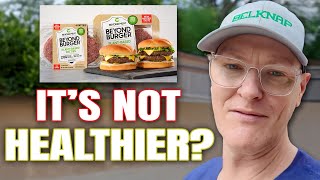
In this informal YouTube commentary, the speaker chronicles the rapid ascent and subsequent decline of the plant‑based meat industry, focusing on Beyond Meat while also mentioning Impossible Foods and other players. The narrative begins with the early 2000s emergence of plant‑based patties, the 2009 launch of Beyond Meat, and the cultural moment of the early 2010s when millennial health‑ and environment‑concerns, amplified by social media, created a surge in demand. This demand attracted massive investment from food giants, leading to explosive revenue growth (e.g., a 300% sales jump from 2018 to 2019) and a high‑profile 2019 IPO that valued the company at $4 billion. The speaker then outlines the turning points that triggered the downturn: COVID‑driven shifts in consumer trust, the debunking of price‑advantage and environmental‑benefit claims, rising price premiums (1.8× real meat), competition from established meat producers, and the fading of the fad as social media narratives changed. By 2023, consumer sales fell ~30%, the stock lost over 90% of its value, and public belief in the health benefits dropped from ~70% to ~50%. The commentary extracts business lessons about the dangers of over‑scaling during a hype cycle, the volatility of fad‑driven markets, and the need for cautious growth. Finally, the speaker offers a nuanced future outlook: despite current headwinds, declining U.S. cattle numbers (lowest since 1951) could raise beef prices, potentially reviving demand for plant‑based alternatives, and the market still generates over $1 billion in annual sales. The video ends with a call for audience opinions on the industry’s trajectory.
Chapters
So there's an industry in absolute freefall these days that's not getting talked about very much, but, uh, it is the plant-based meat market. So companies like Impossible Foods or especially Beyond Meat, uh, have become these companies that were promoting these ideas of like meat replacements all done via plant-based stuff. And those two businesses, they're in absolute freefall. Uh, just in the last year alone, sales for Beyond Meat were down over 10%. And look, if you're in the food business, a 10% decrease in consumption over a year of your type of product— I mean, imagine if that happened to milk, like absolute total disaster. So in this video, I'm going to talk about like how the story of how these plant-based products all came to be and came to become kind of big industries. I'm going to talk about what went wrong, and I'm going to talk about the lessons that we as small business people and even big business people can learn from the story of fake meat. So if you like this kind of stuff, do me a favor, give me a follow, click subscribe, leave a comment below, that helps the algorithm see this stuff. And look, yesterday I had a free hour over my lunch hour yesterday, you know what I did? I went and read about Impossible Meat and Beyond Meat and fake meat 'cause I had fun doing it and I wanted to do a video for you. So if you appreciate that, do me a solid, thanks. So Beyond Meat was a business that launched about 15 years ago, back in 2009, and it launched really at the perfect time. Right? They were able to capitalize with their new brand of fake meat, their meatless patty that was based on plant protein, beet juice, and peas, into hitting a real moment in time. And that moment in time was a couple things all happening at once. So 2010 was the moment kind of millennials came of age, right? They started to be a generation that was the biggest generation since the baby boomers, but they came of age doing a couple different things interestingly. And one of those was they listened to social media a lot. And in social media, you were hearing things about how health was important and especially how environmentalism was important. And that was the original kind of idea behind a lot of these plant-based meats was, okay, like you're gonna be environmental, it's gonna be better for the environment than eating a real cow. And secondarily, hopefully it'll be, well, something healthier for you and, Well, along the way, hopefully it won't cost you much more money than eating real meat would. And look, before Beyond Meat came along, I ate some of those healthy kind of vegan-style patties that were available in the late '90s and early 2000s, and they were nasty. They didn't taste anything like, like real meat or even anything close to the deliciousness you get from a chicken or a beef patty. They just basically tasted like somebody had taken some corn or some lentils and ground it up and smashed it together. Wasn't that good. But now we have something back in the early 2010s that could compete directly with real meat. And heck, it actually tasted pretty good. Like, I enjoy eating these patties too, and I enjoyed eating them then. And it got so big that it even started to span things like Meatless Mondays and those sort of trends. And frankly, like, the coming-of-age folks and the people who were like hungry for things like environmentalism and being healthier, like, they ate this up with a spoon. And big money followed. So based on the kind of, you know, progress and success of Beyond Meat and these other folks, big money from kind of food giants like Nestlé and those type of folks, they They started to put billions of dollars into the fake meat space. And the poster child for this whole movement was Beyond Meat. And they rode this wave from 2018 to 2019, sales of the company basically exploded. They went from $88 million to 2019, or in 2018, to in 2019, nearly tripling, just incredible growth, 300% in a year. Whew. And as euphoria continued, it looked like things couldn't go wrong for Beyond Meat. They went public in 2019 and they were one of the most successful IPOs of the decade. The company was valued at over $400 billion— or not $400 billion, $4 billion on the day of its IPO. Just absolutely crazy numbers. And people couldn't get enough of the stock. It was one of the best performing first day IPOs of the 2010s, which is saying something. There was a lot of money sloshing around back then. And other folks wanted in as well. Burger King started selling Impossible Burgers, and you started to see folks like Carl's Jr. coming in and wanting to serve kind of these plant-based patties as well. And things looked like they couldn't go wrong. The company kept investing like crazy in growth, and so did everybody else, pushing money into the space and, well, bringing up more fake meat offerings. All looked like it was not going to end until it did. And COVID started to change everything. And one of those things that COVID changed was everybody's reliance and, to some extent, disbelief on what they believe online. And a lot of the ideas that you started to see that had made Beyond Meat and plant-based meat, people started to look past some of those original ideas and see what the actual data and the facts were of the situation. And the reality is, if you eat plant-based meat, first of all, it's not cheaper than eating real meat. By and large, you go look at it, it's anywhere from 10 to 50% more expensive than buying a real steak or a real hamburger. And secondarily, the idea that it's better for the environment got mostly debunked. You're just basically consuming and, you know, potentially hurting the environment just in a different way than if you're eating real meat. And perhaps more importantly, and most importantly above all this, is social media started to debunk the ideas that going meatless is the only way to be healthy. There are a lot of people promoting things like the carnivore diet, or just going as simple and doing what I do, which is the Mediterranean diet— balance of carbs, fats, and healthy, well, just natural food. All that pushed things to the wrong place for Beyond Meat. In 2023, it had a horrible year. Basically, sales went down nearly 30% to consumers. People just buying this stuff anymore. The fad was kind of ending. And similarly, the stock market started to punish it because Beyond Meat wasn't growing like it once had and wasn't making money. The stock was down over 90% in just a year. Total disaster in terms of, you know, what had been promised with the, with the business of Beyond Meat. And it looks like things are gonna continue to get worse for the company. You know, if you look at the studies of people who think that plant-based meat is healthier than kind of natural meat, the percentage of people that believe that is going down down drastically. It was up as nearly close to 70%, and now it's dipped by almost 20% in terms of how people think about, you know, whether it's better for them. And similarly, the plant-based meat keeps getting more expensive. Last study I saw was that plant-based meat has increased in price relative to normal meat, uh, nearly, almost nearly double the price, 1.8x. Just not good when you're headed into an environment when people are really feeling the pinch on their pocketbook, kind of post-COVID and post, well, whatever we call today's economy, which is, well, not awesome. And you combine that with folks like Tyson and Nestlé and even Impossible Foods going directly at the Beyond Meat brand and trying to launch something very similar, man, suddenly you're selling a pretty undifferentiated product into a crowded market for consumers who are basically turning against the concept as a whole. It's not good. And I think the lessons here are, are numerous, but number one is it's important to remember that fads go up and fads go down. Just because somebody tries something and kind of changes their behavior, which consumers did, to try these plant-based things, just like social media kind of created that demand, it's very easy for social media to kill that demand, just like it did post-COVID. And tied to that was that Beyond Meat in particular scaled their production incredibly. They expected the party to never end. And that's where a lot of businesses get in trouble, right? You grow like crazy and then you invest expecting things are never gonna stop and the music won't stop. And in the case of Beyond Meat, they had 13 suppliers at one point producing their particular brand of meat. And the good news is since then they've scaled that back down to 1 and cut a bunch of costs. But if you look at the articles, man, the company's still in trouble. And in their situation, and for most businesses, when times are good, you need to scale carefully. You can't just go willy-nilly and expect the music to never stop. But in closing, for Beyond Meat and for these other plant-based meat folks, it's not going anywhere. Like, they still are selling over $1 billion a year of these particular plant-based alternatives to meat. There's still vegans getting cranked out every year who are reading books and getting talked into doing it. So the market's not going anywhere. And potentially the future is one where it's going to be relatively bright for plant-based meat. One thing that people don't talk about very much is we're not growing as many cows anymore in the United States. The number of cattle that we have in the United States is the lowest level in 2024 since 1951, and the population has more than doubled since back then. And if there's fewer cows, well, potentially that means that the price of beef is going to go up, and potentially making plant-based meat much more attractive. And it will turn out that folks like Beyond Meat, Impossible Foods, Tyson, and these other folks, well, they were just early to the party, and they started partying a little too hard. But in the soon, in the near years, it'll be the case that, you know, plant-based meat will have some strategic advantages that just real meat doesn't have. So let me know what you think about the future of plant-based meat, or even if you think it's nasty. Some of it does taste kind of nasty, and some of the social media pictures of the way it gets packaged in the meat aisle, just not appealing whatsoever. So anyway, those are lessons from the journey of plant-based meat. Uh, man, nothing else— it's fascinating to watch. Let me know what you think of it and, uh, where this industry is going to go in the future. It'll be a fascinating one to watch. And I am curious if they kind of roar back in the future or if the industry keeps dying. Either way, it'll be cool to see. All right. Catch you later.