The rise and fall of Prime Hydration: How KSI & Logan Paul’s drink crashed
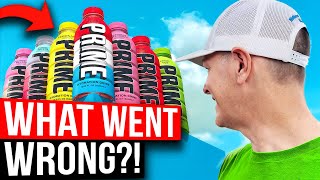
In this YouTube business explainer, Michael Girdley chronicles the meteoric rise and steep decline of Prime Hydration, the energy and hydration drink co‑created by YouTube stars KSI and Logan Paul and operated by Congo Brands. He outlines how Congo Brands leveraged influencer marketing to generate massive demand, achieving $1.2 billion in sales and nearly a billion bottles sold within 18 months. The video explains the mechanics of the partnership—Congo handling logistics and strategy while the influencers supplied hype—and how scarcity tactics mimicking Supreme created a frenzy. Girdley then details the factors that caused the crash: regulatory scrutiny over high caffeine and vitamin levels, parental backlash, the end of scarcity, poor taste leading to low repeat purchases, aggressive spending on sponsorships (UFC, Arsenal) and the launch of Prime Energy, and fierce competition for shelf space from Coca‑Cola, Pepsi, Red Bull, and Monster. He adds a personal taste test that rates the drinks poorly, reinforcing the product‑quality problem. By 2025 the brand faces lawsuits from suppliers (e.g., a $68 million claim from Refresco) and a continued sales slump of 15‑90 % in key markets. Girdley concludes with the lesson that hype and influencer reach cannot compensate for a sub‑par product, emphasizing the need for customer delight and sustainable business fundamentals.
Chapters
In 2023, viral energy drink brand Prime, promoted by YouTube stars KSI and Logan Paul, did $1.2 billion in sales and sold nearly 1 billion bottles of the stuff just a year and a half after launch. It's just kind of an incredible growth story. But just a year later in 2024, the brand is foundering. Sales are down 3/4 in some of its key markets like the UK. It's hard to find them in stock because people aren't stocking them at stores. And the brand is embroiled in lawsuits. And so this video is about the rise and fall of the Prime brand and what we as business owners can learn from the story of what caused it to grow so quickly and similarly what caused it to crash so hard. My name is Michael Girdley. I'm a business nerd. My hobby and personal joy is teaching other people about business, usually through the power of stories. If you are interested, I also do live lectures, which are like free teaching moments that I do via Zoom. I do them a couple times a month. If you go up, teach you something about business. You ask some questions, we do them live. It's pretty fun. If you're interested, we'll put a link to those below. Come on down, we'd love to see you. Oh, and in this video, besides explaining the story, I also have a gimmick. I went and bought Prime, and so later on I'm going to try it because I've never tried it before. I've just studied the business. So stay tuned for that and you can see what I think. So despite being the front faces for the Prime brand, KSI and Logan Paul aren't actually the business masterminds behind it. It's two guys named Trey and Max from Louisville, Kentucky, and they operate a company called Congo Brands. Well, Congo Brands is something pretty genius. They solve a fundamental problem with creating beverage brands by partnering with social media influencers. And they've done this multiple times with brands like Alani Nui and 3D Energy, brands that typically kind of target younger demographics who you can only really reach via social media. And the name of the game in breaking in with a new beverage is Well, it's really hard. There are some giants in the beverage world and they control most of the shelf space. They use their girth and size in the market to maintain market share. So if you look around, there's giants like Coca-Cola and Pepsi that own tons of all the brands that you see. They may be different on the shelf, but behind the scenes you may go into a convenience store and it's all just coming from one company like Coca-Cola. So it's tough without some sort of secret sauce to break in and actually get shelf space inside of stores which have limited shelf space, right? So what the guys do from Congo Brands is use influencers to create demand, which then causes retailers to stock the stuff. It's pretty genius. And Congo at this time had proven the model pretty well, but it never worked with guys at the scale of KSI and Logan Paul. I mean, each one has 23 million YouTube subscribers, which is pretty incredible, especially humbling for somebody like me who, as of this recording, has 53,000. So, yay me! And the good news about Logan Paul and KSI is they have an incredibly difficult-to-reach demographic for advertisers. or any brand in particular, which is kind of this 13 to 24 demographic. These people aren't watching TV, they aren't looking at billboards, they aren't reading newspapers. There's one way to reach them, and that's via social media. So Congo and KSI and Logan Paul together, they launched Prime, this hydration beverage, and it was a win-win, right? Congo brought logistics, operations, strategy. They understood how the whole market work. Logan Paul and KSI got to do what they do really good, which is create hype generate eyeballs and get people excited about stuff. It was basically a win-win, which is, as you form partnerships with other people, what you're looking for, right? How do I do a 1 1 4 situation where each partner brings something awesome that makes something that was previously impossible possible for both sides and everybody makes a bunch of money? And so most people don't know that Logan Paul and KSI actually only own a minority of the business. Each owns about 20%. The Congo guys kept 60% for their work. And Logan Paul and KSI went out and did their job and they did it really well. They created a bunch of hype and their first Instagram Live announcing the product had 300,000 concurrent viewers. Just insane. And it was an absolute hit. Like young people lined up to get this stuff. It was suddenly the thing to have. In 2022, they did $250 million in sales up from zero. And that steamroller kept rolling. In 2023, they did $1.2 billion, as I told you about before. Just an insane level of demand was created by reaching customers where they were in this case, which was on social media. And as I said before, it was a perfect product for the perfect audience, right? The hydration drink was pretty sweet and, well, I'm going to test it here in a minute and we'll see what I think about it. But this is a young generation that grew up on YouTube and they didn't want to drink mom and pop's hydration or coconut water or Vitaminwater or Gatorade. Like my teenagers don't want to be seen drinking the stuff I'm drinking either. And it was perfect for kids. And it was absolute perfect timing. Stores sold out. And the crazy thing about what happened was, was something like the Supreme phenomenon. If you're familiar with the Supreme brand or any luxury brand, they operate on a thing called scarcity. And scarcity is this idea that when something is unavailable or hard to get, oftentimes people want it more. And that's exactly what happened with Prime. The harder it was for young people to buy it, the more they seemed to want it. And so Prime saw this happening. Of course, money's flowing in like crazy. You go and do that amount of sales, you're going to be pulling in a a ton of cash, Prime went all in and they got very confident about what they could do. They started to spend money on sponsoring soccer clubs like Arsenal and they put big time money in the UFC. Suddenly Prime was the drink for every UFC fight. Totally insane amounts of growth. And they got pretty confident. I mean, you can see it when you're throwing that amount of money at the UFC and they launched a thing called Prime Energy. And this was different than regular Prime, right? Regular Prime is a hydration drink. Prime Energy was directed at a different competitor. It was directed at the Red Bulls and Monsters of the world. And kind of this idea of going all in, they They went super all in with how they built Prime Energy. They made it with 200 milligrams of caffeine. And to put that in perspective, that's as much caffeine as a 6-pack of Coca-Cola has. And while 2023 was a crazy good year for the brand, doing $1.2 billion in sales and growing over 4 times, uh, cracks in the armor started to show. And the first one was that people started to notice the level of caffeine in this product that was targeted at kids. Folks in the UK started to ask that it be labeled differently. There was efforts by the Canadian Health Ministry to have it relabeled as not being safe for kids and potentially getting it banned. And in Australia, you had situations where schools found the stuff to be so unhealthy and they were worried about the amount of caffeine being served to kids that they were banning it from their school campuses. And in retrospect, they had made a mistake branding it as Prime Energy because originally Prime itself was supposed to be a relatively healthy drink for kids, albeit sweet, which, you know, that's what kids like. But even still, regulators found reasons to get mad at Prime. Prime itself, a hydration drink, started to get fire from the UK authorities who found that it actually had too many vitamins in it. They were breaking the rules there that you couldn't have that many vitamins in it and still be labeled as a healthy drink. And you look up and just as quickly as the brand grew, suddenly parents were now hearing from their friends and reading in the media that Prime, well, wasn't that good for their kids and it was unhealthy. So potentially their customer base in terms of Prime, these young folks are getting pressure from their parents not to do it. And if their parents are being expected to buy it for them, that's double worse because who's doing the shopping? Mom. And if she's not buying Prime for the 15-year-old, it's probably not getting drank. And I talked before about how part of what drove Prime's growth was scarcity. And eventually scarcity ended. It was— people had either gotten a hold of Prime or moved on to the next thing, and the factories caught up and they delivered inventory to stores and that sort of thing. And when the fad ended and when it started to decline, suddenly people didn't have that pull of scarcity anymore. If you can go walk down the aisle in Target and see a giant stack of Prime, suddenly it's not the cool kind of Supreme-level brand exclusivity that it was before. So suddenly you're just seeing the demand drop. And hype is great as a way to get people to do trials. But part of this problem was people were buying the drink not because it tasted good or not because they wanted to keep drinking it and they needed hydration. They were trying it because they wanted to look cool and scarcity was the thing. And unfortunately for the brand, they were buying it once and they were just never coming back. And look, Coca-Cola, Pepsi, Red Bull, Monster, these guys didn't get big by being pushovers. They also at this time started to fight back against Prime. As I talked about before, the name of the game in retail is having shelf space. And if you're a Coca-Cola shop and Coca-Cola comes in and says, hey, congratulations, we would love to keep working for you. You're going to keep stocking Coca-Cola, which there's tons of pull for and people love it. But we need you to stock our brand. Body armor. And suddenly you look up and you're a brand like Prime and there may not be shelf space for you to be stocked in as well. And for many retailers, they had been stocking Prime because there was a demand frenzy for it. People were coming in and saying, hey, I want this. So they ordered it from their suppliers and they got it in the shelves. But you look up today and it's actually pretty hard to find. I had to go to 3 stores yesterday and eventually ended up at a grocery store to be able to buy it myself. And the PR damage, the end of the hype, The difficulty in finding it, all of that made things tough for Prime, but that wasn't the kind of biggest problem that has been really killing the brand. This biggest problem is people aren't coming back as repeat customers. I talked about that before. You want people that are going to drink it once and then come buy it the next week. And customers just weren't. Alright, taste test time. This first one is called Strawberry Banana. As an adult, I don't drink things called Strawberry Banana. So let's see what this one tastes like. Uh, that is not good. Yeah, it tastes like chemicals. Yeah, this does not taste good. OK, I'll try it again. Jeez. OK, that is really sweet. Strawberry banana, 2 out of 10. Not a fan. Let's go for cherry freeze. Dear Lord, I'm kind of scared. That is slightly better than strawberry banana. I give this like a 2 out of 10. I mean, I would definitely drink Gatorade first if I was like on a long ride or something. Tastes like chemicals. Very chalky. Tastes like Kool-Aid, actually. Do you remember Kool-Aid as a kid? This stuff was not cheap. I spent $6 for 3 cans and it was on sale. Like, each one of these hydration things was $1.98, and I spent $6. Like, that's not cheap. So let's try— this is Prime Energy, for ages 18+. Uh, that kind of tastes like Red Bull. This I give, like, a 5 out of 10. If I was going to drink a Red Bull, I would definitely drink this. That is better than Prime. Yeah, 5 out of 10. So I just tasted Prime and Prime Energy for the first time, and I see what other customers were saying, which was a lot of people just didn't like the taste. For a regular Prime, it's like super sweet, tastes like chemicals, and it has kind of a chalky taste to it. Prime Energy, I think, definitely tasted better, but didn't taste better than a Red Bull, which kind of has a nice tang to it and a little bit better flavor, or a Monster, which tends to be— I don't know, just not, not taste so much like chemicals. And a lot of other folks were just saying the same thing, like when it comes down to it The Prime product is just not that great. Like, it was a brand built on hype, but the taste isn't superior. And in many situations, it's worse than the alternatives that are already out there. I'd rather have a Gatorade than a Prime for sure. Tastes better. So fast forward to today, into 2025, the brand continues to struggle. They're involved in lawsuits with suppliers. One of their suppliers, a company called Refresco, is suing for $68 million. There's other suppliers claiming that they're not being paid. Just kind of the bad stuff that happens when your business starts to shrink from really high growth rates. And the slide is continuing. Continued into 2025. By the research I found, the brand's down another 15% in sales. There's some outlets that are reporting a 90% decrease in sales. And as I told you before, like, I struggled to actually find it, and I live in a neighborhood with quite a number of kids. For me, the big takeaway from the story of Prime is just a reminder that product really matters. It's easy to get hype, it's easy to get good advertising, it's easy to get good salespeople, it's easy to get social media stars to get people to try your product. But if in the end your product just doesn't do a good job, for what it's meant to do, you're gonna fail. And I think that's the case in point here with Prime. Like, product matters. Delight your customers. Give them something that really satisfies their needs and makes them happy, and they tell their friends about it. And that's the way to build a great, growing, sustainable business, not through social media stars and hype. All right, so that's my thoughts and the story and the rise and fall of Prime. What do you think? What mistakes did they make? What would you have done differently? What's your impression of the brand? Uh, let me know in the comments below. I read them all. All right, talk to you.










