The rise and fall of Red Lobster
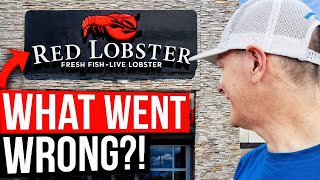
The video essay chronicles Red Lobster’s trajectory from its 1968 founding by Bill Darden in Lakeland, Florida, through rapid expansion under General Mills and later Darden Restaurants, to its peak in 2012 with 679 locations and $2.7 billion in sales. It identifies three structural forces that eroded the chain’s value proposition: rising seafood costs due to over‑fishing, fuel‑driven fishing expenses, and the shift of casual dining consumers toward fast‑casual concepts. The narrative then details a series of financial‑engineering moves after Darden spun off Red Lobster: the 2014 sale to Golden Gate Capital, a $1.6 billion sale‑and‑leaseback of restaurant properties, aggressive cost‑cutting, and a 2016 stake sale to supplier Thai Union. Thai Union’s later control created a conflict of interest that culminated in the 2023 permanent “endless shrimp” promotion, sold at a loss to push shrimp volume, which, combined with inflated lease obligations, drove massive losses. The chain filed Chapter 11 bankruptcy in May 2024 with $1 billion of debt, emerged in 2025 under Fortress Investment Group and other creditors, and now attempts a turnaround under a new CEO. The video concludes that loss of focus—Darden’s diversion to other brands—and the layered financial and supply‑chain misalignments were the primary causes of Red Lobster’s decline.
Chapters
In 2023, Red Lobster made its famous endless shrimp promotion permanent. Ultimate endless shrimp is here with a limited time right now, only at Red Lobster. The idea was you could come in, you could eat all the shrimp you wanted for $20. And true to most things, some guys came in and took total advantage of it. One guy, in fact, came in and supposedly ate 83 shrimp at one sitting. But while the headlines say that's what killed Red Lobster, The actual reason for it is much more sinister, and if you stick around for the whole video, I'll explain to you how it all went down and also why I'm recording this video from a golf cart. The answer might surprise you. This video is the rise and fall of Red Lobster. Our story starts back in 1968 in a little town called Lakeland, Florida, which was about an hour from the coast. And that location wasn't an accident. A restaurateur named Bill Darden, who was from Georgia, wanted to prove that people far away from the coasts would want to eat seafood and that they would want quality seafood, especially if they could get it fresh. On January 18th, 1968, he opened the very first Red Lobster Inn. And get these prices: the opening day menu had a dozen oysters for $1.25. You could get the full Mariner's Platter, which had hush puppies, fried shrimp, fried fish, all that kind of stuff, for $1.95. The casual vibe, the theme, it was all a huge hit. They had lines out the door, and by 1970, Mr. Darden had 5 Red Lobsters. And this era was the era of kind of massive conglomerates coming together in the United States. And one of those was General Mills, who, besides making cereal, had a massive seafood business. And they wanted to go end-to-end, vertically integrate. And so they bought Red Lobster. And usually at this point, when some big corporation buys something like Red Lobster, they come in and ruin it. But exactly the opposite happened with General Mills. The chain absolutely exploded. In 1971, they had 21 locations, did $9.1 million in sales. Just 6 years later, they had 174 Red Lobsters. In 1988, the chain became the largest in-house dining chain in America and crossed $1 billion in annual sales. Along the way, they did a lot for seafood and popularizing across the United States, but they also did one of my favorite things, which was to introduce a concept called the Cheddar Bay Biscuits. Which were these like delicious cheddary, buttery biscuit things. They were a huge hit and people loved them. They loved Red Lobster too. By the '90s, the era in which these kind of diversified conglomerates made sense in the United States, that was over. People were realizing that those parts, well, they were worth more as a bunch of independent things. So General Mills followed suit and they decided to spin their restaurant business off into its own new company called Darden Restaurants, named after Mr. Darden, the founder of Red Lobster. At the time of the spinoff, it was a huge restaurant chain. Darden operated Red Lobster, Olive Garden, and had 1,250 restaurants across 49 states. And even going into the 2000s, the waves of the baby boomers and the dining out trend, they kept giving tailwinds to the Darden restaurant chain. Even in 2009, when overall restaurant sales were down 3% post-Great Recession, Darden kept chugging along. But there was a problem. The Darden portfolio was more than just Red Lobster. They also owned Longhorn Steakhouse, Olive Garden, and some other stuff as well. And with growth slowing at Red Lobster, they started to invest in those other brands and they were starting to let Red Lobster stagnate. So restaurants started to look neglected. The menus looked stale, the, the venues looked tired. It was just kind of a thing that wasn't keeping up with the times. In 2012, Red Lobster hit its peak, 679 restaurants and $2.7 billion in annual sales. The average Red Lobster was doing $3.8 million in sales per location. They controlled over 8% of the casual seafood restaurant market in the United States. And that's when everything started to change. Same-store sales started declining in 2011, and by Q3 2014, same-store sales were down that year over 8% on a year-over-year basis. They were in freefall. Guest counts at Red Lobster were down 21% from a decade earlier. People just weren't coming in. The problems for Red Lobster weren't just focus and execution based. The problem was actually structural behind the whole idea of what the restaurant was about. You see, when Red Lobster started in 1968, seafood was actually a strategic advantage for the chain, but that had all changed over the decades after. But since its founding over the next 50 years, 3 forces had combined to make seafood just not a good fit for casual dining. A ton of these rise and fall stories come down to the same factors over and over again. So I put them all in a new ebook on why businesses win and why they lose. You can download it for free at girdley.com/whytheywin. Link in the description below. Now back to the show. First, over the '60s, '70s, '80s, and beyond, uh, the ocean started to get fished out. Uh, more and more you were seeing things like the cod fisheries and stuff like that just totally disappearing, collapsing, and gone forever. And when fish get harder to find, that brings you to the second problem, which is boats have to stay out longer and go out further just to find the catch to bring it into harbor. And at the core of fish is diesel. Diesel is what powers fishing boats to go out and bring in fish. And between 15% and 60% of their operating costs go directly to fuel. And when you're spending more and more money on fuel and having to travel further, well, that translates to higher costs at the plate. And seafood is unique. Unlike chicken or beef, humans are required and skilled labor is required at almost every single step to get it from the ocean to your plate. So seafood costs have way outpaced inflation. What cost you $20 to buy in 1997 cost $45 today, way faster than inflation is going up. If you buy fresh seafood now, it costs over $9.50 a pound at retail. You compare that to say $3 or $3.50 for chicken or pork or $6 for beef. Well, that just makes seafood not something that's gonna be a casual dining, low-cost food anymore. It's suddenly a luxury item. So seafood and Red Lobster weren't competing with other seafood restaurants. They were competing with the cost of chicken. If you go to a place like Djibouti, you'll notice one thing they don't have on the menu. It's fish. There's a reason for that. Fish is freaking expensive. And if you're Red Lobster, you built your whole restaurant on a value-priced casual dining experience, and that caters to middle-class folks who want value for their money. And suddenly it was virtually impossible for Red Lobster to provide good value. To make things worse, the casual dining experience that Red Lobster and other chains had pioneered had been starting to be supplanted by the new rise in things like fast casual. Fast casual chains like Chipotle and folks like that were carving out this kind of value-priced casual dining experience out of the home. And while baby boomers were aging out of going out and sitting down at Red Lobster, younger people were increasingly less interested than a sit-down restaurant at a seemingly inauthentic feeling restaurant chain like Red Lobster. There was a phrase for what folks like Applebee's and Red Lobster and Olive Garden and folks like that went through at the time, which was they were wallpaper chains, quote unquote. Which was they were commonly seen, but nobody paid much attention to them. And even worse, they didn't go into a slow casual as a concept. It was dying a slow death. Seeing these missteps in 2013, an activist hedge fund called Starboard Capital took a 5.5% stake in Darden Restaurants to try to make some changes. They argued that Darden was essentially mismanaging these brands, and the worst mismanagement was at Red Lobster. Their demand was that Darden spin off Red Lobster into its own business. In May of 2014, Darden announced that they were selling Red Lobster to a syndicate made up and led by a hedge fund called Golden Gate Capital for $2.1 billion. Starboard had gotten what they wanted, which was a dismemberment of the company to create value. But they hadn't got exactly what they wanted, which was they thought the price was way too low and they thought that the transaction was between 5 and 6 times profits. And that all made a lot more sense that they felt like they got screwed when you saw what happened next. Starboard was actually so angry by this transaction that they next moved to take over the entire Darden board to keep themselves from getting screwed again in the future. And they did. But back to Golden Gate Capital, the new owners of the business, they did one of our favorite— I'm joking— things on this channel, which is financial engineering. And they went and sold all of the restaurant properties that Red Lobster owned, over 500 of them, to a REIT, a publicly traded real estate investment trust. For a cool $1.6 billion with the idea that Red Lobster would then rent the restaurants back that it had formerly owned. Golden Gate took that money and they got 71% of their original investment back in cash, all in exchange for new debt that they had put on the balance sheet of Red Lobster. But there's no such thing as a free lunch in business. And in this case, Red Lobster was going to have to pay rent on all those properties for as long as they wanted to keep operating in those locations. That bill would be $119 million a year in rent that was due. With annual 2% escalators each year, no matter what. There's more. One thing you'll notice when private equity buys stuff like these guys did is they go in and cut costs to the bone in order to maximize cash flow. Golden Gate did exactly that play. So much so that an investigation in 2016 by Inside Edition showed that they did a DNA test of Red Lobster's Lobster Bisque. Uh, and, uh, the thing about Lobster Bisque is it's supposed to have lobster in it. Now, the problem was they didn't find any. So while quality was going down, employee satisfaction was going down, and customer satisfaction was going down, by 2023, these rent escalators kept catching up with Red Lobster. In that year, they paid $190 million for their annual rent bill. That was over 10% of revenue going straight out the door to the sweetheart deal they'd done with the REIT. Meanwhile, Red Lobster sales had gone down 23%. Since the deal had closed. Rent going up, revenue going down. It's not a good formula. Crazily, one-third of that rent was going to underperforming locations that Red Lobster was stuck with and couldn't get out of. In later public filings, CEO Jonathan Tybus admitted that many of those leases in many markets were way above market rate rents. In other words, Red Lobster had been stuck with overpaying for their locations. In 2016, Golden Gate sold a 25% stake in Red Lobster to one of their suppliers, a company named Thai Union, one of the largest suppliers of shrimp and seafood in the world. On paper, it looked like it made total sense. Thai Union had money to put in, $575 million with some real cash. They own things like Chicken of the Sea and John West, and they've been a supplier of Red Lobster for over 2 decades. And this is one of those ideas that looks great in boardroom pitch decks. Where supposedly you vertically integrate your supplier and your, your user, in this case Red Lobster, and suddenly you have aligned interest and you make a lot more money because there's no, you know, in-between. In reality, it would prove to be something very different. The next step was that in August 2020, Thai Union put together a consortium called Seafood Alliance made of themselves, people with experience in the restaurant space, and some other investors to to buy out the remaining stake in Red Lobster from Golden Gate Capital. At the time of the transaction, the new owners came in and said they were not going to mess with any of the day-to-day operations of Red Lobster. They were not gonna mess with any of the other supplier relationships that Red Lobster would have and all that kind of stuff. And if you believe the allegations, well, all that was a total lie. Thai Union was suddenly the largest shareholder of Red Lobster and also the largest vendor for Red Lobster. All at once. I think you can see where this is going. When your supplier owns you, what is their priority? Opening more and running profitable restaurants or selling you more shrimp? And yeah, you can see how there's an inherent conflict of interest in this entire structure. And according to later bankruptcy filings, the answer to this whole structure and where it would lead would come pretty quickly. Over 2021 and 2022, the company of Red Lobster cycled through every single C-suite person from CMO to CEO and back and forth. It was just a rotating carousel. Of new executives coming in. In April 2022, finally, the CEO at the time of Red Lobster, they resigned and TransUnion brought in their own guy, a man named Paul Kenny, who was part of the investment group, and he was the new CEO. So here's what happened next, amongst other things. But one of the things that they did was go in and basically cut out all of the other shrimp suppliers for Red Lobster. Suddenly Red Lobster wasn't buying from competitive multiple suppliers. They were buying only from Thai Union. And you'll be shocked to hear that with only one supplier and no competitive bidding process, suddenly the shrimp costs for Red Lobster started to go up. And when you got a bunch of shrimp on hand, well, what do you want to do? You want to sell more of those. And it turns out Red Lobster had sold a lot of shrimp, often by running the endless shrimp promotion for limited time since 2004. And each time, well, that brought traffic in and they also moved a lot of merchandise. Well, in this case, seafood. In May 2023, CEO Kenny made the, made the promotion permanent, still priced at $20, the same price they had charged nearly two decades before when seafood was a lot cheaper. According to bankruptcy filings that would later come out, the management team freaked out and said, you can't do this. We're going to lose money. This is a terrible idea. He didn't listen. So the alleged scheme was that Thai Union had bought the remainder of Red Lobster, basically cut them out of everything else in terms of other vendor selection, and then shoved a bunch of shrimp down their throat and told them to sell at a loss. And eventually, well, the allegations are that's what caused the chain to go bankrupt. And later bankruptcy filings, people actually alleged that Mr. Kenny and Thai Union actually forced management to do excessive promotion of the endless shrimp stuff just to push more shrimp. And so you can imagine what happened. This was such an amazing deal. They were basically selling shrimp at a below cost and people went nuts for it. Traffic went up over 40%. But behind the scenes, it was chaos. People were running outta shrimp, waitresses and waiters couldn't keep up with it. Customers were like questioning the quality and what was going on. It was a total mess. Customers came and we talked to early in the video about these people that show up and just sit there for 5 or 6 hours eating shrimp till they exploded. That was all over social media. Some guy bought 86 shrimp and sat there and ate them. It was a disaster. And so in that year, the chain lost $73 million. Thai Union's CFO later admitted that he knew the, the price was too cheap, but they wanted to build traffic and try to build the chain up. In the end, it's kind of hard to believe they were innocent in this whole thing. Management tried to raise the price to $22, then $25. Didn't really matter. The damage had been done over the preceding decades between the scheme with the leasebacks done by Golden Gate Capital, the brand diminishment in terms of all the cost cutting that they did, this sketchy stuff with the shrimp, like, I mean, just being in the seafood business when fast casual is coming after and eating your lunch, literally and figuratively. It just put the chain in an impossible place. And for the record, Thai Union filing in the bankruptcy proceedings and stuff like that, they call all these accusations meritless and baseless. So I just want to put that out there. There's, there's another side of the story. Just telling you which side of the story I kind of believe. There's a lot of claims against Thai Union and folks like that. Unjust enrichment, breach of fiduciary duty. So all kinds of things that companies are supposed to do when you're a board of director and a shareholder and an employee. People are claiming that Thai Union, well, they were just looking out for themselves and trying to make all the money they could before the music stopped. In January 2024, Thai Union wrote off their entire $530 million investment in Red Lobster. Their CEO went out, basically said, "Eh, Red Lobster, it's a done business. It's dead." In May of 2024, Red Lobster filed for Chapter 11 bankruptcy in Florida. The company had $37 million in cash and owed nearly $1 billion in debt. Well, but depending on how you count it, but they're low on money. And sadly, customer accounts had dropped another 30% since 2019. The company emerged from bankruptcy in 2025 with a totally new ownership group led by its former creditors, a hedge fund, an investment firm called Fortress Investment Group, and they've reset the chain, hopefully back on a better position. They have a new CEO, a guy who's turned around concepts in the past, Harvard-educated MBA, who's trying to bring it back to basics and make an appeal to younger audiences. And I guess time will tell if they'll be able to do it or not. The reality is the slow casual seafood market, it's a tough one. You have all these structural problems and it's unclear if they'll be able to overcome them. I think the key takeaway from this whole story is that focus really matters. Having an organization that focuses on doing that one thing really, really well is super key. And if you tie all this back to kind of when things very first started to go wrong, it's when Darden started to take focus off of Red Lobster and started to worry about things like Olive Garden and Longhorn Cafe. So in this case, like, you got to have somebody who's waking up every morning thinking about what's going to happen with the business in the shower. And when you're distracted, like the Darden guys were, well, it's tough to imagine good outcomes happening from that. Oh, and I promised to tell you why I recorded this from a golf cart. Well, I went for a walk yesterday where we're staying here over holiday in Florida, the home of Red Lobster, and I almost got hit by a golf ball. So in order to get to where I could go for a walk, I decided to take the golf cart over because at least then I'd have a little bit of protection. And good news, nobody hit me today. That's the story of Red Lobster. Let me know what you think in the comments below. I try to read them all. See you next time.










