The rise and fall of Saks Fifth Avenue
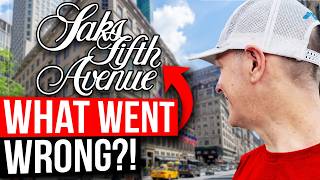
The video essay by Michael Girdley chronicles the 159‑year history of Saks Fifth Avenue, tracing its founding in 1867 by immigrant Andrew Saks, early innovations (fixed pricing and unconditional refunds), and its evolution into a premier luxury department store under Bernard Gimbel after Horace Saks’s death. The narrative follows Saks’s expansion to 28 stores by 1969 and a series of unconventional owners—including a cigarette company, Emirati investors, and the Hudson’s Bay Company (HBC). The turning point arrives with real‑estate magnate Richard Baker, who acquired HBC and bought Saks for $2.9 billion in 2013, treating the brand primarily as a real‑estate asset. Baker’s strategy involved selling flagship properties (e.g., Lord Taylor’s building) and, in 2021, splitting Saks into separate e‑commerce and physical entities, creating a fragmented brand experience. Financial strain intensified after the Great Recession and the post‑COVID credit crunch: late vendor payments, reliance on asset sales for cash, and a 2024 merger with struggling competitor Neiman Marcus—funded by a $2.65 billion deal that attracted Amazon’s investment. By late 2025 Saks missed a $100 million debt payment, filed for Chapter 11 bankruptcy in early 2026, and its assets were sold off, dragging HBC into bankruptcy and eventual acquisition by Canadian Tire. The video also examines broader shifts in luxury consumption—boomers’ preference for department‑store luxury versus Gen X, Millennials, and Gen Z favoring experiences or niche streetwear—highlighting why traditional luxury department stores became obsolete. The essay concludes with a reflection on strategic missteps, the importance of anticipating market trends, and a brief channel membership pitch.
Chapters
On December 30th, 2025, Saks Fifth Avenue missed a $100 debt payment. Two weeks later, it filed for bankruptcy. Amazon, which two years earlier had put $475 million into Saks, went into court.
Amazon is now in a legal battle with the parent company of Neiman Marcus.
Saks Global filed for bankruptcy, Chapter 11 bankruptcy, and said to the judge that they assumed their investment at that point was totally worthless. But the crazy twist in all of this is that the man who engineered the entire thing, he wasn't even a retail guy or even a tech guy. He was a real estate guy. It's easy to blame the collapse of Saks on all the usual things that are killing big retailers these days. Amazon, bad management choices, too much debt. Well, it might have been one of those things. Hold that thought and we'll answer it in this video. This is the rise and fall of Saks Fifth Avenue. To get to where we are today, we start back in 1867 with a man named Andrew Saks. He was the son of two German-Jewish immigrants, and he opened a men's clothing store outside of Washington, D.C. And he had two radical ideas at the time. One of those, believe it or not, was fixed prices for everyone. The second one was no-questions-asked refunds if you weren't happy. Andrew died in 1912. He left it to his son Horace, who took it over after that. In 1923, Horace, having learned everything about the business, partnered with his cousin Bernard Gimbel to create a new type of business that would be the ultimate luxury destination. In 1923, they opened up Saks Fifth Avenue on Fifth Avenue in Manhattan, the ultimate luxury destination. But Horace Saks, he died just 18 months later from septic poisoning. You know, after— well, medicine wasn't that good back then. But don't fear, his cousin Bernard Gimbel, he took over and he was going to be the one to build a luxury empire using the Saks name. While other department stores of the era started to be ones that kind of catered to everybody, Saks went a different direction. It became the luxury destination for American consumers. And the luxury business is a great one to be in. You have typically customers who are willing to pay whatever it takes to get the item they want. And it's typically a luxury thing, is something you want to show off the fact you have money. And so that caused the chain to grow. And by 1969, they had 28 stores across 16 states. What followed over the next 40 years was Saks getting passed around between weird corporate owner from weird corporate owner. At one point, they were owned by a cigarette company called Battis, and at another point they were owned by the Barani Family Investment Fund. You know, those— the oil Emiratis? Yeah, they owned Saks for a while. And all these owners, they really approached Saks like, well, kind of corporate owners. They extracted as much value and profit as they could. And it worked up into the early 2000s. Saks was a destination for these luxury goods, and they were so synonymous with the idea of luxury that their Fifth Avenue store got a vanity zip code around shoes and luxury. I mean, even the post office is playing the luxury game with these guys. But the Great Recession in the 2000s, that hit Saks hard. Like many other retailers, they saw luxury and spending dry up. By 2013, Saks had been brought public and it was struggling. The stock was down in the lower teen dollars and it needed a savior. Well, enter a guy named Richard Baker. Baker wasn't a fashion guy. He was a real estate guy. His family had been involved in strip malls and then eventually got into big malls as well. He wasn't a real— he wasn't a clothing guy and he didn't understand kind of the entrepreneurial side of that stuff, but he did understand real estate. Real estate is built on the idea that when you own properties, it generates cash flow and then other people invest in real estate. They buy that real estate from you because they want the future cash flow. And what better way to profit from real estate than to own the cash flow engine on top of it? So Mr. Baker had started buying up all of these kind of storied brands in, in fashion and in luxury retail. 2006, he bought Lord Taylor, and then later on that decade, he bought the Hudson Bay Company, which is one of the most storied companies out of Canada. Hugely enough, the Hudson Bay Company has been around since 1670. And back then, the idea of a corporation was kind of a weird one. And his title when he owned and was running the company of the Hudson Bay Company wasn't actually CEO. It was governor because they didn't have the CEO title when in the 17th century that Hudson Bay was founded. And so in 2013, Baker's Hudson Bay Company announced that they were going to buy Saks for $2.9 billion with the vision of making an unprecedented luxury destination globally for shoppers. But there was an interesting moment in that announcement when Baker was telling everybody what was going on. He kept slipping and he kept referring to the fact that Saks would add to Hudson Bay's real estate portfolio. Yeah, it's kind of weird if you're going to be selling luxury goods. Why are you talking about the real estate so much? In 2017, he sold off Lord Taylor's flagship store on Fifth Avenue in New York City to WeWork for $850 million. He did the similar things with Saks real estate as well. Basically looking at it as opportunities to cash out if there are willing buyers for the real estate. 2 years later, he would sell the actual Lord Taylor to LaToad for $100 million. It went bankrupt soon thereafter. And if you're doing the math, he sold the actual Lord Taylor building for 8.5 times what he sold the actual business for. By the time Baker owned all of HBC, Hudson Bay Company, they owned 50 million square feet of high-value retail across the United States and North America. And so he did the same move that we've seen in other retailers like the ones done to Sears in the early 2000s, which was playing a real estate game, selling off those assets and monetizing them quickly. Then came 2021 and Baker did something strange. He split the business of Saks Fifth Avenue into two separate businesses, one for the e-commerce business and one for the physical business for the 40 stores or so that remained. He talked private equity firm Insight Partners into investing in the Saks Fifth Avenue e-commerce business at a $2 billion valuation. They put in $500 million. But here was the problem. If you look at Saks Fifth Avenue, the physical stores are actually declining. They weren't doing very well. People weren't going into stores like they used to. They were shopping on the internet. And Saks's digital business was actually a thing that was growing. And what this structure did was insulate the business from the future decline and problems that might come in the physical retail. You can see what the problem is here. If you have two companies that are entirely separate, a digital one and a physical one, operating under the Saks brand, well, how are you going to have a unified and great experience if they're two entirely separate things with entirely separate owners? It was setting them up for a problem in the future. Oh, and by the way, this story and every single story that I break down on this channel, uh, you can download a one-page cheat sheet about it. I have them all produced and then put on my website, girdley.com/youtube, uh, if you want a written thing to accompany your beautiful video you're watching. Under all of this, Saks into the 2020s was facing the headwinds that many other retailers were experiencing. The post-COVID kind of end of easy money was starting to hurt. By 2023, vendors were starting to complain that Saks wasn't paying its bills. In fact, Estée Lauder stopped shipping it new merchandise because they weren't getting paid. All this financial engineering and short-term thinking from the early 2010s into the 2020s meant that the company of Saks wasn't ready and the Hudson Bay Company that owned them wasn't ready to deal with the downturn that started to happen in the post-COVID era. In 2023, easy money was gone and people just weren't throwing around the dollars like they used to. And so you saw that in Saks' story, right? They were starting to pay their bills late. Nearly half of their bills were being paid more than 90 days late. And then secondarily, you had basically Baker having to go to the market and sell off real estate to generate $340 million in cash to keep the operations going. But despite the cash crunch at this moment in 2024, Baker decided to make a huge move for Saks. He was going to combine it with Neiman Marcus, another luxury chain. But there was one problem. Neiman Marcus had gone through its own struggles and filed for bankruptcy in 2020. In other words, like the old Charlie Munger quote, Baker was trying to combine two turds together and hope that he got raisins. And in this case, well, it was going to create a mess. He didn't care. And in July 2024, the deal was announced. And in fact, he went so far to get folks like Amazon and others to invest in the deal. In a $2.65 billion deal, he would combine Neiman Marcus with Saks to create a luxury global powerhouse.
But before we get to that, I want to take a moment to highlight something that we're adding to this channel. Frankly, we've just been so excited about how much you've been excited about the channel, and I love all the comments. But a lot of people also ask how this channel is able to produce 3 rise and fall videos every week.
Here's the truth.
I don't do it all.
I mostly just record it.
And there's a small team behind it— editors, producers— and we're launching a membership team to help me support the cost behind the channel. The regular videos aren't going anywhere, of course, but members will get a few extras: 2 exclusive videos every month, deeper breakdowns on companies that are actually winning, and members-only community posts. And there will be a tier with monthly office hours sessions with yours truly where you can ask me anything and we'll talk live through those things. So if you enjoy the channel and want more of the analysis going deeper, you can check out memberships in the description below and we'd love to have you be part of it. As we roll this out. Thank you for watching and supporting the channel. I've had a great time sharing all of this with you and well, it's been a ton of fun. And if there's something you'd like to see in the membership tiers, feel free to drop it in the comments below.
All right. Back to the story. To show how sketchy this deal was, they had to go out and get debt at a time when money was really cheap. 2022 at 11% interest. They got $2.4 billion in bonds issued on their behalf. The combination of the two companies closed on December 31st, 2024. Within a few months, investors were pricing the debt at a level that goes with distressed companies. In other words, ones they don't think are going to make it. And look, the problem with public bonds like this is that every single one of your vendors can see that you're in trouble. And, uh, you see the same thing happen with companies, uh, like Fry's that I've covered on this channel and stuff like that, where retailers go into a death spiral. And the death spiral is that retailers need to be sent, uh, basically merchandise that they can sell to their customers. And, uh, the vendors have to provide that. And typically they have to provide that on terms where they get paid 30, 60, or 90 days after they ship it. And in this case, you have a situation where Saks and Neiman Marcus couldn't get their suppliers to send them merchandise. Uh, that wasn't good. Vendors stopped shipping. Uh, one of them, uh, which is kind of a, a distributor for many of them called Hilden Corp that guarantees payments and, uh, shipments for $500 million worth of goods a year, uh, basically stopped shipping stuff entirely to Neiman Marcus Saks. In January 2026, Mark Metric, who had been the CEO for nearly 30 years, uh, with Saks. He'd been with the company, uh, he stepped down. Baker stepped in as CEO, but 2 weeks later, Baker, he was gone too. On January 13th, 2026, Saks filed for bankruptcy. Uh, they owed over $3 billion, uh, in debt. $130-something of that was to Chanel alone, and they owed money to basically the who's who of luxury— LVMH, Dolce Gabbana. Man, if somebody sold an expensive, like, overpriced thing, Basically, Sachs owed them some money. The executives at Amazon who had invested all that money, remember back from the early this video, they were furious. Basically, the projections that Sachs had promised them showed them getting a $900 million return on their investment. And they basically accused all the leadership of basically using their investment in an improper manner, burning through tons of cash. The bankruptcy brought also down Hudson Bay Company, you know, the company that had been so storied since 1670. Basically, all of their assets have been bought by a company called Canadian Tire for $30 million. It's a total mess. Looking back on what had been happening over the last couple of decades of Saks, they were probably doomed anyways. In 1990, department store shopping made up 14% of US retail. By 2024, that was less than 2%. You try to keep Saks, a high-end luxury retailer, alive like that during that kind of decline. Ain't going to happen. And I've been in the Saks Fifth Avenue in San Antonio here. Which is not like the world's most luxury-centric market. But here's the thing I'll tell you. Every time I go in there, I'm the only person except for the employees. And then I walk right back out because I'm like, why do I need a $300 t-shirt? Well, I don't. It turns out nobody else does either. And it wasn't always this way. I mean, Saks was a place that was built for boomers. These are folks that like fashion labels. They like to show off the product of all their hard work and wealth. Gen X and younger folks and millennials in my generation, man, we could take that stuff and leave it. Just not interested. Millennials and the likes, they want luxury experiences. They're willing to pay $2,000 to go see Taylor Swift concert. They don't care that they're wearing a hoodie that they got at Walmart to it. It's not a big deal. And Gen Z, well, they're definitely not interested in the kind of old-fashioned luxury that you see there at Saks Fifth Avenue. They want to go to places like Supreme or something more interesting rather than your granddad's luxury department store. In the end, people are buying luxury stuff in a different way. They're not going to a department store that has a bunch of those things there. And even as, you know, kind of luxury spending has gone down from $400 million a year to $340 million a year over the past few years, the people that are still spending on luxury, they're going directly to those brands. They're going to line up at a Supreme store. They're not going to basically Saks Fifth Avenue. Why bother? So like many things, Saks was dying a slow death. Just nobody noticed. Same thing happened with Sears. And the mistakes, unfortunately, that folks like in this case Mr. Baker made or in the case of Sears or Fry's Electronics, all those mistakes that happened, well, they were probably things that were going to happen anyway. In the case of Socks, it's a company that's built for a world that doesn't really exist anymore. In the end, the number one thing you could do as a business owner is recognize where the puck is going to and skate that way. That's the old Wayne Gretzky line. You go that direction. In this case, you got to kind of look to the future and see what's happening to the world around you. Are the trends that are happening in the world helping or hurting your business? And do they potentially aim to kill it in the future? And that's exactly what happened for Saks. Saks. I keep, I keep pronouncing it like I'm wearing, I'm wearing Saks Fifth Avenue on my feet. So I'm sorry about that. Just a stupid Texan. All right. That's it for this video. Let me know what you think about in the comments below. I try to read them all.










