The rise and fall of Schlitz: How America’s #1 beer destroyed itself
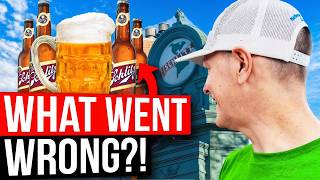
Schlitz was America's top beer in the 1960s until cost-cutting measures like Accelerated Batch Fermentation created white flakes in bottles. A 1976 recall of 10 million bottles, a failed ad campaign, and a federal indictment on 747 counts of bribery destroyed consumer trust. The brand collapsed from dominance to less than 0.5% of its peak sales.
Chapters
Schlitz beer traded the number one spot back and forth with Budweiser for decades. And as late as the 1970s, they were selling over 24 million barrels of beer each year. Yet despite all the success, by the early 1980s, they were virtually out of business. And today, when I went to go try to buy some here in San Antonio, I couldn't even find them in a whole city like nearly 3 million people. This video is the rise and fall of Schlitz beer.
When you're out of Schlitz, not a chance. You're out of beer. A beer that made Milwaukee famous.
By the way, I researched and is one of the craziest self-immolation, self-destruction of a brand I've ever seen. So I had to do a video about it.
Oh, and by the way, thanks to Centra.ai for sponsoring this video. More on them later.
Schlitz Brewery was run by the Uihlein family up in Milwaukee, Wisconsin, and they did billions of dollars in revenue in the 1950s. And you have to understand the 1960s back in Milwaukee, it was basically like the Silicon Valley of beer. All of these different brands, Schlitz, Pabst, Miller, they were Milwaukee brands, and it was the hot industry there. Every ambitious guy in town wanted to work in beer. It was the hot thing. And one of them was a guy who became a young marketing executive at Schlitz named Bob Martin. And he will be very critical to the story of the fall of the beer brand. And in 1952, when he started, Schlitz was an incredibly cool place to work. It was the second largest brewer in the world, second only behind Budweiser. And while Schlitz went back and forth with Budweiser trading the number one spot year after year, in 1957, Budweiser pulled ahead for good. And the management at Schlitz, they didn't like this. In 1967, Robert Uline Jr., the Harvard-educated scion of the founding family, took over as president and chief executive. And Robert wanted to outdo Anheuser-Busch and get back to number one. But he realized that doing so on volume was going to be virtually impossible. So he had a different idea. Schlitz decided if they couldn't be number one on sales, they could be number one on profit. So they hatched a new plan. Throughout the 1960s and 1970s, Uline and the leadership team quietly went through and cut costs as much as possible, and they even went as far as to do things like salami slice their beer brewing recipe to make it move faster. They replaced malted barley with corn syrup in many regards. They would go in and instead of using fresh hops, they replace it with hop pellets. But the biggest change they made was what I talked about before. Speeding up the brewing process. They created something called Accelerated Batch Fermentation, ABF, with the idea of cutting down the amount of time it took to ferment a batch of beer. And while Budweiser was taking 30 days to do that, Schlitz figured out how to do it in 15. At first, these changes seemed like brilliant success. By 1973, Schlitz profit margins exploded, and they had basically the most efficient and profitable breweries, well, if not in the United States, potentially in the world. But that's when the first crack appeared in this plan. Outsiders started talking about the beer tasting kind of unique and interesting because, well, they had accelerated this process that had stood the test of time for tens of thousands of years to make beer. But hey, the Schlitz guys decided that Mother Nature didn't apply to them. I mean, 10,000 years of brewing history, who cares? But instead of changing anything in their processes or business, they just renamed their ABF thing to accurate, balanced fermentation. That would fix it, right? But internally, they knew that this process caused stability and haze issues, especially inside of the beer. The beer wasn't aging long enough for all the particulates inside of the water to settle, so they accelerated that by adding silica gel to the brew. And in theory, this prevented the cloudiness that had plagued the brew for so long. And remember, folks like Budweiser, they didn't have this problem because they didn't try to cheat Mother Nature. They just let the beer brew as it was supposed to. Then in 1968, the FDA hinted that they might start to force companies like Schlitz to list their ingredients on the beer labels. And Schlitz executives, well, they panicked. They certainly did not want the word silica gel appearing on the labels for Schlitz beer. So Uline and his team came up with using a different chemical called Chill Guard, which could be filtered out and therefore didn't need to be listed on the labels. But unfortunately, this new additive had an unseen side effect. Which was they were using something else to do foam stabilizing. So when those two things reacted, well, it had a nasty side effect. So bottles of Schlitz started to develop white flakes inside of them, and in some cases they started to get little particulate floaters in them that— I have no other way to describe this— looked like boogers. But true to form, Schlitz insisted when people complained that this wouldn't harm the taste and there was nothing to worry about when they sold people booger beer. But eventually they couldn't run from it anymore. In 1976, complaints got so bad that they had to recall 10 million bottles bottles of beer at the time costing $1.4 million. Loyal drinkers felt betrayed by the situation, like Schlitz didn't care about them, and they certainly sent a message with the poor quality. And then this story took an even worse turn, if you can believe it, and that involved Robert Uihlein himself.
But before we get into that, I want to talk about today's video sponsor, Centra.ai. Centra.ai is an AI-centered platform built to act like extra team members for your business. Instead of bouncing between tools or manually handling repetitive work, Centra gives you specialized AI helpers that take on real tasks and free up time when actually matters. Instead of bouncing between tools or manually handling repetitive work, Sentra gives you specialized AI helpers that take on real tasks and free up time where it actually matters. For many teams, one of the biggest challenges is keeping up with ongoing execution. Social posts, customer messages, and e-commerce related tasks stack up fast. Sentra's helpers are designed to step into these roles. For example, like Sochi for social media or Cassie for customer support. They handle the day-to-day actions that would normally require constant attention without replacing human judgment or oversight. Everything runs inside one easy-to-use platform, and you can complete tasks in multiple languages, automate repetitive workflows, and get support around the clock. The AI is trained on over 100,000 data points and powered by advanced models while keeping your data encrypted and secure in the cloud. If you want to see how AI helpers can fit into real business operations, check out Centra.ai. Visit Centra.ai/Girdley or use promo code GIRDLEY, my last name, at checkout to get an exclusive limited-time 72% discount on any plan. You get a 14-day money-back guarantee, so there's no risk. The link and code are on screen and in the description below. Thanks to them for sponsoring today's video.
In 1976, Robert was diagnosed with terminal cancer and he passed away within weeks, leaving Schlitz even more rudderless than before. All these quality cuts had finally caught up with the brand, so all this happened at precisely the worst time. And another Milwaukee rival, a brand we all know today, Miller, caught up and surpassed Schlitz. And even though Schlitz's Market share had grown from 7% to 14% between 1950 and 1977. Budweiser and Miller, well, they were growing even faster. Schlitz was now sliding into third place. And a significant factor that they missed while they were dorking around with their quality was that the market around beer was changing at this time. In 1975, you see, Miller had introduced a revolutionary beer at the time targeted at the calorie-conscious consumer, Miller Lite. And it took off like an absolute rocket. And Schlitz, they responded in 1976 with their own version, Schlitz Lite. But frankly, it was too little, too late. Some insiders felt that Schlitz Light failed precisely because they had burned all of the trust with consumers over the previous 15 years through their cost cutting. And I think they had a point. Desperate to stem the tide and the bleeding, the Schlitz leadership stepped up advertising and marketing. And in 1977, they did something kind of crazy. They went and spent a bunch of money on an ad with world-famous advertising agency Leo Burnett. The ad they came up with and approved, literally, and I'm not joking.
You want to take away their Schlitz? You want to take away their gusto? You're cute. Dumb, but cute. You're going to end up a cornerstone in a high-rise. They're going to turn you into an off-ramp on the interstate.
And while the intent was meant to be humorous, it didn't work. Viewers dubbed it as the Drink Schlitz or I'll Kill You campaign. Seeing this happen, Schlitz yanked the ad after just 10 weeks and fired Leo Burnett in the process. One thing about great brands is they can survive some hits, but at a certain point, if you do things repeatedly that damages and tries to destroy that brand, well, eventually you do. And the next thing that happened was fascinating. Behind the scenes, another scandal was brewing, and it turned out so much of Slits growth had been because of shady marketing tactics. Remember marketing VP Bob Martin that I talked to you about at the beginning of the video, who'd be very important later on? Well, here's where he stepped in. It turned out for years he had been doing shady deals using a company slush fund to try to get different stuff done. Things like going under the table and paying bar owners to only carry Schlitz and that sort of thing. And if you're going to break rules in little ways, you also break rules in big ways. Bob also did things like during a Budweiser strike, sneak in past union lines Schlitz beer into Chicago O'Hare Airport. Not good if you're from union country. He also greased palms to get them exclusive rights for the Astrodome, giving out $2.3 million in today's dollars in bribes to get that from, well, the decision makers there. These tactics The tactics worked, but they weren't exactly ethical, and nor were they legal. And in the 1970s, the US government started to look after this secret slush fund. In 1978, the feds caught up to this behavior, and a grand jury indictment from the Department of Justice issued 747 counts of corruption and bribery against Schlitz for these marketing tactics. By 1977 and 1978, profits were in free-for-all at Schlitz. Sales were in free fall, and you can imagine why. It was a brand that suddenly had been shown as a house of cards that was done by scummy people doing scummy things and serving, well, beer with boogers in it. Well, of course they're going to be dying. In 1980, rival brewer Pabst actually overtook Schlitz, which was a thing that had just been unthinkable a few decades prior. And as the case with most dying businesses, the moment you can at least afford another shock is when one happens. And in 1981, the workers at their Milwaukee plant, the flagship one for Schlitz, went on strike and they closed down production for over 4 months, drowning in losses and unable to fulfill orders while competitors took their shelf space. The management had no choice but to close the Milwaukee plant and put the whole company up for sale. Several rivals tried to buy them in 1991, folks like Heilman and Pabst, but the DOJ shut those things down too on antitrust grounds. And those sales didn't happen. Finally, in 1982, the feds approved a sale to Detroit's Stroh's Brewery, which lives on today, by the way, for a paltry $500 million. And this was the end for Schlitz as an independent company and the one-time king of beer, rivaling Budweiser. Independent analysts at the time estimated that Schlitz had lost over 90% of its brand value in one decade alone. Over the following decades, Stroh's itself struggled and never really managed to revive Schlitz's glory. In 1999, Stroh's itself went, uh, bankrupt. And rival Pabst picked up all the assets, including the Schlitz name, in a fire sale. Schlitz limped into the 21st century as a bargain bin beer, mostly a joke. And then Pabst tried to revive it as kind of a hipster beer, but that was short-lived and didn't really work as well. 2007, the brand sold 115,000 barrels, which is a mere pittance and much less than 1% of what it sold in its 1970s peak when it was selling millions of barrels. In other words, Slitz is less than 0.5% of the beer brand that it once was. Nuts. That's it for this video. Let me know what you think in the comments below. I have not seen a wilder story of a brand killing itself like Schlitz did, and I hope you found it as entertaining as I did. Let me know what you think in the comments below. See ya.










