The rise and fall of Sriracha
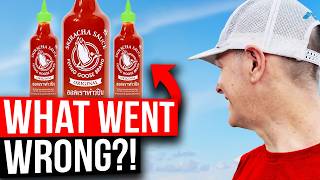
In this long‑form video, Michael Girdley chronicles the extraordinary trajectory of David Tran, a Vietnamese refugee who founded Huy Fong Foods and turned a modest hot sauce made in recycled baby‑jar bottles into a $150 million‑a‑year American staple. Girdley outlines Tran’s contrarian business philosophy—no investors, no advertising, no sales force, and a refusal to trademark the name “Sriracha”—and shows how this product‑led approach created a cultural phenomenon, landing the sauce in fast‑food chains, on the International Space Station, and in pop‑culture references. The narrative then shifts to the 30‑year handshake partnership with Ventura‑county farmer Craig Underwood, which supplied 95 % of the peppers for Huy Fong. Girdley details how Tran covertly built a rival venture, Chillico, used drone surveillance to steal Underwood’s proprietary farming knowledge, and abruptly terminated the partnership, leading to a costly lawsuit that awarded Underwood $23.3 million in damages. The fallout caused a supply crunch in 2022‑2024, prompting product inconsistencies (green‑chili batches, color changes) and a surge in secondary‑market flipping. The crisis opened the market to dozens of new “Sriracha” brands, eroding Huy Fong’s moat. Girdley concludes with a personal taste test of the current product, noting lingering inconsistency, and reflects on how Tran’s trauma‑driven worldview both built and broke his empire.
Chapters
So imagine building a $150 million a year food business with no investors, no marketing, no sales team, really kind of no plan. On behalf of 3,000 refugees, we would like to give this message. Imagine also you're a Vietnamese refugee leaving the Vietnam War to America, arriving here in 1979 with basically nothing in your pocket except some ambition. And then imagine you build one of the most beloved condiments in the history of America. This stuff, sriracha. But then the same instincts that caused you to create this magic product that took America by storm caused you to blow the whole thing up. It's worth wondering how something that could create such magic could also screw things up so badly. That's what this video is about. The rise and fall of sriracha.
Oh, and by the way, thanks to MasterClass Executive for sponsoring this video. More on them later.
All right, if you stick around for the video, I'm going to put some of this in my mouth. And see how it goes. Because I was a Sriracha fan for a while and then I stopped being one. And the reason was, well, the product was inconsistent. So I'm curious how this bottle stacks up now that I'm trying it again a few years later. My videos always seem to do better when I have props. I don't know why, but I love you guys too. And oh, by the way, if you want every single one of these videos, I do a deeper dive on my website and you can go download it for this video at girdley.com. Youtube.com/charliechapman. David Tran was born in 1945 in southern Vietnam, and he got into the hot sauce business early. He ran a chili farm there, and then he got his start selling hot sauce door-to-door, basically, well, hustling. Then in 1978, when the communists were firmly in control of the company and started seizing private businesses and opportunity was drying up, David knew it was time to go. In January 1979, he and 3,000 other refugees boarded a Taiwanese freighter called Huy Fong, H-U-Y F-O-N-G, which would be a familiar name for you because it's on the outside of the bottles of Sriracha. He arrived first in Boston. No English, no connections, no prospects. But then he heard from his brother that they had red chili peppers out in California. Remember, he was a guy who understood hot sauce. Within a month, he'd incorporated Huy Fong Foods out in California, And from that, he would go and make hot sauce and put it in recycled baby jars, just like what he had done back in Vietnam, and went out to sell it. And this is where he'd also recycled a logo that he had created back in Vietnam. It had a rooster on it. First month's revenue was $2,300. David at the time thought he would mostly sell the hot sauce to people who had grown up eating it— Chinese and Vietnamese immigrants. But it turned out he would be very, very wrong about that. David basically broke every single rule of the way we think about doing business in the West. Uh, he didn't invest anything in advertising or marketing. He wanted the product to speak for itself, and to some extent, this was kind of genius. If you do product-led marketing like this, it does something very special. It creates a flywheel where your product has to be so good that people will go out and talk about it. In David's case, it forced him to do that in order to even survive. He didn't hire salespeople. Either the product would be so good people would look for it, or it wouldn't sell at all. And typically, especially in today's world where money is easy to come by relative to history. He didn't take on any investors. You know, we in the West typically would look and say, well, who can we help fund this thing? David said, no, I'm not going to do that. And importantly, David never trademarked the term Sriracha, even though he was going to be the guy to basically popularize the idea. And Sriracha is actually the name of a Thai town. And geographical, geographical places like that are notoriously difficult to trademark. Even still, David didn't care. He just didn't think he should own something that he hadn't created. If you look back at all these decisions, it ties back to something interesting, which is we as human beings tend to be products of the traumas we go through. And if you look at David's trauma, he went through a situation in which he had to be entirely reliant upon himself to survive in that era in Vietnam. And that philosophy meant that when he started to build the Sriracha business, he didn't want to owe anyone anything. He didn't want to be beholden to anybody else. And those were the decisions he made to launch the business. And it makes sense if you're him and you grew up where the government was seizing businesses, you had to smuggle gold in condensed milk cans in order to get your family and yourself to safety. Well, that's what happened. And like many things, being contrarian for the next 35 years, it would work brilliantly. By 2009, Sriracha had taken the United States by storm. It was showing up in menu items at McDonald's and Taco Bell. Bon appétit. Named it the, uh, basically condiment of the year. Miley Cyrus was talking about it in songs. Reportedly astronauts took a bottle with them onto the International Space Station. Do you know how expensive it is to take a bottle of condiments up to the space station? Yeah, it's a lot of jet fuel and rocket fuel to get you there. And by 2019, the empire that David had created, Hoi Fong, will be selling $150 million a year worth of these bottles. It was the number 3 condiment— well, hot sauce— in the United States, only behind Tabasco and Frank's RedHot. And crazily enough, it had been done with zero marketing spend using this totally contrarian business philosophy. And it would work super well until it didn't.
But before we get to that, I want to talk about today's video sponsor, MasterClass Executive. One thing I've been noticing lately is that a lot of people are working harder than ever, but their effort isn't really compounding. And a big reason for that is that the game itself is changing faster than most people can adapt to it. AI is not just another tool. It's changing how decisions get made, how teams operate, and what actually creates leverage in a business. The problem is most professionals were never trained for that kind of shift. They're reacting to it and not leading through it. And that's the whole intention behind MasterClass Executive. It's a 12-week program built for people who are already working and want their skills to actually translate into outcomes in this new environment. Instead of generic content, you're learning from people who have already operated at the high level, like Mark Cuban, Indra Noori, and Ray Dalio. What makes it different is that it's designed around modern business realities, including how AI is reshaping strategy, and it's built in partnership with the University of Chicago Booth School of Business with collaboration from OpenAI. And compared to a traditional MBA, it's a fraction of the cost, which makes it a much more practical way to actually upskill without stepping away from your career. If you're trying to stay relevant and actually get leverage from the work you're already putting in, check out MasterClass Executive at the link in the description below.
Despite David's total intention to have no outside dependencies and be totally self-reliant, uh, he had actually gotten stuck with a relationship with a guy named Craig Underwood. You see, back in 1988, Underwood, who was a fourth-generation farmer back in Ventura County, California, had actually written David a letter. Back then we wrote letters, believe it or not, uh, you know, and people mailed them. Insane. Anyway, he was interested in growing jalapeños and peppers for David's company. David said yes, and what followed by all accounts was an extremely profitable partnership. The two men operated on a handshake. They were basically family members and friends. They watched each other's kids grow up, and they were basically, well, business partners. Tran would prepay before each planting season, and then they'd settle up after the harvest. And remember, David Tran of very contrarian guy. They were doing all of this over a handshake, no contracts. Like, who's doing $10 million a year deals over handshakes anymore? Well, turns out most people aren't, and this story will show you why. By 2006, Underwood was growing 95% of the peppers that Huy Fong was, uh, using to make their hot sauce. On the other end, Huy Fong was 80% of Underwood's business. The relationship was so big that Underwood agreed to plant 1,700 acres of peppers at $13,000 an acre on behalf of Huifeng that year. Huifeng would pay $18 million in prepayments. Just shows you how big this relationship had become. Tran had told Underwood, "You grow it, I'll sell it." And that relationship worked for 3 decades. Now, harken back to the era of Vietnam. David Tran had built his whole life making sure he had complete and total independence. He wasn't dependent upon anybody else. But here it was that 95% of his peppers were being grown by one guy on a handshake. Around 2014, while Underwood was growing more and more peppers for Huaifeng, David Tran was in the background doing something quietly, well, sneaky. He created a company called Chillico LLC, and the idea was he was going to start growing his own peppers, and he installed his own sister-in-law as the owner. He went after Underwood's chief operating officer, the guy who had made them so efficient and effective at growing peppers. To try to come work for Chillico. The man refused. All the while, according to court filings, Tran was telling Underwood, "Hey, like, we're going to keep proceeding as normal. You keep growing and leasing more land and expanding your operation, and you grow those peppers, I'll turn them into hot sauce and I'll sell them." Based on those assurances, Underwood invested millions of dollars, assuming the good times were going to keep rolling. In October 2016, Tran asked Underwood for something interesting and something he'd never done before, which was he asked Underwood if he could take a drone and fly it over their current crops. But instead of saying what it was really about, which was he wanted to understand how Underwood was doing so well and getting such good yield on their crops, uh, he was interested in using that information for Chillico. But he told Underwood he was doing it just because he was curious. Underwood had built proprietary knowledge of how to do harvesting for 28 years. Basically trial and error and all that kind of stuff. And Tran turned around and stole that knowledge and gave it to his own farmers at Chillico. Then in late 2016, Tran waited until Underwood was on vacation, and they sent a notice to Underwood. He was terminating the relationship. They weren't going to be buying any more peppers, and, uh, well, good luck. The entire crop that Underwood had planted in anticipation of the 2017 harvest, it would go unfunded and unbought by Huifeng. Suddenly, 80% of Underwood's business would go away with a single phone call. And he had to lay off over half of his staff. Later, Craig Underwood would tell people that he really trusted David Tran, and he had no idea that he would betray him like this. And look, if you want to predict how a human is going to react in any particular situation, all you have to do is go look at how they've reacted in previous situations that were similar. And here David Tran is basically just acting like he had acted, well, back since the days Vietnam had taught him some pretty hard lessons. And here's what was actually going on on Tran's side inside Huế Phong. The Chinese were coming in and supplying chili mash to competitors at $300 a ton. The problem was Underwood was charging $600 a ton, and Huy Phong and David, they were trying to pay $510. In other words, the economics were being kind of hammered at by the Chinese. In other words, there was no price that Underwood could charge that would basically work for both sides. This is where things get ugly. Tran was actually the first to sue Underwood. In 2016, he actually went and sued asking for $1.45 million in damages, claiming that Underwood had overcharged him and his company. Underwood countersued, and in 2019, well, the case went to court in Ventura County, California. Here's the problem: if you're in a lawsuit, the last thing you want to be doing is suing in the other person's home turf. Here was Hoi Fong, located in LA in Southern California, suing some locals who are pillars of the Ventura County county community, basically. So what do you think happened? Well, basically what you'd imagine. The jury found that Hui Fong and David committed misrepresentation, breach of contract, and fraud. The court awarded $23.3 million to Underwood, $10 million of which was considered punitive. In other words, trying to send a message to David that he was a bad actor. The court found that David had secretly conspired to terminate the relationship all the while inducing Underwood to invest more to support his business and indicate that things would keep going. They found that because they had operated for so long on a handshake, they basically created a relationship that the changes that David and his team were doing in the background, they had a legal obligation to disclose that to Underwood. David appealed, and Hoi Fong ended up continuing to lose the case when the Second Court of Appeals affirmed the judgment in 2021 in California. Key to the case was this drone footage. Scenario where never once in nearly 30 years of working together had David asked to do something like that. But in the end, it was pretty clear he was misrepresenting things so he could take advantage of the Underwoods. This whole set of traumas that David had that shaped his personality and worldview and how he built Huy Fong, uh, basically all the way back to his Vietnam days, had just cost him $23 million and ended a 28-year relationship with Underwood. With this kind of key thing falling apart, David was in a bind. How are you going to recreate finding the exact peppers that made Sriracha, well, great? And how are you going to source the number that he needed in order to support a $150 million a year business? That's what happened next. In April 2022, Huy Fong sent a letter to its distributors, said, hey, we're unable to source the quantity and quality of peppers that we need. We're gonna have to reduce supply of Sriracha that we're pushing out into the market. Part of the story was that there was a drought going on, and the media backed that up in some of the ports that they put out. But something weird was going on. Competing hot sauce brands, they weren't struggling to produce new product. They were bringing stuff out normally. So reporters went and asked Craig Underwood, what's going on? And he said, well, look, if they were still buying from me, we wouldn't have had this problem. I had the scale and supply to keep them, well, with enough peppers. There was a massive run by consumers hearing this news on Sriracha, uh, and prices went through the roof. There was suddenly a secondary market where people were buying Sriracha and flipping it on Amazon. At one point it reached $160 for a 2-pack of bottles. And to put that in perspective, when I bought this bottle yesterday— oops— it was just under $5. Oh, here's the bottle that I didn't drop. Yeah, $5. It's a lot of money. Somebody even got greedy with their flipping of Sriracha. A 50-pack of the little one single serving packages, you know, the ones you would find in the bottom of a takeout bag. Somebody listed it for $2,200. TBD if that actually sold. Before halting production in May 2024, Huy Fong had been getting reports from some of its end users and customers that the sriracha wasn't red when it showed up in their shelves. And these are clear plastic bottles, supposed to be red. Some of them were brown. Reason was, in its rush to get more out, Huy Fong had made sriracha with green, green chilies, and basically that changed the color. And if you're terminally online like I am, you would have seen that, well, what would have happened was the TikTok outrage, people freaking out about how Sriracha was letting them down. David did the right thing. Rather than shipping an inferior product, he shut down production entirely. By betraying Craig Underwood, he had literally started a process that had changed the entire product entirely. And look, if you're making sauce, what matters is, is the sauce good? That was his whole strategy from day one. And here he had blown it up. This opened up an opportunity in 2022 and 2023 for new Sriracha entrants to come into the market. Heck, you know what our family buys? Trader Joe's Sriracha these days. We haven't bought this Rooster brand in almost forever. Other ones like Sky Valley, tripling consumption. Yellowbird, all kinds of other ones. Heck, when I went to the grocery store yesterday to buy this Sriracha, I found the original Sriracha. There were like 15 competing brands, all at like 2/3 the cost, some cheaper. Remember, David had intentionally not trademarked the word Sriracha at all. So meaning anybody who had access to some peppers and a bottling plant could release their own version of sriracha. And that's what you see today when you go into the grocery store. Srirachas for days. While David had created an entire category and come to dominate it, his mistake here had created a window for competitors to come in and take away big amounts of market share. He basically forced them to try something else. Many of them decided they liked the other things better, including me. As of today, 2025 and 2026, Huy Fong is back on the shelves and producing stuff normally. Heck, the biggest amount of shelf space I saw yesterday at my local H-E-B here in San Antonio, it was the original Rooster bottle. But in the end, the billion-and-a-half-dollar hot sauce market that David had created and made famous, well, it has more competitors than ever. Heck, even Underwood Ranches, the farmer that he'd been buying from, they launched their own, uh, Sriracha themselves. I tried to buy some, I couldn't find it this time, but I've seen it before and I bought it. You know what it tasted like? OG Sriracha. I liked it. Huifeng is still a family business. David is in his 70s, uh, his kids are running the show. His son and daughter are president and vice president, uh, but it's not the same business it was before this whole incident happened. Ultimately, the moat is gone, the competition is eating their lunch, and it's tough to see that the good times are going to be like they were as, uh, they were in the early 2000s. Every single one of us as business owners is going to go out and hire people at some point. And there is one thing above all that you should know about hiring people. If you want to predict what they are going to do when they come work for you, what you need to do is just look at what they've done before in similar situations. That's the best predictor. And you can see exactly that happening with David. His whole worldview of how he approached stuff and his psychology and his philosophy of business is exactly what he did at every single step. It's entirely predictable. And ironically, being himself made him super duper rich and successful in the United States as a refugee. And also started to bring down his empire. All right, it's Sriracha taste test time. So as I told you before, I stopped buying Sriracha because it was inconsistent. Sometimes it would show up and be ridiculously spicy, and other times it would show up and just be kind of mild. So let's see what we got today. Oh boy, spicy. Wow. Okay, well, I'm kind of weak sauce Texan. Evidently that's going to leave a mark. Oh. All right, thanks for watching the video. Hopefully you enjoyed it. Oh man, I need to get in the soy sauce or something. This is, this is rough. All right, catch you next time.










